
How did a record-breaking rainstorm overwhelm Yokkaichi’s underground parking garages?
On September 12, Yokkaichi City in Japan’s Mie Prefecture was hit with a deluge that would have tested any city’s infrastructure. In just one hour, 123.5 millimeters (nearly five inches) of rain fell—shattering local records and pushing the city’s drainage systems to their absolute limits. The result? Water surged into the city center, flooding streets and, most dramatically, inundating the two-level Kusunoki Parking facility.
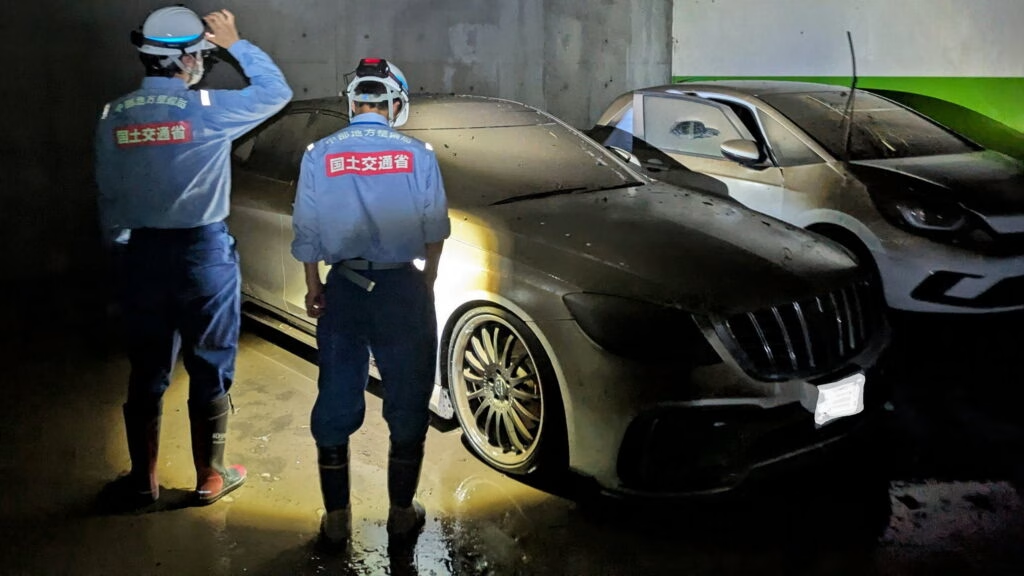
Even with staff piling sandbags at entrances, the sheer volume of water was unstoppable. The first underground level, with a ceiling height of 3.5 meters, was completely submerged. The second floor wasn’t spared either, with water rising to 1.2 meters. In total, 274 vehicles were left underwater—many of them luxury or rare models. And while the garage could hold up to 500 cars, the disaster struck on a night when it was only about half full. Small mercies.
Why are underground parking garages so vulnerable to flash floods?
It’s easy to assume that parking your car underground is the safest bet—protected from hail, theft, and the blazing sun. But when it comes to flash floods, these structures can quickly become traps. Water always seeks the lowest point, and underground garages are, by design, the lowest point around. Once the drainage system is overwhelmed, water pours in through ramps, stairwells, and even ventilation ducts.
In Yokkaichi, the city’s drainage simply couldn’t keep up. According to Japan’s Ministry of Land, Infrastructure, Transport and Tourism, the pumps and stormwater systems were designed for heavy rain, but not for a once-in-a-century event. The storm’s intensity far exceeded what local engineers had planned for, a scenario that’s becoming more common as climate change increases the frequency of extreme weather events worldwide.
What kinds of vehicles were lost—and what does that mean for owners?
The aftermath was a heartbreaker for car enthusiasts and everyday drivers alike. Among the submerged vehicles were a Nissan R35 GT-R, a tuned Mercedes S-Class, a Porsche Cayman, and several other high-end models from Mercedes and BMW. There were also plenty of Toyotas—Crown Sedans, Land Cruiser Prados, Priuses, Alphards, HiAces, and Proboxes—plus a few kei cars like the Mitsubishi Delica Mini.
But the real gut punch? Most of these vehicles are likely total losses. When water rises above the floorboards, it seeps into electrical systems, engine components, and interiors. Modern cars are packed with sensitive electronics, and once those get wet, repair costs often exceed the car’s value. Insurance companies in Japan typically cover flood damage, but with 274 claims from a single event, the financial toll will be steep for both insurers and owners. And because most parking facilities include clauses exempting them from liability in natural disasters, drivers will have to rely on their own coverage.
How did authorities respond, and what lessons can be learned?
Draining operations began the very next day, with pump trucks working around the clock. Still, it took until September 17—five days later—for the garage to be fully cleared of water. Images shared by the Mie River National Highway Office on social media revealed the extent of the damage: mud-caked vehicles, debris-strewn floors, and a stark reminder of nature’s power.
This incident has prompted renewed calls for cities to rethink how they design and protect underground spaces. Some experts suggest installing flood barriers or automated gates that seal off entrances when sensors detect rising water. Others recommend upgrading drainage systems or even restricting underground parking in flood-prone areas. In Tokyo, for example, some new buildings are required to have watertight doors and emergency pumps. But retrofitting older structures is expensive and logistically challenging.
Is this a sign of things to come with climate change?
Unfortunately, yes. Japan’s Meteorological Agency has reported a steady increase in the frequency and intensity of short-duration, high-volume rainfall events over the past decade. This isn’t just a Japanese problem, either. Cities from New York to Paris have seen similar disasters, with underground garages and subway systems bearing the brunt.
Urban planners and policymakers are now grappling with how to future-proof cities against these threats. That means not just building bigger drains, but also rethinking land use, investing in early warning systems, and educating the public about the risks of underground parking during severe weather alerts.
What should car owners do to protect themselves from similar disasters?
If you live in an area prone to heavy rain or typhoons, it’s worth taking a few precautions. First, check your insurance policy to make sure it covers flood damage—especially if you own a high-value or rare vehicle. Second, pay attention to weather alerts and consider moving your car to higher ground if a major storm is forecast. Some Japanese cities now offer real-time updates on flood risks via smartphone apps, giving residents a crucial heads-up.
For building managers, investing in flood barriers or emergency pumps could make all the difference. And for city officials, this is a wake-up call to review and upgrade infrastructure before the next big storm hits.
The big takeaway? Protecting your car from floods isn’t about perfection—it’s about smarter adjustments. Start with one change this week, and you’ll likely spot the difference by month’s end.