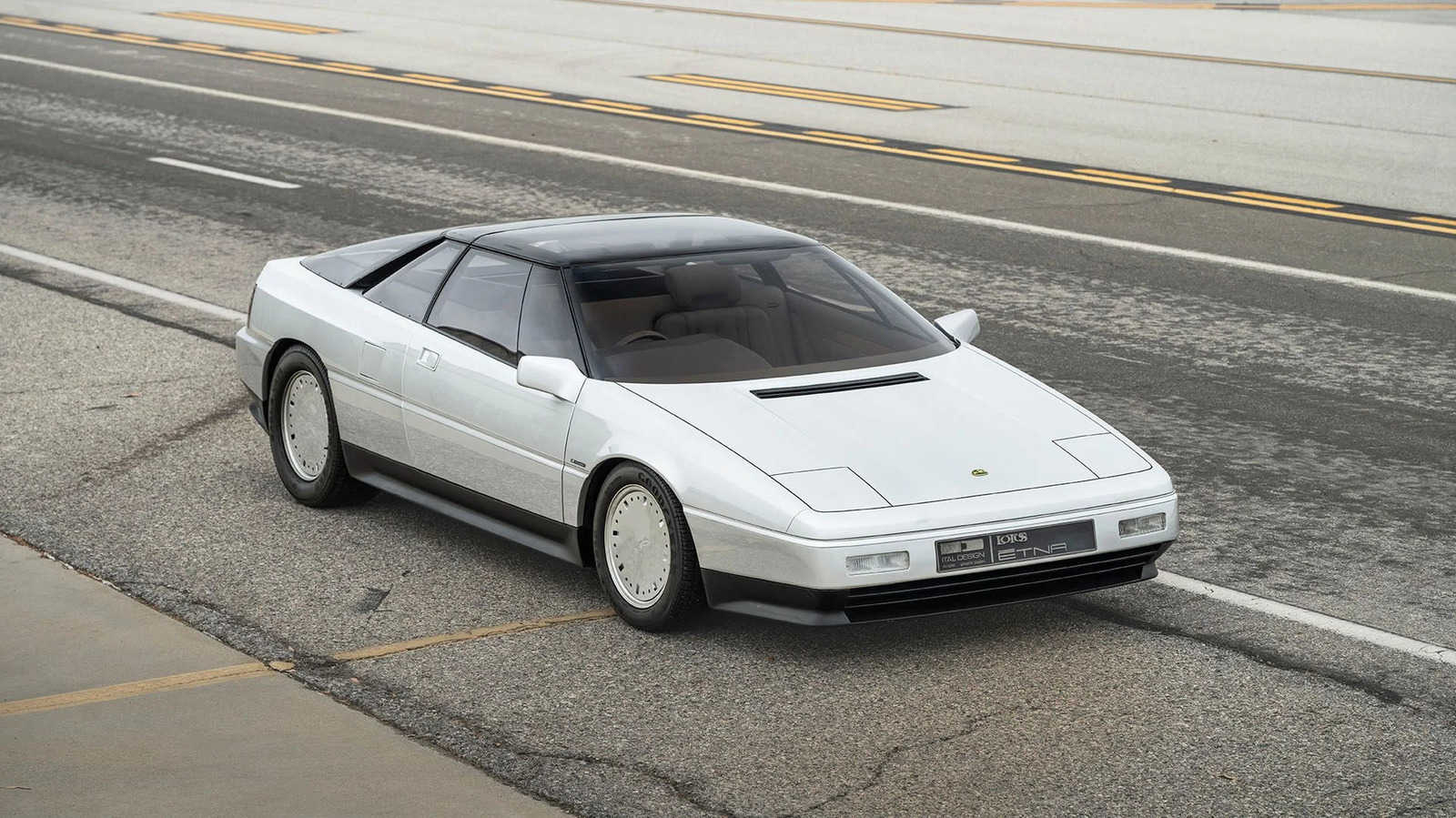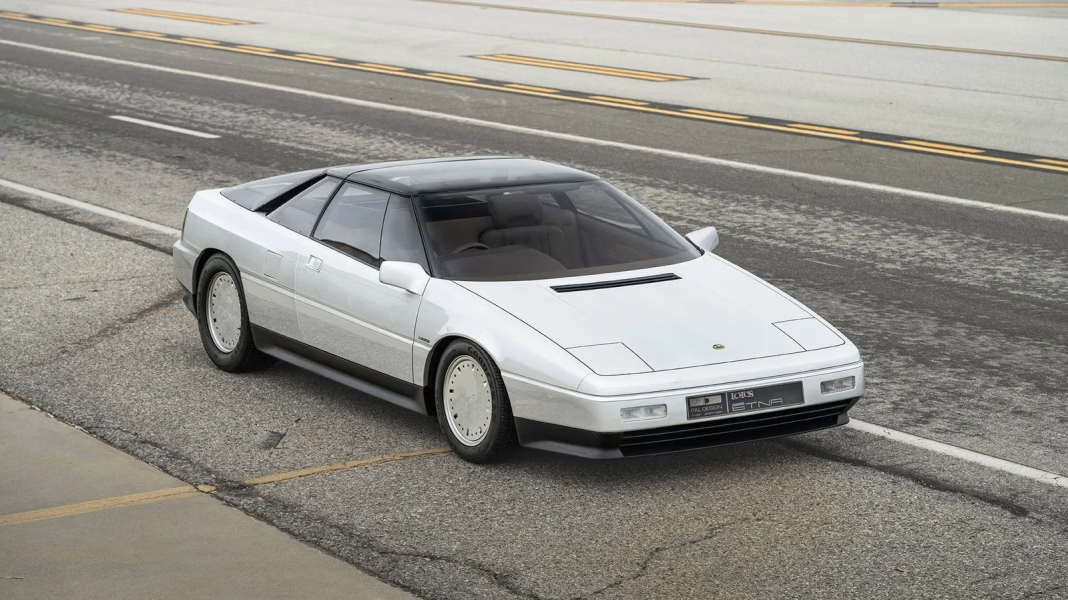
What Made the Lotus Etna Stand Out Among 1980s Supercars?
If you’re a fan of automotive history, you know the 1980s were a golden era for supercars. But even among legends like the Ferrari Testarossa and Lamborghini Countach, the Lotus Etna had something truly special brewing under its skin. Imagine a car with a high-revving V8 that could sing all the way to redline, draped in sharp Italdesign bodywork that looked like it had just rolled off a sci-fi movie set. That was the Etna—a concept that, on paper, had the makings of a true icon.
But what really set the Etna apart wasn’t just its looks or its engine. Lotus was pushing boundaries with F1-inspired active suspension, a technology years ahead of its time. While most supercars of the era relied on brute force and flashy styling, the Etna promised a level of sophistication and handling finesse that could have rewritten the rulebook.
How Did the Etna’s V8 and Active Suspension Compare to the Competition?
Let’s talk numbers and tech. The Etna’s 4.0-liter V8 was designed in-house by Lotus, aiming for a blend of high-revving excitement and lightweight efficiency. While Ferrari’s flat-12 in the Testarossa was no slouch, the Lotus V8 was projected to deliver similar power with less weight over the nose—translating to sharper handling and better balance.
Then there’s the active suspension. In the mid-80s, Formula 1 teams were just beginning to experiment with this technology, which used sensors and hydraulics to adjust ride height and damping on the fly. Lotus, always the innovator, wanted to bring this F1 magic to the road. The result? A supercar that could corner flat, ride smoothly over bumps, and adapt to changing conditions in real time. No other production car at the time could touch that level of sophistication.
Why Didn’t the Lotus Etna Make It to Production?
Here’s where the story takes a turn. Despite its promise, the Etna never made it past the prototype stage. The culprit? Corporate shakeups. When General Motors acquired Lotus in the mid-1980s, priorities shifted. GM, focused on mainstream profitability, was hesitant to greenlight an expensive, risky supercar project—especially one that would compete head-to-head with established Italian exotics.
It’s a classic case of what might have been. Insiders have often remarked that the Etna was simply too advanced and too bold for its own good, at least in the eyes of cautious executives. The project was shelved, and the automotive world was left to wonder what could have happened if Lotus had been given free rein.
What Lasting Impact Did the Etna Have on Lotus and Supercar Design?
Even though it never reached showrooms, the Etna’s influence can still be felt. Lotus continued to push the envelope with lightweight engineering and innovative suspension systems. The lessons learned from the Etna’s active suspension found their way into later Lotus models and even influenced the broader industry—active suspension is now a staple in high-end performance cars.
Design-wise, the Etna’s sharp, wedge-shaped bodywork set a template that would echo through the next decade. Italdesign’s Giugiaro, who penned the Etna, went on to shape some of the most memorable cars of the era. And for Lotus, the Etna remains a symbol of what the brand can achieve when it’s allowed to dream big.
Could a Modern Lotus Etna Rival Today’s Supercars?
It’s tempting to imagine what a 21st-century Etna might look like. With today’s advancements in materials, aerodynamics, and hybrid powertrains, a modern interpretation could easily go toe-to-toe with the likes of Ferrari, McLaren, or Lamborghini. Lotus has already shown with recent models like the Evija that it’s not afraid to innovate.
If the Etna had been built, it might have changed the trajectory of the supercar world. Instead, it serves as a tantalizing “what if”—a reminder that sometimes, the most exciting ideas are the ones that never quite make it to the road.
The big takeaway? Chasing greatness in the world of supercars isn’t about playing it safe. It’s about daring to combine wild ideas—like a high-rev V8, futuristic suspension, and bold design—into something unforgettable. Start dreaming a little bigger this week, and you might just find yourself ahead of the curve before you know it.