
Why Isn’t McLaren Racing to Build a Global Electric Supercar?
If you’ve been following the supercar world, you might’ve noticed something odd: while Ferrari is gearing up to launch its first all-electric model, McLaren is taking a much slower, more cautious approach. So what’s behind this strategy? According to McLaren’s new CEO, Nick Collins, the brand isn’t in a rush to electrify its core lineup—at least, not for the global market.
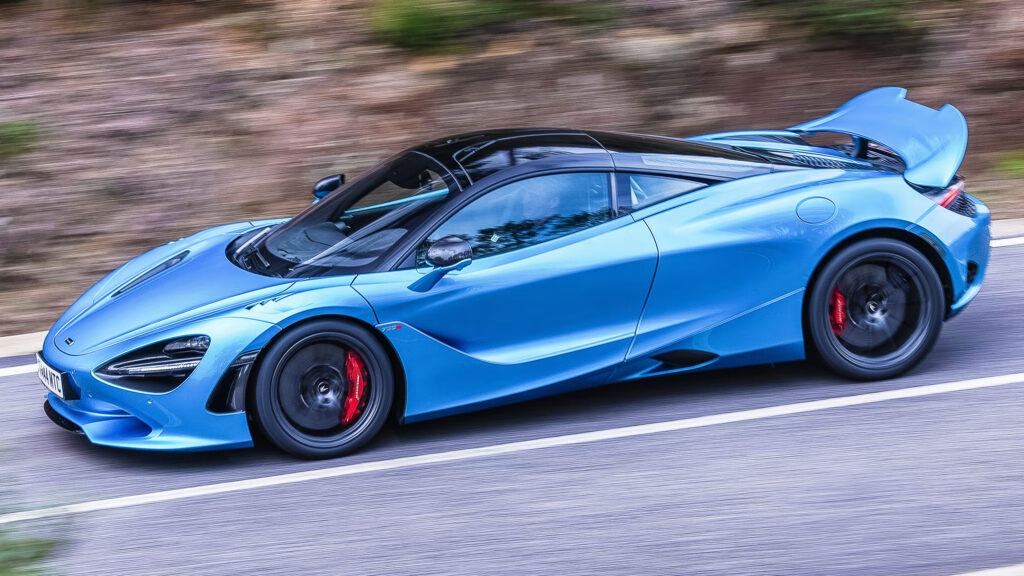
Instead, McLaren is doubling down on its legendary 4.0-liter twin-turbo V8, a powerplant that’s become synonymous with the brand’s razor-sharp performance. Collins recently confirmed that this engine isn’t going anywhere soon. In fact, it’s getting even better. The latest iteration, found in the W1, now delivers a staggering 229.6 horsepower per liter—up from the already impressive 185.3 hp/liter in the 750S. That’s not just incremental progress; it’s a leap that keeps McLaren firmly in the conversation among supercar purists.
Is McLaren’s Future Electric—But Only in China?
Here’s where things get interesting. While McLaren isn’t ready to launch a global EV, it’s not ignoring electric power altogether. Collins hinted that if McLaren does build an electric supercar, it’ll likely be exclusive to China. Why? China is the world’s largest EV market by a mile, accounting for more than 60% of global electric vehicle sales in 2023, according to the International Energy Agency. The country’s infrastructure, government incentives, and consumer appetite for high-tech vehicles make it a natural testbed for any automaker’s electric ambitions.
There’s also a strategic twist: McLaren’s new owner, Abu Dhabi-based CYVN Holdings, is a major investor in Chinese EV giant Nio. That opens the door for McLaren to tap into cutting-edge battery and drivetrain technology, should it decide to go electric—at least for Chinese customers.
How Does McLaren’s Strategy Compare to Ferrari and Other Rivals?
Ferrari’s upcoming Elettrica has generated plenty of buzz, and it’s easy to assume McLaren would want to keep pace. But Collins is adamant: combustion engines and hybrids will remain at the heart of McLaren’s identity for the foreseeable future. The company sees value in refining its existing V8, even as the Artura’s 3.0-liter V6 hybrid shows what’s possible on the electrification front.
This isn’t just stubbornness. It’s a calculated bet that McLaren’s core customers still crave the visceral, analog experience that only a high-revving V8 can deliver. For now, the brand is content to let others take the lead in the global EV race, focusing instead on perfecting what it does best.
What’s Next for McLaren Under New Ownership?
With CYVN Holdings at the helm and a merger with British startup Forseven in the books, McLaren is entering a new era. The company now has access to fresh capital and a direct line to some of the most advanced EV tech in the world, thanks to its ties with Nio and Gordon Murray Technologies.
Collins teased that the first fruits of this partnership will arrive “sooner than you think.” Projects that were already in the pipeline are now getting a boost from increased investment, hinting at a future where McLaren’s innovation engine runs even hotter—whether that means more potent combustion cars, hybrids, or something entirely new for select markets.
Why Is McLaren Sticking With Its V8 When Others Are Going Electric?
It’s easy to see why McLaren is holding onto its V8. The engine isn’t just a mechanical heart; it’s a brand signature. The latest upgrades prove there’s still plenty of life left in combustion technology, especially when it comes to delivering the kind of performance and emotion that McLaren fans expect.
But there’s another layer here: regulation and market demand. While Europe and North America are tightening emissions rules, China’s appetite for EVs is growing fast. By focusing its electric ambitions there, McLaren can hedge its bets—satisfying regulators and customers in one region without alienating its traditional base elsewhere.
What Should Supercar Fans Expect From McLaren in the Coming Years?
If you’re hoping for a McLaren EV in your local showroom anytime soon, don’t hold your breath. The company is playing the long game, refining its combustion and hybrid offerings while keeping an eye on the evolving global landscape. But if you’re in China—or just watching the market closely—don’t be surprised if McLaren’s first electric supercar makes its debut there, leveraging local partnerships and technology.
The big takeaway? McLaren’s next chapter isn’t about perfection—it’s about smarter adjustments. Start with one change this week, and you’ll likely spot the difference by month’s end. For McLaren, that means sticking to its roots while quietly preparing for whatever the future brings. For fans, it’s a reminder that the best roads are rarely straight—and sometimes, the scenic route delivers the most thrilling ride.