
Why Are Modern Classic Cars Suddenly So Popular with Gen X and Millennials?
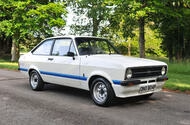
If you’ve noticed a Ford Escort RS1800 fetching nearly £277,000 at auction and thought, “Wait, wasn’t that just a cool car from my childhood?”—you’re not alone. There’s a seismic shift happening in the classic car world, and it’s being driven by Gen X and millennials. These aren’t just collectors with deep pockets; they’re enthusiasts chasing the cars that once adorned their bedroom walls. So, what’s behind this boom in modern classic values, and why are younger buyers suddenly calling the shots?
What’s Fueling the Surge in Modern Classic Prices?
Let’s start with the numbers. That Ford Escort RS1800 sold in July for a record price, despite being a restored press car rather than a famous rally winner. For context, a similar model with genuine motorsport pedigree went for less than half that amount (adjusted for inflation) just a few years ago. The difference? Demand from a new generation of buyers who now have the means—and the nostalgia—to chase their dream cars.
Peter Haynes from RM Sotheby’s points out that scarcity is a huge factor. Cars like the Ford Sierra XR4i or Vauxhall Cavalier SRi were once everywhere, but most have been scrapped. Now, finding a pristine example is like striking gold. The result? Prices are soaring, especially for models that resonate with buyers in their 30s to 60s. It’s not just about rarity, though. It’s about identity—people want to own the cars that defined their youth.
Are Only the Usual Suspects Getting Attention?
Not at all. While BMW M cars and Mercedes-AMGs are perennial favorites, the net is widening. John Glynn of Specialist Car Valuations notes that even less obvious models—think Ford Escort XR3 cabriolets or Land Rover Freelanders—are climbing in value. The 2009/10 scrappage schemes wiped out many everyday cars, making survivors more desirable. And with private sales of used cars in the UK often free from capital gains tax, some buyers see modern classics as a smart investment, not just a passion project.
Interestingly, the market isn’t just for high-rollers. Many younger enthusiasts, priced out of the housing market, are channeling savings into cars instead. Spending £5,000 to £10,000 on a fledgling classic feels more attainable—and more fun—than chasing an elusive mortgage.
Is the Classic Car Market Still Booming Across the Board?
Here’s where things get nuanced. John Mayhead, editor of the Hagerty Price Guide, cautions that not every car is riding the wave. Only about 70% of tracked models increased in value over the past year. The post-pandemic rush and the rise of online auctions did push prices up, but some have since cooled off. The market has split: top-tier cars and performance variants (like 997-generation Porsche 911s) remain in hot demand, while others have plateaued or even dipped.
What’s clear is that modern classics—Peugeot 205 GTis, Volkswagen Golf GTIs, Renault 5 Turbos, Sierra Cosworths—are thriving. These are the cars that Gen X and millennials grew up idolizing, and now they’re putting their money where their memories are.
What’s Happening to Traditional Classics Loved by Boomers?
As the spotlight shifts to modern classics, some older favorites are losing their luster. Once-coveted models like Triumph TR2s, MGBs, Austin-Healey 3000s, and even iconic Aston Martins and Jaguar E-Types are seeing prices soften. For some, that’s good news—these cars are more affordable than they’ve been in years. But there’s a catch: the cost of garaging and maintaining vintage vehicles hasn’t dropped, and that’s putting off potential new owners.
Peter Haynes agrees that while the very best E-Types still command strong prices, there are plenty of less pristine examples languishing at lower values. Meanwhile, modern supercars and performance icons—Subaru Impreza Turbos, Nissan Skylines, and, of course, fast Fords—are stealing the show at auctions.
Is Investing in a Modern Classic a Smart Move?
It depends on your goals. For some, it’s about reliving the thrill of their youth. For others, it’s a calculated investment—especially given the tax advantages and the potential for appreciation. But as with any market, there are risks. Not every car will become a blue-chip collectible, and trends can shift quickly.
Still, the data suggests that the appetite for modern classics isn’t going away anytime soon. According to the latest figures from Hagerty and other trusted sources, demand remains robust for well-preserved, desirable models from the 1980s, 1990s, and early 2000s. And as more buyers from younger generations enter the market, the definition of a “classic” will keep evolving.
What Does This Mean for the Future of Classic Cars?
We’re witnessing a generational handover in the world of car collecting. The cars that once seemed too new or too ordinary to be collectible are now the hottest tickets in town. For Gen X and millennials, it’s about more than investment—it’s about connection, nostalgia, and the simple joy of driving something that makes them smile.
If you’re eyeing a modern classic, now might be the time to act. The market is dynamic, and the cars that resonate with today’s buyers could become tomorrow’s unobtainable icons. Just remember: buy what you love, not just what you think will go up in value. After all, the best part of owning a classic isn’t watching its price rise—it’s hitting the open road and reliving the memories that made you fall in love with cars in the first place.