
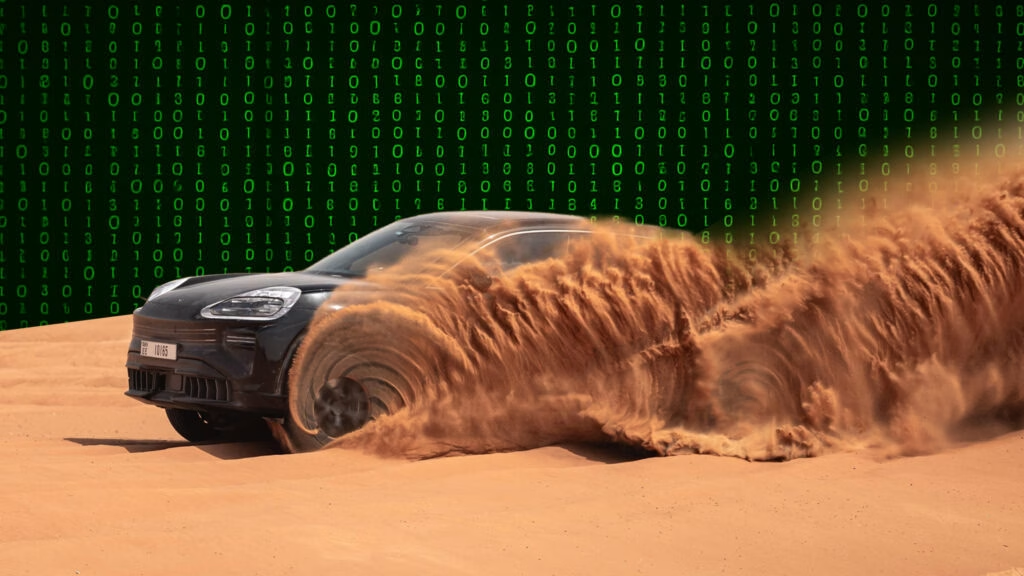
How did Porsche use digital technology to transform Cayenne Electric development?
Porsche’s latest move with the Cayenne Electric isn’t just a peek into the future—it’s a full-on leap. Instead of the old-school method of building dozens of physical prototypes, Porsche leaned hard into digital simulations. The result? They skipped constructing about 120 early test vehicles. That’s not a typo. This strategy didn’t just save a mountain of cash; it also shaved 20 percent off the total development time. For a company obsessed with precision and speed, that’s a game-changer.
What does skipping prototypes actually look like in practice?
Traditionally, automakers go from sketches to clay models, then to a parade of prototypes, each one tested, tweaked, and sometimes trashed. Porsche flipped the script. Their engineers ran virtual Cayennes through digital Nürburgring laps and simulated city traffic before a single bolt was tightened in the real world. If a tire spec didn’t work, they swapped it out in the code. If a damper setting felt off, a few clicks and it was fixed. Only after the digital Cayenne passed its virtual exams did Porsche move to pre-series production, cutting out an entire phase of physical builds.
How reliable are these virtual tests—and do they replace real-world driving?
Let’s be clear: Porsche isn’t tossing out the keys to the test track just yet. Virtual testing is powerful, but it’s not infallible. Once the digital Cayenne cleared its simulated hurdles, a fleet of real SUVs hit the road for validation. These weren’t gentle Sunday drives, either. Test vehicles endured the searing 122-degree heat of Death Valley and the bone-chilling -31-degree cold of Scandinavia, each racking up around 93,000 miles. The digital approach got them to this stage faster, but the final sign-off still happens on tarmac, ice, and gravel.
What’s new about Porsche’s digital test benches?
Here’s where things get really interesting. Porsche developed a new test bench that lets them simulate everything from battery management to charging systems—without a human in the loop. The computers can mimic different road surfaces, tire slip, and even thermal loads. According to Porsche engineer Marcus Junige, the goal was to ensure the Cayenne Electric’s powertrain delivers full power on demand, no matter the conditions. That means better thermal management and fewer surprises for drivers.
How does this compare to what other automakers are doing?
Porsche’s approach is ahead of the curve, but it’s not happening in a vacuum. Chinese carmakers, for example, are already using digital tools to bring vehicles to market at breakneck speed. Western brands are racing to catch up, knowing that the real threat isn’t just price—it’s pace. A 2023 McKinsey report found that digital simulations can reduce development cycles by up to 30 percent across the industry, and Porsche’s 20 percent cut is right in line with that trend.
What’s under the hood of the Cayenne Electric?
The Cayenne Electric rides on a stretched version of the 800-volt PPE platform, shared with the Macan Electric. It packs a 108 kWh battery, promising a WLTP range of up to 373 miles. Porsche’s Active Ride suspension is standard, and in track mode, the SUV even pipes in V8-like sounds for a bit of drama. Expect three versions at launch: a base model with 394 hp, an S with 592 hp, and a Turbo that cranks out a wild 794 hp. That’s not just fast for an SUV—it’s fast, period.
What does this mean for the future of car development?
Porsche’s digital-first strategy signals a broader shift in how cars will be designed and built. By slashing the number of prototypes and accelerating timelines, automakers can respond faster to market trends and regulatory changes. It’s also a win for sustainability—fewer prototypes mean less waste and a smaller carbon footprint. And for buyers? Faster innovation cycles mean you won’t have to wait as long for the latest tech to hit the showroom.
The big takeaway? Reinventing the car development process isn’t about perfection—it’s about smarter adjustments. Start with one change this week, and you’ll likely spot the difference by month’s end.