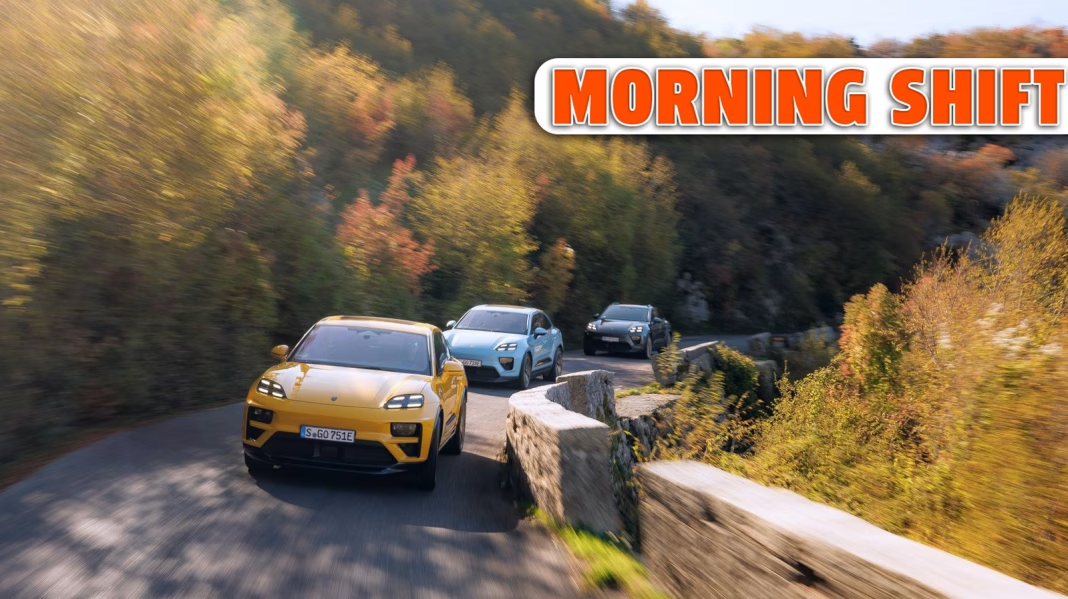
Why Is Porsche Slowing Down Its Electric Vehicle Plans?
If you’ve been following the auto industry’s electric revolution, you might be surprised to hear that Porsche is tapping the brakes on its all-electric ambitions. Not long ago, the German automaker seemed all-in on EVs, riding high on the success of the Taycan and promising a future filled with battery-powered sports cars. So, what changed?
The answer comes down to a mix of market realities and Porsche’s relentless focus on what its drivers actually want. Recent data from the European Automobile Manufacturers Association shows that while EV sales are growing, the pace has cooled off in key markets like Germany and the US. Range anxiety, charging infrastructure gaps, and the high price of batteries are still major hurdles. Porsche’s core customers—many of whom crave the visceral thrill of a flat-six engine—aren’t quite ready to trade in their gas pedals for silent acceleration just yet.
Instead of pushing forward with a full EV lineup, Porsche is doubling down on hybrids. The company’s CEO, Oliver Blume, recently told investors that plug-in hybrids and performance hybrids are now the main focus. Why? Because these models offer the best of both worlds: electric driving for daily commutes, and the unmistakable Porsche roar for weekend getaways. It’s a classic case of meeting your audience where they are, not where you wish they’d be.
How Is Stellantis Using Battery Tech to Speed Up Its Electric Shift?
While Porsche is taking a more cautious approach, Stellantis—the parent company behind brands like Jeep, Dodge, and Peugeot—is betting big on new battery technology to turbocharge its EV transition. The company credits recent advances in lithium iron phosphate (LFP) batteries for making electric cars cheaper, safer, and more accessible.
Here’s why that matters. LFP batteries don’t rely on expensive metals like cobalt or nickel, which means lower costs and fewer supply chain headaches. They’re also less prone to overheating, which addresses some of the safety concerns that have dogged early EVs. According to Stellantis CTO Ned Curic, these improvements could shave years off the company’s timeline for going all-electric.
And there’s more. Stellantis is investing heavily in solid-state battery research, aiming for even faster charging and longer range. If these bets pay off, the company could leapfrog rivals who are stuck waiting for the next big breakthrough. It’s a bold move, but one that fits Stellantis’ reputation for shaking up the status quo.
What Do These Shifts Mean for Everyday Drivers?
If you’re in the market for a new car, all this back-and-forth might feel a little dizzying. Should you hold out for a pure EV, or is a hybrid the smarter play right now? The answer depends on your needs, your budget, and your appetite for new tech.
Hybrids are a great bridge for drivers who want to dip a toe into electrification without giving up the convenience of gas. They’re especially appealing if you live in an area with spotty charging infrastructure. On the other hand, if you’re ready to go all-in on electric and want to future-proof your purchase, keep an eye on brands like Stellantis. Their next wave of EVs could be more affordable and practical than anything we’ve seen so far.
One thing’s for sure: automakers are listening to their customers and adapting on the fly. That means more choices—and better technology—are on the horizon.
What’s the Real Story Behind These Strategic Pivots?
It’s tempting to see Porsche’s pivot as a retreat and Stellantis’ battery push as a gamble. But dig a little deeper, and you’ll find a more nuanced picture. Porsche isn’t abandoning electrification; it’s just taking a detour that plays to its strengths. The company knows its audience and is betting that hybrids will keep loyalists happy while keeping regulators at bay.
Stellantis, meanwhile, is leveraging its global scale to drive down costs and accelerate innovation. By investing in next-gen batteries, the company is positioning itself to win over mainstream buyers who have been sitting on the EV sidelines.
Both strategies reflect a broader truth: the road to electrification isn’t a straight line. It’s a winding path, full of unexpected turns and recalculations. Automakers who can adapt quickly—and aren’t afraid to change course—are the ones most likely to come out ahead.
What Should You Watch for Next?
Keep an eye on hybrid sales numbers, especially in Europe and North America. If Porsche’s bet pays off, you’ll see more performance hybrids hitting the road—and maybe even a shift in how other luxury brands approach electrification. On the tech side, watch for announcements from Stellantis about solid-state battery milestones. If they can deliver on their promises, it could mark a tipping point for affordable, long-range EVs.
The big takeaway? The EV transition isn’t about perfection—it’s about smarter adjustments. Start with one change this week, and you’ll likely spot the difference by month’s end.