What Drives the Strategic Shift from Campus to Urban Robot Delivery?
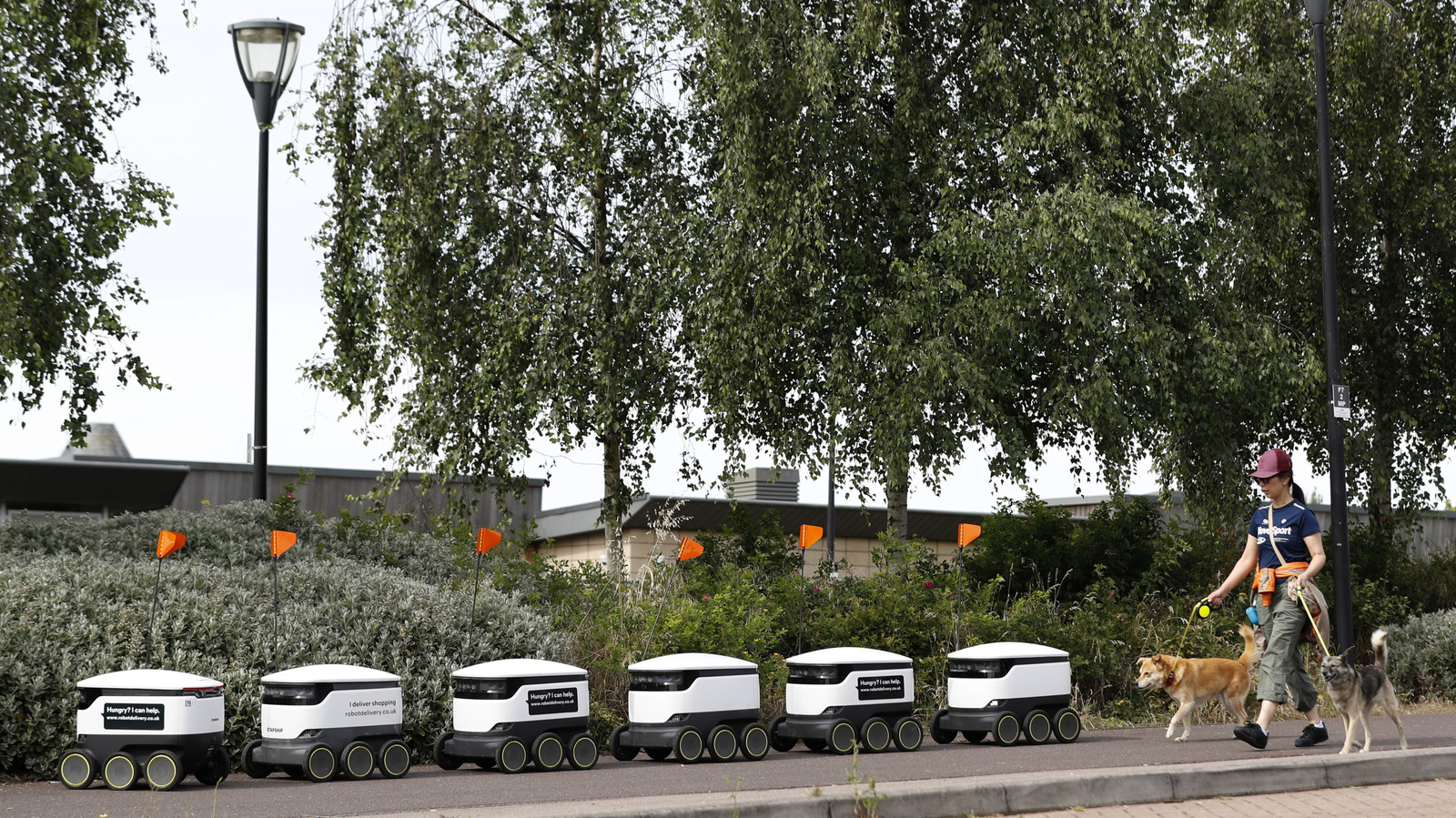
The redeployment of Starship Technologies’ 1,200-robot fleet from more than 60 college campuses to urban environments signals a recalibration of both ambition and operational logic. At first glance, this pivot might appear to be a straightforward response to market demand or logistical friction within the campus sector. However, the underlying mechanism is more nuanced: the evidence suggests that the controlled, semi-private nature of campuses—once thought ideal for autonomous delivery pilots—has proven less scalable or lucrative than anticipated. The core argument at stake is not merely about where robots can operate, but about the evolving interplay between technological promise, regulatory tolerance, and the economic realities of last-mile logistics.
Why Do Urban Deployments Present Both Opportunity and Risk?
Urban settings offer a tantalizing expansion of addressable market and operational complexity. Cities, with their density and diversity of delivery endpoints, present a theoretically larger and more varied customer base. Yet this opportunity is double-edged. The practical significance of redeploying robots into cities lies in the exposure to infrastructural unpredictability: variable sidewalk quality, unpredictable pedestrian flows, and a patchwork of municipal regulations. Methodologically, the success metrics for campus pilots—delivery speed, safety incidents, user satisfaction—may not translate cleanly to urban contexts. The evidence from early urban pilots is mixed; while some cities report improved delivery efficiency, others encounter heightened public resistance and regulatory scrutiny. The mainstream narrative of seamless technological scaling thus appears incomplete, if not fundamentally flawed.
Who Gains and Who Loses in This Transition?
The immediate beneficiaries of this strategic shift are not necessarily the end-users, but rather the stakeholders positioned to monetize urban delivery data and logistics contracts. City governments, for instance, may leverage pilot programs to signal innovation, but the distributive effects on local businesses and pedestrians remain ambiguous. Under specific conditions, small retailers could see marginal gains from more efficient delivery, yet the broader labor market—particularly gig economy couriers—faces potential displacement. Less obvious, but equally significant, are the implications for urban accessibility: populations with mobility challenges may experience either improved access or increased sidewalk congestion, depending on implementation specifics. The evidence on these secondary effects is thin, and the debate remains unresolved.
What Structural Limitations and Blind Spots Persist?
A critical blind spot in the prevailing discourse is the assumption that technological adaptation is primarily a matter of scale and iteration. In reality, the structural limitations are deeply embedded: fragmented regulatory frameworks, uneven public infrastructure, and the persistent challenge of human-robot interaction in dense environments. Vested interests—ranging from incumbent delivery firms to municipal unions—further complicate the landscape, often shaping policy outcomes in ways that are opaque to the public. The redeployment of robots to cities, therefore, is not simply a technical or commercial maneuver, but a contest over the governance of public space and the allocation of urban risk.
What Should an Informed Reader Infer or Do?
For the analytically minded observer, the salient takeaway is not to accept the inevitability of urban robot delivery, but to interrogate the conditions under which such systems are deployed and to whom the benefits accrue. The evidence suggests that the transition from campus to city is less a triumph of innovation than a recalibration in the face of unanticipated constraints. Vigilance is warranted: policymakers, urban planners, and citizens alike should demand transparency regarding operational data, insist on rigorous public consultation, and remain alert to the second-order consequences—intended or otherwise—of automating the urban last mile.