
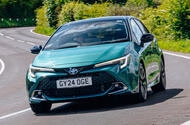
Is the Toyota Corolla Still a Top Choice for British Families?
If you’ve ever glanced around a UK car park, you’ve probably spotted a Toyota Corolla or two. Maybe more. There’s a reason for that: this hatchback has been a staple on British roads for decades. But with the latest updates and a fiercely competitive field—including the Volkswagen Golf, Vauxhall Astra, Mazda 3, and even the Mercedes A-Class—does the Corolla still deserve a spot on your shortlist? Let’s dig in.
What’s Changed in the Latest Toyota Corolla?
Toyota isn’t one to rest on its laurels. The Corolla’s 2023 facelift brought a handful of smart tweaks, but the 2025 model takes things a step further—especially under the bonnet. The big news? A revised hybrid system that actually lowers the power output of the 2.0-litre engine. That might sound counterintuitive, but Toyota’s aiming for better efficiency and smoother driving, not just raw numbers.
Why Did Toyota Bring Back the Corolla Name?
Let’s be honest: the Corolla name once had a reputation for being, well, a bit dull. Back in 2008, Toyota swapped it out for the Auris, but that didn’t exactly set hearts racing either. Fast forward to 2019, and the Corolla badge made a comeback—this time with a sharper design and a promise from Toyota’s chairman, Akio Toyoda: “no more boring cars.” The result? A hatchback that’s anything but bland, with crisp lines and a genuinely handsome profile that stands out in a sea of SUVs.
How Does the Corolla’s Hybrid System Stack Up?
Hybrid tech is where Toyota really flexes its muscles. The latest Corolla uses a self-charging hybrid setup—no plugging in required. The updated 2.0-litre hybrid may have a bit less punch on paper, but it’s more efficient than ever. According to Toyota, you can expect fuel economy figures in the region of 60 mpg (WLTP cycle), which is impressive for a family hatchback. Real-world reports from UK drivers suggest that mid-50s mpg is easily achievable, even with mixed driving.
And it’s not just about saving at the pump. The hybrid system is smooth, quiet, and makes city driving a breeze. There’s a certain satisfaction in gliding through traffic on electric power alone, even if it’s just for short bursts.
Is the Corolla Fun to Drive, or Just Practical?
Here’s where Toyota’s recent efforts really show. The 12th-generation Corolla is built on the brand’s TNGA platform, which gives it a low centre of gravity and a surprisingly agile feel. Steering is precise, body roll is well controlled, and the ride strikes a nice balance between comfort and composure. It’s not a hot hatch, but it’s far from boring.
If you’re coming from an older Corolla (or an Auris), you’ll notice the difference immediately. The car feels lighter on its feet, and there’s a genuine sense of connection to the road—something you don’t always get in this segment.
How Does the Corolla Compare to the Volkswagen Golf and Other Rivals?
The family hatchback class is packed with strong contenders. The Volkswagen Golf is the perennial benchmark, known for its premium feel and tech-laden interior. The Mazda 3 brings style and driver engagement, while the Vauxhall Astra is a solid all-rounder.
Where the Corolla shines is in its reliability and running costs. Toyota consistently ranks near the top in owner satisfaction surveys. According to the latest What Car? Reliability Survey, Toyota was the highest-ranked mainstream brand in the UK, with the Corolla earning particular praise for its trouble-free ownership.
The hybrid powertrain also gives the Corolla a real-world advantage. While rivals like the Golf offer plug-in hybrid options, they come at a premium and require regular charging to deliver their best economy. The Corolla’s self-charging setup is simpler and suits the stop-start nature of British driving.
What’s the Interior Like for Everyday Life?
Step inside the Corolla and you’ll find a cabin that’s both modern and user-friendly. The dashboard is clean, materials feel solid, and the latest infotainment system is a big step up from older Toyotas. Apple CarPlay and Android Auto are standard, and there’s a suite of driver assistance features—think adaptive cruise control, lane-keeping assist, and a handy reversing camera.
Space-wise, the Corolla is competitive. There’s enough room in the back for adults on shorter trips, and the boot is a decent size for a hatchback (361 litres with the seats up). It’s not class-leading, but it’s practical enough for most family needs.
Is the Corolla a Good Value for Money?
Pricing for the Corolla is in line with its main rivals, but the real value comes in the long run. Toyota’s hybrids tend to hold their value well, and the brand’s five-year warranty (with the option to extend up to ten years with regular servicing) adds peace of mind. Insurance and maintenance costs are typically lower than average, thanks to Toyota’s reputation for durability.
Should You Put the Toyota Corolla on Your Shortlist?
If you’re after a family hatchback that’s easy to live with, cheap to run, and refreshingly un-boring to drive, the Toyota Corolla deserves a serious look. It’s not the flashiest or the most powerful option out there, but it nails the basics—reliability, efficiency, and comfort—while adding a dash of style that’s hard to ignore.
In a market crowded with choices, the Corolla stands out for all the right reasons. Whether you’re a long-time fan or just looking for a hassle-free daily driver, this British-built hybrid hatchback is proof that practical doesn’t have to mean dull. Give it a test drive—you might be surprised by how much you enjoy it.