
How Will the New UK EV Grants Actually Work for Everyday Buyers?
If you’ve been eyeing an electric car but balked at the price tag, there’s good news on the horizon. The UK government is rolling out a fresh round of grants aimed squarely at retail buyers—meaning regular folks, not just big fleet operators. Unlike the previous Plug-in Car Grant, which ended in 2022 and offered a flat £1,500 off, this new scheme introduces a tiered system. What does that mean for you? The amount you get off the sticker price will depend on the car you choose, with the most generous subsidies reserved for vehicles built right here in the UK.
This approach is designed to make EVs more accessible to a wider range of buyers, not just those with deep pockets. It also nudges buyers toward supporting British manufacturing, with models like the Nissan Leaf and the upcoming Juke EV—both produced in Sunderland—likely to be top picks for the highest grants. If you’re considering a luxury EV, though, don’t get your hopes up: the grants will only apply to cars below a certain price threshold, keeping the focus on affordability.
Why Is the Government Bringing Back EV Grants Now?
The timing isn’t random. The UK’s Zero Emissions Vehicle (ZEV) mandate is putting pressure on automakers to ensure that at least 28% of their new car sales are fully electric this year, or face hefty fines of £12,000 per non-compliant vehicle. So far, just under 25% of new cars sold in 2024 are electric, and much of that is thanks to fleet sales—companies and organizations that already benefit from tax incentives. Retail buyers, on the other hand, have been slower to make the switch, often citing high upfront costs and concerns about charging infrastructure.
By targeting retail customers with these new grants, the government hopes to close the gap and help automakers hit their targets. It’s a move that’s been welcomed by industry leaders, who see it as a necessary step to keep the UK competitive in the global EV race.
What’s the Deal with Charging Infrastructure?
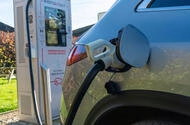
Let’s face it: range anxiety is still a thing. Even if you’re sold on the idea of an EV, the thought of running out of juice far from a charger can be a dealbreaker. That’s why the government is also allocating an extra £60 million to expand the public charging network. The goal isn’t just to add more chargers, but to make them more reliable and conveniently located, so you can travel with confidence.
Transport Secretary Heidi Alexander put it bluntly: it’s time to move from range anxiety to range awareness. In other words, the focus is shifting to making sure drivers know they can get where they need to go—without the stress.
How Will This Impact UK Car Manufacturing and Jobs?
There’s a bigger picture here, too. Alongside the grants for buyers, the government is investing £2.5 billion through the Drive35 fund to support the transition to zero-emission vehicle manufacturing. This isn’t just about building more cars; it’s about creating jobs, upskilling workers, and keeping the UK at the forefront of automotive innovation.
Business and Trade Secretary Jonathan Reynolds has been clear that economic growth is the top priority. By backing the auto sector, the government hopes to attract more investment, boost job opportunities, and ensure that the UK remains a leader in the EV space. Industry voices, like Mike Hawes from the Society of Motor Manufacturers and Traders, have praised the move as a sign of the sector’s importance to the broader economy.
Are There Any Downsides or Concerns?
No policy is perfect, and there are a few wrinkles to iron out. For one, the tiered grant system could create confusion for buyers trying to figure out exactly how much they’ll save. There’s also the question of whether the grants will be enough to tip the scales for those still on the fence, especially as EV prices remain higher than their petrol or diesel counterparts.
Some industry insiders worry that focusing grants on UK-made vehicles could limit choice, at least in the short term. And while the boost to charging infrastructure is welcome, it’ll take time for new chargers to appear in every corner of the country.
What Should You Do If You’re Considering an EV?
If you’ve been waiting for the right moment to make the switch, this could be it. Keep an eye out for the official announcement and details on which models qualify for the highest grants. If you’re interested in a UK-built EV, you might find yourself at the front of the line for savings. And don’t forget to factor in the expanding charging network—planning your routes is about to get a lot easier.
The big takeaway? Making the leap to an electric vehicle isn’t about perfection—it’s about smarter adjustments. Start with one change this week, and you’ll likely spot the difference by month’s end.