
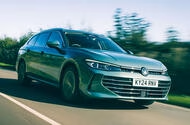
Why Has the Volkswagen Passat Gone Estate-Only, and Does It Still Make Sense?
If you’ve been keeping an eye on family cars lately, you might have noticed something interesting: the Volkswagen Passat, once available as both a saloon and an estate, is now strictly an estate. At first glance, this might seem like a bold move—after all, aren’t SUVs all the rage? But dig a little deeper, and it starts to make perfect sense, especially for drivers in Europe.
Estate cars have always had a loyal following here. They offer that sweet spot between practicality and style, giving families the space they need without the bulk of a full-size SUV. The Passat, in particular, has been a staple on European roads for decades, even predating the iconic Golf by a year. So, when Volkswagen decided to double down on the estate format for the ninth generation, it was less a gamble and more a nod to what buyers actually want.
What’s Changed in the Latest Passat?
This isn’t just a simple facelift. The ninth-generation Passat has a fresh origin story—it was developed in tandem with the new Skoda Superb, with Skoda actually leading the project. That’s a twist, considering Volkswagen’s usual role as the big sibling in the group. But it’s not unprecedented; previous Passats have borrowed architecture from other Volkswagen Group models, like the Audi A4.
So, what does this mean for the car itself? For starters, you’re getting a vehicle that benefits from shared expertise and economies of scale. The Superb, for example, scored a full five stars in recent road tests (in diesel form), which bodes well for the Passat’s underpinnings. The collaboration has allowed both brands to refine their offerings, focusing on what matters most to drivers: comfort, space, and efficiency.
How Does the Passat Stack Up Against Its Rivals?
Let’s be honest—this isn’t a one-horse race. The Passat faces stiff competition from the likes of the BMW 5 Series Touring, Mercedes-Benz E-Class Estate, Audi A5 Avant, and even the recently reintroduced Volvo V60 and V90. Each brings its own flavor to the table, but the Passat’s appeal lies in its blend of understated style, practicality, and value.
Where the Passat really shines is in its versatility. With a choice of petrol and plug-in hybrid powertrains, it caters to a wide range of needs. The plug-in hybrid, in particular, is a smart move—offering lower running costs and a cleaner conscience for those not quite ready to go fully electric. According to recent data from the European Automobile Manufacturers’ Association, plug-in hybrids are gaining traction, accounting for nearly 10% of new car sales in Europe in 2023. Volkswagen’s decision to offer this option puts the Passat right in the sweet spot for eco-conscious families.
Is the Estate Car Still Relevant in an SUV World?
It’s a fair question. SUVs have dominated headlines and sales charts for years, but estate cars aren’t going quietly. In fact, they’re enjoying something of a renaissance, especially among drivers who value a lower center of gravity, better fuel efficiency, and a more car-like driving experience. Estates like the Passat offer generous cargo space without the top-heavy feel of an SUV, making them a favorite for long road trips and daily commutes alike.
There’s also a certain timelessness to the estate format. It’s practical without being flashy, spacious without being unwieldy. For families who need room for bikes, luggage, or the occasional flat-pack furniture run, it just works.
What’s the Real-World Experience Like?
Here’s where things get personal. Owners of previous Passat estates often talk about the car’s reliability and comfort—two qualities that matter when you’re hauling kids, pets, or a week’s worth of groceries. The new model builds on that legacy, with improved ride quality, more advanced tech, and a cabin that feels a notch above its price point.
Take the plug-in hybrid version, for instance. It offers enough electric-only range for most daily commutes, with the petrol engine stepping in for longer journeys. That flexibility is a game-changer for families who want to reduce their carbon footprint without sacrificing convenience.
What’s the Takeaway for Buyers?
If you’re in the market for a family car that balances practicality, comfort, and a touch of understated style, the new Volkswagen Passat estate deserves a spot on your shortlist. It’s proof that the estate car isn’t just surviving—it’s thriving, quietly adapting to the needs of modern drivers.
The Passat’s move to estate-only might seem bold, but it’s really just Volkswagen listening to its core audience. And with a choice of efficient powertrains, a spacious interior, and a legacy of dependability, it’s hard to argue with their logic. For families who want a car that fits seamlessly into everyday life, the Passat estate is still one of the smartest picks on the road.