
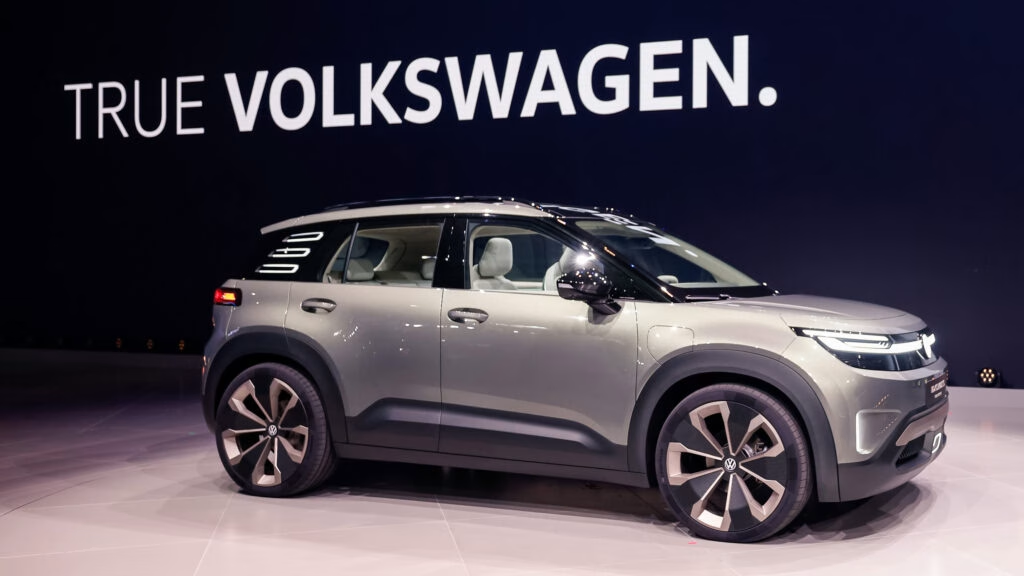
Why Is Volkswagen Bringing Back Classic Names for Its New EVs?
Volkswagen’s latest move might feel like déjà vu for longtime fans: the return of iconic names like Polo and Golf, now reimagined for the electric era. But there’s more to this than nostalgia. The company is doubling down on its roots, betting that the values that made it a household name—reliability, smart design, and value—are exactly what buyers want as the car market shifts to electric.
At the recent Munich Motor Show, VW made it clear: the new generation of “true Volkswagens” isn’t just about fresh badges. Models like the ID. Polo, ID. Cross, and the upcoming ID. Every1 (possibly called ID. Up) are designed to bridge the gap between the brand’s internal combustion engine (ICE) legacy and its electric future. The plan? Use familiar names to make the leap to EVs feel less intimidating and more like coming home.
How Is Volkswagen Responding to Competition From Chinese EV Makers?
Let’s not sugarcoat it—Chinese automakers are shaking up Europe’s EV market. They’re fast, innovative, and often undercut established brands on price. VW’s answer is to sharpen its focus on what it does best, while pushing the envelope on tech and quality.
Thomas Schäfer, VW’s brand CEO, put it bluntly: the goal is to become the leading high-volume manufacturer for pioneering technology by 2030. That’s not just talk. The new EV lineup will feature improved software, better battery tech, and a price-performance ratio that aims to outshine rivals. Oliver Blume, VW Group CEO, told CNBC that competition is healthy—it keeps VW on its toes and drives innovation. He’s confident that the company’s 28 percent market share in electrified vehicles can grow, especially with these new models.
What’s Changing in Volkswagen’s Design and Technology Approach?
VW isn’t just slapping old names on new cars. The company is rethinking design from the ground up. Expect cleaner lines, more intuitive interiors, and a focus on quality materials—think less plastic, more substance. The facelifted T-Roc and the new Tayron SUV, both showcased in Munich, hint at this new direction: EV-inspired looks, hybrid tech, and a clear nod to the brand’s heritage.
On the tech front, VW is investing heavily in software and battery improvements. The aim is to make its EVs not only more affordable but also more reliable and easier to live with. This is a direct response to customer feedback and a clear attempt to avoid some of the teething issues that have plagued early electric models across the industry.
Will These Changes Affect Volkswagen’s Gasoline and Hybrid Models?
Absolutely. VW’s new philosophy isn’t limited to its electric range. The same commitment to design, quality, and value is being baked into its gasoline and hybrid offerings. The T-Roc’s recent update, for example, features EV-inspired design cues and the latest hybrid tech, showing that the brand’s evolution is holistic, not just a marketing exercise for EVs.
This approach is smart. Many buyers aren’t ready to go fully electric just yet, but they still want the benefits of modern tech and improved efficiency. By applying its new standards across the lineup, VW is making sure no customer feels left behind.
How Does Volkswagen’s Strategy Stack Up Against Industry Trends?
Volkswagen’s pivot mirrors a broader shift in the auto industry. Legacy brands are under pressure from upstart EV makers—especially those from China, who are gaining ground in Europe with aggressive pricing and rapid innovation. According to the European Automobile Manufacturers’ Association, Chinese brands accounted for nearly 8% of Europe’s EV sales in 2023, up from just 4% two years earlier. That’s a wake-up call.
VW’s response—leaning into its heritage while pushing forward on tech and quality—could be a blueprint for other established automakers. By making EVs more approachable and keeping prices competitive, the company is betting it can hold onto its loyal customer base while attracting new buyers.
What Should Buyers Expect From the Next Wave of Volkswagens?
If you’re in the market for a new car, expect to see more familiar names with a modern twist. The ID. Polo and ID. Cross will likely offer the practicality and value VW is known for, but with the added benefits of electric power—quieter rides, lower running costs, and fewer emissions. The upcoming ID. Every1 aims to be an affordable, city-friendly EV, while the eventual ID. Golf promises to bring the legendary hatchback into the electric age.
VW’s renewed focus on quality and design means interiors should feel more premium, tech will be more user-friendly, and pricing will stay competitive. In short, the company wants to make the switch to electric as painless—and appealing—as possible.
The big takeaway? Volkswagen’s reinvention isn’t about perfection—it’s about smarter adjustments. Start with one change this week, and you’ll likely spot the difference by month’s end.