
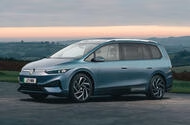
Volkswagen is on the brink of a significant shift in its lineup, with plans to introduce an electric compact MPV that could replace the beloved Touran. This move comes as the automotive landscape evolves, with family-oriented vehicles increasingly vying for attention against the ever-popular SUV segment. So, what does this mean for families looking for practical, eco-friendly transportation?
The New Electric MPV: What’s the Vision?
Volkswagen’s new electric MPV is currently under internal review, with the company drawing inspiration from past concepts like the 2016 Budd-e. This model, which was based on an early version of Volkswagen’s Modular Electric Drive Matrix (MEB) platform, serves as a foundation for the brand’s future electric vehicles. By revisiting these earlier designs, Volkswagen aims to create a vehicle that not only meets modern demands but also taps into the nostalgia of its iconic Microbus lineage.
The potential new MPV is expected to fit snugly between the Golf and the ID Buzz, offering a smaller, lighter, and more affordable alternative for families. Imagine a modern-day Microbus, designed with practicality in mind—this could be a game-changer for those who need space without the bulk of an SUV.
Design and Features: What Can We Expect?
While the exact design remains under wraps, we can anticipate a few key features based on Volkswagen’s recent concepts and models. An upright silhouette, short overhangs, and a high roofline are likely to be part of the design, maximizing interior space and versatility. This is particularly appealing for families and even commercial users, like taxi fleets, who prioritize functionality.
The Budd-e concept measured around 4,597 mm in length, which is slightly longer than the second-generation Touran but shorter than the standard-wheelbase ID Buzz. This size could strike the perfect balance between spaciousness and maneuverability, making it ideal for urban environments.
Innovative Seating and Accessibility
One of the standout features being developed is the introduction of sliding doors and flexible seating arrangements. This modern touch aims to enhance accessibility and usability, catering to families with children or those who frequently transport passengers. The new MPV is expected to compete with emerging electric models, particularly from China, which have been gaining traction for their innovative designs and practical features.
Aiming for the Family Market
Unlike the ID Buzz, which targets a more premium lifestyle demographic, this new MPV is designed with families in mind. It promises to be a “no-nonsense, high-utility electric vehicle” that prioritizes day-to-day usability. The inclusion of sliding rear doors is a thoughtful nod to the challenges families face when loading and unloading passengers or cargo.
The Touran Legacy: A Model of Success
Launched in 2003, the Touran has been a staple in Volkswagen’s lineup, selling over 2.6 million units globally. Despite the growing popularity of SUVs, the Touran has maintained its status as one of the most successful European models in its class. This legacy adds pressure on Volkswagen to deliver a worthy successor that can meet the expectations of loyal customers while attracting new buyers.
What’s Next for Volkswagen’s Electric MPV?
While no production decision has been finalized, the new MPV is anticipated to utilize an advanced version of Volkswagen’s MEB+ platform or the upcoming SSP platform. This could offer a range of battery options between 60–80 kWh, along with choices for single-motor front-wheel drive or dual-motor all-wheel drive configurations.
If all goes according to plan, we could see this new MPV hit the market by 2027 or 2028, potentially reviving the Touran nameplate in a fresh, electric form. This aligns with Volkswagen’s strategy to reintroduce traditional names for future EVs, moving away from the current ID nomenclature.
The big takeaway? Volkswagen’s electric MPV isn’t just about replacing the Touran; it’s about redefining what family vehicles can be in an electric future. Keep an eye on this project, as it could very well reshape the landscape for family cars in the coming years. Start thinking about what features matter most to you, and you might just find that the next generation of family vehicles is right around the corner.