Over the past two years, each time I have returned to the United States after visiting family and colleagues in Pakistan, I have been struck by a deepening sense of hopelessness. It is impossible not to notice that many roads still bear the same potholes they did when I was a child, and that some public hospitals are now in worse condition than New York City subways—hallways reeking of urine and neglect. This decay has become normalized, no longer treated as a temporary failure, but as a permanent condition of civilian life.
On one such flight back, I listened to Fatal Invention by Dorothy Roberts, where she argues that race was historically constructed not to describe biological difference, but to justify hierarchy and domination. That argument clarified something I had long sensed in Pakistan: askari privilege functions as a system of hierarchy in much the same way—not biologically, but politically and socially—designed to preserve power rather than serve the public.
Unlike in many societies where privilege hides behind euphemisms or institutional neutrality, military privilege in Pakistan was never subtle. Cantonment areas were always clearly marked, fenced, and guarded. While initially justified in the name of national security, these spaces were never merely symbolic; they were physical manifestations of a hierarchy that elevated military personnel above civilian society, not accountable to it.
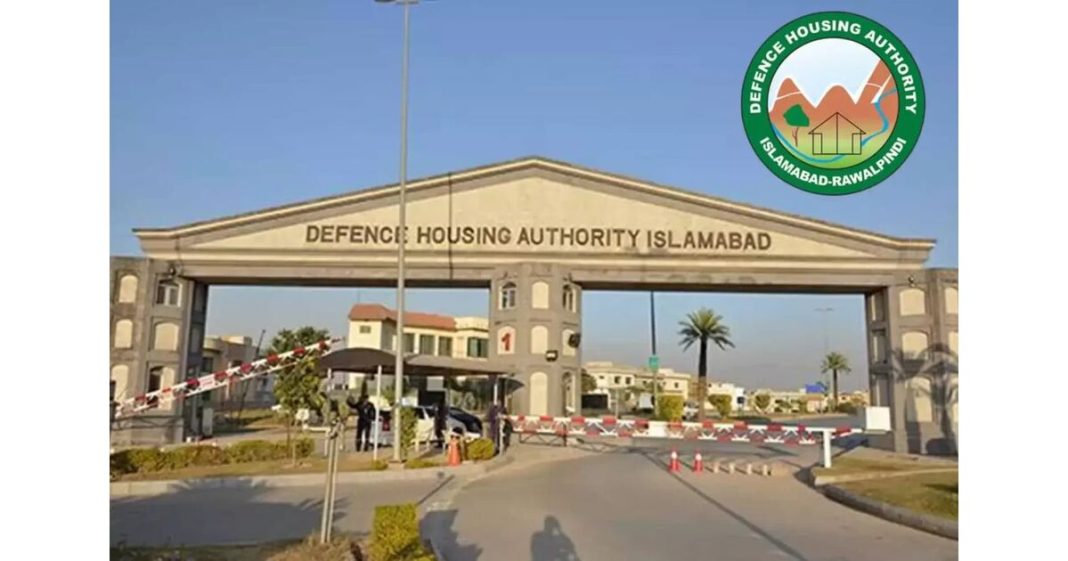
For decades, military-run parks, neighborhoods, schools, and hospitals have remained clean, orderly, and well-maintained while surrounding civilian infrastructure crumbled. Access to many of these facilities required validation by a serving or retired officer. I still remember asking a retired military colonel neighbor to sign off so I could go for a walk in the Polo Ground in Lahore Cantt because that was the place where everyone wanted to go for a walk. Today, this separation has expanded far beyond cantonments, with DHA developments now dominating nearly every major city as the most prestigious, secure, and resource-rich neighborhoods.
The scale of this imbalance is not anecdotal; it is structural. According to estimates cited by Ayesha Siddiqa and subsequent analysts, Pakistan’s military-run commercial empire, often referred to as “milbus”, controls assets worth tens of billions of dollars, spanning real estate, banking, agriculture, manufacturing, and services, much of it operating outside civilian oversight or parliamentary audit. Military foundations such as the Fauji Foundation, Army Welfare Trust, and Bahria Foundation collectively dominate prime urban land and housing markets, while defense allocations consistently consume the single largest share of the federal budget, even as public spending on health and education remains among the lowest in South Asia as a percentage of GDP. Pakistan’s repeated IMF bailouts signal deep fiscal stress, mounting debt, and unresolved structural flaws in the economy. Yet rising defense spending and opaque military budgets undermine reform efforts. The result is a state where elite enclaves flourish while civilian infrastructure decays, and where resource allocation reflects institutional power rather than public need. To maintain its dominance, the military must continuously reward loyalty through land allotments, housing schemes, business opportunities, and post-retirement placements, regardless of rank. The result is visible in everyday life: a 45- to 50-year-old retired officer, often with only an undergraduate education, frequently accumulates far greater assets than an ordinary Pakistani who has worked for decades outside the military system. Plot allotments in elite neighborhoods alone have generated enormous generational wealth—an area that still awaits serious academic scrutiny.
Read more: Zionism vs Global South: The New World War
The damage extends far beyond material inequality. Military privilege in Pakistan has metastasized into a governing logic that reshapes the country’s moral and social fabric. It becomes environmentally embedded—structuring institutions, determining how disputes are resolved, and conditioning how citizens relate to themselves and to one another. Even mundane encounters reveal its reach. While picking up prescriptions for my family, I noticed a pharmacy named “Forces,”—an unremarkable sight that nonetheless captured a deeper truth: power no longer merely rules; it brands, occupies, and normalizes itself in daily life. Over time, this system shapes citizens’ identities and what they are taught to take pride in, deciding whose grievances are heard, whose failures are excused, and whose lives are deemed disposable. What appears subtle in everyday life becomes unmistakable at moments of political reckoning.
The aftermath of Pakistan’s February 2024 elections marked precisely such a reckoning. For the first time, nearly 250 million citizens believed they had peacefully defeated military-backed political dynasties at the ballot box. That belief lasted only a few hours. The outcome was overturned through overt interference, followed by judicial manipulation and constitutional amendments—culminating in the Islamabad Massacre of November 26, 2024, when security forces opened fire on peaceful pro-democracy protesters, killing at least 15–17 people and injuring more than a hundred. The use of live ammunition, enforced disappearances, and the abduction of a journalist documenting the death toll laid bare the regime’s willingness to extinguish dissent by force, drawing international condemnation and urgent calls for accountability. Even for those who remain politically disengaged, the ordinary citizen now has little meaningful recourse for grievances or disputes, deepening a pervasive sense of hopelessness. As economic conditions deteriorate in tandem with political repression, the result has been an unprecedented wave of emigration—hollowing out the country of its talent, labor, and future.
Read more: The Half-Baked Five-Star Office: Why Pakistan’s New CDF Post Is a Constitutional Time Bomb
The military has long instrumentalized religion and religious figures to legitimize its authority, but this practice has hollowed out moral values in far more enduring ways. Under British colonial rule, religious institutions were systematically weakened, regulated, or depoliticized, as moral authority was stripped from indigenous structures and replaced with bureaucratic control. Religion was pushed out of public ethical life and confined largely to seminaries, ritual practice, or identity markers rather than civic accountability. After independence, instead of rebuilding religion as a moral check on power, Pakistan’s military-led state selectively redeployed it as a tool of governance using religious language to sanctify authority while identifying its critics and enemies as enemies of Islam. This history has produced a deeply distorted relationship between faith and power, where religion is invoked to demand obedience rather than justice, conformity rather than compassion, and silence rather than moral courage.
Askari privilege, then, is not merely about exclusive clubs, elite neighborhoods, or access to power. It is about how an entire society is conditioned to accept inequality as fate and coercion as normal. It is about generations growing up with the quiet understanding that the state exists not to protect them, but to rule them—and that survival requires either submission to this system or departure from a country that has steadily abandoned its own people.
At a recent U.S. Senate briefing, Dr. Christine Fair, a professor of security studies at Georgetown University, described Pakistan’s military as a predatory parasite on the country’s politics. I would go further. It has become a predatory parasite on society itself—one that no nation can sustain indefinitely. Systems built on extraction rather than accountability eventually hollow out the very society they dominate. If justice has any meaning, the immense economic and political enterprises of Pakistan’s military will one day pay repressions for the damage they have inflicted—not only on democratic institutions, but on the moral and social fabric of the country itself.
Zoobia W. Chaudhry, MD, is a U.S.-based academic physician and Communications Director at First Pakistan Global, a U.S.-based advocacy organization. Her work focuses on democratic erosion, human rights in Pakistan, and advocacy for Palestinian rights.
The views expressed in this article are solely those of the author and may not necessarily reflect the position or editorial policy of the publication.