The US military wants you to believe that its worst day of air combat losses since the Vietnam War was the result of a “friendly fire” mishap. But do some digging and that story begins to look far-fetched.
Three US F-15E Strike Eagle fighter jets were shot down over Kuwait on Monday morning in what US Central Command (CENTCOM) called “an apparent friendly fire incident.” All six crew members – two per plane – ejected safely and suffered no serious injuries.
The incident made Monday the joint worst day of losses for the US Air Force since the Vietnam War. Only once in the five decades since Vietnam has the USAF lost three fighter jets in a single day: when two F-16s and an F-15 were shot down over Iraq on the second day of Operation Desert Storm in 1991.
Read more: India and Afghanistan have only seen a ‘fraction’ of Pakistan’s military capabilities – Islamabad
CENTCOM claimed that the F-15s “were mistakenly shot down by Kuwaiti air defenses.” While this story may well be true, some inconvenient plot holes suggest that someone else may have been responsible.
The Patriot problem
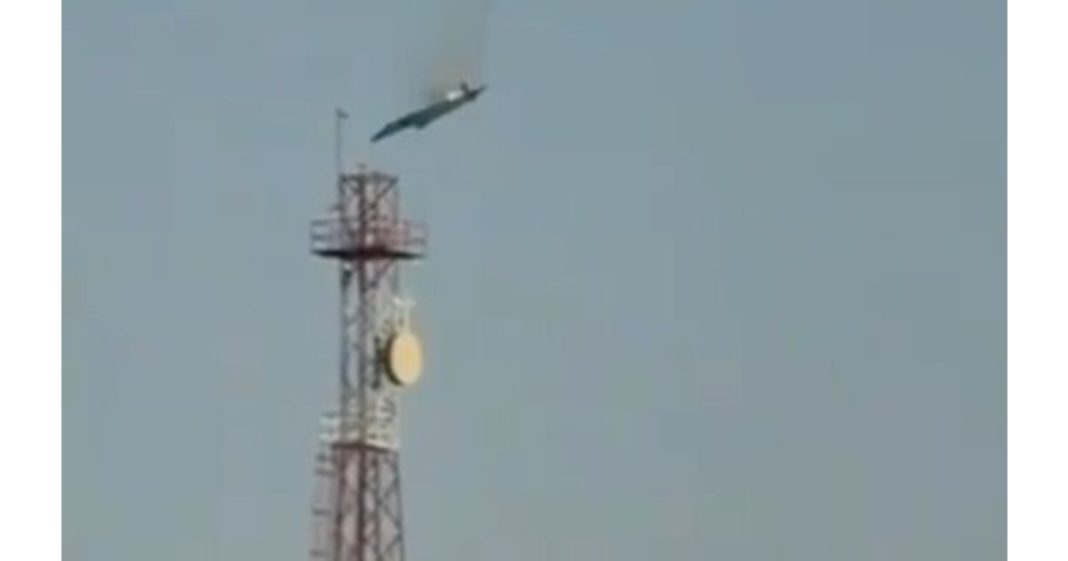
Video footage suggests that the F-15s suffered hits to their engines, indicating that they were taken out by heat-seeking missiles.
However, none of Kuwait’s surface-to-air missiles operate this way. Kuwait has 35 M902 Patriot missile batteries, and a smaller number of HAWK, NASAMS, and Italian-made Spada 2000 systems. Those systems all fire radar-guided, not heat-seeking, missiles.
The Patriot’s PAC-3 missiles physically slam into the center mass of incoming jets or ballistic missiles, while the missiles fired by Kuwait’s other systems detonate a fragmentation warhead in close proximity to incoming threats. Used against jets, they typically detonate between the target’s fuel tanks and cockpit.
The trails typically left behind by PAC-3 and similar missiles were not visible in the sky at the time the F-15s were shot down.
Assuming Kuwait used its most numerous and modern Patriot systems against the F-15s, the fact that all six crew members survived is a statistical anomaly. No pilot, friend or foe, has ever survived a successful Patriot missile interception. Ukrainian fighter pilot Aleksey Mes was killed when his US-supplied F-16 was shot down by a US-supplied PAC-3 missile in 2024, while both the pilot and navigator of a British Tornado reconnaissance jet were killed instantly when a PAC-3 missile hit their aircraft over Iraq in 2003.
Friends and foes
Patriot and other US air defense systems are equipped with IFF (Identification Friend or Foe) technology. IFF transponders on US warplanes broadcast an encrypted signal that ground radars can read, indicating that the aircraft is friendly and preventing the release of weapons against it. It is extremely unlikely that American jets would have been operating over Kuwait without an IFF connection with Kuwaiti air defense, although such mistakes have happened before: the deaths of Aleksey Mes in 2024 and the British crew in 2003 were blamed on failure by air and ground crews to share IFF codes before missions.