The United Arab Emirates has sold itself to foreigners for years as a sunny, safe, tax-free oasis.
That peaceful image was shattered Saturday as Iranian weaponry rained down on Dubai, setting fire to a five-star resort, threatening the world’s tallest building, and killing one person and injuring seven others at the airport in the capital city of Abu Dhabi.
🚨 BREAKING:
Amazon data center has been BOMBED in UAE.
This was a key infrastructure used by Israel. pic.twitter.com/nLdsQek3bw
— Jvnior (@Jvnior) March 2, 2026
Iran has hit the UAE and several of its neighbors as it strikes back from the major attack by U.S. and Israeli forces, causing fear and chaos in a place that until Saturday was predictably calm.
“This is Dubai’s ultimate nightmare, as its very essence depended on being a safe oasis in a troubled region,” Cinzia Bianco, an expert on the Persian Gulf at the European Council on Foreign Relations wrote on X. “There might be a way to be resilient, but there is no going back.”
🚨🇦🇪 BREAKING: UAE economic losses exceed $5 billion in past 48 hours.
— Jackson Hinkle 🇺🇸 (@jacksonhinklle) March 2, 2026
Officials tried to reassure residents and visitors that the country’s air defense system was among the best in the world, blasting down drones and missiles.
“I know it’s a scary time for a lot of the residents,” Reem Al Hashimy, minister of state for international cooperation, told CNN. “We don’t hear these types of loud sounds. But at the same time, those are sounds of interception. And where there has been damage — that has been primarily debris.”
Fallout from the attacks has undermined the Emirates’ efforts to de-escalate tensions with Iran despite longtime suspicions of its neighbor across the Gulf. The UAE closed its airspace Saturday, shuttered its embassy in Tehran on Sunday, and withdrew its diplomats because of the attacks.
Explosions reported in Ras Al Khaimah in the United Arab Emirates, located 60 minutes away from Dubai.pic.twitter.com/wtrkGNC5vt
— Jackson Hinkle 🇺🇸 (@jacksonhinklle) March 2, 2026
The oil-rich federation of seven sheikhdoms has relied on its image as a place of serenity to lure wealthy tourists, businesspeople and future residents who want to live largely tax-free in luxury in the desert by the sea. Nearly 90% of the estimated 11 million residents are foreigners.
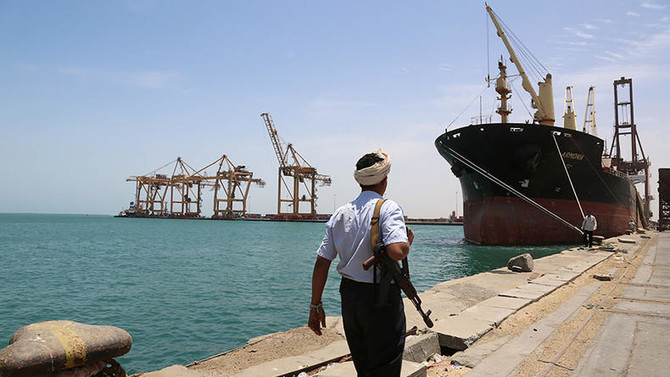
JUST IN: Zayed Port, Abu Dhabi’s economic lifeline. pic.twitter.com/ldaXTmzRWK
— Sulaiman Ahmed (@ShaykhSulaiman) March 1, 2026
Real estate firms sell glimmering high-rises and poolside villas to rich Europeans and Americans by promoting a welcoming climate and business-friendly policies, and touting it as one of the safest places on earth.
Hundreds of drone and missile attacks later, though, that reputation has been rocked.
“Last night was pretty surreal,” said British racehorse trainer Jamie Osborne, who was in Dubai for the Emirates Super Saturday. “You’re standing in the paddock watching missiles get shot through the sky.”
The Ministry of Defense said Sunday that air defenses had dealt with 165 ballistic missiles, two cruise missiles and more than 540 Iranian drones over two days.
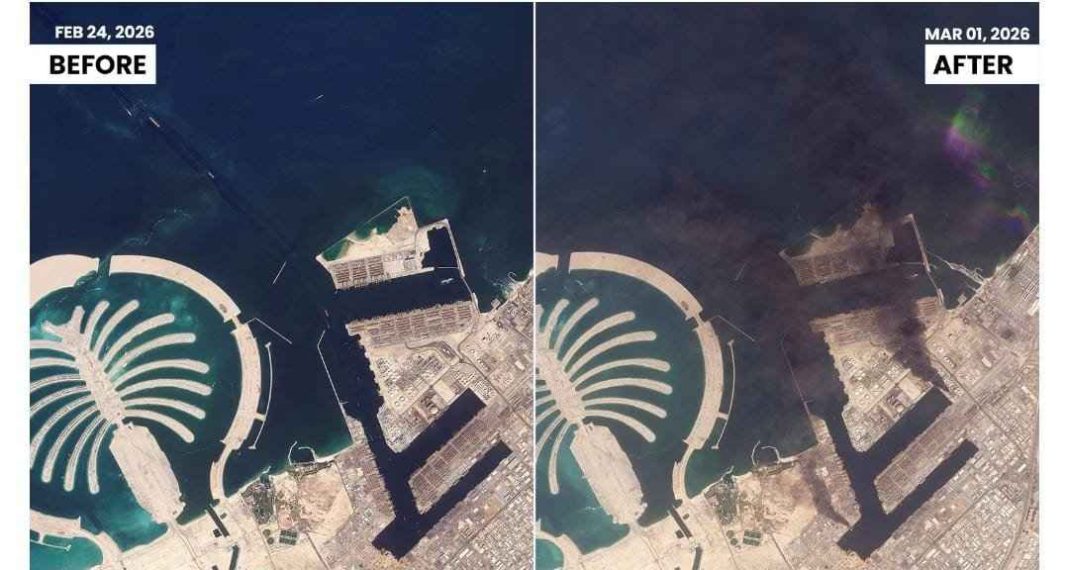
While officials said they intercepted all air attacks Saturday, debris from the knocked-down weapons sparked blazes at some of Dubai’s most iconic locations.
Social media videos and photos showed a fire outside the Fairmont hotel on the prestigious man-made Palm Jumeirah island, flames licked at the facade of the famous Burj Al Arab hotel, and smoke rose into the sky near Burj Khalifa, the 2,723-foot (830-meter) skyscraper.