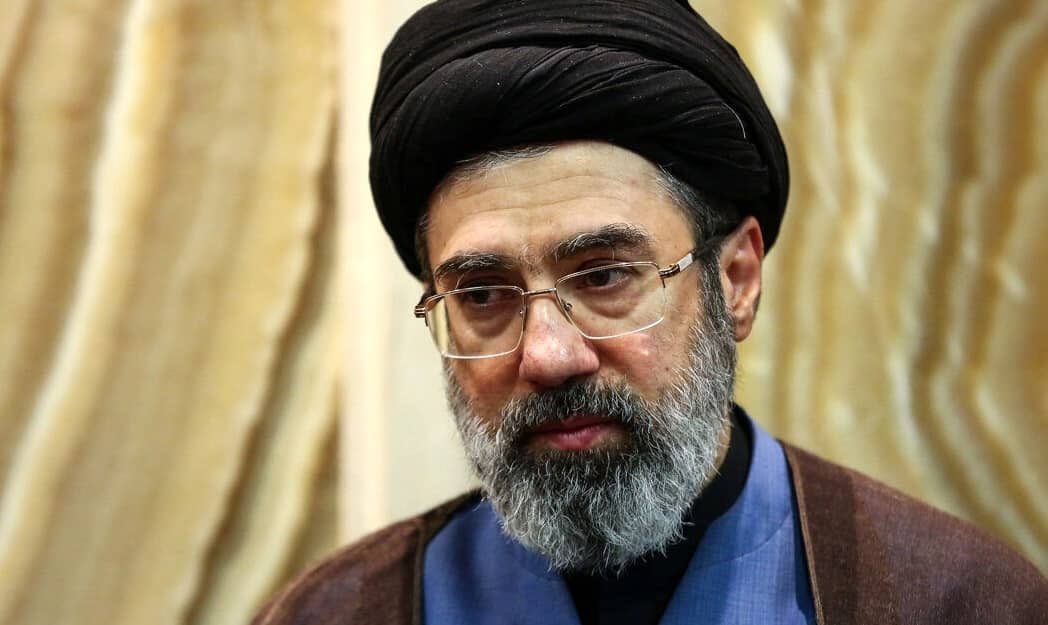
In his first public comments since becoming Iran’s Supreme Leader, Ayatollah Mojtaba Khamenei on Thursday asked neighbouring Arab countries to shut U.S. bases “as soon as possible”, demanded reparations for the material losses during the war and vowed to keep the Strait of Hormuz “closed”.
🚨 “If this war continues, we’ll activate such fronts in this war in which our enemies have no experience.”
– Iran’s new Supreme leader Mojtaba Khamenei
— South Asia Index (@SouthAsiaIndex) March 13, 2026
“We will exact reparations from the enemy, and if it refuses, we will seize from its assets as much as we deem necessary; and if that too proves impossible, we will destroy an equivalent portion of its assets,” said Mr. Khamenei, whose father, the former Supreme Leader Ayatollah Ali Khamenei, was assassinated on February 28 by an Israeli-American joint strike.
Pledging to avenge “the blood of the martyrs”, the 56-year-old cleric said the “effective and regret-inducing defence” by the Iranian armed forces would continue. “Furthermore, the leverage of blocking the Strait of Hormuz must certainly continue to be used,” he said, referring to the critical maritime chokepoint connecting the Persian Gulf with the Arabia Sea through which roughly 20% to 34% of world’s oil passes through.
The number of ships passing through the Strait has come down to single digits in recent days as the Islamic Revolutionary Guard Corps (IRGC) has targeted cargo vessels in the Gulf waters. There were also reports that the Strait is being mined by the Guards.
“The countries of the region must clarify their stance regarding the aggressors against our dear homeland and the killers of our people,” Mr. Khamenei, who is yet to make a public appearance since his appointment as the country’s top leader, said, referring to Persian Gulf monarchies who were targeted by Iranian missiles and drones since the war began. “I recommend that they shut down those bases as soon as possible; for they must surely have realised by now that America’s claim of establishing security and peace has been nothing but a lie.”
Mr. Khamenei, according to Iranian officials, was injured in the February 28 strike, but is “safe and sound”. He thanked Iran’s non-state allies such as Hezbollah, and said additional fronts would be opened “in areas where the enemy has negligible experience” if the “state of war persists”.
Earlier in the day, President Masoud Pezeshkian had set three conditions for ending the war. “The only way to end this war — ignited by the Zionist regime & U.S. — is recognising Iran’s legitimate rights, payment of reparations, and firm international guarantees against future aggression,” he said.
During nuclear talks ahead the war, Iran had consistently argued that as a signatory of the Nuclear Non-Proliferation Treaty (NPT), nuclear enrichment is “a legitimate right”. This was also the first time a senior Iranian leader called for reparations as a condition to end the war.
Since the war began on February 28, Iran has maintained that it would not talk to the U.S. and accept a ceasefire.
On March 10, Mohammad-Bagher Ghalibaf, Speaker of Iran’s Parliament, said Iran “believes the aggressor must be punished and taught a lesson that will deter them from attacking Iran again.”
Mr. Ghalibaf, who, along with Security Council Secretary Ali Larijani, has emerged as a defiant public faces of the government, added: “The Zionist regime has consistently perpetuated a vicious cycle of “war, negotiations, ceasefire, then war again” throughout its disgusting history. We will break this cycle.”