Iran marked the 47th anniversary of its 1979 Islamic Revolution on Wednesday as the country’s theocracy remains under pressure, both from U.S. President Donald Trump who suggested sending another aircraft carrier group to the Middle East and a public angrily denouncing Tehran’s bloody crackdown on nationwide protests.
People across Iran 🇮🇷 marked the 47th anniversary of the Revolution 🎉.
Ps. 🇮🇷🤝🇷🇺 pic.twitter.com/4pWnCeEoeA
— dvmc (@deviumcoin) February 11, 2026
Iran is in the midst of negotiations with the United States over its nuclear program but it remains unclear if a nuclear deal will be reached. Meanwhile, the United Nations’ nuclear watchdog, the International Atomic Energy Agency, has been unable for months to inspect and verify Iran’s nuclear stockpile.
Read more: UK’s King Charles comments on brother’s Epstein links
In a ceremony marking the revolution anniversary, Iran’s President Masoud Pezeshkian apologized to “all those affected” by the nationwide protests and bloody crackdown that followed it, even as he denounced unspecified “Western propaganda” surrounding the protests.
Pezeshkian said he knew the “great sorrow” felt by people in the protests and crackdown, without directly acknowledging the hand Iranian security forces had in the bloodshed.
“We are ashamed before the people, and we are obligated to assist all those who were harmed in these incidents,” Pezeshkian said. “We are not seeking confrontation with the people.”
Pezeshkian also insisted that his nation was “not seeking nuclear weapons. … and are ready for any kind of verification.
In escalating pressure, Trump suggested a second carrier in an interview published Tuesday night as Israeli Prime Minister Benjamin Netanyahu, long an Iran hawk, visited Washington to push the U.S. toward the strictest-possible terms in any agreement reached with Tehran in the fledgling nuclear talks.
A top Iranian security official planned to visit Qatar on Wednesday after earlier traveling to Oman, which has mediated this latest round of negotiations.
On Iranian state television, authorities broadcast images of tens of thousands of people taking to the streets across the country Wednesday to support the theocracy and its 86-year-old Supreme Leader Ayatollah Ali Khamenei. But on Tuesday night, as government-sponsored fireworks lit the darkened sky, witnesses heard shouts from people’s homes in the Iranian capital, Tehran, of “Death to the dictator!”
Commemoration comes under crackdown
In the streets, people waved images of Khamenei and Ayatollah Ruhollah Khomeini, the founder of the Islamic Republic, alongside Iranian and Palestinian flags. Some chanted “Death to America!” and “Death to Israel!”
Among Iran’s 85 million people, there is a hard-line element of support for Iran’s theocracy, including members of its paramilitary Revolutionary Guard, which crucially put down the protests last month in a bloody suppression that killed thousands and saw tens of thousands detained. Others often take part in demonstrations as they are government employees or to enjoy the carnival atmosphere of a government-sponsored holiday.
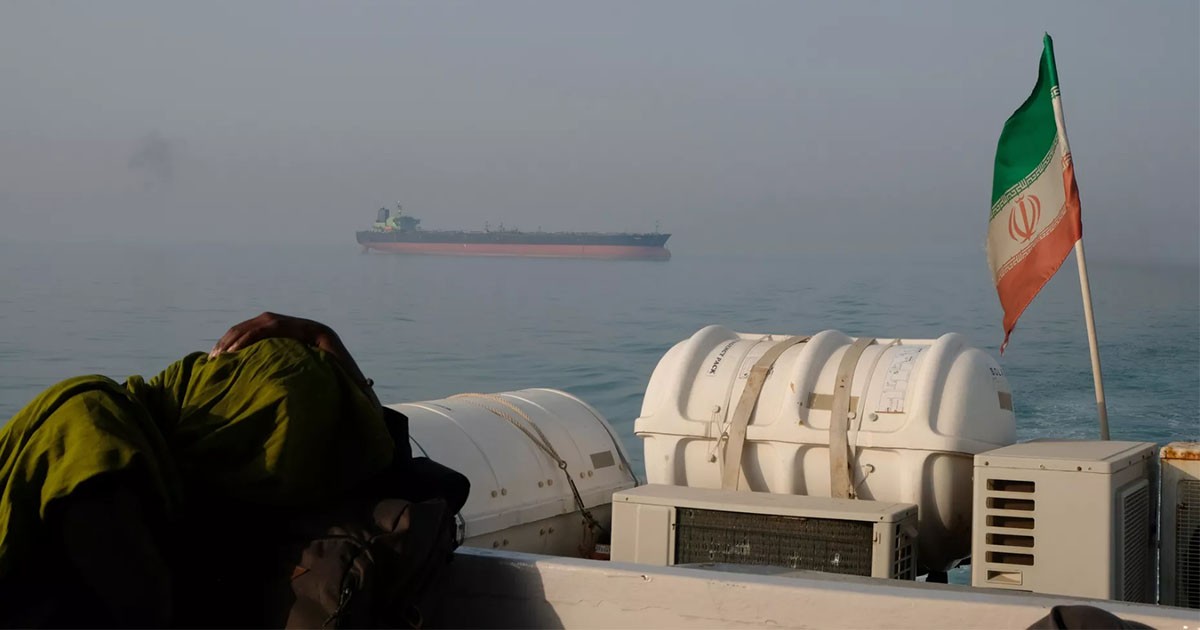
As the commemoration took place, senior Iranian security official Ali Larijani left Oman for Qatar. That Mideast nation hosts a major U.S. military installation that Iran attacked in June after the U.S. bombed Iranian nuclear sites during the 12-day Iran-Israel war.
Qatar also has been a key negotiator in the past with Iran, with which it shares a massive offshore natural gas field in the Persian Gulf.
Read more: Armed gang stages daylight airport heist in South Africa
Speaking to the Russian state channel RT, Iranian Foreign Minister Abbas Araghchi said Tehran still does “not have full trust for the Americans.”
“Last time we negotiated, last June we were in the middle of negotiation then they decided to attack us and that was a very very bad experience for us,” Iran’s top diplomat said. “We need to make sure that that scenario is not repeated and this is mostly up to America.”
Despite that concern, Araghchi said it could be possible “to come to a better deal than Obama,” referencing the 2015 nuclear deal with world powers Iran reached when former U.S. President Barack Obama was in office. Trump in his first term unilaterally withdrew America from the accord.