Washington’s closest Gulf allies – Saudi Arabia and the United Arab Emirates – have said they will not permit their territory or airspace to be used for US military action against Iran.
Saudi Crown Prince Mohammed bin Salman told Iranian President Masoud Pezeshkian in a phone call on Tuesday that the kingdom “will not allow its airspace or territory to be used for any military actions against Iran.”
Read more: US cybersecurity chief leaked sensitive files to ChatGPT – Politico
This followed a similar announcement on Monday from the UAE, which said it would not provide logistical support or serve as a staging ground for “hostile military actions” against Tehran.
The refusals complicate US military planning, as both nations host substantial US military assets. Saudi Arabia stations more than 2,300 US troops and has long-standing security partnerships with Washington. The UAE hosts 5,000 US military personnel at Al Dhafra Air Base, just outside Abu Dhabi.
Analysts interpret the moves as an attempt to avoid being drawn into a broader war and to hedge against Iranian retaliation. Military experts cited by the WSJ noted that while the Saudi and Emirati decisions increase operational complexity and costs, they do not preclude US action.
Read more: Gold soars above $5,300 per ounce
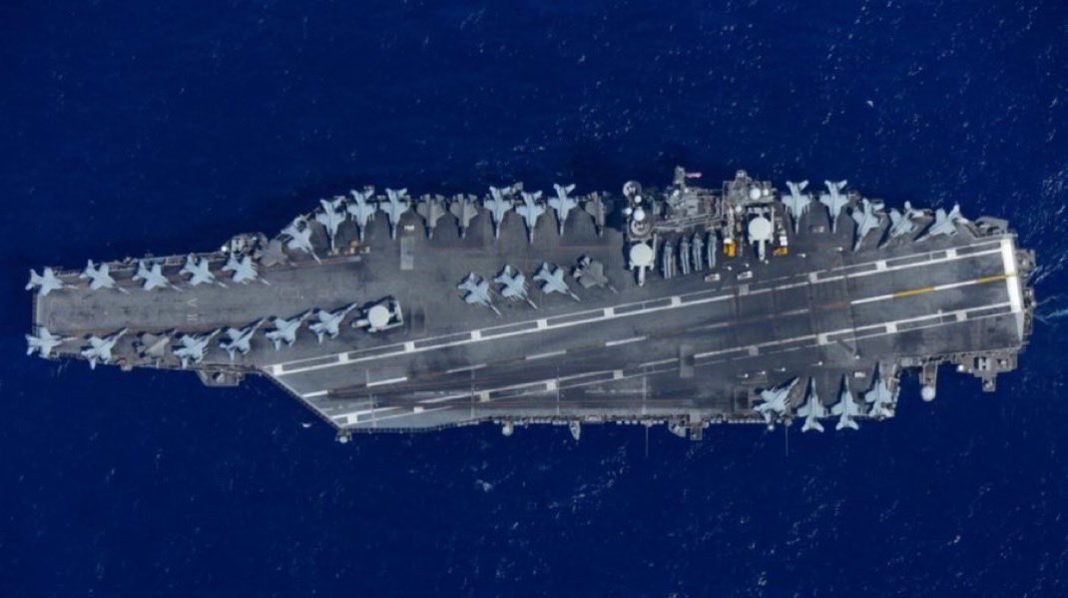
President Donald Trump recently bolstered the US military presence in the Middle East, deploying the USS Abraham Lincoln carrier strike group and additional fighter squadrons and missile-defense systems to the region.
Another Arleigh Burke-class guided missile destroyer, the USS Delbert D. Black, reportedly joined the force on Wednesday, bringing the number of warships in the CENTCOM area of responsibility to at least ten.
Trump has said the deployment of a “beautiful armada” is a show of force intended to pressure Iran over its nuclear program and its violent crackdown on domestic protests, while leaving the door open to diplomacy.
Earlier this week, the US initiated large-scale, multi-day military exercises across the Middle East. The operation reportedly aims to validate procedures for dispersing personnel and jets to various “contingency locations” and integrating command with unnamed “partner nations.”
Iran previously warned that any country facilitating an attack would be considered “hostile.” Iranian Deputy Foreign Minister Kazem Gharibabadi reiterated on Wednesday that Tehran is “200 percent ready to defend itself” and would deliver an “appropriate, not proportionate” response, likely aimed at US bases in the region.