Defence Minister Khawaja Asif on Tuesday said that Pakistan is recording a surge in defence deals following its military escalation with India in May 2025, and he is hopeful that if all the orders are materialised, they could end the country’s reliance on the International Monetary Fund (IMF).
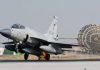
The statement came hours after a high-level Bangladeshi defence delegation met Pakistan’s Air Chief Marshal Zaheer Ahmed Babar Sidhu to discuss the potential deal of sale of JF-17 Thunder aircraft jets jointly produced by China and Pakistan to Bangladesh that had become the backbone of Pakistan’s air force over the past decades.
“Right now, the number of orders we are receiving after reaching this point is significant because our aircraft have been tested,” Defense Minister Asif told a Pakistan’s Geo News channel.
“We are receiving those orders, and it is possible that after six months we may not even need the IMF.”
These jets have played a pivotal role in combating Indian Air Force back in 2019 as well as 2025. Fighter jets used by Pakistan came into limelight after Islamabad came to have shot down six Indian aircraft including French-made Rafale jets during the military conflict in May. India acknowledged losses in aerial combat but was reluctant to publicly specify a number.
Many countries have been signing up defence engagements with Pakistan following Pakistan’s decisive victory where delegations from multiple other nations have proposed learning from Pakistan Air Force’s multi-domain air warfare capabilities that successfully employs Chinese military technology and has challenged the Western hardware.
Pakistan is successfully employing and even marketing JF-17 Thunder fighter jets as a lower-cost multi-role fighter and has positioned itself as a supplier able to offer aircraft training and maintenance outside Western supply chains. Meanwhile the dwindling economy of the country has made Islamabad rely heavily on financial assistance from the IMF to stabilize the economy.
Read more: Pakistan Strikes $4.6 Billion Arms Deal With Libya, Defying UN Embargo
These loans come with strict conditions and heavy fiscal reforms, subsidy cuts and measures to increase revenue that Pakistan must implement to secure disbursements. In September 2024, IMF had approved a $7 trillion bailout for Pakistan and a separate $1.4 billion loan under its Climate Resilience Fund in May 2025.
These loans are aimed at strengthening the country’s economic and climate resilience whereas Pakistan is severely facing challenges in its foreign account reserves. Pakistan has long been striving to expand defence exports by leveraging its decades of counter-insurgencies experience and a domestic industry that produces aircrafts, armoured vehicles, munitions and other equipment. South Asian country Libya, Pakistan has also recently signed a $4 billion worth defence deal with the Libyan National Army last month.
Pakistan is expected to provide Libya with 16 JF-17 fighter-tunnel jets and 12 Super Mushak trainer aircraft for the basic pilot training over the course of two and a half years. It will also help develop the military combat. It will also help the Libyan National Army improve its military combat capabilities and skills.