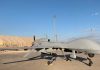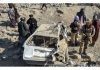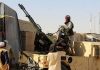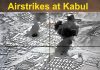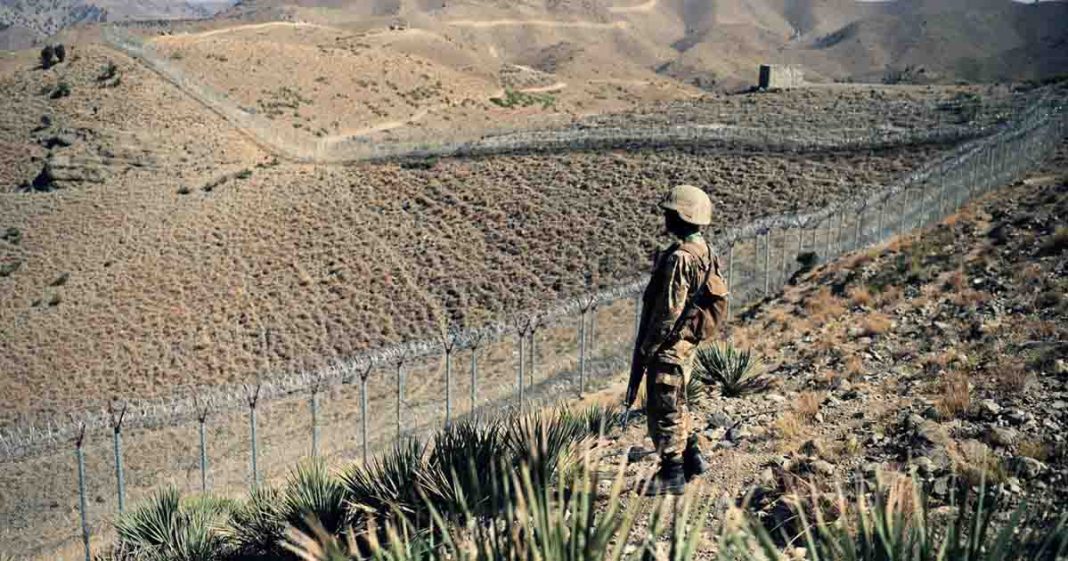
Pakistan launched air strikes on cities in neighbouring Afghanistan on Friday, in a major escalation after months of attacks and cross-border strikes along their porous frontier.
Big news! PAF conducted airstrikes on the former residence of the Afghan Taliban founder Mullah Omar in Kandahar. It was being used as a base for the Taliban’s suicide brigade. It is also only 1 KM away from the residence of their current Supreme Leader Hibatullah Akhundzada.
— Wajahat Kazmi (@KazmiWajahat) February 27, 2026
He is what we know about the fighting, which has raised fears of a wider conflict between the two neighbours.
The US asks its citizens to leave Afghanistan immediately as Pakistan ramps up airstrikes.
— Wajahat Kazmi (@KazmiWajahat) February 27, 2026
– Strikes follow clashes –
Pakistan’s nighttime operation followed clashes on Thursday evening, when Afghan forces attacked Pakistani border troops in retaliation for earlier air strikes by Islamabad.
Pakistani Information Minister Attaullah Tarar said his country’s forces hit defence targets in the Afghan capital Kabul, the southern city of Kandahar and the southeastern province of Paktia.
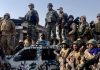
This is respect and honour! Pakistan forces take over control of a post previously held by the Taliban and see how respectfully they fold the flag because it has our Kalma written on it! While the Taliban disrespect the Kalma every day!
Pakistan Hamesha Zindabad 🇵🇰 pic.twitter.com/b9n6bg2nPo
— M. Munib Hamid (@MunibHamidpk) February 27, 2026
Neither side has formally announced a full-scale military campaign, though Tarar said in a post on X that “now it is open war”.
Islamabad says it is responding to militant attacks it claims originate from Afghan territory, although Afghanistan’s Taliban authorities deny allowing their soil to be used against Pakistan.
Dozens of people have been reported killed in recent months, while border crossings remain largely closed.
With diplomacy repeatedly failing, the risk of further escalation is high.
Read more: Pakistan says three cities targeted by Taliban drone attacks
– Conflicting claims –
Both sides have issued sharply different accounts of what has happened.
The Taliban government confirmed Friday’s air strikes, but spokesman Zabihullah Mujahid said there were no casualties in urban areas.
Hours earlier, he had announced “large-scale offensive operations” at the border in response to what he called repeated Pakistani violations.
Afghanistan’s defence ministry said eight of its soldiers were killed in land fighting.
An Afghan provincial official said a mortar shell wounded seven civilians at a camp for people who had returned from Pakistan, with one woman in serious condition.
Pakistan and Afghanistan each claim to have killed dozens of enemy fighters in recent clashes.
Mujahid said several Pakistani soldiers had been “caught alive”, a claim denied by Islamabad.
Read more: World urges restraint as Pakistan-Afghanistan border tensions spike
– Militants –
At the heart of the dispute is Pakistan’s long running accusation that Afghanistan is not doing enough to curb the Tehreek-e-Taliban Pakistan (TTP).
The militant group has stepped up attacks inside Pakistan since the Taliban returned to power in Kabul in 2021, according to analysts.
Islamabad says many of these fighters operate from Afghan soil, which the Taliban government rejects.
Recent months have seen major attacks in Islamabad and the border region, and the resurgence of militant violence has deepened mistrust between the neighbours.
– Frail diplomacy –
The most serious confrontation in months follows diplomatic efforts that have struggled to contain tensions.
A truce was brokered by Qatar and Turkey after deadly clashes in October that killed more than 70 people on both sides.
But multiple rounds of negotiations since then have failed to produce a durable agreement.
Saudi Arabia recently intervened to mediate the release of three Pakistani soldiers captured by Afghanistan.
Iran also stepped in, with Foreign Minister Abbas Araghchi saying on Friday that Tehran “stands ready to provide any assistance necessary to facilitate dialogue and to enhance understanding and cooperation between the two countries”.
However, some experts say it might be too late for effective diplomacy.
Qamar Cheema, a Pakistani political analyst, told AFP that Islamabad had “used all options including regional diplomacy, direct communication, but nothing has been honoured”.
– Historic tensions –
Afghanistan and Pakistan share the disputed Durand Line, a colonial-era frontier that Kabul has never formally recognised.
Cross-border militant sanctuaries, refugee flows and accusations of interference have strained ties for decades.
Since the Taliban’s return to power, relations have seesawed between cautious engagement and open hostility.
Border crossings have frequently shut following clashes, disrupting trade and the movement of people.
The latest violence marks what analysts describe as the most dangerous phase yet, with Pakistan appearing to target Taliban government sites rather than only alleged TTP positions.
South Asia expert Michael Kugelman called the overnight strikes a “significant and dangerous escalation”.