The arrival of Afghan refugees in Pakistan nearly five decades ago strengthened Pakistan’s position vis-à-vis Afghanistan. The Afghan refugee camps particularly were breeding grounds for Mujahedin recruitment. Thus, Pakistan acquired a double leverage: the refugee card and the armed Mujahideen/militants. Additionally, landlocked Afghanistan’s reliance on Pakistan for access to open waters was another important leverage that Pakistan had over Afghanistan.
Read more: Afghanistan threatens retaliation over Pakistani airstrikes
Given the recent tensions between Afghanistan and Pakistan, and how Pakistan has poorly played its hand, one could conclude that Pakistan is fast losing (if not already lost) all of its leverage vis-à-vis Afghanistan. From Pakistan’s perspective, this should ring alarm bells. But does it really? I am not sure.
Refugees: Afghan refugees in Pakistan were Pakistan’s most important strategic investment in Afghanistan, and not just from a militancy or foreign aid perspective. After General Zia-ul Haq passed away, successive Pakistani governments have long used the refugee card as a hanging sword over Afghanistan. For instance, Pakistani officials would threaten if this or that particular thing did not happen, then Pakistan would expel Afghan refugees. Pakistan finally forcibly expelled most Afghan refugees between 2021 and 2026. The idea was to force concessions from Afghanistan. However, the forcible and dishonorable expulsion of Afghan refugees, even in successive months of Ramadan, does not seem to have had any impact on Afghanistan’s policy toward Pakistan. At long last, the refugee card seems to have lost its utility in Afghanistan-Pakistan relations.
Militants: With the Taliban returning to Afghanistan, Pakistan no longer has Afghan militants as leverage to use against Afghanistan. Pakistan can try its luck with various Afghan supporters of the U.S. occupation of Afghanistan, but it is unlikely these collaborators could deliver much. Primarily, they are neither fighters nor loyal to anyone, except their own pockets. If they were fighters in the 1980s, then money, greed, and other weaknesses have softened their warrior spirits. Pakistan’s next best bet would be, as per the Afghan allegations, its support for Daesh (the Arabic for Islamic State in Iraq and the Levant—ISIL). Although Daesh can certainly attract attention in urban areas through bombings, its ability to even capture and hold a single provincial district is seriously doubted. But more importantly, Pakistan has largely lost the Afghan refugee pool from which it could have recruited a large number of Daesh fighters to challenge the Taliban.
Read more: India condemns Pakistani airstrikes on Afghanistan
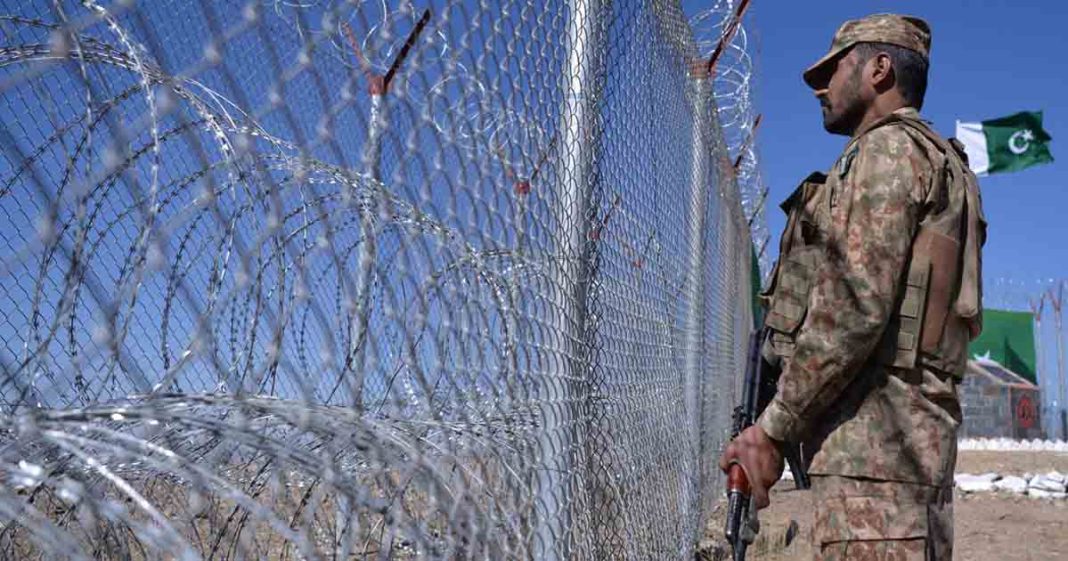
Trade and transit: Pakistan looks for unique ways to shoot itself in the foot. After losing the militants and refugee cards, Pakistan turned to closing its border crossings with Afghanistan, bringing all bilateral trade and transit to a halt. Like the U.S. uses the dollar as a weapon against its adversaries, Pakistan uses its border crossings with Afghanistan as a weapon against Afghans, and even its own people who rely on trade with Afghanistan. The Pakistani regime thought that closing the border crossings at a crucial time when Afghans wanted to export their fruits and vegetables to and through Pakistan would put pressure on Afghanistan to comply with Pakistani demands.
Contrary to Pakistan’s expectations, Afghanistan did not comply. In fact, the closing of border crossings with Pakistan provided Afghanistan with an opportunity to diversify its trade and find new trade routes and new trade partners. There is also a belief in Afghanistan that instead of importing, we can produce and manufacture our necessities in Afghanistan.
Remaining options: What remains for Pakistan to utilize is not leverage, but what I would call “options,” which are not too pleasant to begin with.
Drones: The first of those options is drone attacks inside Afghanistan. Drone attacks, however, are almost always counterproductive, especially in Afghanistan and Pakistan, where for each individual target taken out (I am guessing roughly) nine innocent bystanders are killed. That is creating a lot of unnecessaries enemies for getting very little in return. Additionally, drone strikes will prompt Afghanistan to acquire its own drones (we may already have acquired them) and start shooting in the opposite direction.
Invasion: The last tangible option left for Pakistan is an outright invasion of Afghanistan. The chances of this happening any time soon are slim, but the chances are there, nonetheless. Afghanistan may initially lose some territory, but that is where Afghanistan’s advantage lies: cede territory, draw the enemy in, entangle it, and exhaust it (and in the case of Pakistan, even bankrupt it). Given Pakistan has two ongoing insurgencies in Khyber Pakhtunkhwa and Balochistan, such a misadventure against Afghanistan will likely lead to the eventual disintegration of Pakistan.
How things move forward will depend on what the Pakistan army led by so-called Field Marshal Asim Munir decides. If they think they can achieve outcomes, which the Soviets and the Americans failed to achieve, through use of force then the consequences will be catastrophic for Pakistan. For now, it looks Pakistan is willing to deteriorate relations with Afghanistan so that Pakistan can be in the good books of Donald Trump, who may help Pakistan with much-needed cash and weapons.
Arwin Rahi is an independent writer, and a former adviser to the Parwan governor in Afghanistan. He can be reached at rahiarwin@gmail.com.
The views expressed in this article are solely those of the author and may not necessarily reflect the position or editorial policy of the publication.