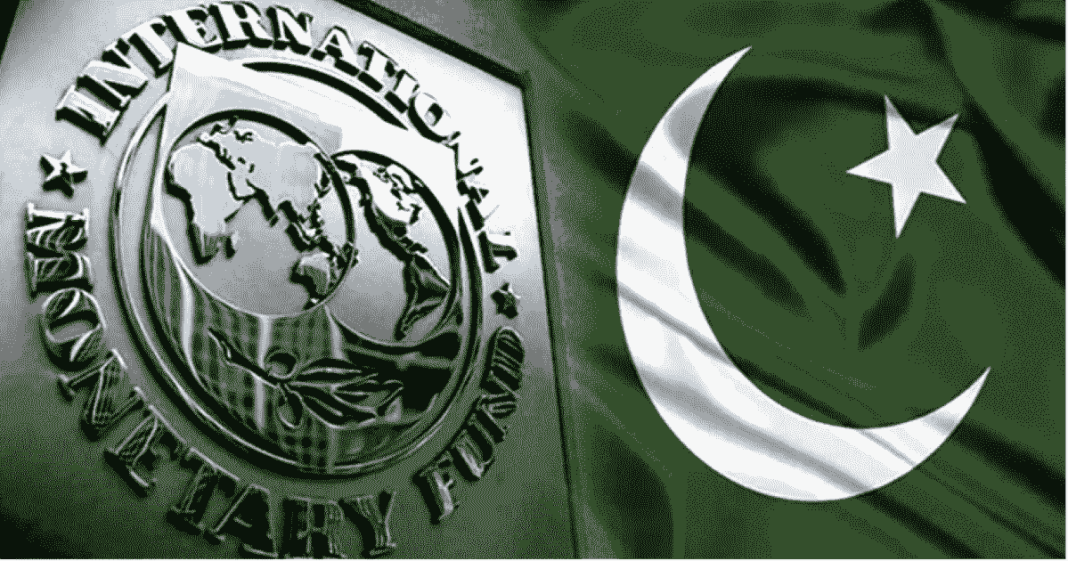
On November 19, 2025, the Ministry of Finance dutifully uploaded the IMF’s Governance and Corruption Diagnostic Assessment (GCDA) for Pakistan. The 190-page document is, by the Fund’s normally bloodless standards, astonishingly blunt. It declares in measured but merciless prose that governance failures and corruption are not peripheral irritants in Pakistan; they are the central macroeconomic constraint, draining a significant percentage of GDP every single year—many trillions vanishing into elite pockets, offshore accounts, and plain old cash envelopes, an amount larger than the entire federal divisible pool.
The findings are brutal and familiar:
- Tax and fiscal systems remain a patchwork of discretionary exemptions and off-budget slush funds. Illicit flows and legal tax avoidance together siphon off as much revenue as the state actually manages to collect.
- Public procurement and loss-making state-owned enterprises function as a parallel patronage economy.
- An archaic, overburdened judiciary has become a binding constraint on investment; contract enforcement is a joke, and property rights are negotiable for the right bribe.
- The much-hyped Special Investment Facilitation Council (SIFC), sold as a red-carpet welcome mat for Gulf investors, is called out for opaque tax concessions, extra-legal immunities, and zero accountability: in effect, a brand-new channel for the very elite capture the report condemns elsewhere.
- Anti-corruption bodies are fragmented, starved of funds, and offer no whistle-blower protection. The Fund quietly floats the idea everyone has whispered for decades: one genuinely independent anti-corruption agency.
The IMF even attaches a price tag to salvation: credible implementation of its 15-point matrix could add 5–6.5 percentage points to GDP growth over five years. Mandatory e-governance in procurement and tax filing within 12 months, full public disclosure of every SIFC deal, hard budget constraints, an end to routine tax amnesties, operational autonomy for the FBR -the list is specific, sensible, and politically radioactive.
Read more: Italy now recognizes the crime of femicide and punishes it with life in prison
But here lies the economic rub. For all its candour, Pakistan’s GCDA is a toothless ritual — blunt diagnosis, zero enforcement. The diagnostic tool itself never imposes conditions; that only happens when the IMF chooses to embed its findings into a lending programme with real teeth.
It made that choice in Sri Lanka. There, the 2023 governance diagnostic was deliberately weaponised inside a $3 billion Extended Fund Facility: key recommendations were turned into prior actions and structural benchmarks: mandatory asset declarations, full procurement digitisation, judicial-efficiency targets with hard deadlines. Miss one, and the money stayed frozen. In Pakistan, the IMF chose not to. No prior actions, no benchmarks, no consequences. The tranche will flow anyway. Business as usual.
Sri Lanka’s multi-party democracy, free press, and restless civil society meant the government paid a political price for every delay. Pakistan’s elite, comprising entrenched business groups, security establishment, and bureaucracy: treat IMF programmes as negotiable checklists, confident that geopolitical cover will always trump governance. Where Colombo had to bend, Islamabad can defy.
Read more: ‘Everything is soaked’: Winter rains in Gaza bring new misery for Palestinians
This is not equal treatment. This is exceptionalism that keeps the wound bleeding.
Commentators rushed to call the report “landmark,” “bombshell,” “unprecedented.” In doing so, we unintentionally polished the loan conveyor belt a little brighter. By showering diplomatic candor with praise, we let the one institution with real leverage off the hook. Stern criticism without enforceable action is not courage; it is complicity.
These are not normal times. When the IMF itself puts a number on the hemorrhage—6.5 percent of GDP bleeding out annually—yet stops short of demanding the only reforms that could stanch it (constitutional protection for judicial independence, make SIFC accountable, creation of a truly independent anti-corruption commission), the silence is deafening.
Moreover, critics—and one suspects some IMF staff also, privately—fear that the current dispensation will wave the GCDA like a prop to justify the 27th Constitutional Amendment and its ongoing reconfiguration of the superior judiciary. The report documents judicial delay, bloat, and corruption in painstaking detail, yet conspicuously refrains from prescribing greater independence as the remedy. That’s the tragedy of sincere effort and much critical analysis, but so long as geopolitical considerations dominate, not much good will happen.
Pakistan’s tragedy is not that it lacks diagnostics. It has endured more IMF, World Bank, and donor autopsy reports than virtually any other country on earth. Each one rediscovers the same congenital deformities, updates the jargon, and is quietly laid to rest. Seventy-seven years after independence, policy capture by a narrow civil-military-commercial elite remains the country’s core economic institution.
The 2025 GCDA is remarkably candid and unusually specific. Whether it joins the graveyard of unimplemented reform agendas will tell us everything we need to know about Pakistan’s trajectory, and about the limits of Fund conditionality in a sovereign state that has perfected the art of tactical compliance and strategic defiance.
The IMF has finally said the quiet part loud: corruption is killing Pakistan’s economy. Then it looked the other way while the patient kept bleeding.
Javed Hassan has held senior executive positions both internationally and in Pakistan. He is a Senior Visiting Fellow at the Pakistan Study Center, Fudan University. He tweets as @javedhassan. The views expressed in this article are the author’s own and do not necessarily reflect the editorial policy.
The opinions presented here reflect the author’s personal analysis and experience, which may not fully align with the publication’s editorial outlook.