Prince Andrew, Duke of York detained on suspicion of misconduct in public office as the long shadow of Jeffrey Epstein returns to haunt Britain’s monarchy.
There are moments in history when the mighty are brought low, and justice, long delayed, long denied finally arrives at the door. February 19, 2026, was one such moment. On his 66th birthday, a man who was once styled His Royal Highness Prince Andrew, Duke of York, the favorite son of the late Queen Elizabeth II, was arrested by Thames Valley Police on suspicion of misconduct in public office.
He was taken to Aylsham Police Station in Norfolk, booked like any other suspect, fingerprints, custody photograph, DNA sample and held for nearly twelve hours before being released under investigation. The fall from grace was total. The humiliation was absolute.
And, in the view of this columnist, it was entirely deserved. Let us not mince words about what this arrest represents. It punctured the defining perception of the Jeffrey Epstein scandal, that wealthy elites are shielded from scrutiny because of who they are. For years, critics argued that Andrew’s royal blood would protect him, that the establishment would close ranks around one of its own, that justice was a luxury available to ordinary people but not to princes.
On that cold February morning, that comfortable assumption was shattered. The facts, as they have emerged through the release of millions of Epstein files by the United States Department of Justice, are damning. Police said they were reviewing claims that Andrew, while serving as UK trade envoy in 2010, had shared confidential documents with Epstein. Emails released by the DOJ appeared to show Mountbatten-Windsor sharing reports of official visits to Hong Kong, Vietnam and Singapore, and sending Epstein a confidential brief on investment opportunities in Afghanistan.
This is not the indiscretion of a naive man star-struck by a wealthy friend. This is the alleged betrayal of public trust, the misuse of a position paid for by the British taxpayer to service a relationship with a convicted sex offender.
That relationship, let us be absolutely clear, was no innocent friendship. Virginia Giuffre repeatedly claimed that she was forced to have sex with the then-prince while underage, and flight logs show Andrew and Giuffre were in the places she alleges the sex happened. Giuffre did not live to see this day, she died by suicide last year, having spent years fighting for accountability.
Her family, when they heard of the arrest, spoke of broken hearts being lifted. “Not enough has been done,” her brother said, and he is right. That this brave woman had to carry the weight of her trauma for decades while Andrew lived comfortably on royal estates is a moral outrage. Andrew reached a settlement with Giuffre in 2022, paying her around £16 million according to British media reports, while never admitting any wrongdoing, a classic maneuver of the privileged, buying silence without accepting responsibility. That settlement was presented as closure. It was not closure. It was merely a pause. Now comes the reckoning. Andrew Mountbatten-Windsor is the first senior British royal to be arrested in almost 400 years. Think of what that means. For four centuries, the monarchy insulated its own from the rough justice of the constabulary.
Monarchs abdicated, royals were disgraced, scandals rocked the institution but no one was actually arrested. Andrew has earned the distinction of being the man who ended that streak. It is a distinction no one should envy. One cannot write of this scandal without reflecting on the late Queen Elizabeth II. She was a woman of extraordinary duty, dignity, and devotion to the Crown. She wore the burdens of the monarchy with quiet grace for seventy years. And yet, it is widely known that Andrew was her favorite child, the boy she indulged, the son she reportedly shielded even as the evidence against him mounted.
In 2022, it was Queen Elizabeth who gave Andrew her public support by riding alongside him in a carriage at a memorial service, a gesture that shocked royal watchers around the world. Perhaps a mother’s love is simply incapable of objectivity. Perhaps she could not bear to see what the rest of the world could plainly see.
Thank God and one says this with sincerity, not cruelty, that she is not alive to witness the photographs, the emails, the arrest, the fingerprinting. The humiliation would have broken her. The rest of us though must face it squarely and without sentimentality. King Charles III, to his credit, has not flinched. After learning of his younger brother’s arrest, he stressed that “the law must take its course” and reiterated that the authorities have his “wholehearted support and co-operation.” Buckingham Palace was not given prior warning of the arrest. That detail matters. This was not a choreographed royal moment designed to manage optics.
This was the law operating independently, as it must. Charles’s statement is the correct one and it sets an important precedent. If the former prince were to go to trial, it would be listed as “The King versus Mountbatten-Windsor”, pitting the younger brother against the stately powers wielded by his elder sibling. There is something almost Shakespearean about it.
Read more: Harry and Meghan meet Syrian refugees, Palestinian children in Jordan
However, the drama must not distract from the principle. No one, not a prince, not a duke, not the favorite son of a beloved queen, is above the law. In the days after the arrest, fresh allegations have emerged that Andrew may have used taxpayer-funded police protection as security while spending time with Epstein, and that he may have used chartered RAF flights to attend personal engagements that involved Epstein, flights described as a “wholly unacceptable” use of public money.
Every new revelation adds to the portrait of a man who treated his royal privilege not as a responsibility but as a personal convenience, to be deployed in the service of a predator. The charge of misconduct in public office carries, in the United Kingdom, a maximum sentence of life imprisonment. Justice demands that the full weight of this investigation proceed without interference, without favor, and without any concession to Andrew’s bloodline or his mother’s memory. The monarchy has, to its credit, already stripped Andrew of his titles. In October 2025, amid continued controversy, King Charles initiated a formal process to remove all of Andrew’s royal titles, honors, and styles, including the style “Prince” and “His Royal Highness.” He is now simply Andrew Mountbatten-Windsor. Simply Andrew Mountbatten-Windsor. A man under criminal investigation.
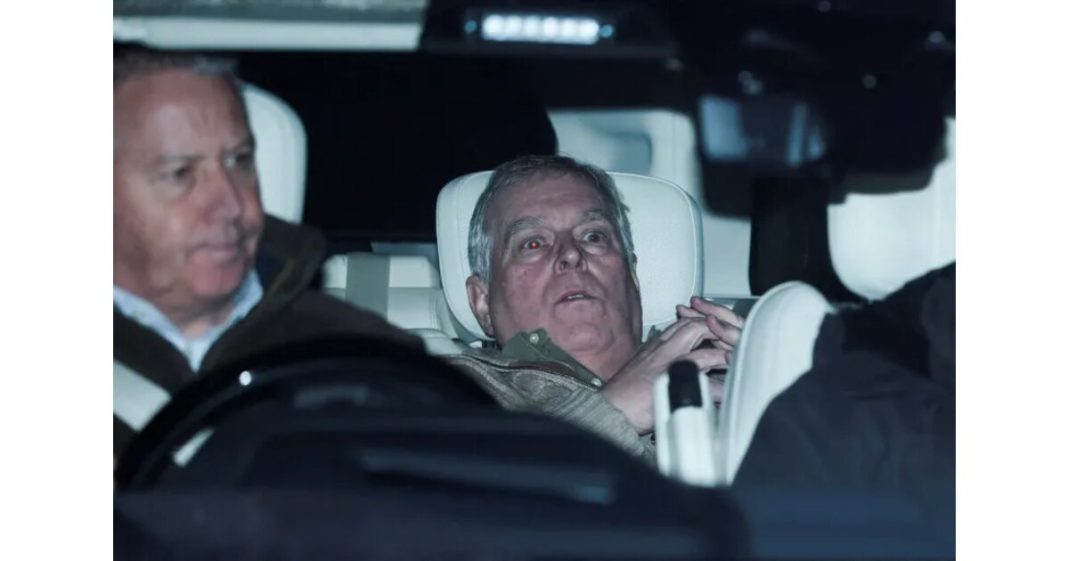
A man photographed slumped in the backseat of a car, staring into space, after hours in a police station. Let the law take its course. Let an example be made. Not out of vengeance, that is not what justice is but because accountability must be universal for it to mean anything at all. The victims who suffered, who were trafficked, who were abused and then had to watch this man live in comfort for decades, deserve nothing less than the full truth and the full process of the law. The crown that once sat on his head could not protect him from this day. Nor should it have.
The writer holds a MSc Economics & Finance degree from LSE. She is an ex-banker and a columnist. Readers can reach her at tbjs.cancer.1954@gmail.com.
The views expressed in this article are solely those of the author and may not necessarily reflect the position or editorial policy of the publication.