Saudi Arabia alleged Thursday that the United Arab Emirates (UAE) smuggled a separatist leader in Yemen wanted for treason out of the country and flew him to Abu Dhabi.
The UAE had no immediate reaction to the claim, which further escalates tensions between the neighboring nations on the Arabian Peninsula as their partnership in the yearslong war in Yemen breaks down.
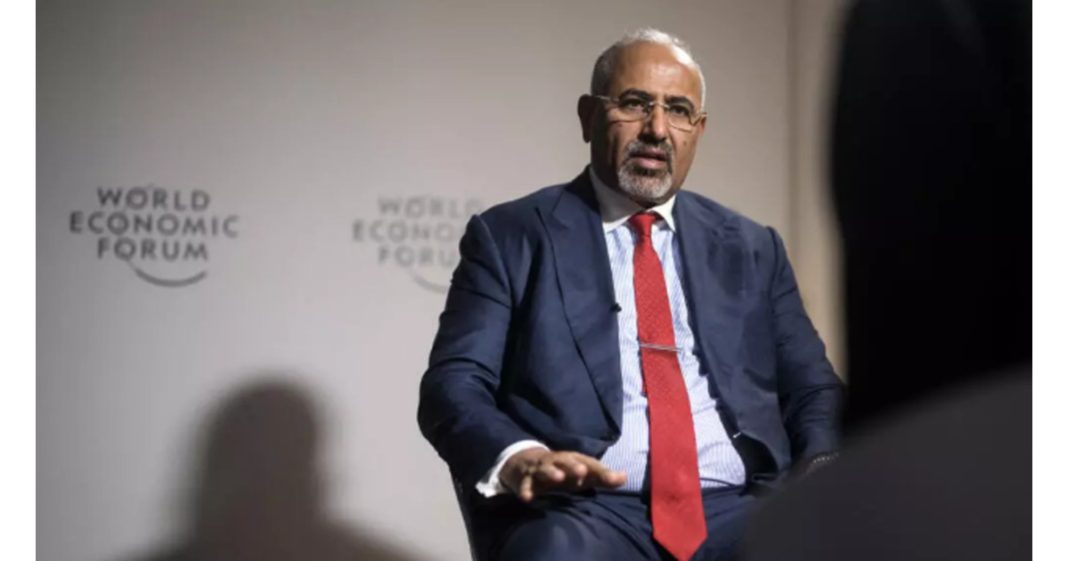
A Saudi military statement claimed Aidarous al-Zubaidi, the leader of the Southern Transitional Council, fled Yemen by boat to Somalia. Then, UAE officials flew al-Zubaidi to Abu Dhabi, the capital of the Emirates, the statement said. The UAE has been the major supporter of the council, known as the STC, which sparked a confrontation between Saudi Arabia and the Emirates in recent days after STC fighters advanced in two governorates and appeared to be preparing to secede from Yemen.
The Saudi statement from Maj. Gen. Turki al-Malki included him naming a major general in the UAE as being involved in al-Zubaidi’s alleged escape, along with identifying his nom de guerre — something highly unusual in the typical clubby world of Gulf Arab relations. It also suggested an Ilyushin Il-76 aircraft used in the operation had been used in “conflict zones” like Ethiopia, Libya and Somalia — routes the Emirati military has been accused of funneling weapons through in the past.
The UAE has denied running guns into those areas. The Emirati Foreign Ministry did not immediately respond to a request for comment from The Associated Press. The STC did not immediately acknowledge the allegation either, saying Wednesday that al-Zubaidi had remained in Aden, where forces allied against the Iranian-backed Houthi rebels had congregated for years since the rebels seized Yemen’s capital, Sanaa.
Southern Yemen had been run under the Presidential Leadership Council, a group including al-Zubaidi and others, since 2022. On Wednesday, the leadership council expelled al-Zubaidi and charged him with treason after he apparently declined to fly to Saudi Arabia for talks. It marked the latest pushback against the STC by Saudi Arabia, which also recently launched airstrikes against the group and an arms shipment the kingdom said came from the UAE.
The war in Yemen, on the southern edge of the Arabian Peninsula and bordering the Red Sea and the Gulf of Aden, has killed more than 150,000 people, including fighters and civilians. It has created one of the world’s worst humanitarian disasters. The Houthis have also launched attacks against shipping over the Israel-Hamas war in the Gaza Strip, disrupting a vital route for global commerce.
Read more: Pakistan, Saudi Arabia Talk to Convert $2bn Loans Into JF-17 Fighter Jet Deal
The U.S., which earlier praised Saudi-Emirati efforts to end the crisis over the separatists, has launched airstrikes against the Houthi rebels under both Presidents Joe Biden and Donald Trump. Saudi Arabia’s foreign minister met with U.S. Secretary of State Marco Rubio in Washington on Wednesday.
This latest accusation will further strain ties between Saudi Arabia and the UAE, OPEC members and neighbors that increasingly have competed over economic issues and regional politics, particularly in the Red Sea area. The Yemen dispute has become their most serious confrontation in decades.
The Saudi statement came as part of what appeared to be an organized media push over the incident by Saudi broadcasters and newspapers that offered details that could prove embarrassing for the Emiratis. The Saudi-owned satellite news channel Al Arabiya aired what it described as intercepted telephone calls highlighting al-Zubaidi’s alleged escape.
Saudi Arabia’s English-language newspaper Arab News offered a front-page image of al-Zubaidi under the headline “WANTED” in the style of a poster from the American Old West. A scathing front-page editorial by the state-backed newspaper said the separatist leader’s refusal to come to the kingdom was “cementing his image as a traitor to his country.”
“Al-Zubaidi chose narrow self-interest, aligning with foreign powers at the expense of his homeland and attempting to impose southern secession by force,” the editorial said. “His sole aim: to seize power for himself.”