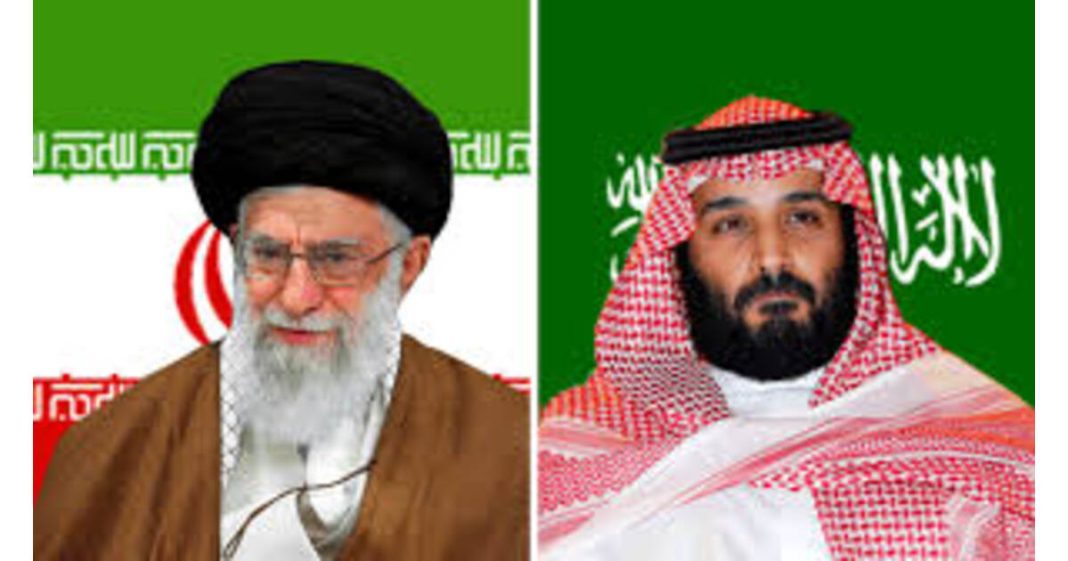
The Saudi embassy in Washington has denied a recent report published by Washington Post claiming that the Crown Prince of Saudi Arabia, Mohammed bin Salman, privately lobbied US President Donald Trump along with Israel in recent months and weeks to strike Iran.
The Saudi authorities claims that Saudi Arabia was among the Gulf countries working to prevent military confrontation in the region and publicly said that it would not be part of any potential war. Saudi government publicly told that they will not allow their bases to be used for attacks on Iran.
Fahad Nazer, spokesperson for the Saudi Embassy in Washington, said in a post on X: “At no point in all our communication with the Trump Administration did we lobby the President to adopt a different policy.
“The Kingdom of Saudi Arabia has been consistent in supporting diplomatic efforts to reach a credible deal with Iran.”
Crown Prince Mohammed bin Salman informed the Iranian president during a phone call on January 26 that the Kingdom would not allow its airspace or territory to be used for any military attack on Iran. However, following the US and Israeli strikes in Iran, Tehran began indiscriminately attack on Gulf countries hosting American bases, including UAE, Qatar, Bahrain, Kuwait, and Saudi Arabia.
Iran had targeted every GCC country within the first 24 hours of the attack launched by Israel and USA under Operation Epic Fury. The first wave of attack killed dozens of top Iranian officials, including its Supreme Leader, Ayotall Ali Khamenei. Meanwhile, these Gulf countries have been receiving missile strikes from Iran incessantly for the past few days.
GCC has slammed Iran for targeting them in response to its retaliation to US-Israeli strikes.
ust a day after the attack, Washington Post had reported that Mohammed bin Salman, the Saudi crown prince, had argued in favour of an attack during multiple phone calls with Donald Trump within the past few months. Contrary to these reports, Middle East Eye reported that US Senator Lindsey Graham had travelled to Saudi Arabia in late February to bring Mohammed bin Salman on board and convince him to back an attack on Iran.
Read more: US Embassy in Islamabad, Consulates Suspend Visa Services Amid Security Concerns
Around 150 girls have been killed in a strike on a school in southern Iran on Saturday. Iran has been retaliating to these strikes by launching continuous strikes on US assets, military personnels and bases in the region, including countries in the Gulf region. UAE and Bahrain are the hardest on the Iran’s radar of receiving its airstrikes. Several luxury and world-famous locations in UAE have been targeted, including Fairmont Hotel in Abu Dhabi to Jebel Ali port.
The Gulf countries are warning Iran of strict measures if it doesn’t stop its retaliatory strikes on their soil. Meanwhile, Saudi Arabia is lobbying and persuading its Gulf allies to avoid any steps that could inflame tensions in the region in response to strikes from Iran. Many of the officials have expressed anger at the scale and the timing of the US and Israeli strikes on Iran and have been convincing Gulf countries to avoid taking any strong response to the retaliatory to the strikes by Tehran or its proxies and that would push the region into a broader conflict.
According to the report, there is a consensus that Iran’s retaliatory strikes are lesser in intensity than expected and that the Gulf Gulf State should avoid taking any direct action that could elicit an angry response from Tehran. The leaders of the GCC country believe that a direct conflict between GCC and Iran will deplete the resources of both sides and will provide an opportunity and will provide a platform for others forces and proxies to create further chaos in the region,