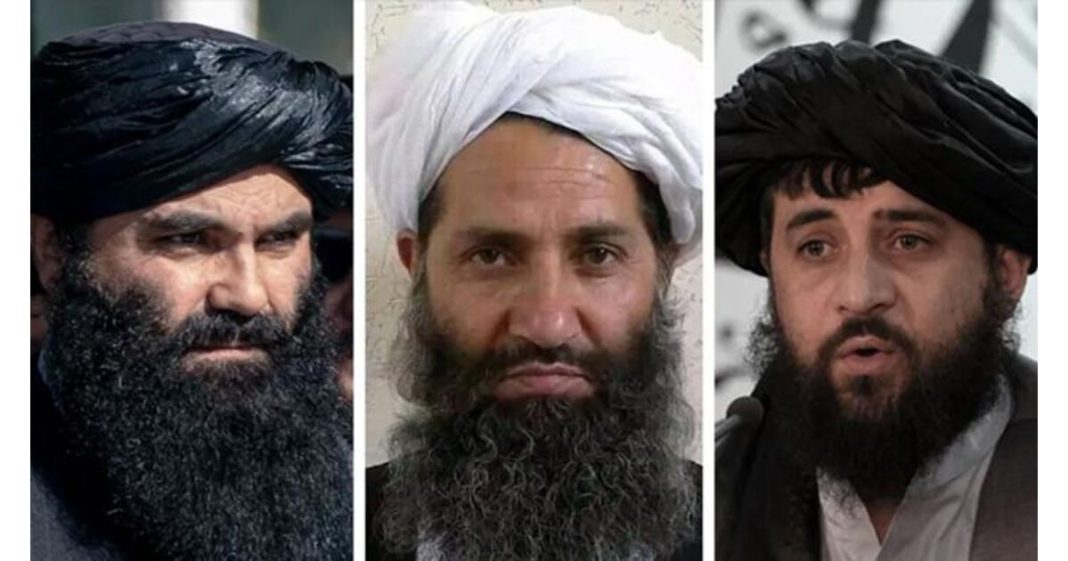
The Afghan Taliban are facing growing internal rift within their leadership, according to a recent report by the British Broadcasting Corporation (BBC). The report claims that the Taliban government has split into two rival factions, with hardline leaders based in Kandahar increasingly at odds with senior figures governing from Kabul.
The report also references a leaked audio message attributed to Taliban supreme leader Haibatullah Akhundzada, in which he warns that internal disunity could pose a serious threat to the Islamic Emirate. In the recording, Akhundzada cautions that continued infighting could ultimately lead to the downfall of the movement and its leadership.
The Kandahar faction is being led by Akhundzada and advocates for a strict Islamic state. The Kandahar faction opposes women’s education and jobs and restrict modern technology and including the internet. This faction also controls the security forces, arms distribution, and consolidation of power away from the Kabul. However, the Kabul faction is of a more pragmatic approach.
Conversely, the Kabul faction, including the Interior Minister Sirajuddin Haqqani, Defence Minister Mullah Yaqub, and Deputy Prime Minister Abdullah Ghani brothers are in favor of increasing economic engagement and limited modernization. They call for trade, international relations, and, however, they also call for restricted girls’ education.
The group, however, advocates for the internet as an essential in governance and commerce. Experts say tensions peaked in September 2025 when Akhundzada ordered nationwide shutdown of internet. Kabul officials had resisted and internet services were restored three days later. Analysts describe this as a real Taliban era internal revolt. The factions continue ideological battles primarily through public statements and political policy maneuvers.
Entering into 2026, the situation remains tense. The speculations about punitive action against Kabul leaders eased and Akhundzada avoided decisive moves. Official statements, however, deny this split, calling it a difference of opinion. Though analysts are clearly warning of power struggles within the Afghanistan’s internal government.
According to the Taliban, Akhundzada is the Taliban’s group’s absolute ruler who isn’t accountable to anyone but God. His authority is not to be challenged by anyone in the group. Akhundzada was chosen as the Taliban’s supreme leader in 2016 because of his approach of building consensus.
Sirajuddin Haqqani, a wanted man with a $10 million bounty on his head, was appointed as the depuity. Yaqoob Mujahid, was appointed as the second deputy, who is the son of Mullah Omar. The arrangement continued throughout the negotiations with United States of America in Doha to end the 20-year war between Taliban fighters and the U.S. forces. The eventual agreement in 2020 resulted in the sudden and dramatic recapturing of the country by the Taliban and the chaotic withdrawal of U.S. troops in August 2021.
Read more: Pakistan, Saudi Arabia and Turkey Draft Trilateral Defence Pact Amid Rising Regional Tensions
Both the deputies, however, were relegated to the position of ministers as soon as the Taliban returned to power with Akhundzada clinching the becoming the lone, becoming the absolute power structure in the government. Abdul Ghani Baradar was also appointed as the deputy prime minister instead of a prime minister. Akhundzada made Kandahar the base of power for Taliban, began surrounding himself with trusted ideologues and hardliners.
According to the BBC report, photographing or filming Akhundzada is forbidden, as the eyewitnesses claims he obscured his face, covering his eyes with a scarf draped over his turban and often standing at an angle when addressing an audience. Taliban insiders say that earlier Akhundzada used to hold regular consultations, but now most Taliban ministers wait for days or weeks to meet him.
Another source within the Taliban claims that Kabul-based ministers are being instructed to travel to Kandahar only if they receive an official invitation. Akhundzada has been moving crucial departments to Kandahar, including distribution of weapons, which was previously controlled by Haqqani and Yaqoob. However, the people in the Kabul group believe that the government in its current state cannot survive for long.
The Kabul group wants to see an Afghanistan adpating to Gulf state-model. However, there has been an unease on the increasing concentration of power in Kandahar, the nature and enforcement of Islamic Sharia laws, and how the Taliban should engage with the international community in women’s education and employment.
South Asia Desk