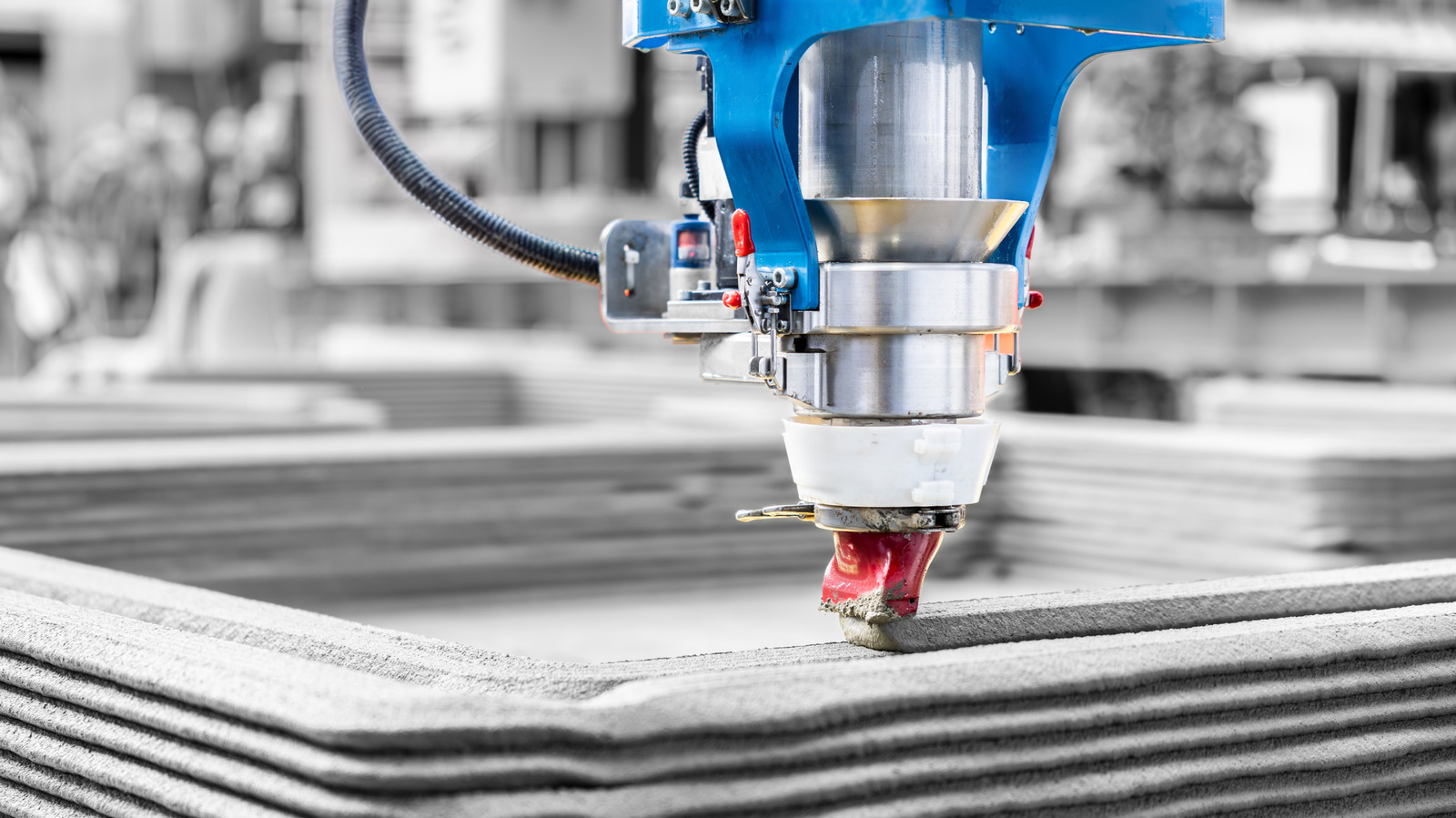
How Does 3D-Printed Concrete Challenge Conventional Construction Paradigms?
The recent achievement by an MIT research team—a model bridge rendered 16% lighter than its conventionally constructed counterpart while maintaining equivalent load-bearing capacity—signals a potential inflection point in the evolution of structural engineering. At its core, this development interrogates the longstanding assumption that strength and mass are inextricably linked in civil infrastructure. The evidence, while preliminary and context-dependent, suggests that additive manufacturing techniques can optimize material distribution in ways that traditional casting and assembly cannot. This is not merely a matter of efficiency; it is a reconfiguration of the relationship between form, function, and resource consumption.
Why Should the Weight Reduction of Structural Elements Matter?
The practical significance of a lighter bridge extends well beyond the immediate savings in material costs. Reduced mass translates into lower transportation and assembly energy requirements, diminished foundation loads, and potentially longer service life due to decreased stress on supporting elements. Yet, the implications are not universally positive or evenly distributed. For example, lighter structures may exhibit different vibrational characteristics, raising questions about long-term durability under dynamic loads—an area where empirical data remains sparse. Furthermore, the environmental calculus is complicated by the energy intensity of 3D printing equipment and the sourcing of printable concrete mixes, which may offset some of the anticipated gains unless supply chains and energy inputs are carefully managed.
Who Stands to Benefit—and Who Might Lose—from This Technological Shift?
While proponents of 3D-printed construction emphasize its promise for rapid, resource-efficient building in both developed and emerging markets, the distribution of benefits and risks is uneven. Large construction firms with access to capital and technical expertise are positioned to capture early advantages, potentially exacerbating existing industry consolidation. Conversely, skilled laborers whose livelihoods depend on traditional fabrication methods may find themselves displaced unless retraining initiatives keep pace. Municipalities and public agencies, often risk-averse and bound by legacy codes, may hesitate to approve novel structural typologies, thereby delaying widespread adoption and blunting the technology’s transformative potential.
What Are the Structural and Methodological Limitations of the Current Evidence?
The MIT team’s result, while compelling, is derived from a model-scale bridge—an important caveat. Scaling up from laboratory prototypes to full-scale infrastructure introduces a host of variables: thermal gradients, curing inconsistencies, and the unpredictable behavior of complex geometries under real-world loading. The methodological boundaries of the current data set preclude sweeping generalizations about the feasibility of 3D-printed concrete for all bridge types or climates. Moreover, the durability of printed joints and interfaces, especially under cyclical loading and environmental exposure, remains an open question. Competing studies have reported both promising and disappointing results in this regard; the preponderance of evidence currently favors cautious optimism, but not unqualified endorsement.
What Second-Order Consequences Might Emerge from Widespread Adoption?
Should 3D-printed concrete construction achieve mainstream acceptance, the ripple effects could extend far beyond the building sector. Supply chains for aggregate, cement, and reinforcement materials may be reconfigured, with downstream impacts on mining, transportation, and even urban planning. The possibility of bespoke, site-specific designs—tailored to local conditions and constraints—could foster architectural diversity, but also complicate regulatory oversight and maintenance protocols. There is also the risk of technological lock-in: early adopters may find themselves tethered to proprietary systems or software, limiting interoperability and stifling innovation.
What Judgment Should the Informed Reader Draw?
While the MIT team’s achievement does not, in itself, overturn the foundational tenets of structural engineering, it does invite a reconsideration of how material efficiency, design flexibility, and environmental stewardship might be reconciled in future construction. The prudent course is neither uncritical enthusiasm nor reflexive skepticism, but rather a measured engagement with the evolving evidence—one that recognizes both the promise and the unresolved complexities of 3D-printed concrete. For stakeholders across the construction ecosystem, the imperative is clear: invest in rigorous, transparent experimentation, and remain alert to both the intended and unintended consequences of technological change.