What Drives the Impending Obsolescence of the International Space Station?
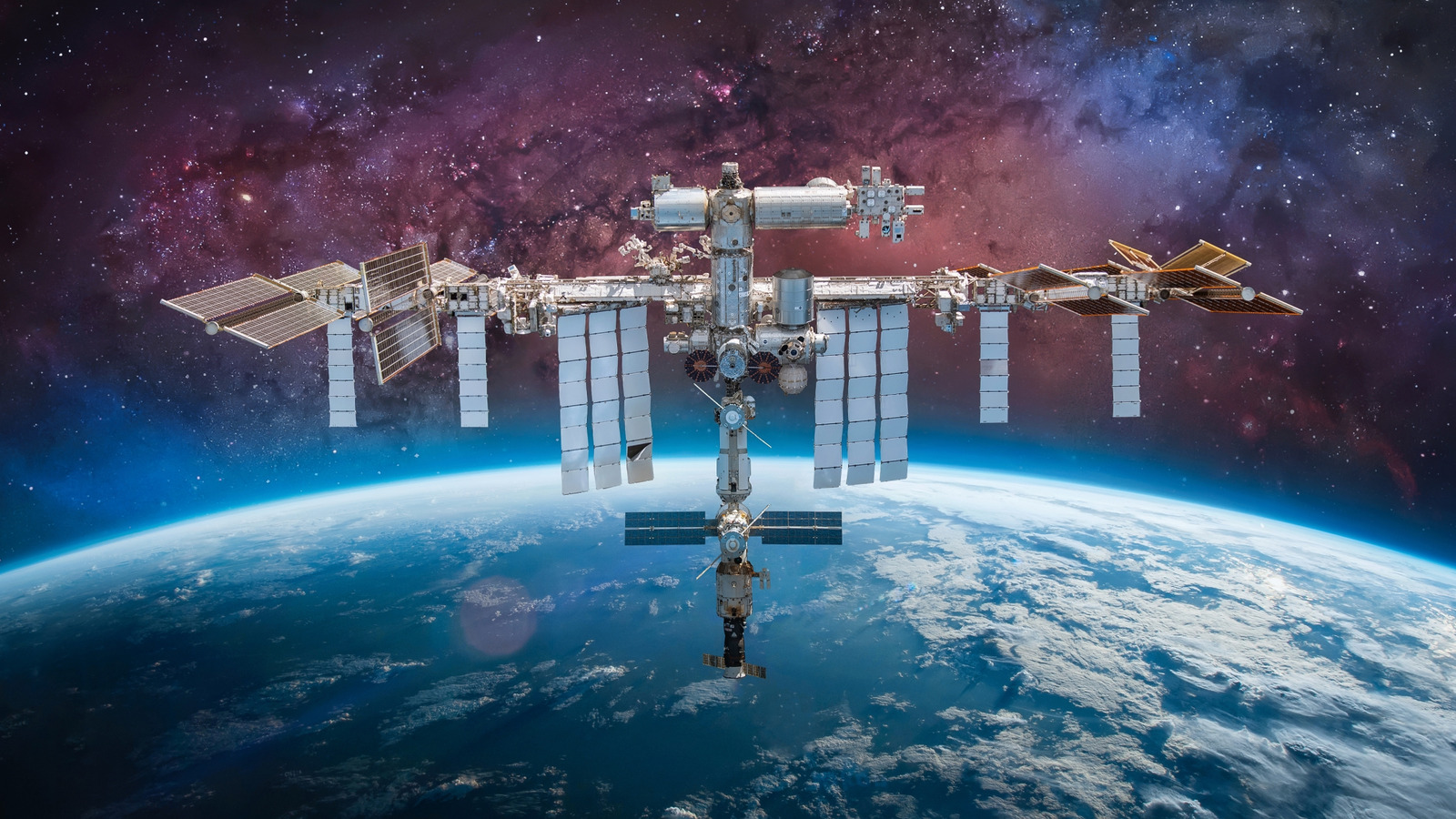
The International Space Station (ISS), once a marvel of multinational engineering and scientific ambition, now stands at a crossroads defined less by its original promise than by the inexorable march of time and entropy. The station’s aging infrastructure—subjected to relentless cycles of thermal expansion, micrometeoroid impacts, and the cumulative wear of two decades in low Earth orbit—has reached a point where routine maintenance increasingly borders on the Sisyphean. The evidence suggests that the ISS’s core systems, from environmental controls to power distribution, are operating at the edge of their designed tolerances. While incremental repairs have staved off immediate crises, the underlying trend is unmistakable: the cost, complexity, and risk profile of maintaining the ISS are escalating at a rate that outpaces its scientific returns.
This trajectory is not merely a function of physical decay. The ISS’s modular architecture, revolutionary in the 1990s, now constrains adaptation. Retrofitting new technologies or experimental platforms requires workarounds that introduce further vulnerabilities. The station’s very longevity, paradoxically, has become its liability—its systems were not designed for perpetual renewal, and the institutional inertia of international collaboration slows decisive action. Under these conditions, the argument for decommissioning the ISS is less a matter of sentiment than of strategic rationality.
Why Do Debates Over the ISS’s Future Reveal Deeper Tensions in Space Policy?
Beneath the technical arguments for retiring the ISS lies a more consequential debate about the allocation of finite resources and the evolving priorities of spacefaring nations. The ISS has long served as a diplomatic touchstone, a venue for scientific cooperation between erstwhile rivals. Yet, as new actors—both state and private—enter the domain of orbital infrastructure, the rationale for sustaining a single, aging outpost becomes less compelling. The opportunity cost is substantial: funds devoted to ISS maintenance are funds not invested in next-generation platforms, lunar gateways, or autonomous research modules.
This shift is not universally embraced. Some stakeholders argue that the ISS remains a unique testbed for long-duration human spaceflight and international collaboration. However, this perspective often underestimates the degree to which the station’s scientific output is constrained by its maintenance burden and the diminishing marginal utility of its experiments. Moreover, the persistence of legacy interests—contractors, national agencies, and political constituencies with a stake in the status quo—complicates the calculus. The most robust analyses suggest that, while the ISS has delivered immense value, its continued operation now risks crowding out more innovative and adaptive approaches to orbital science.
What Are the Unseen Risks and Second-Order Consequences of Delayed Retirement?
The practical hazards of extending the ISS’s operational life are not limited to budgetary inefficiency. Recent incidents—such as the need to consider extreme measures for hull repair—underscore the growing fragility of the platform. Each additional year in orbit increases the likelihood of catastrophic failure, whether from system breakdown, collision with debris, or human error under duress. The reputational risk for participating agencies is nontrivial: a high-profile accident could undermine public support for crewed spaceflight and complicate future international ventures.
Less obvious, but equally significant, are the opportunity costs for scientific innovation. The inertia of legacy infrastructure tends to suppress risk-taking and divert talent from more ambitious projects. As commercial operators and emerging space powers develop modular, rapidly upgradable platforms, the ISS risks becoming a monument to past achievement rather than a catalyst for future discovery. The evidence, while not absolute, points to a structural misalignment between the ISS’s continued operation and the broader trajectory of space exploration.
What Should Guide Policy and Public Judgment on the ISS’s Fate?
The decision to retire the ISS is not merely a technical or fiscal matter; it is a test of strategic clarity and institutional adaptability. Policymakers and the informed public must weigh the sentimental and symbolic value of the station against the imperatives of safety, innovation, and opportunity cost. The most defensible course, under current conditions, is a deliberate transition plan that maximizes knowledge transfer, minimizes risk, and reallocates resources toward more flexible and forward-looking platforms.
This is not a call for abrupt abandonment. Rather, it is an argument for recognizing the limits of incrementalism in the face of structural obsolescence. The ISS’s legacy will endure not in the indefinite extension of its operational life, but in the willingness of its stewards to confront the realities of aging infrastructure and to invest, with clear-eyed purpose, in the next phase of human presence in space.