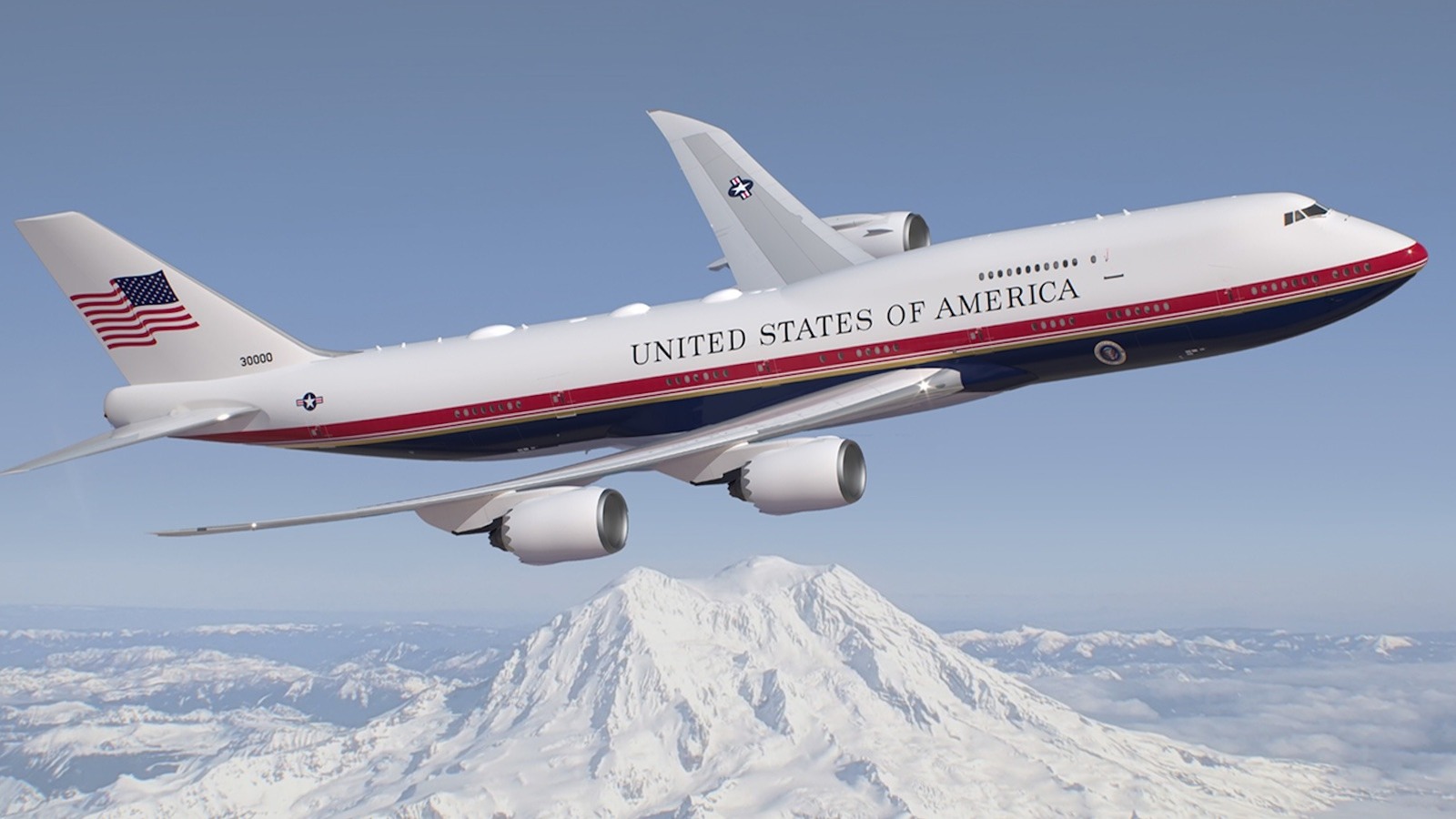
Who Ultimately Owns Air Force One After a Presidential Term?
The prevailing assumption that Air Force One, as a symbol of executive power and national security, remains the property of the United States government is not merely a matter of tradition but of statutory and fiscal logic. Yet, the claim that a former president might retain personal possession of such an aircraft—especially one that has undergone a $1 billion taxpayer-funded refit—raises profound questions about the boundaries between public assets and private privilege. The evidence suggests that, under standard protocols, aircraft designated as Air Force One revert to general military or governmental use once a president leaves office. Any deviation from this norm would require extraordinary legal justification or a bespoke transfer arrangement, neither of which is typical in the historical record. If such an exception were granted, it would represent a radical departure from established stewardship of public resources.
What Justifies the Enormous Public Investment in Presidential Aircraft?
The rationale for investing upwards of $1 billion in refitting a presidential aircraft is anchored in the imperatives of security, communications, and global mobility. However, the scale and opacity of these expenditures often escape rigorous public scrutiny, shielded by claims of national security. While such investments are defensible to the extent that they ensure the continuity of government and the safety of the executive, the lack of transparent cost-benefit analysis leaves open the possibility of over-specification or procurement inefficiencies. Moreover, the practical significance of these upgrades must be weighed against opportunity costs: every dollar allocated to Air Force One is a dollar not spent on other pressing national needs. The methodological challenge lies in quantifying the marginal security or diplomatic advantage conferred by each increment of spending—a task complicated by classified information and shifting threat environments.
How Do Perceptions of Presidential Privilege Shape Public Trust?
The optics of a former president retaining a lavishly refitted aircraft, especially one financed by taxpayers, risk fueling perceptions of elite impunity and eroding public trust in the stewardship of national assets. This dynamic is not merely symbolic. It has material consequences for the legitimacy of democratic institutions and the willingness of citizens to support future investments in executive infrastructure. If the public comes to believe that such resources are susceptible to personal appropriation, the social contract underpinning collective investment in the presidency itself may weaken. The evidence from analogous controversies—ranging from presidential libraries to post-office security details—suggests that transparency and clear legal boundaries are essential to maintaining public confidence.
What Are the Structural Blind Spots and Vested Interests?
The intersection of defense contracting, executive privilege, and political symbolism creates a fertile environment for structural blind spots. Procurement processes for presidential aircraft are notoriously complex, involving multiple layers of contractors, security agencies, and political oversight—each with its own incentives to maximize budgetary allocations or preserve institutional prerogatives. This diffusion of responsibility can obscure accountability and foster a culture in which exceptional arrangements, such as the personal retention of a government aircraft, become thinkable. Moreover, the absence of robust independent auditing mechanisms means that the true cost and utility of such investments often remain contested or under-examined.
What Should an Informed Reader Conclude?
For the analytically minded observer, the core issue is not simply whether a former president will keep a particular plane, but what this possibility reveals about the permeability of public-private boundaries at the highest levels of government. The evidence, while incomplete, points to the need for more rigorous oversight, clearer statutory guidelines, and a renewed commitment to the principle that public resources serve collective—not personal—ends. Until such reforms are enacted, the risk of exceptionalism and the erosion of public trust will persist, with consequences that extend far beyond the fate of any single aircraft.