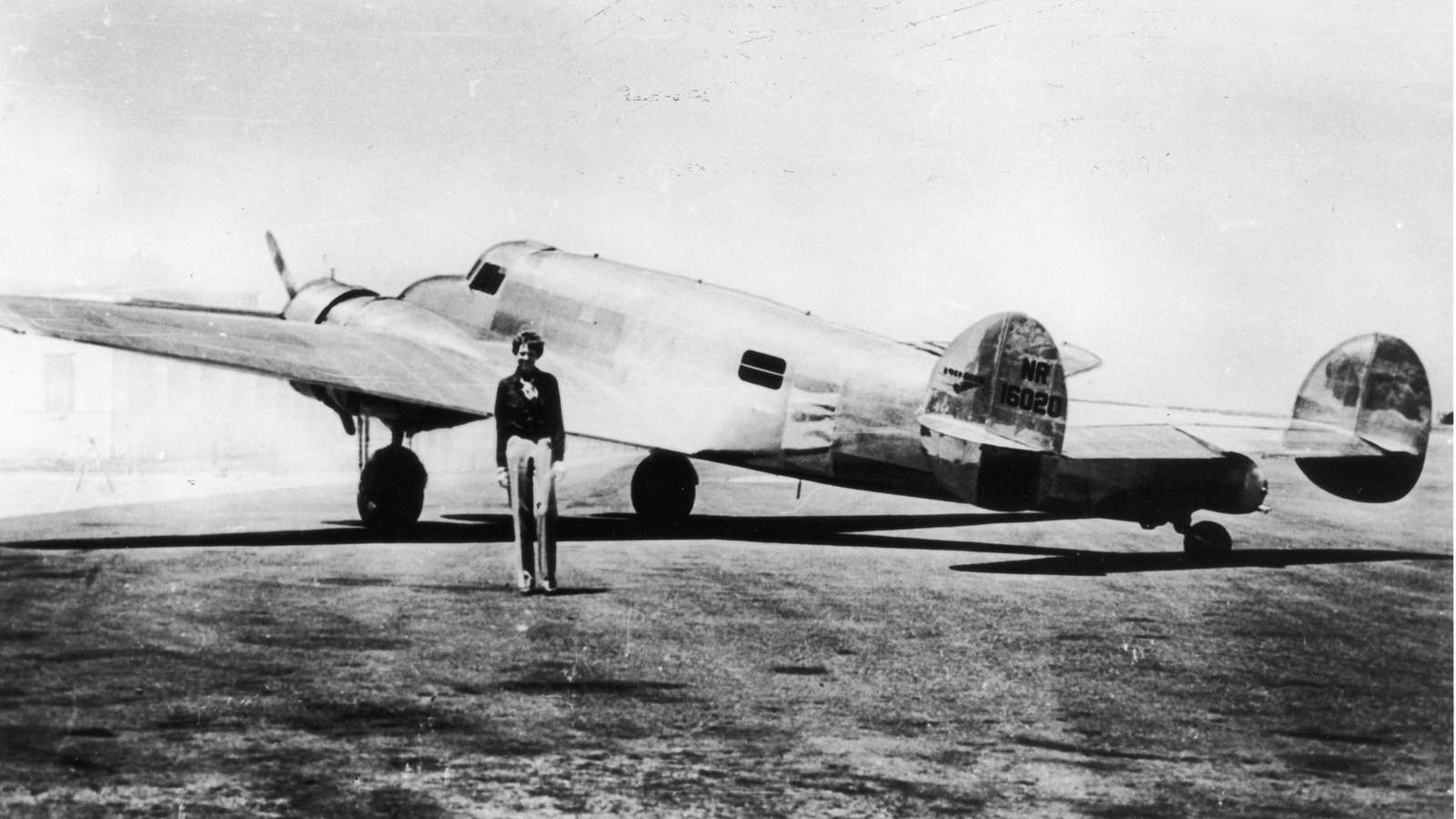
What Mechanisms Sustain the Enduring Mystery of Amelia Earhart’s Disappearance?
The persistent enigma surrounding Amelia Earhart’s final flight is not merely the product of historical curiosity or the absence of definitive evidence. Rather, it is a function of the interplay between technological limitations, the ambiguous nature of archival data, and the psychological allure of unresolved narratives. Satellite imagery, recently touted as a potential breakthrough, exemplifies this dynamic: while such images may suggest the outline of a downed aircraft on a remote island, the interpretive leap from ambiguous pixels to conclusive identification remains fraught with uncertainty. The evidence, in this instance, is as much a Rorschach test for the hopes and biases of investigators as it is a neutral record of physical reality.
Why Do Claims of New Evidence Persist—And What Are Their Structural Limitations?
The cyclical emergence of purported discoveries—whether in the form of grainy photographs, anecdotal testimony, or ambiguous satellite data—reflects both the limitations of available methodologies and the powerful incentives for sensational revelation. Satellite imagery, for all its promise, is constrained by resolution, atmospheric distortion, and the inherent ambiguity of interpreting natural versus artificial forms in remote environments. The possibility that the object in question is a downed coconut tree, rather than an aircraft, is not a trivial caveat but a structural limitation: the technology is not yet capable of delivering the kind of forensic certainty that the public imagination demands. This ambiguity is compounded by the vested interests of those who stand to gain from perpetuating the mystery, whether for institutional funding, media attention, or personal legacy.
Who Is Most Affected by the Perpetuation of This Mystery?
While the narrative of Earhart’s disappearance is often framed as a universal historical puzzle, its consequences are not evenly distributed. The families of Earhart and her navigator, the communities invested in her legacy, and the broader public fascinated by the mythos of vanished pioneers all experience the effects differently. For some, the ongoing search offers a form of closure deferred; for others, it is a source of frustration or even exploitation. Moreover, the allocation of resources—both financial and intellectual—toward the pursuit of increasingly marginal returns on evidence raises questions about opportunity costs in the broader field of historical research.
What Deeper Patterns and Second-Order Consequences Emerge from This Case?
The case of Earhart’s disappearance, and the repeated invocation of new “evidence,” highlights a broader epistemological tension: the desire for narrative resolution often outpaces the capacity of available tools to deliver it. This dynamic is not unique to Earhart; it recurs wherever technological optimism collides with the recalcitrance of physical reality. The risk is that, in the absence of methodological rigor, the search for closure devolves into a kind of collective pareidolia—seeing what we wish to see, rather than what the evidence can reliably support. The second-order consequence is a subtle erosion of public trust in both technological promise and historical inquiry, as each new “breakthrough” fails to deliver definitive answers.
What Should an Informed Reader Conclude About the Latest Claims?
Given the methodological boundaries and the history of contested interpretations, the prudent stance is one of measured skepticism. The allure of a dramatic discovery should not obscure the necessity of critical scrutiny—especially when the evidence is ambiguous and the stakes are as much symbolic as they are factual. The most responsible course is to recognize both the enduring fascination of Earhart’s story and the structural limitations that make definitive closure unlikely, at least with current technologies. In resisting the temptation to conflate possibility with probability, the informed reader preserves the integrity of historical inquiry—and, perhaps, the dignity of the mystery itself.