Why Artemis III’s Role as a Moon Landing Mission Remains Contingent
Despite the rhetorical framing of Artemis III as the United States’ return to the lunar surface, a closer examination of the program’s technical dependencies and operational prerequisites reveals a more ambiguous reality. The prevailing narrative—one that treats Artemis III as the inevitable next step in human lunar exploration—obscures the extent to which this mission is structurally contingent on a cascade of unproven capabilities, each of which introduces significant risk and uncertainty. The evidence suggests that, rather than serving as a definitive Moon landing, Artemis III may ultimately function as a demonstration of readiness, the culmination of which remains conditional at best.
What Capabilities Must Precede a Credible Lunar Landing?
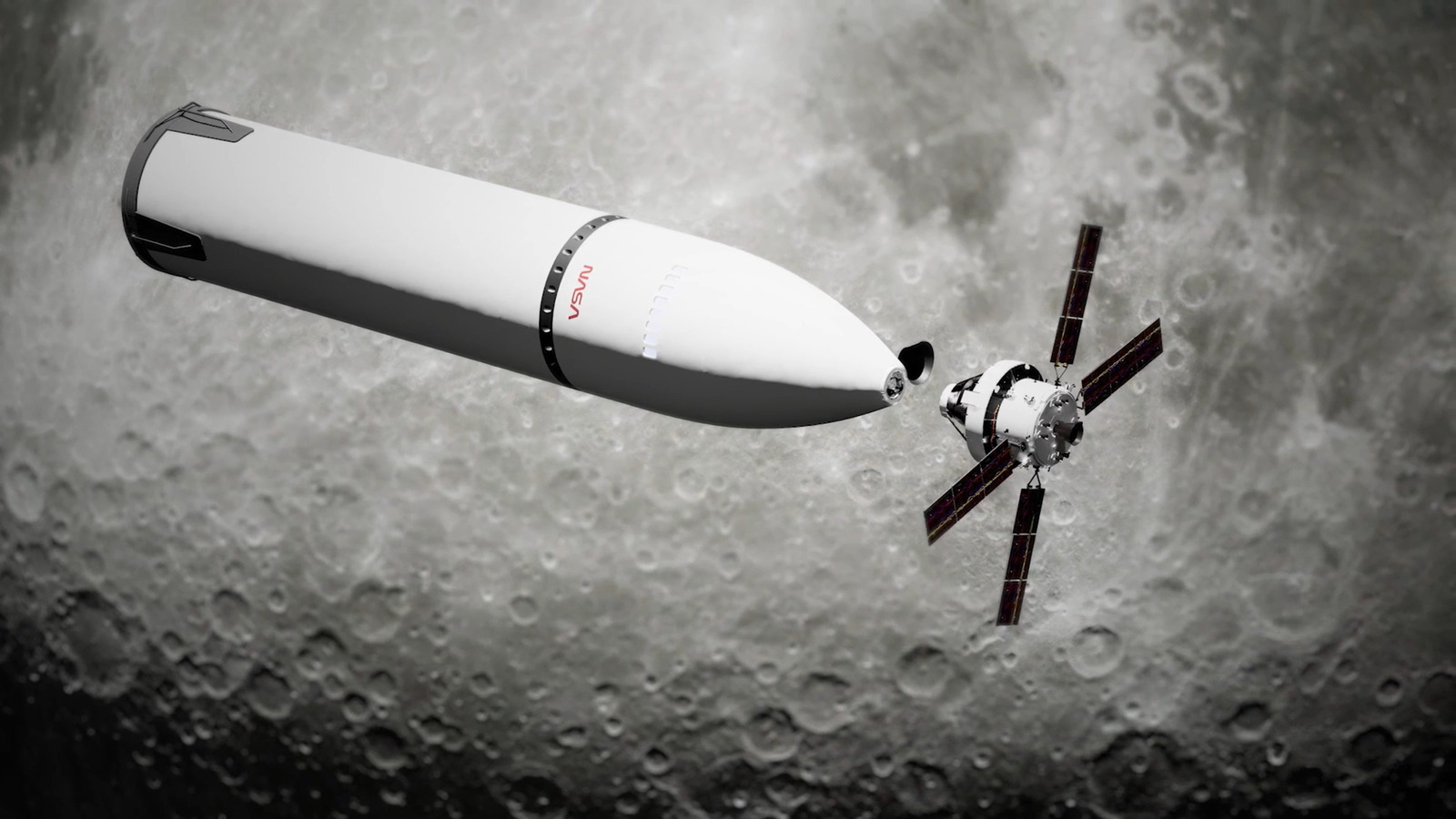
At the heart of the Artemis III dilemma lies the intricate choreography of hardware, software, and human factors that must align before a crewed lunar landing can be credibly attempted. The mission’s architecture depends on the successful demonstration of multiple novel systems: the Space Launch System (SLS), the Orion spacecraft, and—most critically—the Human Landing System (HLS), which itself is predicated on in-space refueling, autonomous docking, and extended lunar surface operations. Each of these elements, while theoretically sound, has yet to be validated in the operational context required for a safe and repeatable Moon landing.
The HLS, in particular, represents a technological leap with few historical analogues. Its reliance on rapid propellant transfer in lunar orbit introduces a layer of complexity that has not been tested at scale. Moreover, the integration of commercial partners into this architecture, while potentially accelerating innovation, also introduces coordination risks that NASA’s traditional, vertically integrated approach did not face. The practical significance of these dependencies is clear: until these systems are demonstrated in flight, the designation of Artemis III as a “landing mission” remains more aspirational than assured.
How Do Programmatic and Political Pressures Shape the Narrative?
The framing of Artemis III as a lunar landing is not merely a technical question but also a reflection of institutional incentives and political imperatives. Congressional timelines, contractor milestones, and the broader geopolitical context—particularly the desire to reassert American leadership in space—exert pressure to present Artemis III as a foregone conclusion. Yet, this framing risks obscuring the operational realities on the ground (and in orbit). The evidence from prior large-scale space initiatives suggests that such pressures can lead to schedule-driven decision-making, with attendant risks to safety and mission success.
There is also a structural blind spot in the public discourse: the tendency to treat the demonstration of individual subsystems as equivalent to the demonstration of integrated mission capability. This conflation, while perhaps useful for sustaining political and public support, does little to mitigate the technical debt that accumulates when systems are tested in isolation rather than as part of a coherent end-to-end sequence.
Who Stands to Gain or Lose from the Current Framing?
The consequences of prematurely designating Artemis III as a landing mission are not evenly distributed. For NASA and its contractors, the narrative of imminent lunar return secures funding and institutional momentum. For policymakers, it offers a tangible symbol of national ambition. However, for astronauts, mission planners, and the broader scientific community, the risks are more acute. Should Artemis III proceed without adequate demonstration of critical capabilities, the likelihood of mission failure—or, more gravely, loss of crew—rises in ways that are not fully captured by optimistic timelines or press releases.
There are also second-order effects: the potential erosion of public trust should delays or failures occur, the opportunity cost of diverting resources from more incremental but robust demonstrations, and the risk of crowding out alternative approaches to lunar exploration that might prove more sustainable in the long term.
What Should an Informed Reader Conclude?
Given the current state of technological readiness and the historical record of complex spaceflight programs, the most defensible interpretation is that Artemis III’s status as a Moon landing mission remains conditional on a series of unproven demonstrations. The prudent course—both for policymakers and the public—is to treat the mission as a critical waypoint in a longer process of capability maturation, rather than as an assured culmination. To do otherwise is to conflate aspiration with achievement, and in so doing, to risk both the safety of the crew and the credibility of the broader lunar program.