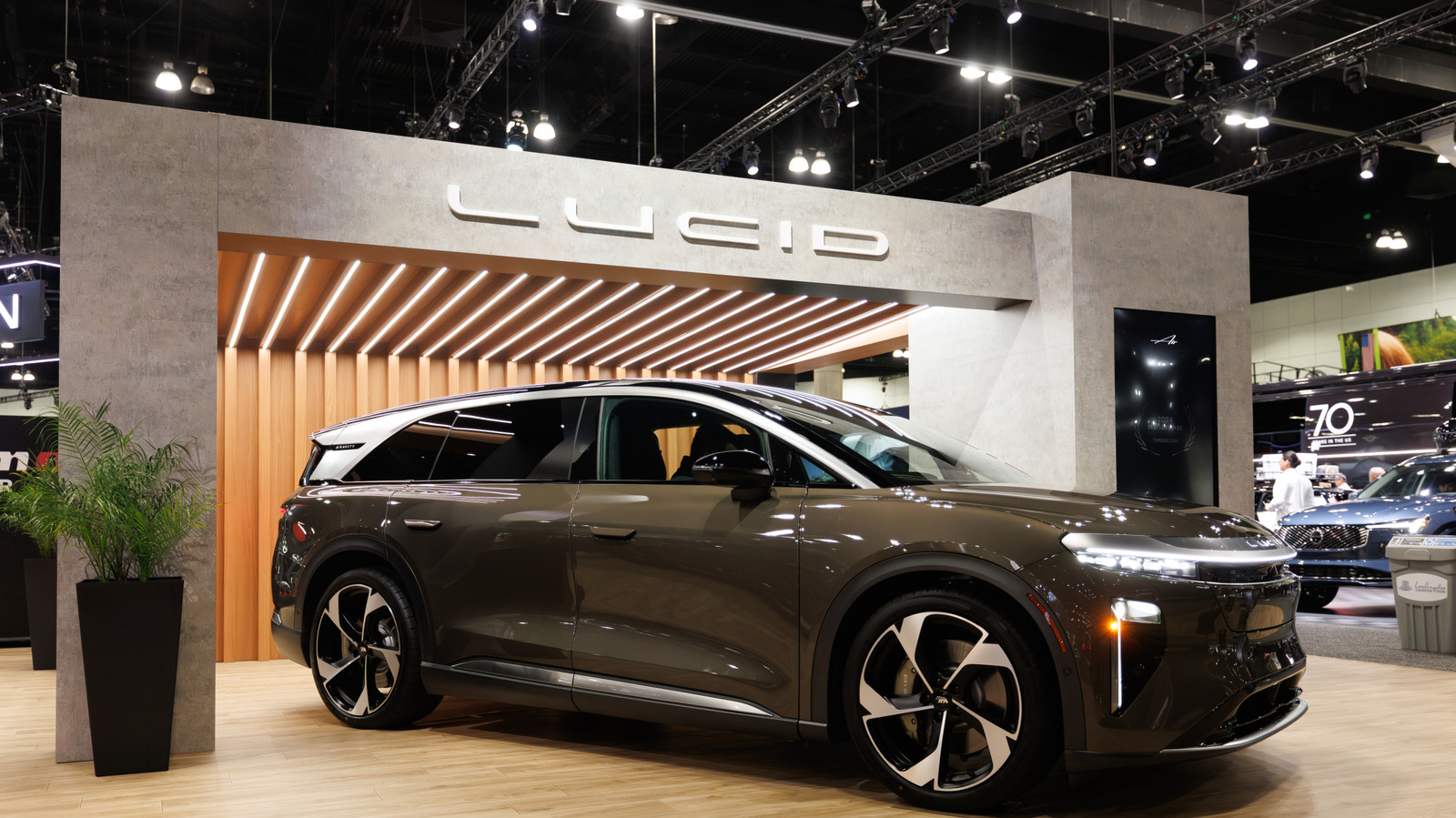
Does the Hypothetical Acquisition of Lucid by Aston Martin Reveal Deeper Industry Dynamics?
The proposition that Aston Martin might acquire Lucid, while superficially improbable, exposes a set of underlying tensions and strategic imperatives within the automotive sector. On its face, the scenario appears fanciful—Aston Martin, a storied British marque with a legacy rooted in combustion-powered luxury, absorbing a high-burn-rate American electric vehicle (EV) startup. Yet, the very implausibility of this merger invites scrutiny. It compels us to interrogate not only the financial and technological trajectories of both firms but also the broader structural realignments shaping the industry.
Why Would Such a Merger Make Counterintuitive Sense?
At first glance, the asymmetry between Aston Martin’s tradition and Lucid’s technological ambition seems insurmountable. However, the evidence suggests that legacy automakers are increasingly compelled to seek quantum leaps in electrification, often through partnerships or acquisitions rather than incremental internal development. Lucid’s proprietary battery and drivetrain technologies, while unproven at scale, represent a potential shortcut for Aston Martin—a company whose electrification roadmap has lagged behind both regulatory mandates and consumer expectations.
This is not a simple case of technological deficit. Rather, it is a function of capital constraints and the high fixed costs of developing next-generation EV platforms. For Aston Martin, the cost of building a competitive EV program from scratch, given its limited production volumes and cash flow volatility, may well exceed the risks associated with acquiring a distressed but innovative player. Conversely, Lucid’s existential challenge—turning technical promise into commercial viability—could be mitigated by access to Aston Martin’s brand equity, dealer networks, and established customer base. The logic is not that such a merger is likely, but that it is less irrational than it appears when viewed through the lens of mutual structural deficiencies.
What Are the Hidden Stakeholders and Second-Order Effects?
The mainstream narrative tends to focus on shareholders and immediate product synergies. Yet, the most consequential effects of such a merger would likely be felt by actors further down the value chain: suppliers recalibrating to new technical standards, regulators navigating the collision of national industrial policies, and even rival automakers forced to reassess their own acquisition strategies. There is also the question of labor—how would the integration of two distinct corporate cultures, with divergent engineering philosophies and geographic footprints, affect employment stability and innovation incentives?
Moreover, the hypothetical merger could serve as a bellwether for the fate of other legacy brands confronting the EV transition. If a company as tradition-bound as Aston Martin were to pursue such a radical move, it would signal a broader industry acceptance that organic transformation is insufficient under current market and regulatory pressures. This, in turn, could accelerate a wave of consolidation, with unpredictable consequences for competition, consumer choice, and technological diversity.
Where Do the Mainstream Interpretations Fall Short?
Prevailing analyses often reduce such scenarios to binary outcomes: either a deal is “likely” or “unlikely,” with little attention paid to the underlying mechanisms that render the improbable plausible. This interpretive shortfall stems from a tendency to treat automakers as monolithic actors, rather than as coalitions of competing interests—engineers, marketers, financiers—each with distinct risk tolerances and strategic horizons. Furthermore, the focus on headline financials obscures the reality that, in periods of technological upheaval, value is often created or destroyed not by balance sheet strength but by the capacity to reconfigure organizational capabilities at speed.
What Should an Informed Reader Conclude?
While the probability of Aston Martin acquiring Lucid remains remote under current conditions, the scenario is analytically useful precisely because it dramatizes the scale of adaptation required in the automotive sector. The informed reader should resist the temptation to dismiss such proposals as mere speculation. Instead, the prudent judgment is to recognize that the boundaries between legacy and disruptor, luxury and technology, are more porous than they appear. In this context, strategic imagination—however improbable its immediate instantiations—may prove a more reliable guide to the industry’s future than conventional wisdom or static financial modeling.