How Do Unplanned Natural Encounters Reshape Industrial Spaces?
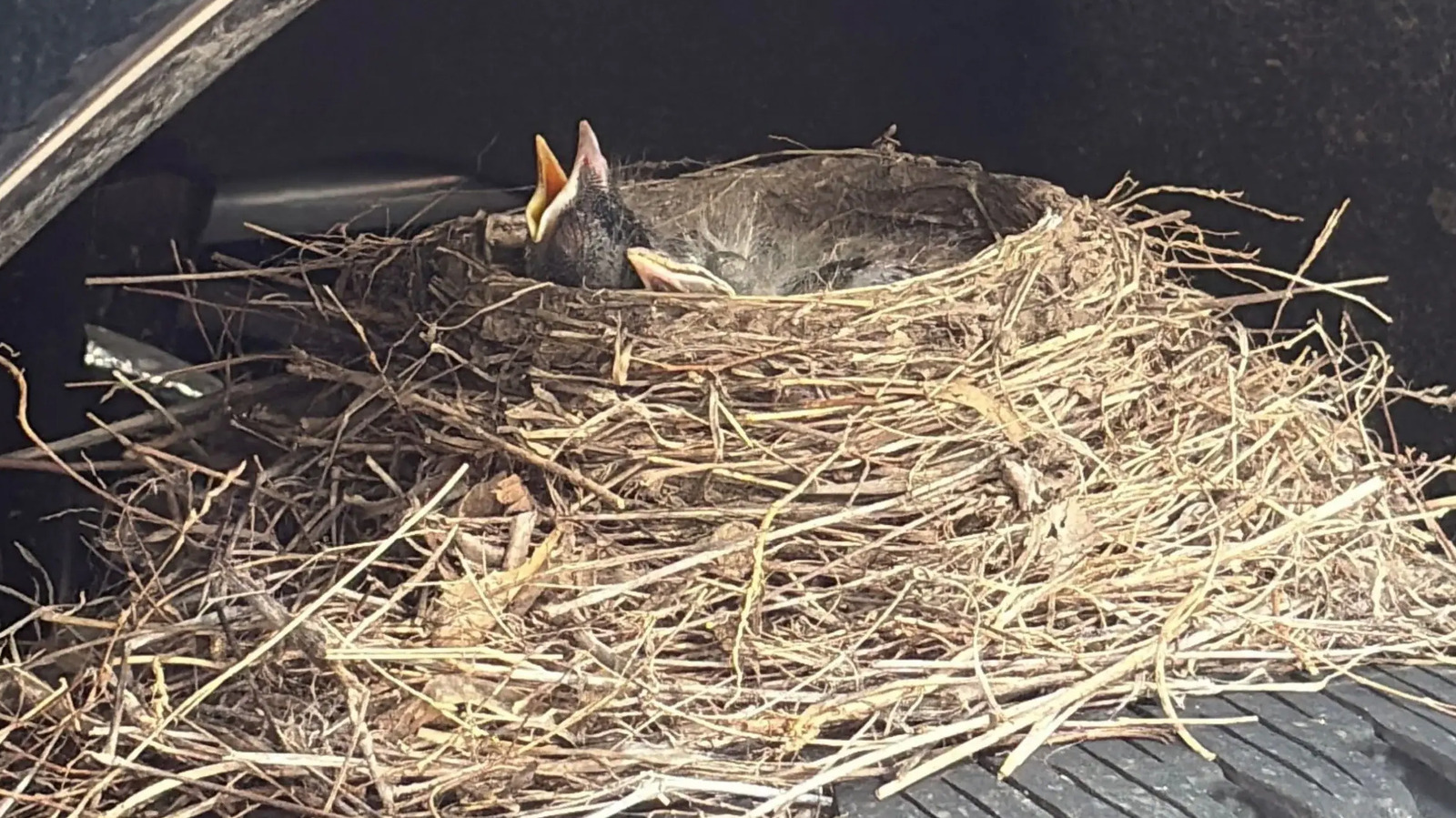
When a commercial facility becomes the site of an unexpected natural event, such as the nesting of baby birds within a newly sold vehicle, the boundaries between human enterprise and ecological processes are momentarily redrawn. The evidence suggests that such incidents, while rare, provoke a reconsideration of the assumed impermeability of industrial environments. The image of fledglings occupying the chassis of a Ford F-250—an object engineered for utility and commerce—serves as a visual contradiction to the prevailing narrative of human dominion over manufactured space. This juxtaposition does not merely amuse; it unsettles the tacit hierarchy between the built and the wild.
Why Do Employees Respond Positively to These Disruptions?
The visible delight among employees at the Olathe facility, as inferred from their engagement with the avian visitors, warrants closer scrutiny. While workplace morale is often discussed in terms of productivity metrics or team-building exercises, the spontaneous arrival of wildlife introduces a different vector: collective wonder. This response, however, is not universally replicable. It depends on the absence of operational risk, the brevity of the disruption, and the cultural disposition of the workforce. Under these specific conditions, the event becomes a shared narrative, momentarily suspending the transactional logic of the workplace. Yet, one must acknowledge the possibility that such positivity is itself a function of privilege—the luxury to treat nature as novelty rather than nuisance.
What Broader Implications Emerge from Such Interactions?
The incident’s significance extends beyond the anecdotal. It exposes the porousness of even the most controlled environments and challenges the presumption that human systems can fully exclude or manage non-human actors. For stakeholders invested in operational efficiency, this may be an uncomfortable realization. For those concerned with sustainability, however, it offers a subtle prompt: coexistence is not merely a policy aspiration but an inevitability, sometimes manifesting in the most unanticipated forms. The mainstream interpretation—that such events are harmless curiosities—risks overlooking the latent tension between ecological unpredictability and industrial order.
Who Is Affected in Ways Not Immediately Apparent?
While the immediate participants—employees, management, and perhaps the eventual vehicle owner—are obvious, the ripple effects reach further. The birds themselves, whose habitat selection inadvertently intersects with human commerce, become unwitting symbols of adaptation and vulnerability. Local ecological networks may be subtly altered by such interactions, though the evidence for long-term impact remains limited. Moreover, the event may influence organizational attitudes toward future wildlife encounters, shaping protocols or informal norms in ways that persist beyond the incident itself.
What Should an Informed Reader Conclude?
The episode at Olathe is more than a charming workplace anecdote. It is a microcosm of the ongoing negotiation between human ambition and ecological contingency. The prudent observer will resist the temptation to romanticize or trivialize such events. Instead, the more durable lesson lies in recognizing the structural limitations of even our most meticulously managed environments and the value—both practical and existential—of remaining receptive to the unpredictable presence of the natural world.