How Does the End of Bugatti’s W16 Era Reflect Shifting Priorities in Hypercar Engineering?
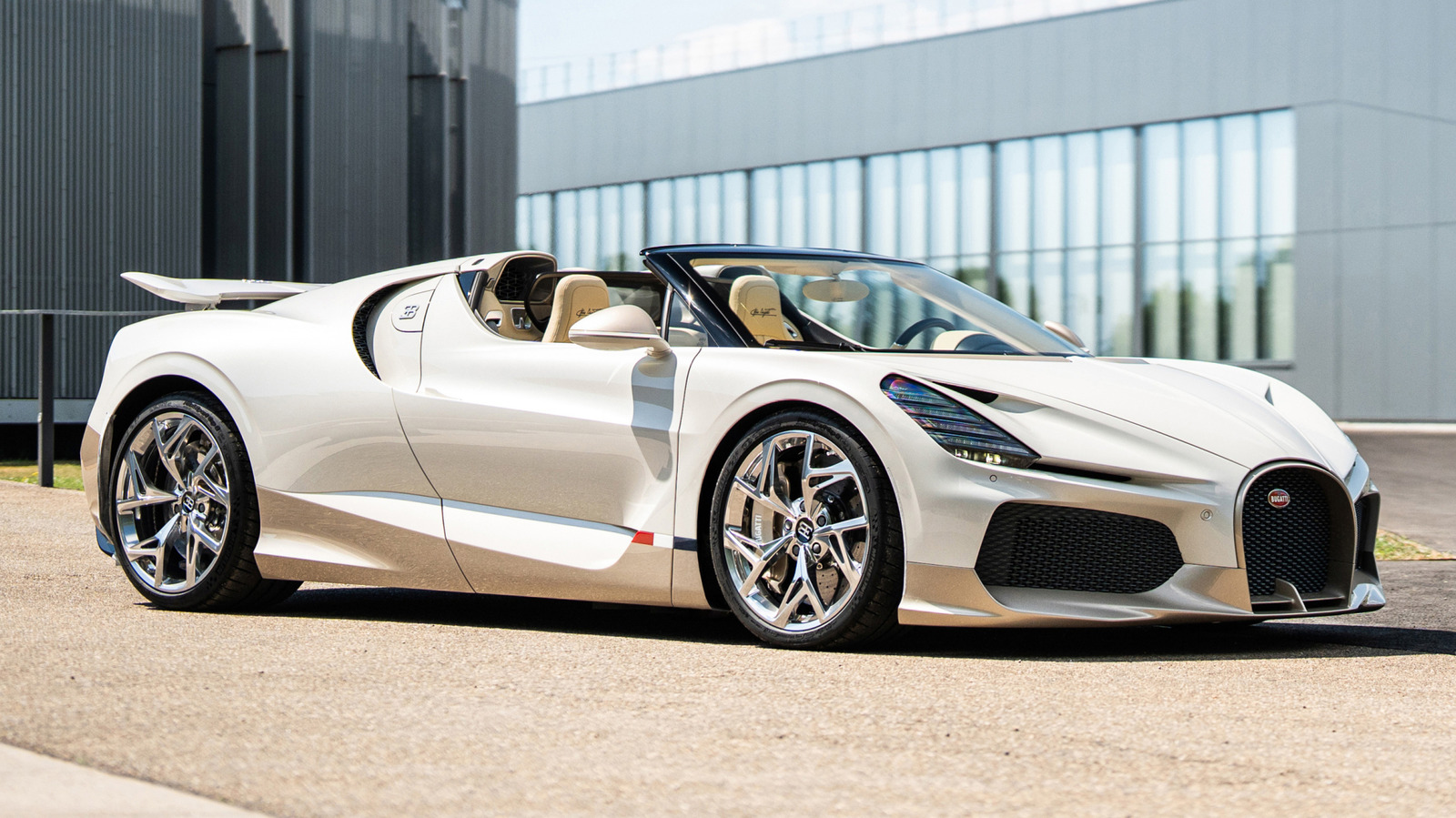
The near-completion of Bugatti’s 99-unit Mistral run, marking the effective retirement of its iconic W16 engine, signals more than a technical milestone. It encapsulates a broader inflection point in hypercar philosophy. The W16, a feat of mechanical audacity, has long served as both a symbol and a tool: its sixteen cylinders and quad-turbocharged architecture enabled performance benchmarks that, for a time, seemed to defy the limits of combustion engineering. Yet, as the Tourbillon’s production looms, the evidence suggests Bugatti is not merely chasing higher numbers but reorienting its ambitions toward a new synthesis of powertrain innovation and regulatory adaptation.
The core mechanism at stake is not simply the replacement of one engine with another. Rather, it is the recalibration of what constitutes automotive excellence. The W16’s retirement is not a concession to obsolescence per se—its output remains formidable—but a tacit acknowledgment that the future of hypercars will be defined as much by hybridization, electrification, and software integration as by raw displacement. This transition, while technologically inevitable, is also shaped by tightening emissions standards and shifting consumer expectations, especially among the ultra-wealthy clientele who increasingly demand exclusivity without environmental backlash.
Why Does the W16’s Discontinuation Matter Beyond the Realm of Collectors?
For those outside the rarefied circle of Bugatti owners, the W16’s swan song might appear as little more than a footnote in automotive history. Yet, the implications ripple outward. The W16’s demise is emblematic of a larger industry reckoning: the gradual eclipse of internal combustion’s most extravagant expressions. Under specific conditions—namely, regulatory environments in Europe and parts of Asia—the continued viability of such engines is not merely challenged but rendered untenable. This shift, while often framed as a triumph of environmental stewardship, also raises questions about what is lost when mechanical complexity gives way to digital optimization.
Moreover, the symbolic value of the W16’s retirement cannot be overstated. For decades, engines like it have functioned as totems of engineering prowess, their excesses justified by the pursuit of speed and spectacle. The move toward electrified or hybridized platforms, while technologically impressive, lacks the visceral drama of a sixteen-cylinder crescendo. This is not simply nostalgia; it is a recognition that certain forms of mechanical artistry may not be easily replicated in the coming era.
Who Stands to Gain or Lose from Bugatti’s Strategic Pivot?
The most immediate beneficiaries of this transition are, paradoxically, both regulators and a new cohort of hypercar buyers. For policymakers, the phasing out of the W16 aligns with broader emissions-reduction targets, offering a high-profile case study in industry compliance. For buyers, the scarcity of the final W16-powered Mistrals—each adorned with bespoke flourishes, such as the “Sparkle” paint and falcon-head shifter sculpture—translates into instant collectibility and, likely, long-term asset appreciation.
Yet, the losers are not only traditionalists or combustion purists. There is a less visible constituency: the network of suppliers and artisans whose livelihoods are intertwined with the production of complex, hand-built engines. As powertrains become more modular and software-driven, the demand for such specialized labor may diminish, with second-order consequences for regional economies and technical apprenticeships.
What Are the Structural Limitations and Blind Spots in Mainstream Interpretations?
Prevailing narratives often frame Bugatti’s move as a straightforward embrace of progress, but this interpretation remains contested. The practical significance of the W16’s retirement is bounded by the fact that hypercars, by definition, occupy a minuscule share of global vehicle emissions. The environmental impact of retiring one engine line, however dramatic, is largely symbolic when set against the scale of mass-market transportation.
Furthermore, there is a tendency to overlook the role of regulatory arbitrage. Some manufacturers, faced with similar constraints, have sought loopholes or relocated production to more permissive jurisdictions. Bugatti’s decision to sunset the W16, therefore, may be as much about brand positioning—signaling alignment with the zeitgeist—as about technical necessity.
What Should an Informed Reader Conclude About the Future of Hypercar Identity?
The evidence, while not unequivocal, points toward a future in which the meaning of hypercar excellence will be contested and redefined. The W16’s retirement is both an end and a beginning: it closes the chapter on an era of maximalist combustion engineering, even as it opens the door to new forms of innovation whose legitimacy will be measured by different metrics—efficiency, connectivity, and perhaps a subtler kind of exclusivity.
For those invested in the cultural and technological evolution of the automobile, the key takeaway is not to mourn the passing of the W16, but to interrogate what will replace its role as an object of aspiration and debate. The Tourbillon, and the models that follow, will not merely inherit the mantle of performance; they will be tasked with inventing new rationales for desire in a world where the old ones are increasingly untenable.