What Drives the Relentless Complexity of Automotive Manufacturing?
The assertion that building cars is hard, while superficially self-evident, conceals a deeper structural reality: automotive manufacturing is not merely a technical challenge, but a crucible for reconciling ambition with constraint. The process demands the orchestration of thousands of interdependent components, each sourced, fabricated, and assembled under unforgiving tolerances. Yet, the true difficulty lies not in the accumulation of parts or the sophistication of machinery, but in the persistent negotiation between visionary design and the intransigent realities of mass production.
This tension is not static. It intensifies as consumer expectations, regulatory frameworks, and technological paradigms evolve. The evidence suggests that each new generation of vehicles is less a linear improvement over its predecessor than a contested synthesis of competing priorities: safety, efficiency, aesthetics, cost. The core mechanism at stake is not simply engineering prowess, but the capacity to translate abstract ideals—efficiency, beauty, innovation—into reproducible form at scale. Here, the labor is not just physical but conceptual.
Why Do Aspirations Precede Achievement in Automotive Design?
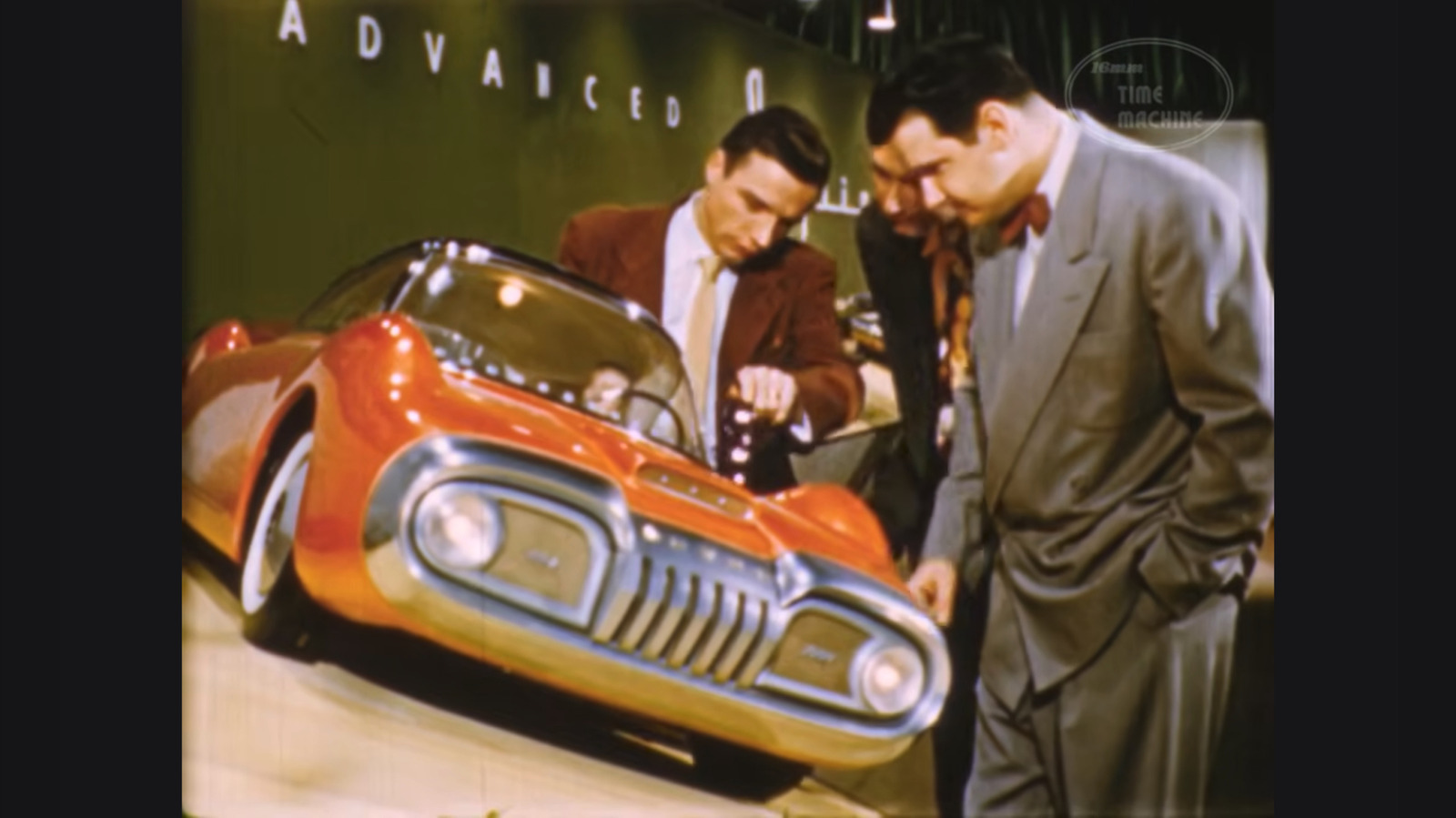
The image of dreams preceding cars, as depicted in mid-century industrial films, is more than nostalgic rhetoric. It encapsulates a persistent truth about innovation: vision must precede execution, yet vision alone guarantees nothing. The historical record is replete with examples where bold concepts faltered in the face of production bottlenecks, supply chain fragility, or consumer indifference. Conversely, incremental improvements—often derided as uninspired—have sometimes yielded disproportionate gains in reliability or affordability.
This dynamic raises a critical interpretive question: to what extent does the industry’s rhetoric of progress mask the structural inertia embedded within its own processes? While the mythology of the lone designer or the breakthrough prototype persists, the reality is that most automotive advances emerge from iterative, collective effort. The work, in other words, is not merely the price of entry—it is the crucible in which aspiration is either realized or quietly abandoned.
Who Bears the Consequences of Manufacturing Difficulty?
The burdens of automotive complexity are not distributed evenly. Workers on the assembly line encounter the most immediate manifestations—ergonomic strain, repetitive tasks, exposure to industrial hazards. Yet, the consequences ripple outward. Consumers, often unaware of the invisible compromises embedded in their vehicles, may experience the downstream effects as recalls, reliability issues, or subtle design limitations. Investors and suppliers, meanwhile, navigate the volatility of a sector where a single miscalculation can erase years of profit.
Less obviously, entire communities are shaped by the fortunes of local plants—subject to the whims of global supply chains and shifting corporate priorities. The evidence does not support a narrative of unmitigated progress; rather, it suggests a cyclical pattern of expansion and contraction, innovation and retrenchment, with human costs that are frequently externalized.
What Are the Structural Blind Spots and Second-Order Consequences?
Mainstream accounts of automotive manufacturing often foreground technological triumphs while minimizing the systemic frictions that persist beneath the surface. For instance, the relentless pursuit of efficiency can incentivize practices—such as just-in-time inventory or globalized sourcing—that introduce new vulnerabilities. Recent disruptions, whether from pandemics or geopolitical tensions, have exposed the fragility of these arrangements.
Moreover, the industry’s focus on visible innovation—electric drivetrains, autonomous features—can obscure less glamorous but equally consequential domains: materials sourcing, labor relations, environmental impact. The evidence suggests that the most profound transformations may originate not from headline-grabbing breakthroughs, but from incremental shifts in these foundational practices.
What Judgment Should the Informed Reader Draw?
An uncritical celebration of automotive progress risks overlooking the complex interplay between ambition and constraint that defines the sector. The informed reader should approach claims of revolutionary change with measured skepticism, attentive to both the visible achievements and the hidden compromises. The lesson is not that dreams are futile, but that realization requires sustained, often invisible, labor—work that is as much about managing limitations as transcending them. In the end, the hard work of building cars is less a heroic struggle against adversity than a perpetual negotiation with reality itself.