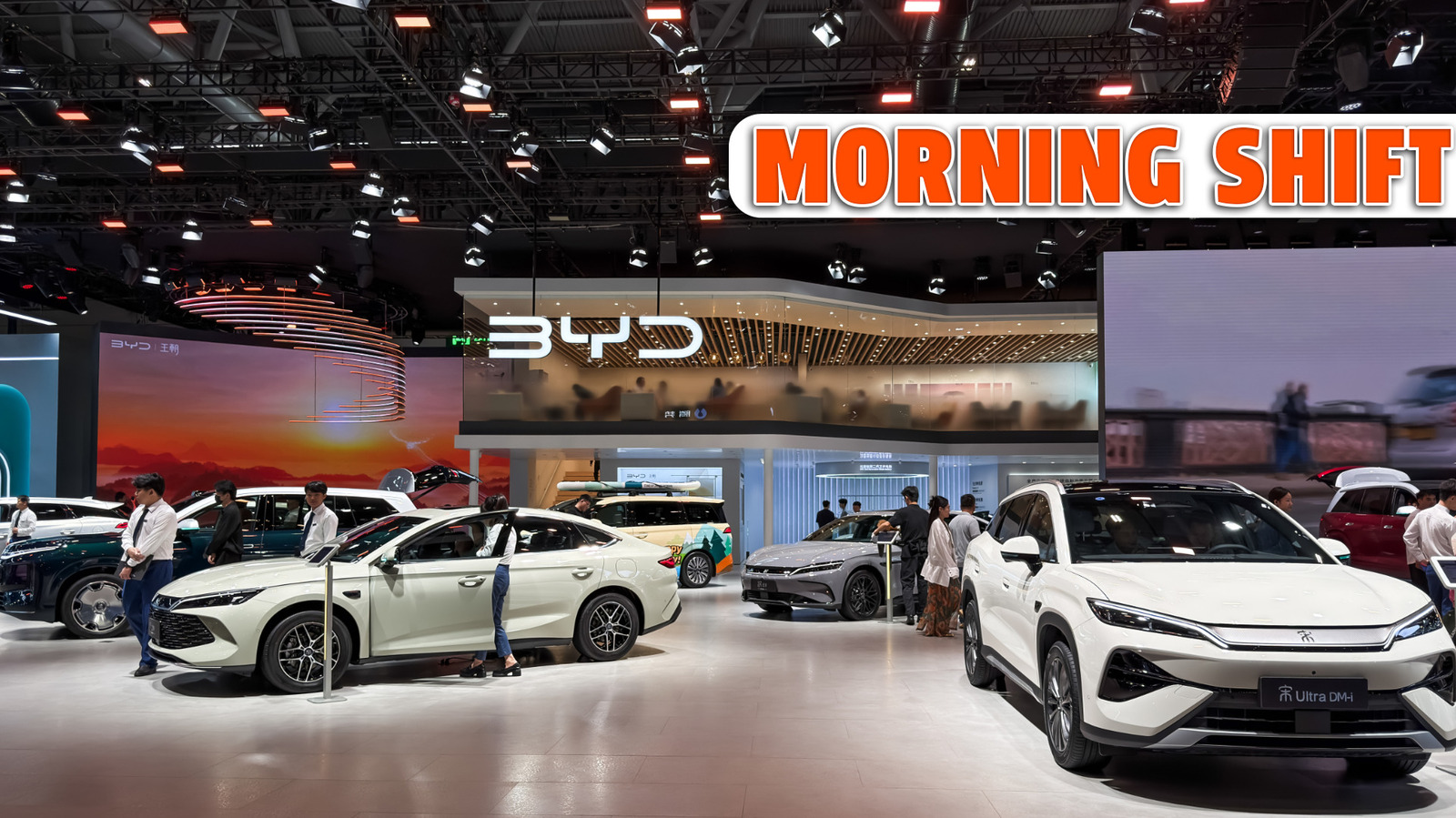
What Drives BYD’s Ambition to Surpass Global Automotive Giants?
The aspiration of BYD to become the world’s largest automaker is neither a mere marketing flourish nor a predictable extension of China’s industrial policy. Rather, it reflects an emergent logic in global manufacturing: the fusion of scale, vertical integration, and state-enabled risk-taking. BYD’s trajectory is not simply about producing more vehicles; it is about redefining the boundaries of what constitutes automotive leadership in an era where electrification, software, and supply chain sovereignty are converging.
The evidence suggests that BYD’s competitive edge lies less in any single technological breakthrough than in its ability to orchestrate a tightly controlled ecosystem. By manufacturing batteries, chips, and even some raw materials in-house, BYD circumvents many of the bottlenecks that have hobbled Western rivals. Yet, this model is not without vulnerabilities. The company’s rapid expansion into international markets exposes it to regulatory pushback, cultural missteps, and the perennial risk of overextension—a pattern that has historically undermined even the most ambitious industrial challengers.
Why the Harley-Davidson and Indian Rivalry Reflects Deeper Industry Insecurities
The ongoing antagonism between Harley-Davidson and Indian is often dismissed as a relic of brand tribalism. However, a closer reading reveals a more consequential anxiety: the struggle to remain culturally relevant as the motorcycle market fragments and ages. Both brands, steeped in Americana, are forced to navigate a paradox. On the one hand, their heritage is their most valuable asset; on the other, it risks becoming a liability as younger consumers gravitate toward different forms of mobility and self-expression.
Underneath the surface-level bravado, the “war” between these two companies is symptomatic of a broader identity crisis. The evidence for this is circumstantial but persuasive: declining U.S. sales, aggressive repositioning in overseas markets, and a proliferation of limited-edition models that gesture toward innovation while clinging to nostalgia. The mainstream narrative tends to overstate the zero-sum nature of their rivalry. In reality, both brands are contending with the same existential threat—irrelevance in a market that is moving on.
How Mercedes’ New Electric Motors Complicate the EV Value Proposition
Mercedes’ recent unveiling of advanced electric motors is frequently interpreted as a straightforward leap forward in performance and efficiency. Yet, such a reading risks oversimplifying the strategic calculus at play. The move is better understood as an attempt to recalibrate the luxury value proposition for an electrified era—one where differentiation is increasingly defined by software, user experience, and proprietary technology rather than by combustion-engine heritage.
The practical significance of Mercedes’ innovation remains contested. On the one hand, the integration of in-house motor development could yield marginal gains in efficiency and driving dynamics. On the other, the incremental nature of these improvements may be insufficient to sway consumers already overwhelmed by the proliferation of EV options. Moreover, the company’s reliance on high-cost, high-complexity engineering raises questions about scalability and long-term profitability, particularly as new entrants undercut legacy brands on price and simplicity.
What Honda’s Recall Reveals About Systemic Vulnerabilities in Automotive Quality Control
Honda’s latest large-scale recall, while superficially a routine episode in the cyclical drama of automotive manufacturing, points to deeper structural tensions. Recalls of this magnitude are rarely the result of isolated errors; rather, they are symptomatic of the relentless pressure to compress development timelines and outsource critical components. The evidence, drawn from recall data across the industry, suggests that such incidents are becoming more frequent as supply chains grow more complex and regulatory scrutiny intensifies.
The mainstream interpretation—that recalls are simply a cost of doing business—obscures the second-order consequences. For Honda, the reputational damage may be diffuse and slow-burning, eroding consumer trust in ways that are difficult to quantify but strategically significant. For suppliers, the recall signals a shifting burden of liability and a potential recalibration of contractual relationships. The broader lesson is that quality control, once considered a solved problem in mature industries, is now a moving target—subject to the same volatility and uncertainty that define the contemporary automotive landscape.
What Should Informed Observers Conclude?
Taken together, these developments illuminate a sector in flux, where legacy advantages are being renegotiated and new forms of risk are emerging. The evidence does not support a single, deterministic narrative of disruption or decline. Rather, it points to a landscape where agility, strategic coherence, and the ability to manage complexity are more valuable than ever. For stakeholders—whether investors, consumers, or policymakers—the imperative is to look beyond headline-grabbing rivalries and technological milestones, and to interrogate the underlying mechanisms that will shape the next era of mobility.