

Jeep Compass Reinvents for South America with Leapmotor Hybrid Tech and Familiar Platform


Villeneuve Biopic Captures the Unlikely Ascent of a Canadian Racing Icon


Genesis GV90 Redefines Flagship Luxury with Electric Power and Coach Doors to Challenge Premium...

Hennessey Blackbird Redefines the Analog Supercar with V8 Power and Enduring Driver Engagement
 New atmo V8 supercar promises focused driving experience and long range, inspired by famed spy plane
American supercar maker Hennessey has revealed the wild Blackbird as its third all-new model, replacing the Venom F5 with a clear and rather different mandate: “maximum man-machine connection”.
Although it places a greater emphasis on driver engagement, its targeted statistics pitch it at the top of the supercar set: 800-850bhp, 0-60mph in less than 3.0sec and a 220mph top speed.
Hennessey has touted a dry weight below 1360kg (3000lb) with the help of a bespoke carbonfibre tub and carbonfibre bodywork.
At its heart is a high-revving, naturally aspirated V8 engine developed alongside Ilmor Engineering of Nascar fame and with a targeted red line of 9000rpm.
It sends its reserves to the rear axle via an open-gate, exposed-linkage, six-speed manual gearbox.
While there are electronic aids including active suspension, anti-lock braking and traction control, Hennessey pledges that the driver will be placed in the thick of the action.
As well as offering a more analogue alternative to the similarly priced McLaren W1, the supercar has been conceived as a tribute to the 1960s Lockheed SR-71 Blackbird spy plane, not only in its design cues and name – Hennessey has acquired the rights to use the latter – but via its long range.
It's first and foremost as a road car, with its development programme prioritising refinement, visibility and luggage space to “comfortably cover more than 800 miles in a single day”.
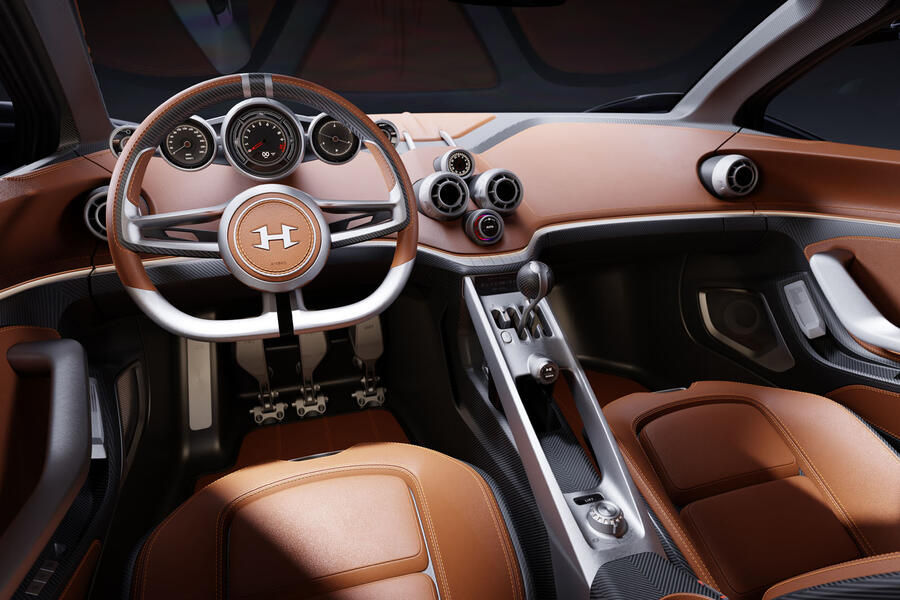
There’s more cabin space than its Venom F5 forebear and enough luggage capacity for “two full-size carry-on bags”, Hennessey said.
Aerodynamics still play a significant role: the active rear stabilisers, modelled on the SR-71's tail fins, tilt up to 71deg at speeds above 71mph to maintain downforce and the creases alongside the sidepods are an obvious link to its airborne inspiration.
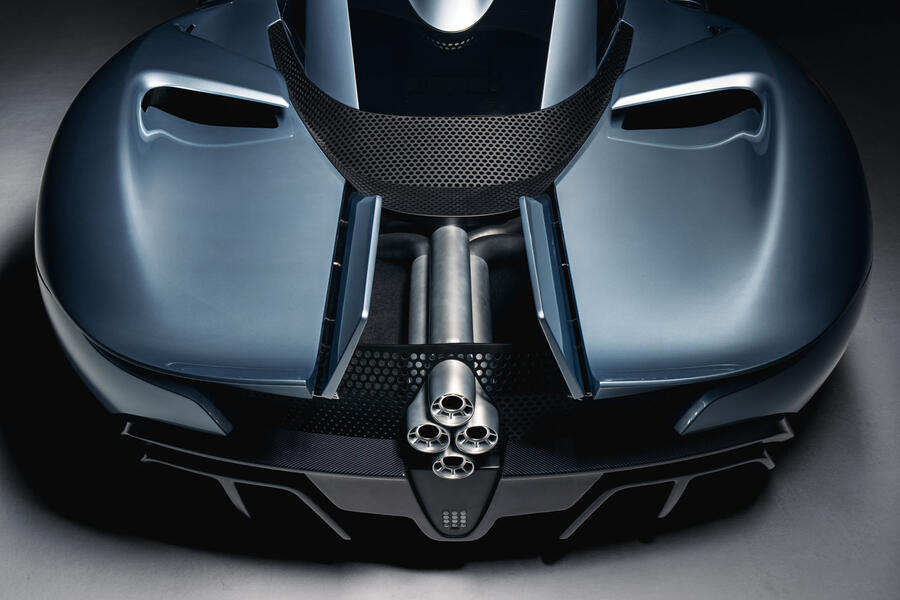
The quad exhaust layout is a nod to the rocket-engined Bell X-1, the first aircraft to break the sound barrier back in 1947.
The aviation theme carries over to the functional, driver-focused cabin, which features an abundance of exposed carbonfibre, visible pedal linkages and a suite of clearly presented dials and clocks in place of a digital driver display.
The focus on simplicity extends to the use of a smartphone mount for infotainment, rather than a central touchscreen, and the eradication of any buttons or switches from the steering wheel.
The minimalist arrangement also places greater emphasis on the gearlever, which sits pride of place on the 'floating' centre console.
Equally atypically for a modern supercar, the Blackbird also features a traditional ignition key.
“A big concern with our customers is driving something that is dated the minute that it lands,” Hennessey design director Nathan Malinick told Autocar. “Not only are these objects of desire to drive and enjoy, but for a large body of our customer base they are also driveable assets. You could still drive this in 75 years and not have a blank and unusable screen that is now broken and no one can find parts to.”
Malinick cited the cockpit of the 1960s Ferrari 250 GTO as among his all-time favourites.
Production of the 71 customer Blackbirds is touted to begin in Texas in 2029, priced from $2.5 million (£1.9m) before taxes.
The Blackbird is expected to live a similarly long life to its forebears, with further spin-offs and specials almost guaranteed. “We are not even thinking about what's going to be next,” said Malinick.

Lotus Eletre and the Collapse of the Chinese-Built EV Business Case in America

Nissan’s Return to Profit Signals Shifting Fortunes in the Japanese Auto Industry


Renault 4 Forges Community Through Charisma and Everyday Joy in the Electric Crossover Market
 It's a value crossover you can actually love - and owners are a cheery bunch
Good news: Renault 4 drivers are wavers. How could they not be? It’s such a cheery car – and still being fairly new remains sufficiently uncommon – that you simply have to celebrate when you see one coming the other way with a friendly wave or thumbs-up to its pilot.
There aren’t many current cars that would cultivate such a sense of community – the Jeep Wrangler and Mini Cooper are among the few that have made me feel like part of some benevolent fraternity – and I’m thrilled to be a member of the gang for a few months.
Last week I was coming up to overtake a lovely Carmine Red 4 on the M40 and preparing to give a jolly salute when my partner warned me to not embarrass her by larking around with strangers in adjoining lanes. Imagine my delight, then, when we pulled alongside and were greeted by a whole family of 4 fanatics – mum, dad and two kids – waving gleefully at us. Joining in ultimately proved irresistible for both occupants of my car.
All of which is to say that the 4 is proving itself to be a car for the happy motorist. It’s attractively priced and competitively specified but unlike some rivals doesn’t trade exclusively on those cold, hard, rational attributes; its charisma, dynamism and slight quirkiness are helping it curry favour with a large and enthusiastic group of buyers who want a car they can actually enjoy owning, not one that simply gets them joylessly from A to B.
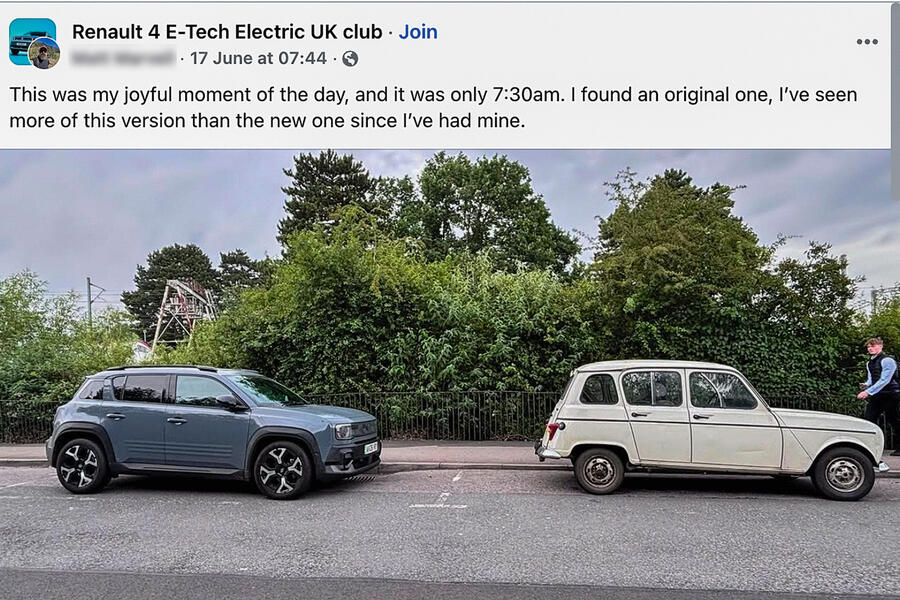
You need only look at the online owners’ groups for evidence of the conviviality it encourages. There are all the usual questions about how to turn down the ADAS bongs, remove the parcel shelf and find the VIN, but mostly people just want to tell everyone how excited they are about their new motor.
“I’m genuinely blown away with how good this car is as the daily runaround,” gushed one whose 4 was estimating 325 miles of range during a hot, low-speed commute. “I’m a day late posting because I’ve been having too much fun with the car,” apologises another who had promised live updates on their collection process the day before.
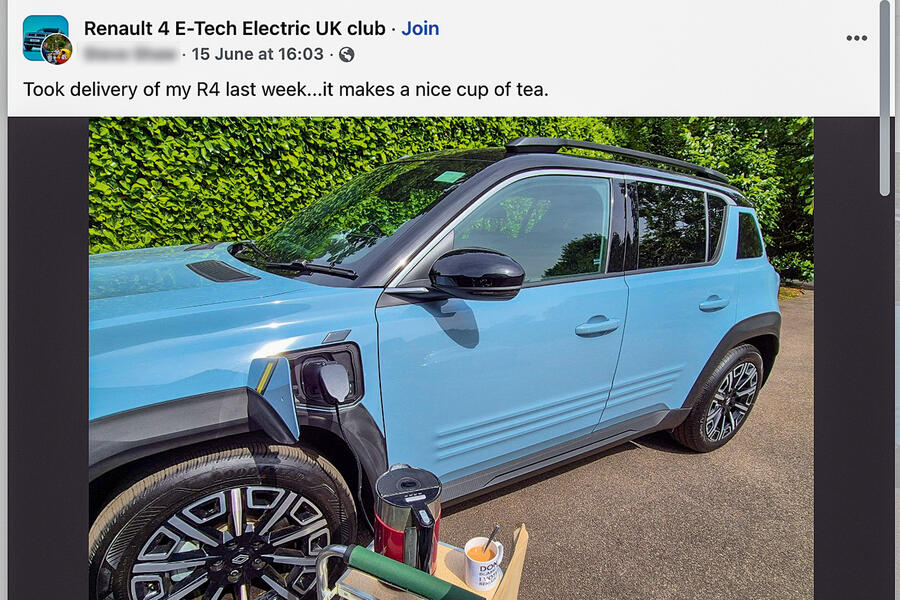
“It makes a nice cup of tea,” boasted an owner who’d discovered the vehicle-to-load functionality and lugged his kettle out to his driveway. Some are even organising meet-ups: there’s no better testament to the 4’s potential to achieve true classic status on a par with its 1970s namesake. Your average electric crossover just doesn’t attract this quasi-cult following from the off.
The constant discussion and debate also gives me plenty of opportunities to consider the merits of different specs and options and alerts me to quirks and features that might otherwise have passed me by.
I now know for sure, for example, that entry-level Evolution trim isn’t worth the slight saving, because owners lament that it lacks crucial niceties like heated seats, charge pre-conditioning, wireless phone charging and Google mapping.
I also know how to tell my 4 to prioritise one phone over another when booting up Apple CarPlay, how to deactivate the alarm if I have a dog in the car and even how to completely remove the rear seats if I ever need to (I hope not)

Kia Sales Surge in July as Hybrids Outpace EVs and Carnival Minivan Nears Record...

BMW M5 Facelift Confronts Weight Criticism With Subtle Design Tweaks and Major Interior Overhaul

Electric Vehicle Charging Costs and Strategies for Company Car Drivers Amid Rising Energy Prices
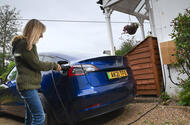 Volatile energy prices have made charging much pricier in recent years – so how can company car drivers keep a lid on their costs?
Electric vehicles have come a long way in the last ten years. With longer ranges, lower prices and faster charging, even long-haul company car drivers can switch to battery power – but it’s not as cheap as it once was.
Inflated by higher energy prices, the cost of charging an electric car has surged since the end of 2021, and HMRC’s approved mileage rates for company car drivers don’t always cover those costs. However, a few small changes in behaviour can make a big difference. Here are our top tips.
1. Smooth and steady driving
There’s a lot to love about EVs’ straight-line pace, but they’re much more sensitive to driving style than petrol or diesel cars.
Shifting into Eco mode can help soften throttle responses and support more energy-efficient driving. And a gentler right foot while braking is also helpful.
Although EVs have a traditional friction braking system, they tend to only use them when they need to stop quickly. The rest of the time, they’re using magnetic resistance within the motor to slow down, and this regenerative braking (or regen) produces electricity that’s fed back into the battery.
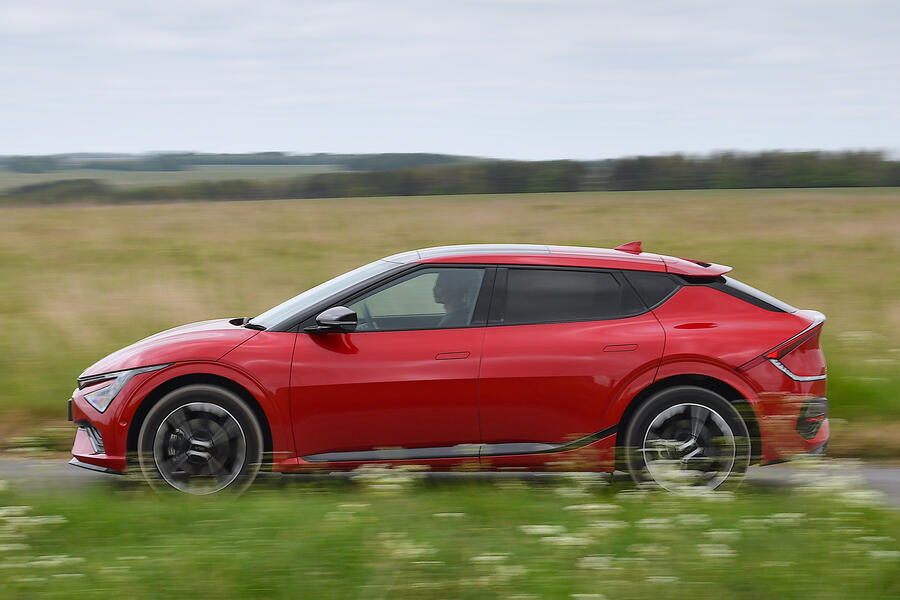
By looking further ahead and backing off a bit earlier for junctions, you’ll be doing more braking using regen and wring a few extra miles out of every charge.
2. Plug in at home
If you’re lucky enough to have somewhere to plug in at home, it’s almost always the most convenient and cheapest place to charge.
For example, the Tesla Model Y – one of the UK’s best-selling EV – officially travels 4.6 miles per kWh of electricity in Premium Long Range trim. That’s less than 6p per mile if you’re on an Ofgem-capped home energy tariff, or around half the cost of the slowest public chargers, according to Zap-Map’s latest price data.
Ordering one is easy. Most leasing companies have options to add a home charger while speccing a company car, and your employer can pay for it without any tax implications. If you’re doing a lot of business mileage, they will quickly recover that cost by avoiding paying for expensive public chargers.
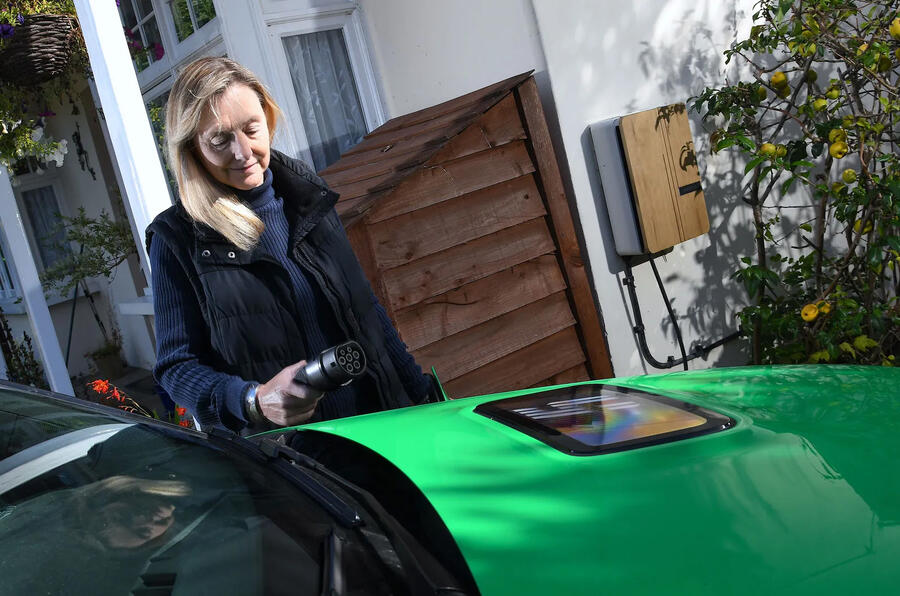
3. Charge overnight
Wholesale electricity costs change constantly, as they’re set by the most expensive source of that energy.
Utility companies pay more during the day, when demand is greater and there’s a larger share coming from fossil-fuelled power plants, and less at night, when cheaper renewables are doing most of the work. Some of them also offer tariffs that pass those cheaper costs onto customers.
An EV-focused tariff (as offered by E.ON and Octopus) slashes energy costs by around two thirds during off-peak hours, which are typically between midnight and 6am.
That’s less than 2p per mile for the Tesla Model Y Long Range, or equivalent to 455mpg in a petrol car. Most EVs and all new home chargers will let you preset charging times to match cheaper energy rates.
4. Be smarter with public charging
It has never been easier to access a public charger. Most new AC and all DC rapid chargers are required by law to offer contactless payments without having to sign up as a member. That’s a positive step, but it’s often the most expensive way to use them.
Several charging networks have paid-for membership schemes with reduced rates. Ionity, for example, offers a 43% discount for £10.50 per month. Tesla also offers discounted Supercharging for drivers in other EVs, for a £9.99 monthly fee. That’s worth considering if you’re a high-mileage user.
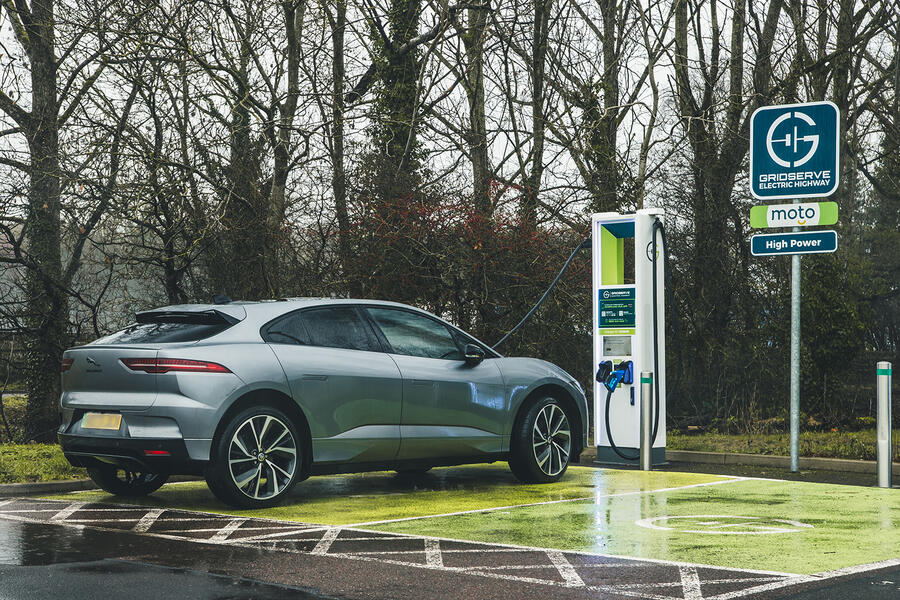
5. Join a roaming service
Don’t want to confine your discounts to a single charging network? Roaming services, such as Bonnet and Octopus Electroverse offer cut-price electrons (and other perks) across multiple brands, all from a single membership.
Each one works a little differently. Bonnet offers up to 15% off the advertised rate for its top-tier membership, while Octopus is free and offers up to 8% off all partner networks for its home energy customers with ‘plunge’ pricing when there’s an abundance of green energy on the grid.
As an added bonus, you get all of your public charging invoices in one place, which is useful if you're sorting out your expenses claims at the end of the month.
6. Top up at work
Workplace charging is more common for van fleets, but it can also help company car drivers to go electric.
Work is a convenient place to plug in if you can’t do it at home, while also avoiding relying on expensive public chargers. That’s a win-win for most employers, some of whom offer discounted rates to help drivers, and there’s plenty of support available to help them put that equipment in the ground.
Fleets can claim up to £350 per socket for up to 40 workplace chargers and provide free charging without drivers being taxed for it, even if it isn’t used for business trips. That includes plugging in at your passenger’s workplace if you’re carpooling, but it’s worth check with their boss before you do so.
7. Hot tips
All cars lose a bit of range when temperatures drop off, but it’s more obvious with an EV. Cold conditions slow the chemical reactions in the battery, which hurts efficiency, and there’s no petrol or diesel engine for the car to scavenge heat from to warm the cabin. The result is reduced efficiency and higher costs.
There are ways to minimise that loss, though. Most EVs can be programmed to pre-warm the cabin and bring the battery up to its most efficient operating temperature before a set departure time, and it can do this using mains electricity if it’s still plugged in.
However, once you’re on the move, the best way to stay comfortable is using heated seats, steering wheels and heated windscreens. It's quicker and uses less energy than heating all the air inside the car.