Land Rover Discovery 3 Reliability Tested at High Mileage Reveals Enduring Strengths and Persistent...
 With 151,000 miles on the clock, it's done well so far, but there's still plenty to go wrong
Dan Eve is a member of Surrey 4x4 Response, an organisation formed of 4x4 owners who volunteer their time and personal vehicles to assist local authorities, the emergency services and volunteer agencies during major emergencies and severe weather.
It explains why he owns a Land Rover Discovery 3, but for all its 4x4 capability, is it a vehicle he can actually depend on? "There isn't a good or a bad Discovery," he says.
"They all share the same faults. It's when they happen that differs. Among the faults are water leaks and suspension wear. Mine's currently sitting in off-road mode - about 100mm higher than in its lowest position. Go off-roading in this mode and it's easy to get grit under the suspension airbags, which can puncture them. To avoid that happening, you should always jet wash the suspension after going off-road but people don't.
"There's not much you can do to prevent the crankshaft from snapping on cars from 2008, though. Irrespective of how the engine has been serviced, it will probably let go at some point."
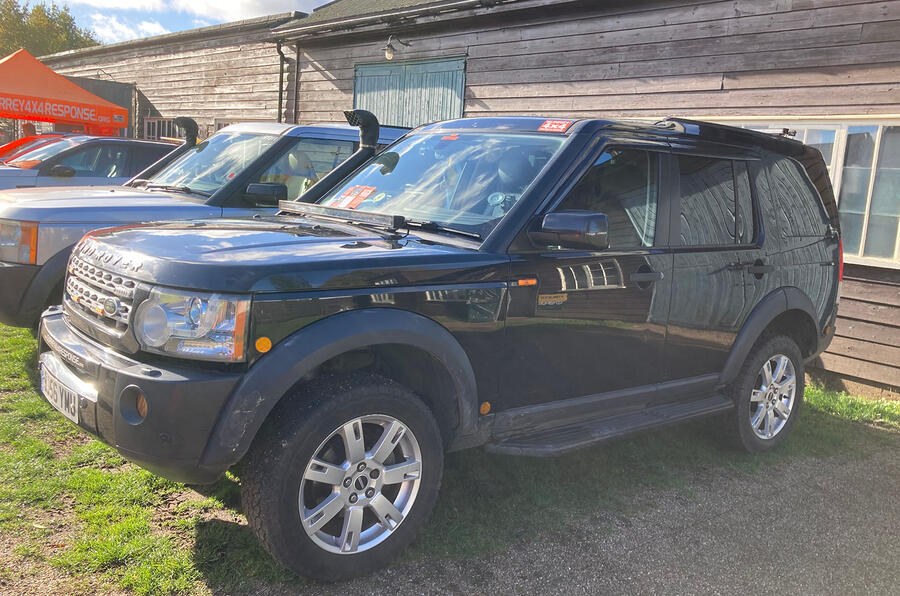
Dan's Discovery is a 2006-reg 2.7 V6 diesel automatic in XS trim. He bought it three years ago with 131,000 miles on the clock. It's now showing a nail-biting 151,000. "I'm a mechanic and had known the car for five years before I bought it, so I knew how much money had been spent on it," says Dan. "It's okay, for now.
"I had a Disco 2 before but the 3 is easier to get child seats into. There's more space through the rear door aperture. Each generation has its pros and cons, although I have less faith in my car than in the Disco 2 because it has so many more electronics. For example, my car's transfer box is electrically operated, as also is the electronic handbrake. It has tyre pressure warning too. Just a bit of water somewhere can cause a world of problems. I certainly wouldn't buy newer than a Disco 3. The 4 has even more electronics."
Dan's not really selling his Discovery to me but then he remembers why he has a 3. "Comfort-wise, thanks to the front and rear air suspension, it's much more comfortable than the 2," he says. "The engine has a lot of power and can put it down very well too. We've done training exercises where we've tried moving all sorts of things and it does so without fuss. It will even pull an 18-tonne truck. I reckon that in low range it would pull a house down if you let it!"
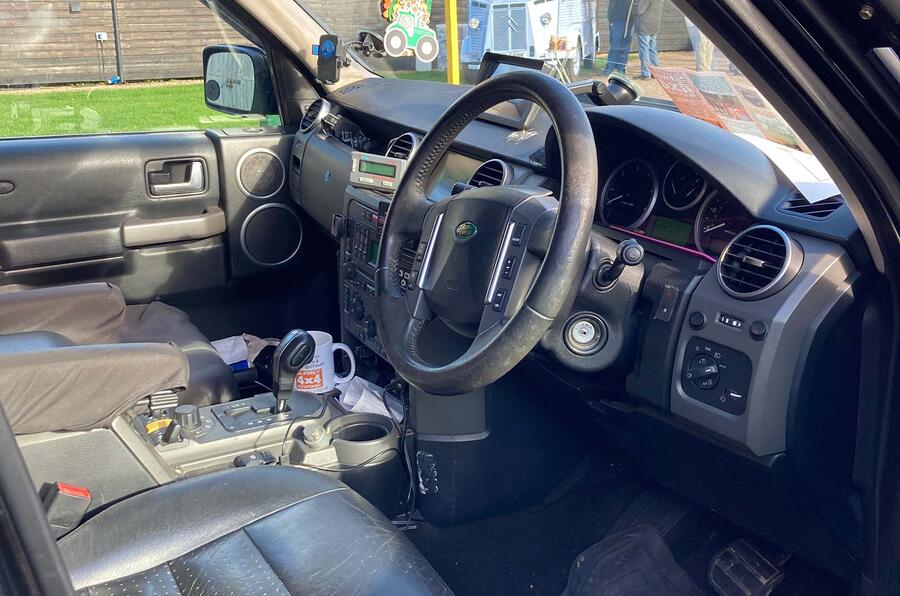
Dan's Disco has the obligatory snorkel but he warns against taking older cars like his into floods: "I've taken this one into water up to the middle of the headlights, which is when you find the door seals aren't as good as they once were Even now, three years after he bought it, he's still discovering things about the car. "Last week I realised that not only are the front seats heated but the rear ones are too," he says.
Dan certainly puts his Discovery through its paces. Most recently, he and fellow Response members were at the Goodwood Revival, helping out. "We towed over 1000 vehicles including lorries, buses and vans, as well as cars, out of the mud," he says. A Discovery may have its faults but when the going gets tough...

Chinese Plug-In Hybrids Expose Limits of EU Tariffs as Trade Tensions Escalate

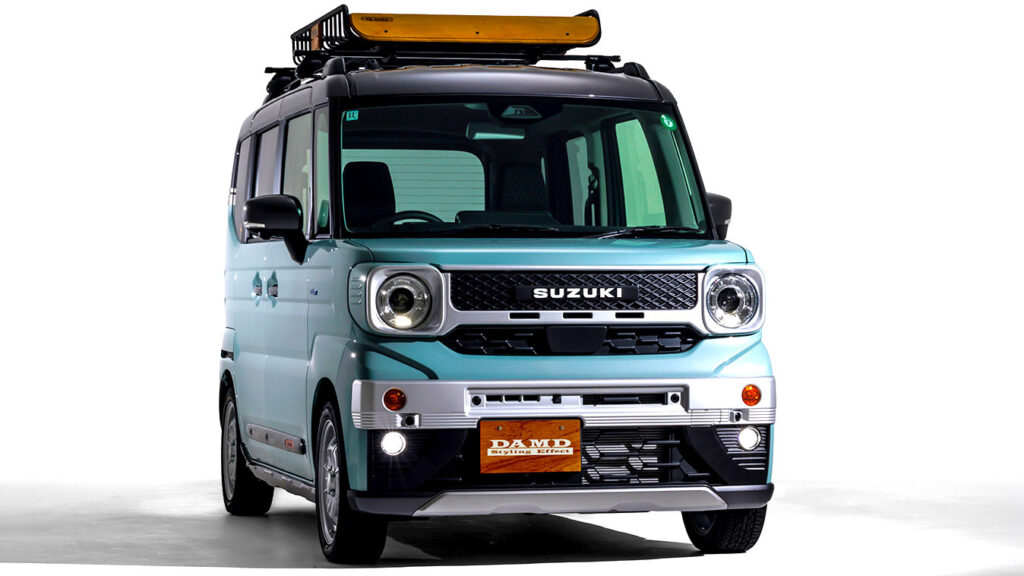
Suzuki Spacia Gear Reimagined by Damd as a Retro-Inspired Kei Car with Custom Styling...

Ariel Atom 4RR Redefines Track Performance by Overcoming Aerodynamic Limits at Thruxton
 The newest, maddest Atom has 799bhp per tonne – enough for total sensory overload
Going parachute jumping in a storm-force wind isn't something your author has ever done but, thanks to the Ariel Atom, I feel oddly familiar with the idea.
To appreciate the full effect, you need a proper circuit-and quite a quick one at that. Somewhere you can get this totally tubular flyweight driver's car near the business end of its rev range in fifth and sixth gears, well beyond 100mph, just to feel what it's like.
And what it's like is... well, fresh. Breezy, if you prefer. To me, parachuting through a hurricane covers it nicely.
For a driver, few cars better illustrate and juxtapose the parallel influences of mass and drag on a moving object – and exactly where and to what extent the reduction of one can seem to rapaciously feed the other.
The Atom has very little bodywork to speak of. It's a gorgeous, scantily dressed spaceframe with exposed just-about-everything, a nose cone that's barely much larger than a motorbike fairing, and a Perspex 'windscreen' that is about the size of a deck of playing cards.
It is the back-to-basics, less-is-more, simplicity-is-king driver's car taken to its apogee. And, yes, it is fast. But, due mostly to that dedication to its particular agenda, it does rather begin to slow down if you go fast enough if only in a manner of speaking.
What actually happens is that above about 120mph, the car's rate of acceleration is - quite suddenly and very plainly - curtailed (which doesn't amount to actually slowing down, I grant, but humour me).
It hits a wall of air pressure created by its own unapologetically irregular shape. It's one you clearly can't see but you can certainly hear and feel it, as it simultaneously presses on and lifts off your racing helmet, buffets your torso and limbs, and acts like a natural speed damper for the car you're driving.
Ariel Atoms of various sorts have been pushing and probing away at that wall for a little over a quarter of a century. But, in celebration of the special anniversary of this unique sports car, the Atom 4RR has arrived-armed to the teeth to smash its way through that wall. And where better to explore its potential to do it than the self-proclaimed fastest motorsport venue in Britain: Thruxton racing circuit.
Anatomy of a 4RR
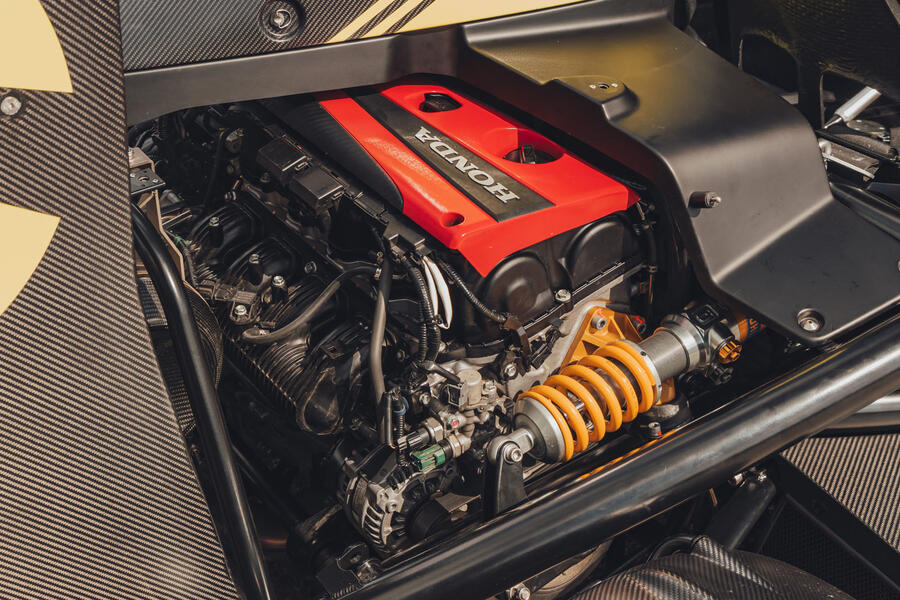
The key thing to understand is that this isn't another Atom V8. Rather, it's powered by a very special version of the Honda 'K20C' 2.0-litre turbo four-pot engine, of which the company's stockpile remains apparently unexhausted. After 100 hours of expensive, by-hand overhaul, it gets closed-deck cylinder sleeves, forged pistons and conrods, a completely new motorsport-spec cylinder head, new 1400cc fuel injectors and a whacking great turbo running at up to 1.7 bar of boost.
The end result – if you're brave enough to dial the engine map knob all the way up to '3' – is staggering peak power of 525bhp at, gulp, 8200rpm. More than the 2011 Atom V8 had. Thirty per cent more than the last fast Atom, the 2023 Atom 4R, had.
It's an absolutely unhinged amount of revs and grunt, in short, for a pint-sized car that has always seemed like the antidote to aerofoil-bodied, ground-effect, modern racing prototype-style track cars – except that now it suddenly seems interested in challenging them on their home patch.
While they're available on an Atom 4R (and even a regular Atom 4, if you like) as an option, the 4RR's standard front and rear wings – painted angry-hornet black and yellow – certainly make that confrontational sense of track purpose apparent.
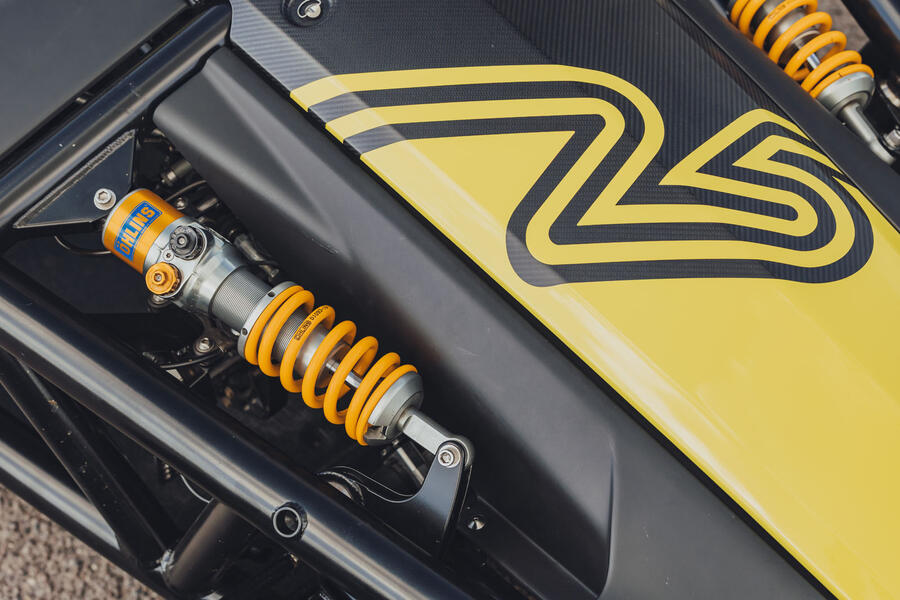
The car gets shorter, stiffer inboard coil suspension springs than the 4R too, plus enticing, fully adjustable Öhlins dampers, which Ariel has been offering for some time on other Atoms, as standard.
Its engine-cooling sidepods are larger than the 4R's and its lightened, wing-section suspension wishbones are attached to axles and hubs that make wheel geometry easier to adjust. It has new AP Racing brakes up to 310mm in disc diameter – the largest that will fit inside the Atom's staggered forged wheels.
And because every bit of bodywork on the car that might be made out of carbonfibre actually is made out of carbonfibre, the 4RR weighs slightly less than a 4R and a good 50kg or so less than a regular Atom 4.
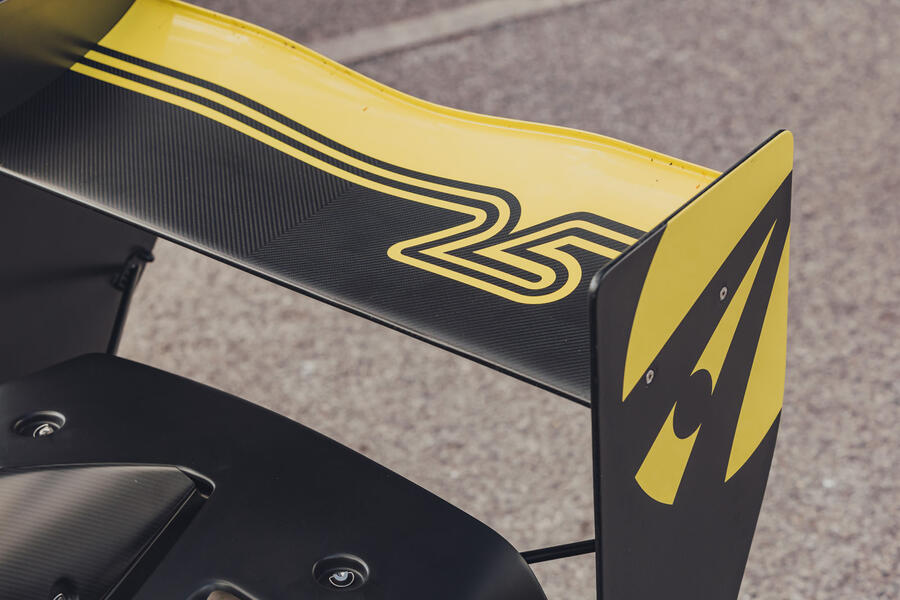
And what about downforce and drag? Well, here we must understand that Ariel isn't like Aston Martin, Ferrari or McLaren, and can't just negotiate a fortnight in the Formula 1 team's wind tunnel.
When I asked Ariel's Henry Siebert-Saunders – the most superbly affable, straight-talking managing director of a car company that you could ever meet – how much better a 4RR sticks to the track at high speed than a regular Atom, he smiled and suggested "quite a lot better".
But he also admitted that he couldn't put numbers on it. Are those wings just cancelling lift? Might they actually cut drag rather than increasing it, by better directing the air pressure where it would otherwise build up? Do they achieve more for aerodynamic balance of load than in outright downforce? Shrug, grin. "We've got our suspicions, but you could just go and find out for yourself."
The fast show
Autocar hasn't used Thruxton much for road car testing over the past few decades, not least because it's just so fast and learning how a road car performs and handles well beyond 100mph wouldn't seem to be the best way to inform yourself about how rewarding and capable it might be in everyday road driving.
There are plenty of hot hatchbacks and sports cars that would simply feel out of their depth here – underpowered, underdamped or in some other way outmatched by the sheer speed of the place. Thankfully, we haven't come along with anything at risk of that.
To allow me to get familiar with the track's notoriously fast, sweeping curves before I also have a hypercar-level power-to-weight ratio to worry about, we have the excellent BMW M2 CS, which we already know to be a fabulous, entertaining and very capable track car. It has almost identical peak power to the Ariel, but more than twice as much weight.
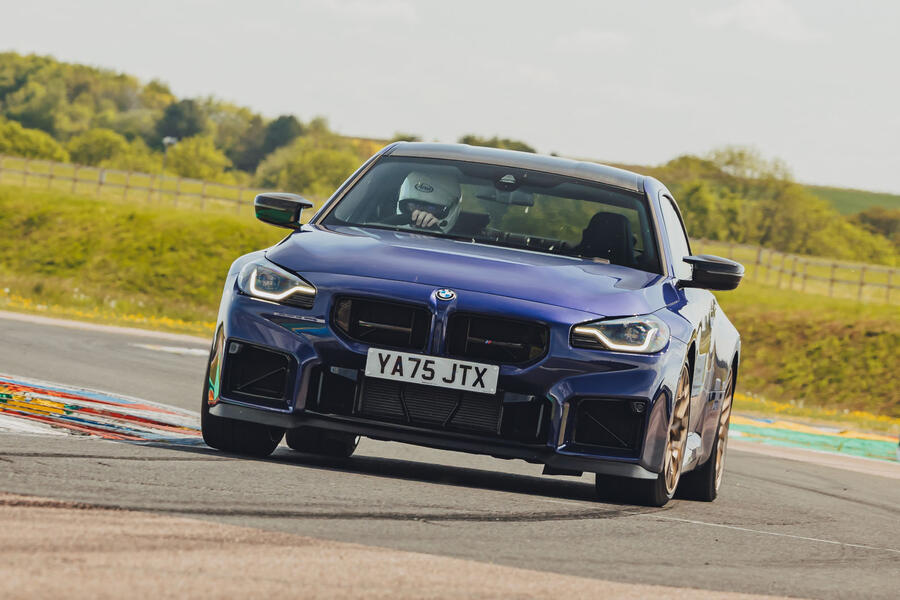
Thruxton ARDS track driving instructor Andrew Franklin gives me the guided tour. He points out not only where the racing line goes but also where on the expansive, inviting asphalt you really don't want to be especially at the kind of cornering speeds that few circuits other than Thruxton routinely create. He does it all in that calm, understated, matter-of-fact way that only someone who's seen plenty of people explore those no-go areas, to their cost, can command.
Then, it's into the M2 and off we go. Jeepers, this place is wide. It looks that way, at least at first-when you're leaving the pit lane at fairly moderate pace. Big speed has a way of making what once looked wide seem quite a lot narrower, though.
The track is not serpentine, but it is demanding and it certainly has enough gradient and camber to give your suspension a workout.
Carrying big speed is only possible if you're exact in your positioning of the car. There's a gentle crown on the track in places and, if you're three feet off line into either the Allard or Goodwood bends, for example, it has a way of sucking you even further wide.
When the car's not where it should be, it's far better to ease off and try again next lap than to risk keeping your foot in, wrestling it back to where it ought to be – and failing.
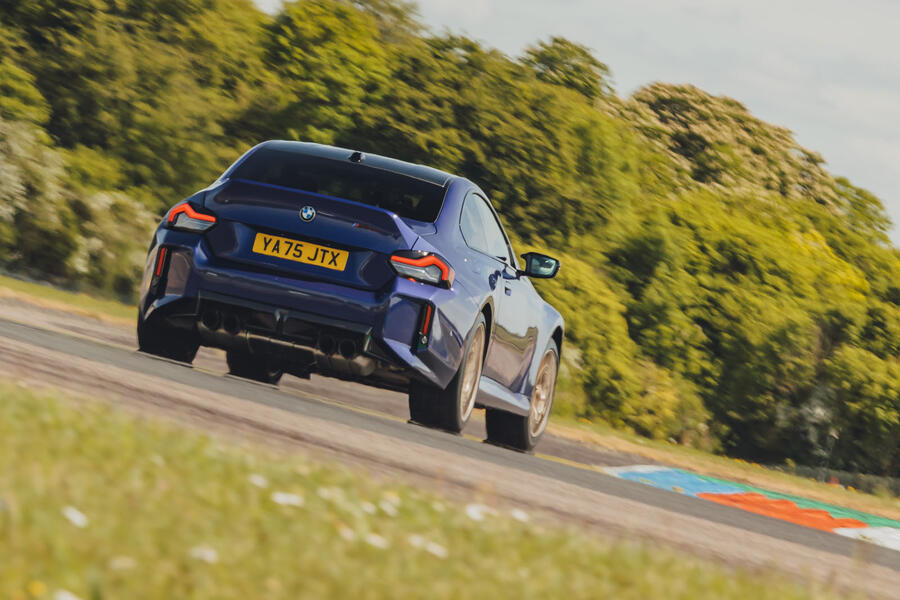
Still, the BMW handles it all. It's really secure in the quick sections, the Michelin Cup tyres warming through and switching on tangibly, and keeping the car pointed true and locked on line.
It has some M-car-typical power-on handling exuberance in the tighter corners, mind you, which the 10-position traction control quells as progressively as you fancy.
The biggest hurdle it struggles with is high-speed body control through the super-quick Village, Church and Brooklands curves. Sport damping mode feels overly firm and grabby here. It's better to soften off the suspension and let the car's 1700kg ride the bumps fast and straight – albeit with plenty of heave at what can be well above 130mph.
Now for the 4RR
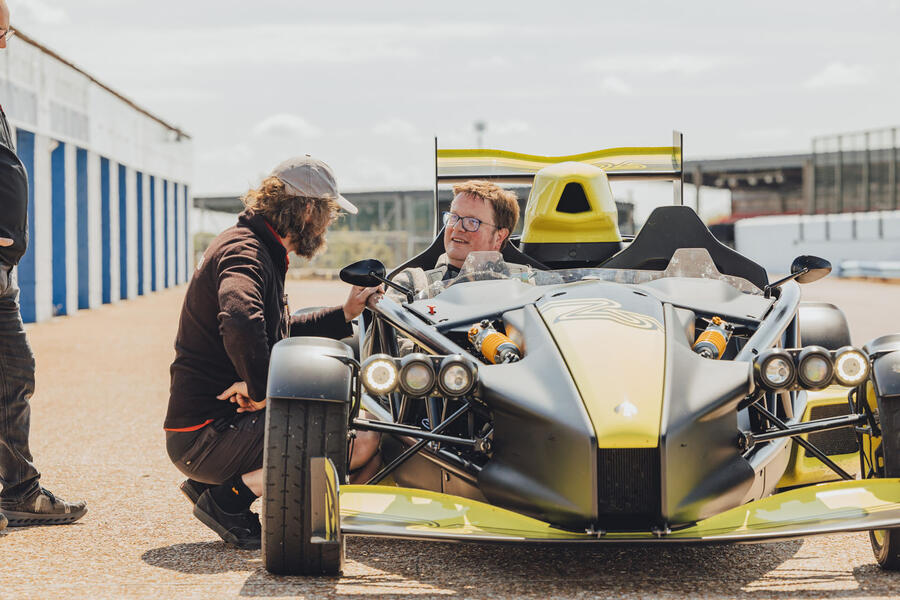
After two five-lap stints in the BMW, I'm down to a 1min 29.5sec lap time and a peak speed of 147.2mph before braking for Club. Baby steps. Given another half hour to devote to it, it feels like a 1min 27-something would be possible. But it's time to move on.
Driving the Atom 4RR is more like clinging to a motorbike than piloting the M2 in so many ways. You're considerably more exposed – even if the car's relatively accommodating seat adjustment and perfectly placed steering wheel and pedals begin to reassure you before you've even turned a wheel.
The engine catches and growls to a loud, hard-edged bark that's quite classic four-cylinder in character, with less turbo hiss and flutter than I was anticipating, so it's not that intimidating.
In some ways, the pneumatically actuated paddle-shift gearbox helps you out too, because from leaving the pit lane to re-entering it, you simply don't need the clutch pedal.
If you're long-legged like I am, you can move your left foot off the third pedal completely, get your left thigh out of the way, and make more room around the orbit of the heavy but superbly communicative steering wheel for your hands and forearms.
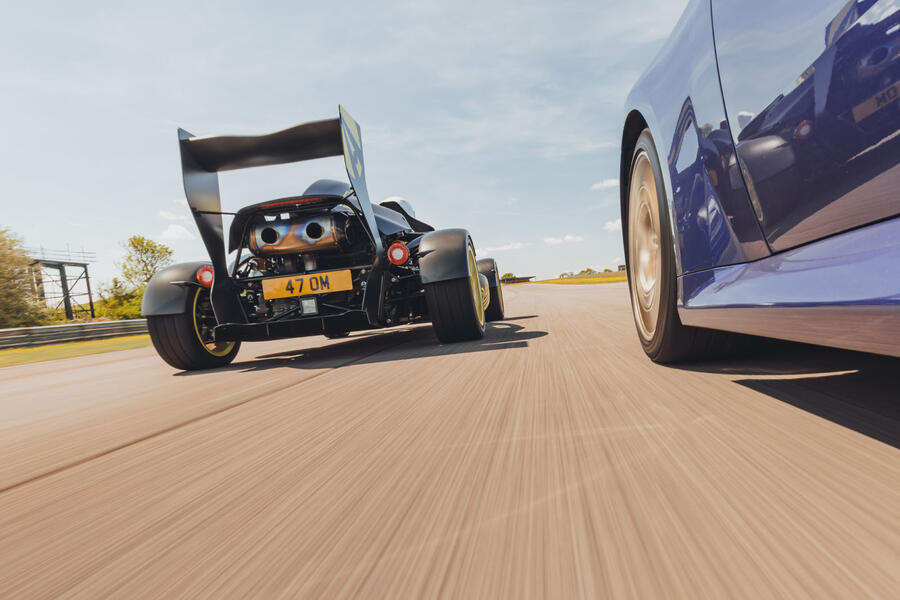
I'm only in Engine Map 1' and already the car feels rapid – and not at all in a boosty, 'pin it and hold on' sort of a way, but instead really instantly, progressively responsive.
The car appears almost weightless for my first few laps, bristling with energy, feedback and immediacy, and almost exempted from inertia. It doesn't handle with the litheness or delicacy of a regular Atom, on account of the forces you have to exert.
But it's so effortlessly controlled with its vertical body movements. Those long-wave inputs along the faster sections that so upset the M2 are driven over even more quickly, but also as if they simply don't exist.
After a quicker couple of laps in 'Map 3', I'm in need of 10 minutes in the pit lane to gather myself, process the sheer pace and consider where, and how, the 4RR can 'extend'.
This car is monstrously fast. It's linear enough in its power delivery that you can easily forget to rev it out all the way to 8000rpm, with plenty of boost and huge accessible urgency lower down.
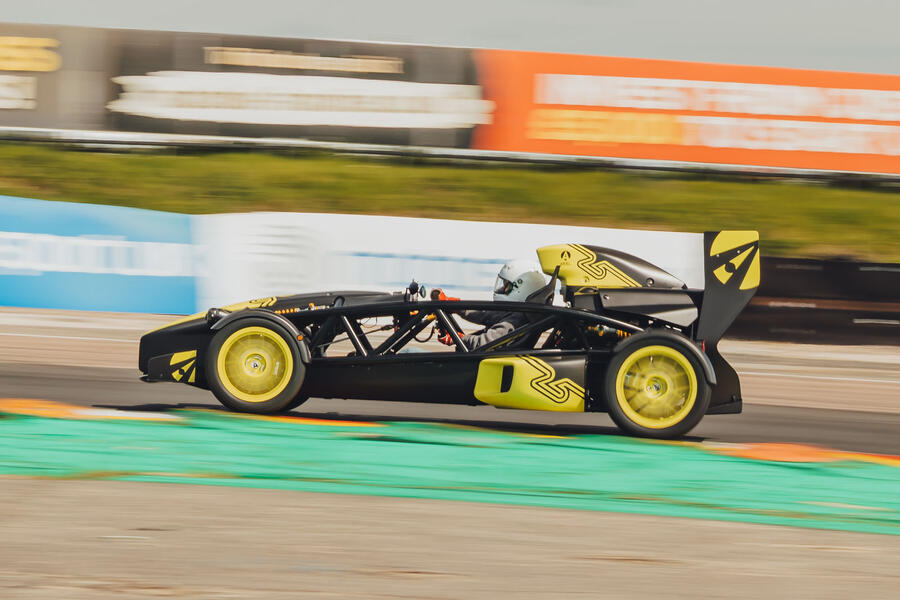
It's also savage enough to make you squeeze through the farther reaches of the accelerator travel, even in fifth and sixth gears, because every few millimetres of pedal makes a difference and pulls at the horizon that bit harder.
Where's the Atom's familiar wall of drag? Missing, presumed exploded into smithereens.
The 4RR sails past 130mph, then 140mph and 150mph, and just keeps going with unrelenting appetite, but no evidence of lightness at the steering or any instability.
Keep your foot in. Watch the shift lights. Grab another gear when you need it. Hold your nerve. Be brave enough to tear your eyes away from the buzzing, blurry world ahead for just long enough to check the digital speedo. Don't miss your braking point. And don't forget to breathe.
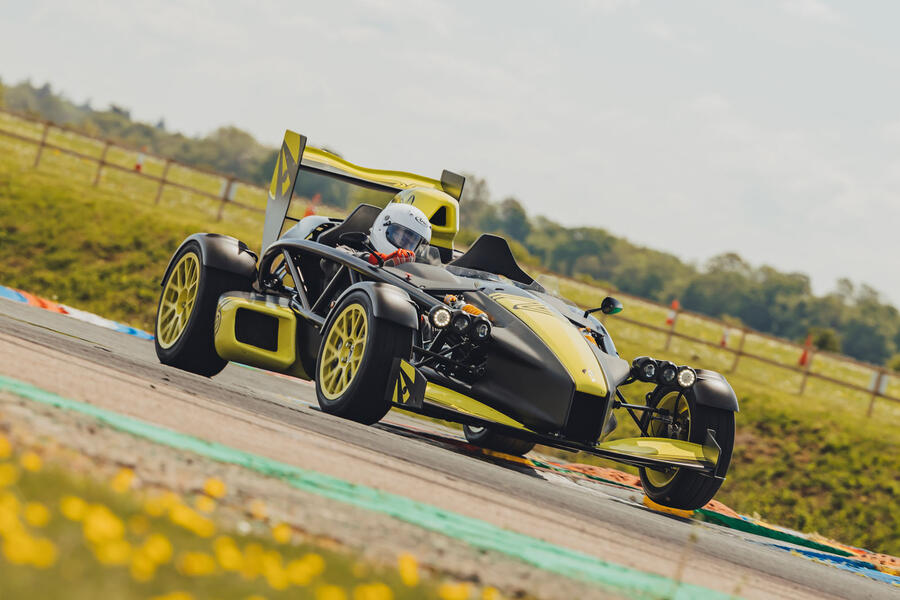
The result? A lap time of 1min 23.3sec at the end of my second five-or six-lap stint, a peak speed of 162mph – and that familiar, inevitable feeling, which all Atom drivers know, that the car's got so much more and is ready to go quicker, if only you can get on its level.
To be fair, it doesn't take a £250k Atom 4RR to make you feel that, but seldom, in this tester's experience, is it any more potent or prevailing.
The most remarkable thing of all is that the 4RR still handles like an Atom. It just does it all at greater speeds. The way it rotates through slower corner apices on a trailing throttle, reminding you where its weight is and offering up catchable, exploitable slides.
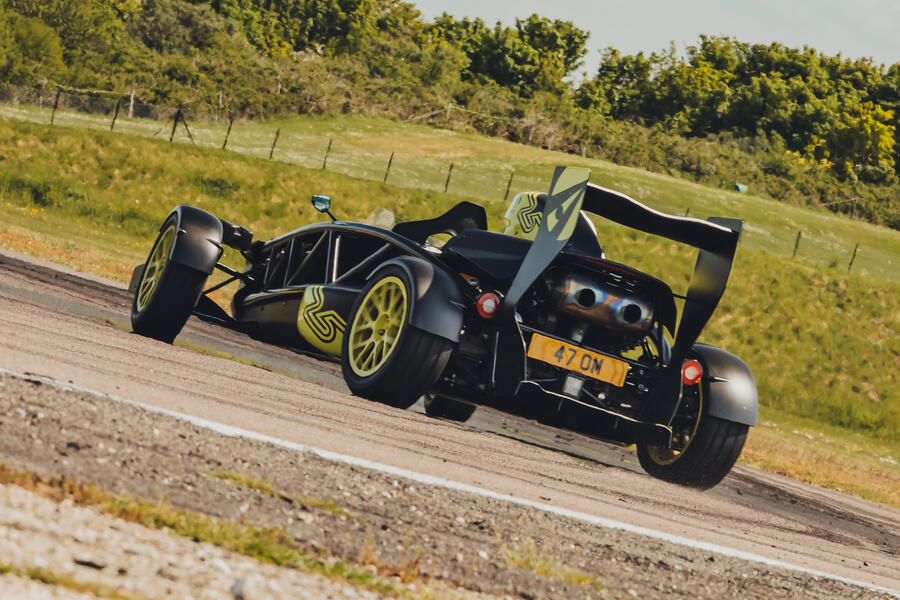
The way it nudges into stabilising understeer in faster bends, letting you know right where the edge of adhesion is. The way every little move that the car makes, and every frisson of feel, somehow tells you when you're in the right place, at the right speed, doing the right thing – or warns you when you're not.
I wonder how much silver plating the spaceframe would have added to the price of this car? Or to its kerb weight? It's a seriously daft idea, but I can't imagine many other ways that the Atom 4RR could have been made even more spectacular.
You can rest assured the aero works. The car's big mission is accomplished. "The wall' lies in ruins. And in any list of ultimate modern track-day cars you might care to compile - especially if you like them wild, rapid, physically challenging and massively rewarding – this thing deserves serious ranking consideration.
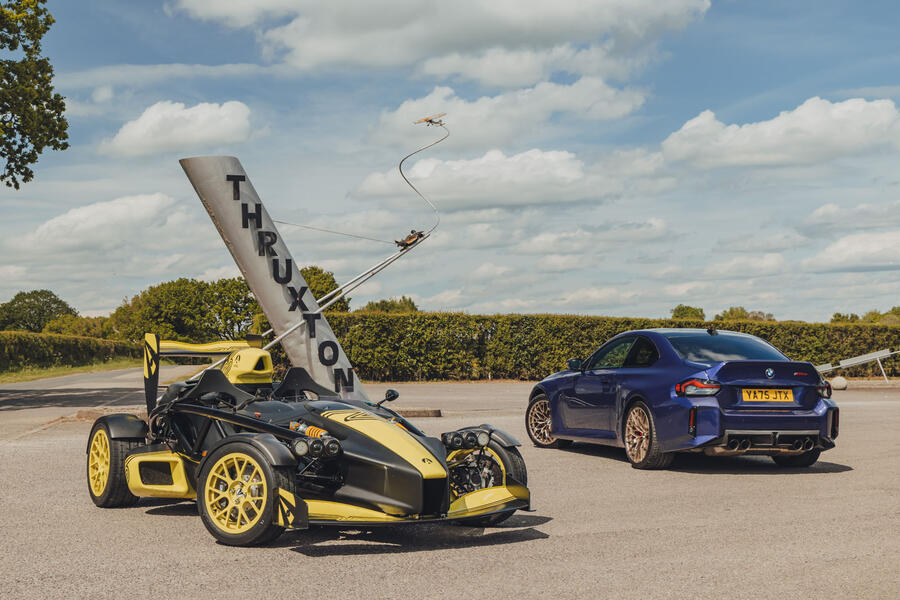
Verdict: Ariel Atom 4RR
Fast and visceral on track, in ways beyond any other Atom there has ever been, but still wonderfully engaging, enigmatic and inimitable.
Verdict: BMW M2 CS
M2 CS takes a challenging circuit mostly in its fast, capable stride. Fun and playful; serious and stable; but still wonderfully engaging, enigmatic and inimitable.
Specifications
| ARIEL ATOM 4RR | BMW M2 CS | |
|---|---|---|
| Rating | ||
| Price | £249,600 | £92,475 |
| Engine | 4 cyls in line, 1996cc,turbocharged, petrol | 6 cyls in line, 2993cc,twin-turbocharged, petrol |
| Power | 525bhp at 8200rpm | 523bhp at 6250rpm |
| Torque | 406lb ft at 5200rpm | 479lb ft at 2750-5730rpm |
| Gearbox | 6-spd sequential, RWD | 8-spd automatic, RWD |
| Kerb weight | 657kg | 1700kg |
| 0-62mph | 2.4sec | 3.8sec |
| Top speed | 175mph | 188mph |
| Fuel tank | 40 litres | 52 litres |
| Economy | 25mpg (est) | 28.2mpg |
| CO₂, tax band | na | 226g/km, 37% |

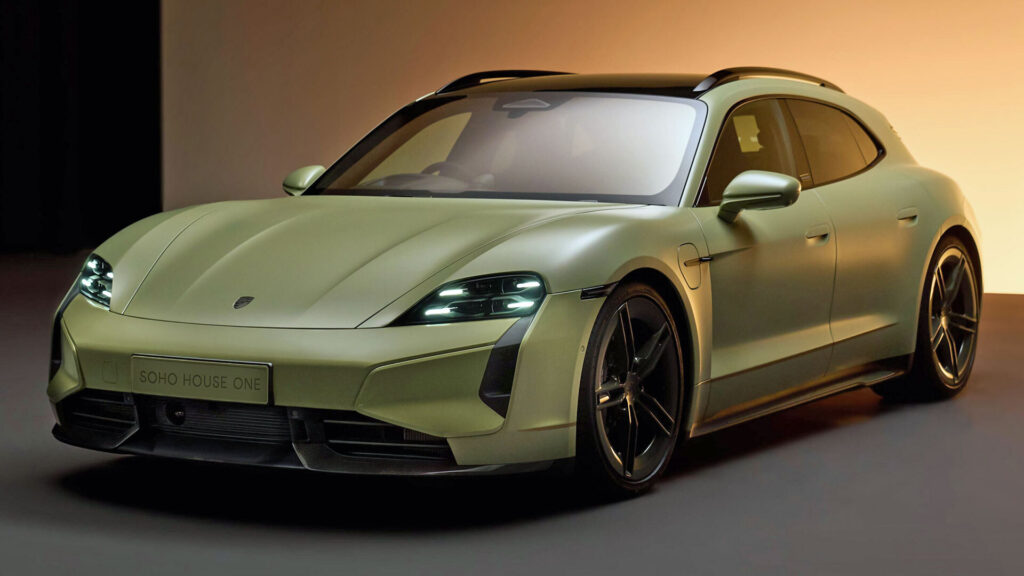
Porsche Taycan Turbo S Sport Turismo Soho House One Blends Bespoke Craftsmanship With High-Performance...

Ford Kuga as a Used Family SUV Weighs Value, Practicality, and Key Reliability Risks
 A Kuga should be on the hit list for those hunting for an affordable family SUV
Kuga is now a familiar name within the Ford stable.
The current model has been around since 2020, when it replaced the hugely popular Mk2 with a spread of new powertrains to suit almost any buyer, plus a slicker new design and a more spacious interior. It has aged well and, with early examples now available from just £8000, it's increasingly attractive as a do-it-all family hauler for those on a budget.
If you're coming from a Mk2 Kuga, you will notice the increase in size: it's almost 100mm longer and 50mm wider, although also 20mm lower to aid aerodynamics and 90kg lighter in the name of efficiency.
The biggest benefit of the size increase is class-leading rear space. The 60/40-split folding bench also slides 150mm fore and aft so you can choose from limo-like leg room, an enormous (645-litre) boot or indeed a pleasing compromise.
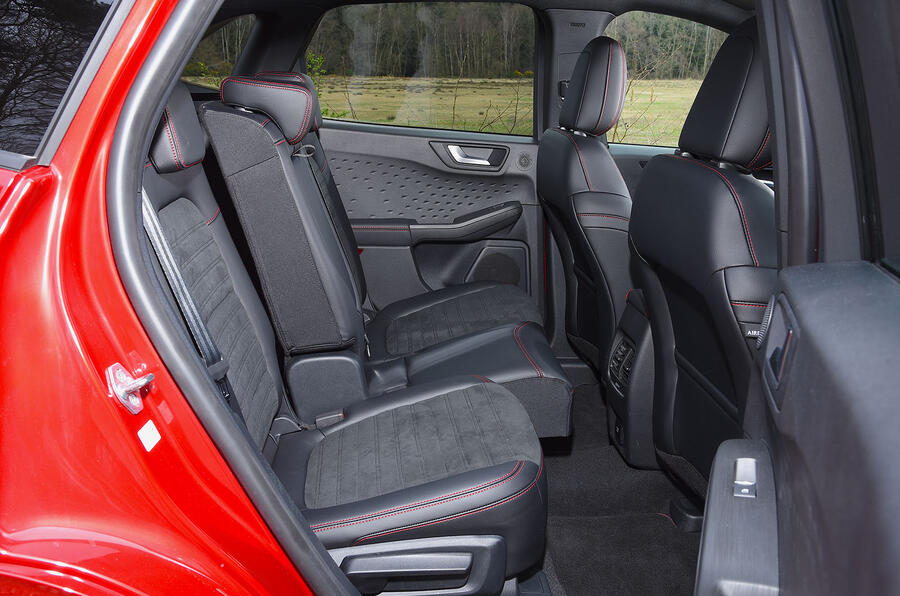
The interior feels a little low-rent in places, but there are some nice squidgy materials too, and the seats are comfortable and supportive.
From launch, the Kuga ran Ford's Sync 3 infotainment system through an 8.0in touchscreen prominently positioned atop the dashboard. Its resolution and speed are poor by current standards, but then these cars also feature lots of physical switchgear, so quick adjustments are easy on the move.
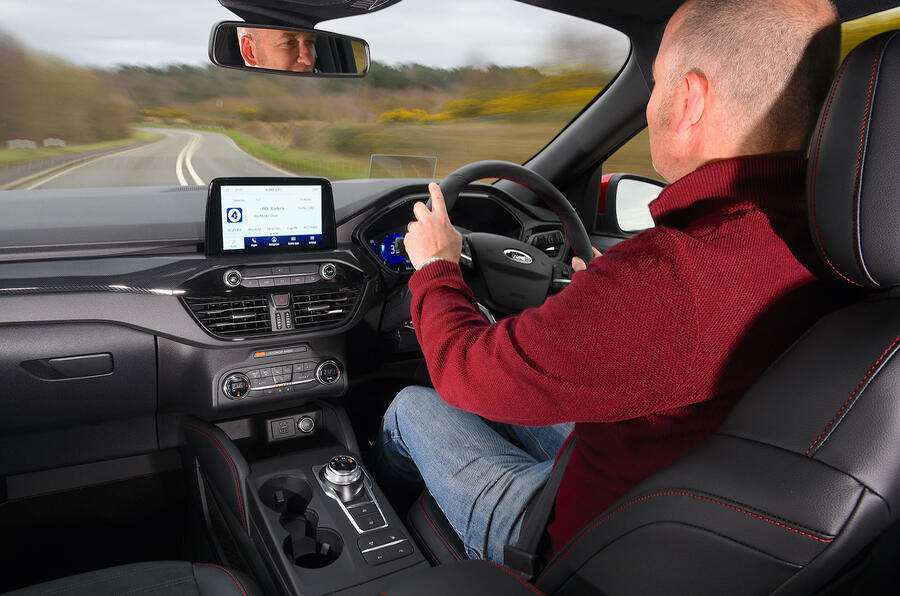
A facelift in 2024 brought a larger (13.2in) and slicker screen, which made the infotainment much easier to use but unfortunately also wiped out most of the physical controls.
Apple CarPlay and Android Auto are standard, while an excellent Bang & Olufsen stereo features on Titanium trim and above.
There's also a lot to like about the Kuga on the road. It rides and handles very nicely for the most part: typical of Fords are the pliant ride, secure body control and direct steering. If you're coming out of a Focus, you might miss the outright sense of agility that can be exploited in corners, but it has most other mid-sized SUVs beat for poise and responsiveness.
That said, the plug-in hybrid powertrain adds another third to the kerb weight, which translates to a stodgier dynamic character and a more fidgety ride (the springs are firmer to cope with the extra weight). It's just about acceptable, though, except when paired with the yet stiffer springs and larger wheels of sporty ST-Line trim.
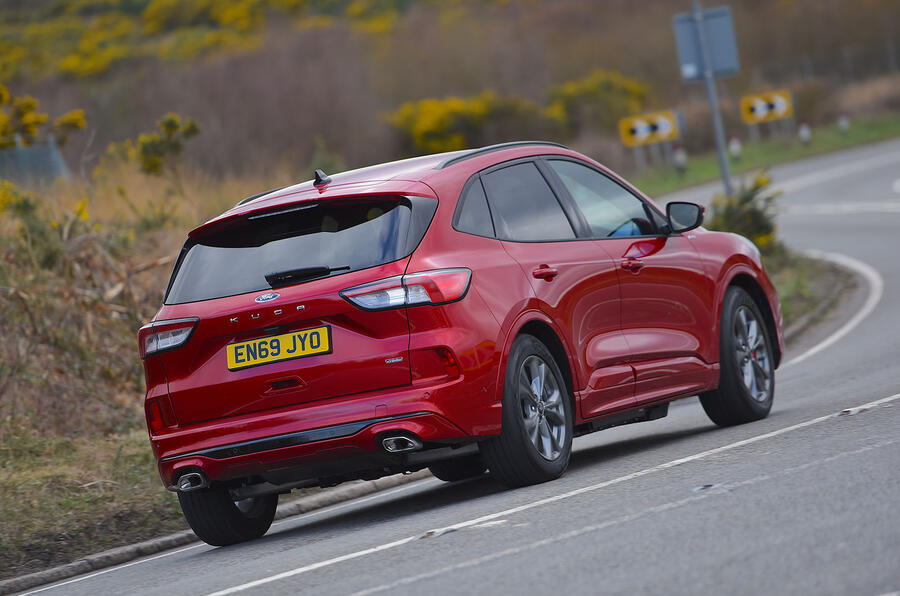
The PHEV is a popular option, however, offering about 30 miles of real-world electric range. It doesn't command much of a premium over other versions, so it's worth a look if you can charge at home.
If you can't, there's also a full hybrid with the same Atkinson-cycle 2.5-litre petrol four, although it's down on power (188bhp versus 222bhp) and won't achieve the same economy highs (although 50mpg is doable in mixed, mostly urban, use).
Both types of hybrid are let down by the use of a CVT, which induces engine mooing and makes them feel slower than you would expect.
Thankfully you can get a regular automatic gearbox by opting for the 187bhp 2.0-litre four-cylinder diesel. Curiously, if you want a manual shift, you must sacrifice 39bhp and accept mild-hybrid tech. Either version should hit 60mpg in mixed use, and the same goes for the 118bhp 1.5-litre diesel manual.
If petrol power is your preferred choice, there's a 1.5-litre turbo four in two states of tune. The 118bhp version lacks punch but the 148bhp one makes a good all-rounder. Both are capable of 45mpg and paired exclusively with a manual gearbox.
What to look out for
Timing belt: The 2.0-litre EcoBlue diesel engine has a wet belt, which can fail unpredictably and is expensive to replace routinely. Regular servicing - yearly or every 10,000 miles - should slow degradation, at least.
PHEV powertrain: Shortly after launching the PHEV, Ford found that contamination in the battery cells could cause a short circuit and potentially a fire. Owners were asked not to charge their cars and drive only in EV Auto mode. Ford eventually replaced the battery of affected PHEVs; check this has been done.
12V battery: A 12V battery drain can leave the car dead after sitting for just a few days. The culprit is often the telematics modem or FordPass phone app, which prevents the car from entering 'deep sleep' mode. Some owners have a higher-capacity AGM battery fitted under warranty. You can check the voltage by holding the 'OK' button on the steering wheel while firing the ignition.
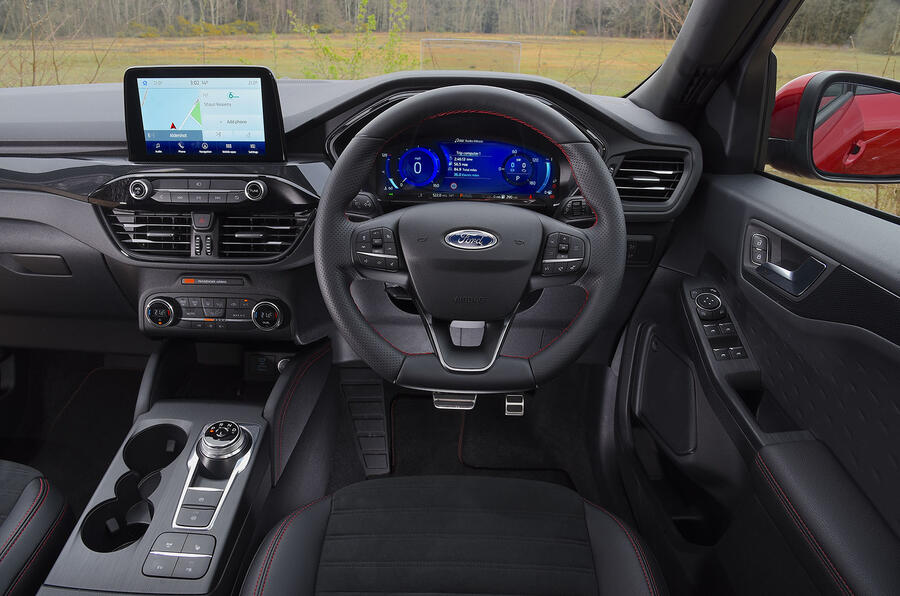
Interior: Door rattles are a persistent complaint. The door cards, particularly on ST-Line models with the Bang & Olufsen sound system, are prone to buzzing. Press your elbow against the door card during the test drive: if it creaks excessively, it could drive you mad on the motorway. The rotary gearshifter has been known to get stuck or fail to engage park properly, leading to 'shift system fault' warnings.
Wheels and tyres: PHEVs ride firmly, but sticking to the standard 18in wheels can mitigate this. PHEVs also chew through front tyres with their additional weight and power.
Also worth knowing
Four-wheel drive is available on the full hybrid and standard on the punchier 2.0-litre diesel. All other Kugas are front-driven.
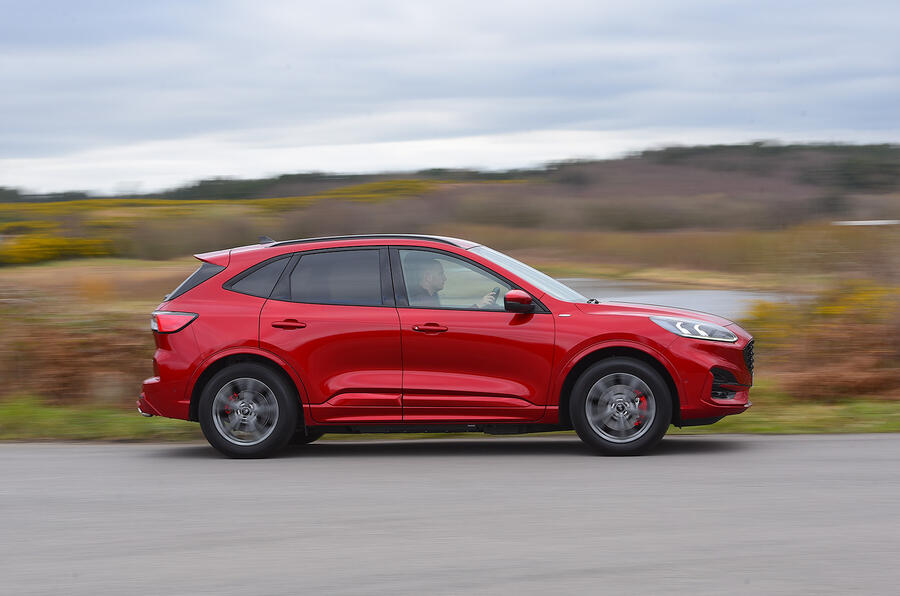
Entry-level Zetec trim has front and rear parking sensors, cruise control and phone mirroring, while Titanium adds LED headlights, a rear-view camera and a digital instrument cluster. ST-Line offers sports suspension, sports seats and meaner-looking bumpers, with ST-Line X adding 19in alloys, heated front seats and a panoramic sunroof. Vignale tops it off with full leather, an electrically adjustable driver's seat and a head-up display.
Most Kugas are £195 a year to tax, but those less than five years old with an original list price of more than £40,000 will be £620. Insurance groups range from a reasonable 10 to 26.
How much to spend
£8000-£11,999 A mix of higher-mileage cars, with trim level having a larger bearing on value than powertrain.
£12,000-£19,999 A vast choice of pre-facelift models in every specification.
£20,000-£29,999 Facelifted cars, including low- mileage, high-spec ones for as much as £20,000 below list price.
£30,000-£50,000 Prices for new Kugas start at £33k, but shop around and you can get a pre-registered Vignale for that.
An owner's view
Alfie Castle: "I've had my 1.5-litre EcoBlue ST-Line Kuga for two happy years. I settled on the diesel because I regularly drive long distances. So the diesel particulate filter isn't a problem, plus I've seen close to 60mpg. I've yet to be disappointed by the car, although the touchscreen is a bit slow to react sometimes."

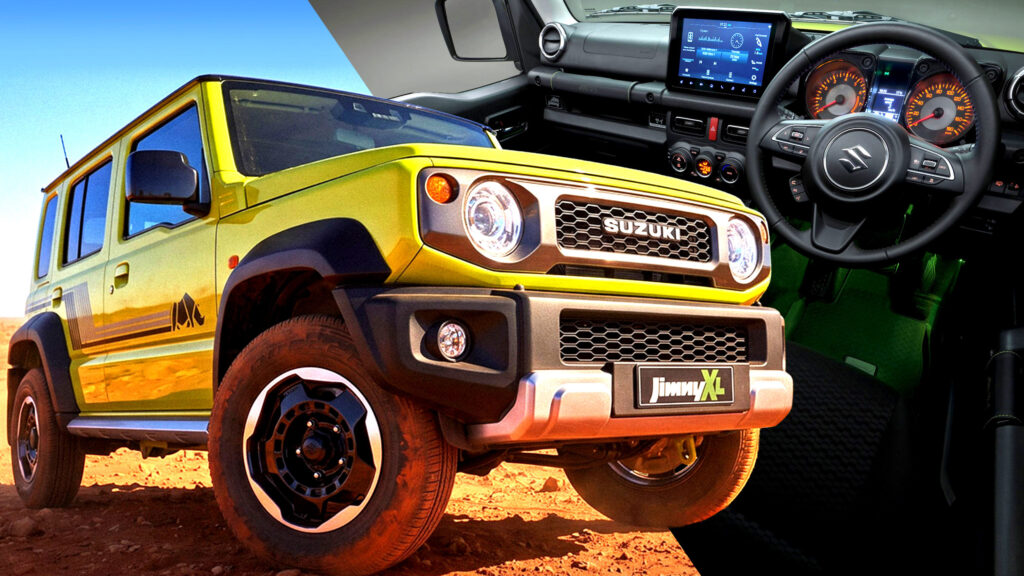
Suzuki Jimny Rhino Edition Redefines Value with Premium Price and Branded Perks in Australia

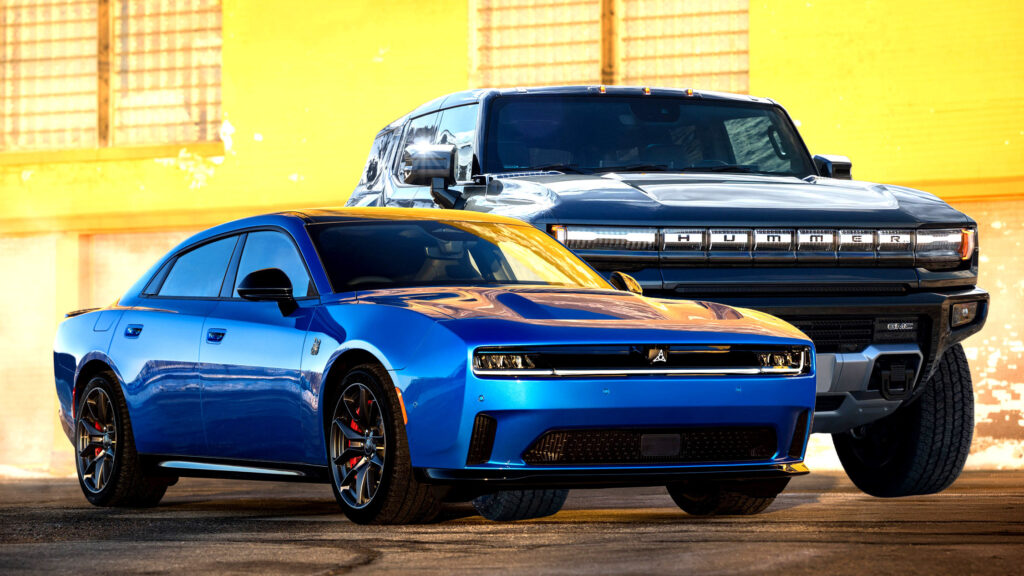
EV Driver Risk Profiles Reveal Hummer and Charger Daytona Lead in Dangerous Behavior While...

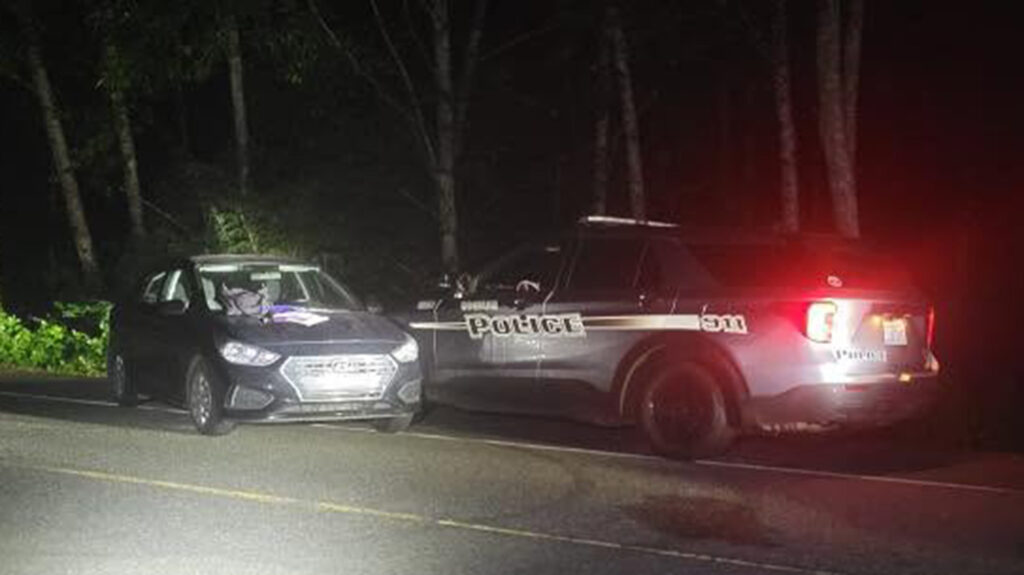
Sovereign Citizen Claims Collide With Police Authority in Unusually Slow Washington Pursuit

Maserati Considers Manual V6 Supercar to Rekindle Brand Identity Amid Industry Shift