Hyundai i20 N Signals Return of Affordable Petrol Hot Hatches Amid Electrification Shift
 "An i20 N for Europe is a must," says Hyundai's R&D boss, paving way for stunning hot hatch comeback
Hyundai has pledged to return to affordable performance vehicles, and is set to soon unwrap a new petrol-powered i20 N hot hatch.
The previous performance version of the i20 was launched in 2021 as a rival to the Ford Fiesta ST, Mini Cooper S and Volkswagen Polo GTI - with 201bhp, a six-speed manual gearbox and a mechanical limited slip-differential.
It served as the entry point to a performance line-up that also included the larger i30 N, and later the electric Ioniq 5 N and Ioniq 6 N - but was taken off sale after just three years as Hyundai moved away from petrol sports cars.
But now, the comeback is on, as Hyundai's global R&D boss Manfred Harrer confirmed plans to "bring back entry cars on the N line-up" as a means of broadening the brand's appeal with younger buyers.
"An i20 N for Europe is a must," he said, because "the gap is too big" between Hyundai's previous petrol N models and their larger, much more powerful electric successors, which start at around £65,000 in the UK.
"We need this entry-level back for our fans," Harrer said, adding: "We are working intensively to do this sooner rather than later".
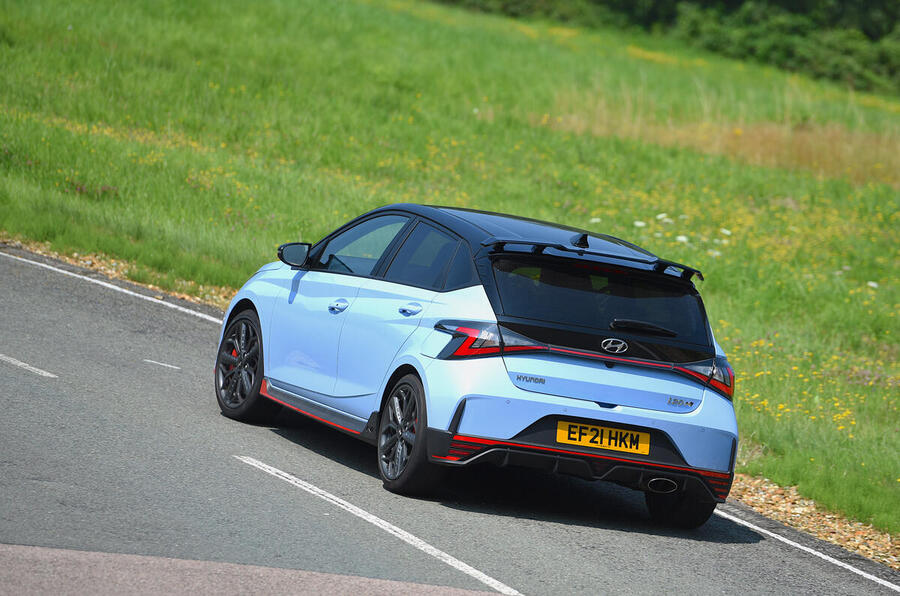
A new version of the i20 N would face off with a much smaller field of rivals than did its predecessor, with the Cooper S standing as the only petrol hot supermini left on sale, other brands having backed out of this space in pursuit of reduced emissions.
It would, though, be a natural alternative to a growing array of small hot EVs, including the Alpine A290, VW ID Polo GTI and Peugeot E-208 GTI.
Prototypes of the new hot hatch are already testing, Harrer said, and a launch is "not so far out".
He wouldn't be drawn on any specifics of the new model, but said it would make sense to "use existing technology" as its basis, hinting at power coming from a version of the 1.6-litre four-cylinder hybrid that features in Hyundai's more mainstream models.
He suggested that the powertrain would, though, be heavily tweaked for performance: "I want to go to the Nürburgring and do really successful lap times - better than the existing one.
"But you have to work on the battery management system to get this done."
Harrer also said that Hyundai is investing in making sure the new model apes the character of its pure-petrol predecessor: "It feels sporty - don't worry about that."
A new generation of the Hyundai i20 is being primed for an imminent launch in Europe, and will likely be derived from the new Brazilian-market car that was revealed last week - with a chunkier, higher-riding silhouette than the current car, and a completely new interior. Hyundai has not confirmed how closely related Europe's new i20 will be, nor given any indication of timings for the standard car or a performance version.
Confirmation of the i20 N's comeback comes after N division boss Joon Park said last year that the performance sub-brand would not pursue an all-EV line-up.
"The problem that we have is that there is a perception from the media and our fans that Hyundai N is only focusing on the EV world, which is not true,” he said.
"We are not limiting ourselves to EVs."

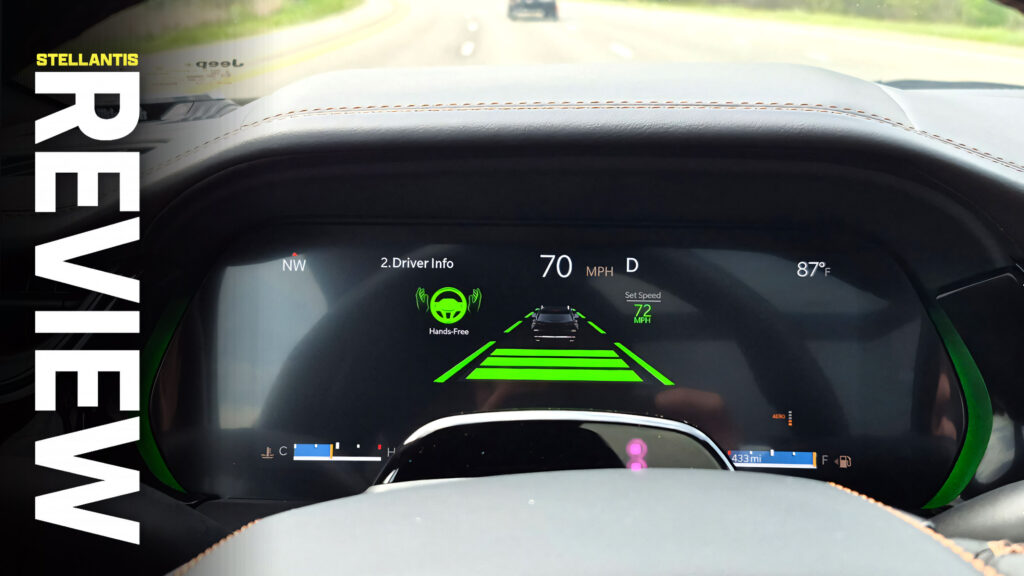
Hands-Free Active Driving Assist in the 2026 Jeep Grand Cherokee Sets a High Bar...

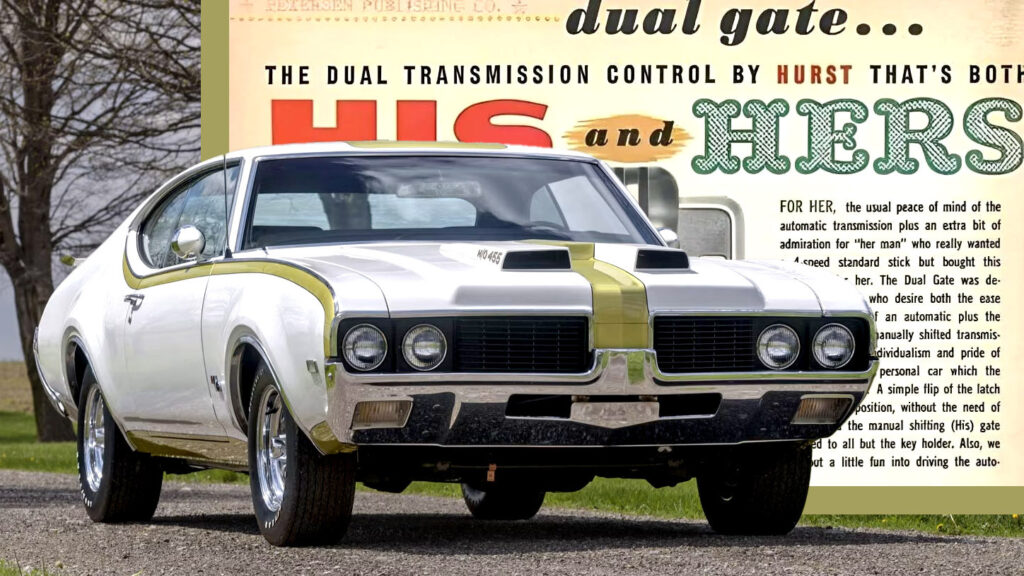
Hurst Dual Gate Shifter Redefined Driver Engagement in the 1969 Oldsmobile Hurst/Olds

Premium Crystal Garnet Metallic Signals Honda Prelude’s Embrace of Luxury Aesthetics

General Motors V8 Engines Tracing a Century of Innovation, Triumph, and Turbulence in American...
 We take a look at the highs and lows of the GM V8
Whatever your motoring preferences may be, it’s difficult not to be thrilled by the roar of a V8 engine.
As electrification takes over, there may not be many more of these in future, even though new ones are still being developed today. But when the last V8 goes out of production, we will still be able to look back at the great examples of the past.
General Motors has a particularly fine - though occasionally patchy - history of V8 engines which extends back more than a century. Here we take a look at the good and the bad, in chronological order.
Cadillac L-head (1914)
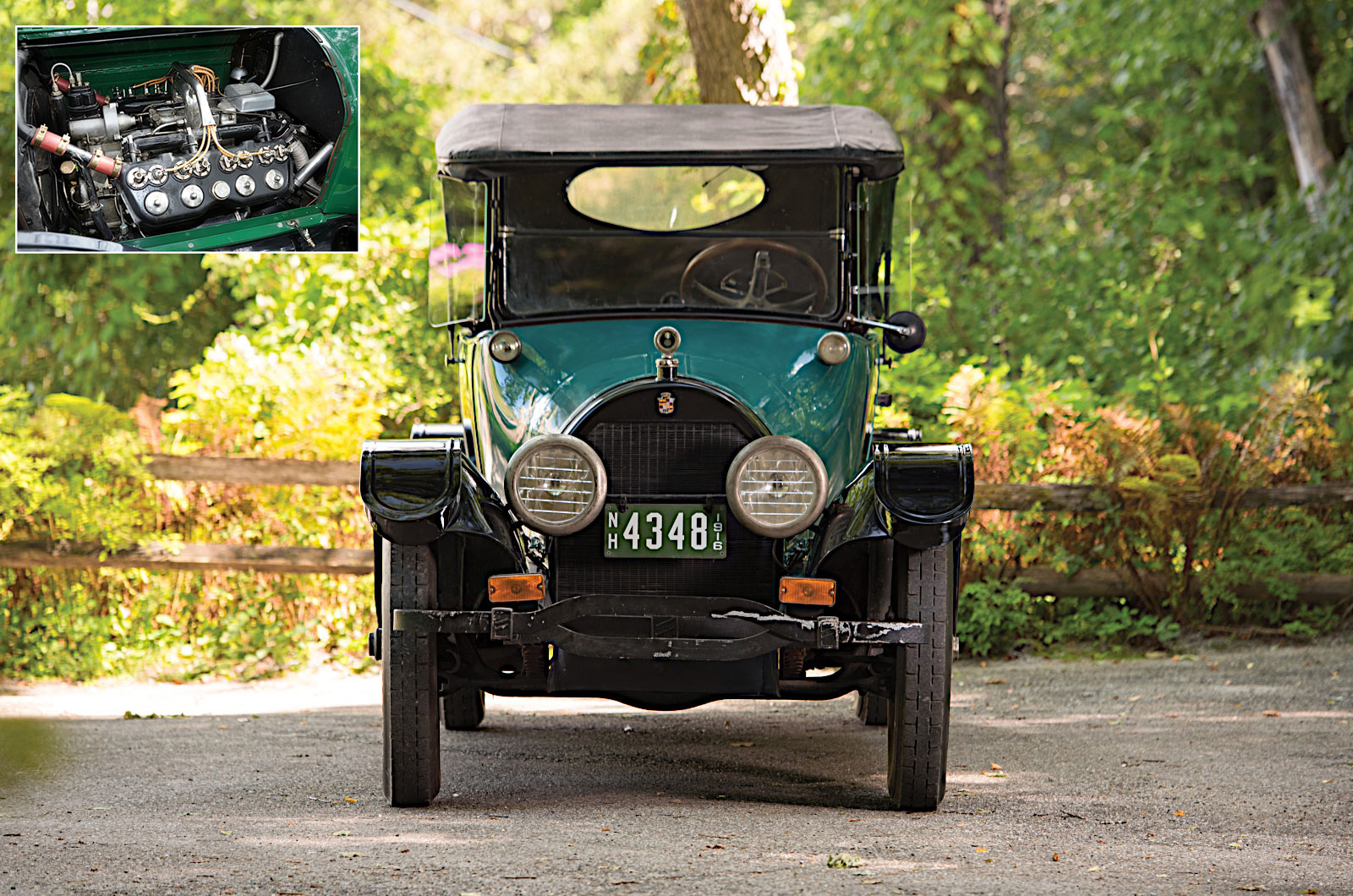
V8 engines were rare, though not unheard of, in 1914, but the Cadillac engine of that year is regarded as the first to have gone into mass production. It made its debut in a car officially called the Type 51, but generally known simply as the Cadillac V8, and was still being used, after several updates and capacity increases, two decades after it first appeared.
Thankfully Cadillac had recently developed the electric starter; hand-cranking a heavy V8 engine would have been a nightmare for owners.
PICTURE: Cadillac Type 53 pickup
Cole-Northway (1915)
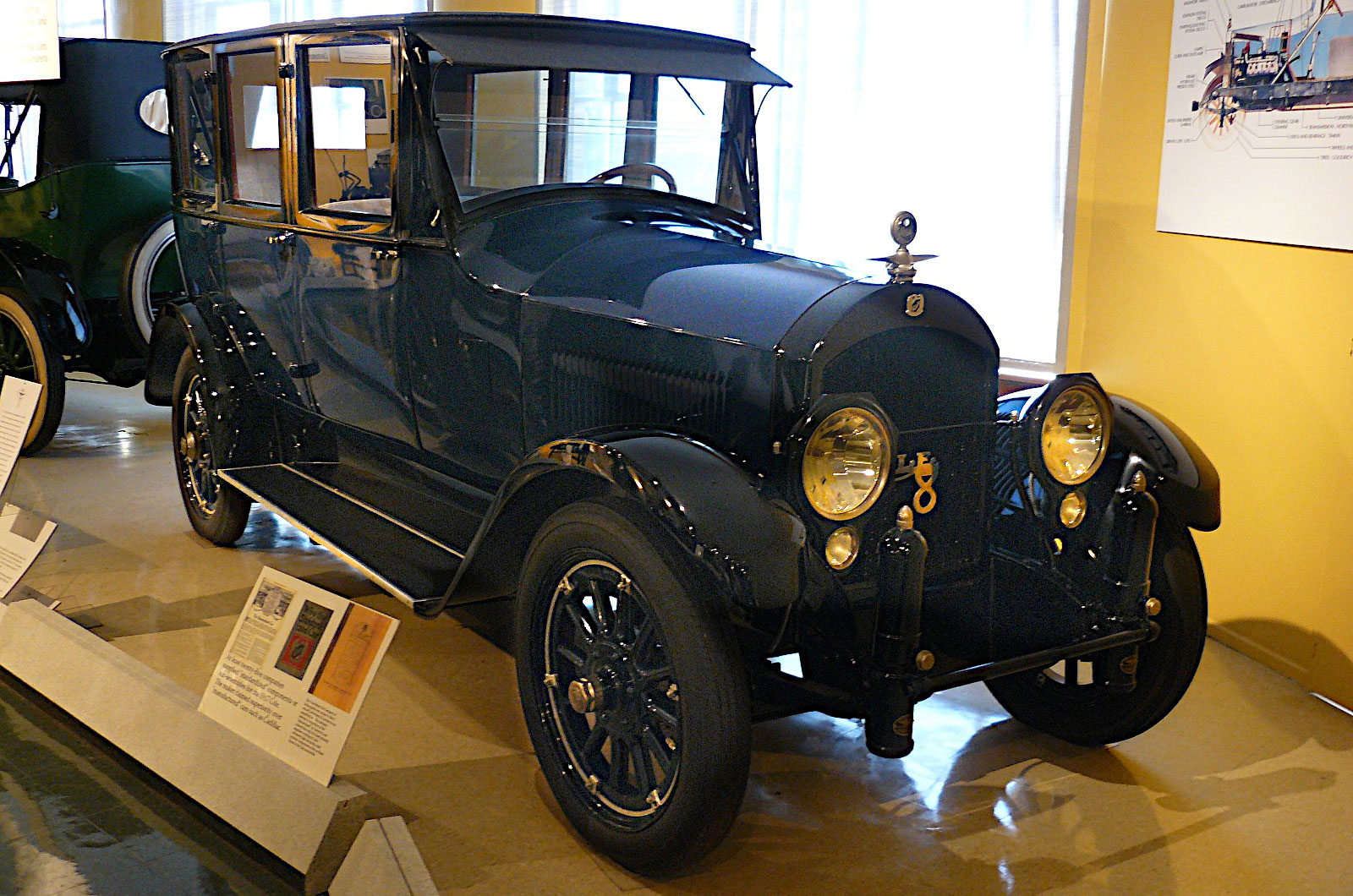
In 1909, the Northway Motor and Manufacturing Company became one of the earliest of many firms to be taken over by General Motors. For several years after this, it was a leading producer of engines for GM’s car brands.
But there was more to it than that. Just a year after the Cadillac V8 arrived, Northway began supplying a similar engine to Indianapolis-based Cole for a high-class model pitched as an alternative to Cadillac. This was a rare, but not unique, case of a company owned by GM providing an engine to a direct rival.
PICTURE: Cole Aero Eight
Oldsmobile Light Eight (1916)
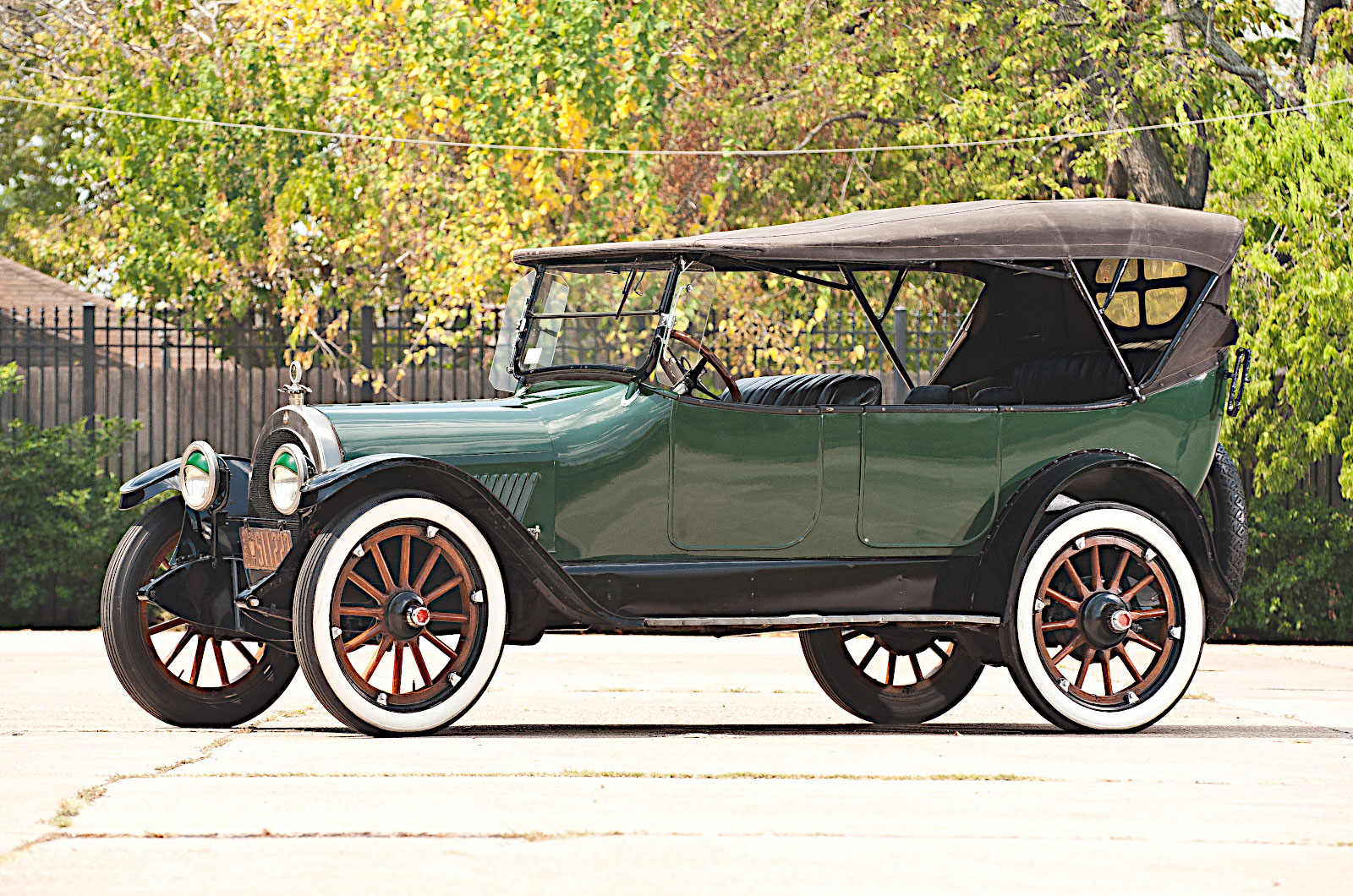
Northway also created the first V8 used by Oldsmobile. The 4.0-litre engine was similar in design to the Cadillac V8 and produced 40 horsepower. It was used in the first two generations of the Oldsmobile Light Eight, which had model names ranging from 44 to 46.
PICTURE: Oldsmobile Light Eight Model 45 Touring
Oakland flathead (1916)
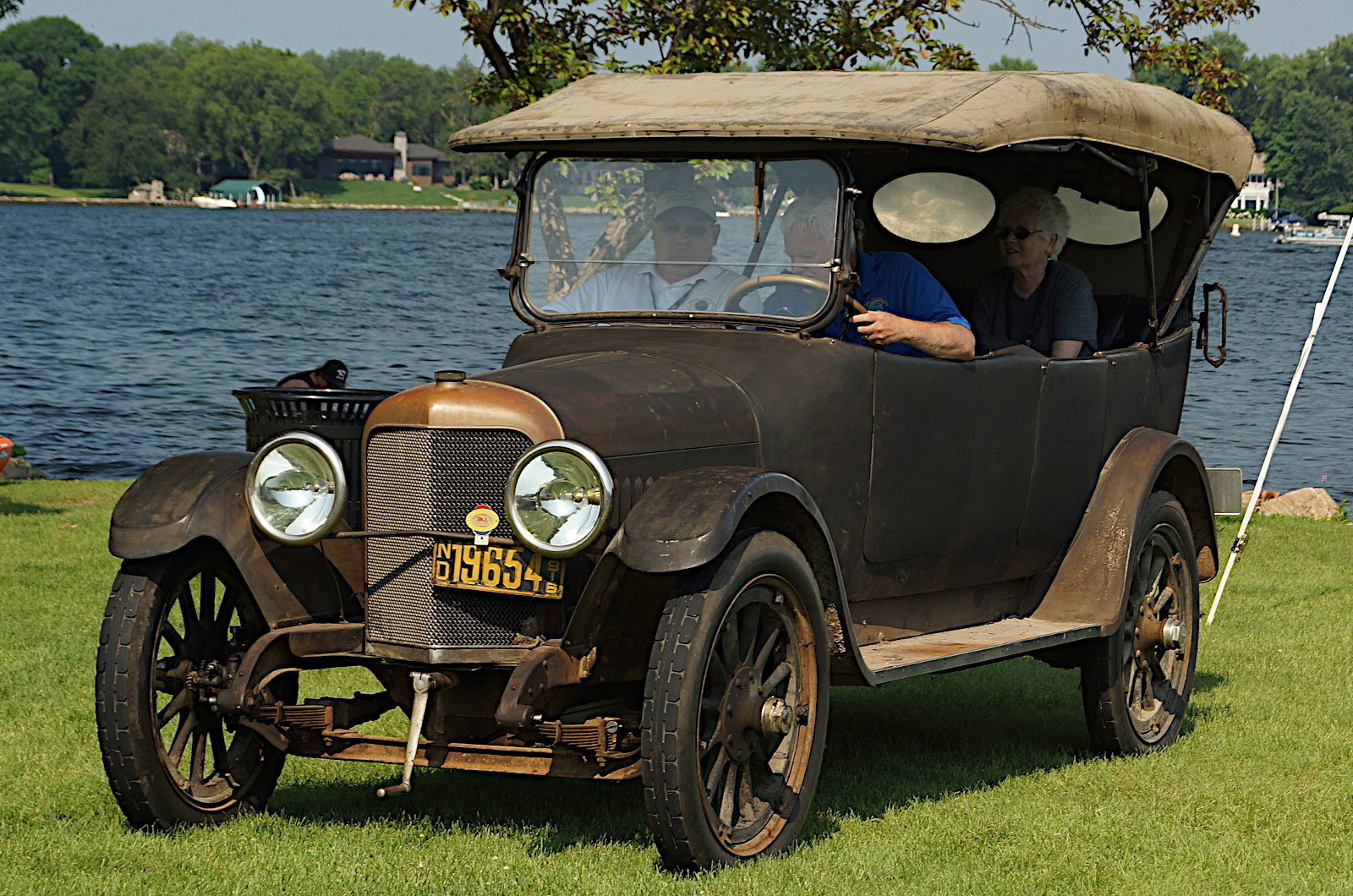
Yet another Northway V8 was adopted by Oakland – which, by a complicated process, can be considered the predecessor of Pontiac – for its Model 50. Perhaps unsurprisingly, this engine bore some resemblance to the Northway units adopted by Cadillac, Cole and Oldsmobile, but it was significantly larger at 6.0 litres.
Chevrolet Series D (1917)
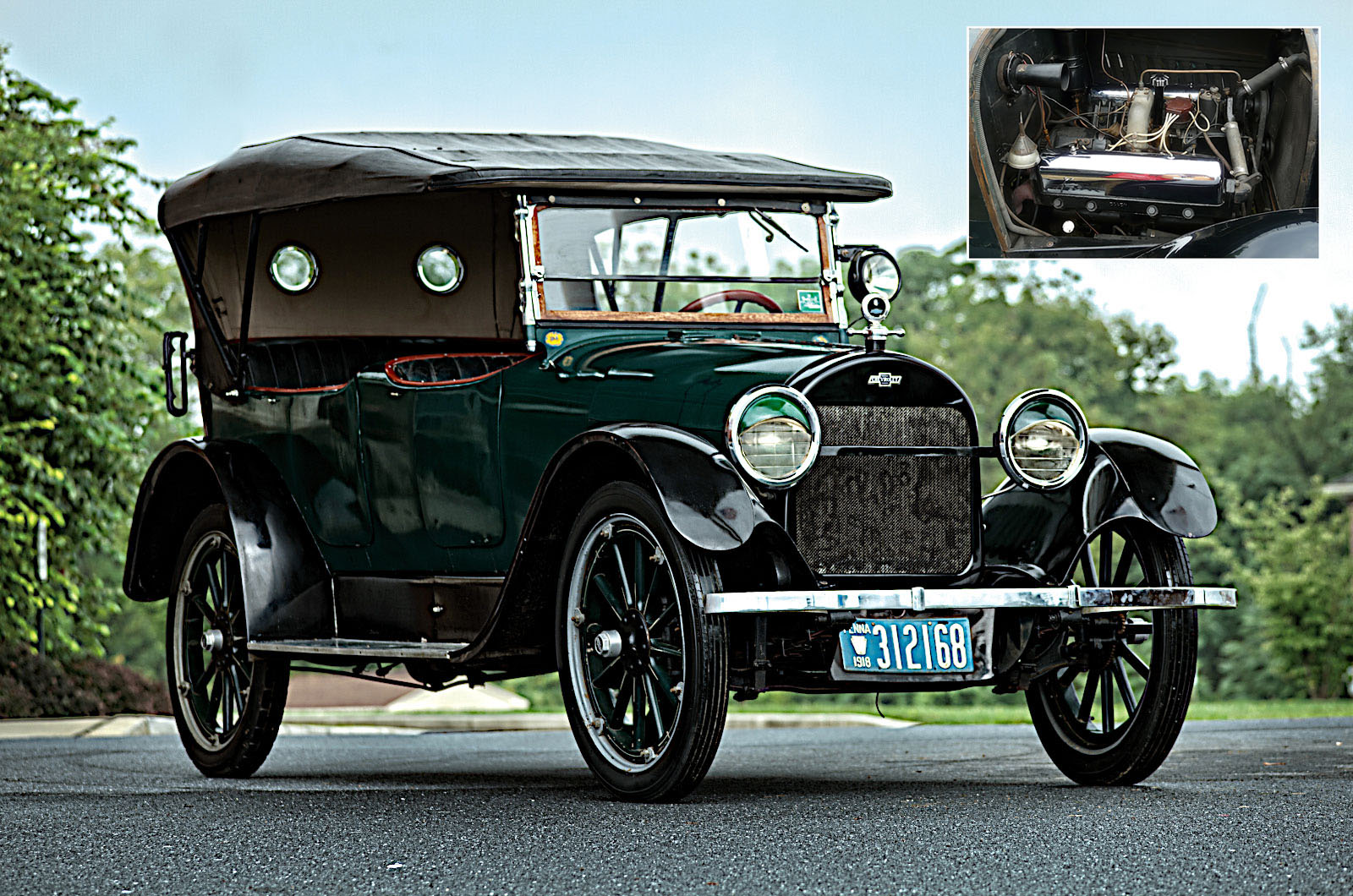
The first of many Chevrolet V8 engines was designed around the time the brand was incorporated into General Motors. Unlike all the units mentioned so far, whose valves were mounted alongside the cylinders, Chevrolet put them in the cylinder head. Although this design is now outdated, it was still novel in 1917, and had been popularised by Buick only 13 years before.
Chevrolet fitted this engine to the Model D, which was in production only very briefly. There were to be no more Chevy V8s until the 1950s.
Oldsmobile Light Eight Model 47 (1921)
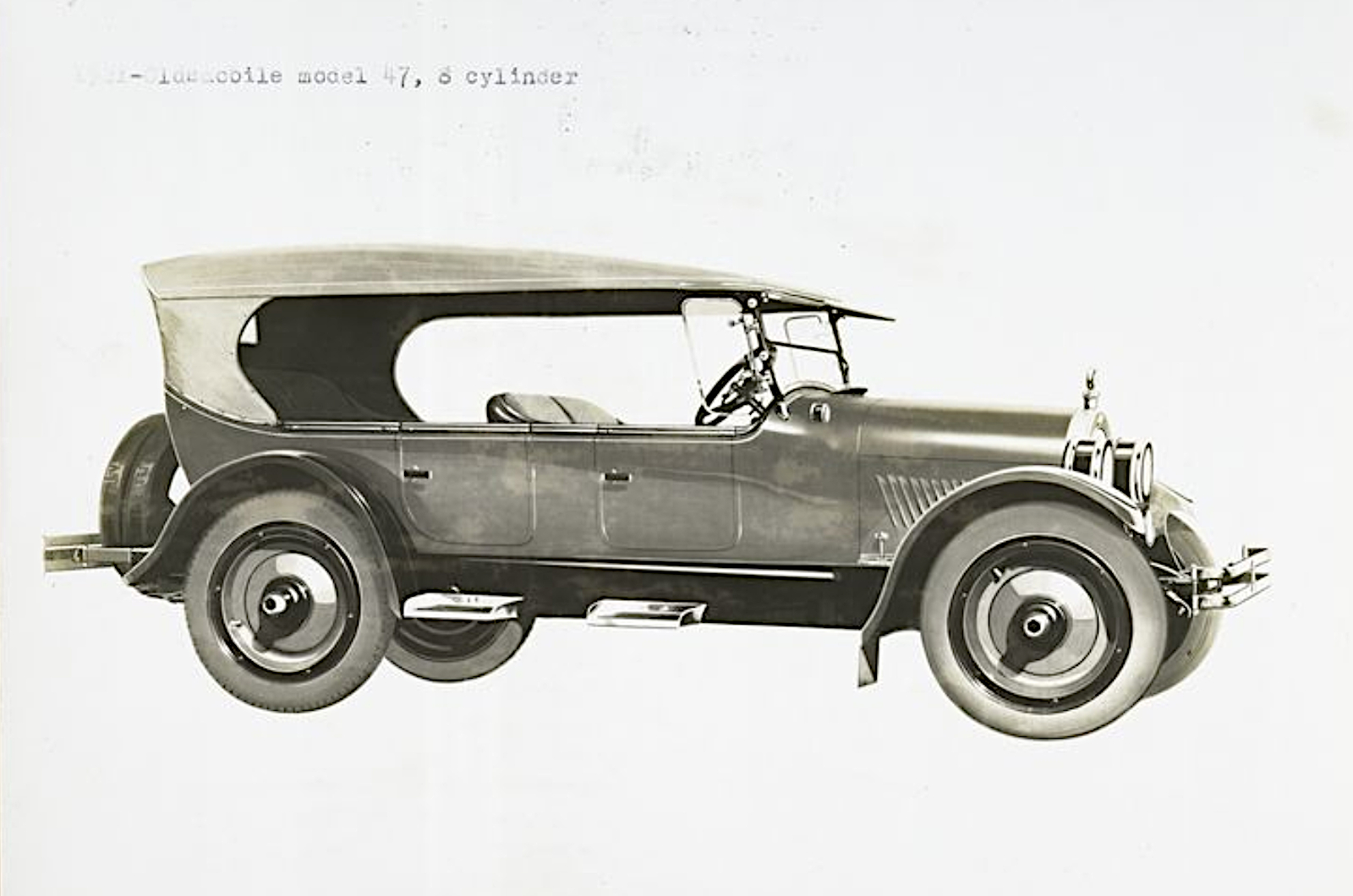
The third and final generation of the Light Eight consisted of a single car (with a variety of available body styles) called the Model 47. Some sources suggest that it used that it used the same Northway engine as its predecessors, but in fact its V8 was of a new design, though some of Northway’s ideas were carried over.
While smaller than the previous engine at 3.8 litres, it was also considerably more powerful. In its marketing literature, Oldsmobile reported an output of 63.5 horsepower (“by laboratory tests”) and claimed that it produced the greatest power “per cubic inch of cylinder displacement of any American-made automobile engine”.
Viking (1929)
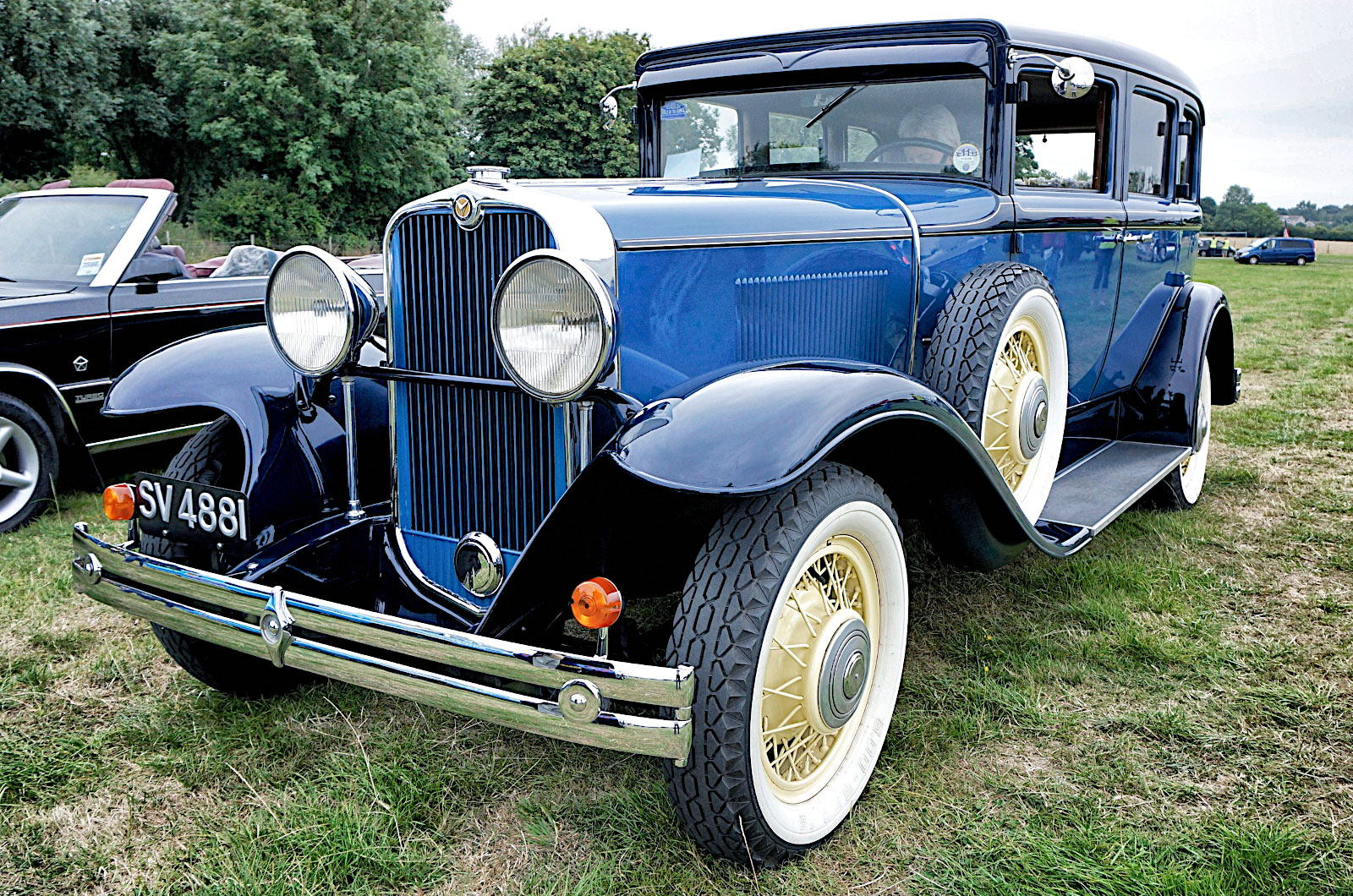
Viking was one of four GM companion makes, and the only one occupying a higher market position than its associate (in this case, Oldsmobile). It produced just one model, whose 4.3-litre V8 engine was of monobloc construction, with the block and cylinder heads cast as one piece.
This is great for strength and reliability (the head gaskets can’t fail because there aren’t any) but tricky for maintenance. Not many people would be troubled by that in this case, because only around 7000 Vikings were built before the brand was abandoned in 1931.
Oakland (1930)
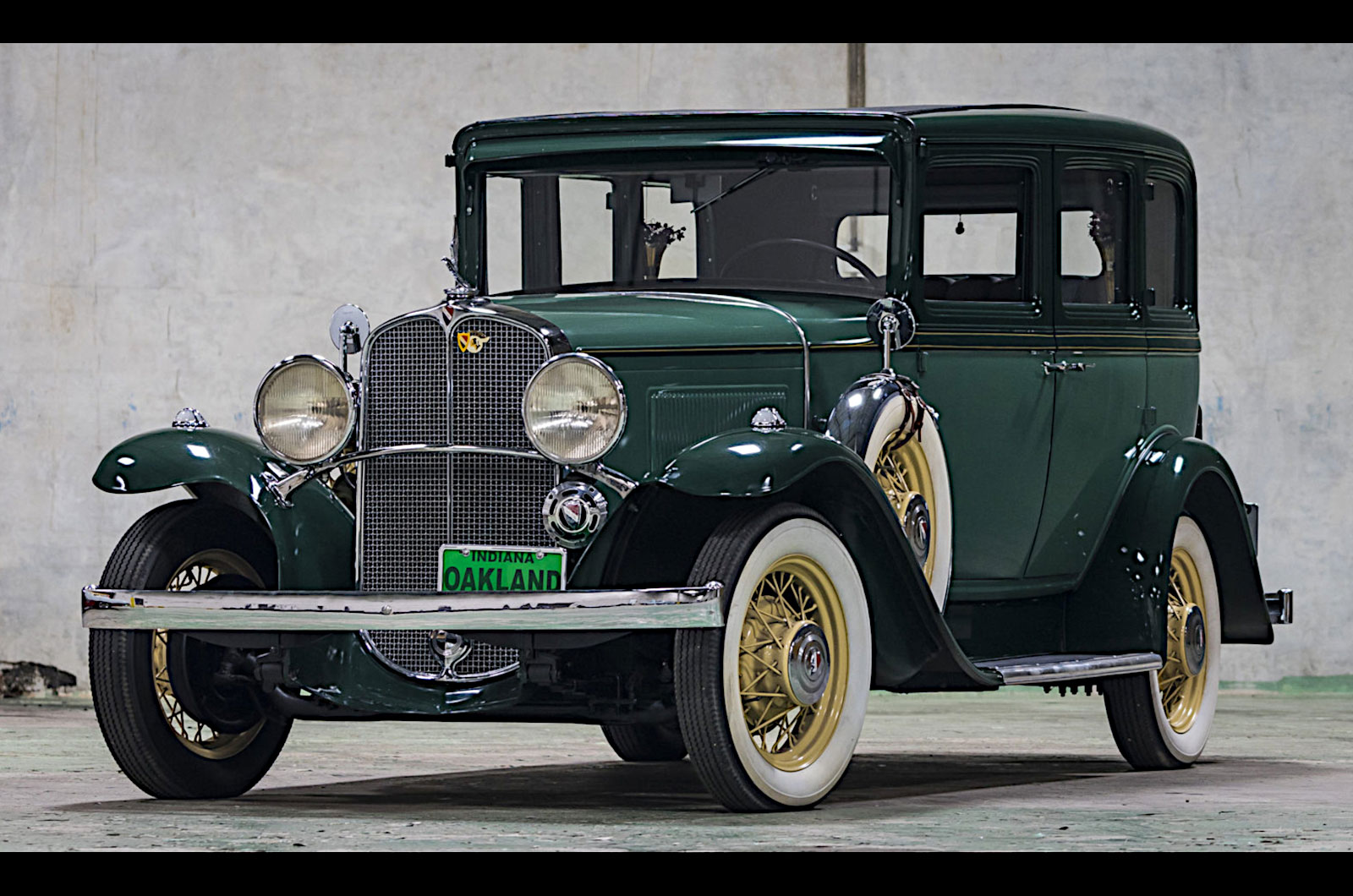
Oakland returned to V8s in 1930 with a new engine which is sometimes said to be the one developed for the Viking, but is accepted by experts as being the work of a different designer.
Uniquely in GM history, Oakland was dropped in favor of its younger companion make, Pontiac, in 1931. Pontiac used the same V8, with minor modifications, for a little longer before replacing it with a straight-eight.
PICTURE: Oakland Model 301
Cadillac monobloc (1936)
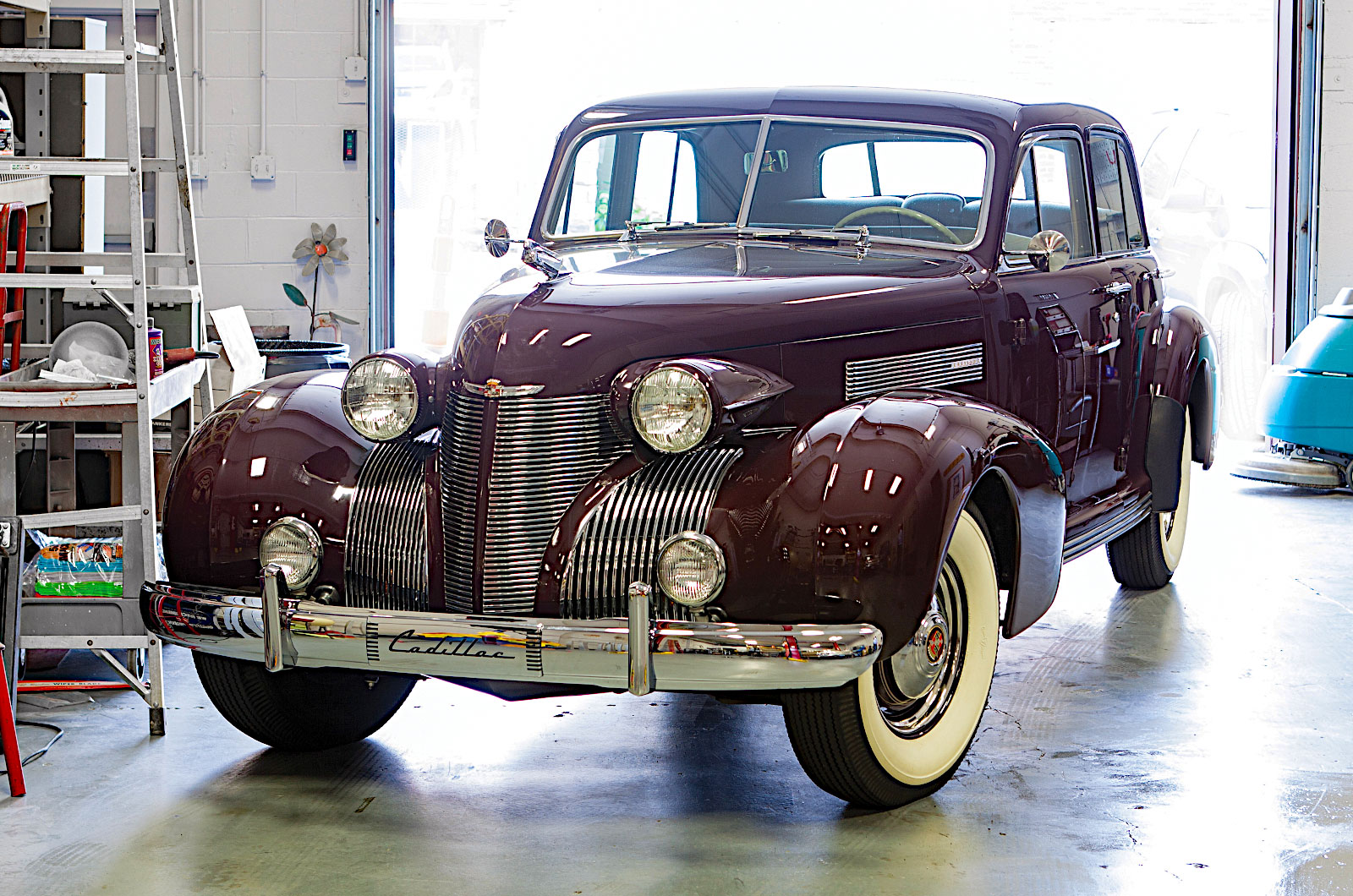
Cadillac joined the monobloc party with a new engine which made its debut in the Series 60 and the larger Series 70. Initially measuring 5.3 litres, it was later expanded to 5.7 litres.
This V8 was also used by Cadillac’s companion make, LaSalle, towards the end of its 13-year existence.
PICTURE: 1939 Cadillac Series 60
Cadillac OHV (1949)
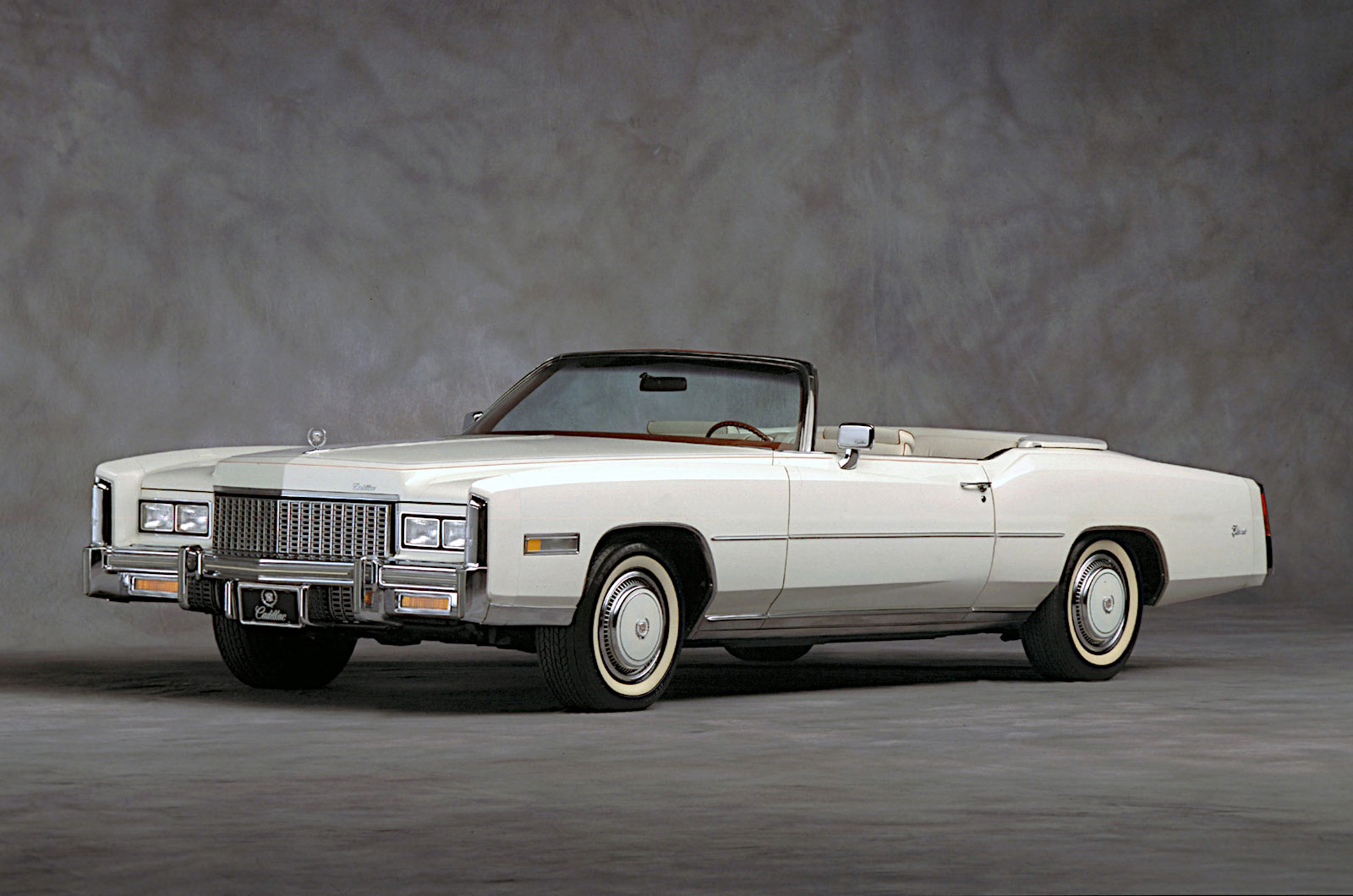
Four years into peacetime, Cadillac finally got around to creating a V8 with the overhead-valve arrangement which Buick had been using since 1904. This OHV engine was the first in a very long-lived family which was modernised several times, though retaining more or less the original architecture.
The capacity started out at 5.4 litres, but by the 1970s it had reached a phenomenal 8.2 litres, as fitted to the Eldorado (pictured). At the time, this was a record for an engine used in a mass-produced car, though more exclusive models had already gone much further.
Oldsmobile Rocket Mk1 (1949)
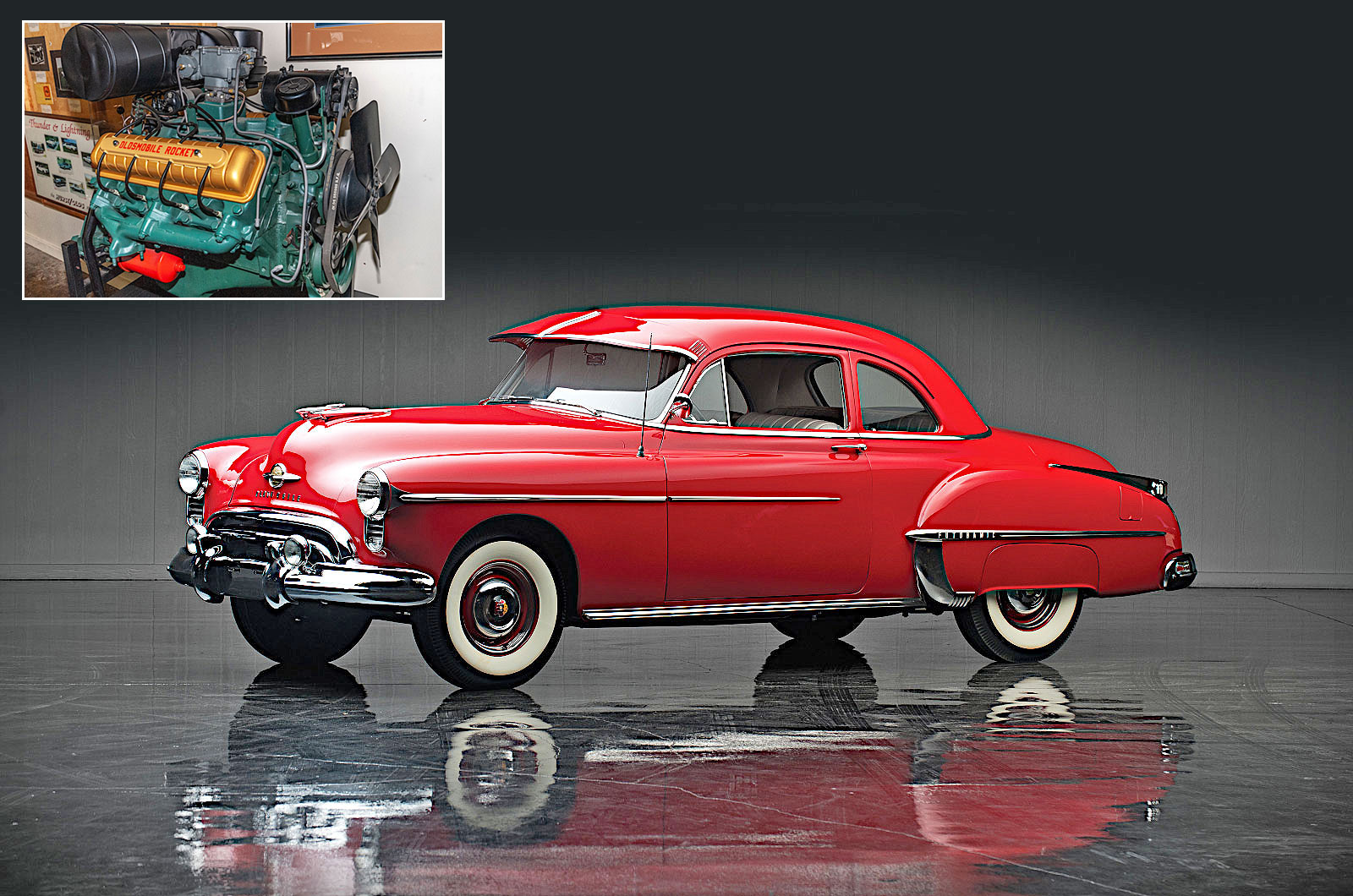
After the Light Eight was discontinued, Oldsmobile steered clear of V8s for a quarter of a century before returning to the layout with an engine nicknamed the Rocket. Slightly smaller than the Cadillac V8 of the same period, the Rocket was initially offered in 5.0-litre form but would eventually be extended to 6.5 litres. It was still available in Oldsmobiles as late as the 1964 model year.
PICTURE: 1950 Oldsmobile 88 Deluxe Club Coupe
Buick Nailhead Mk1 (1953)
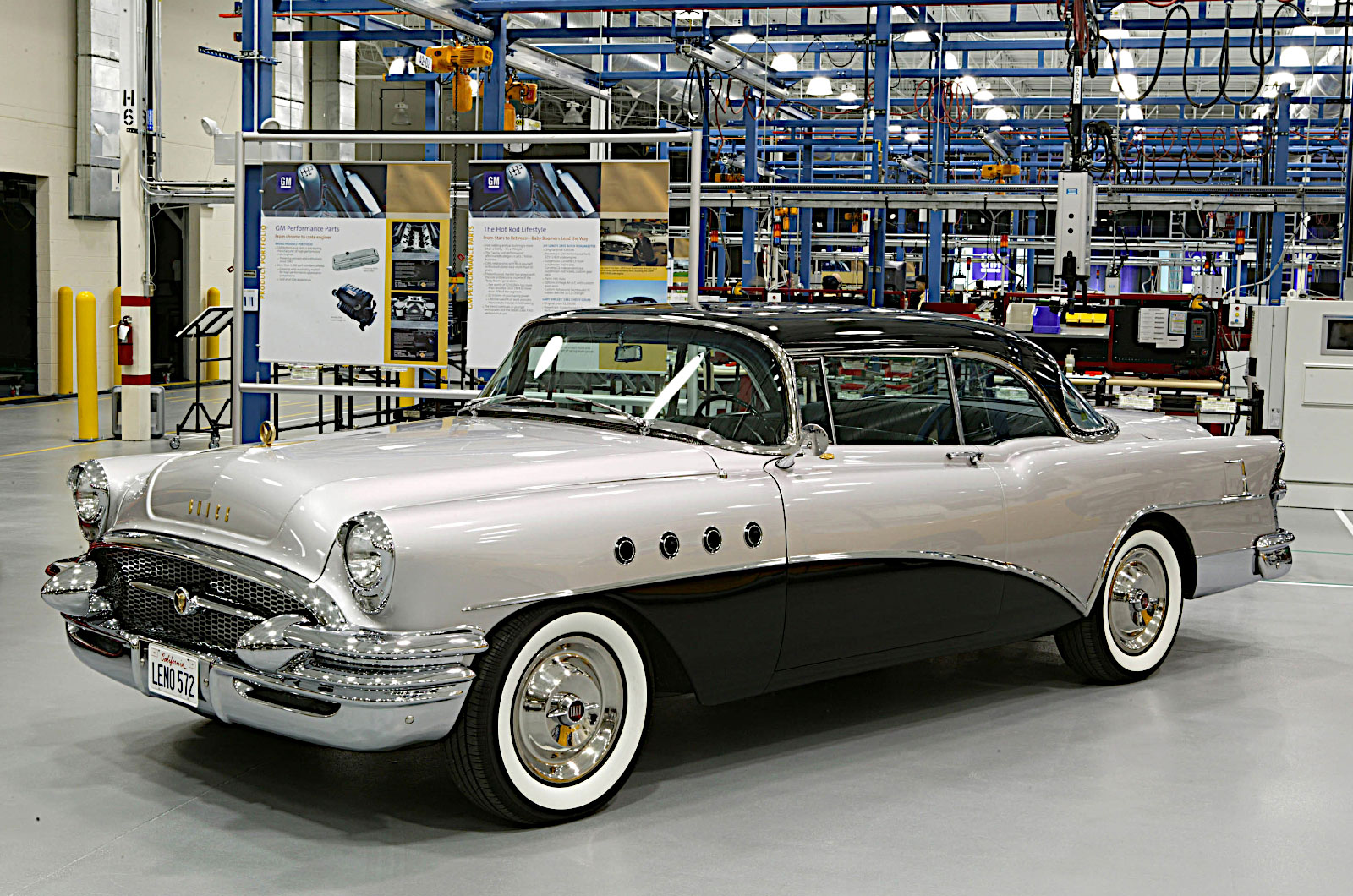
Buick called its first V8 the Fireball, but it quickly became known as the Nailhead because its small, vertically-aligned valves looked like a row of nails. The little valves were part of a plan to make the engine perform particularly well at low revs, a feature for which it became famous and respected.
Early Nailheads had capacities of either 4.3 or 5.3 litres. Buick used them only until 1956 before moving on to a new generation.
Chevrolet Small Block Mk1 (1954)
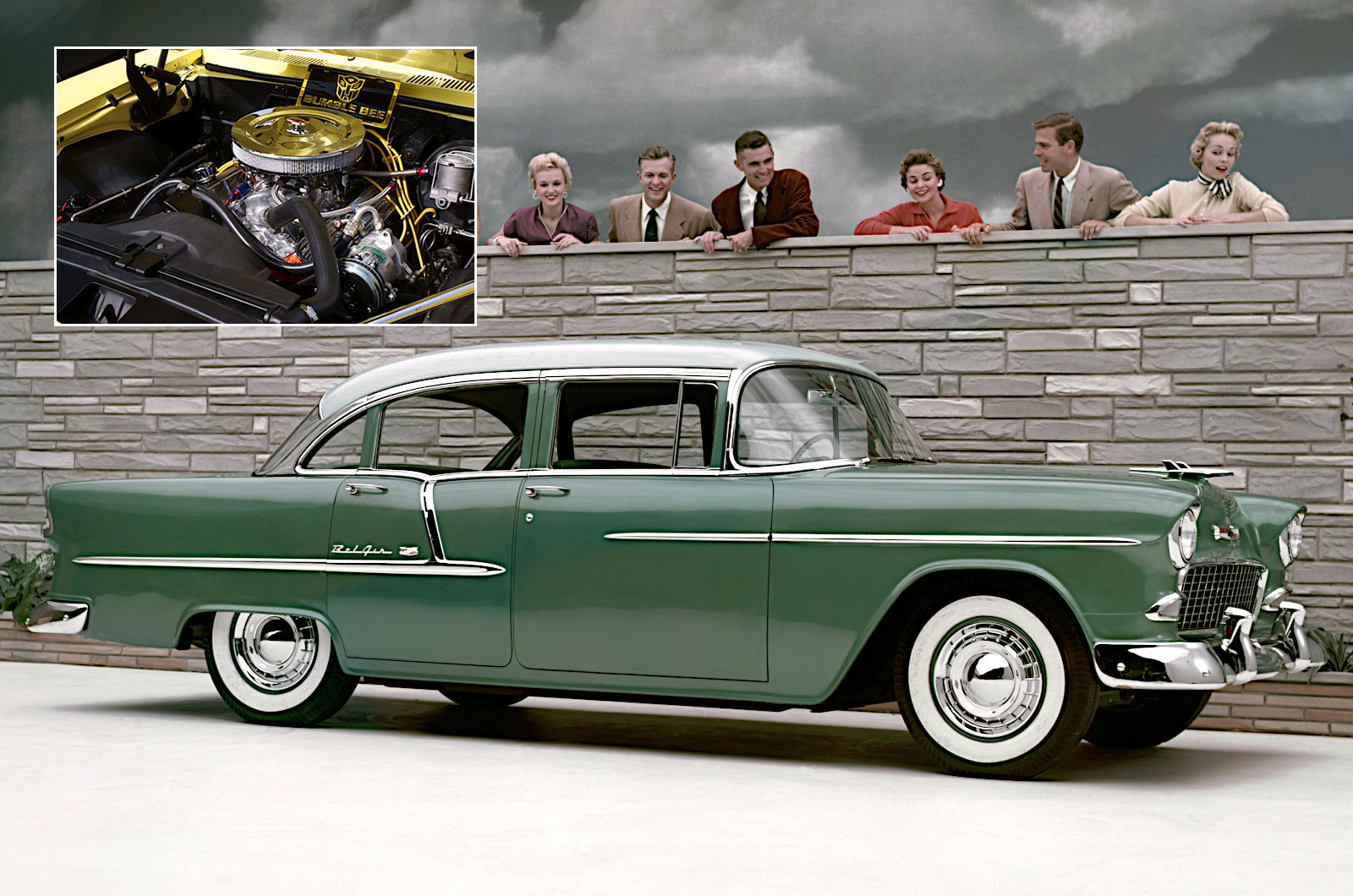
The Chevy Small Block is probably the most celebrated GM engine of them all. Astonishingly, more than 100 million examples of it have been built, and although it is no longer fitted to a production vehicle it is still available as a ‘crate’ engine for replacements or high-performance conversions.
It first appeared in the 1955 model year Bel Air (pictured) and Corvette. Heavily developed derivatives were still being fitted to GM production vehicles as late as 2003.
Pontiac V8 (1955)
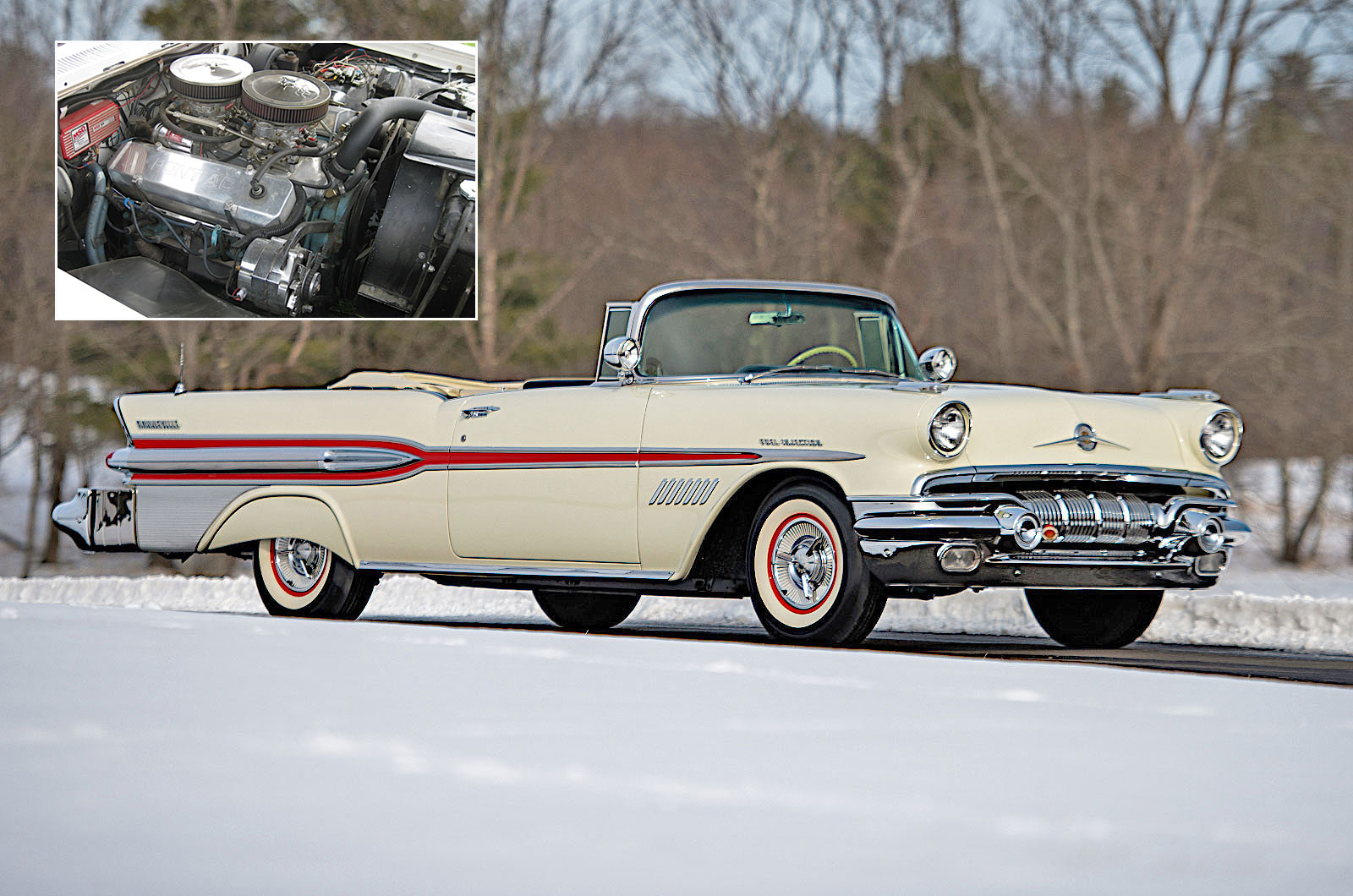
Pontiac’s first self-designed V8, as opposed to the one it inherited from Oakland in the early 1930s, amounted to a family of engines which made their debut in 1955 and survived, with many updates, until the 80s.
Capacities ranged from 4.3 to a mighty 7.5 litres. More extreme examples were known as High Output, Super Duty and the slightly misleadingly named Ram Air.
PICTURE: 1957 Pontiac Bonneville
Buick Nailhead Mk2 (1957)
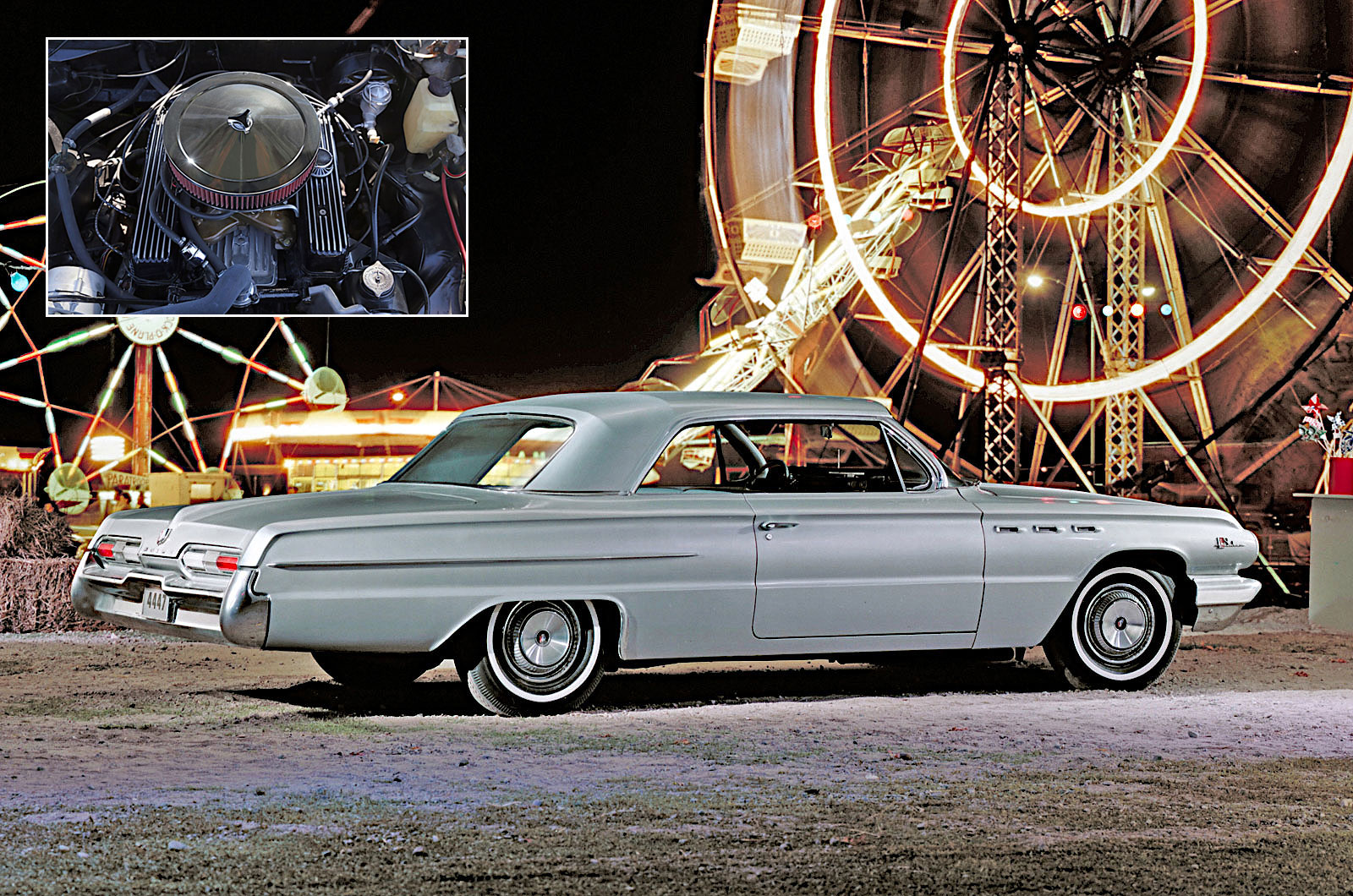
Buick thoroughly designed the Nailhead for 1957 but retained the original engine’s relatively small valves and big-bore, short-stroke layout. Many of these units were known as Wildcat, though the unofficial Nailhead name is still used.
These engines were also considerably larger than their predecessors. They started out at 6.0 litres, and by 1963 Buick had taken the design to 7.0 litres. This was roughly the same as the contemporary second-generation Chrysler Hemi V8, which was so large it was known as the Elephant.
Chevrolet Big Block (1958)
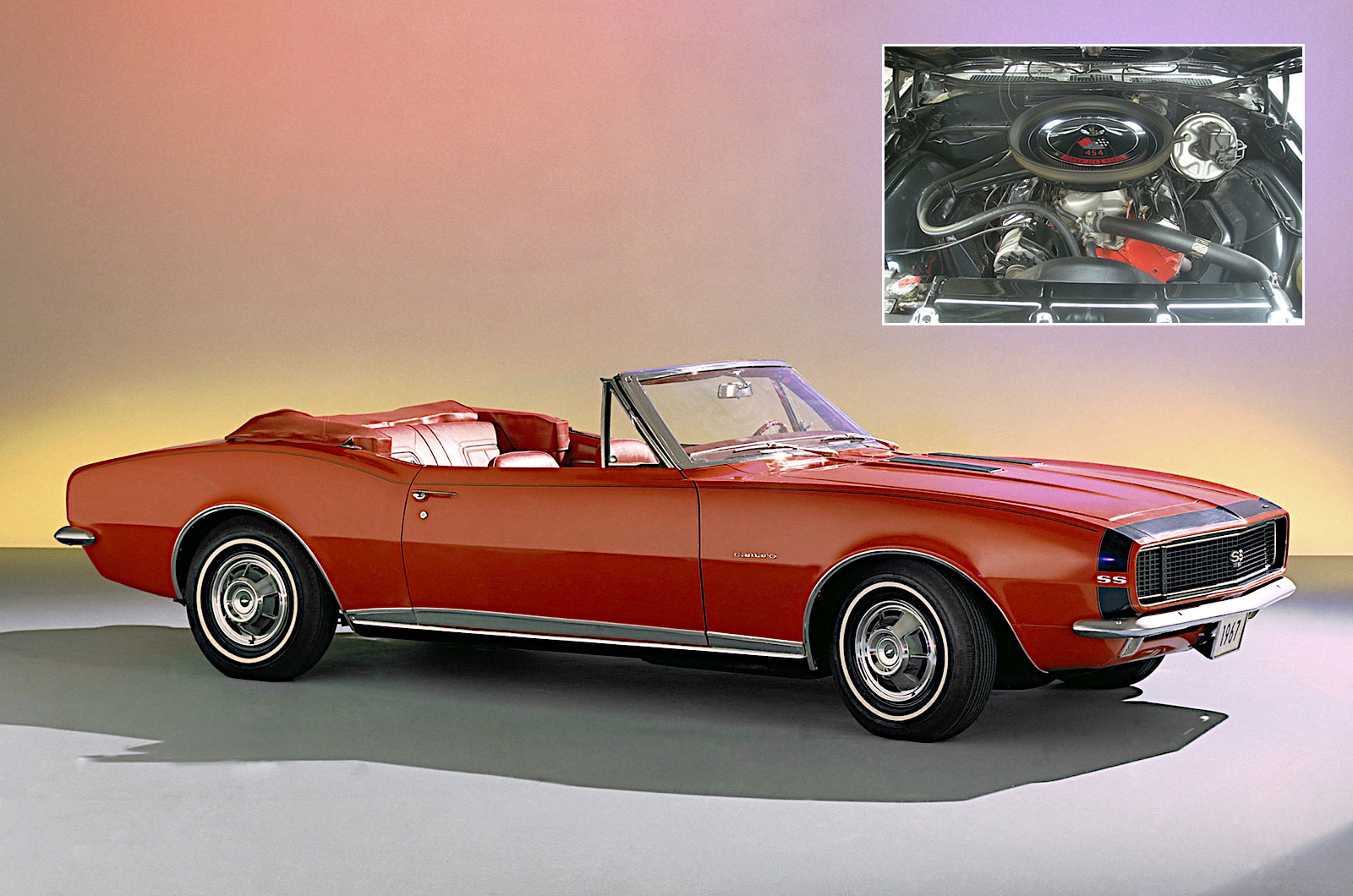
Known as the Rat motor to distinguish it from the Small Block, which was nicknamed Mouse, the Chevy Big Block was originally intended for use in trucks and heavier cars. It is now regarded as being in its seventh generation, but there is a clear line of gradual evolution between today’s engine and the one introduced in the late 1950s.
As used in production vehicles, capacities have ranged from 5.7 to 8.1 litres, but GM currently offers a crate version measuring 9.4 litres. Sonny Leonard’s Godfather dragster engine, which is loosely based on the Big Block, is even more extravagant at 16.5 litres.
Buick/Oldsmobile 215 (1961)
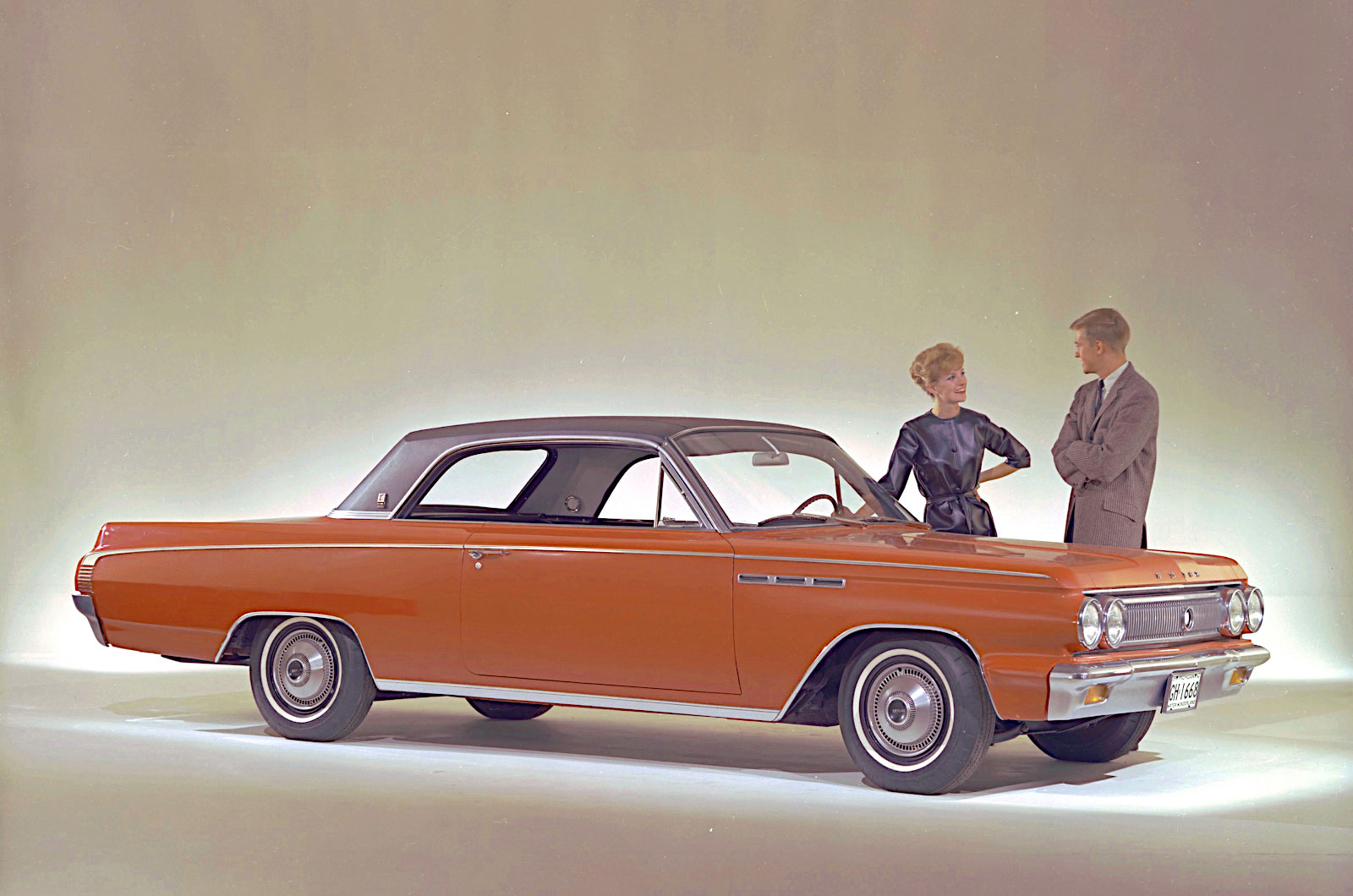
In the early 1960s, Buick created an all-aluminum 3.5-litre small-block V8. Oldsmobile produced its own version, which differed from the Buick only in detail. Both engines had very short lives in their original forms, but they were taken on and developed by other companies in the UK and Australia.
Rover bought the rights to the Buick motor and transformed it into its own V8, which powered a great many mainstream, specialist and home-built cars for decades afterwards, including the first two generations of the Range Rover. The Oldsmobile became the basis for the Repco V8, which powered the Brabham cars used by Jack Brabham (1926-2014) and Denny Hulme (1936-1992) to win the 1966 and 1967 Formula 1 World Championships respectively.
Oldsmobile Turbo-Rocket (1962)
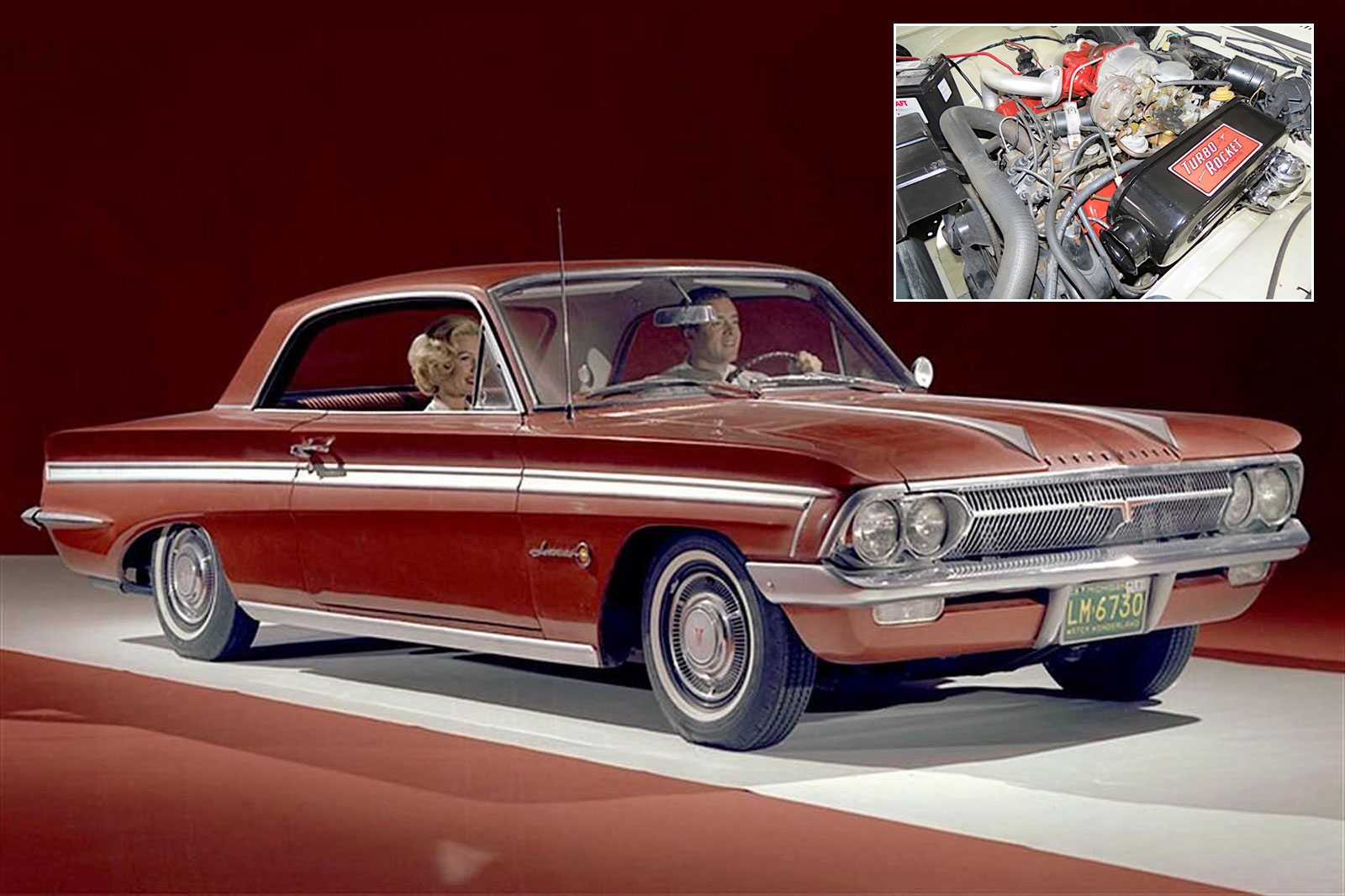
Oldsmobile turbocharged the 215 for the same reason so many manufacturers use turbos today – to achieve a combination of superior performance with better economy due to the fact that an off-boost turbo engine uses relatively little fuel.
The Turbo-Rocket, as it was known, appeared briefly in the Jetfire, a derivative of the Oidsmobile Cutlass, which was one of the first turbocharged production cars. High cost, poor reliability and consequent disappointing sales limited the Jetfire’s production life to just two years and 9607 examples.
Oldsmobile V8 (1964)
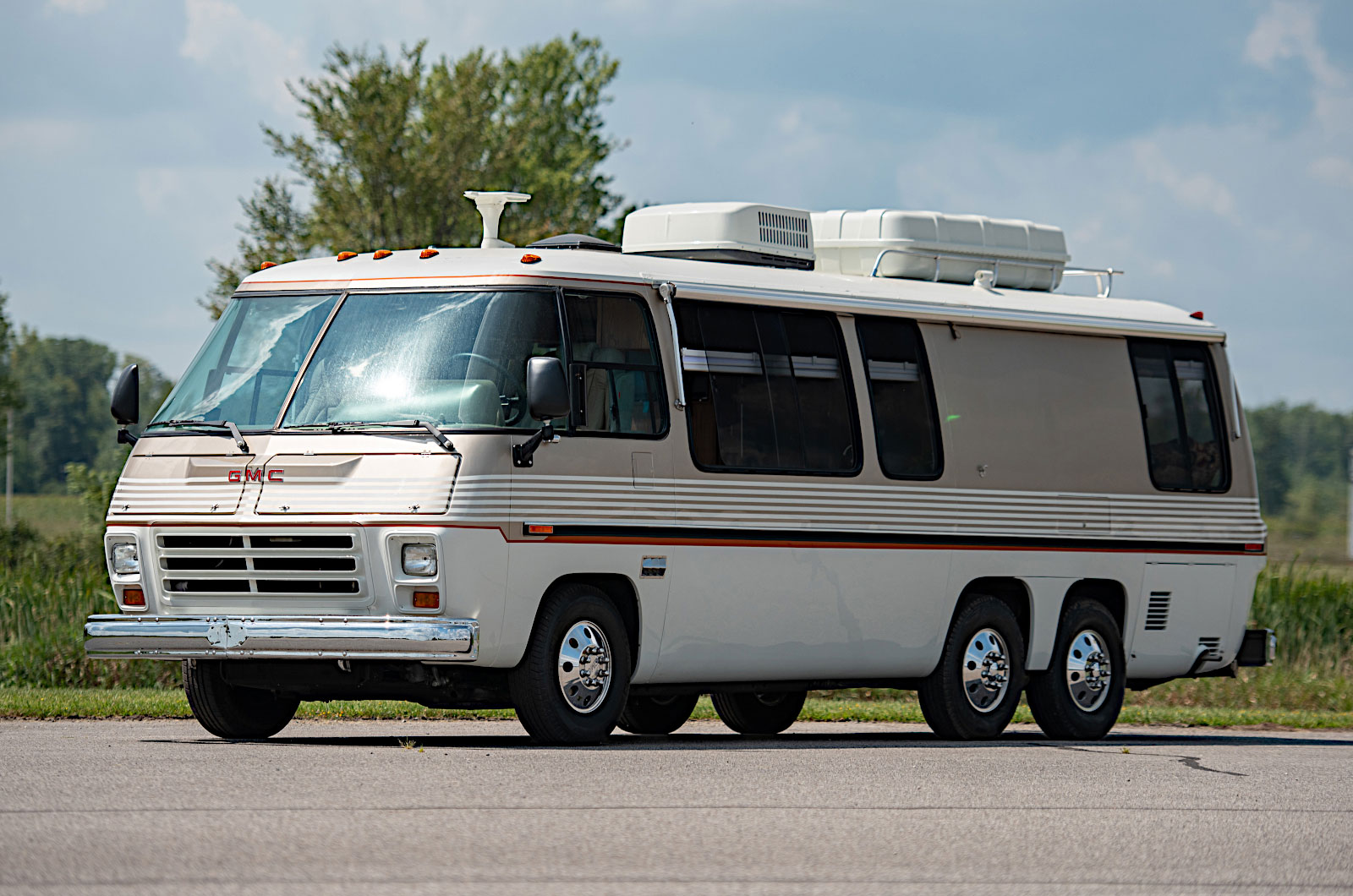
The second V8 designed in-house by Oldsmobile was by far the longest-lived, remaining in production from 1964 to 1990. There were many variants in both small- and big-block forms, with capacities ranging wildly from 4.3 litres (in an economy version introduced in 1975) to 7.5 litres.
In this era, engines created by one GM brand were often used by at least one other. The Olds V8 found its way into Buicks, Cadillacs, Chevrolets, Pontiacs and even the GMC Motorhome (pictured).
Buick 300 (1964)
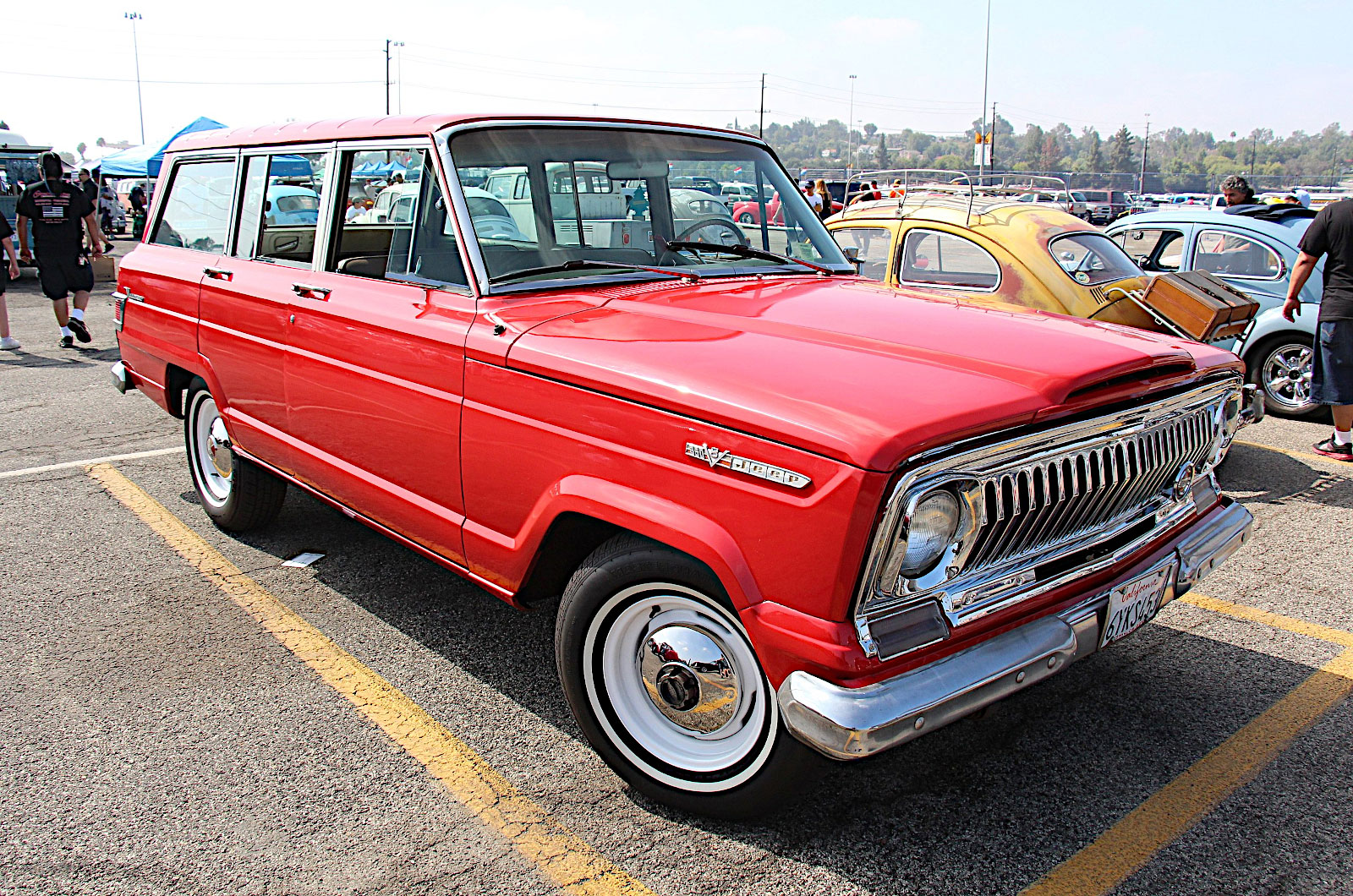
The all-aluminum Buick 215 was replaced by the 4.9-litre 300, which had iron blocks from the start and soon gained iron cylinder heads too. The 5.6-litre 340 and the 5.7-litre 350 were larger derivatives of the same engine.
The 300 family was used extensively in Buick models and in the independently-produced Apollo GT sports car. GM even allowed one of its traditional rivals to fit it to Jeep vehicles in the late 1960s and early 1970s. In those applications it was known as the Dauntless.
PICTURE: 1968 Jeep Wagoneer
Buick Big Block (1967)
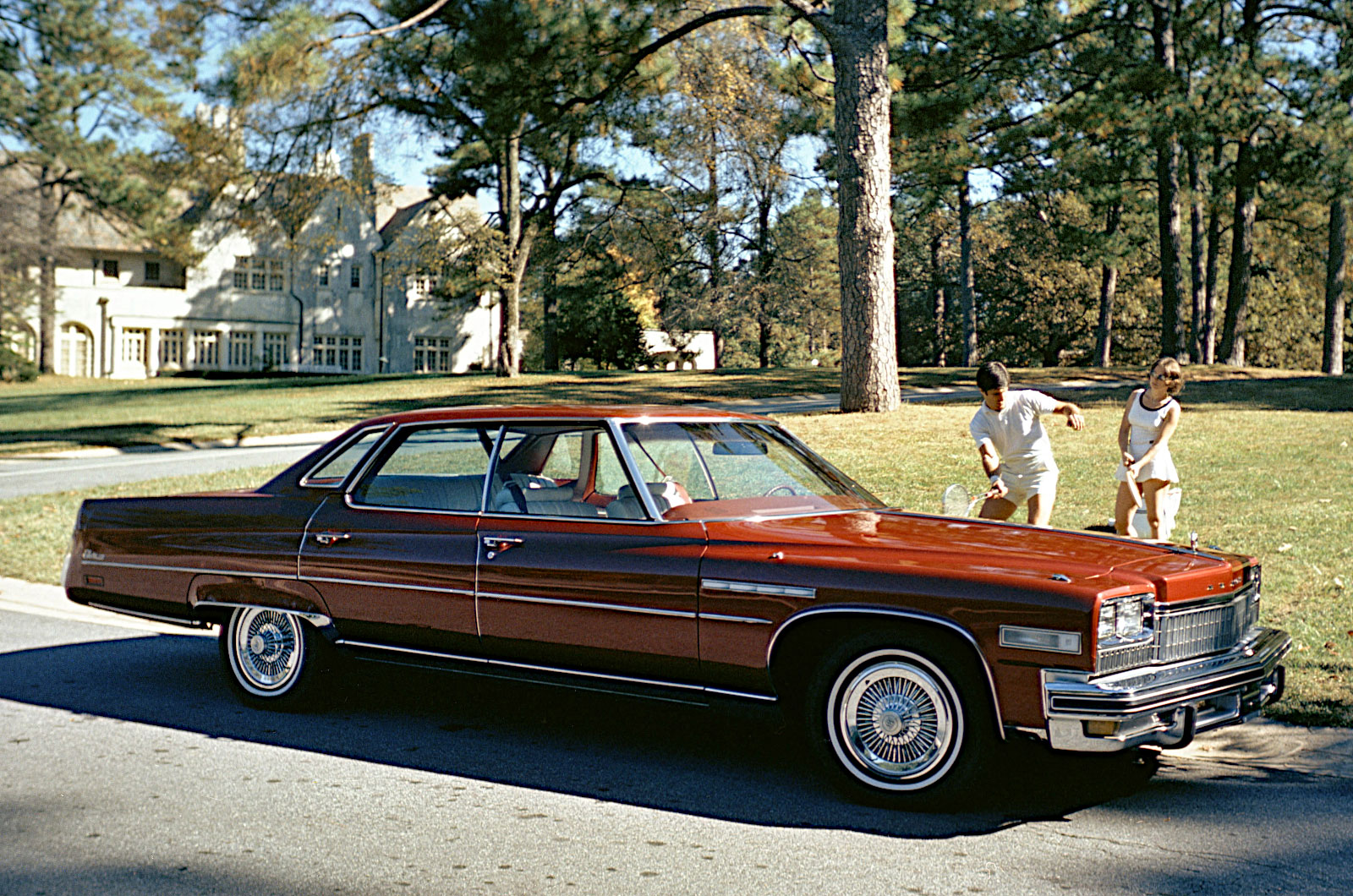
Buick phased out the Nailhead in favor of a new V8 known as the Big Block. This started out at 6.6 litres and was expanded first to 7.0 and then to 7.5 litres. This engine would become a victim of the Malaise Era that began in 1973, characterised by enormous engines which used a lot of fuel and created significant pollution to no great effect.
The 7.5-liter Buick V8, known as the 455, was a typical example of this, and was withdrawn in 1976. Buick has not designed an engine as large as this one since then, and almost certainly never will.
PICTURE: 1975 Buick Electra
Holden V8 (1969)
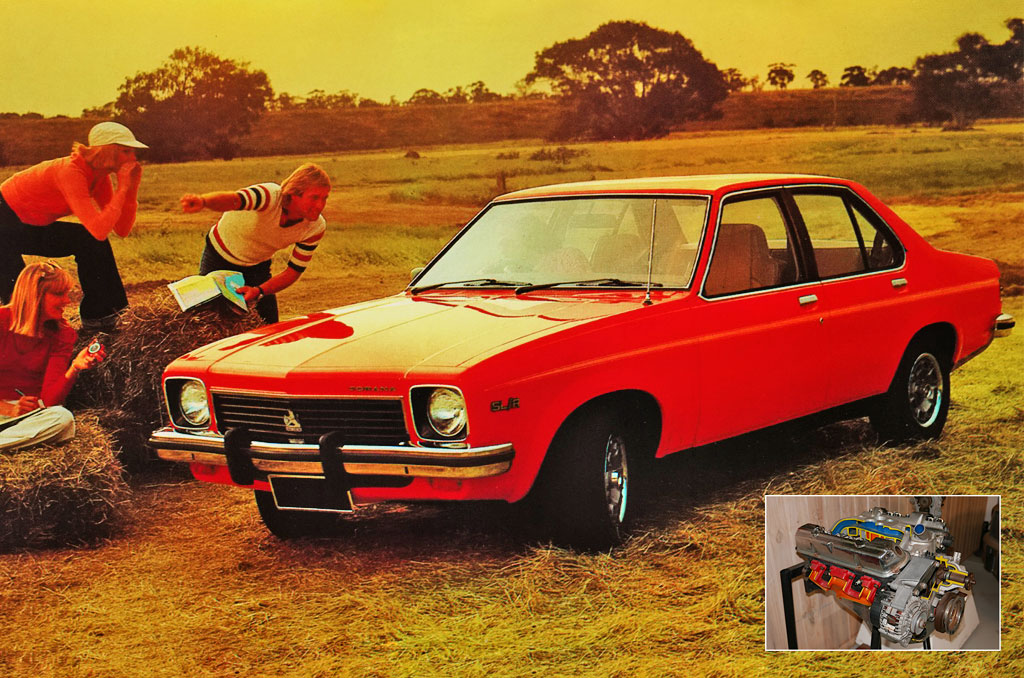
Australian high-performance cars have frequently been powered by engines from North America, but during the late 1960s GM’s Holden arm developed its own V8. A classic design with a 90-degree angle between the cylinder banks and two pushrod-operated valves per cylinder, it was continuously developed over three decades, and appeared in sizes ranging from 4.1 to 5.7 litres, latterly with fuel injection rather than the original carburettors.
Competition versions were used successfully in Touring Car racing (winning at Bathurst 1000 several times) and in Formula 5000 single-seaters.
PICTURE: Holden Torana LH SLR, 1974
Oldsmobile Diesel (1978)
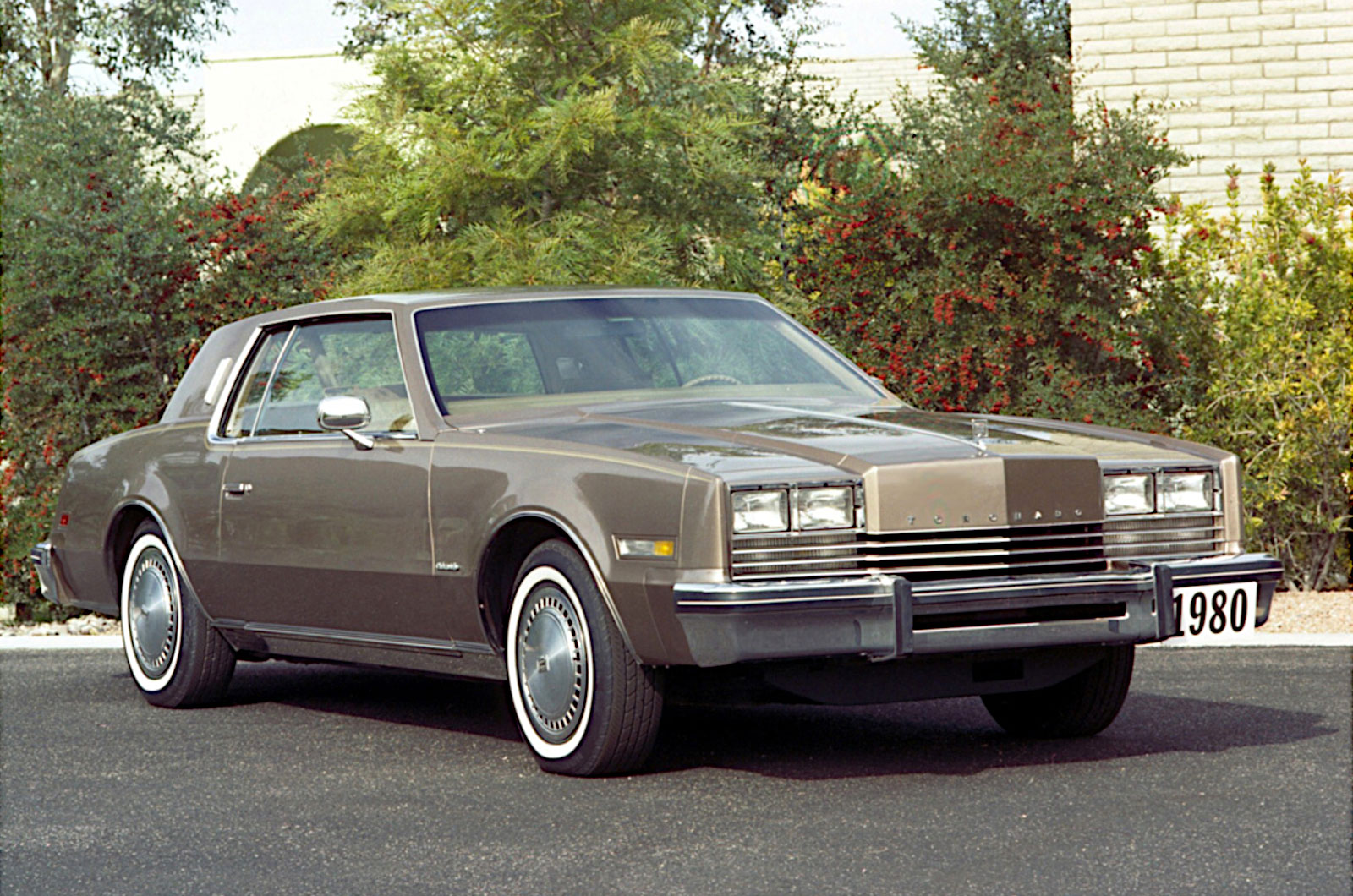
In response to an increasing demand for good fuel economy, Oldsmobile developed a diesel-fuelled version of its second-generation V8. It quickly developed a reputation for being one of the most terrible engines ever produced by General Motors. Among other problems, it had the same number and type of cylinder head bolts as the gasoline V8.
The high compression ratio typical of diesel engines did a good job of pushing the heads away from the block, which rapidly led to a series of unfortunate events. A V6 derivative was less problematic, but the V8 suggested to North American buyers that diesels were not worth considering for cars. Volkswagen would later try and popularise diesel once again in the early 21st century, with results that can fairly be described as disastrous.
PICTURE: Oldsmobile Toronado
Pontiac 301 Turbo (1980)
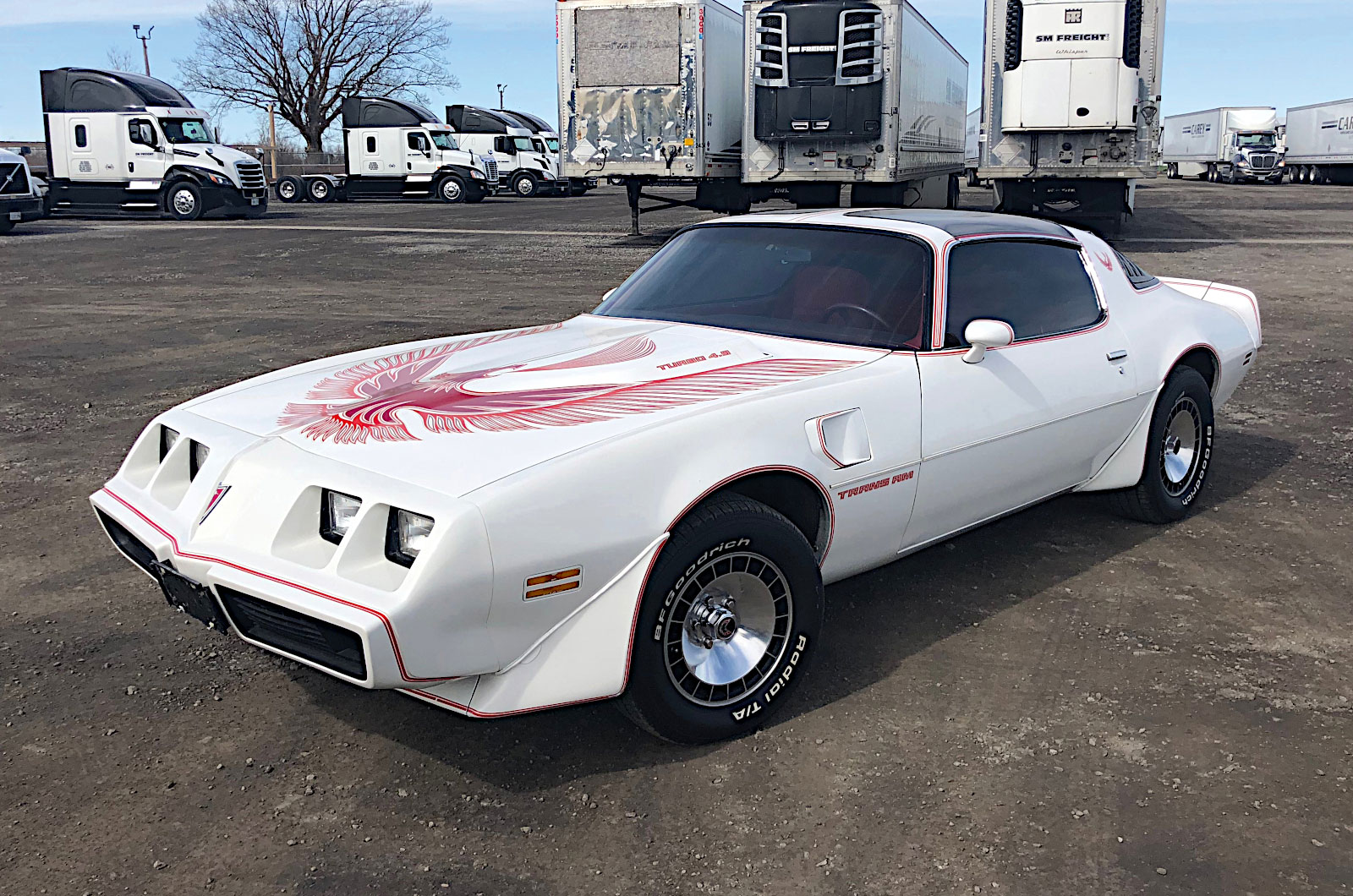
Nearly two decades after Oldsmobile had done something similar, Pontiac turbocharged the 4.9-litre version of its V8 engine. This wasn’t simply a case of slapping on a compressor – the block was stronger than that of the naturally-aspirated unit, and there were several internal changes.
The 301 Turbo was available only in the 1980 and 1981 model years, the last two of the second-generation Pontiac Firebird Trans Am (pictured).
Cadillac 8-6-4 (1981)
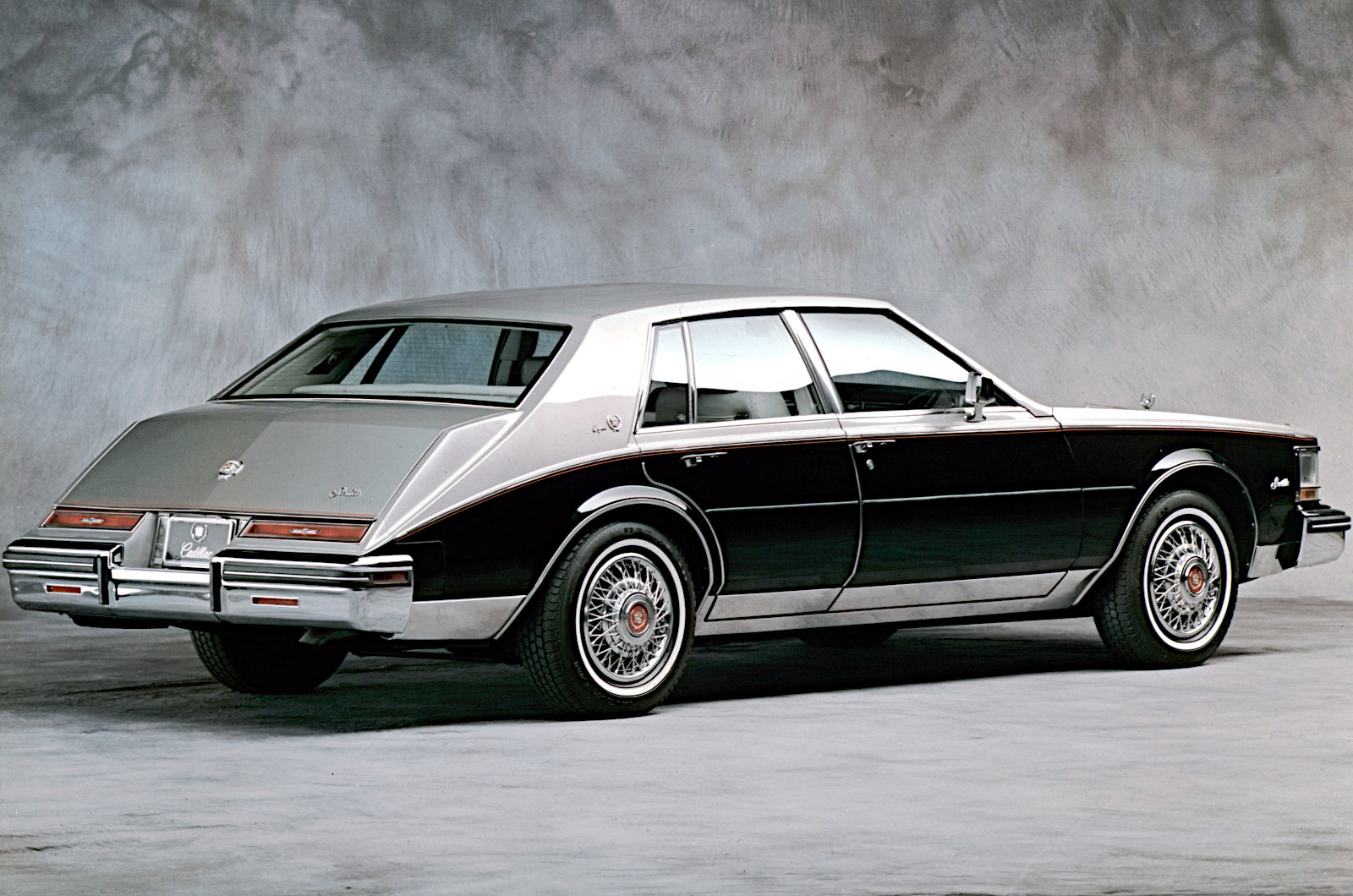
The name of this engine hints at its party trick: in the interests of fuel economy and low emissions, this 6.0-litre V8 could operate on six or even four cylinders if it sensed that current conditions did not require it to produce a lot of power. Cylinder deactivation was nothing new (the engine in the unique Schebler car of 1908 could operate as either a V12 or, by disabling one of the carburettors, a straight-six).
But Cadillac tried to control it electronically, and the available technology in terms of computer processing power simply wasn’t up to that in a fast or reliable enough fashion. Cadillac dealers quietly told buyers to switch the system off if they didn’t want to spend a lot of time by the roadside, hood up. It would be a long time after 1981 before engine management systems could successfully deal with this sort of thing.
PICTURE: 1981 Cadillac Seville
Cadillac High Technology (1982)
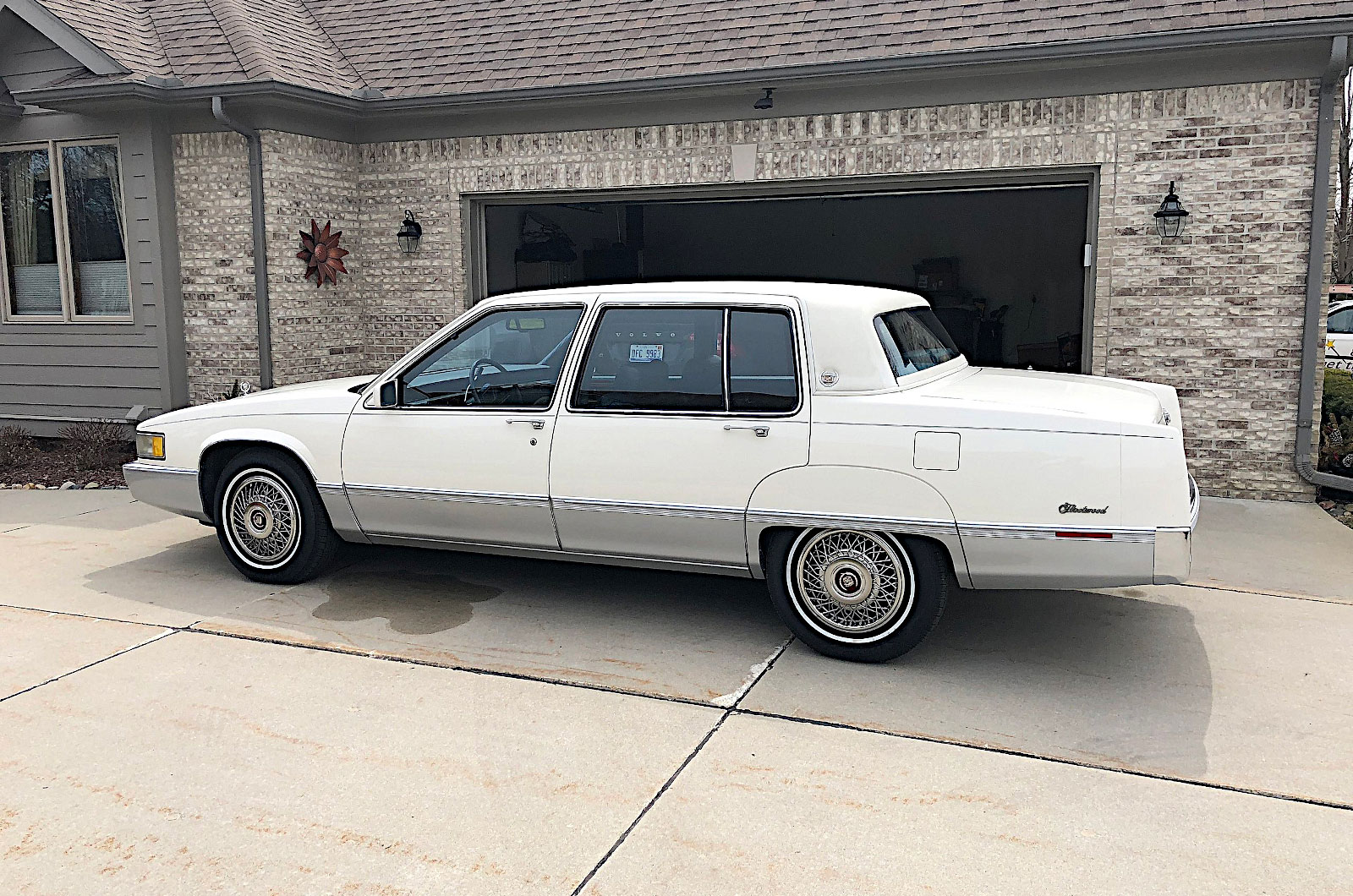
The failure of the 8-6-4 forced Cadillac to bring its new V8 to market earlier than planned. Insufficiently developed by 1982, the original 4.1-litre version known as the HT-4100 became known almost immediately for poor reliability, and it is now referred to in similar terms to those used for the unfortunate 8-6-4 and Oldsmobile Diesel.
The High Technology was later improved and enlarged, first to 4.5 litres and later to 4.9. These engines have a much better reputation than the HT-4100.
PICTURE: 1981 Cadillac Fleetwood
Detroit Diesel V8 (1982)
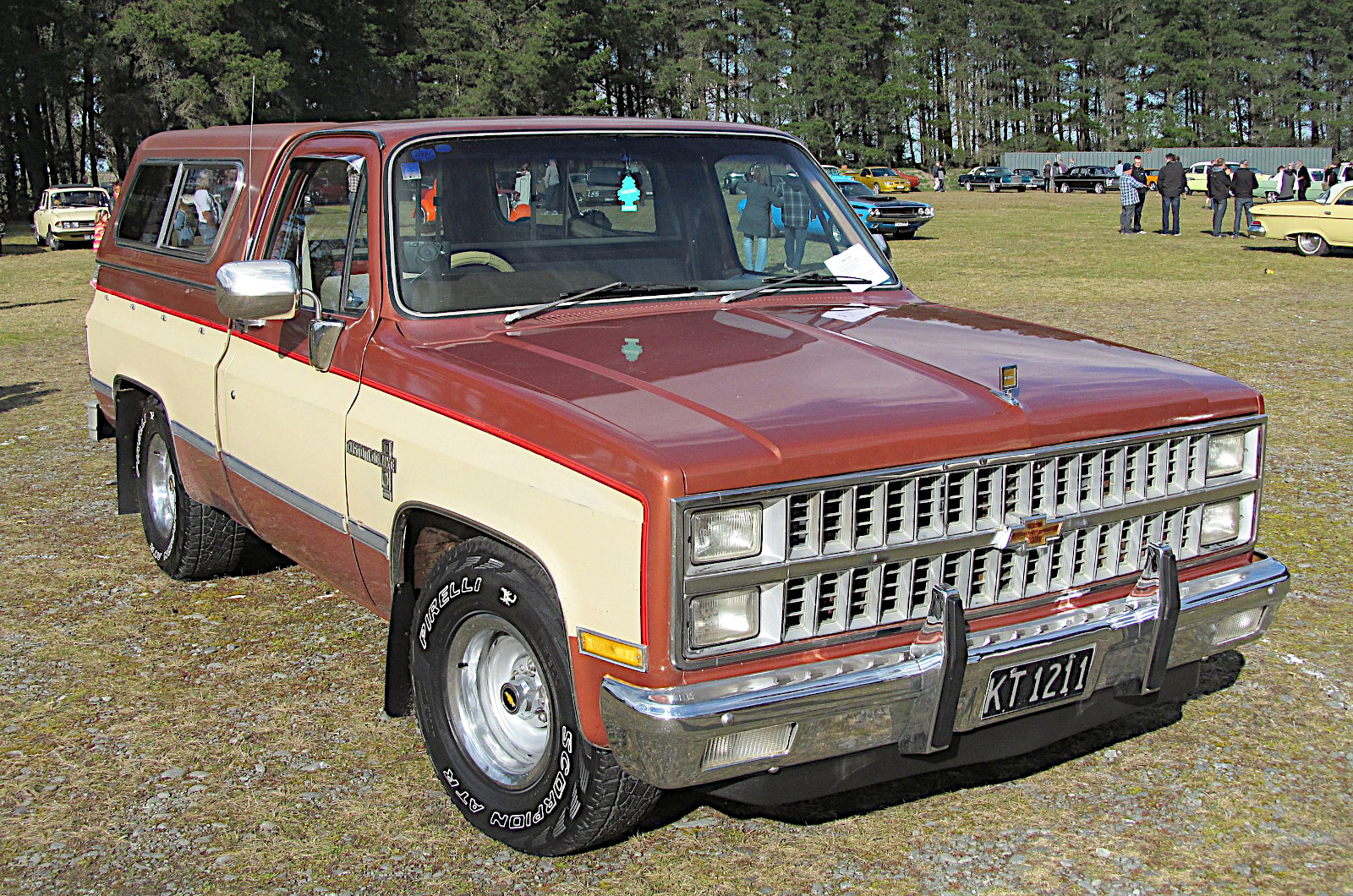
Better known at the time for its two-stroke engines, Detroit Diesel (then owned by GM) created a 6.2-litre V8 in the early 1980s. This was replaced around a decade later by a 6.5-litre version which was often turbocharged.
The engine was first used in the C/K pickup truck (pictured) marketed by both Chevrolet and GMC. It also found a home in other, quite different vehicles including the Chevrolet Suburban SUV and the Hummer H1.
Chevrolet Small Block Mk2 (1992)
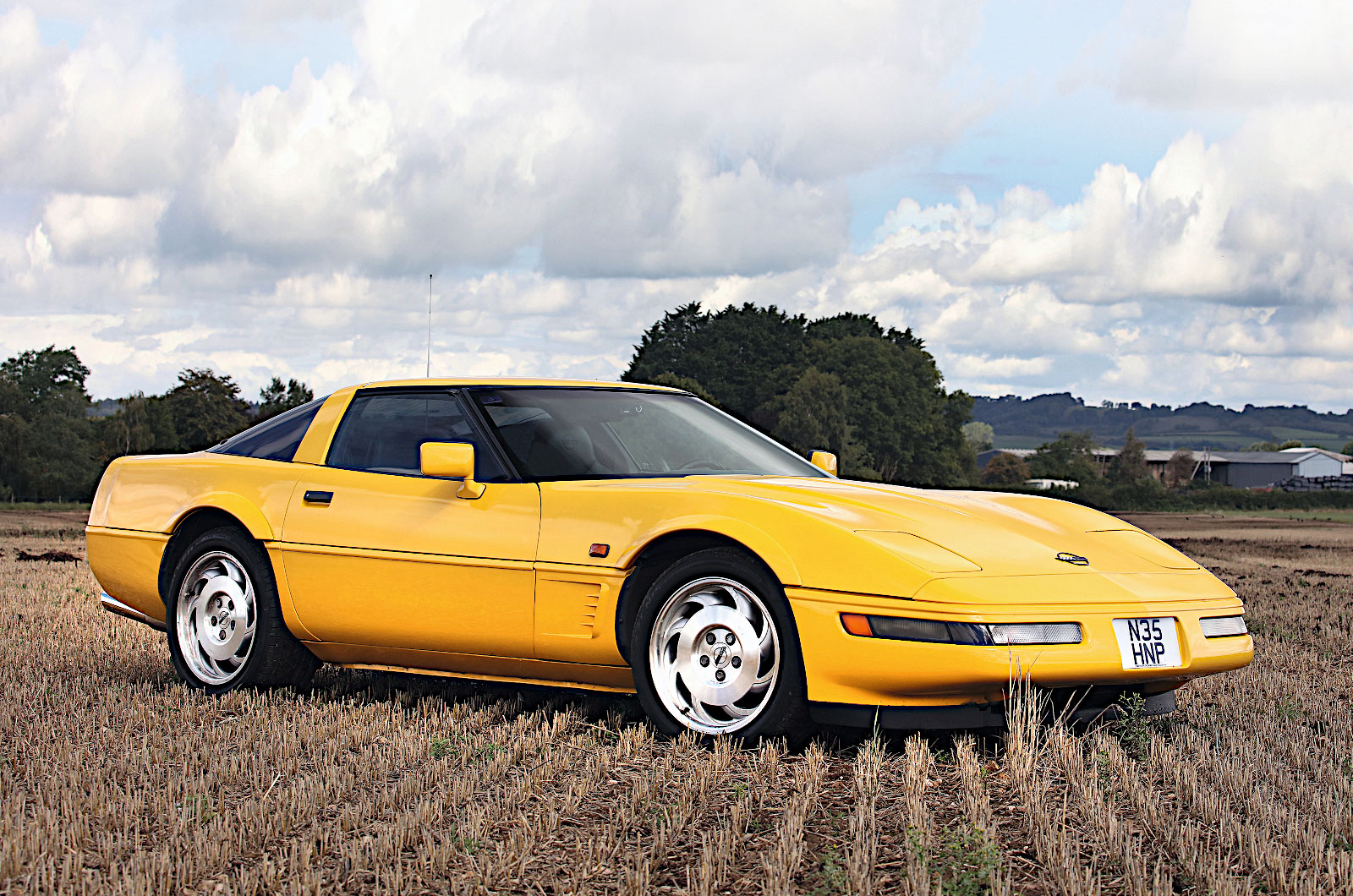
While the original Small Block was still in production, GM introduced an almost completely new successor. Initially rated at 300hp, the 5.7-litre V8 made its debut in the 1992 Chevrolet Corvette. A 330 hp version arrived four years later, and there was also a more economical 4.3-litre short-stroke.
This Small Block was discontinued in 1997, but by then it had appeared in a wide variety of cars, including several Chevrolets, the Pontiac Firebird, the Buick Roadmaster and the Cadillac Fleetwood.
PICTURE: Chevrolet Corvette
Cadillac Northstar (1993)
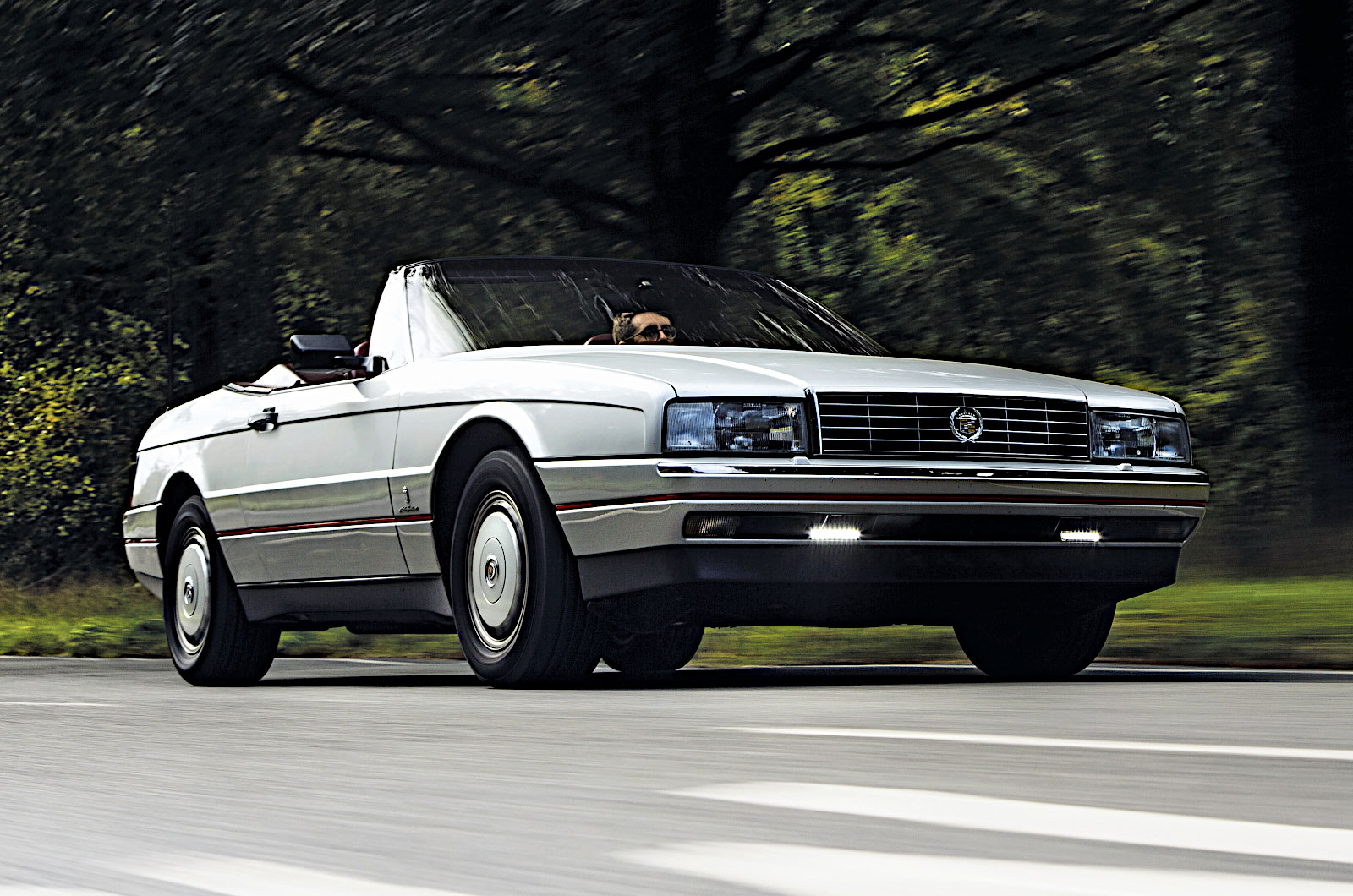
For a large American V8 of the 20th century, the Northstar was remarkably complex, with twin overhead camshafts and four valves per cylinder. It made its debut 4.6-litre form in the Allanté (pictured), and subsequently appeared in many other Cadillacs, often as a supercharged 4.4.
The Northstar was also used in the Pontiac Bonneville and Buick Lucerne, and – as a 4.0-litre twin-turbo producing 650 hp – in a sports racing car which competed in the American Le Mans Series.
Oldsmobile Aurora (1995)
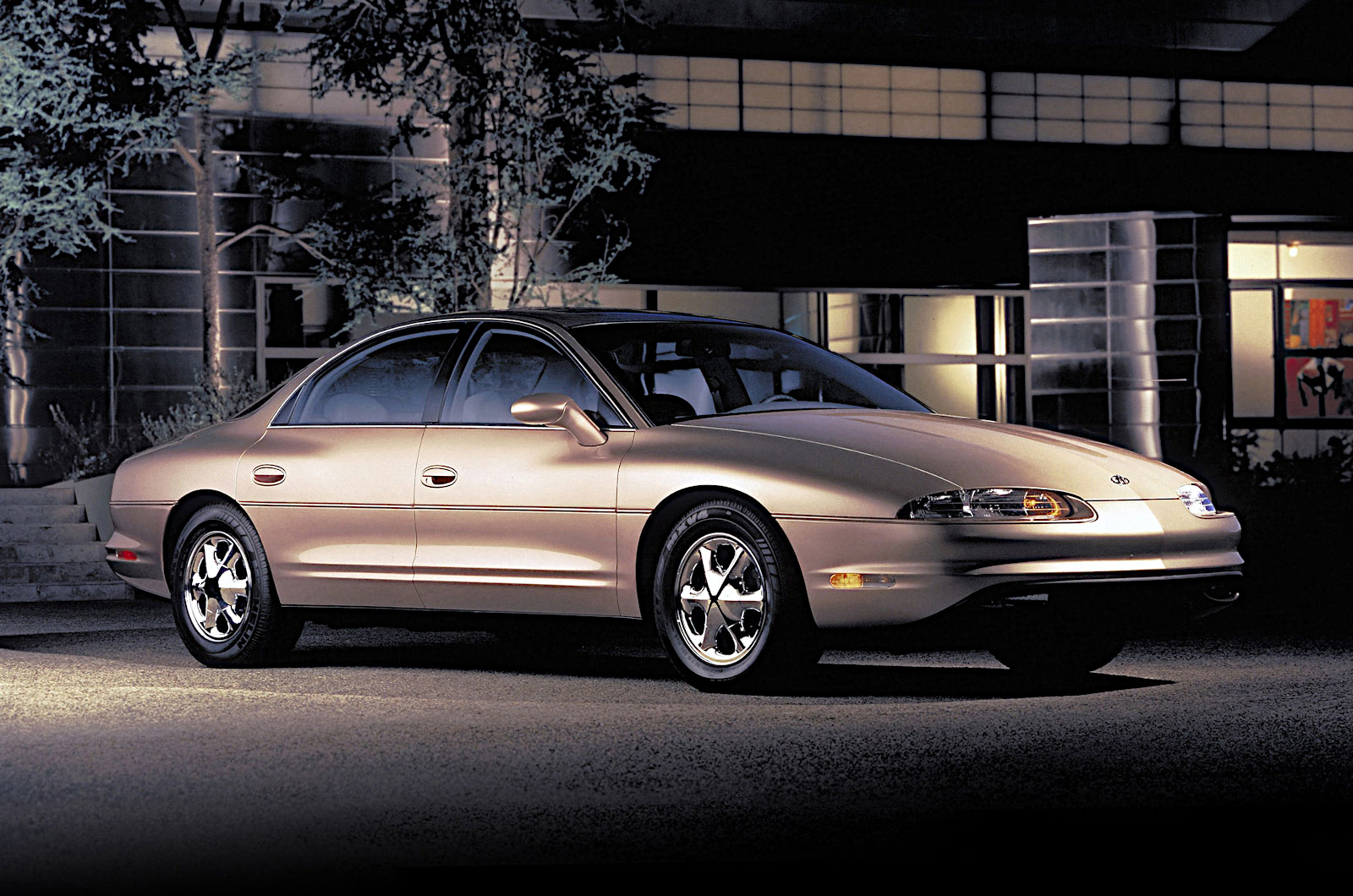
Officially called the L47, this V8 is more commonly known by the name of the only GM-built car it was ever fitted to. Closely related to the Cadillac Northstar, it was also used in the limited-production Shelby Series 1 roadster.
Sharing its 4.0-litre capacity with the Northstar race engine, it produced 250 hp. Oldsmobile created a 215 hp 3.5-litre V6 derivative which has become known as the Shortstar. Both versions were discontinued when GM closed down the Oldsmobile brand in 2004.
Chevrolet Small Block Mk3 (1997)
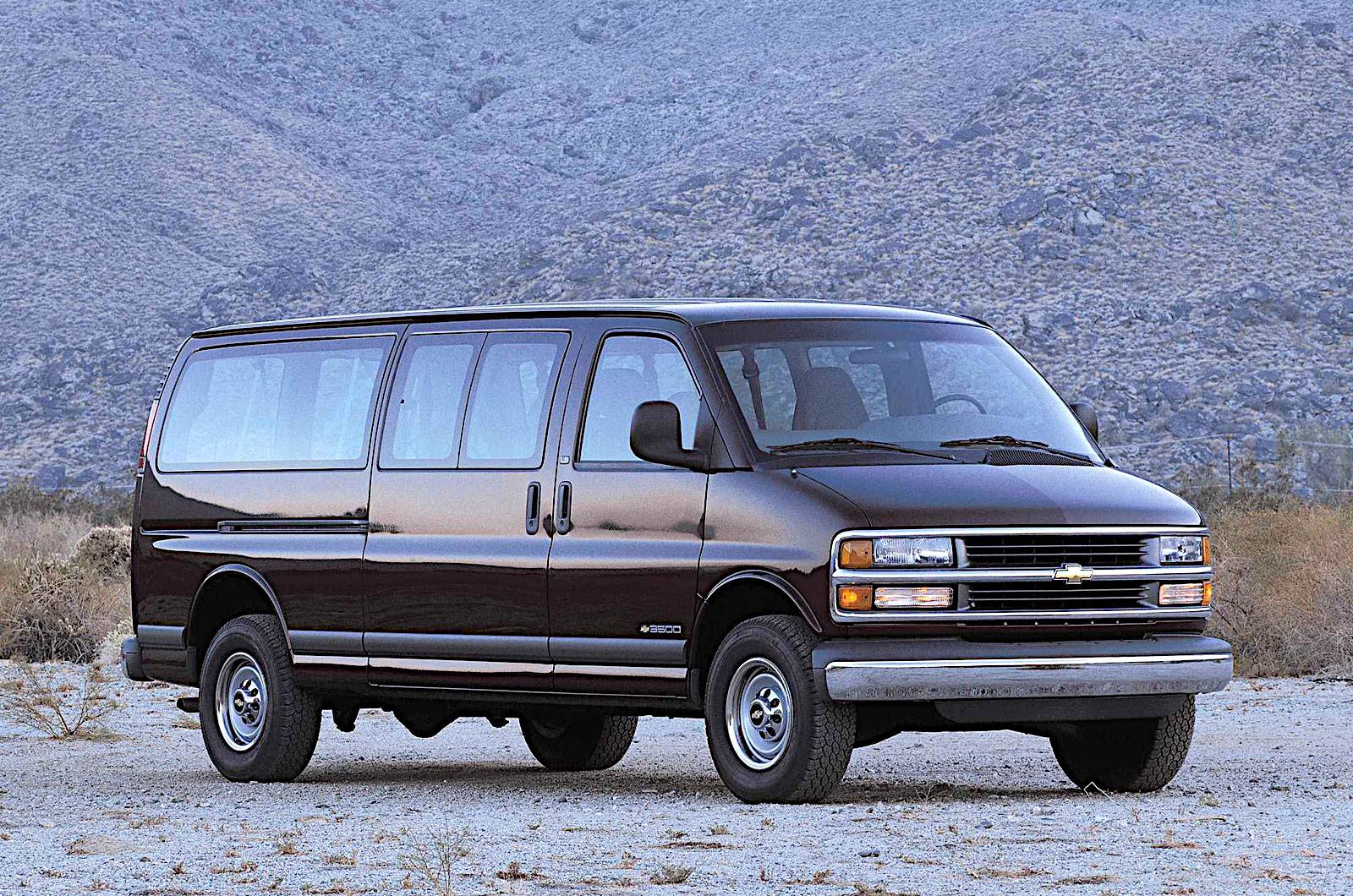
Often referred to as the LS, the third-generation Small Block had almost no connection with the previous two. It was effectively a clean-sheet design, though unlike the earlier Cadillac Northstar it had the traditional arrangement of two pushrod-operated valves per cylinder.
Available in capacities from 4.8 to 6.0 litres, the LS was produced in many forms, and appeared in all sorts of Chevrolets from the Corvette to the Express (pictured), along with Buicks, Cadillacs, GMs, Holdens and the Isuzu Ascender.
Duramax V8 (2000)
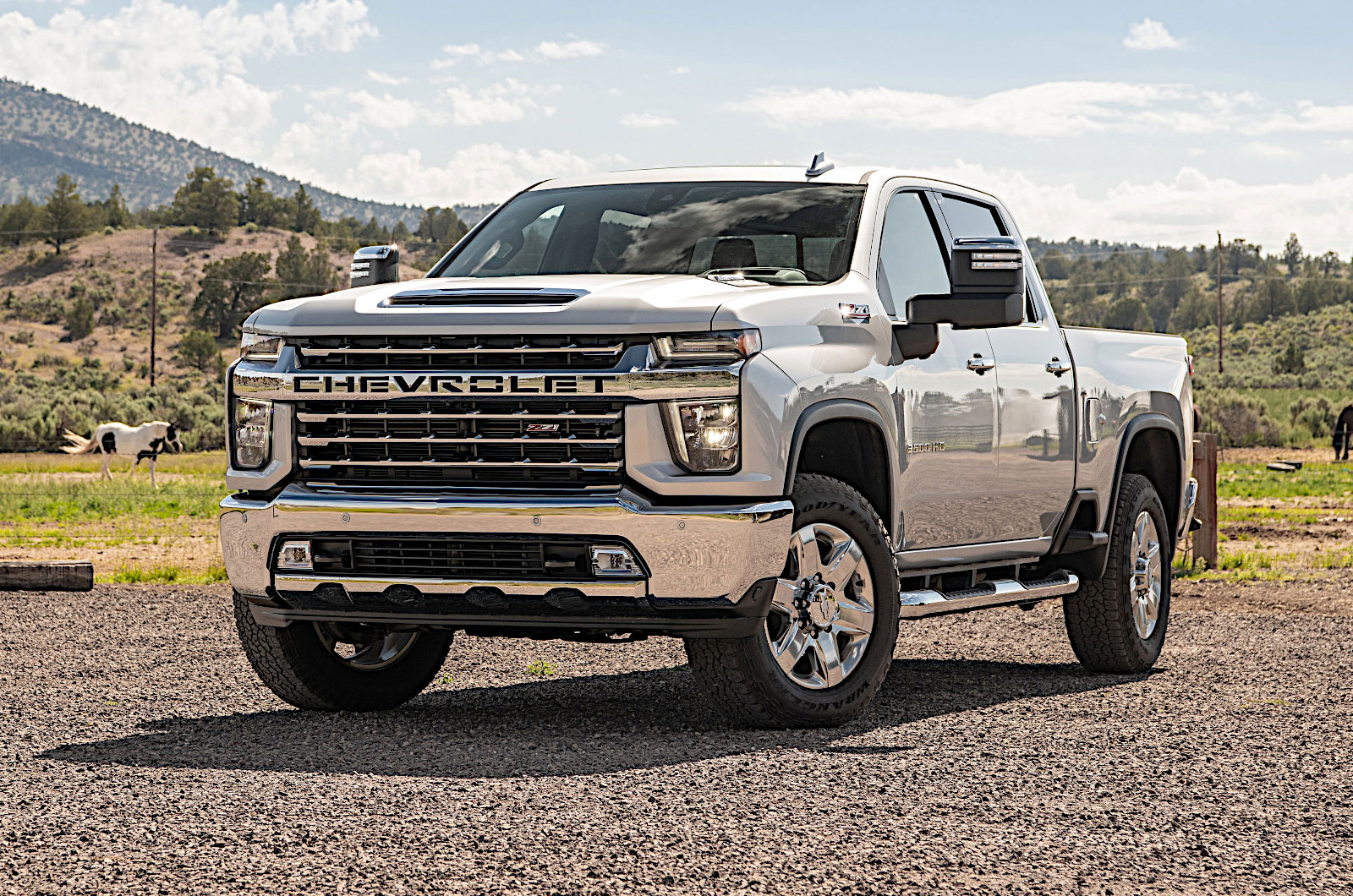
Duramax is a family of V8 diesels built by DMAX, a joint venture between General Motors and Isuzu. The first came off the line in July 2000, and production reached two million in March 2017.
All full-scale Duramax engines (as opposed to the smaller units known collectively as Baby Duramax) are of 6.6 litres, and are used in commercial and private trucks and vans. A 4.5-litre version was announced but then put on indefinite hold shortly after the global financial crisis of 2008.
PICTURE: 2022 Chevrolet Silverado 2500 HD
Chevrolet Small Block Mk4 (2004)
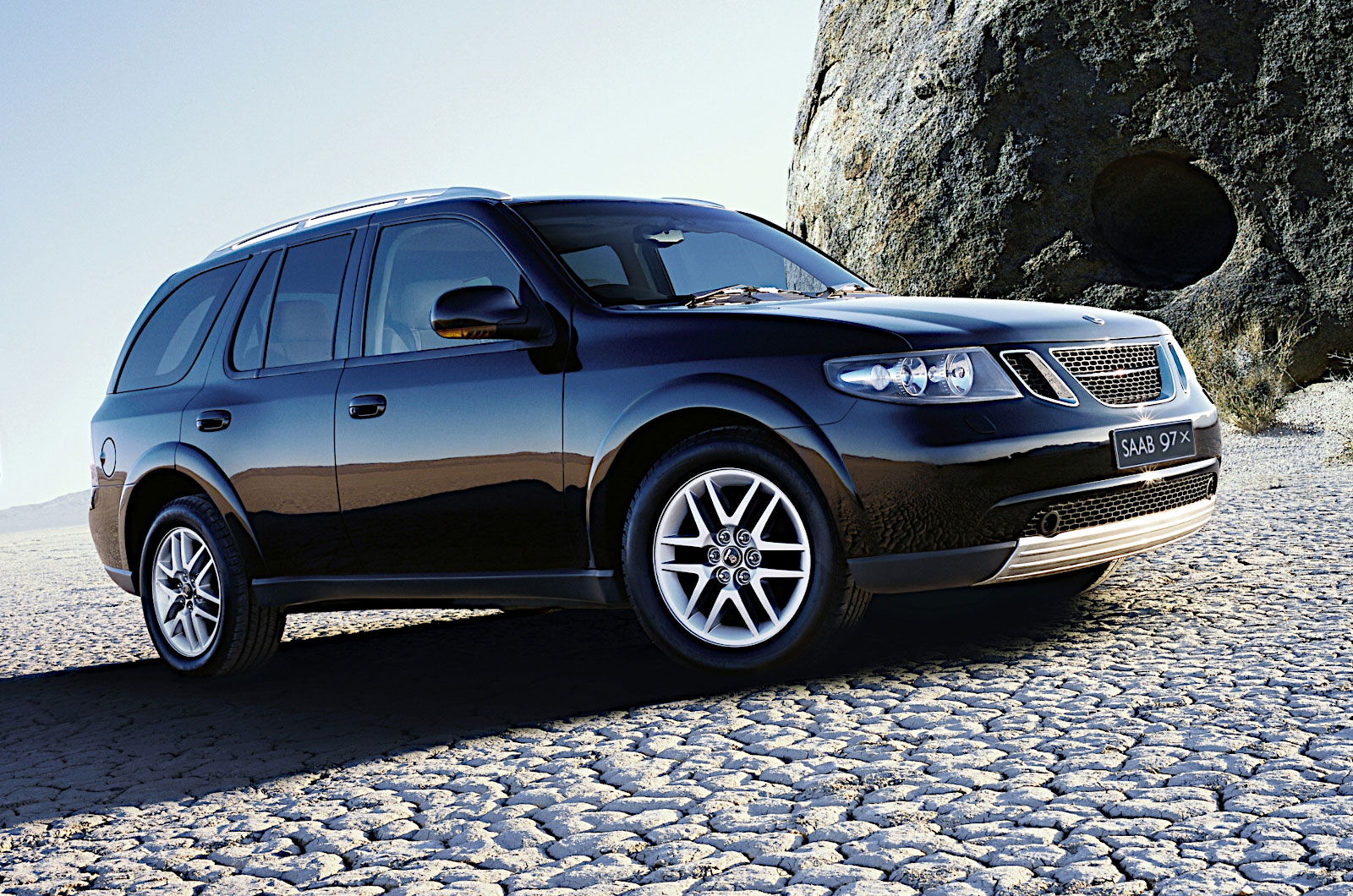
The Small Block was so thoroughly updated in 2004 that it is considered to have entered a new generation. First available in the 2005 model year Corvette and the Chevy SSR retro pickup, its capacities ranged from 4.8 to 7.0 litres. In power terms, the highlight was the supercharged 6.2-liter version fitted to the Corvette ZR1, which was rated at 638 hp.
Offered with both variable valve timing and cylinder deactivation (or ‘displacement on demand’), the engine appeared in a great many GM products including the Hummer H3 and the Saab 9-7X (pictured).
Chevrolet Small Block Mk5 (2013)
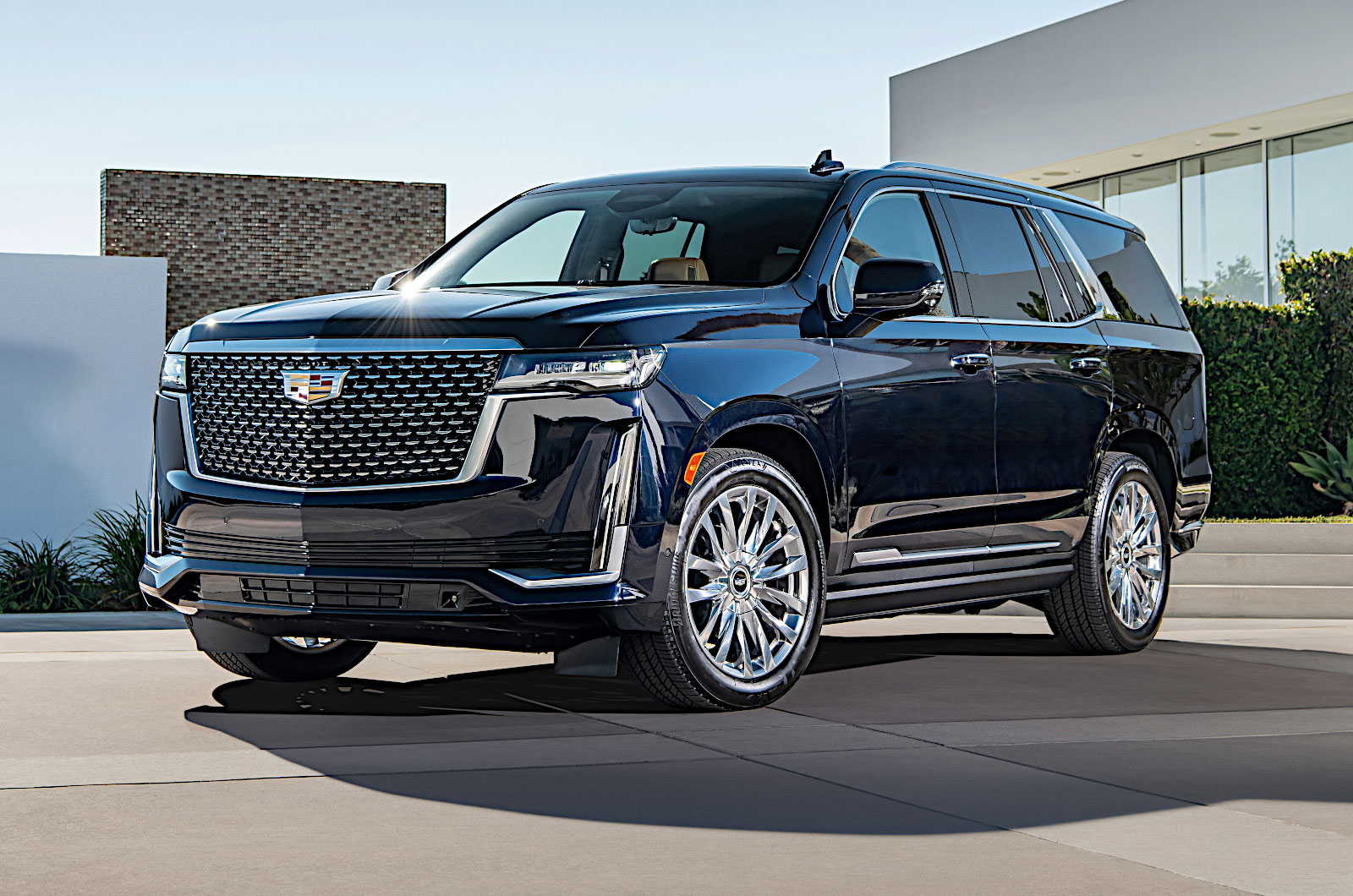
The current Small Block retains the traditional two valves per cylinder and pushrod operation, but is otherwise thoroughly modern, with new cylinder heads, direct fuel injection and active fuel management. It has been used in sports cars, the fastest of today’s Cadillacs, and also in heavier vehicles such as the Cadillac Escalade (pictured).
In addition, a naturally-aspirated version of the unit became the first engine placed in the middle of a Corvette, when the eight-generation version of the nameplate arrived in the 2020 model year.
Cadillac Blackwing (2018)
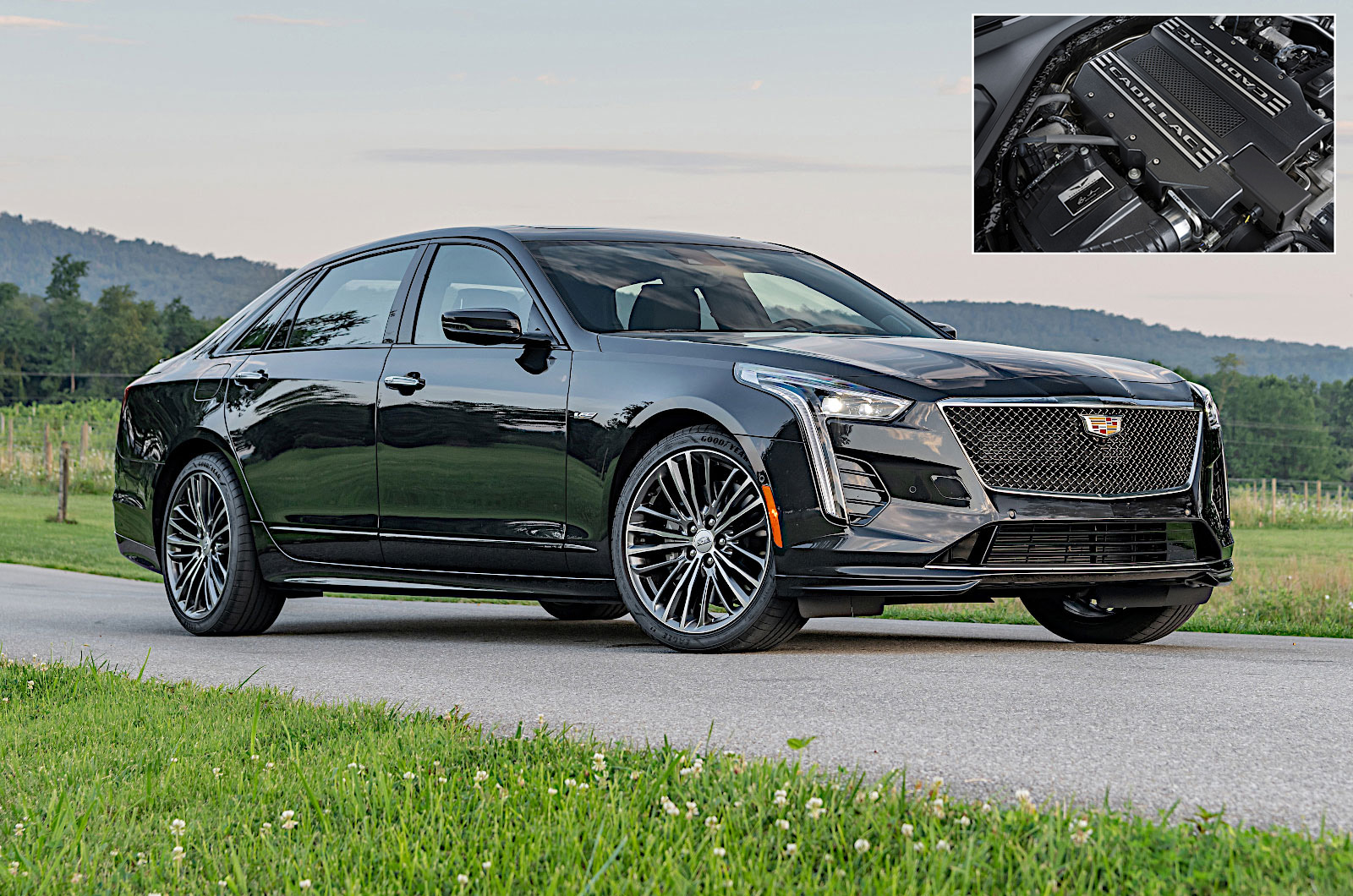
In almost complete contrast to the Small Block, the Blackwing was a 4.2-litre V8 with two overhead camshafts per cylinder bank and two turbochargers. It first appeared in 550 hp form in the Cadillac CT6-V. Only 275 examples were earmarked for production, and all of them were pre-ordered almost immediately. A detuned 500 hp Blackwing was later offered in the Cadillac CT6 Platinum.
The engine was never fitted to anything else. Despite its name, the CT5-V Blackwing was powered by the 6.2-liter supercharged fifth-generation Small Block, to the annoyance of some Cadillac enthusiasts.
Chevrolet LT6/LT7 (2022, 2024)
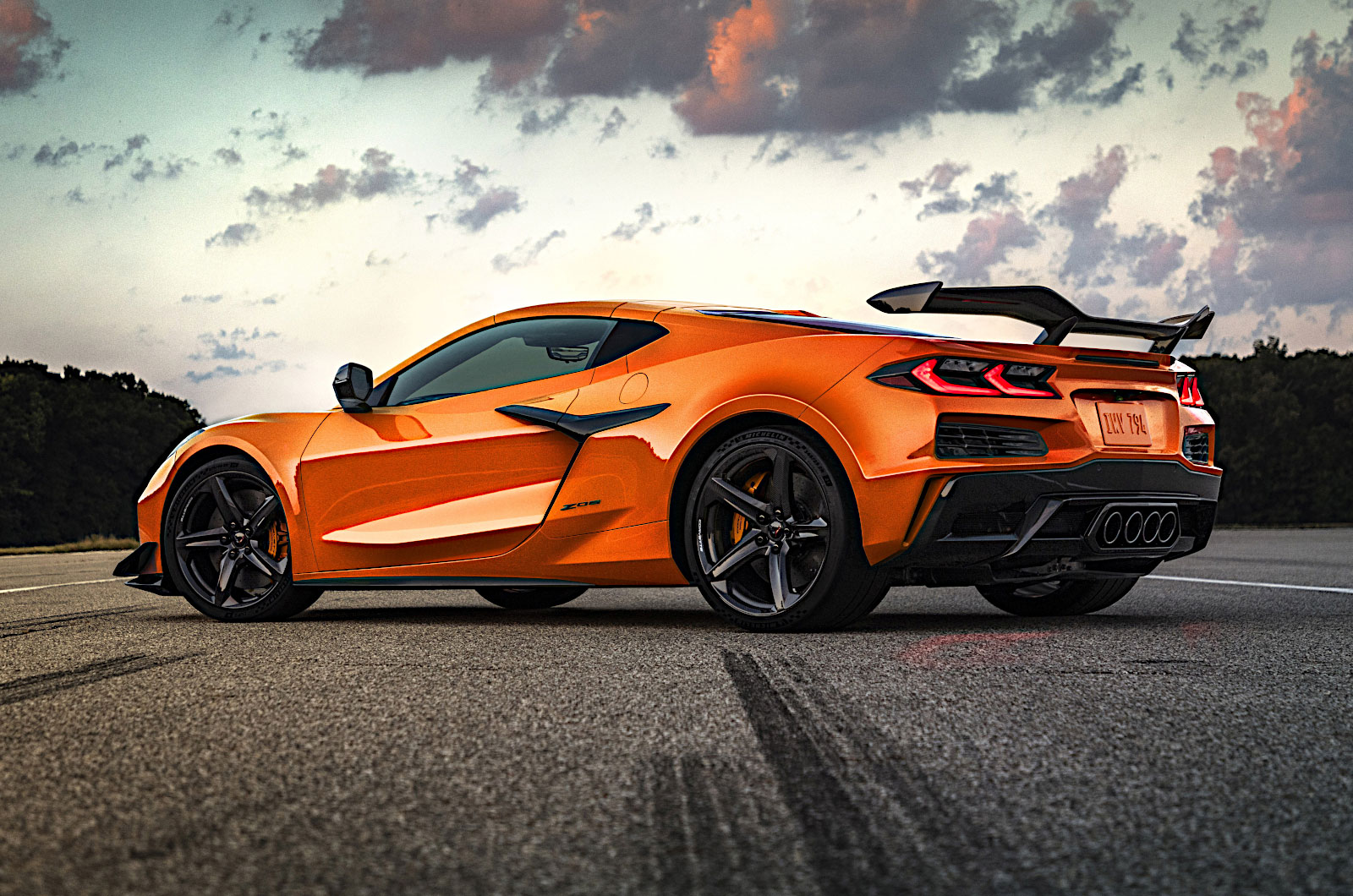
The current LT6 and LT7 units will perhaps be two of the final V8 engines made by General Motors. Unlike any of the Chevy Small Blocks, the 5.5-litre LT6 (also known as the ‘Gemini’) has twin overhead camshafts and a flat-plane crankshaft, and can rev to 8600rpm. It made its first appearance in the C8-generation Corvette Z06 (pictured) in 2022.
Meanwhile, the LT7 was developed in tandem with the LT6, and retains a displacement of 5.5-litres. However, with a larger combustion chamber, strengthened pistons and a pair of mono-scroll turbochargers, power is boosted to 1064 hp. In 2024, the LT7 debuted in the brand new Corvette ZR1, which has since set a top speed record of 233mph – making it the fastest American production car of all time.
If you enjoyed this story, please click the Follow button above to see more like it from Autocar

Toyota HiAce Reinvented as a High-Mileage, Fully Equipped Home on Wheels

Cadillac Optiq V Redefines Performance EVs With Balanced Dynamics and Everyday Usability

Ford’s Most Controversial Cars and the Corporate Risks That Shaped Automotive History
 We count the biggest troublemakers that landed the illustrious blue oval in hot water
There are many kinds of controversy, and a car manufacturer which has been operating for 120 years, as Ford Motor Company has, will inevitably have experienced most of them.
Here are 40 examples of the company’s models which have caused disputes of one kind or another. They’re listed in chronological order, and were marketed either by Ford itself or by brands Ford owned before 1950, but not ones it acquired after that year.
Ford Model T (1908)
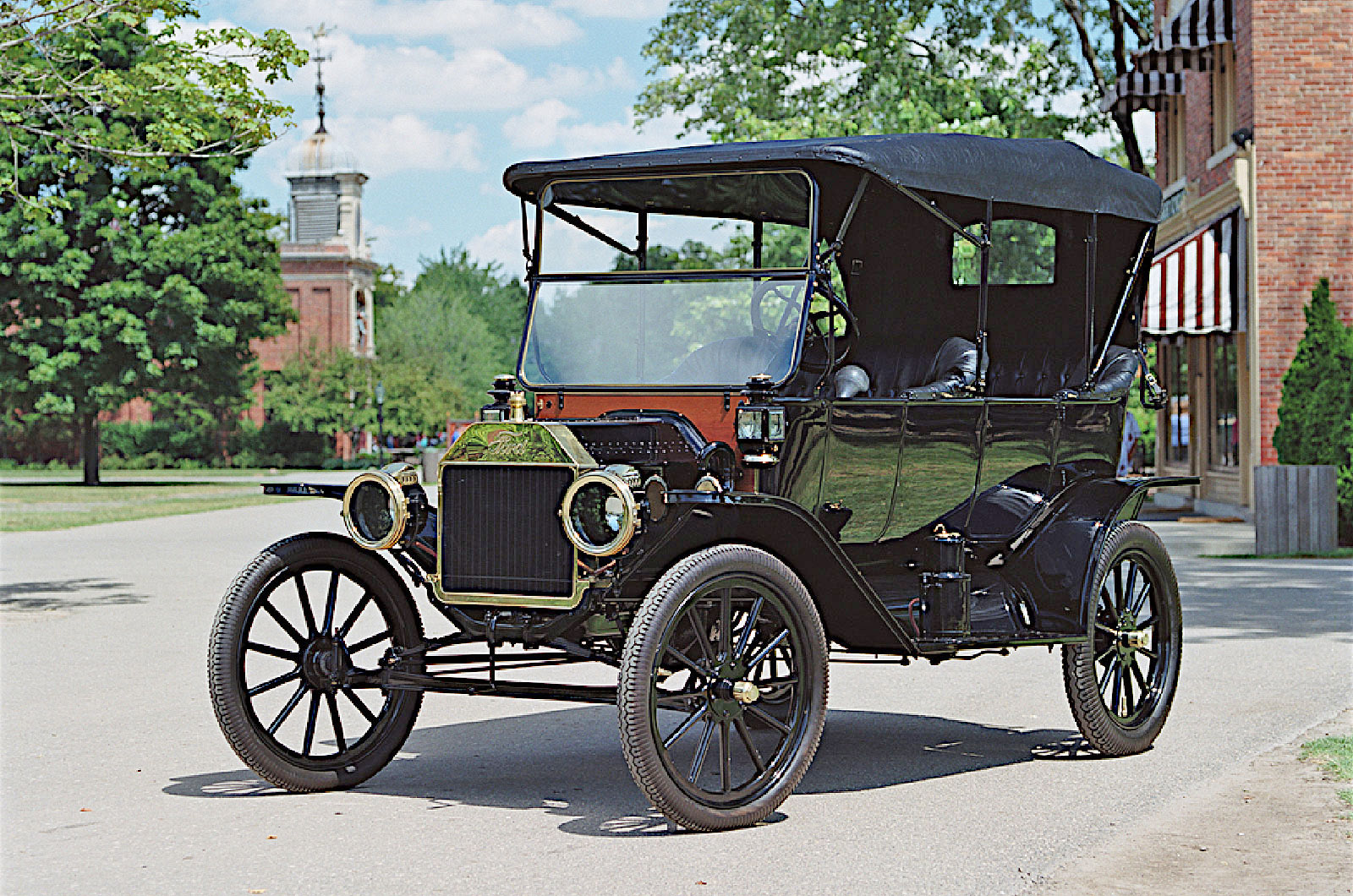
The Model T is now perhaps the most celebrated car Ford ever produced, but to get the full picture we have to consider how cars in general were viewed when it first appeared in 1908. Although they developed an enthusiastic following, they were also considered by many people to be noisy, smelly, frighteningly fast and terribly dangerous.
The T wasn’t necessarily a specific target, but by its very existence it was part of a large controversy, and became central to it as sales skyrocketed. Henry Ford was however criticised for hanging onto it for too long, as it stayed in production for 19 years, and during the latter half of its life General Motors overtook Ford in the US market.
Lincoln Zephyr (1936)
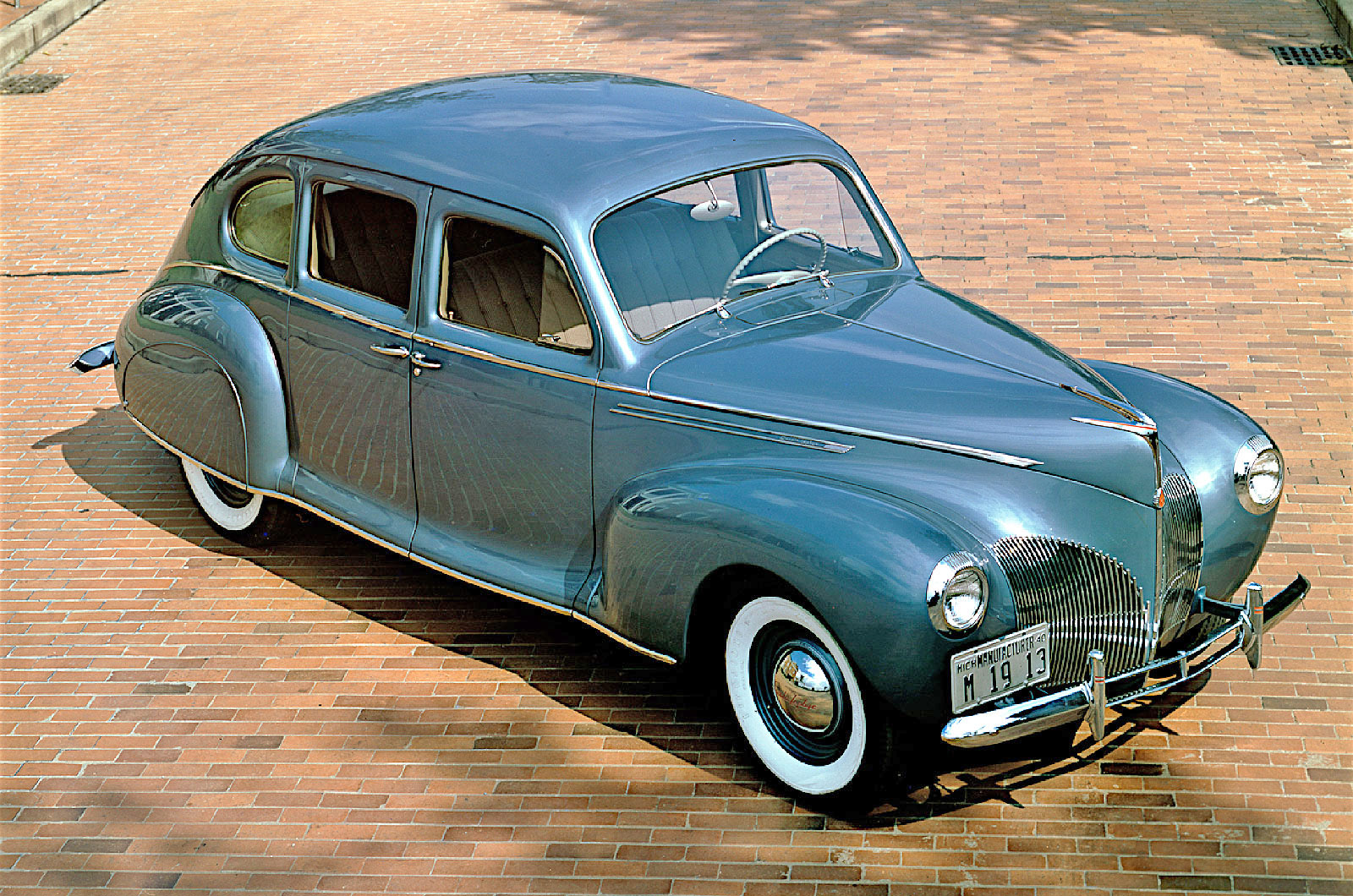
The Zephyr was a remarkable car for 1936, not least because it had – remarkably for its relatively low price – a V12 engine related to (but not simply an enlarged version of) the Ford flathead V8.
The V12 was the car’s most appealing, but also most controversial, feature. Its most serious flaw was that the exhaust gases were ported through the cylinder blocks, and heated up the water which the radiator was trying to cool down. Lincoln later made amends, but the Zephyr never quite lost its reputation for unreliability.
Ford Parklane (1955)
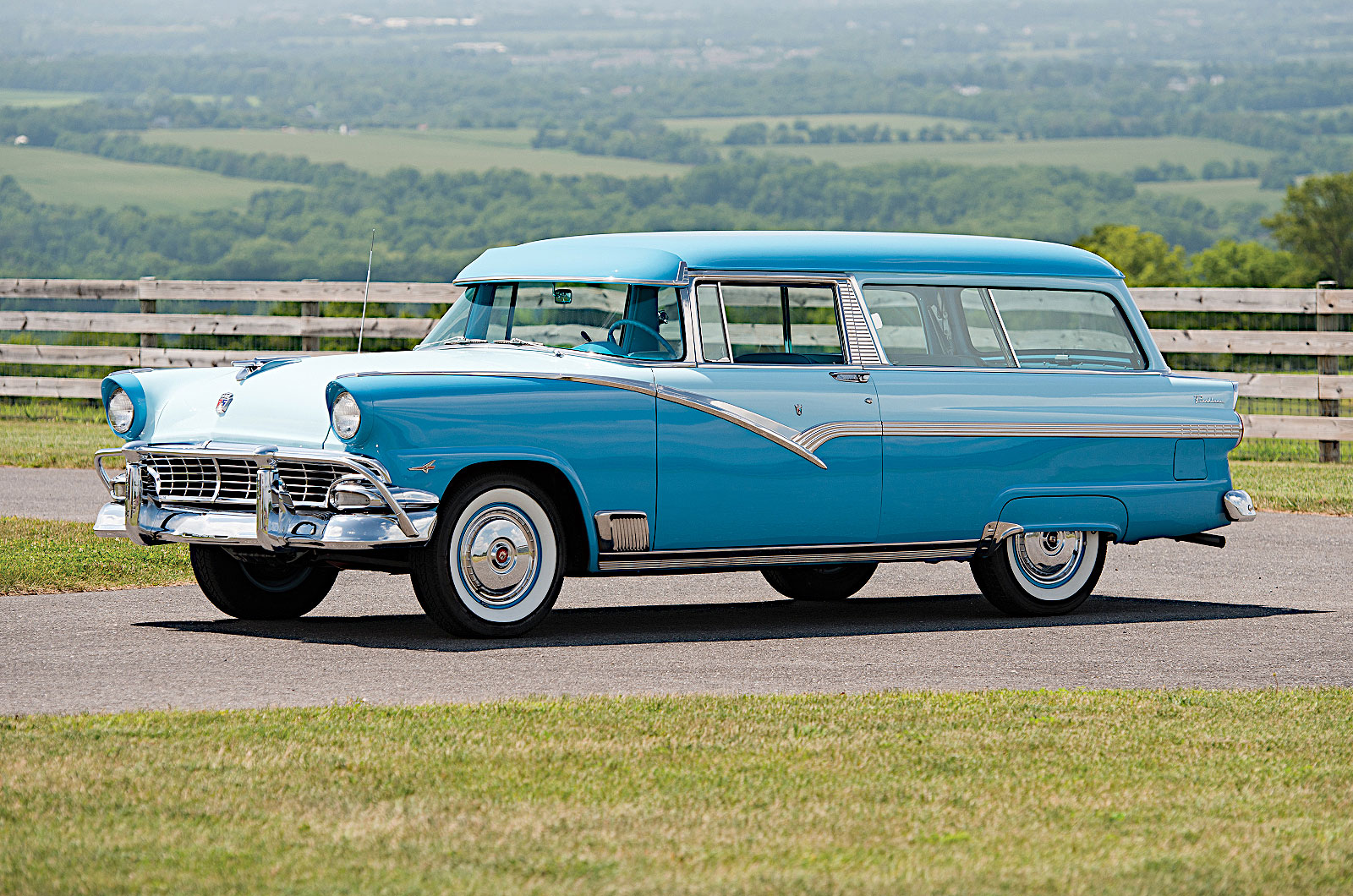
Sometimes a controversy can arise between a manufacturer and its customers. This was the case with the Parklane, a two-door station wagon which sold so poorly that Ford offered it only in the 1956 model year.
Ford tried again with the very similar Del Rio, which was more successful in the limited sense that it lasted for two whole model years (1957 and 1958) before being canned.
Ford Taunus (1957)
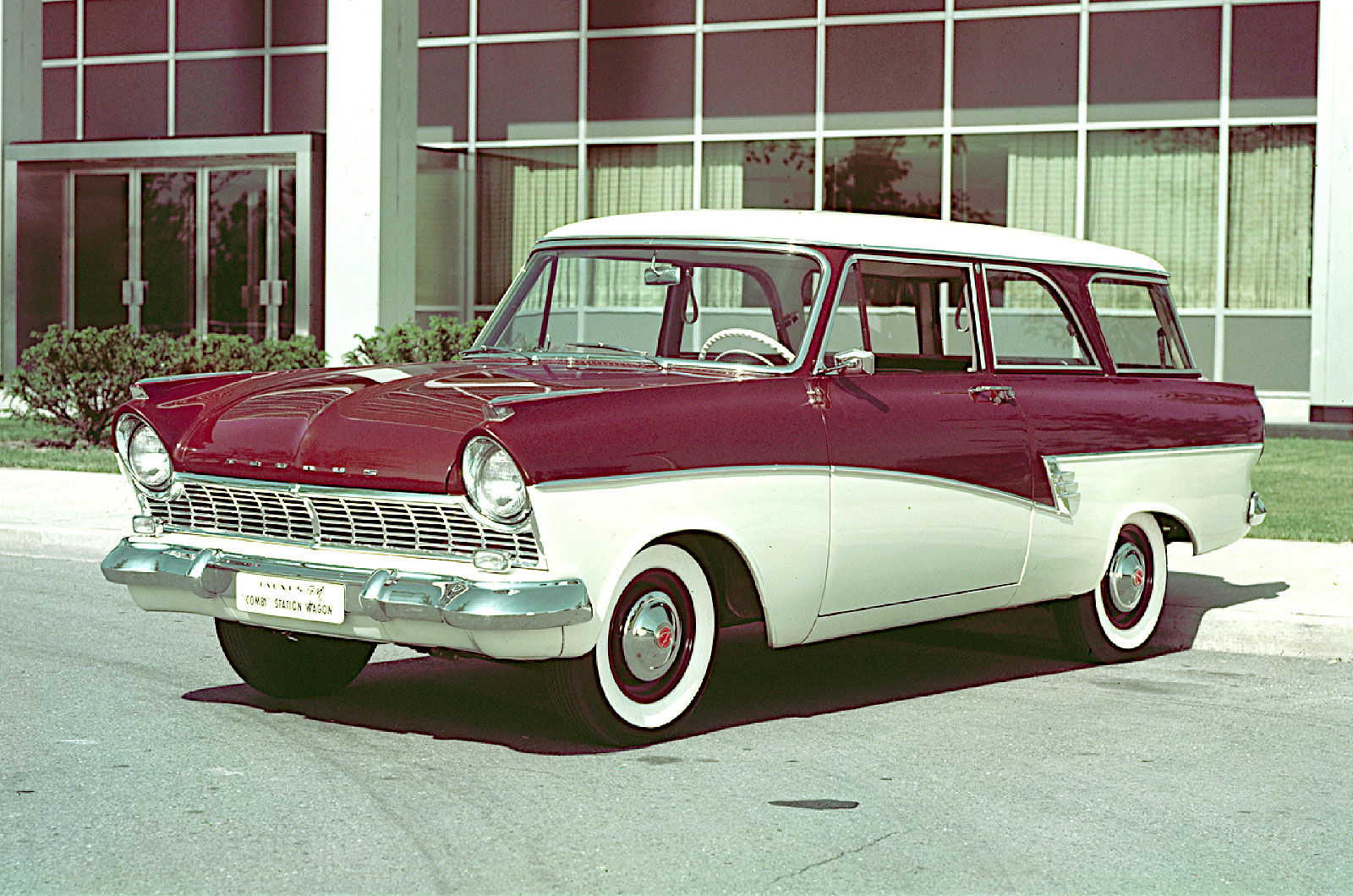
The P2 generation Taunus, sold from 1957 to 1960, must have come as quite a shock to people who had been accustomed to earlier German Fords of the same name. While the previous models appeared relatively staid, this one had lots of chrome, prominent tailfins, a frontal resemblance to the contemporary Mercury Monterey and in some cases two-tone paintwork, the different colours appearing above and below a line which resembled Buick’s ‘sweepspear’.
All this flamboyance led to the P2 being nicknamed Barocktaunus, or baroque Taunus, in reference to a highly decorative artistic style of the 17th and 18th centuries. More positively, it was also known as the fliegende Teppich, or flying carpet, in a tribute to its excellent ride quality.
Edsel (1958)
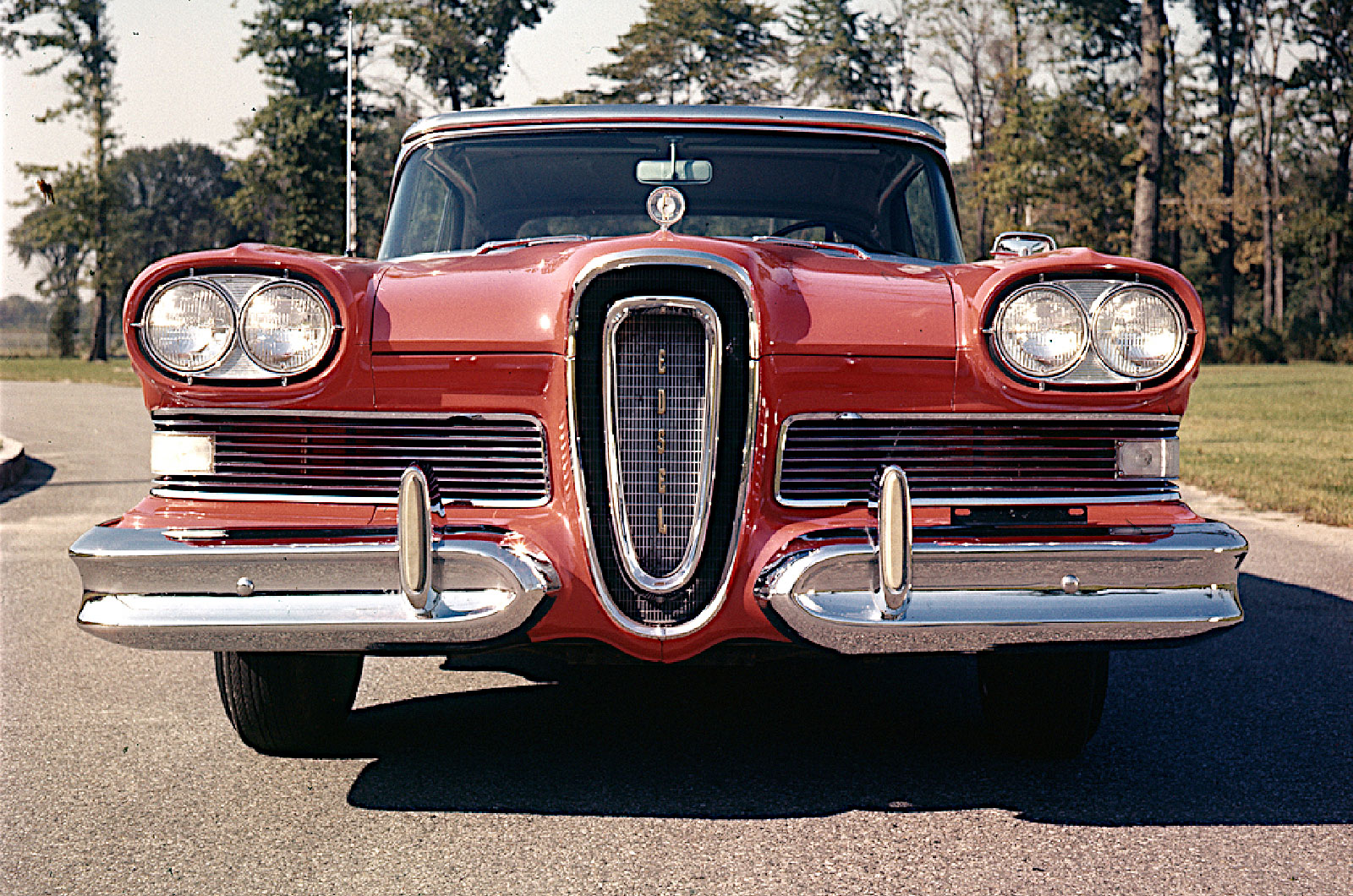
Possible reasons for the failure of Ford’s calamitous Edsel brand, which was introduced in 1958 and axed just two years later, include incoherent marketing, a change in customer preferences towards smaller cars, low quality, dubious styling and a horrendous recession in America which saw new car sales halve.
Nearly 70 years later, the exact cause no longer matters. What does matter is that Edsel was Ford’s first major disaster, and a sign that even an enormously wealthy company with talented staff can sometimes get things very badly wrong.
Ford Anglia (1959)
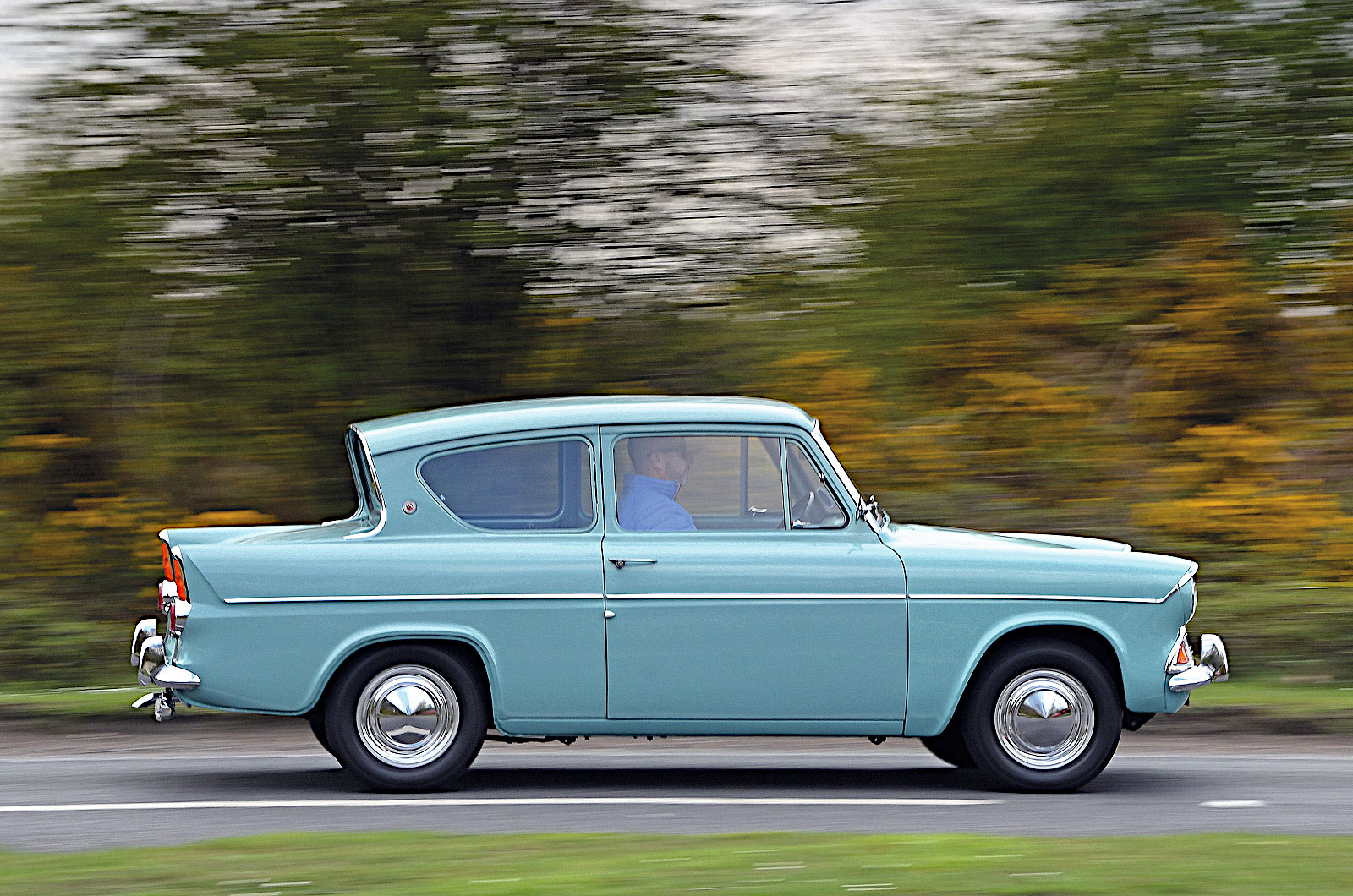
The last of many European Fords to bear the Anglia name is probably best known now for its appearance in the Harry Potter films, though it’s also notable for being the first car fitted with an engine from the Kent family. Its most controversial feature, which applied only to the saloon versions, was a reverse-angled rear window, which one authority has described as being given “short shrift by customers who could see no rationale for it beyond a perverse desire to be different”.
That might well have been the case when the Anglia was launched in 1959, but in the following eight years Ford had reason to build more than a million examples, so the car’s other qualities seem to have overcome early distaste for its unusual appearance.
Ford Taunus (1960)
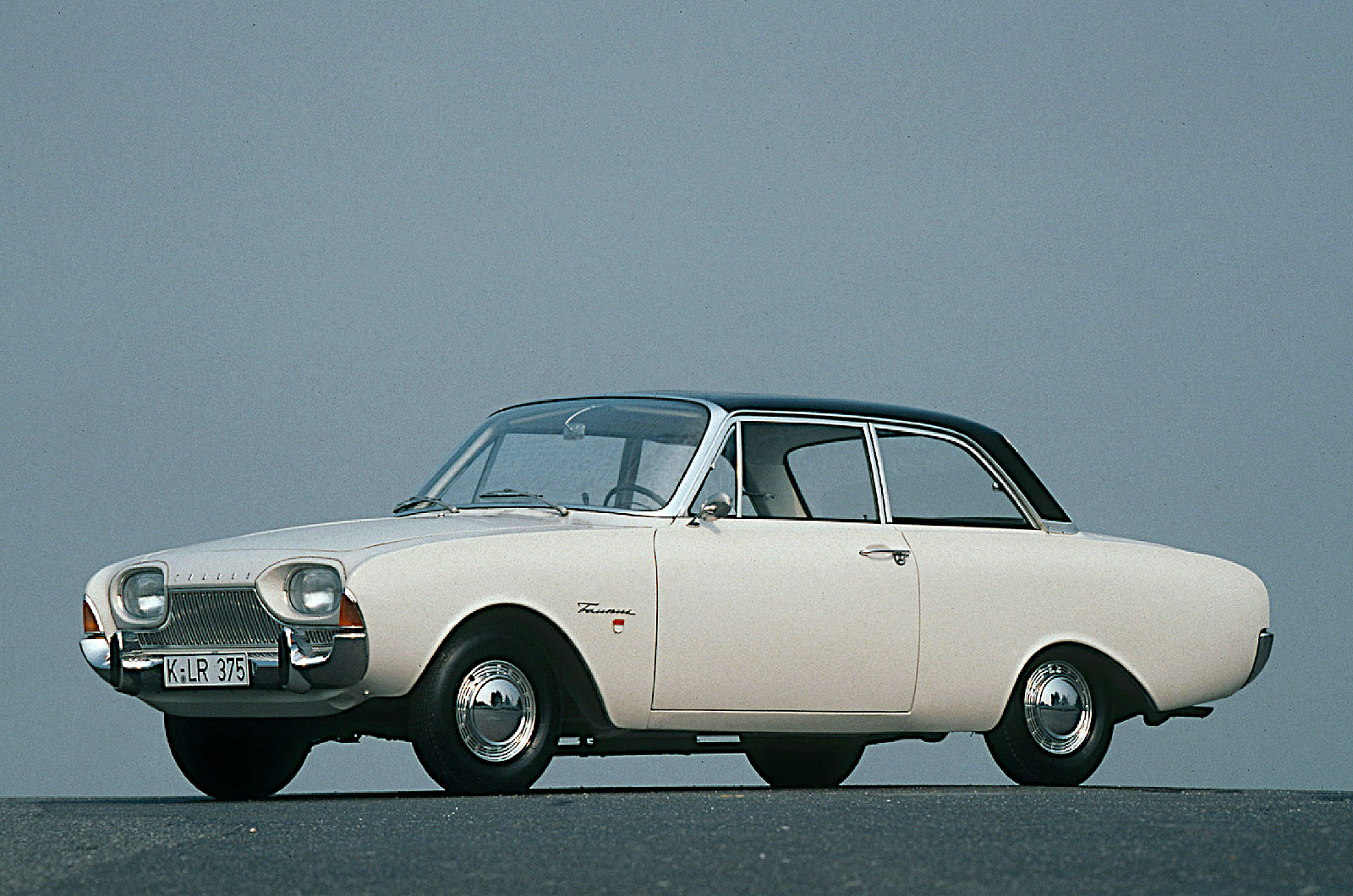
The appearance of the P3 Taunus was approximately as controversial as that of the ‘baroque’ model it replaced in 1960, but for completely different reasons. American influence had been eliminated, and the car’s shape was so unusual for the period that it became known as the Badewanne, or ‘bathtub’.
Even more remarkably, the P3 had lozenge-shaped headlights. These would have had to be replaced if the car had been exported to the US, since it was illegal to use anything other than round headlights there at the time.
Ford Consul Classic (1961)
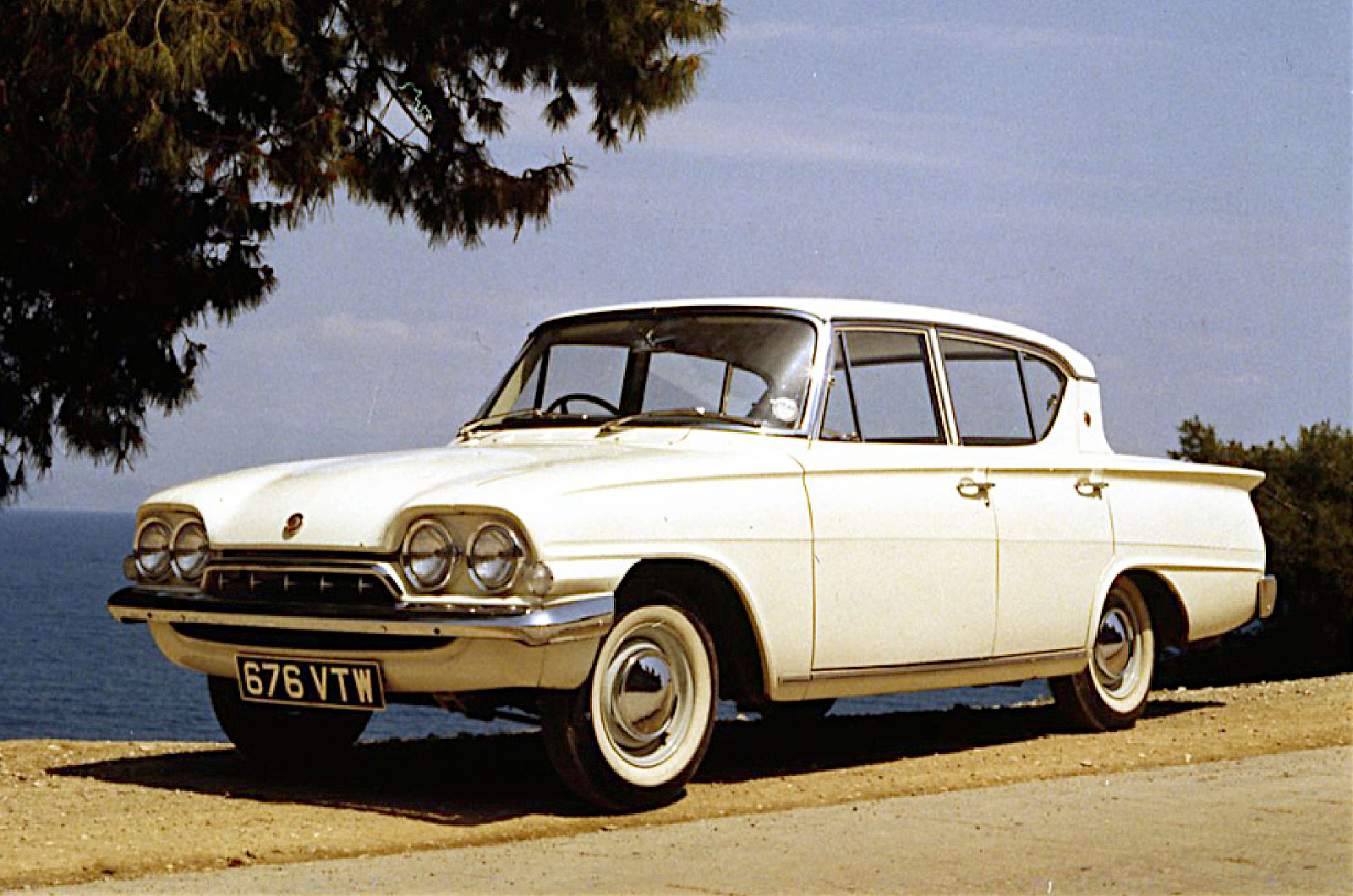
While Ford of Germany was removing American influence from the Taunus, Ford of Britain adopted it in a big way for the Consul Classic. By UK standards, the front end was brash and the finned tail was enormous, while the reverse-angled rear window was carried over from the Anglia.
Despite early concerns, the Anglia quickly became accepted, but the even more unusual Consul Classic never was. Production lasted only from April 1961 to September 1963.
Ford Consul Capri (1961)
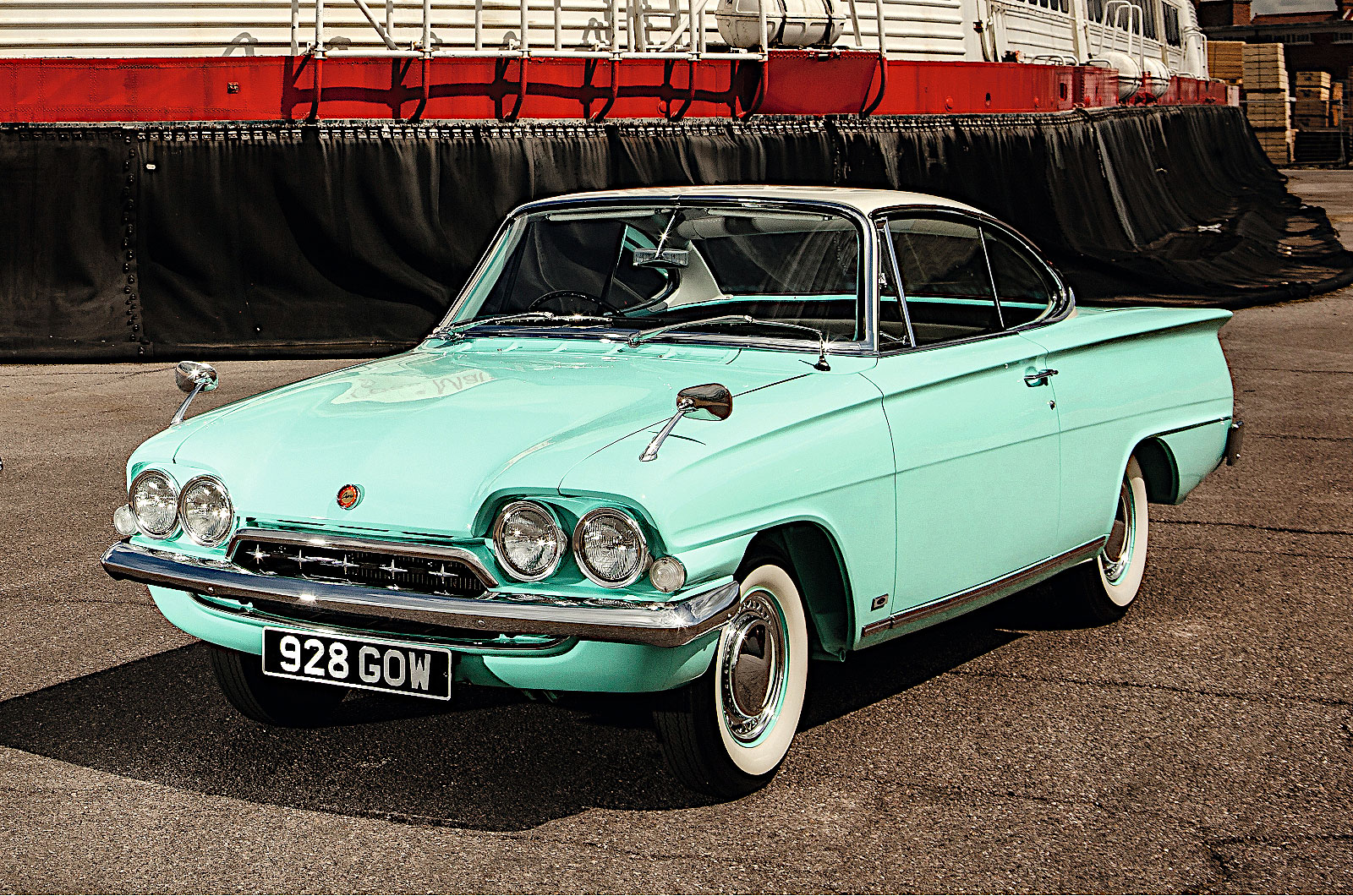
It’s difficult to say if the Consul Classic looked stranger than its coupe equivalent, or the other way round. The first Ford model with Capri in its name was lower than the saloon, and although its rear window sloped the ‘correct’ way, this also emphasised the length of the car’s tail even more.
At under 20,000, sales of the Capri were less than a fifth those of the Classic, though in fact the Capri remained on the market for slightly longer, until July 1964. It’s possible that Ford needed a replacement for the Consul far more urgently than it did for the Capri.
Ford Corsair V4 (1965)
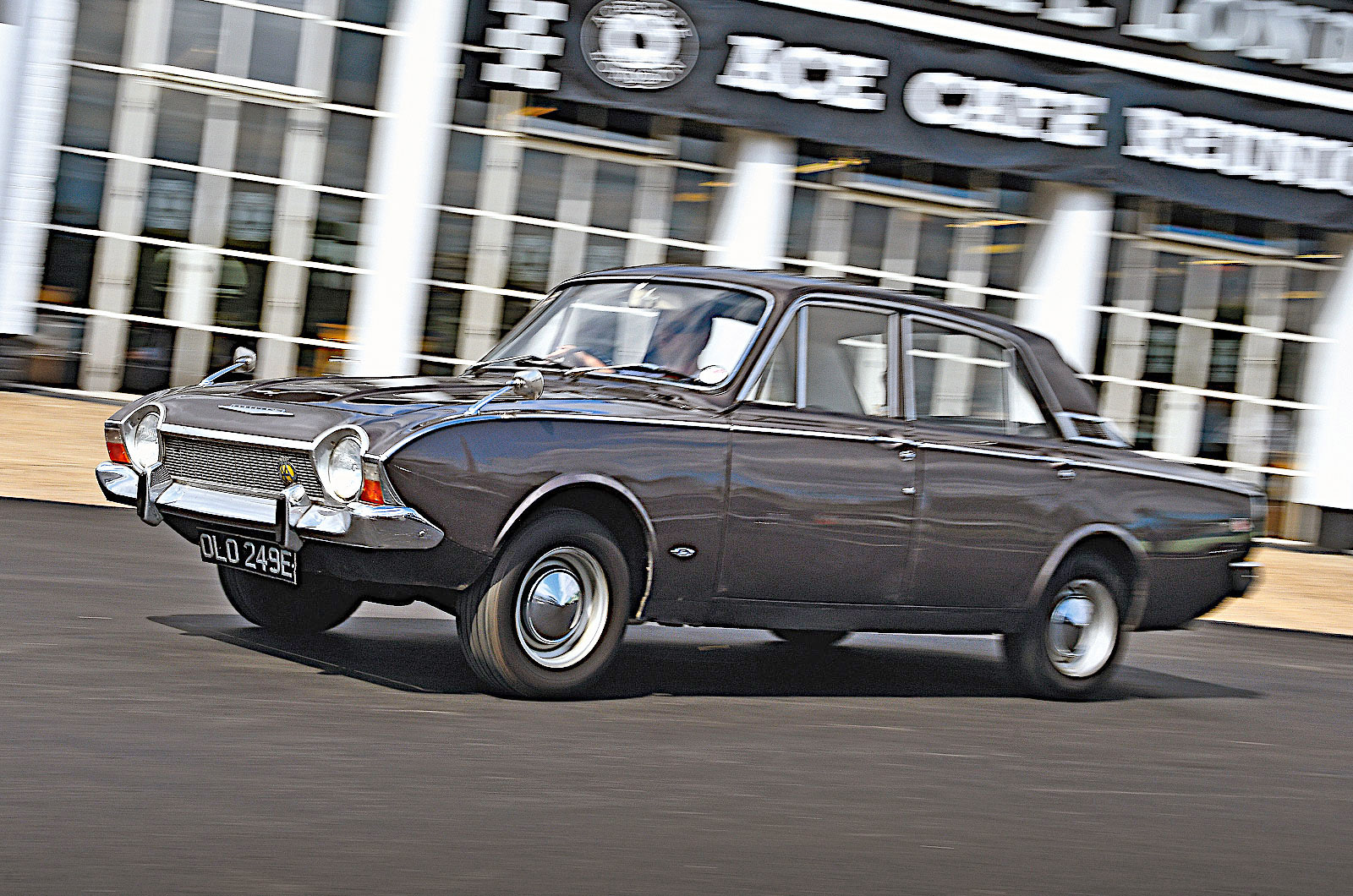
The Consul Classic was replaced by the far more conventional-looking Corsair, which was relatively cheap to develop because it shared all its mechanicals and part of its structure with the Cortina. Launched in 1963, it remained uncontroversial until late 1965, when Ford decided to replace its Kent engine with the Essex V4. Also available in the Transit, the Essex was larger and more powerful than the Kent, but it was also heavier.
While the Corsair’s performance certainly improved, it was now also less economical, didn’t handle as well (due to the extra nose weight) and sounded harsher. Demand fell to such an extent that Ford needed to build slightly fewer V4 Corsairs in four years than it had been obliged to manufacture Kent-engined versions in just two.
Ford Thunderbird (1967)
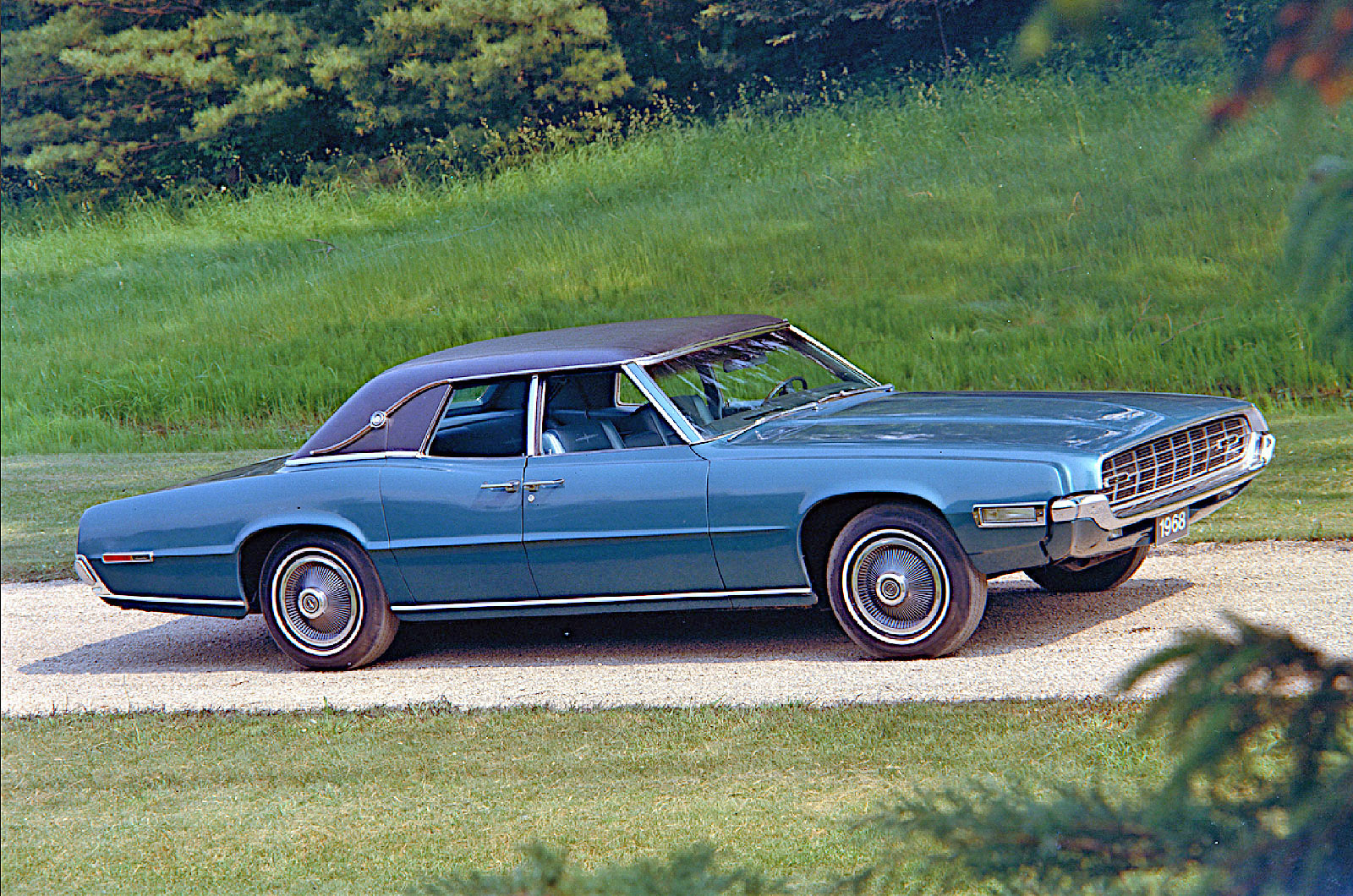
The glory days of the Thunderbird were already behind it when Ford introduced the fifth-generation model in 1967. The T-bird was now larger than before, there was no convertible derivative, a saloon was added to the range, and Ford returned to the old-fashioned body-on-frame construction method for the first time in a decade.
Customers were unconvinced. Sales were reasonably strong at first, but dropped to just over 36,000 in the 1971 model year, the lowest figure for the nameplate since 1957.
Ford Torino Talladega (1969)
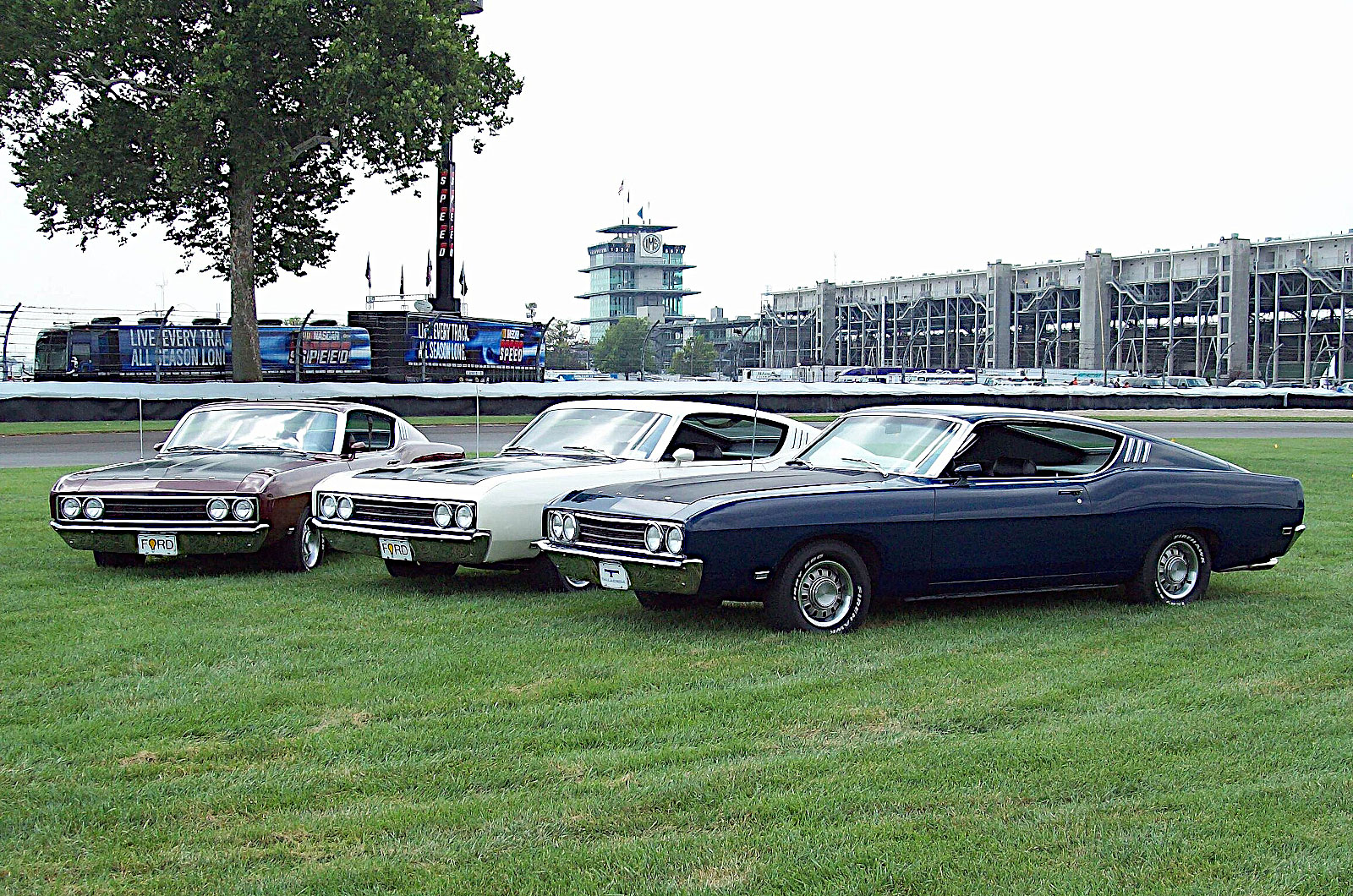
The Talladega was the subject of a motorsport controversy rather than a general motoring one. Based on the Sportsroof fastback version of the regular Torino, it had a more aerodynamic front end which reduced drag – a very useful feature on high-speed NASCAR oval tracks.
In early 1969 Ford built just enough road-going versions to qualify for that year’s NASCAR series. David Pearson (1934-2018) won eleven rounds and his third title. Other manufacturers followed Ford’s lead until the aero warriors, as they were known, were legislated out of contention, a sure sign that someone had had a better idea than the rule makers were expecting.
Mercury Cyclone Spoiler II (1969)
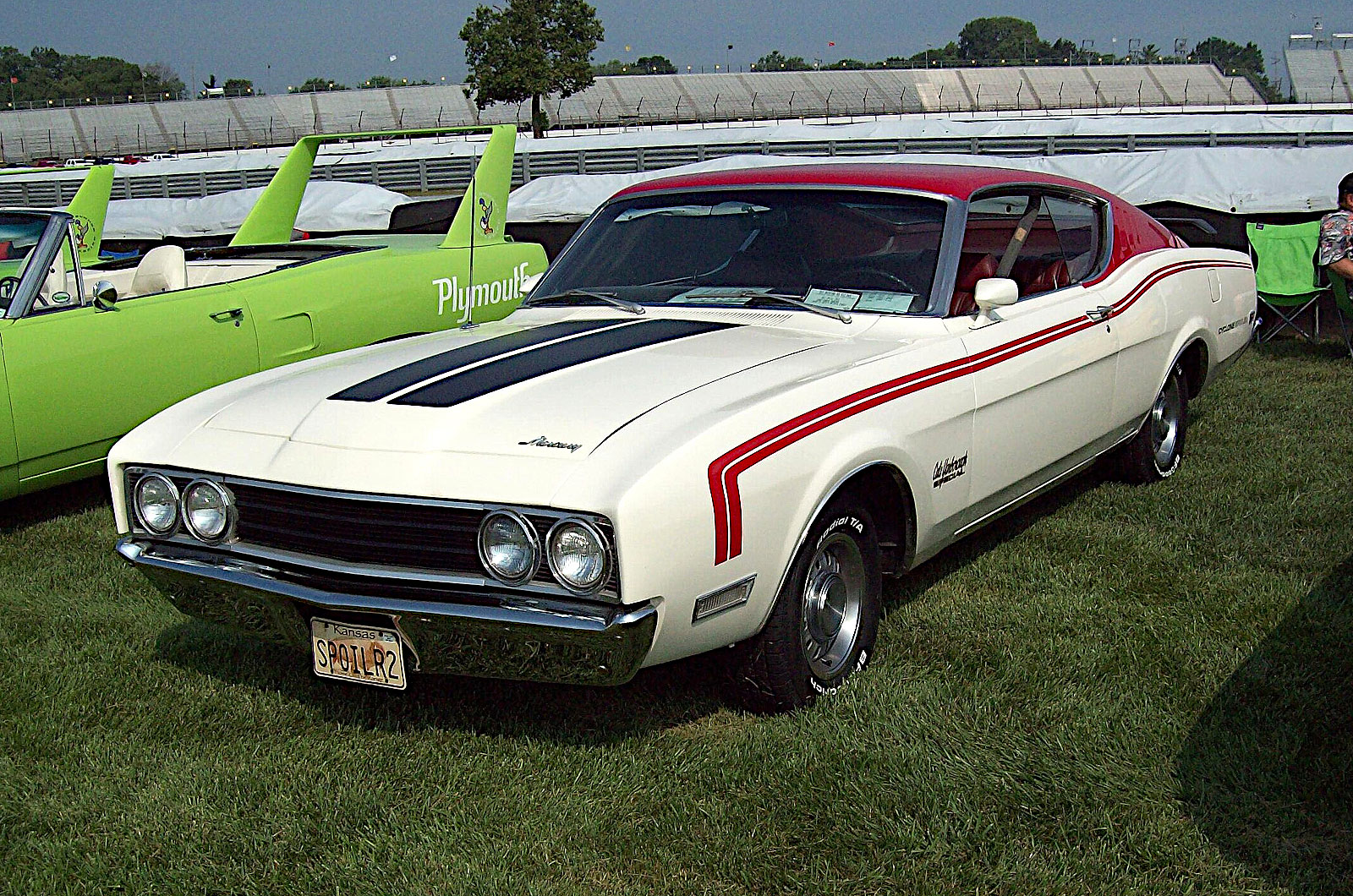
The Spoiler II was the exact equivalent of the Ford Torino Talladega homologation special, built in similar numbers from the same material and for the same reasons. It was also equally competitive, at least potentially – LeeRoy Yarbrough (1938-1984) won two rounds in a Spoiler II in 1969, but competed more often in a Talladega, in which he won five.
The contrasting results achieved by the two models were appropriate, and possibly deliberate. While the Spoiler II gave Mercury a lot of publicity, the idea of the junior brand beating the senior one across a whole season might not have sat well with upper management.
Ford Pinto (1971)
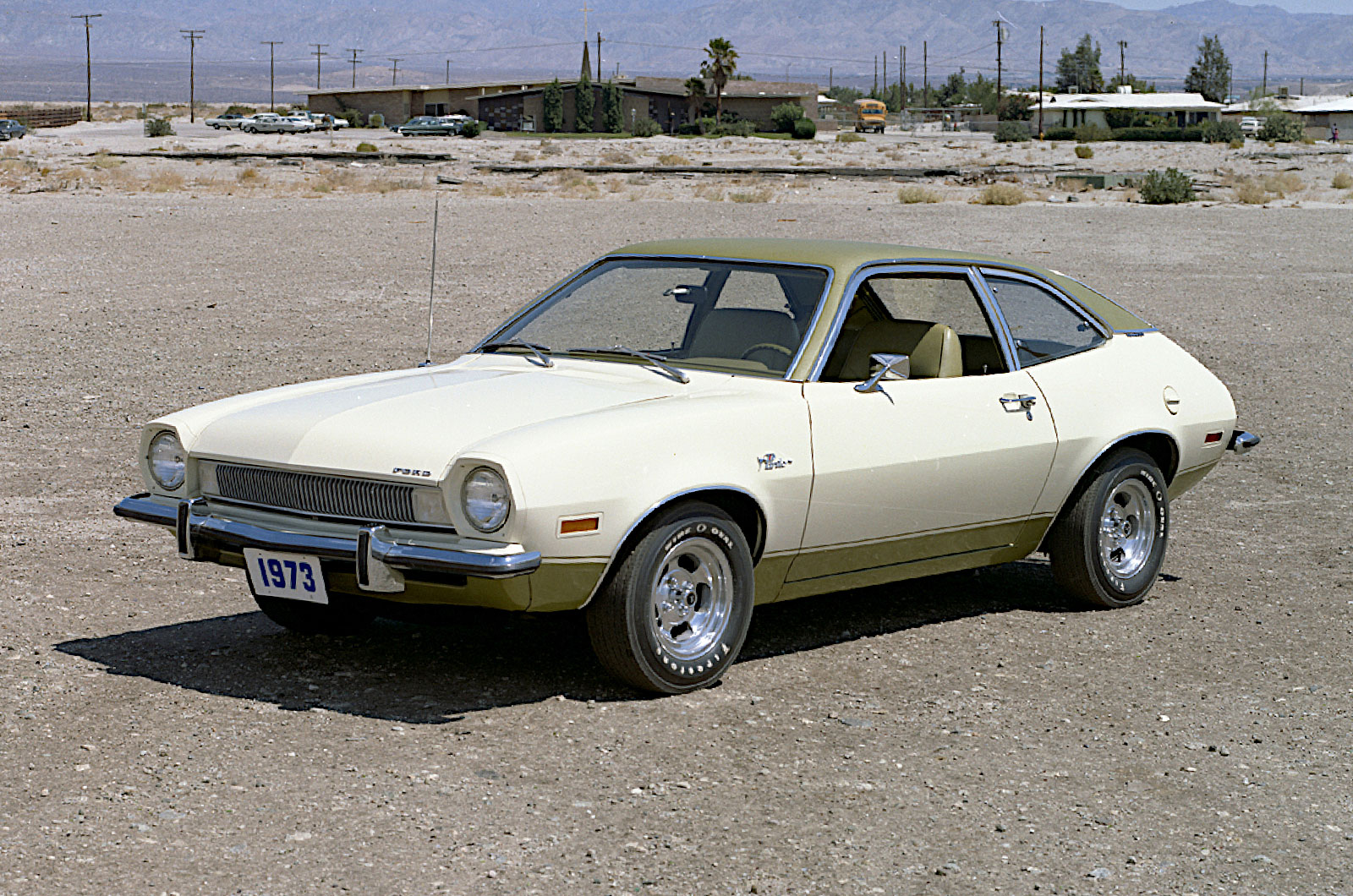
Ford’s first North American subcompact sold in very high numbers throughout the 1970s, but it’s more famous now for its tendency to burst into flames if the fuel tank was ruptured in a rear-end collision.
While there are differing views on just how dangerous the Pinto really was compared with similar cars built in the same decade, there is no doubt that it was an extremely costly car for Ford in terms of both money and reputation.
Ford Falcon GTHO Phase IV (1972)
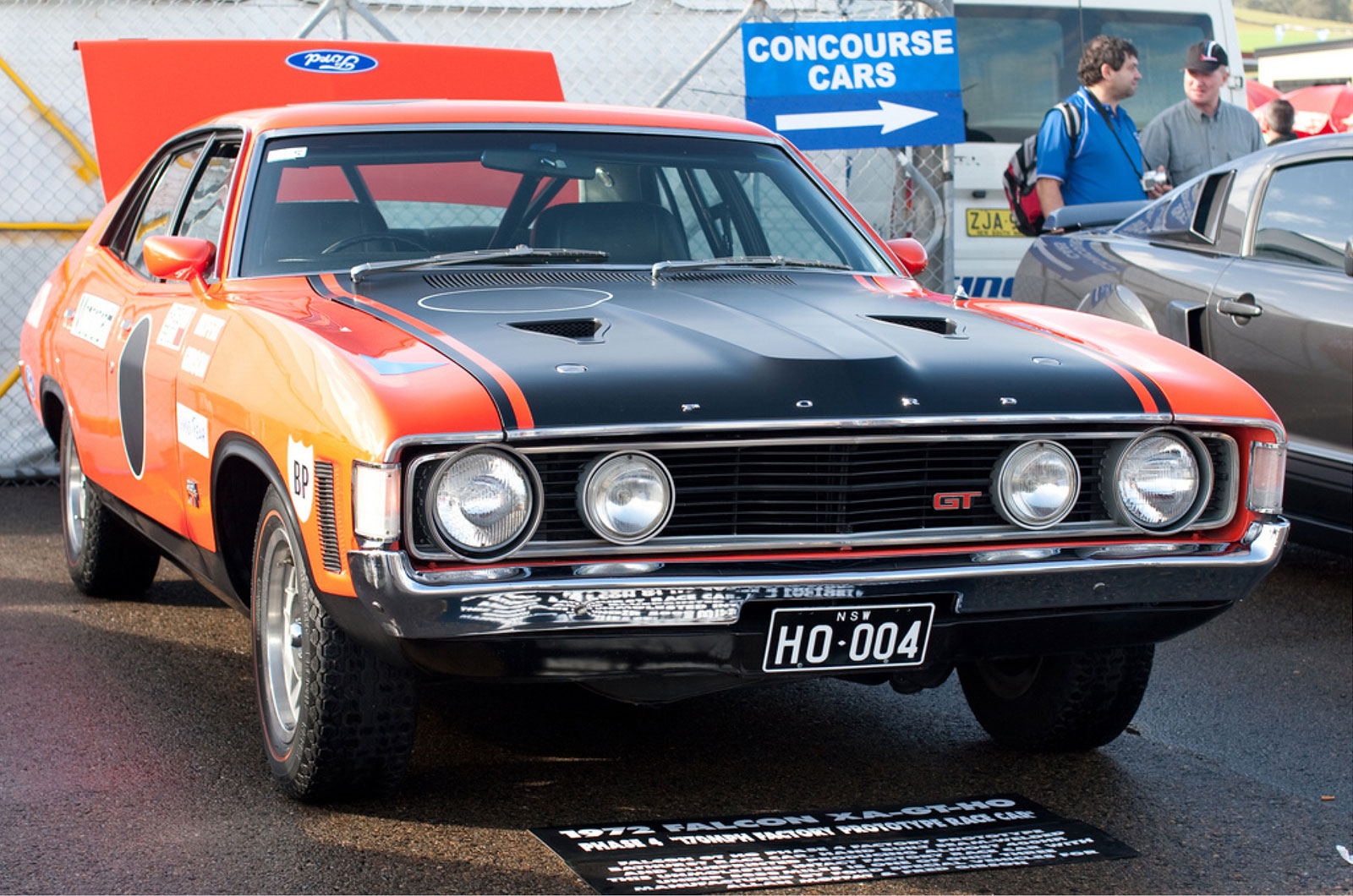
Along with high-performance versions of the Holden Torana and Chrysler Valiant Charger, the GTHO Phase IV was one of the most controversial cars ever developed for road use. All three were created as homologation specials for the 1972 model year, and were expected to battle it out on Australian race tracks in that season.
However, a newspaper article in the Sydney Sun-Herald gave rise to what has become known as the supercar scare, which led to these cars being strongly criticised by politicians. Within days, each manufacturer had abandoned its project. As a result, very few GTHO Phase IVs were actually built. In 2021, one of them set a new auction record for an Australian-built car of $1.75 million.
Ford Granada (1972)
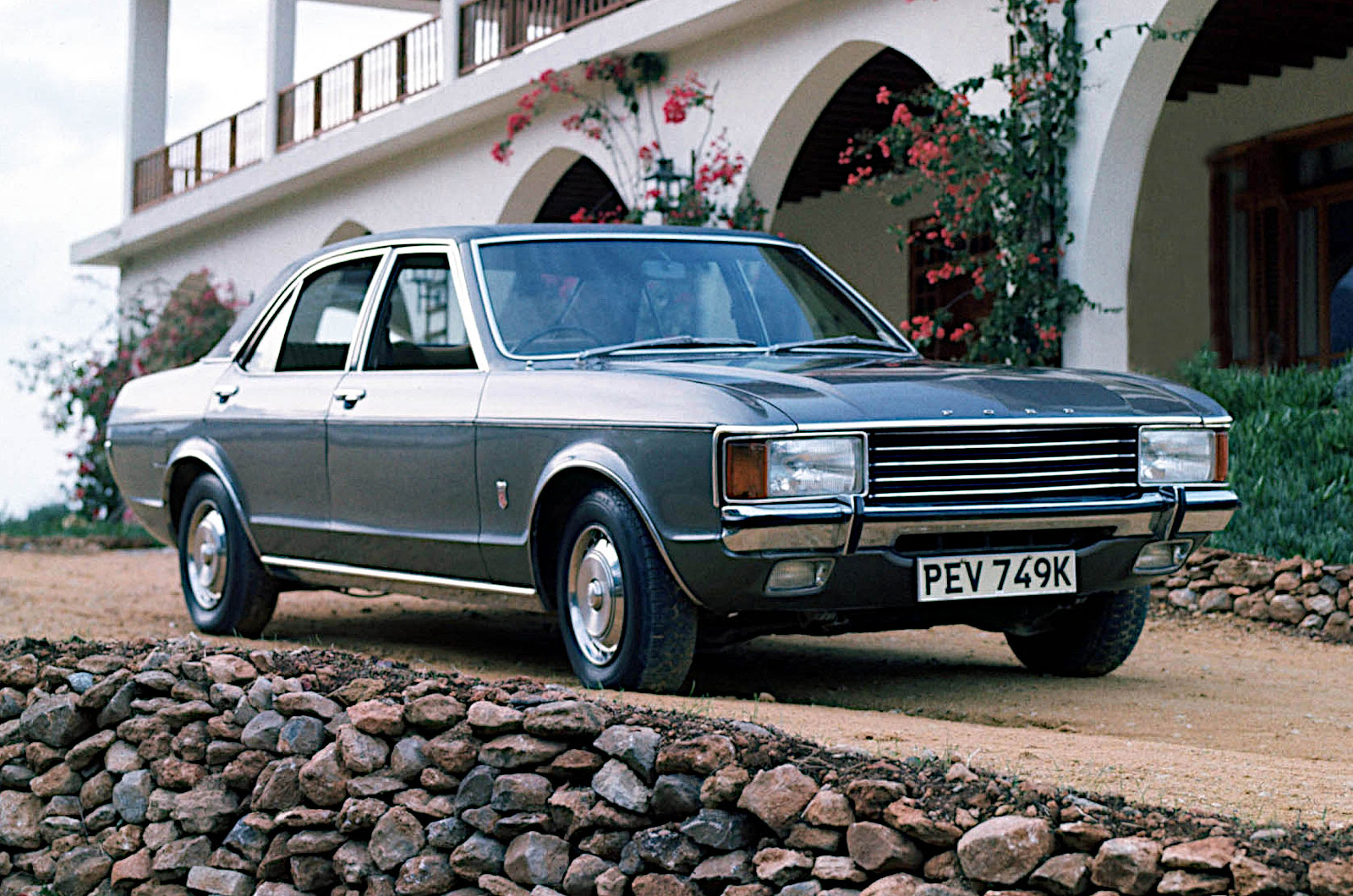
By far the most controversial thing about the first-generation European Granada introduced in 1972 was its name. The Granada Group, a large UK media and catering conglomerate (including operating motorway service areas ), took Ford to court over this, on the grounds that members of the public might think it had something to do with the car, which was described in court as “an unfair and unlawful incursion into [the Group’s] goodwill”.
The judge, Justice John Graham, decided Granada had “failed to produce evidence that satisfies me that such is likely to be the case”, and found in favour of Ford. The car went onto great success in Europe, becoming the car to aspire to for any senior manager, before German brands inevitably came calling for that market…
Ford Mustang (1973)
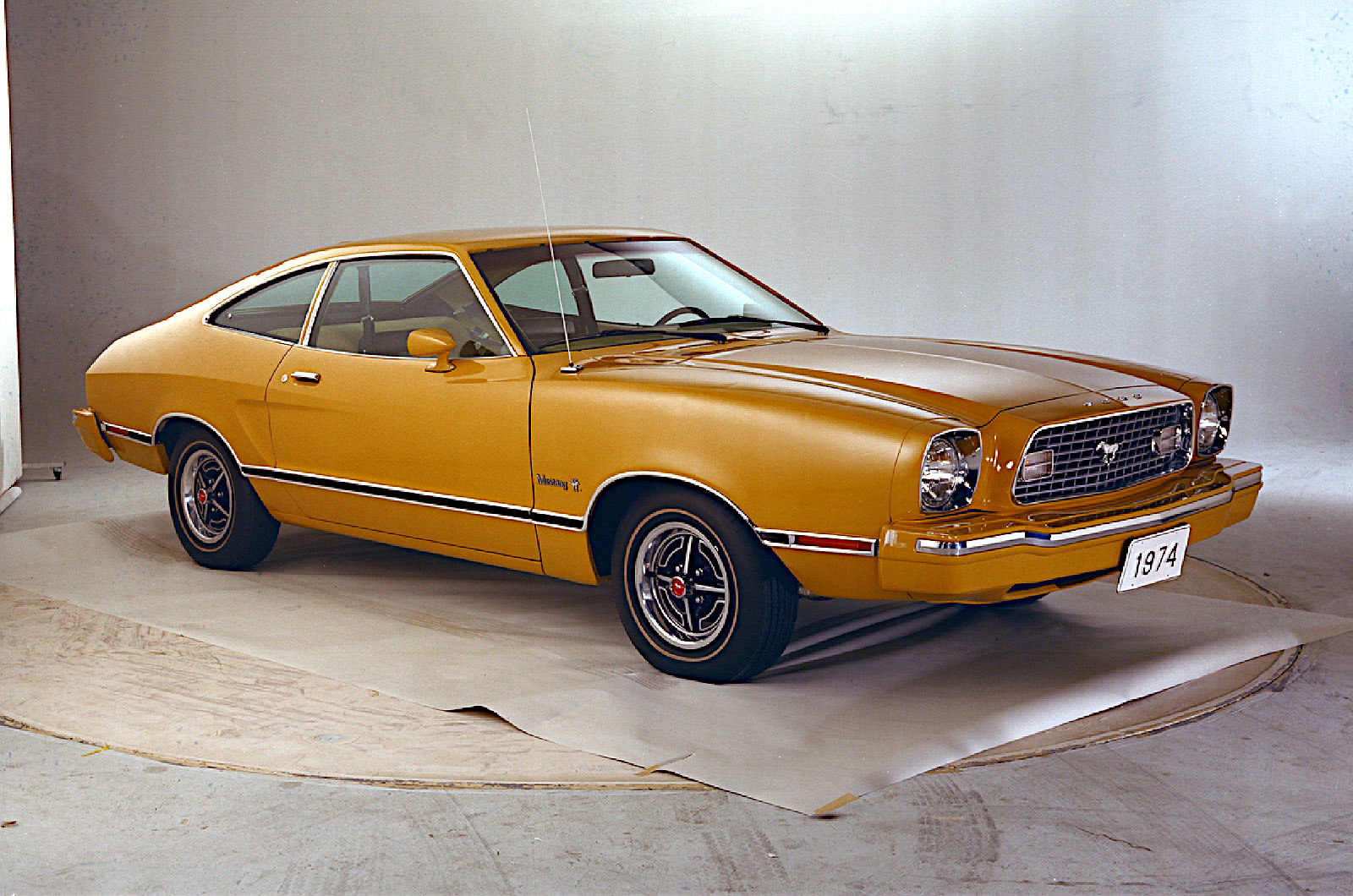
The second-generation Mustang, introduced in the 1974 model year, is widely regarded as a poor substitute for the first, which had made its debut a decade earlier. Media reaction was mixed, and often hostile – journalists complained at the time, as later commenters have also done, that it just wasn’t sporty enough to be a ‘real’ Mustang.
The controversy made little difference to customers. Mustang sales in 1974 were higher than they had been since 1967, and over the course of five years the car found more than a million buyers. Whatever people think of it now, it was successful in its day.
Ford Escort (1980)
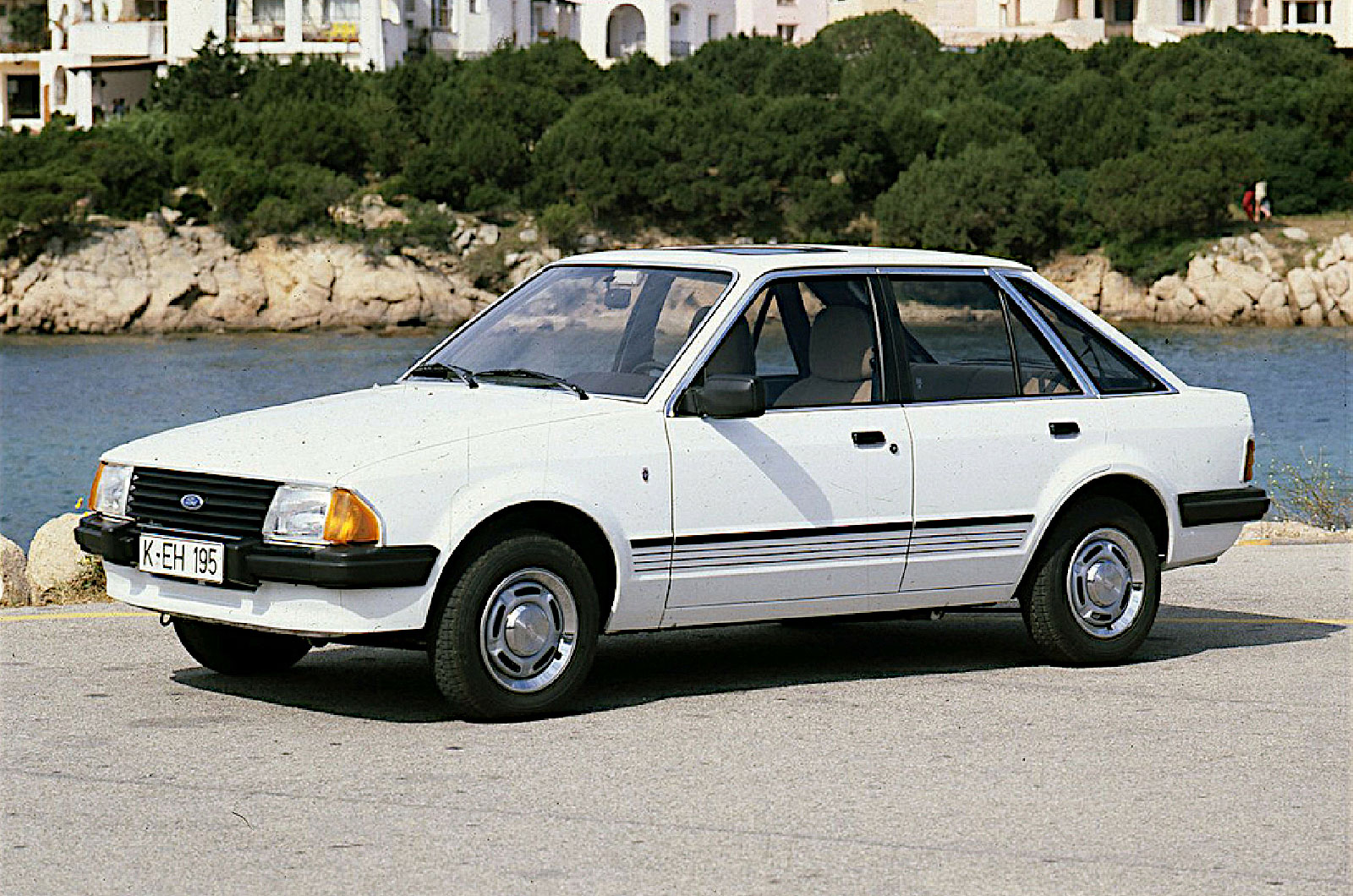
The Escort launched in 1980 was a completely different machine from the two versions built over the previous 12 years. It was available as a hatchback, it had front-wheel drive, and it came with a new engine called the CVH, which had an overhead camshaft and hydraulic lifters. After more than a decade of rear-wheel drive and overhead-valve engines, it was all rather exciting – or, if you were a traditionalist, rather alarming.
Reviews were mostly favourable, but there was immediate criticism of the poor ride quality, which Ford responded to by revising the suspension. In 1982, the new Escort became the most-registered car in the UK, according to figures collated by the Society of Motor Manufacturers and Traders, and remained so (if you include the fourth-generation car, which was really just an update of this one) until 1989.
Ford Mustang (1980)
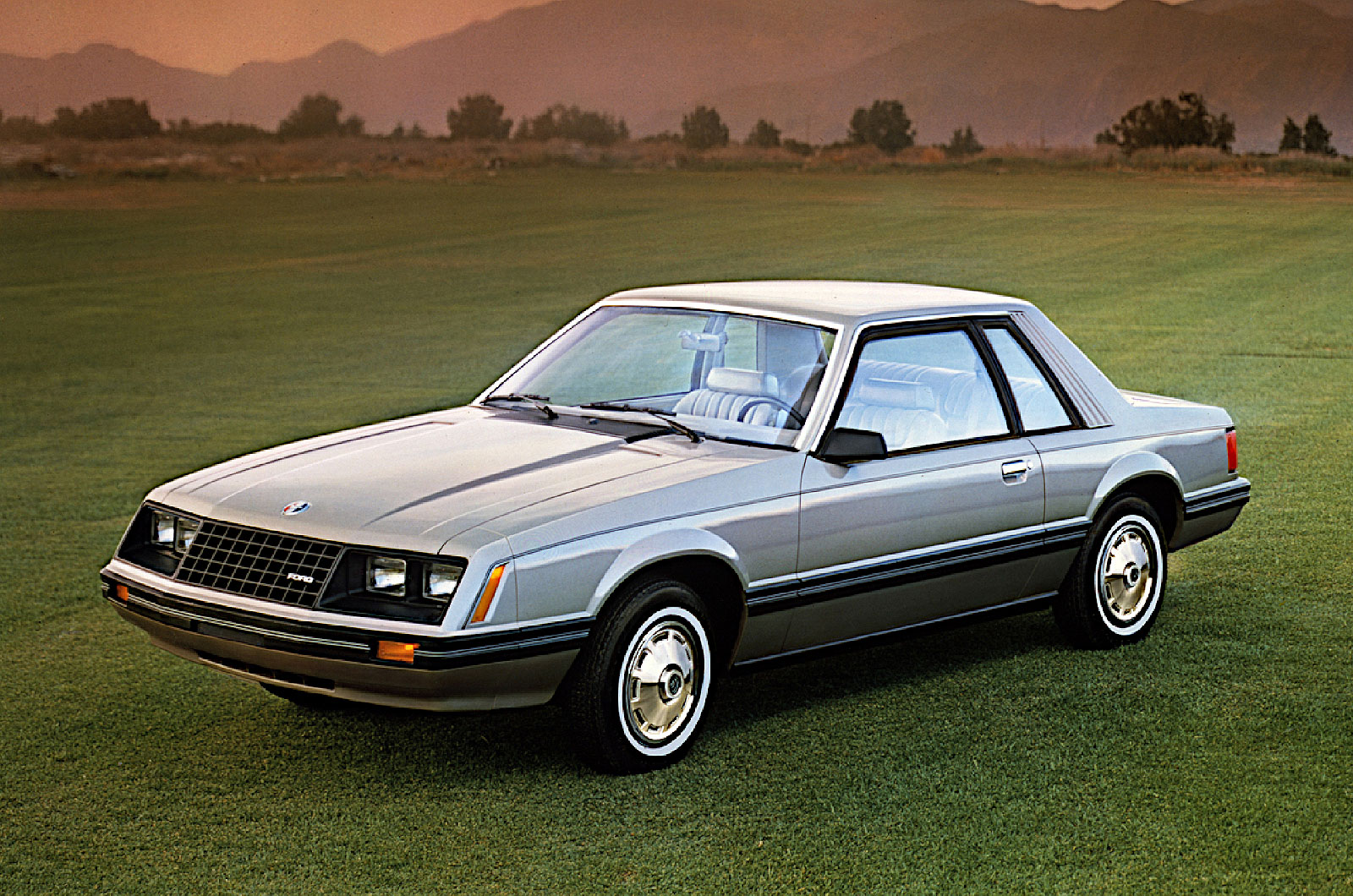
The third Mustang arrived around the time of the second global oil crisis in six years. In an effort to keep fuel economy favourable, Ford smothered its Windsor V8 engine, reducing its capacity to 4.2 litres and its power output to just 120bhp.
In this form, the engine was available in the Mustang from 1980 to 1982. Cars of that period had miserable performance, and are now regarded as the low point both of V8-powered Mustangs and of the generally respected Windsor.
Ford Sierra (1982)
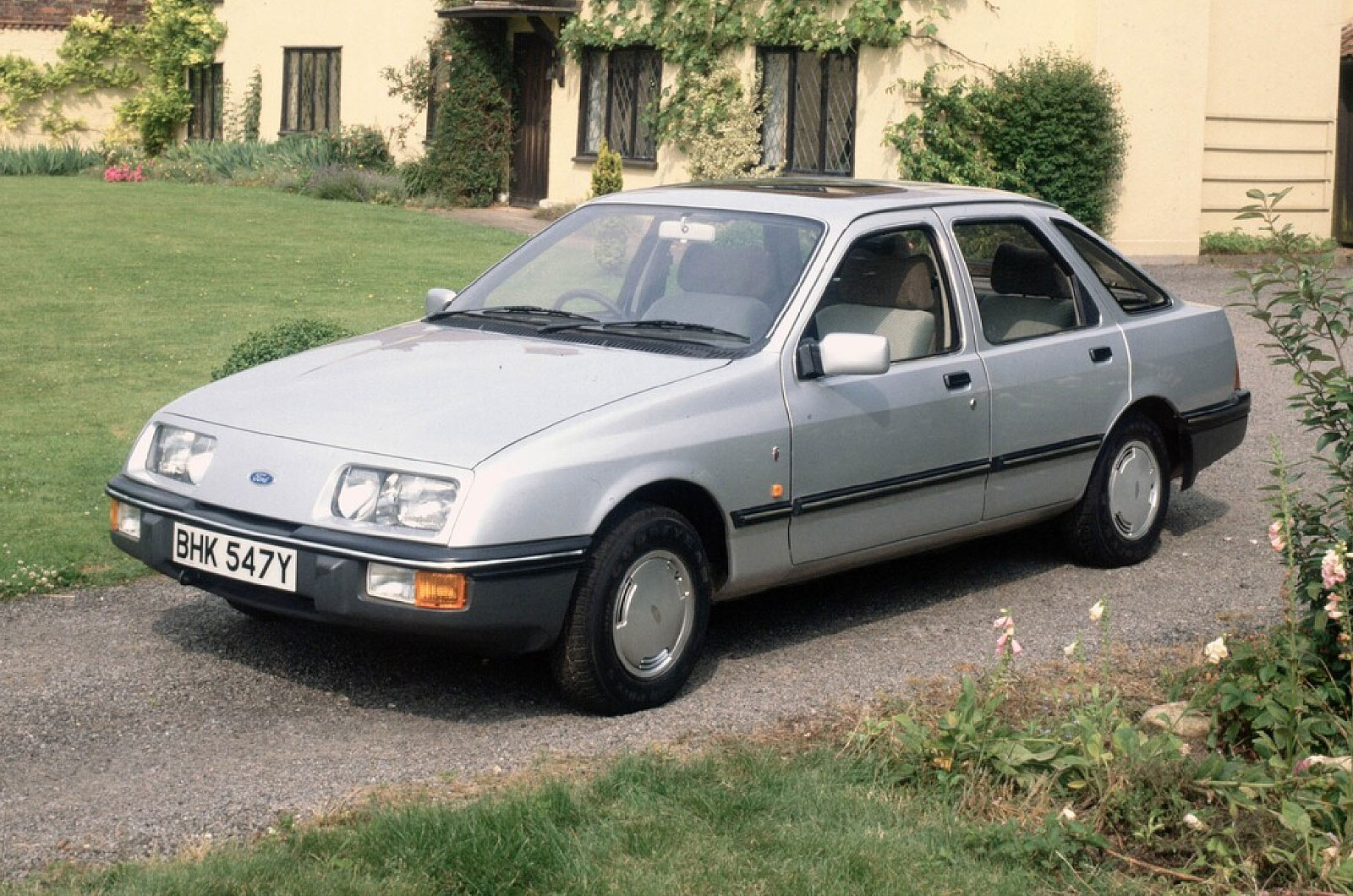
A section of the British motoring public, familiar with the Ford Cortina for two decades, reacted hotly to the arrival of the Sierra in 1982. It had a silly name, they said, and it looked like a jelly mould.
The controversy eventually died down, and the Sierra became as familiar as its Cortina predecessors had been. The high-performance RS Cosworth and later RS500 variants added glamour to what, by the end of the decade, was regarded as a very conventional car.
Ford Bronco II (1984)
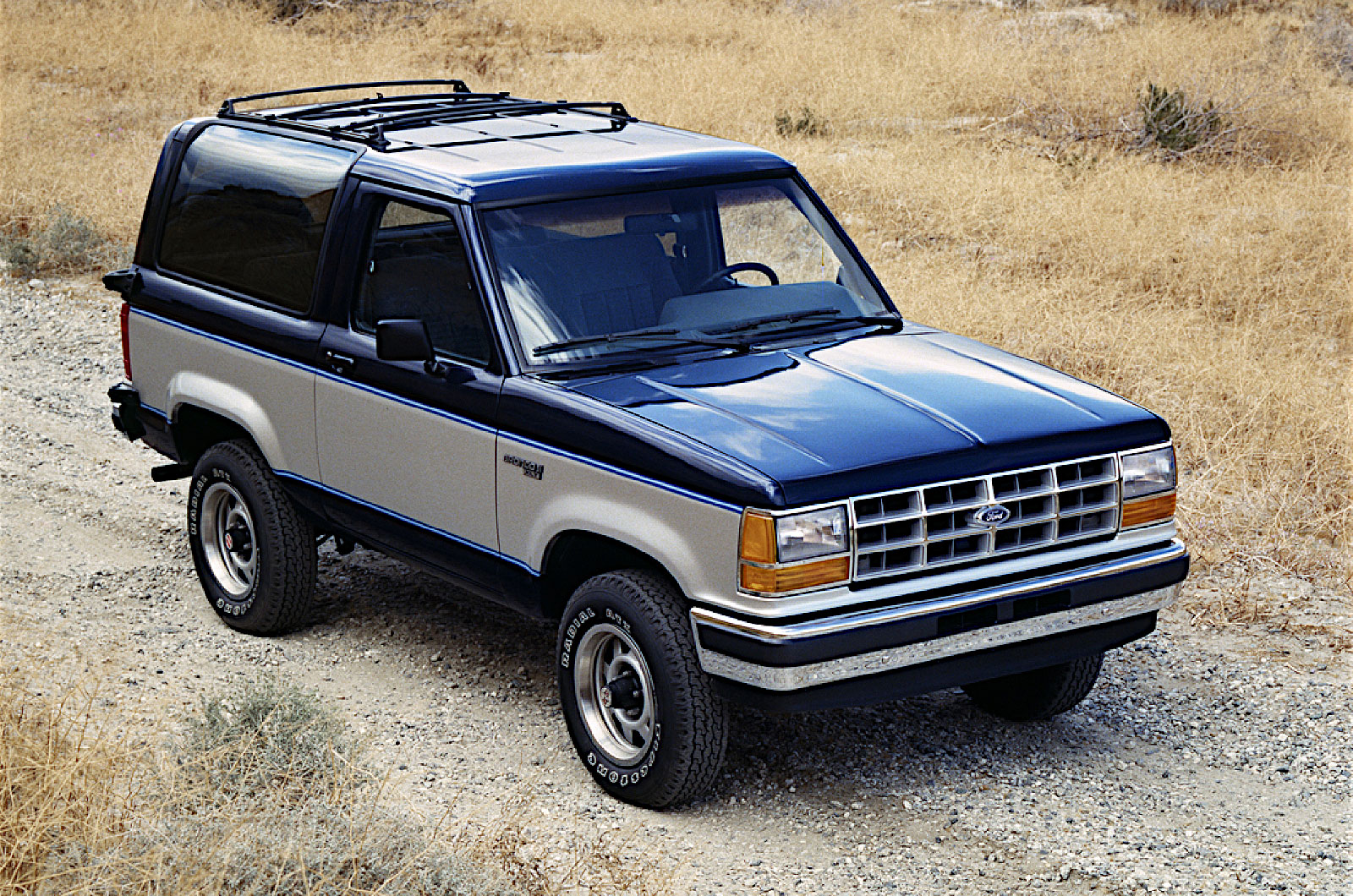
The Bronco II, a compact SUV sold from 1984 to 1990, developed a terrible reputation for falling over due to its combination of a small footprint and a high centre of gravity. Other vehicles of the same type have had similar problems, but the Bronco II became the poster child due to a series of high-profile cases.
The total cost to Ford is difficult to determine, but a magazine report published in 2001 included an estimate that the company had had to pay “approximately $2.4 billion in damage settlements”. Its follow-up model, introduced in 1991, became controversial in another way when a 1993 example became involved in one of the most famous - albeit slow-speed - car chases in history when it carried OJ Simpson, in Los Angeles in 1994…
Ford Probe (1988)
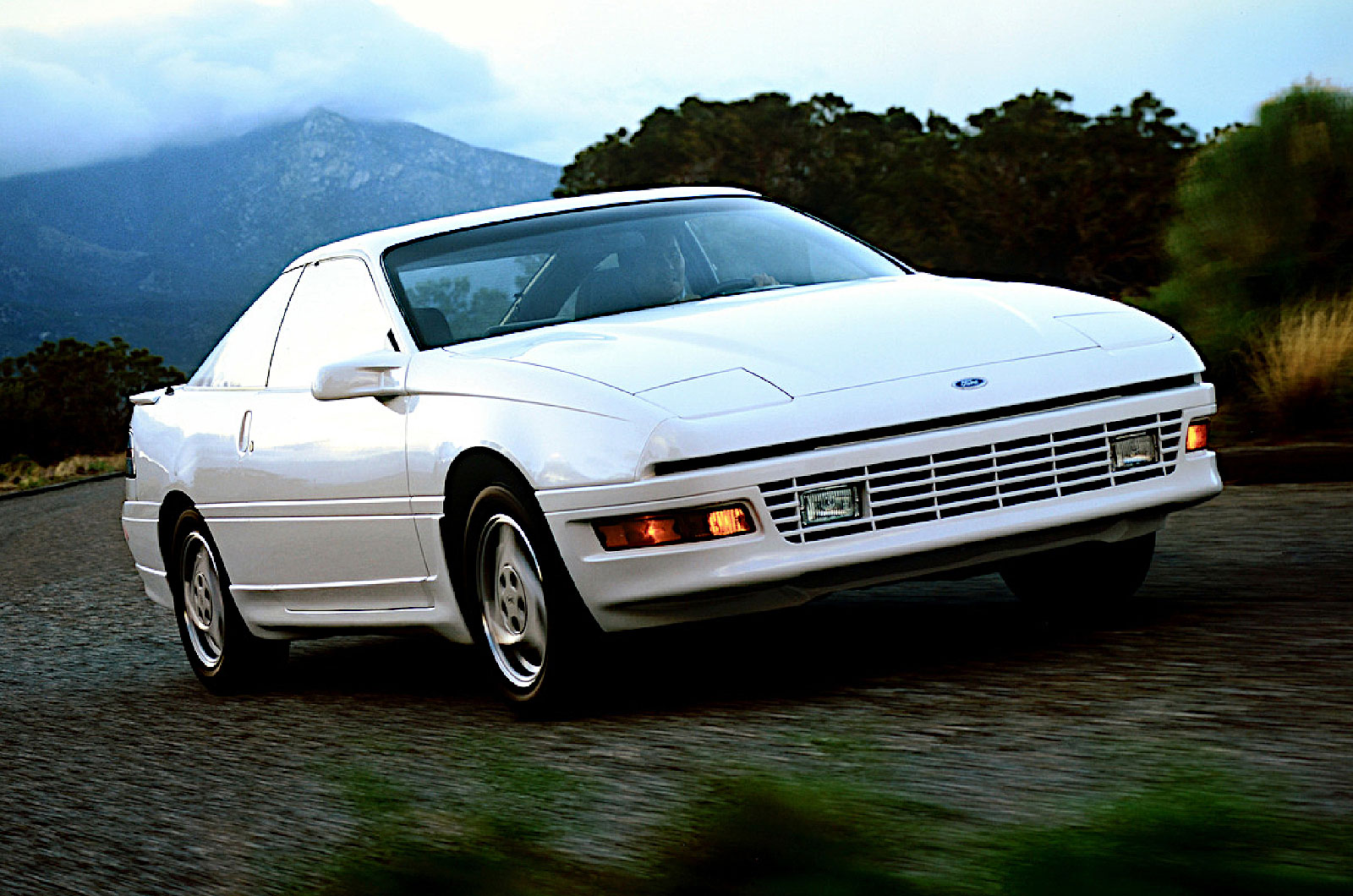
The controversy surrounding the Probe was over and done with before the car went on sale in 1988. This compact coupe was designed in collaboration with Mazda, had front-wheel drive and was powered by either a four-cylinder engine or a V6, all of which seemed acceptable.
The problem was that it was originally planned as the new Mustang. Both inside and outside Ford, it was felt that front-wheel drive, partly Japanese heritage and the lack of a V8 option simply didn’t add up to something that could be called Mustang, so the car was launched as the Probe instead. The then-current Mustang wasn’t replaced until 1994, by which time the Probe was in its second generation.
Ford Escort Mk5 (1990)
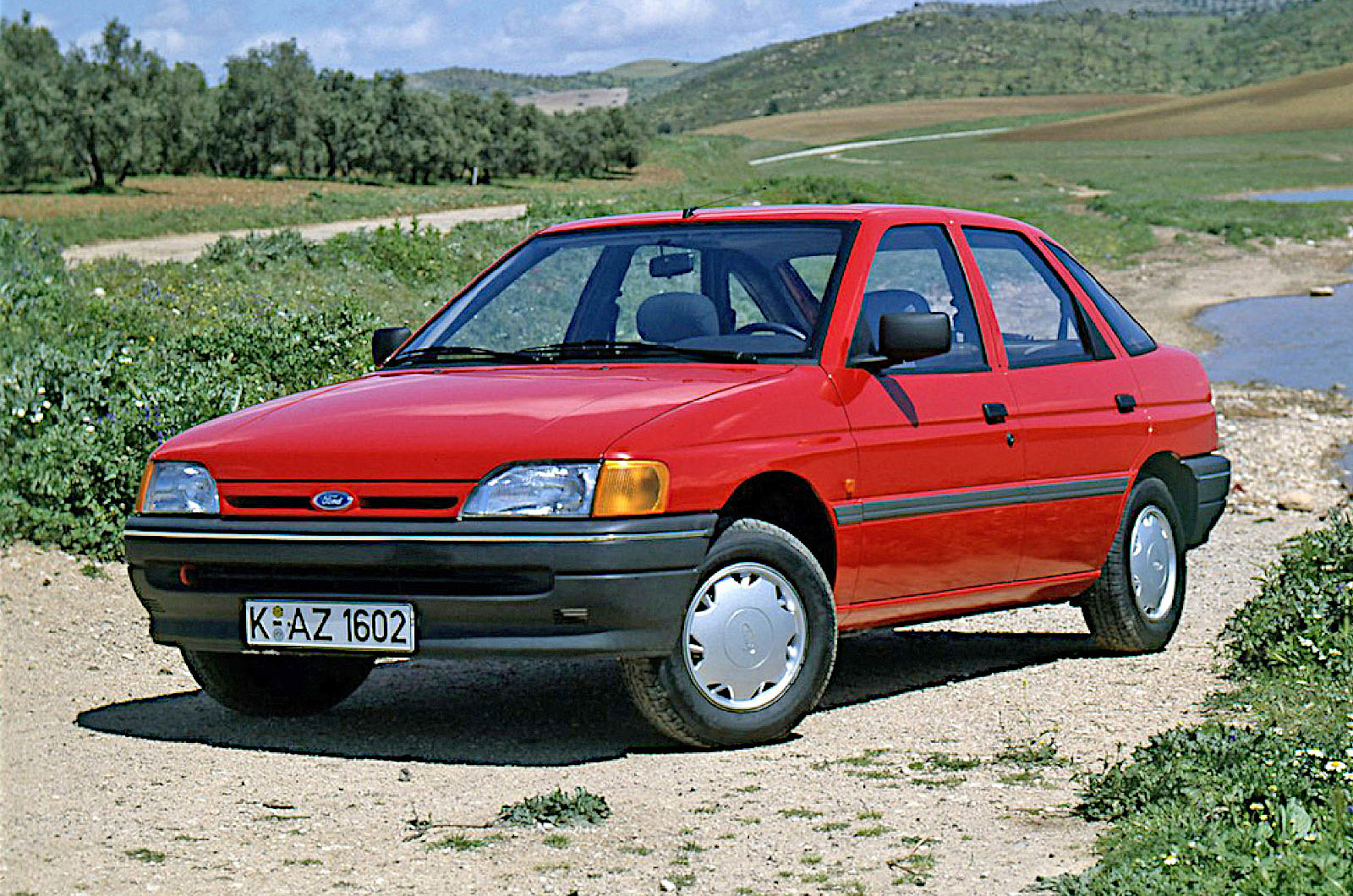
The European Escort entered a new generation in 1990. Compared with its immediate predecessor, the car was roomier, better equipped and only slightly more expensive. Customers liked it, and it was a big success for Ford.
This happy tale is spoiled only by the fact that early models were heavily criticised for their ride, handling, gutless engines and appearance. Ford reacted very quickly to the complaints, and introduced a revised version in only slightly more than two years, making the new Escort the car it should have been in the first place. Luckily perhaps for Ford the market, and competitor cars, were more forgiving then than today.
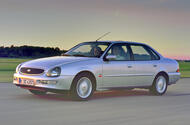
Ford Scorpio (1994)
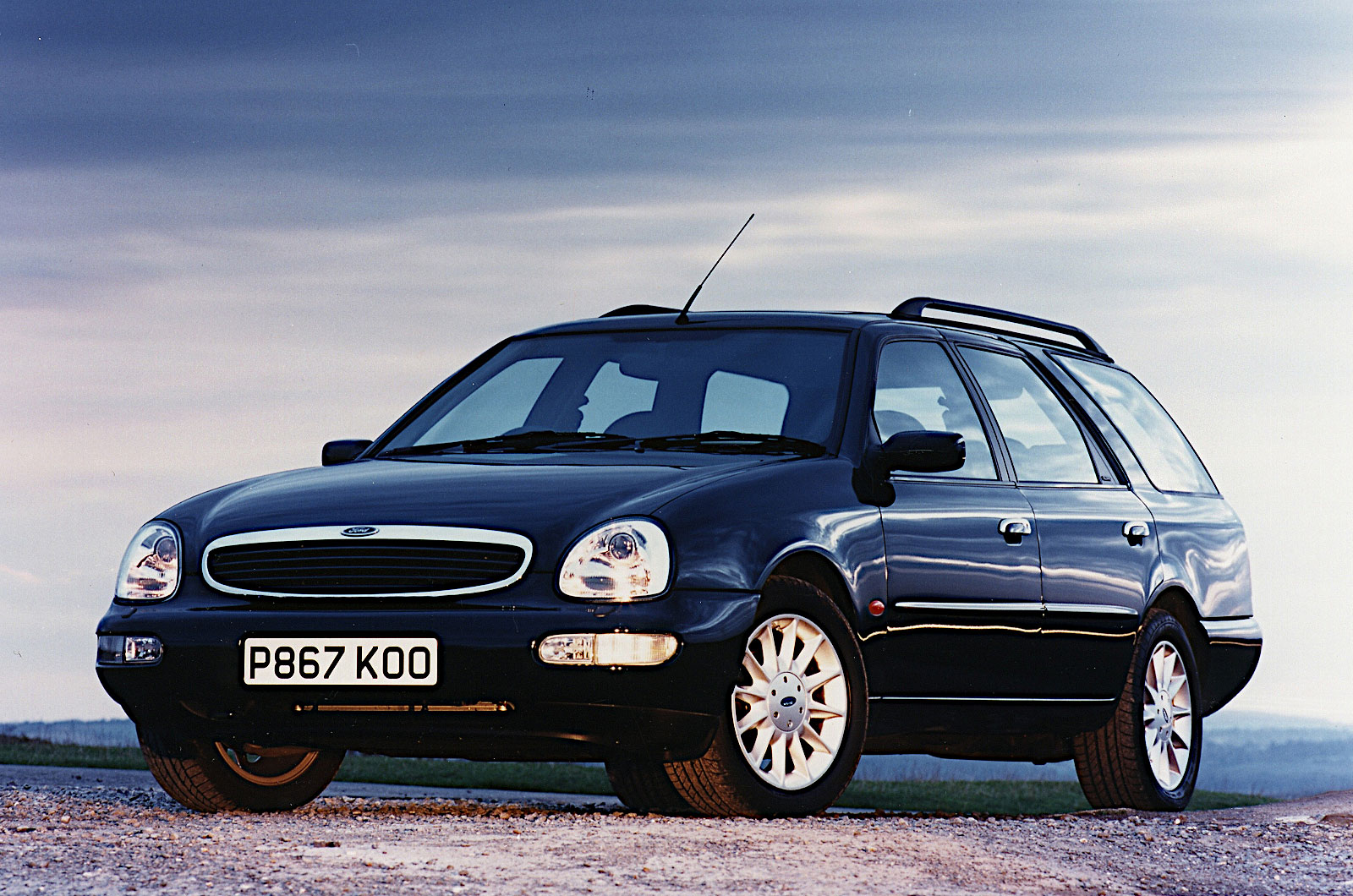
The final European Ford in the Granada/Scorpio line, launched in 1994, was a conventional large saloon/estate which in normal circumstances wouldn’t have offended anyone. The abnormal circumstance which made it one of the most talked-about Fords ever (in an entirely negative sense) was its design.
Commentators fell over themselves trying to out-do each other with ever more insulting remarks about the car’s appearance. Ford couldn’t do much about this without starting again from scratch (too expensive to contemplate), but it did give the Scorpio a minor facelift in late 1997, which helped slightly.
Ford Aspire (1994)
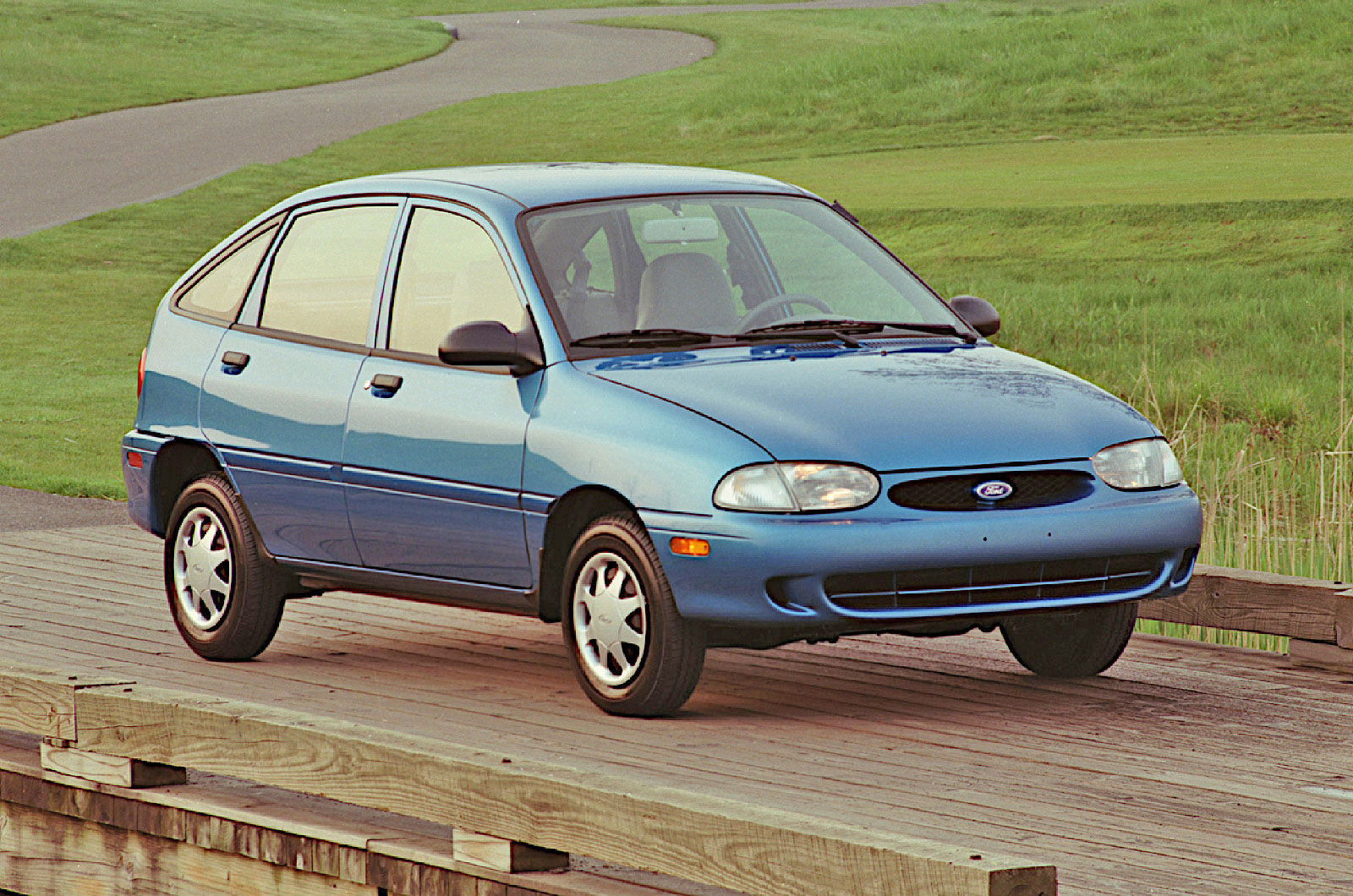
Like the much earlier Parklane, the Aspire was an example of a mild controversy between Ford and its customers – the former wanted the latter to buy it, but the latter weren’t interested.
This inexpensive little hatchback was co-developed with Kia, which sold it as the Avella. It was introduced in North America in 1994, but dropped three years later due to lack of interest.
Ford Explorer (1995)
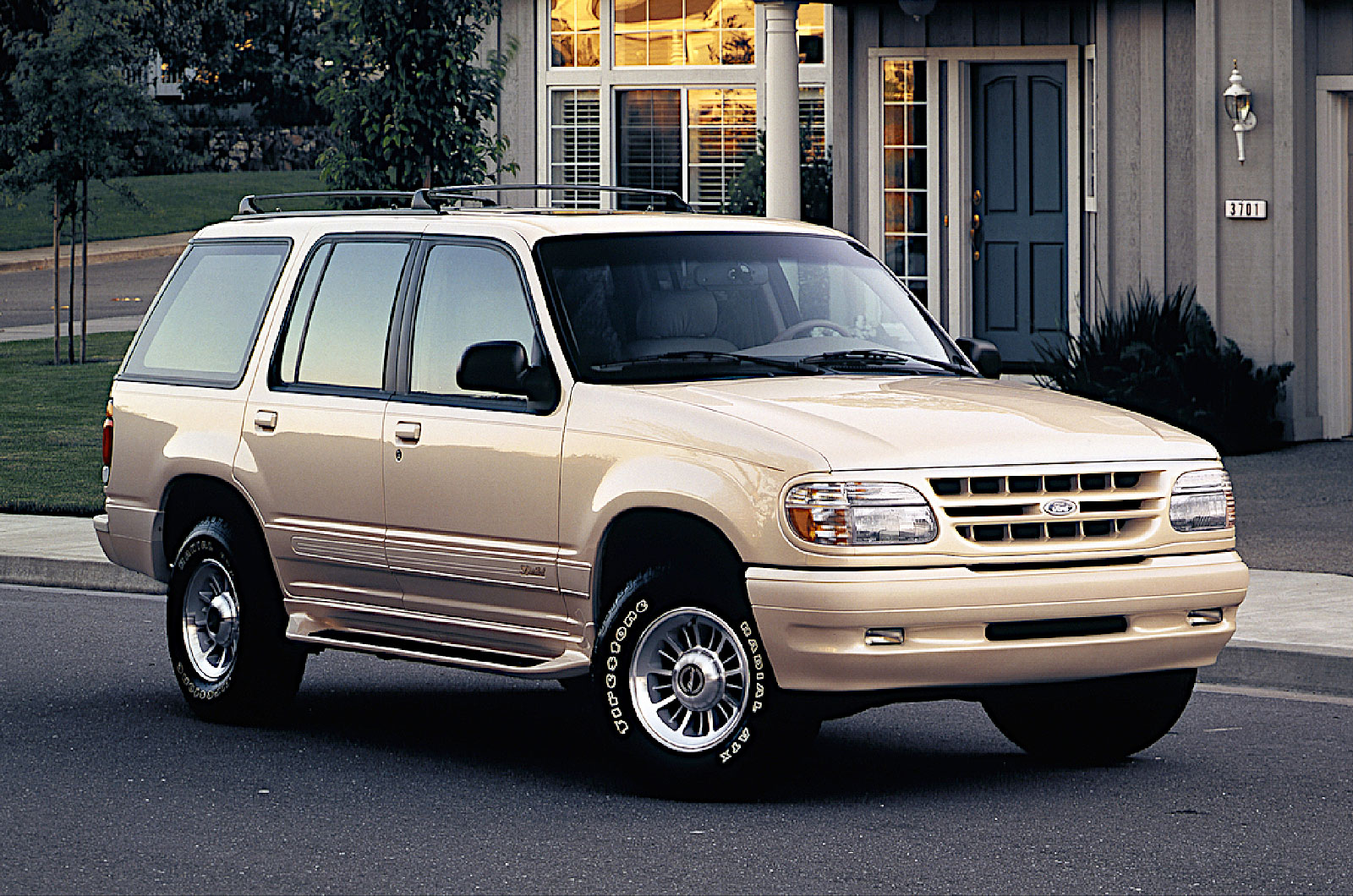
The second-generation Explorer SUV went on the market in 1995, and quickly became notorious due to a series of major accidents. This led to a legal battle between Ford and tyre supplier Firestone. In February 2001, the National Highway Traffic Safety Administration (NHTSA) announced that it had denied a request by Firestone to open a safety defect investigation into the handling and control characteristics of the Explorer if the tread of a rear tyre came away from the rest of it.
The NHTSA stated that analysis of claims data showed there was “no significant difference in the likelihood of a crash following a tread separation between Explorer vehicles and other compact SUVs”. The affair led - among other things - to the exit of Ford CEO Jac Nasser.
Ford Fiesta (1996)
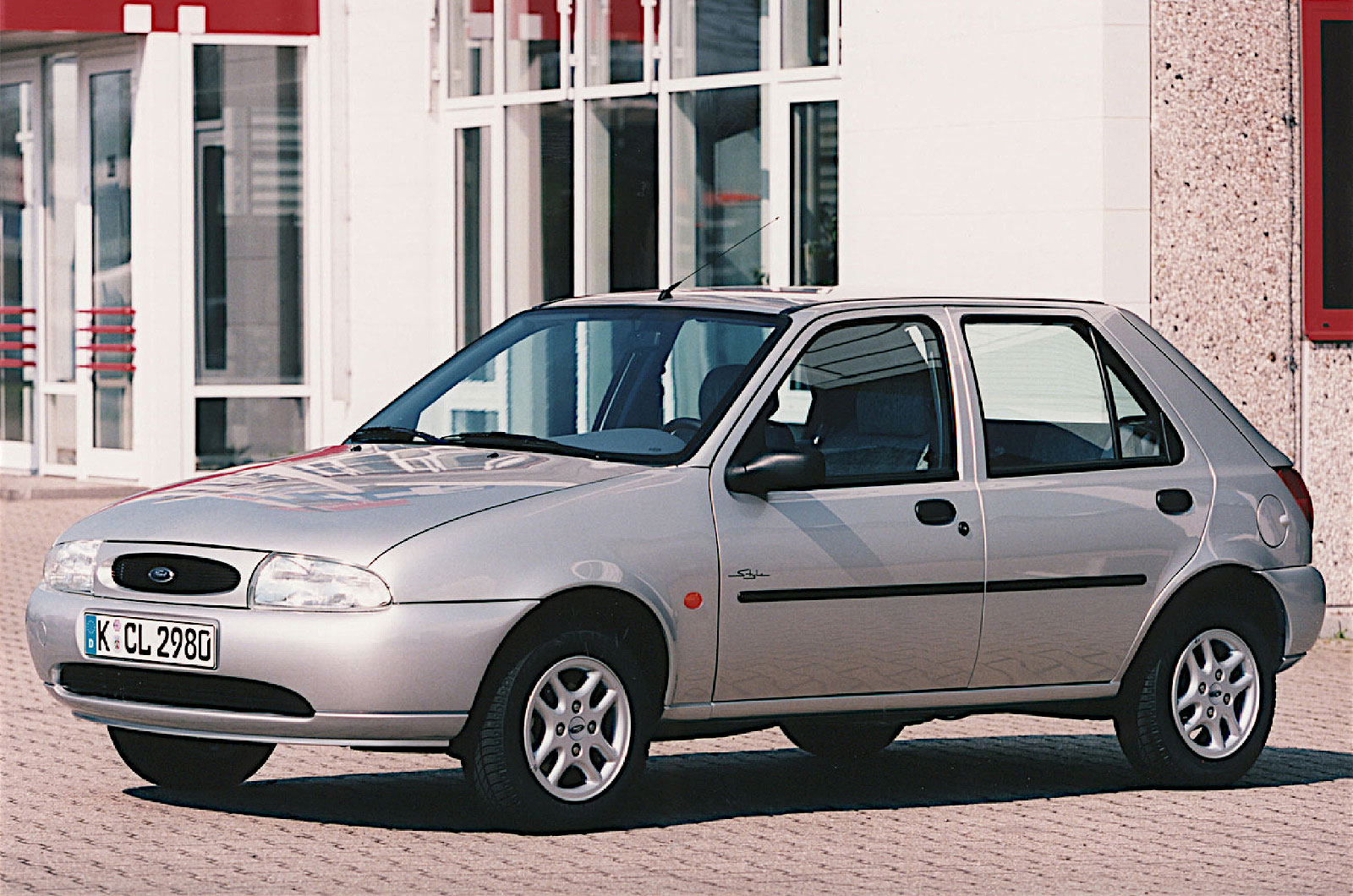
The 1996 Fiesta (also sold as the Mazda 121) was largely the same as the previous one apart from a new engine, less weight and a mild restyle. The last of these was perhaps the least successful and caused adverse comments, some of them including the word ‘fish’.
Fortunately, it didn’t last long. Ford adopted its New Edge styling for the facelifted version, which looked significantly better.
Ford Ka (1996)
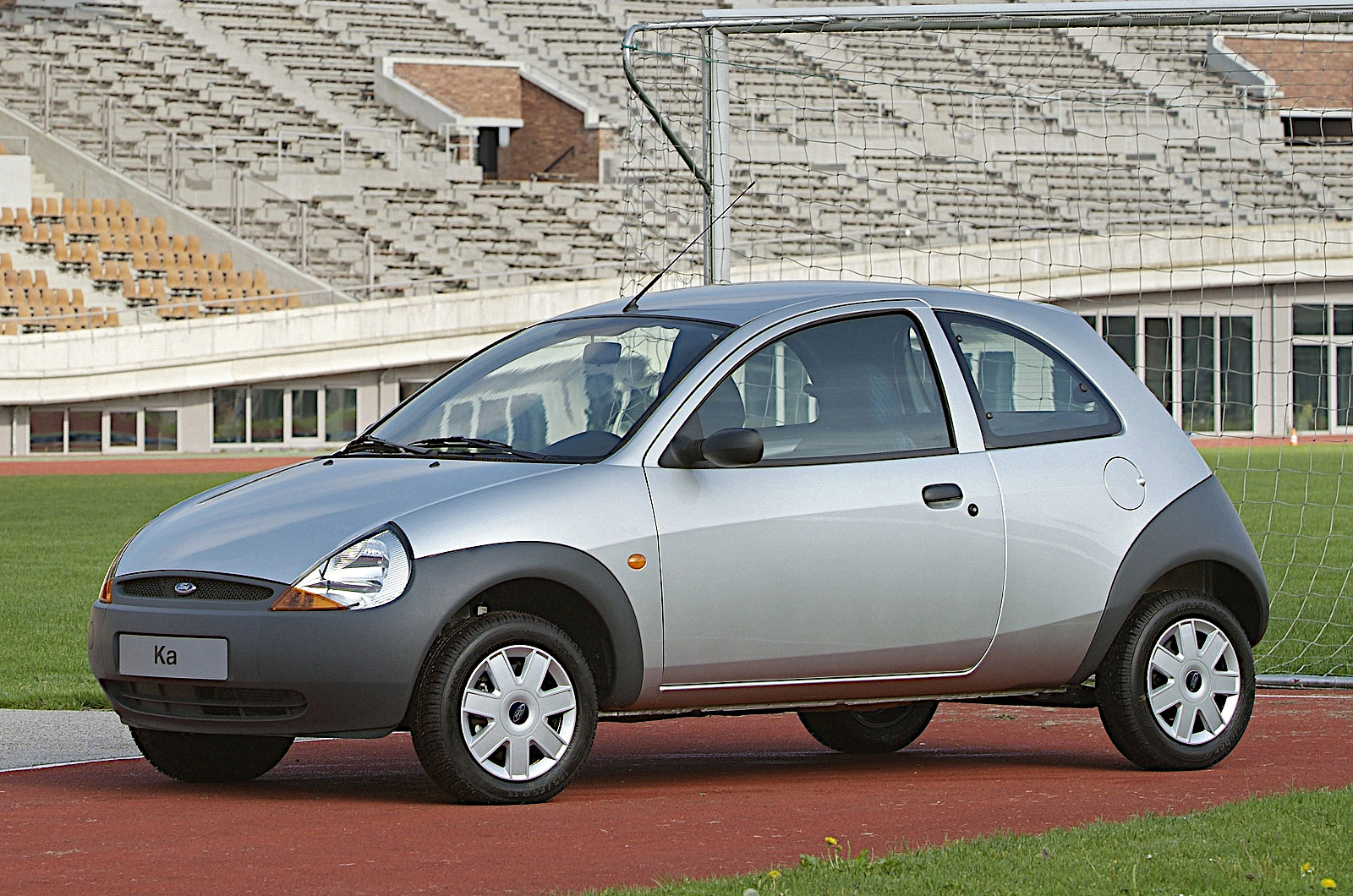
The original Ka, which made its debut in 1996, was only mildly controversial, but there has always been disagreement about how to pronounce its name – with a short ‘a’ as in cat, with a long ‘a’ as in ‘car’, or even spelling out each letter as if they were intials (which is not the case).
Then there was the question of its styling. The Ka was the first production Ford with a New Edge design, and while it looks innocent enough now it was quite startling at the time, especially to people who hadn’t seen pictures of the similar Saetta concept car.
Ford Racing Puma (1999)
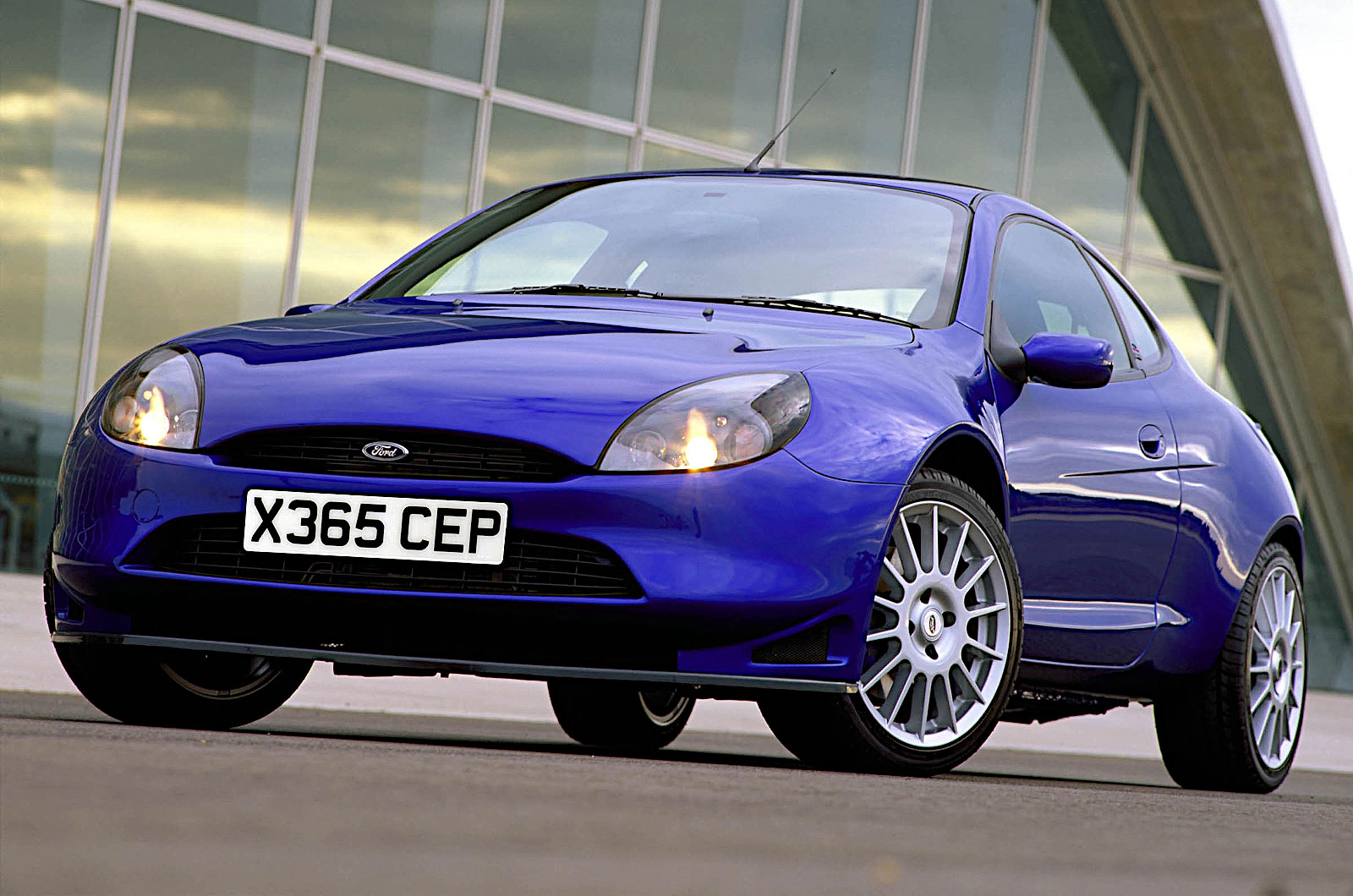
The 1999 Racing Puma was a special version of the Fiesta-based Puma coupe developed by Tickford. Among other modifications, the standard 1.7-litre engine was uprated from 123bhp to a still less than startling 153bhp, though the emphasis was more on handling. Two race drivers, one of whom later became a British Touring Car Champion, agreed that it suffered from understeer on a circuit, but this was not apparent in road use.
The most controversial thing about the Racing Puma was its price. Ford charged £22,750, at a time when a Subaru Impreza WRX cost significantly less and a Lotus Elise only slightly more. Sales were understandably low.
Ford Excursion (1999)
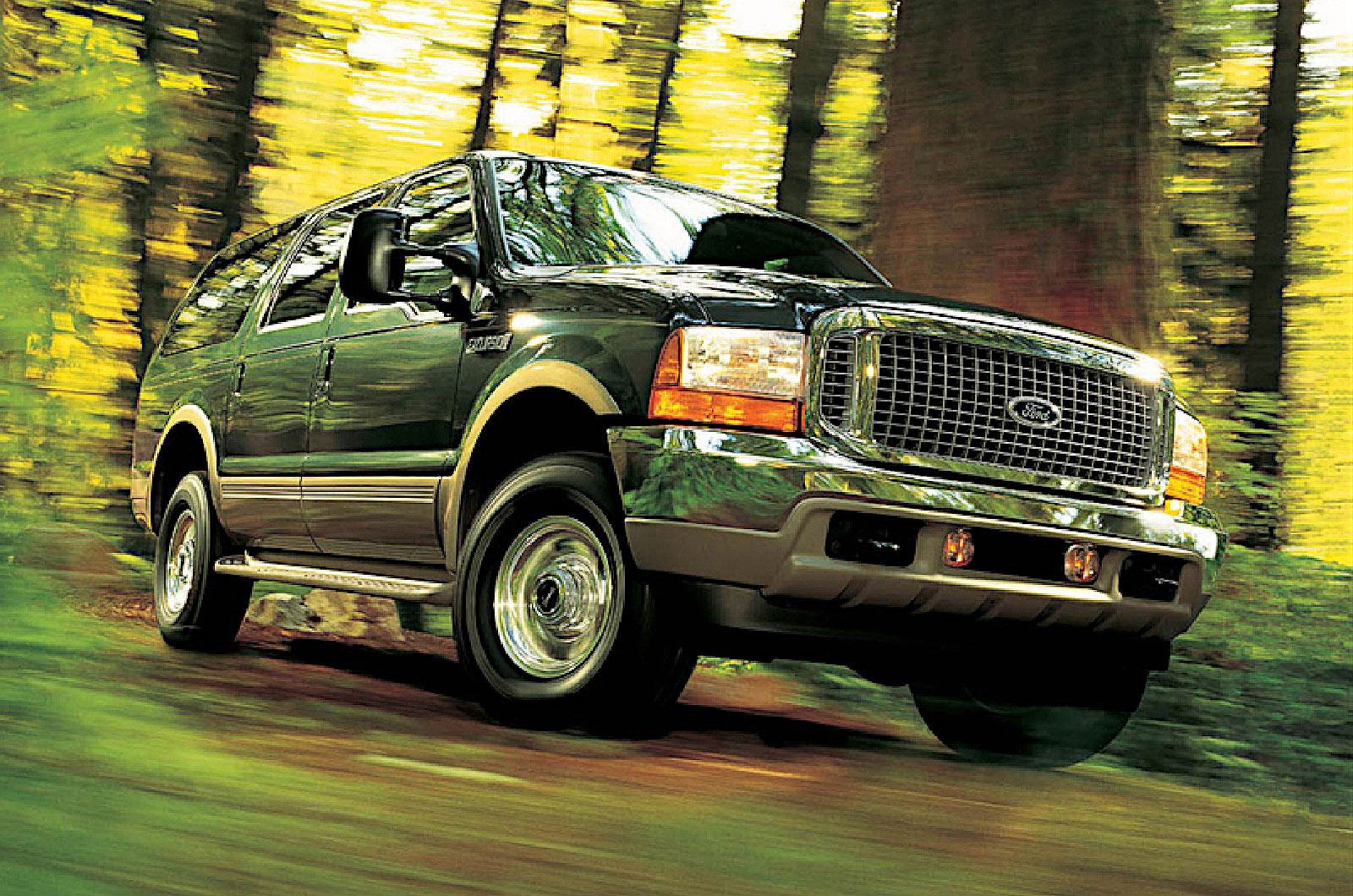
At 5758mm (226.7in) from end to end, and weighing around four US tons, the Excursion remains, nearly a quarter of a century after its debut, one of the largest, heaviest and least economical SUVs ever to go on sale.
Onlookers concerned about safety and the environment reacted with alarm, and came up with several nicknames for the vehicle, including Fordasaurus, Ford Saddam and Ford Valdez. The last of these was a reference to the Exxon Valdez supertanker which dropped ten million US gallons of crude oil into Prince William Sound, Alaska, in 1989.
Ford Focus RS (2001)
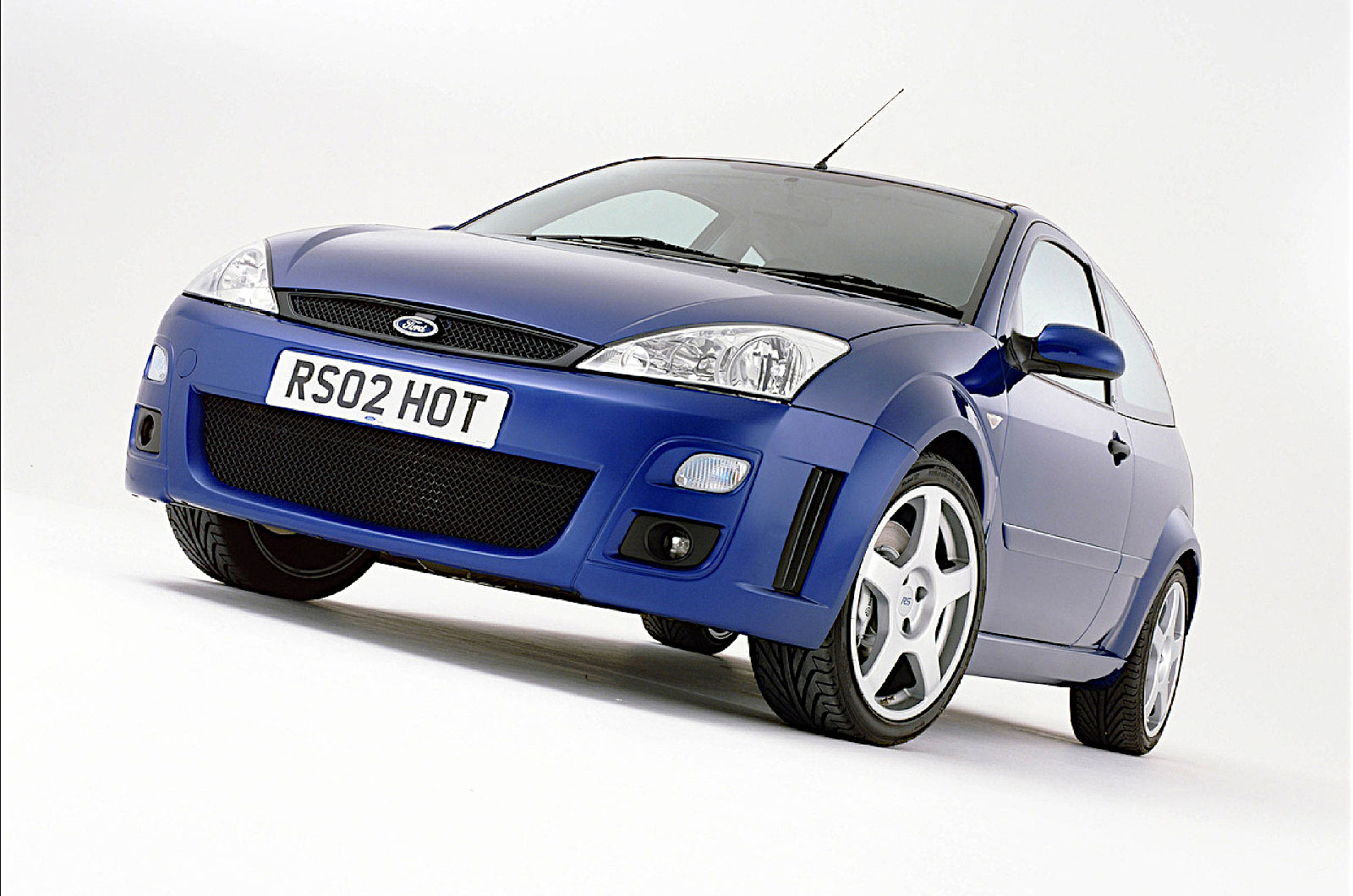
The first of what would become three series of Focus RS arrived in 2001, and was immediately impressive because Ford (for either technical or cost reasons, depending on who you spoke to) had made it front-wheel drive like the standard model rather than four-wheel drive like the versions competing in the World Rally Championship.
Torque steer, which happened only if you were driving very hard, was a controversial issue, and unfairly blamed on the car’s Quaife limited slip differential, which wasn’t in fact causing the problem. The second Focus RS – also front-wheel drive, and also fitted with the Quaife diff – behaved far better because of its superior front suspension geometry, which Ford achieved by developing the ingenious RevoKnuckle system.
Ford Thunderbird (2001)
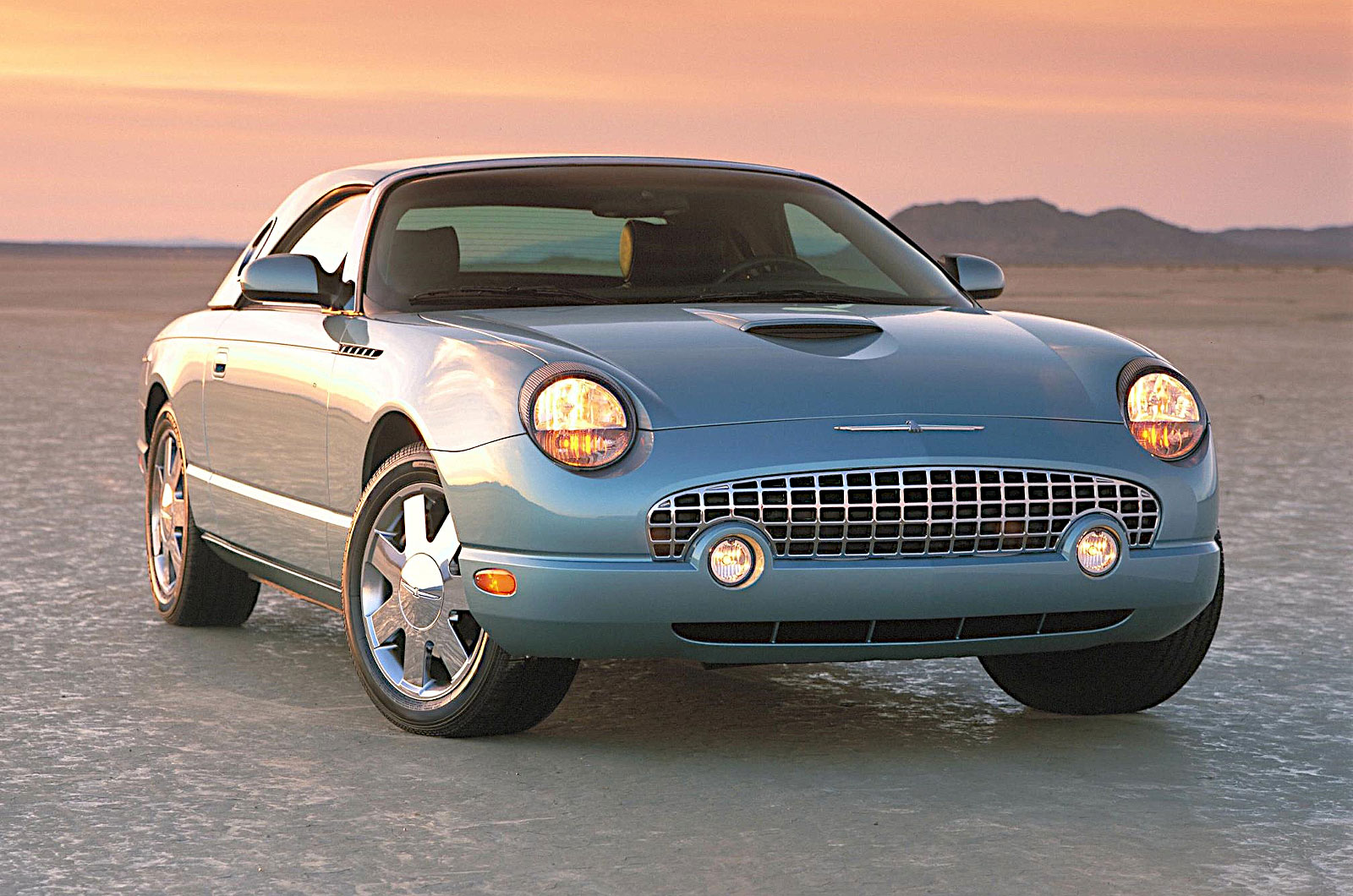
After building Thunderbirds in ten generations for 42 years, Ford discontinued the nameplate in 1997, but then brought it back five years later. Like the original T-bird, but unlike any of the nine in between, this version was a two-seat convertible, and was based on the same platform as the Jaguar S-Type and Lincoln LS.
After an initial flurry of interest, sales fell sharply, leading to the cancellation of the model after just four years. Perhaps a truly modern Thunderbird would have been more successful than a retro tribute, and perhaps also Ford had been right to abandon the two-seat convertible configuration in the late 1950s, and wrong to bring it back in the following century.
Lincoln Blackwood (2002)
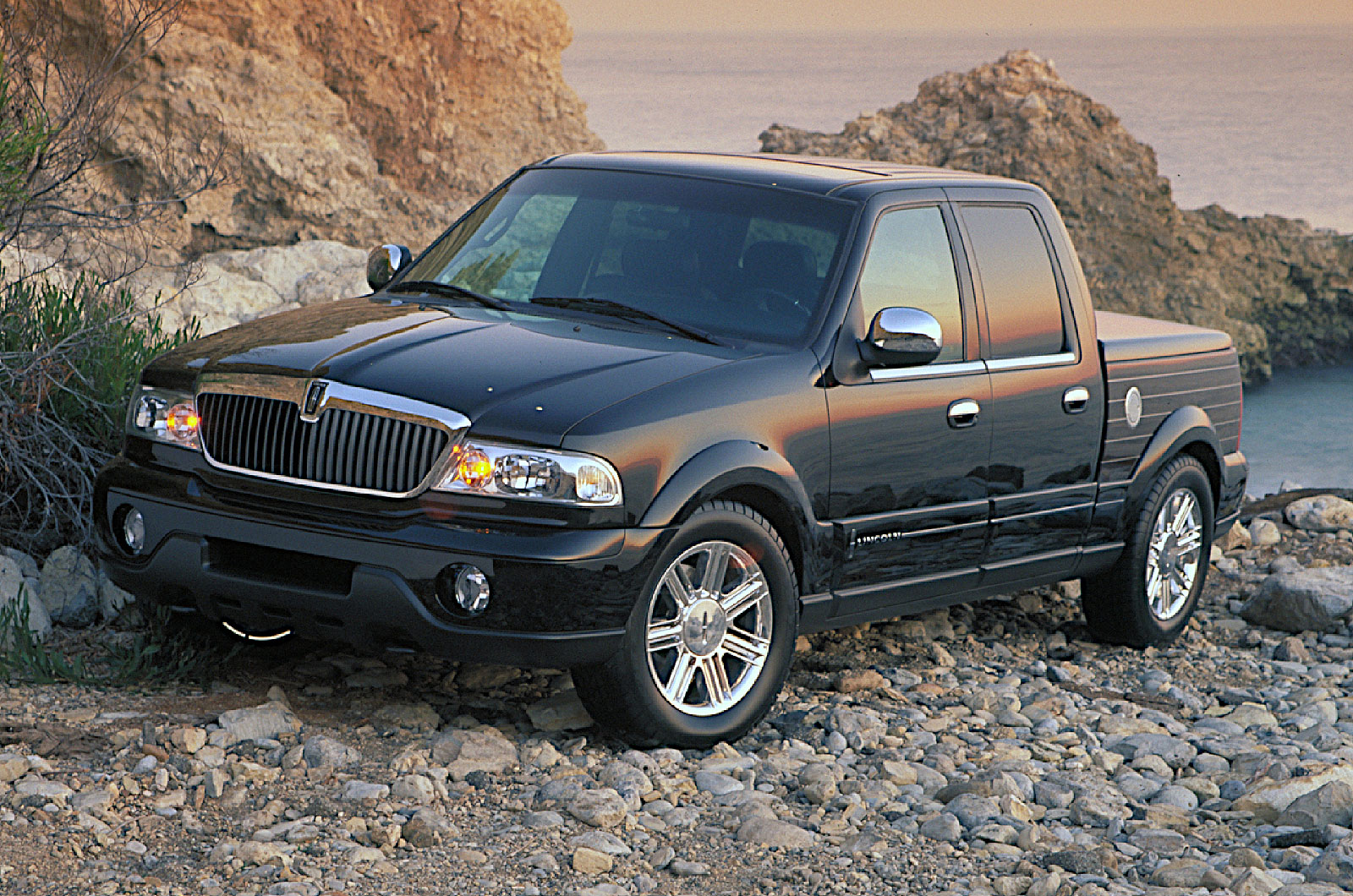
Ford’s luxury brand made the unusual decision to produce a pickup truck in 2002. Based on the contemporary F-150, it was resoundingly unpopular, and stayed on the market for just one model year in the US and one more in Mexico.
Lincoln’s next effort, the Mark LT, was barely more successful. Even in combination, they didn’t come close to GM’s equivalent, the Cadillac Escalade EXT, which wasn’t exactly a big hit either. The message seems to be that no matter how much you want to put a luxury pickup on sale, don’t do it.
Ford Five Hundred (2004)
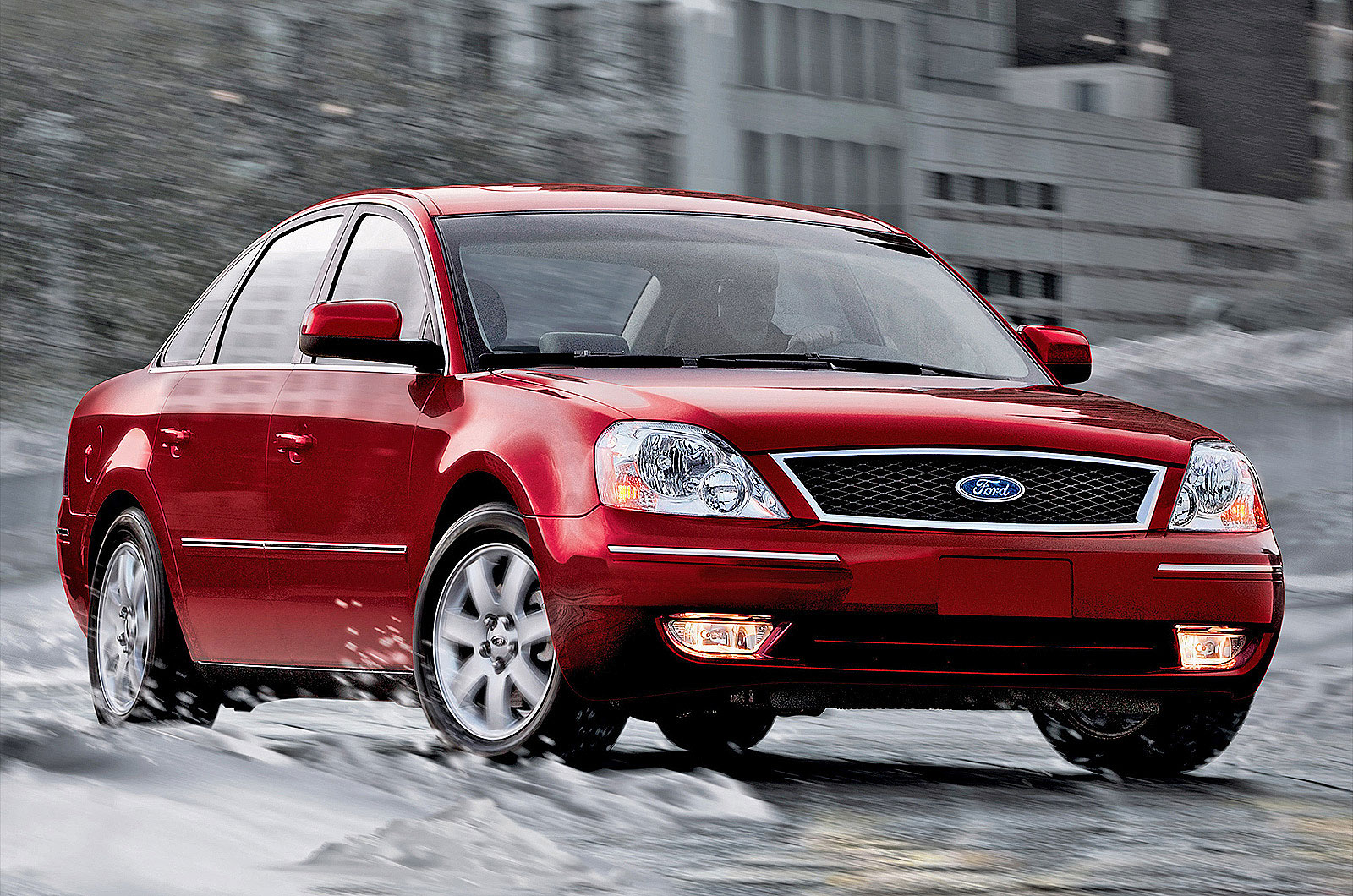
Ford’s second largest saloon of its period, after the Crown Victoria, was sold only in the 2005 to 2007 model years and was based on a platform inherited from Volvo, which made this car a slightly unlikely sibling of the Volvo XC90 Mk1. The Five Hundred’s lack of success has been attributed to its conservative styling, which was widely criticised. Ford designer J Mays admitted that the look of the Five Hundred was problematic. “It’s just lacking in the emotional appeal that we should have put into it,” he admitted in one interview, though this was not the whole story.
In another interview, talking about the same car, he hinted at another reason by saying, “I've been at the company 13 years and I've been through five CEOs. Some of those CEOs have had more conservative tastes than others.” Ford’s latest CEO, Alan Mulally who arrived in 2006, ordered an immediate re-design and the revival of the Taurus nameplate, which he said had much greater brand equity, having been around between 1986 and 2005; this seemed to improve sales, especially when an all-new Taurus arrived in 2010.
Ford EcoSport (2014)
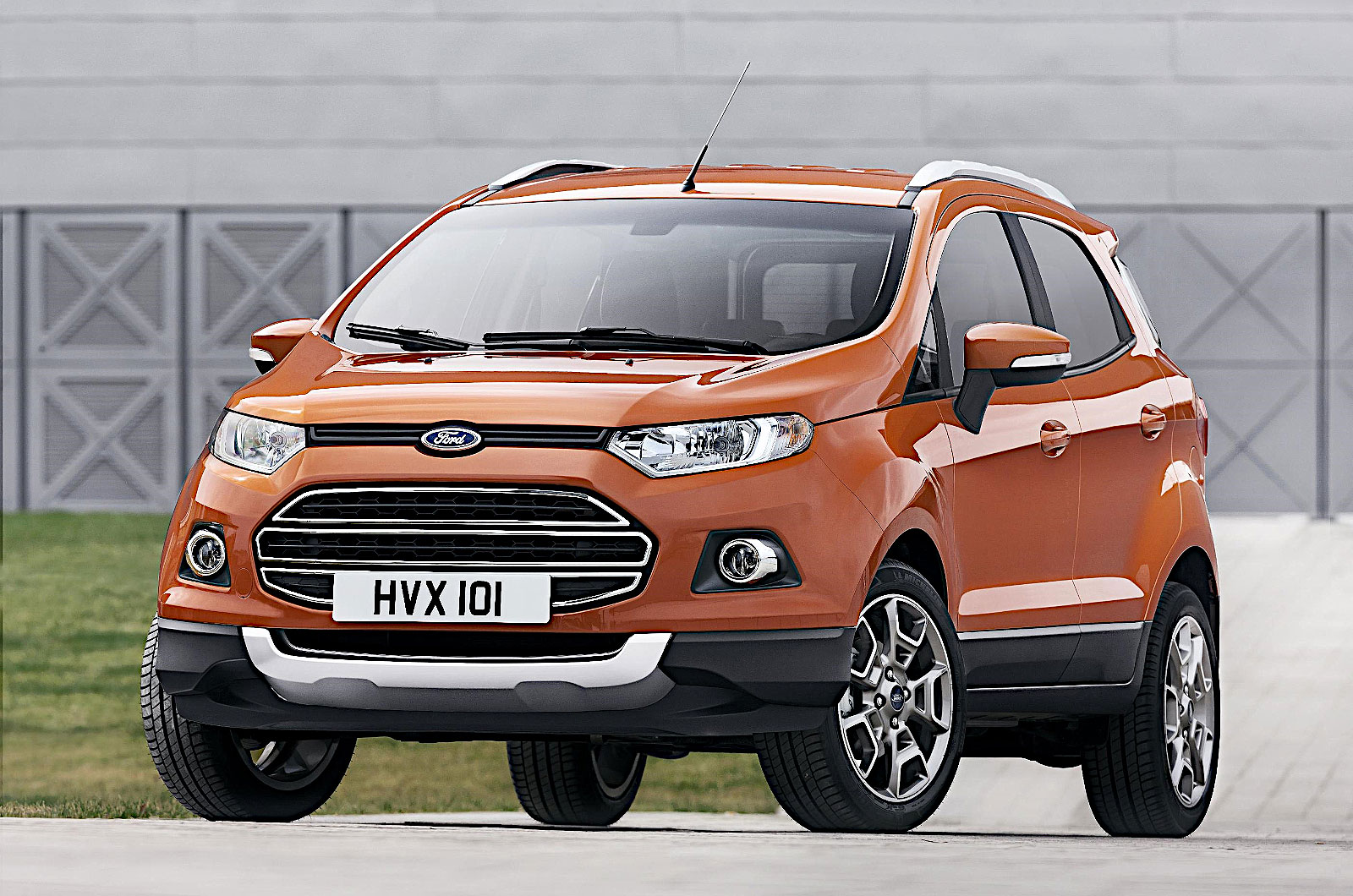
“It’s been a long time since a new Ford was as bad as the EcoSport,” we said in 2014. Launched in other markets two years earlier, the model had been developed in Brazil and built (for Europe) in India (and also in several other places), where it suited local conditions, and brought over to Europe, where it definitely didn’t, to allow Ford to compete in the highly competitive compact SUV sector.
With question marks over its ride, handling and interior quality, the EcoSport at first sold poorly in the region, though Ford made amends by improving it considerably in later years. It sold reasonably well in the US, despite being very small for that market – but at least it was cheap.
Lincoln Continental concept (2015)
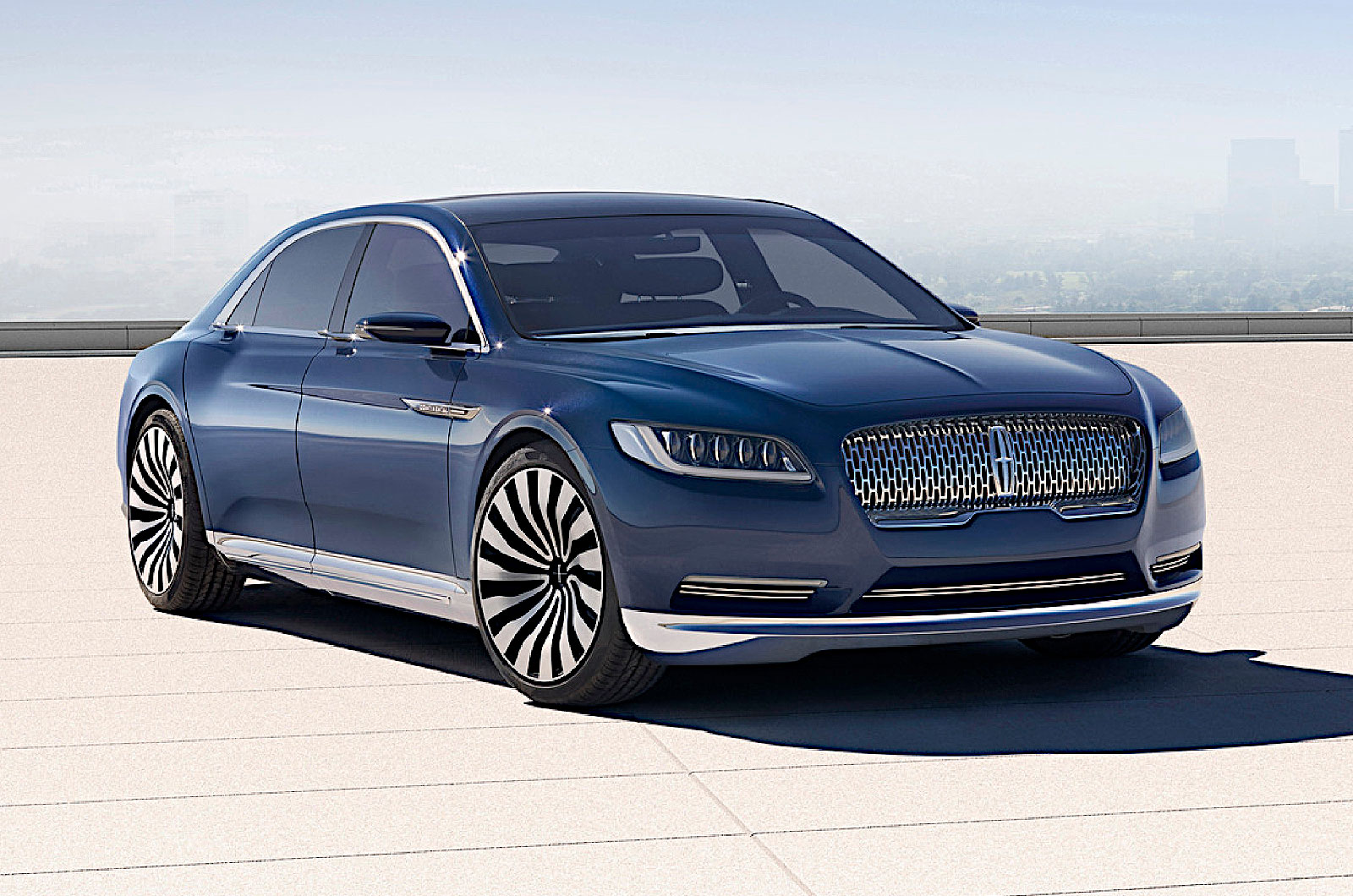
The concept version of what would become the new Continental caused quite a flurry when it was revealed at the 2015 Detroit Show. Bentley design chief Luc Donckerwolke (born 1965) thought it bore a suspiciously close resemblance to his own company’s car of the same name, and vigorously conveyed his objections on social media.
Lincoln made some adjustments (which would probably have happened anyway) before the production Continental went on sale two years later, but the basic shape remained the same.
Ford Focus RS (2012)
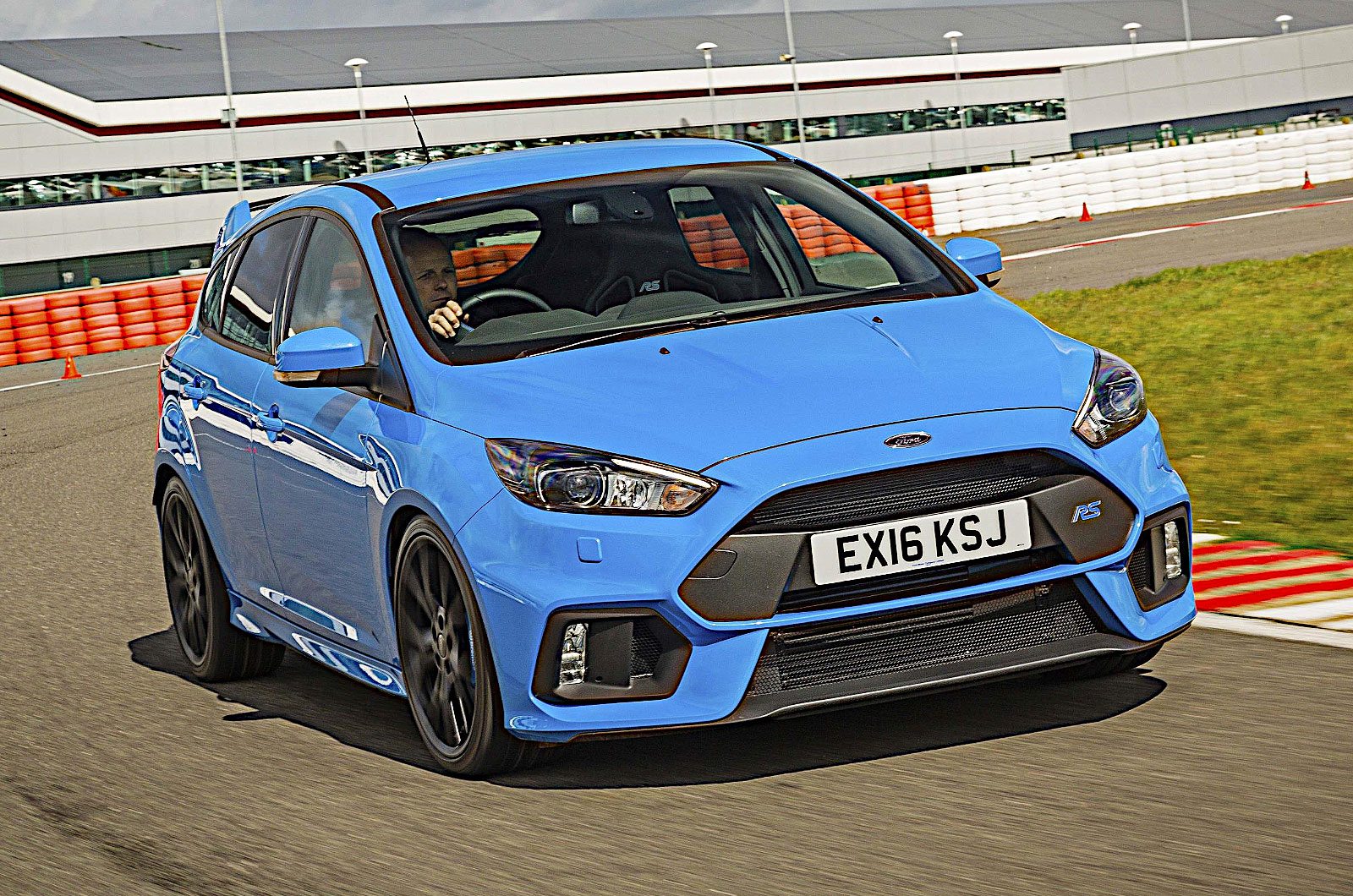
The third and last Focus RS was the only one in the series with four-wheel drive, which wasn’t controversial, and a setting called Drift Mode, which was – at least in Australia.
Representatives of the Pedestrian Council of Australia and the National Roads and Motorists’ Association, along with a former head of Australian Medical Association, all expressed concerns about Drift Mode. Ford responded to calls for it to be disabled by not disabling it, and there the matter rested.
Ford GT (2015)
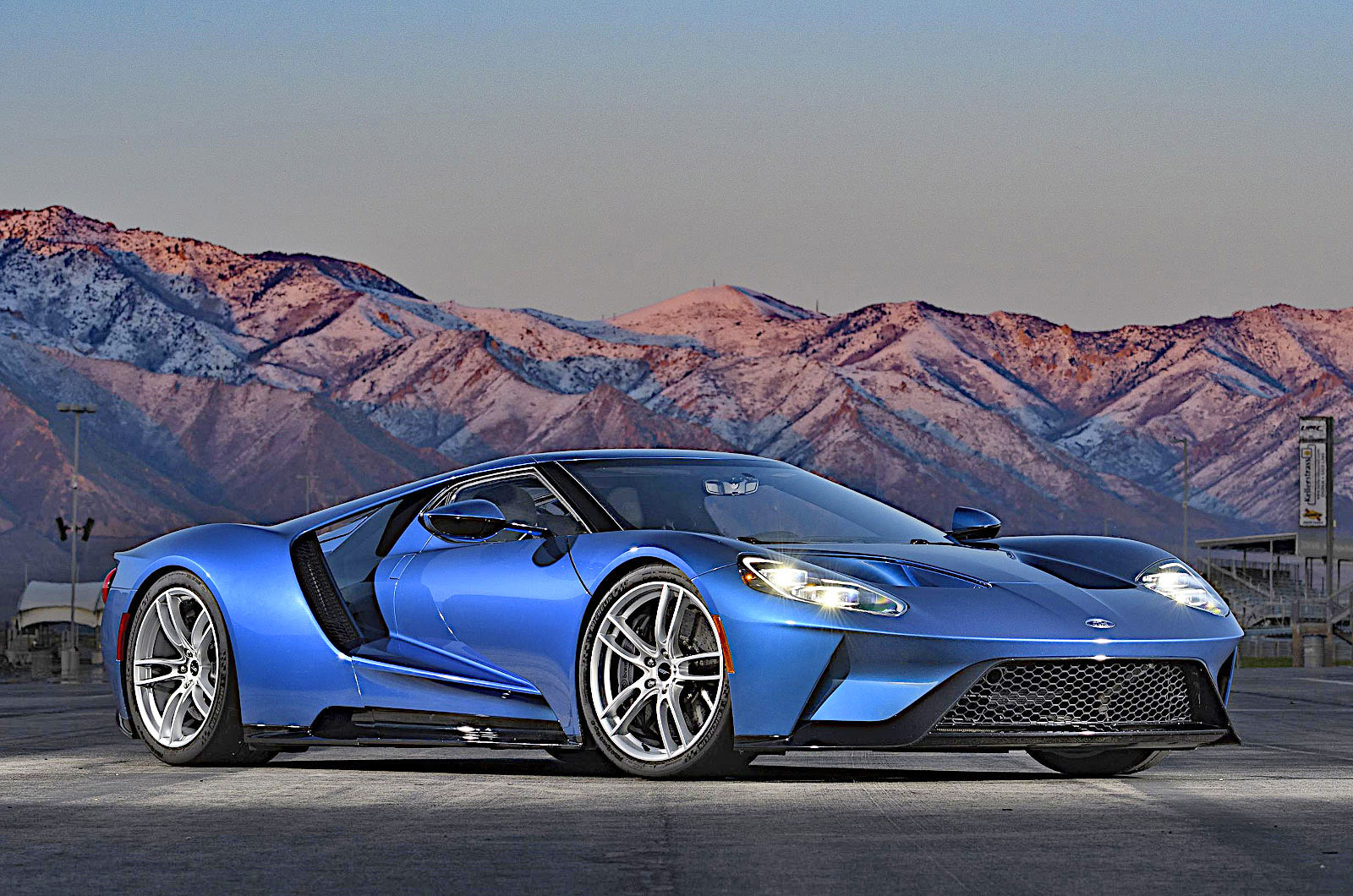
In order to prevent ‘flipping’ (selling a car for a vast profit shortly after purchasing it) Ford required buyers of the second-generation GT to keep it for 24 months. Not everyone did, which led to various lawsuits.
Two particularly high-profile examples – one involving Mecum Auctions, the other wrestler John Cena – were amicably settled out of court. Ford donated the money it received to charity in each case.
Ford Mustang Mach-E (2020)
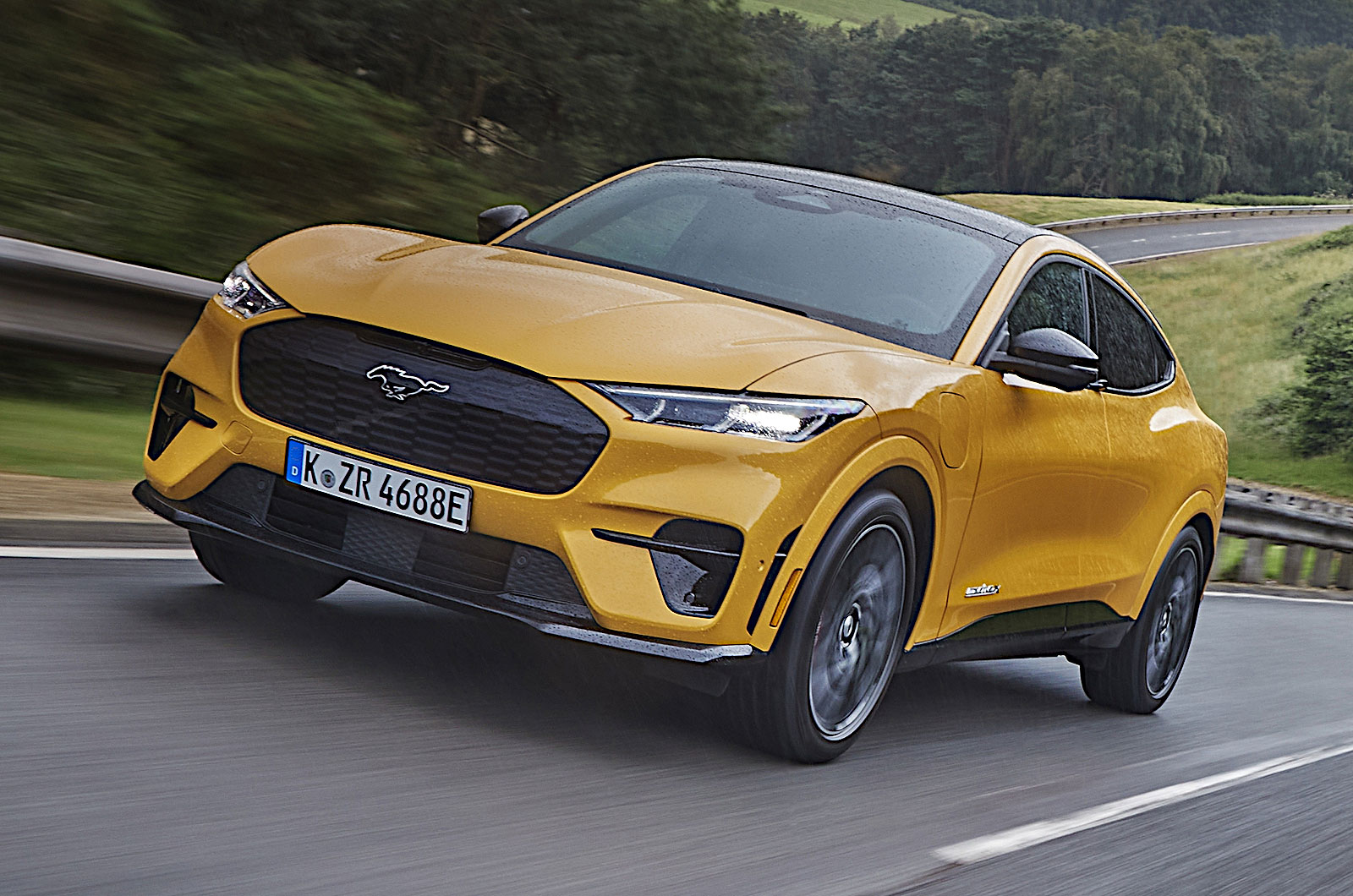
The full name of the Mach-E, which went on sale in the 2021 model year, was not welcomed by people who felt that a Mustang should be a high-performance coupe or convertible, as it had been for the past 57 years, and not an all-electric SUV.
Ford stuck with it anyway. ‘Traditional’ Mustangs are still available (a new one, the seventh in the series, has recently been introduced) and manufacturers can call their vehicles anything they like, within reason.
Ford F-Series Super Duty (2023)
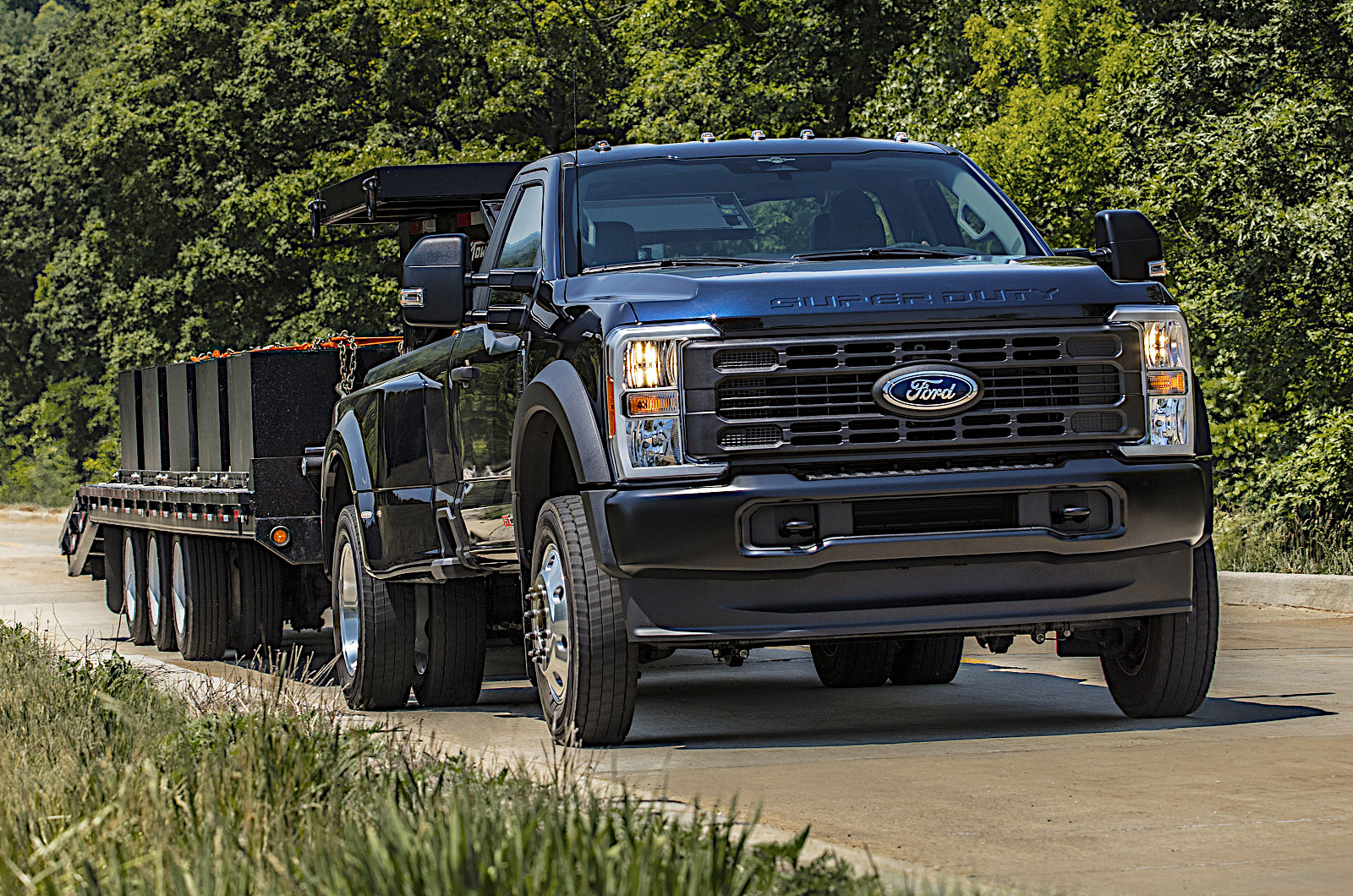
The enormous size of some North American pickup trucks is an increasing cause for concern in their home markets, and regarded as madness in other parts of the world. Since they are built by several competing manufacturers, Ford is only part of the problem rather than the cause of it, but the current F-Series Super Duty certainly contributes to the controversy.
In its most extreme, long-wheelbase F-450 Crew Cab form, the Super Duty is a leviathan – 6762mm (266.2in) long, 2960mm (105.9in) wide including its mirrors, 2085mm (82.1in) tall, and with a kerbweight of 3895kg (8587 pounds). Perhaps one day legislation will be introduced to prevent vehicles of this size being available to American private users on standard licences, but there’s no sign of it at the moment; certainly in many other countries such as the UK a heavy-goods vehicle licence would be needed, with extra driving training and testing required.

Catalytic Converter Theft Surges as Hybrids and High-Clearance Vehicles Become Prime Targets for Costly...

American Cars as Mirrors of a Nation’s 250-Year Experiment