Defense Contracts Outpace Civilian Auto Production in Shaping Industry Profits

Used Car Shortage Exposes Lingering Impact of Pandemic-Era Production Cuts on US Auto Market

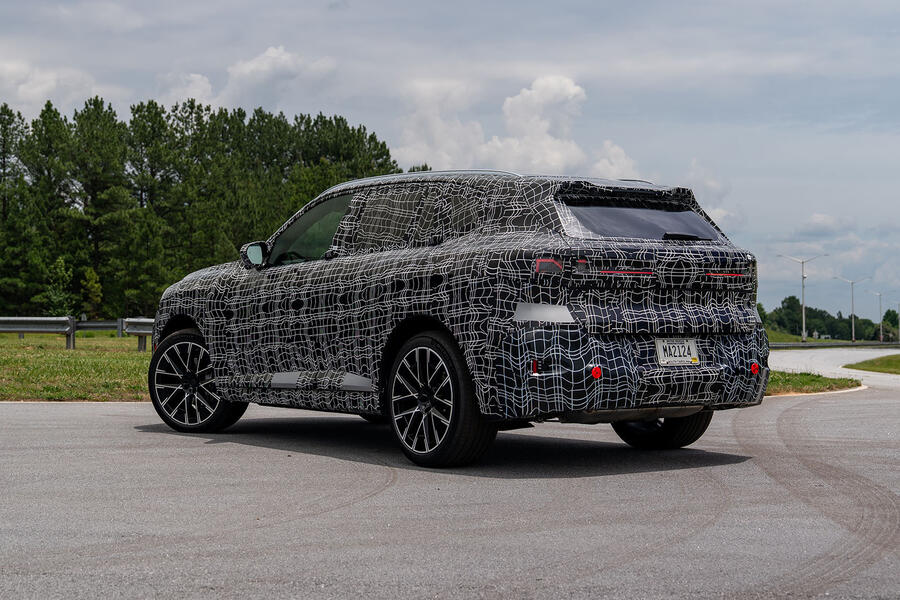
BMW X5 Redesign Balances Bold Styling with Incremental Mechanical Updates in Competitive Luxury SUV...
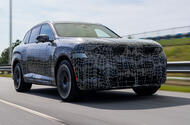 New-era styling and cabin but familiar mechanicals for the new ICE SUV
A new generation of BMW’s seminal large SUV is coming, and the big news is that there will be an electric BMW iX5 with a 141kWh battery, but have no fear: there will be a fulsome range of other powertrains as well.
The exact model line-up has yet to be announced, but the core will remain a set of 3.0-litre straight-six powertrains: a mild-hybrid petrol, a mild-hybrid diesel and a plug-in hybrid petrol. We expect a more powerful M60 PHEV to join the range, as well as a hot X5 M with the same powertrain as the M5. For now, things are nice and simple.
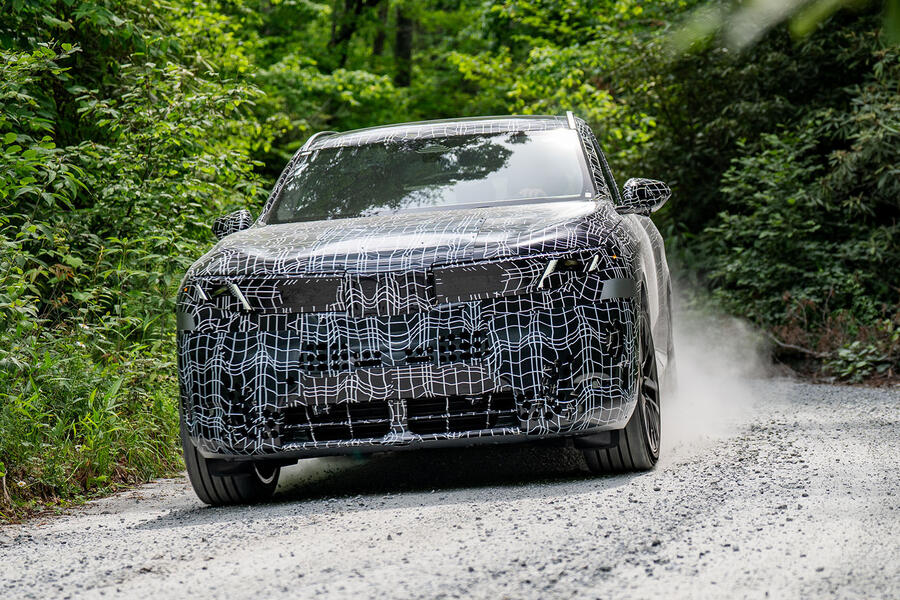
The ICE X5 adopts the same smooth Neue Klasse styling as the iX5, and will also get all the same structural and suspension upgrades. It sticks with the outgoing generation's CLAR platform, but grows a bit in all directions. For all the details, have a look at the full review of the iX5. Here, I’ll just go over the differences for the petrol and plug-in hybrid models.
We don’t have any details about the diesel yet, but it won’t be too different from the current xDrive30d and xDrive40d.
The petrol 40 xDrive (yes, they’ve turned the naming formula around between generations just to confuse you) uses the latest evolution of the ‘B58’ engine with a bit more grunt than before, going from 375bhp to 394bhp. Torque remains at 398lb ft.
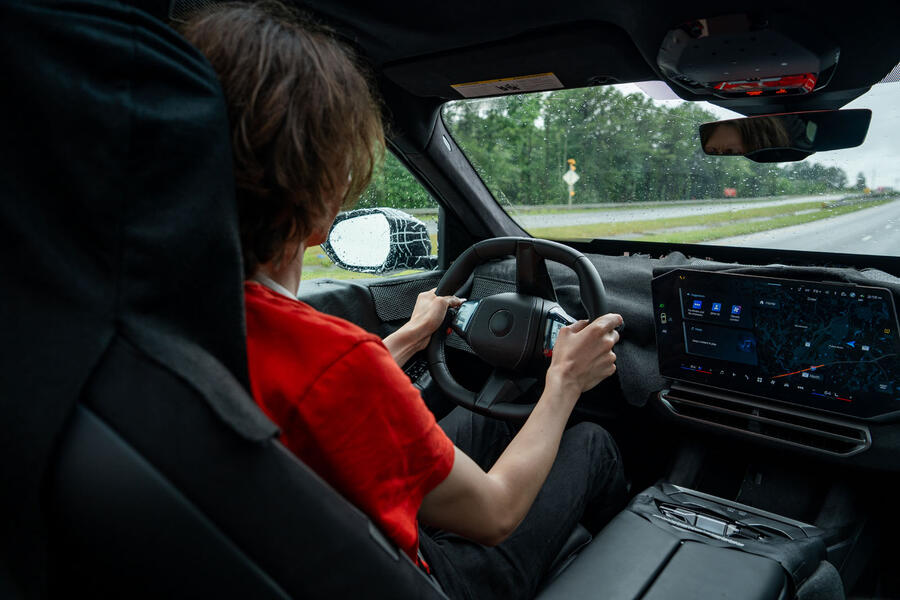 It’s still a brilliant engine: torquey, happy to rev and with a natural straight-six sound (even if it is augmented by the speakers).
In the hard-working development car that I sampled, there was a bit of vibration and the start/stop system was a little jerky. Once on the move, though, the eight-speed automatic gearbox was smooth and responsive on the paddles.
On the normal air suspension, it feels similar to the current X5, which is to say broadly comfortable but slightly more wooden and connected than some of the more magic-carpet options in the class.
On the surface, the 50e xDrive’s PHEV drivetrain hasn’t changed from the previous generation. The vital specs are the same: 308bhp from the engine, 194bhp from the electric motor, 18.7kWh battery for around 60 miles of electric range.
The engineers say the cells are different internally and the motor is slightly more efficient, there’s more armour on the bottom of the battery to protect it from being punctured, and the handover between electric and engine-on running is smoother than before, but I can’t help being disappointed that they haven’t managed to take it to the next level.
While BMW says that its customers are happy with the current PHEV’s electric performance, it’s beginning to look a bit last-generation, given the way some of the Chinese players are starting to offer EV power and range in their PHEVs.
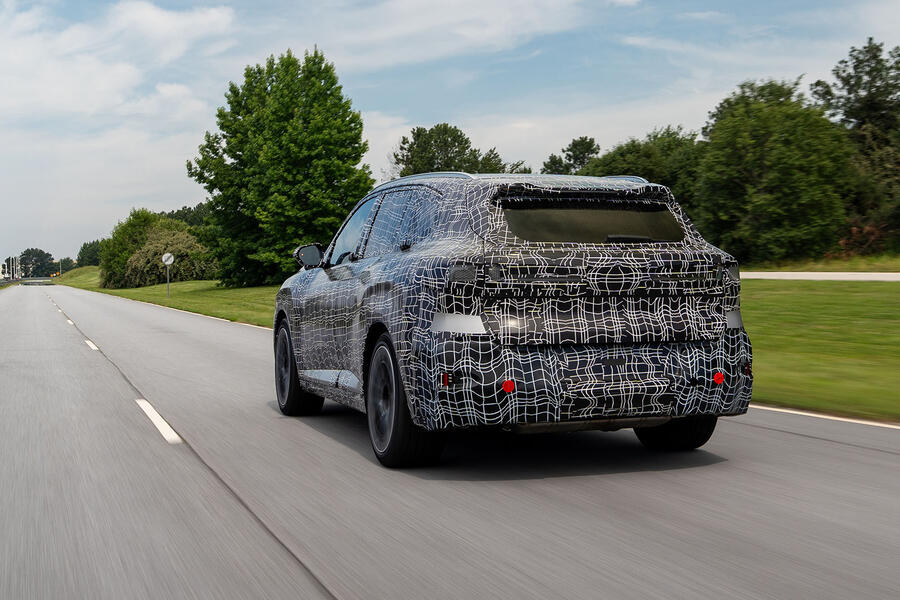
On electric power alone, it’s possible to accelerate to motorway speeds and up to 87mph, just not very quickly. It’s only when the six-cylinder engine fires up that you’re getting the power and soundscape that’s worth paying for.
My test car had the active anti-roll bars and four-wheel steering, and they do enhance the experience. The point of the active anti-roll bars seems less to improve the handling and more to benefit comfort, because when you’re just driving in a more or less straight line they can be disconnected to give the suspension freedom to move. The result is a noticeably smoother ride than on the mild hybrid and iX5 EV that lacked them. The rear-steering adds some agility and low-speed manoeuvrability without making the handling nervous or distant, as it can do on some cars.
Having said all that, my favourite of the three X5 variants to drive was the EV. Although there is a lot of weight, it’s positioned low down, making the iX5 feel a bit more planted than the others.
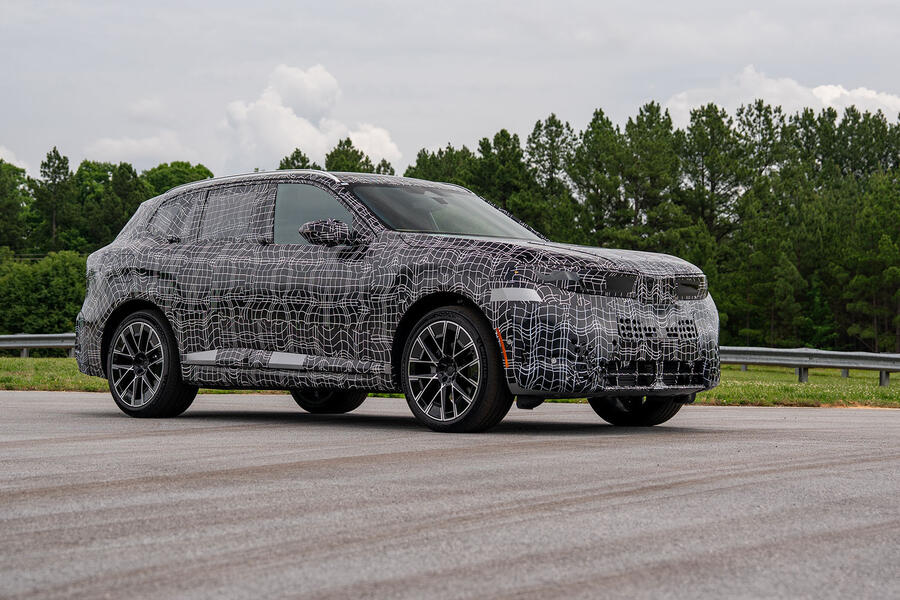
Apart from the design and infotainment, which are the same as on the iX5 and still largely secret, things look like business as usual for the X5. There isn’t a whole lot wrong with the current X5, so in a way that’s quite comforting. The diesel and the EV will arrive first in March, with the other versions following later. Assuming prices remain more or less the same, the X5 should continue to do well.
BMW X5 40 xDrive
Big visual changes, smaller mechanical ones. The X5 continues to possess a wide range of talents, centred on great engines
Price £85,000 (est)Engine 6 cyls in line, 2998cc, turbocharged, petrol, plus ISGPower 394bhp at 5500rpmTorque 398lb ft at 1950-4800rpmGearbox 8-spd automatic, 4WDKerb weight 2300kg (est)0-62mph 5.3secTop speed 155mphEconomy 30mpg (est)CO2, tax band 210g/km (est), 37%Rivals Audi Q7, Mercedes-Benz GLE, Porsche Cayenne

Peugeot Le Mans Editions Signal Brand’s Commitment to Performance and Heritage Across 2027 Lineup

Vibes Over Data How Subjective Experience Challenges Traditional Metrics

Rivian R2 Drops FM Radio in Favor of Streaming, Raising Questions About Connectivity and...
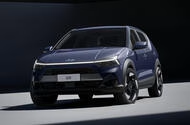
Hyundai i20 Redesign Prioritizes Space and Crossover Appeal for Brazilian Market Debut
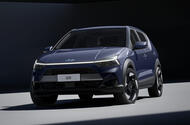 Next generation of petrol supermini is revealed in Brazil, designed to maximise interior space
The next-generation Hyundai i20 has been revealed in Brazil and shows a dramatic shift in design for the small hatchback.
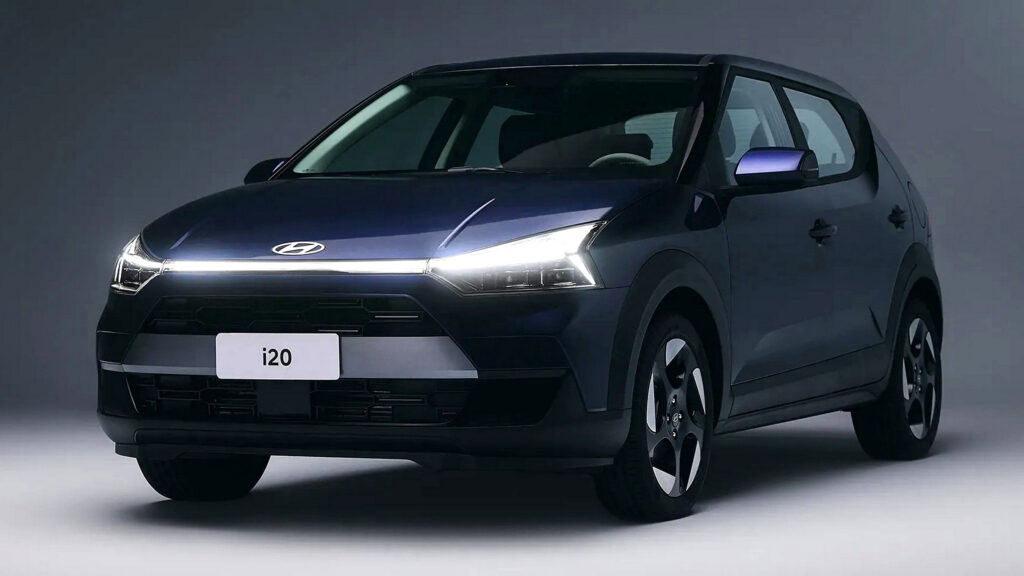
It is notably taller and chunkier than the current i20, with black plastic cladding running around its bumpers and wheel arches giving the appearance of a small crossover rather than a traditional hatchback.
The new i20 has been shaped according to the brand’s latest ‘Art of Steel’ design language. As seen on the electric Ioniq 3, this approach emphasises hard lines and creases in the bodywork, as well as geometric lighting signatures.
Inside, the car does away with the existing i20’s curved surfaces in favour of a more robust look, with rectangular digital displays for the infotainment and instrumentation, each measuring 12.3in. Their software can be updated over the air. Hyundai said it has designed the new i20 to maximise passenger space, claiming it has the roomiest rear seats in its class.
The new i20 does away with the ‘K2’ platform that underpins the existing iteration in favour of ‘K3’, which is employed by the Kona, as well as Kia’s Niro and Seltos. The model will – for now – be sold exclusively in the Brazilian market and it remains to be seen which powertrains it will be offered with when it lands in Europe.
In Brazil, it will be offered with two 1.0-litre three-cylinder engines capable of running on pure ethanol – a staple in the South American nation. The entry-level version does without a turbocharger for outputs of 79bhp and 74lb ft, though these are reduced to 74bhp and 69lb ft when running on petrol. The range-topping variant adds a turbocharger and produces 113bhp and 127lb ft, regardless of how it is fuelled.
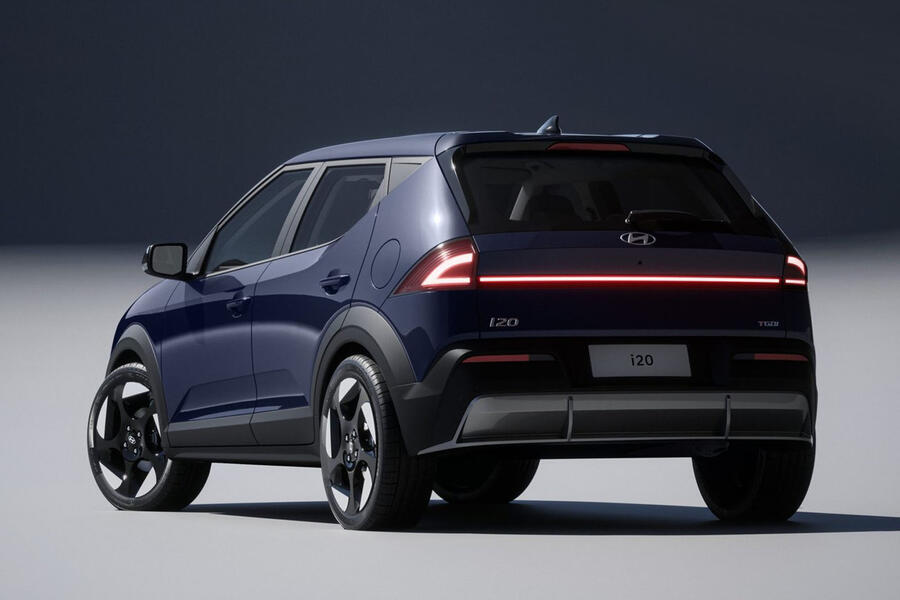
Prices for the new i20 start at R$99,990, equivalent to around £15,000. It is expected to be costlier by the time it reaches the UK, however, and Europe-bound examples could be built in Turkey – as with the existing i20 – rather than Brazil. For reference, the existing i20 starts at £20,600.
It also remains to be seen whether the vaunted i20 N hot hatch will return. Hyundai’s N performance range currently comprises only electric cars in the UK but, as previously reported by Autocar, the sub-brand’s future is not rooted solely in battery-electric powertrains. Indeed, Autocar exclusively revealed in December that it is preparing a new iteration of the i30 N, which is likely to employ hybridisation to meet global emissions requirements.

Hyundai i20 Reinvents the Subcompact for Brazil with SUV Styling and Pure Combustion Power

Zero Emissions Vehicle Mandate Faces Industry Pushback as UK Considers Easing 2030 EV Targets
 Car makers are currently required to ramp up to 52% EV sales in 2028 and 80% in 2030
The UK government is poised to soften the Zero Emissions Vehicle (ZEV) mandate – the legislation requiring that car manufacturers sell an increasing proportion of electric vehicles annually – according to several media reports.
Under the mandate, a third of every car maker’s UK sales must be electric in 2026, rising to 38% in 2027, 52% in 2028, 66% in 2029 and 80% in 2030.
The legislation does allow firms to meet their quotas by buying surplus ‘credits’ from other manufacturers, or by converting reductions in emissions from their combustion-engined fleet into credits. But those who fall short of their ZEV targets face fines of £12,000 per car sold over the allowance.
In 2030, sales of new pure-combustion-engined vehicles – ie those without some form of hybridisation, though the extent of this has yet to be decided – will be outlawed. Second-hand vehicles will not be affected by the band.
As first reported by The Times, the government will meet with the UK car industry this week to discuss softening the mandate so that only 50% of all sales must be electric in 2030. Citing government sources, several reports – including from The Guardian – suggest the 2030 ban on sales of new pure-combustion cars, and the outlawing of new hybrids five years later, will remain in place.
Car makers had lobbied intensely about the dramatic ramp-up in EV sales that they will be forced to enact in the coming years. Many had already turned to discounting to stimulate sales of EVs, warning the practice is unsustainable.
For example, Volkswagen sales boss Martin Sander told Autocar in March that it could be forced to raise prices of its combustion-engined cars to offset losses made on EVs – which would also make its EVs a more attractive proposition, in comparison.
Meanwhile, Stellantis Europe chief Emmanuele Capellano told Autocar the group – which owns Citroën, Fiat, Peugeot and Vauxhall, among others – may shrink its UK operations because of the losses.
Mike Hawes, head of trade body the Society of Motor Manufacturers and Traders, said last week that EV "uptake is still not keeping pace with ambition".
Indeed, the reports come after the House of Commons’ Business and Trade Committee warned the government the mandate “poses significant risks” to UK automotive in its current form.
Liam Byrne, committee chairman and Labour MP for Birmingham Hodge Hill and Solihull North, said the government’s target to boost domestic vehicle production to 1.3 million by 2035 was “jeopardised” by the mandate.
But not every manufacturer was against the mandate: Renault CEO Fabrice Cambolive told Autocar in November 2025 that the European Union needs its own ZEV mandate to “smooth the trajectory” in ramping up electric car sales.
Some industry stakeholders have now hit out against reports of the mandate being softened. Vicky Read, chief of EV charging body ChargeUK, warned that reducing targets could “send the entire [EV] transition into a tailspin”. The instability created by further changes to the legislation could “bring Britain’s reputation as a market worth investing in into disrepute”, said Read.
Lobby group Transport and Environment said last week – before reports broke – that “any further weakening of the ZEV mandate would jeopardise the future of the UK automotive sector”, stating that stability is crucial for investors considering the UK.

BMW Armored Vehicles Redefine In-House Protection by Matching Performance with Security Demands