Missed Opportunities in Automotive History Reveal How Innovation, Misjudgment, and Compromise Shaped Industry Failures
 We look at the cars that could have been highly successful, but weren't for a wide variety of reasons
Every time a new car is created, there's an opportunity to change the face of motoring for the better.
But sometimes a car maker releases a car that's so disappointing for numerous reasons that you wonder why it was ever signed off. They could have made something good, but missed the opportunity by making a hash of things. Let's take a look at some famous examples:
Tucker 48 (1948)
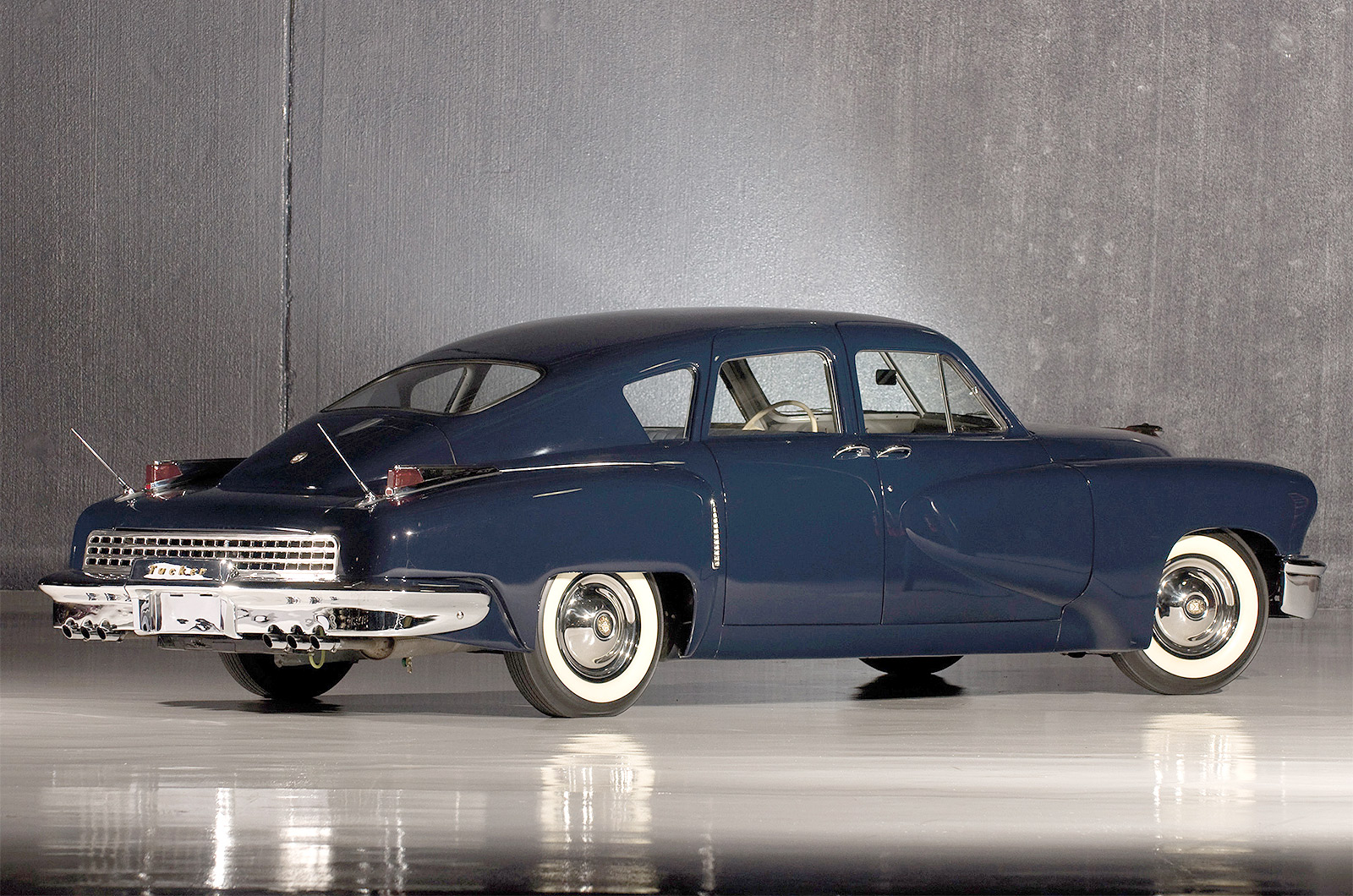
Preston Tucker (1903-1956) was a visionary who wanted to push the boundaries with his 'Torpedo' family sedan. He dreamed big about a car with revolutionary styling and safety features, luxury and performance.
He gained the support of some major backers, but when confidence in the project stalled as Tucker was dragged through the courts on charges of fraud, the money dried up and the company went bust with just 50 cars completed. Surviving 48s are today very valuable.
Nash Metropolitan (1953)
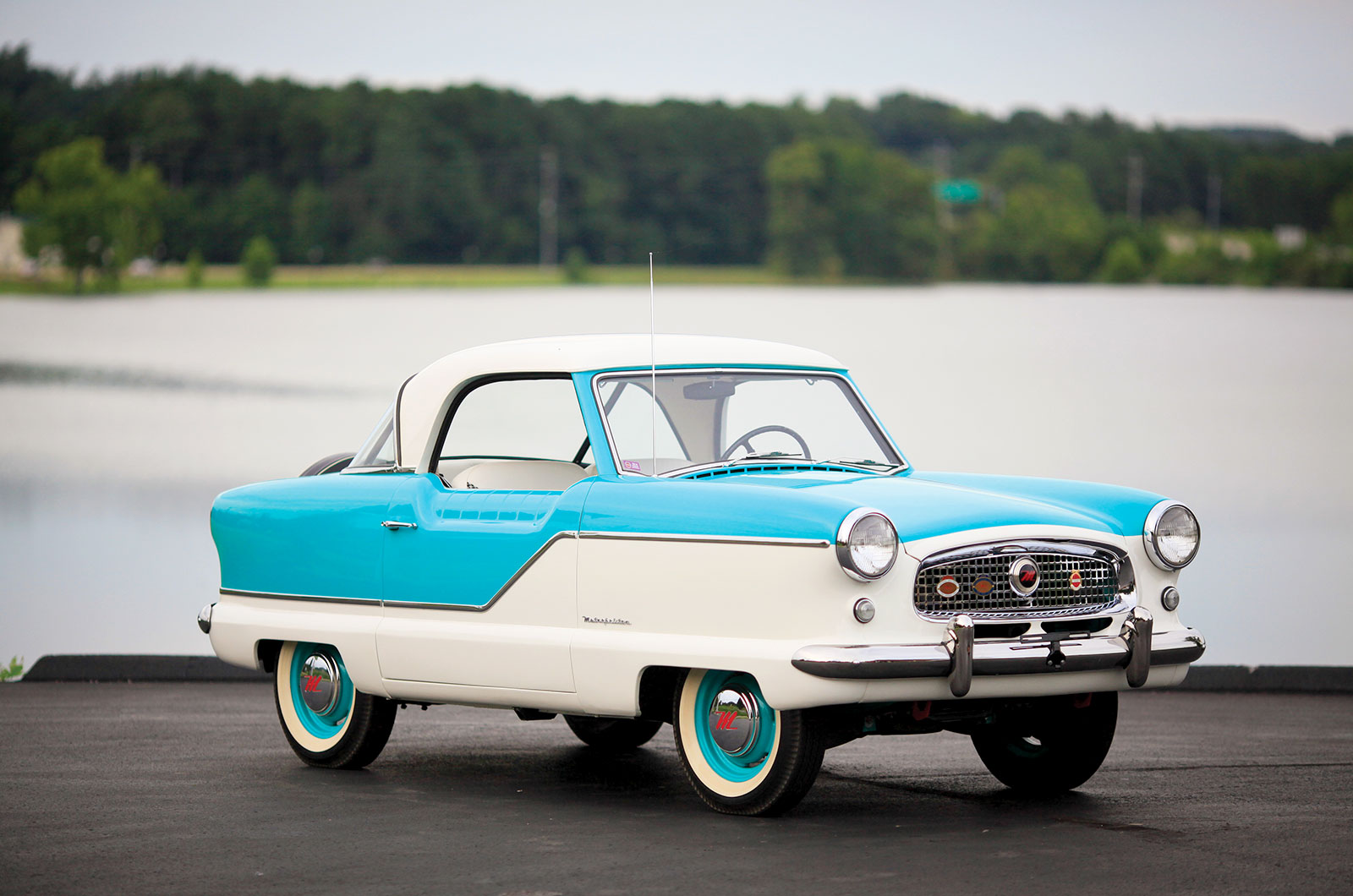
Sold on both sides of the Atlantic, with either Nash or Austin badges, the Metropolitan was the result of a collaboration between the two companies. The plan was to offer an economy car using Austin A40 running gear.
The result was a car that now looks cute but which at the time looked ridiculous with its slab-sided design, cramped cabin and shoddy handling thanks to a narrow track and short wheelbase. Buyers wanted cheap but they didn't want nasty, which the Metropolitan was.
Austin Gipsy (1958)
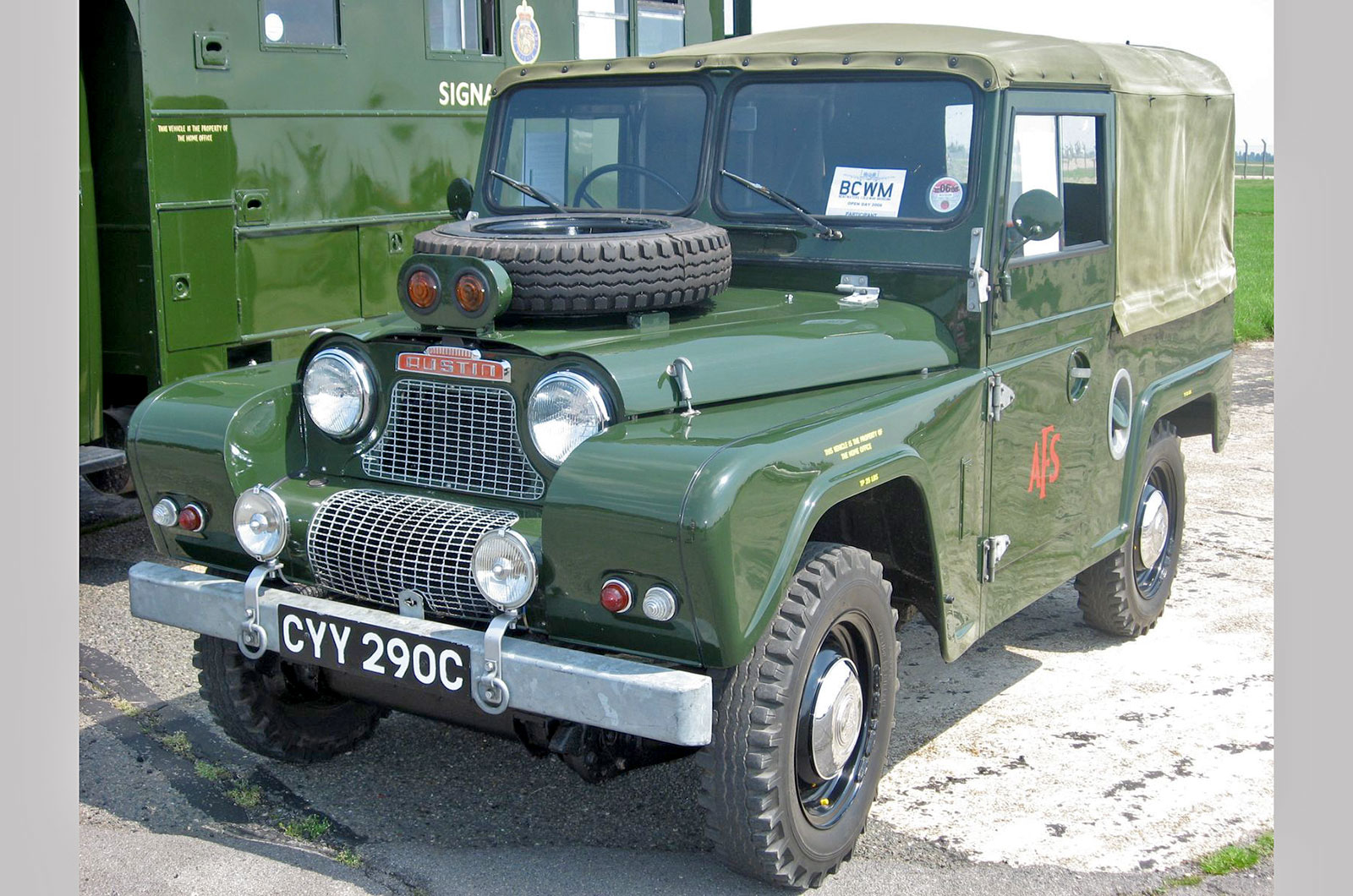
Land Rover was cleaning up in the 1950s as it had the four-wheel drive market largely to itself in England. Austin wanted a piece of the action and its response was the Gipsy, which unlike its arch-rival was fitted with steel bodywork that quickly rotted.
The poorly designed suspension was prone to failure too, so while the Gipsy could go anywhere, it couldn't do so for long.
Ford Edsel (1957)
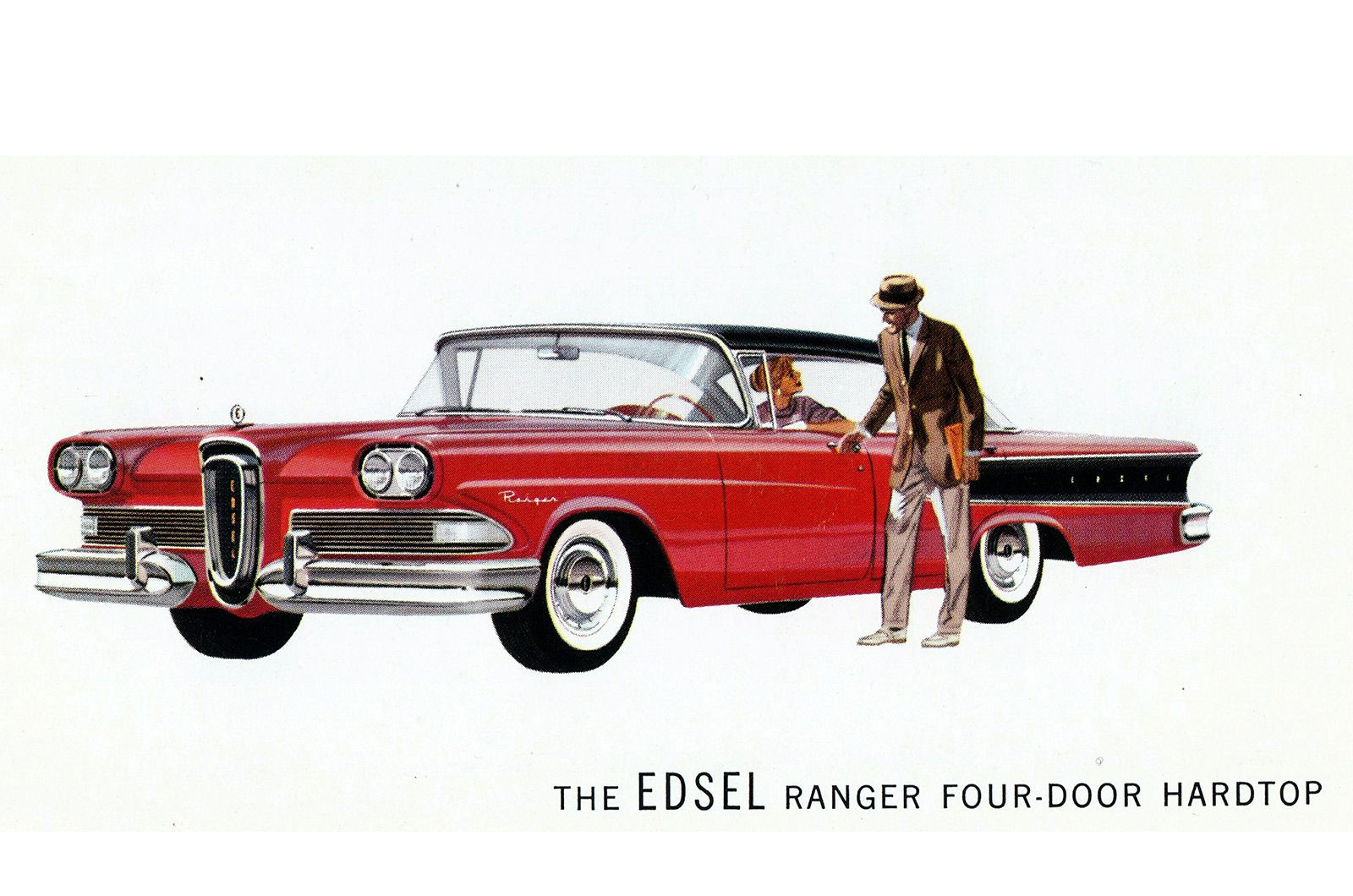
Arguably the biggest motoring misjudgment of all time, Ford attempted to create a whole new brand with the Edsel, named after Henry Ford's son. With $300 million invested in the new brand it soon became obvious that Ford had got the styling disastrously wrong.
It also launched the car into a recession as America’s long post-war boom finally came to an end, and buyers were expecting something more than what was effectively a reheated Mercury – but they didn't get it.
Hillman Imp (1963)
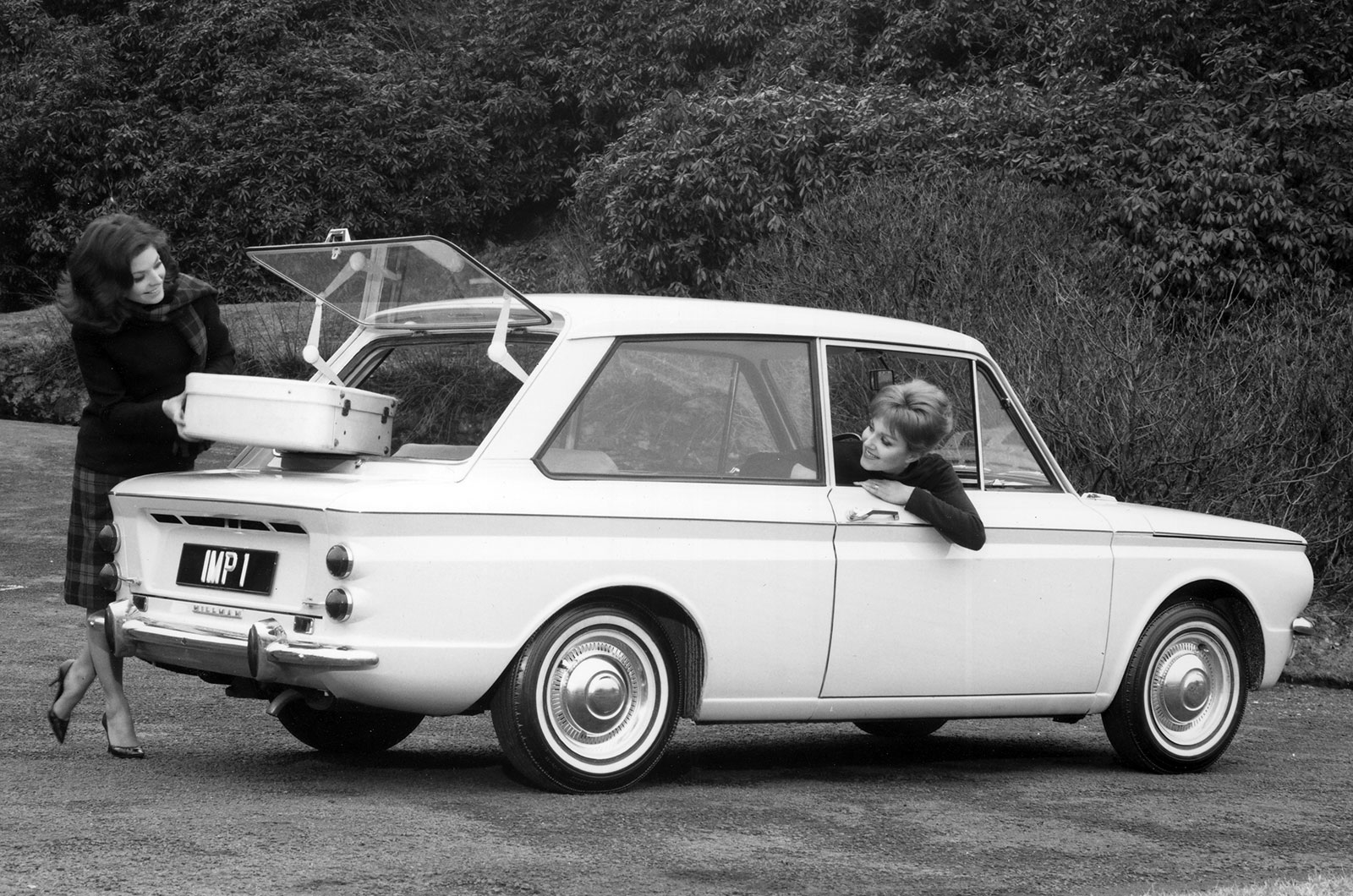
Built to counter the Mini, the Imp packed a rear-mounted engine driving the back wheels, the free-revving overhead-cam all-alloy four-pot making the car a hoot to drive.
But water leaks plus weak engines and unreliable pneumatic throttles meant the Imp spent more time in the workshop than on the road. Throw in shocking build quality and the Imp was doomed from the outset – but drive one that's well sorted and it'll be a revelation.
Austin 3-Litre (1967)
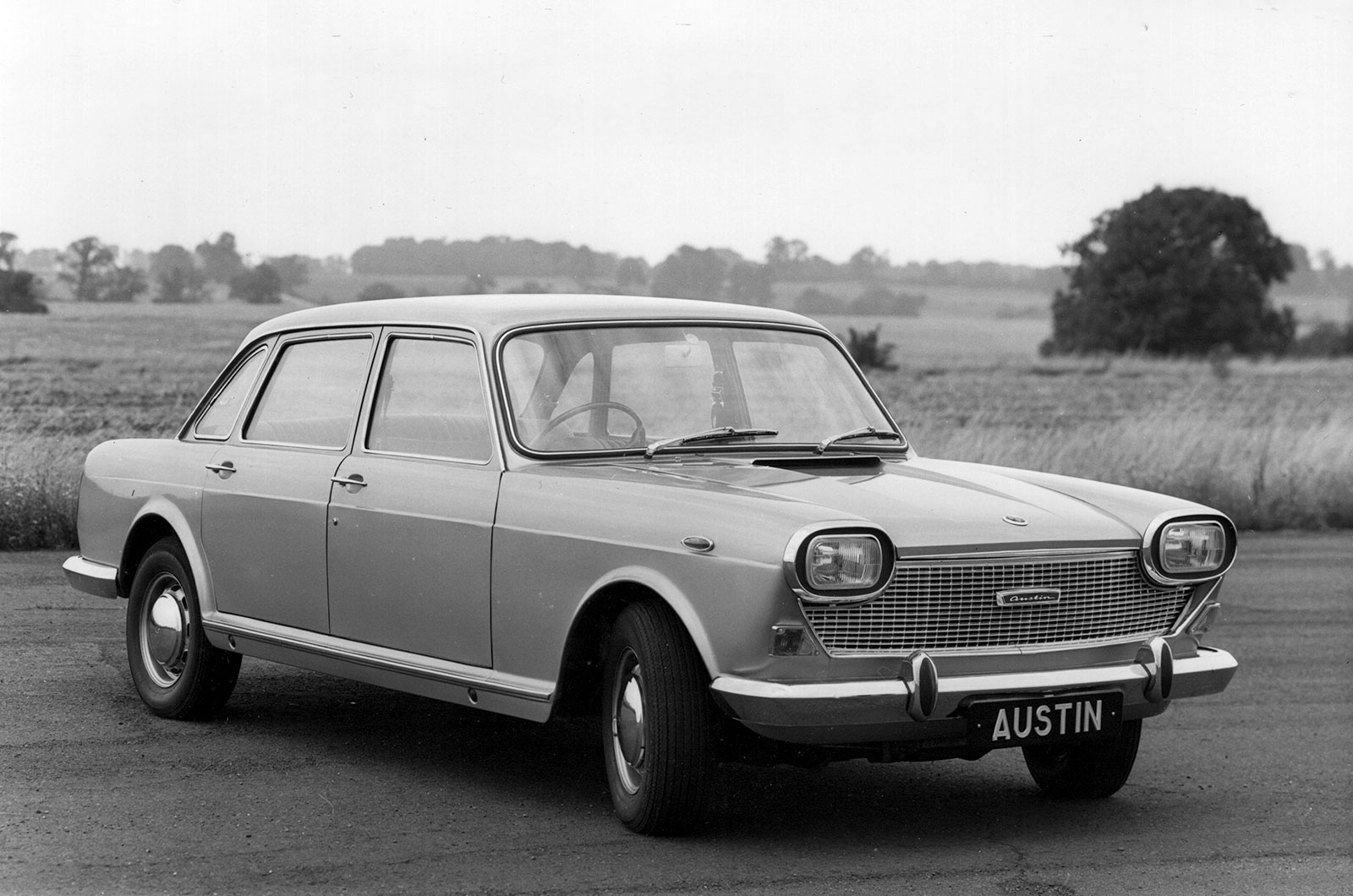
Created to take on such luminaries as the Ford Zodiac, Humber Sceptre, Jaguar XJ6 and Vauxhall Viscount, the Austin 3-Litre was a stretched Austin 1800/220 (Landcrab) with a 2912cc straight-six from the ageing Austin Healey 3000. The engines were weak and though the bodyshell was strong considering the wider wheelbase, the handling was poor and so was the ride for what was supposed to be a luxury car. Fewer than 10,000 were made before the plug was pulled.
Chevrolet Nova (1970)
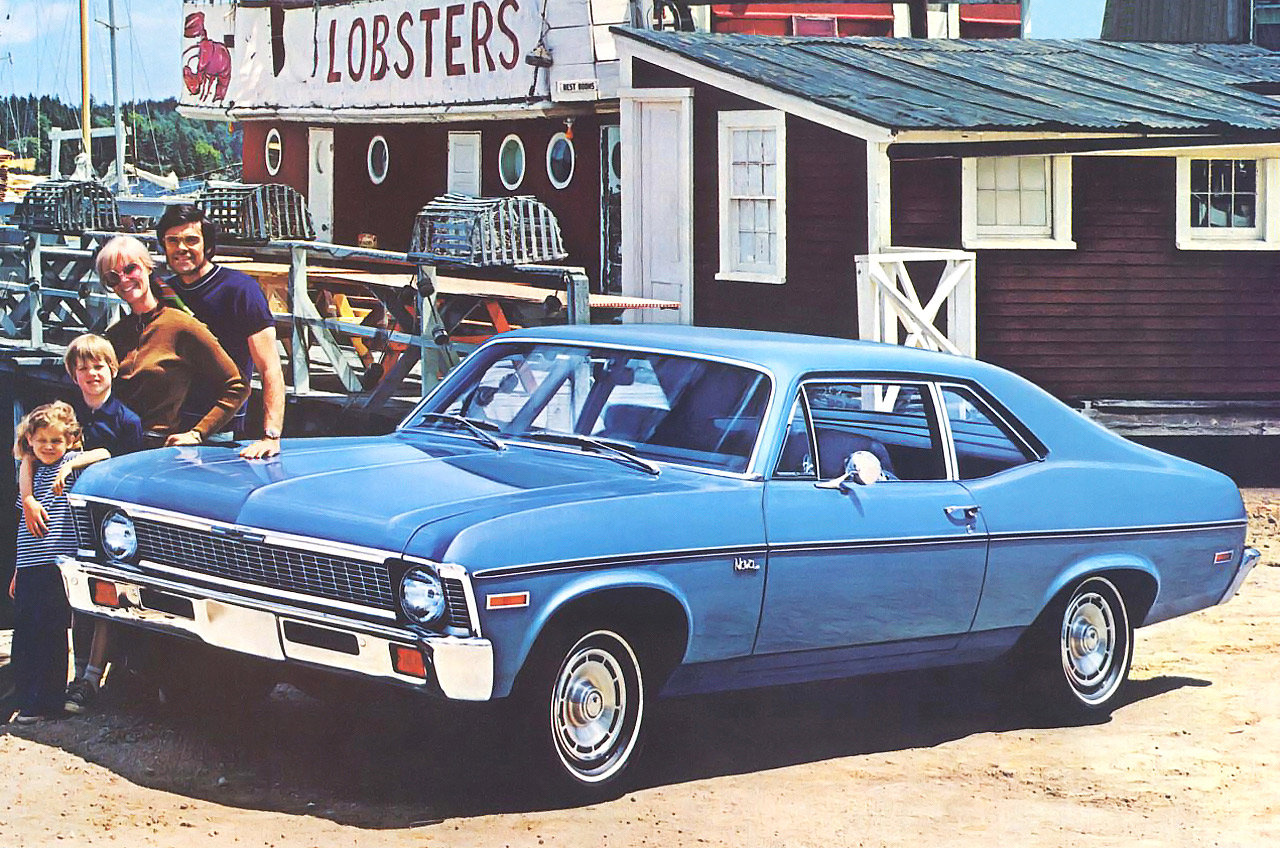
Chevrolet wanted to create a people's car for the seventies, for those on a budget. It started out pretty well, with a car that looked the part, but then GM stripped out as much cost as possible to keep purchase prices down and profit levels up.
The result was uninspiring, with an interior full of brittle plastics, a bodyshell that rotted prematurely and an array of mechanical problems that dogged those budget-conscious buyers who bought one.
Chrysler 180 (1970)
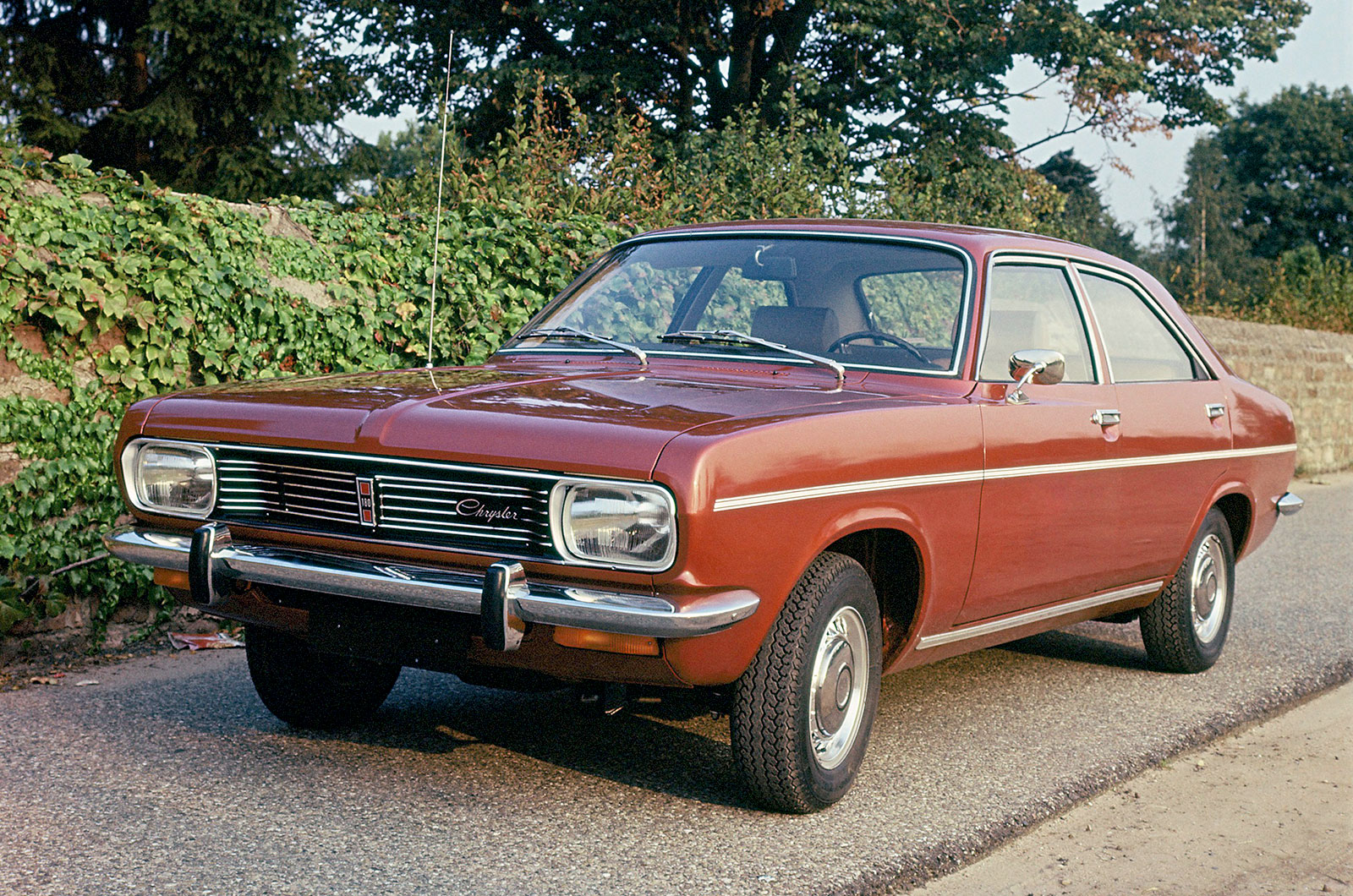
When Chrysler bought the Rootes Group in 1967 it decided to sell cars under its own brand in Europe. You'd think that Chrysler would pull out all the stops to come up with something pretty special to get buyers excited, but instead we got an upscaled Hillman Avenger called the Chrysler 180, with a 1.8-liter engine.
Later came the Chrysler 2-Liter complete with a vinyl roof, but these cars were so underwhelming that they were just about invisible.
Morris Marina (1971)
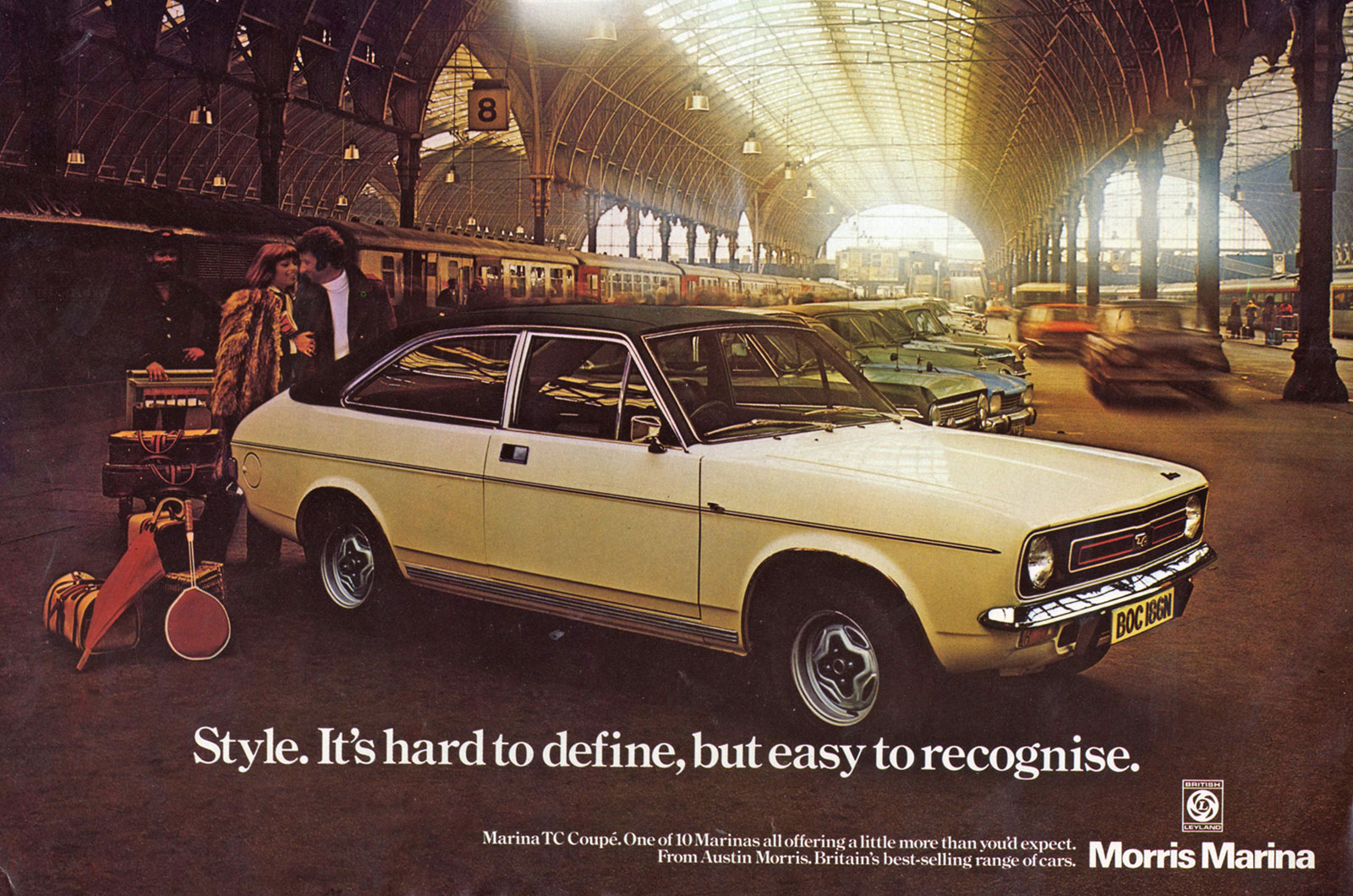
Designed to supersede the BMC Farina sedans that had been introduced in 1959, the Marina was British Leyland's attempt to take on the all-conquering Ford Cortina.
The problem was, that while its rival was hardly the last word in build quality or dynamic ability, the Marina was poor in both regards. With its dubious refinement, ponderous handling, lax quality control and uninspiring engines the Marina never had a chance.
Chevrolet Vega (1971)
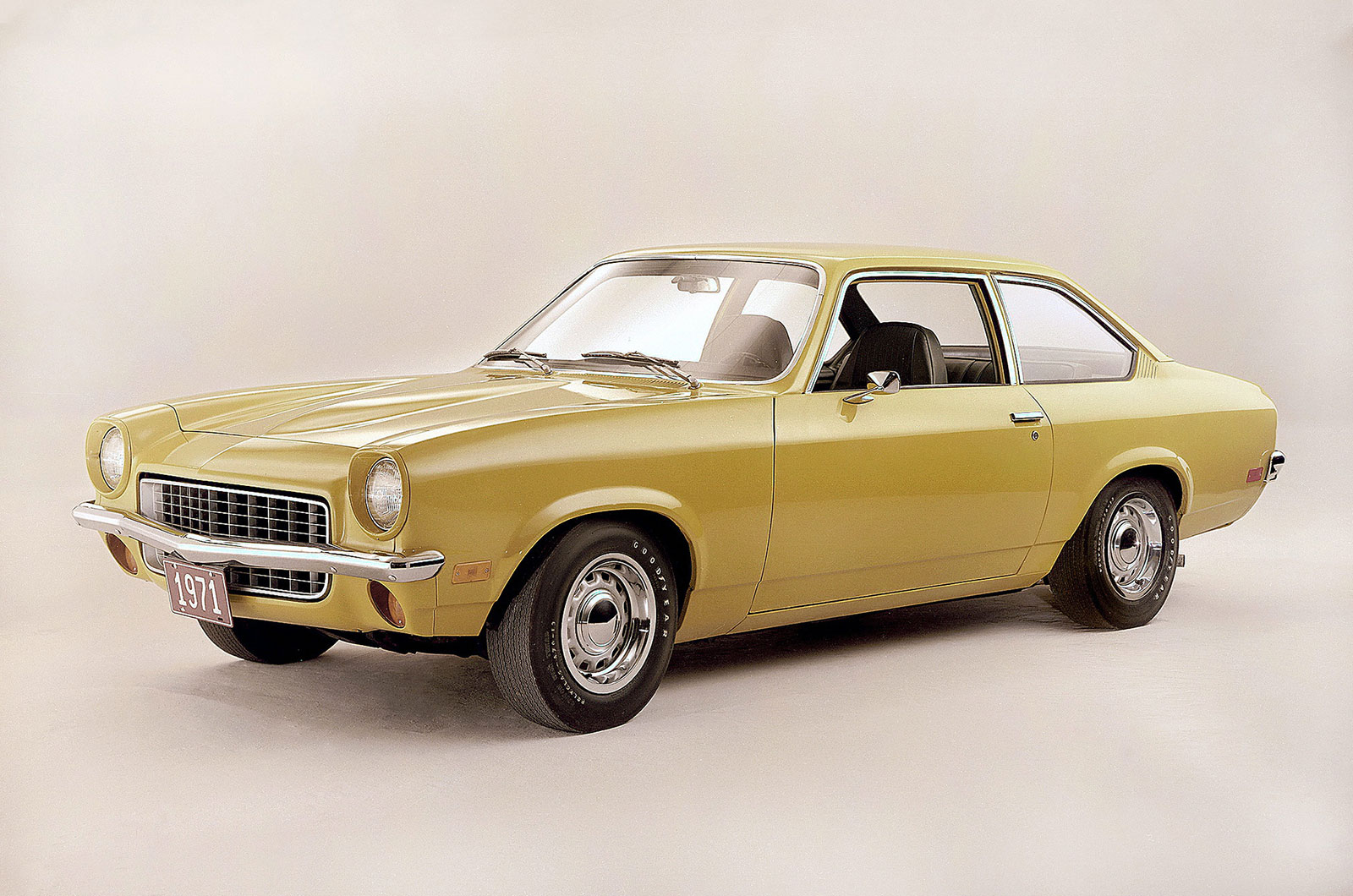
The Vega was supposed to help GM head off encroaching Japanese imports. However, GM executive John Z De Lorean later claimed that the company knew about the Vega's shortcomings before the car entered production, but it pressed the 'go' button all the same. The result was a compact that rusted away in double-quick time, while the engines had a habit of destroying themselves.
The Vega was built to such a low standard that it's credited with pushing many Americans into buying Japanese rivals – the direct opposite of what the Vega was supposed to achieve.
Leyland P76 (1973)
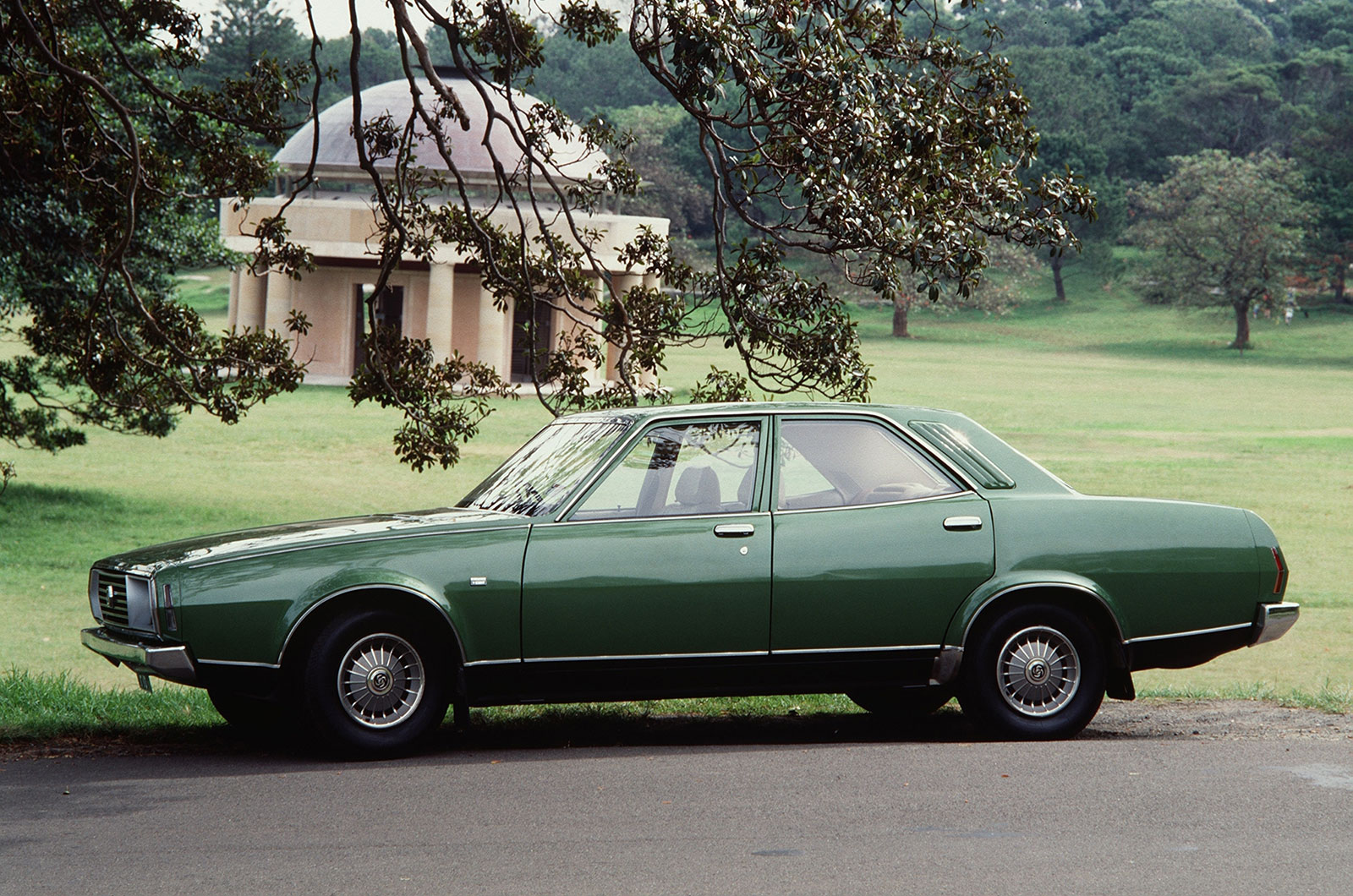
When British Leyland (BL) decided to create a car purely for the Australian market, the result was the P76. There could be no compromises as this was a vehicle that didn't need to work in other markets too, so it was no 'world car'.
But the P76's handling was as ugly as its design, while the build quality was typical 1970s BL. Despite significant investment in the programme, the plug on the P76 was pulled after just two years, and BL’s Sydney factory went with it.
Triumph Stag (1970)
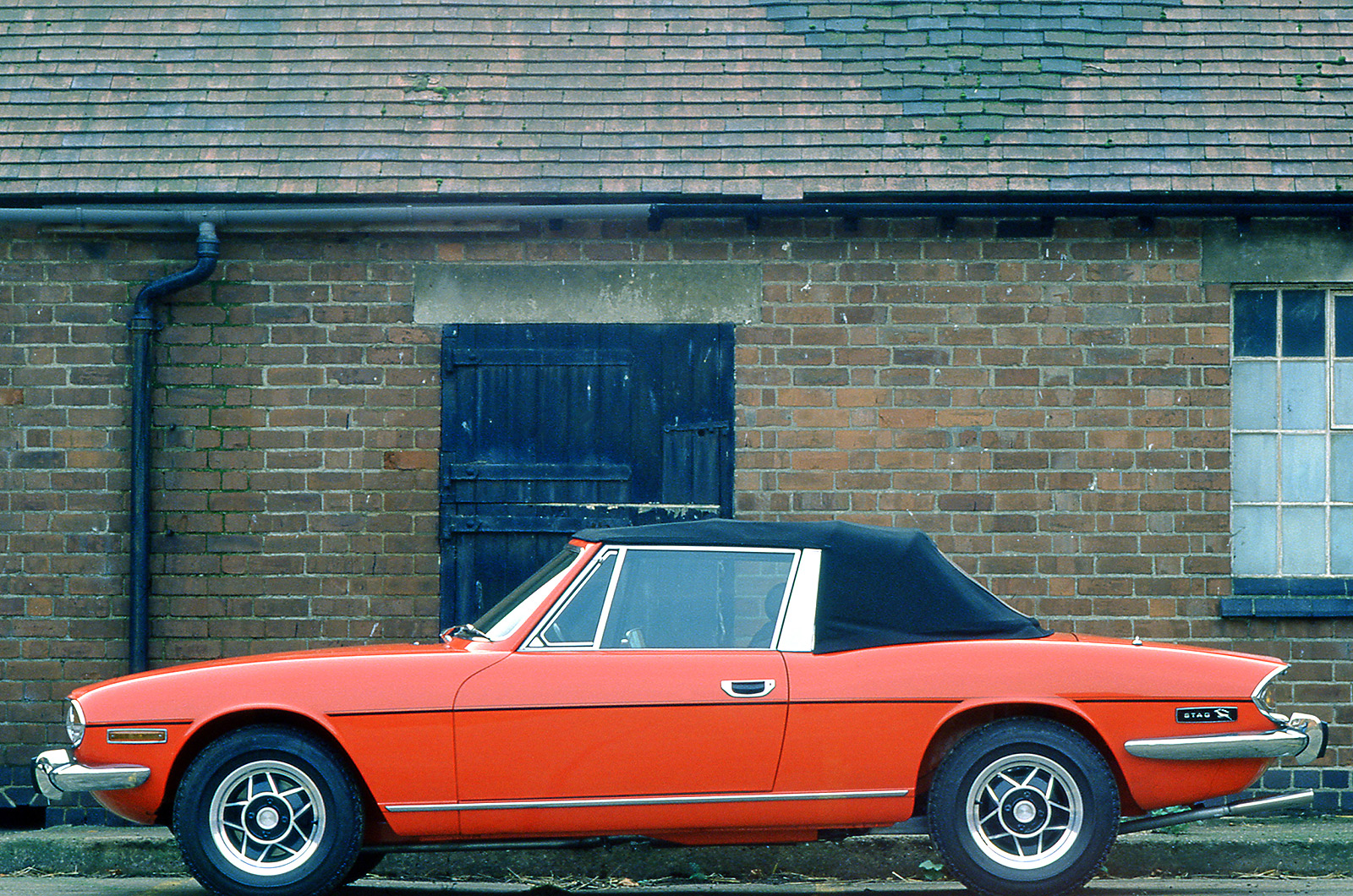
We could have filled this whole feature with the products of British Leyland, which is why this isn't the last such car that you'll see here, but the Stag must surely be one of the saddest cases of a missed opportunity in the automotive arena.
Designed as an affordable alternative to the Mercedes SL, this V8-powered four-seater convertible had the market to itself when it arrived in 1970, but fewer than 26,000 were sold globally by the time production ended in 1977, because of build quality issues affecting the unique V8 engine as well as the bodyshell.
Ford Pinto (1971)
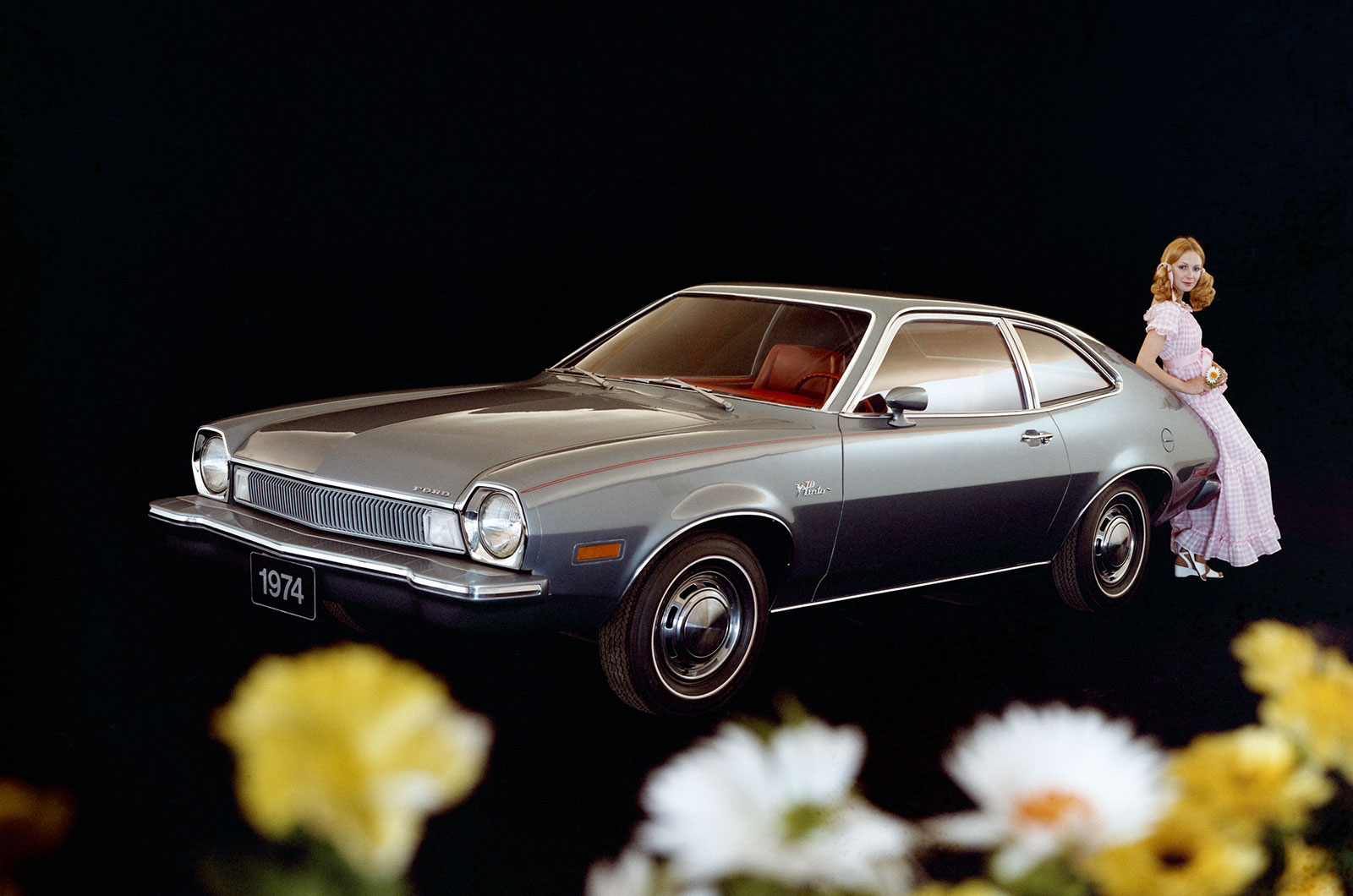
If ever there was a missed opportunity, this was it. Designed to head off Japanese compact sales in America, it was soon discovered that rear-end impacts could puncture the fuel tank of the Pinto, resulting in fires.
Ford was later forced to recall the car for rectification, but the damage to its reputation had been done.
Lancia Beta (1972)
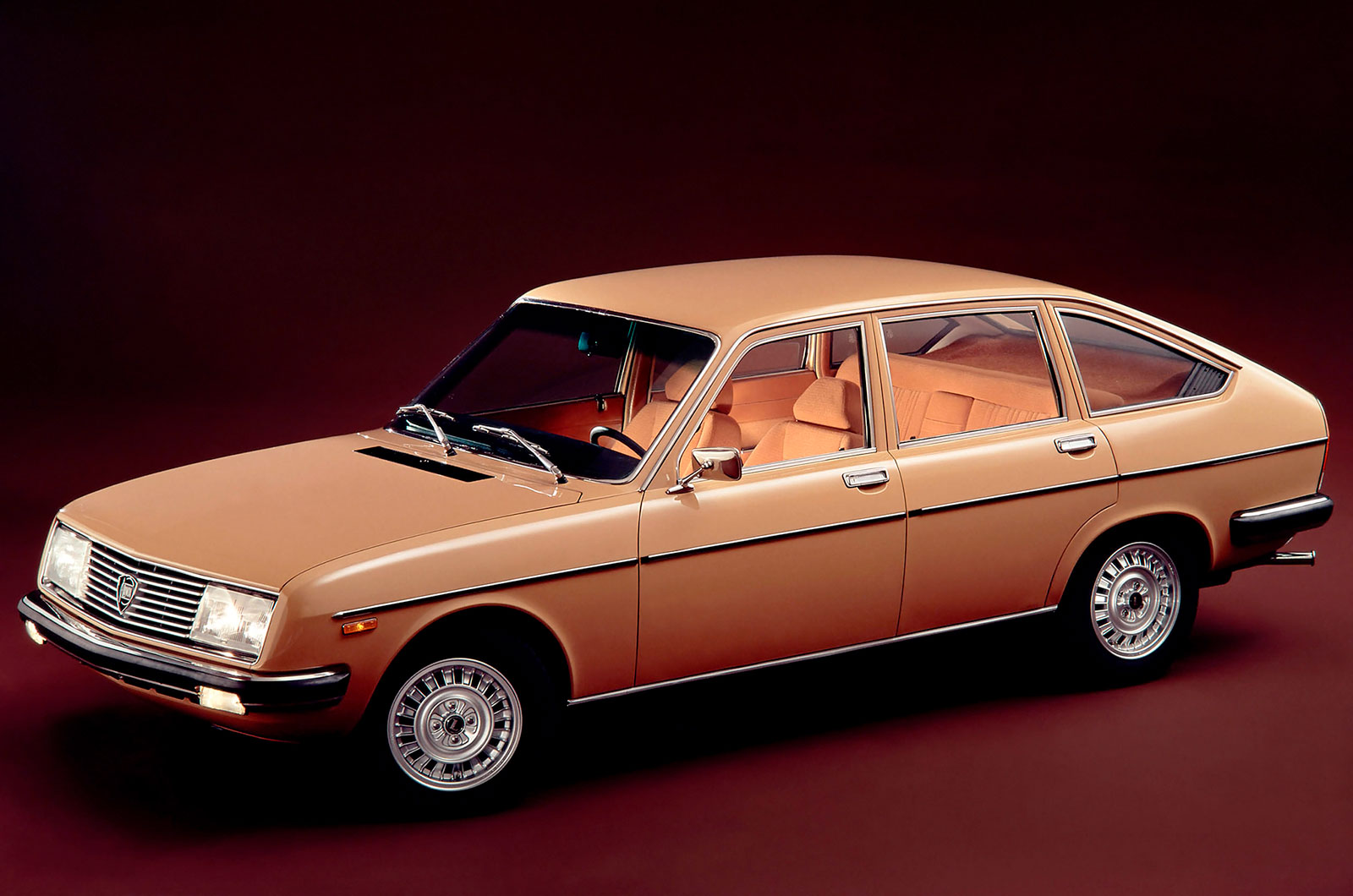
The Lancia Beta could have been an all-time great with its smart design, wide array of bodystyles and zesty twin-cam engines. But when Lancia's owner Fiat went too far with the cost cutting, the result was poor-quality steel that led to premature corrosion which effectively destroyed Lancia's reputation across much of Europe.
Ford Mustang II (1973)
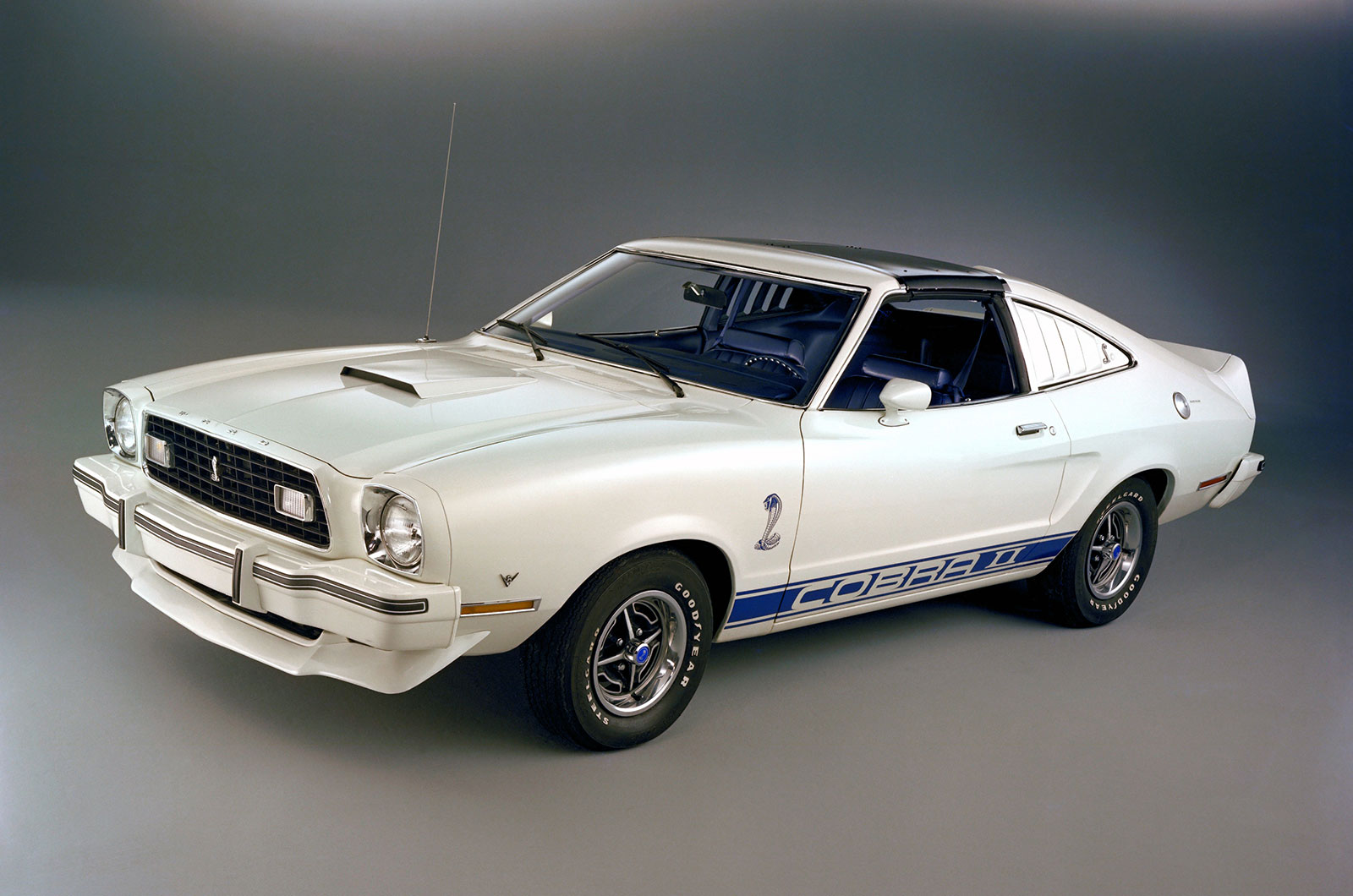
When Ford launched the original Mustang in 1964 it became the fastest-selling car in history, but within less than a decade the Mustang brand had been devalued so comprehensively - in part by new emissions controls - that we ended up with a 'muscle car' that featured a V6 engine so weak that the car couldn't even get to 100mph.
It took a long time for the Mustang to rebuild its reputation.
Bricklin SV-1 (1974)
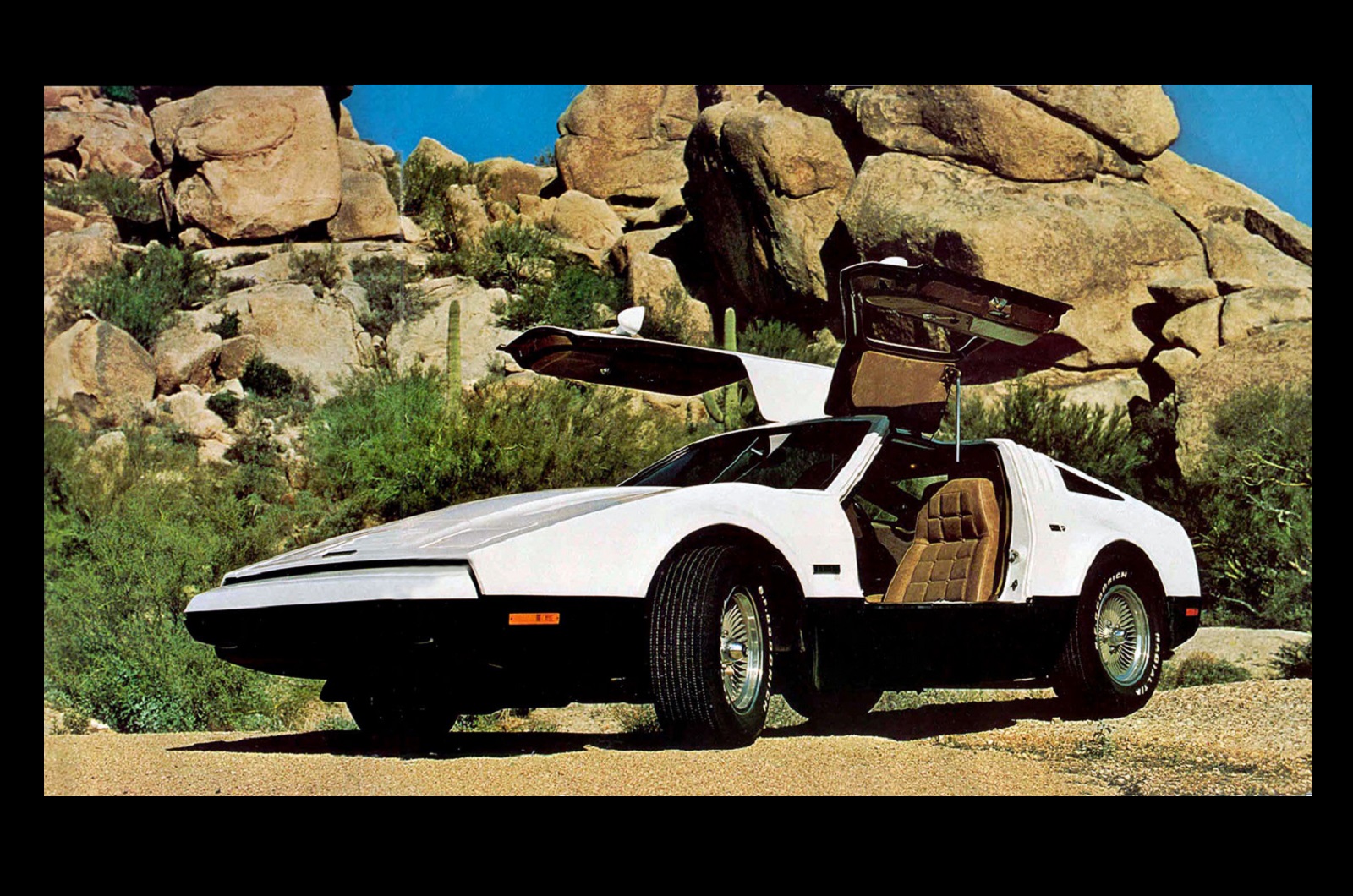
Safety was becoming ever more important to legislators and car buyers in the early 1970s, so when Malcolm Bricklin came up with the idea of building an ultra-safe sports car he couldn't go wrong.
Well, that was the theory, but his plastic-bodied gull-winged car suffered from so many manufacturing faults that production was halted after just a year, with all of 3000 examples made – when Bricklin had predicted 10 times as many would roll off the production lines.
Leyland Princess (1975)
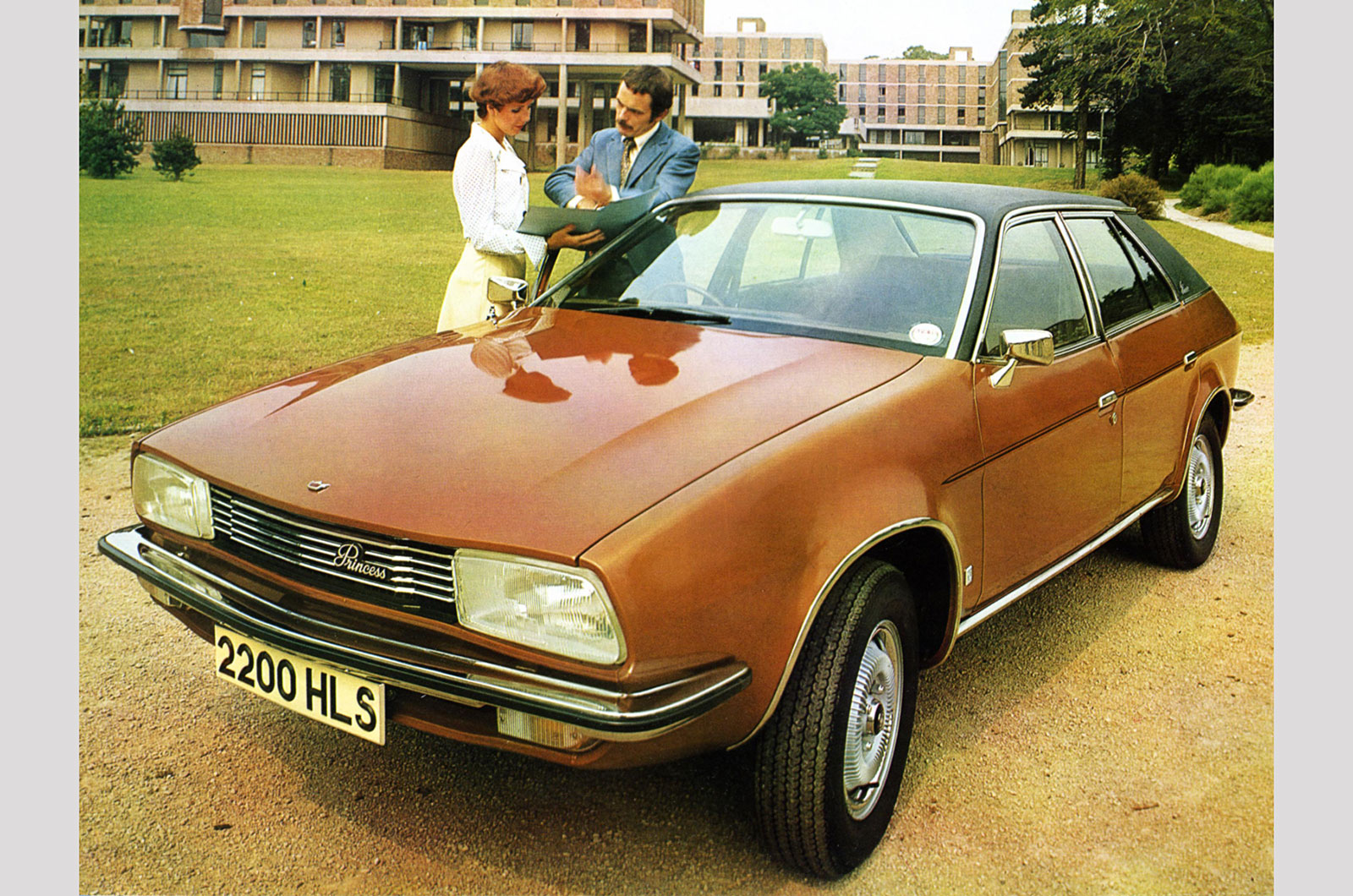
When it came to muddled product planning, British Leyland was the master. Having introduced the disappointing Maxi in 1969, the company then went on to launch the Princess in 1975, but as a saloon rather than with a fashionable hatchback. The reason?
It didn't want the Princess to compete with the Maxi, which by then was six years old. Instead of replacing the Maxi with the Princess the two sold alongside each other until the former died in 1981 – then a year later the Princess was facelifted to become the Ambassador, complete with hatchback, at last.
AMC Pacer (1975)
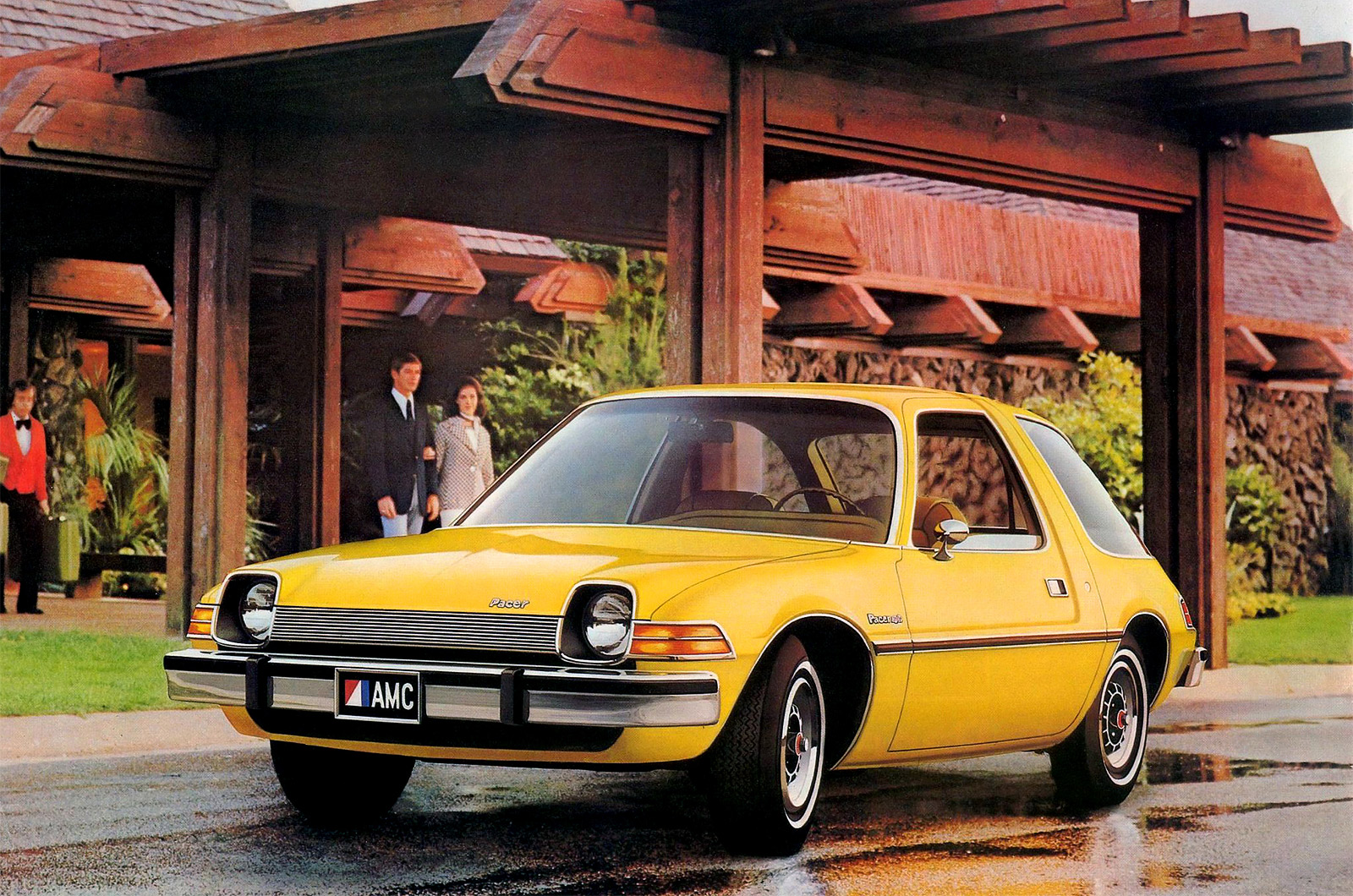
The fuel crisis of the 1970s led to all of the big US car makers introducing smaller models with lower running costs. AMC threw its hat into the ring with the Pacer which wasn't really all that small at all, and neither was its engine; the smallest unit offered was a 3.8-liter six-cylinder unit.
Throw in spectacularly awkward styling along with wayward dynamics and you can see why Motor magazine tested it then ran with the cover headline "We test the Pacer – and wish we hadn't".
AC 3000ME (1979)
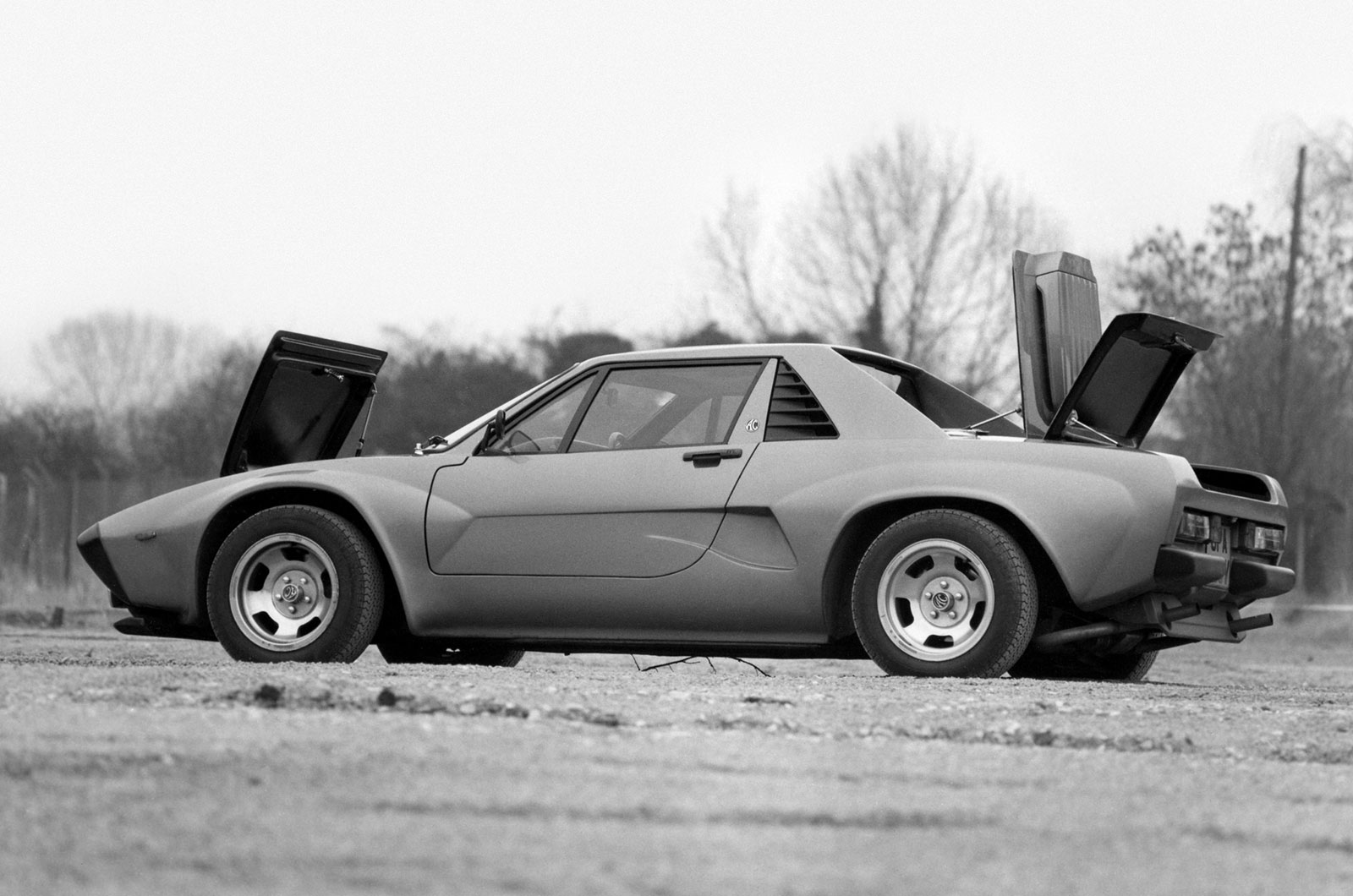
In theory a long gestation period should lead to a better car, but not in the case of the AC 3000ME, which was in development for much of the 1970s.
First shown in 1973 as the Bohanna-Stables Diablo, this plastic-bodied two-seater sports car was meant to offer power and agility for buttons – but by the time it arrived in production form in 1979 it wasn't very quick, not especially powerful – and the price had ballooned so it was far too costly.
Rover SD1 (1976)
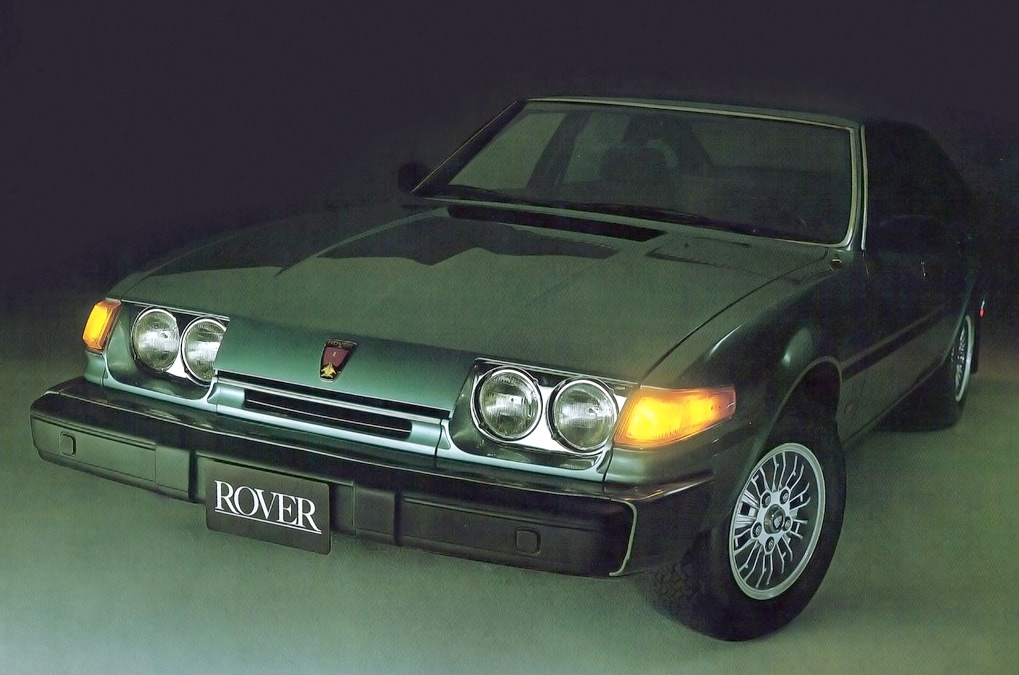
Another child of the seventies, the Rover SD1 was crowned European Car of the Year in 1977.
A sleekly styled large and luxurious five-door hatch could have beaten all comers, but as with all British Leyland cars the SD1 was put together by a disaffected workforce that seemed to often delight in sabotaging its own vehicles.
Aston Martin Lagonda (1976)
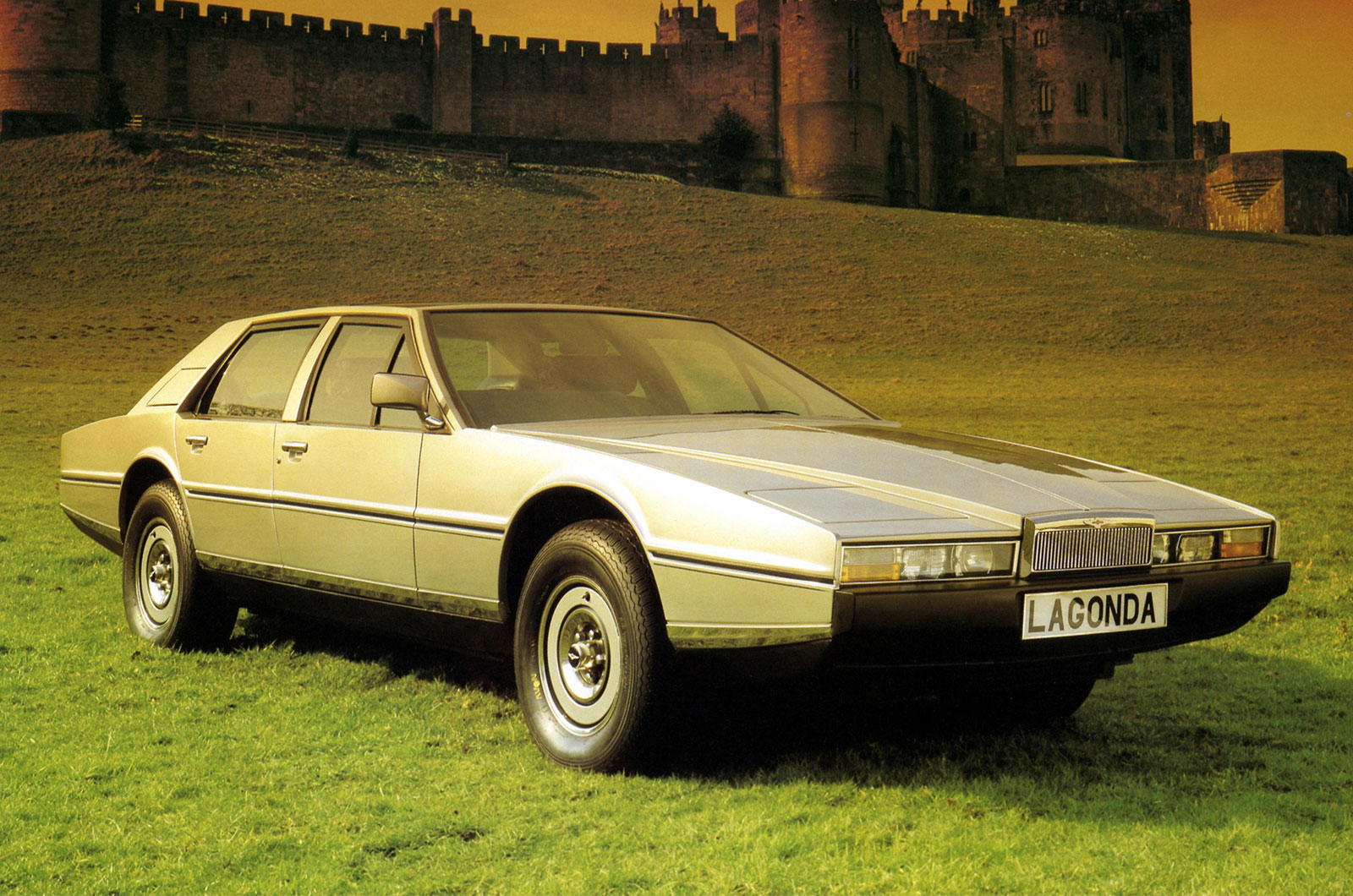
This entire article is written on the premise that there was an opportunity to be missed, but we're not sure that there really was an opportunity here.
Aston Martin reckoned there was a market for a luxury sedan that was styled futuristically inside and out. It came up with a car that featured a cutting-edge digital dash and a raft of electronics to control the various systems. But unfortunately the Lagonda arrived before the tech was properly developed and buyers were rewarded with a car that would throw a fit just for the fun of it.
Renault 14 (1976)
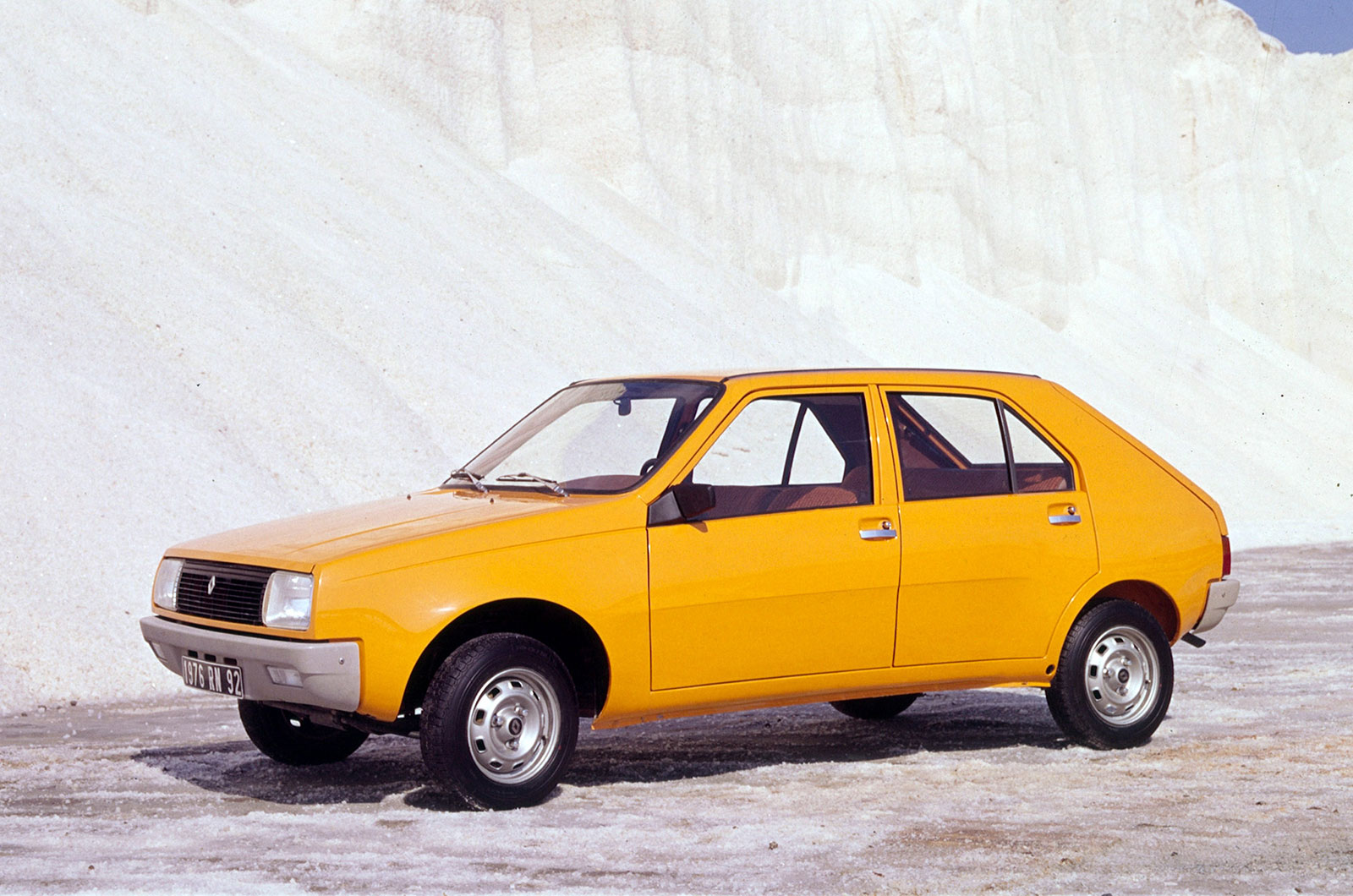
The seventies produced a lot of lacklustre family cars. One of the most disappointing was the Renault 14, which after the brilliance of the 16 that had arrived more than a decade earlier, didn't impress with its anonymous styling, poor build quality and mediocre dynamics. Bizarrely, the wheelbase on one side was longer than on the other, due to the car's transverse torsion bar rear suspension, with one bar behind the other, with equal length trailing arms.
GM diesels (1978)
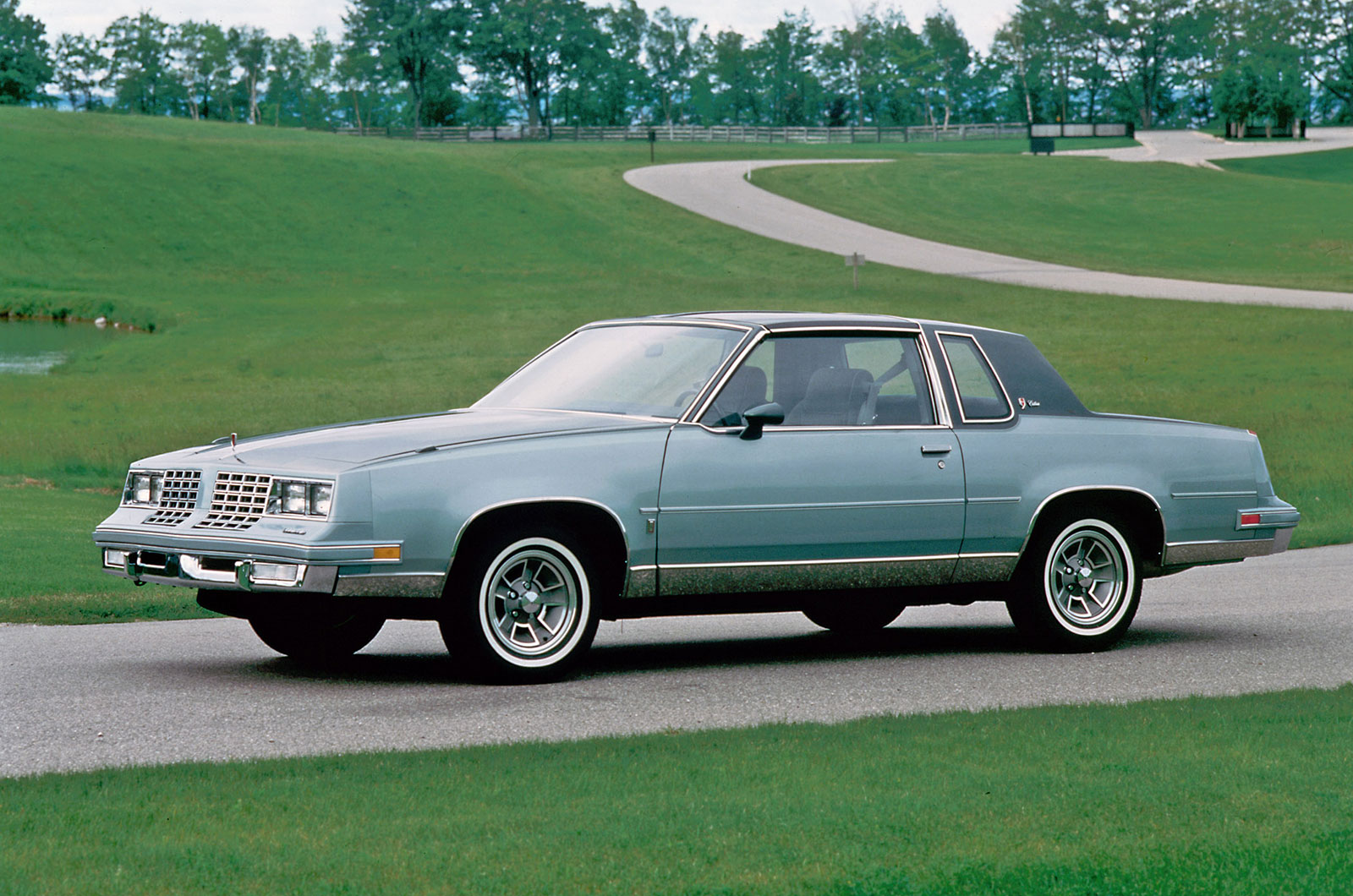
Diesel cars have always been a hard sell in America, and part of the reason is because of GM's ill-fated efforts in the late 1970s. With the market hit by fast-raising fuel prices, in an attempt to offer a more economical luxury car GM introduced a 5.7-liter V8 diesel option in many of its brands including Buick, Cadillac, Chevrolet, Oldsmobile [pictured], and Pontiac.
But the engines were fitted with unsuitable cylinder head bolts which stretched, leading to blown head gaskets and bent con rods once the combustion chambers had filled with water. Warranty claims went into overdrive and many US car buyers were put off diesels for a long time. The next major diesel push in America was made by Volkswagen about 30 years later – and we all know how that ended…
Cadillac Seville (1979)
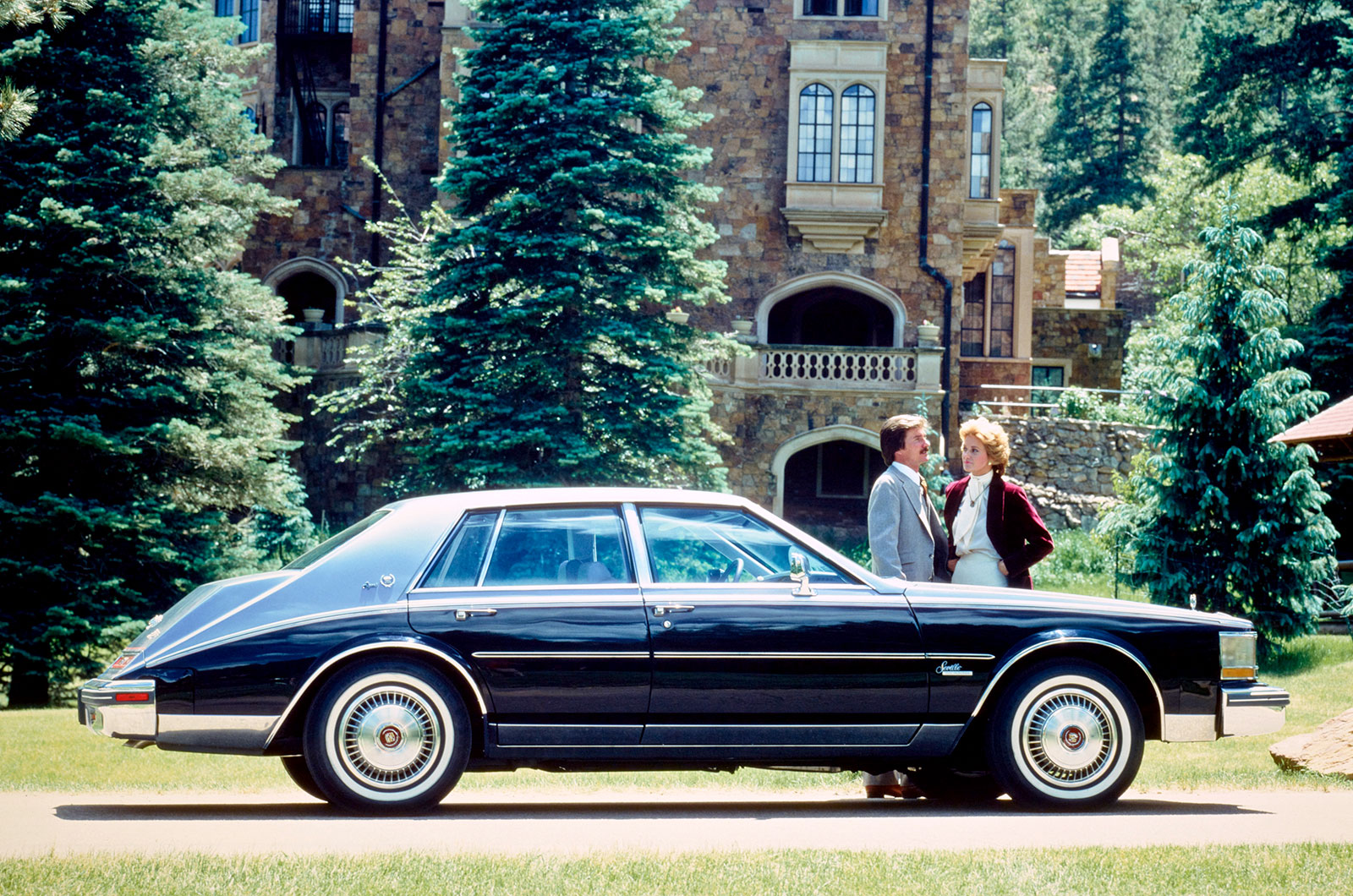
GM was looking to Cadillac to help the company head off luxury imports from the like of Mercedes-Benz and BMW. Alas, automotive design went through a prolonged sticky patch throughout the seventies, on both sides of the Atlantic. On the US side, nowhere was this more apparent than with the Cadillac Seville that looked as though it had been rear ended. Its dubious proportions and kitsch interior ensured buyers lapped up European imports like never before.
De Lorean (1981)
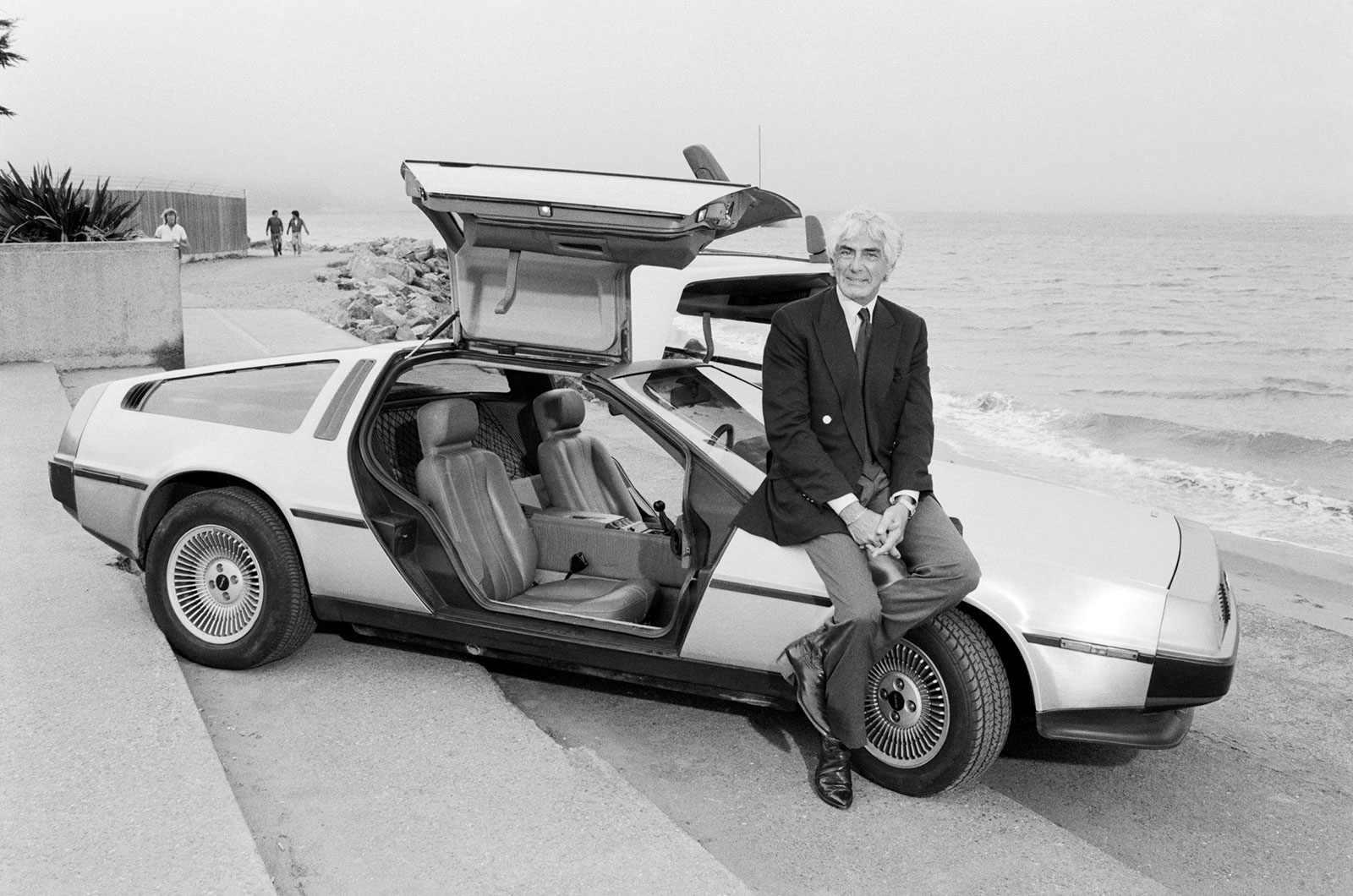
It was Malcolm Bricklin's story all over again: a gull-winged sports car designed to take on the big boys and change the game. However, it was built unbelievably badly, wasn't very fast and handled poorly into the bargain.
Production ended after less than two years. Despite being a failure when new, the De Lorean – here pictured with its creator, John De Lorean - has become massively collectible, largely thanks to its high profile courtesy of the Back to the Future film franchise.
Talbot Tagora (1981)
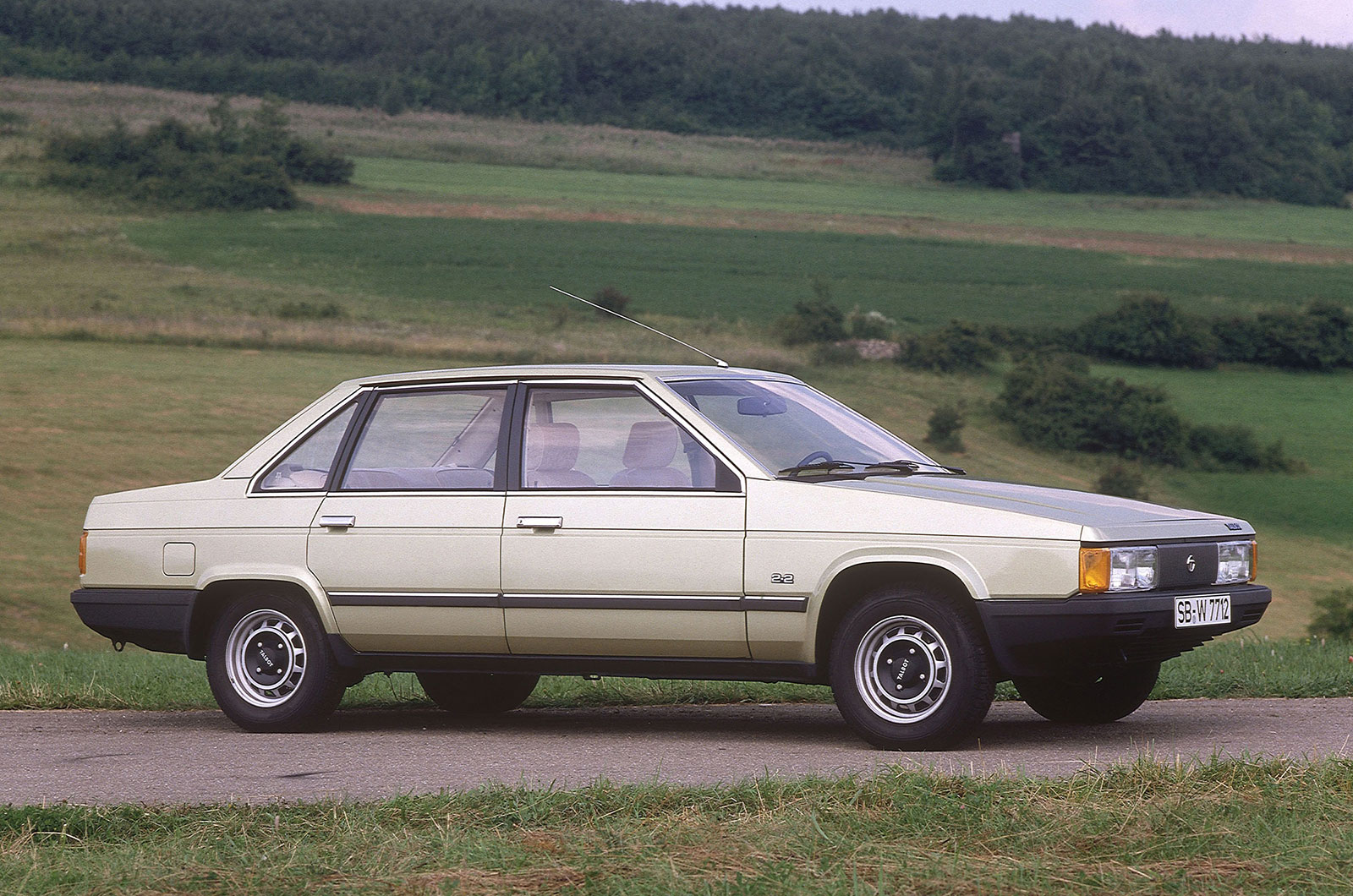
We're not sure any car has ever featured more anonymous styling than the Talbot Tagora, which should have been killed off before it reached production. When Peugeot bought Chrysler Europe the nearly-completed Tagora project came with it.
Although Peugeot offered the perfectly decent 505 it elected to stick with Tagora production, even though the two cars competed with each other. But the Tagora was dynamically poor and so was the build quality, which is why less than 20,000 were sold in the three years that the Tagora was on sale. There is just one single example left on UK roads today...
Chrysler E-Class (1982)
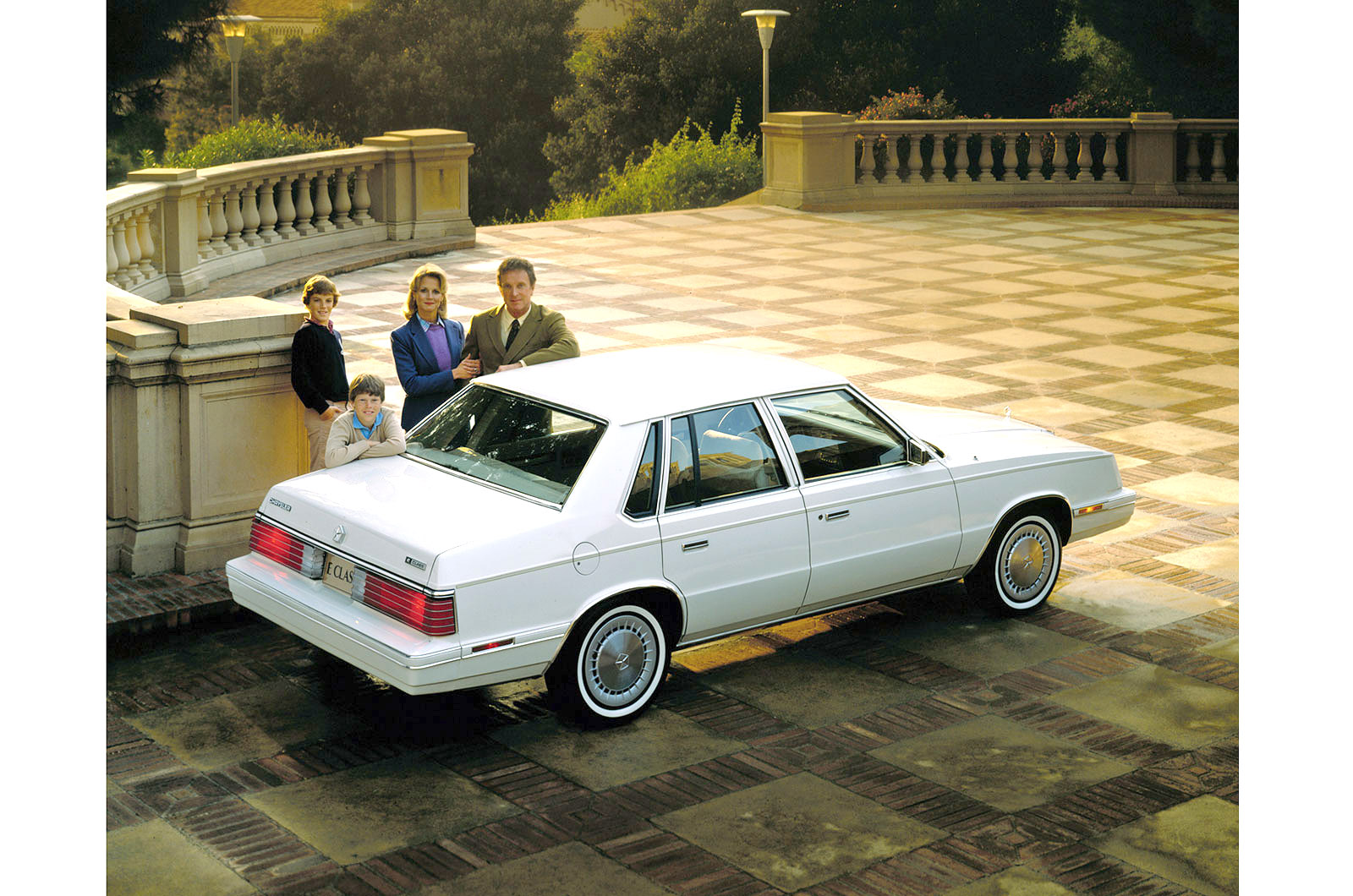
The Chrysler E-Class was a car that was aimed at impecunious buyers who wanted a New Yorker but couldn't afford one. This cheaper sedan was as anonymous as they come and was powered by an array of lacklustre four-cylinder engines. After just two years the E-Class was canned due to a lack of sales, with the car morphing into the equally unloved Caravelle.
Cadillac Cimarron (1982)
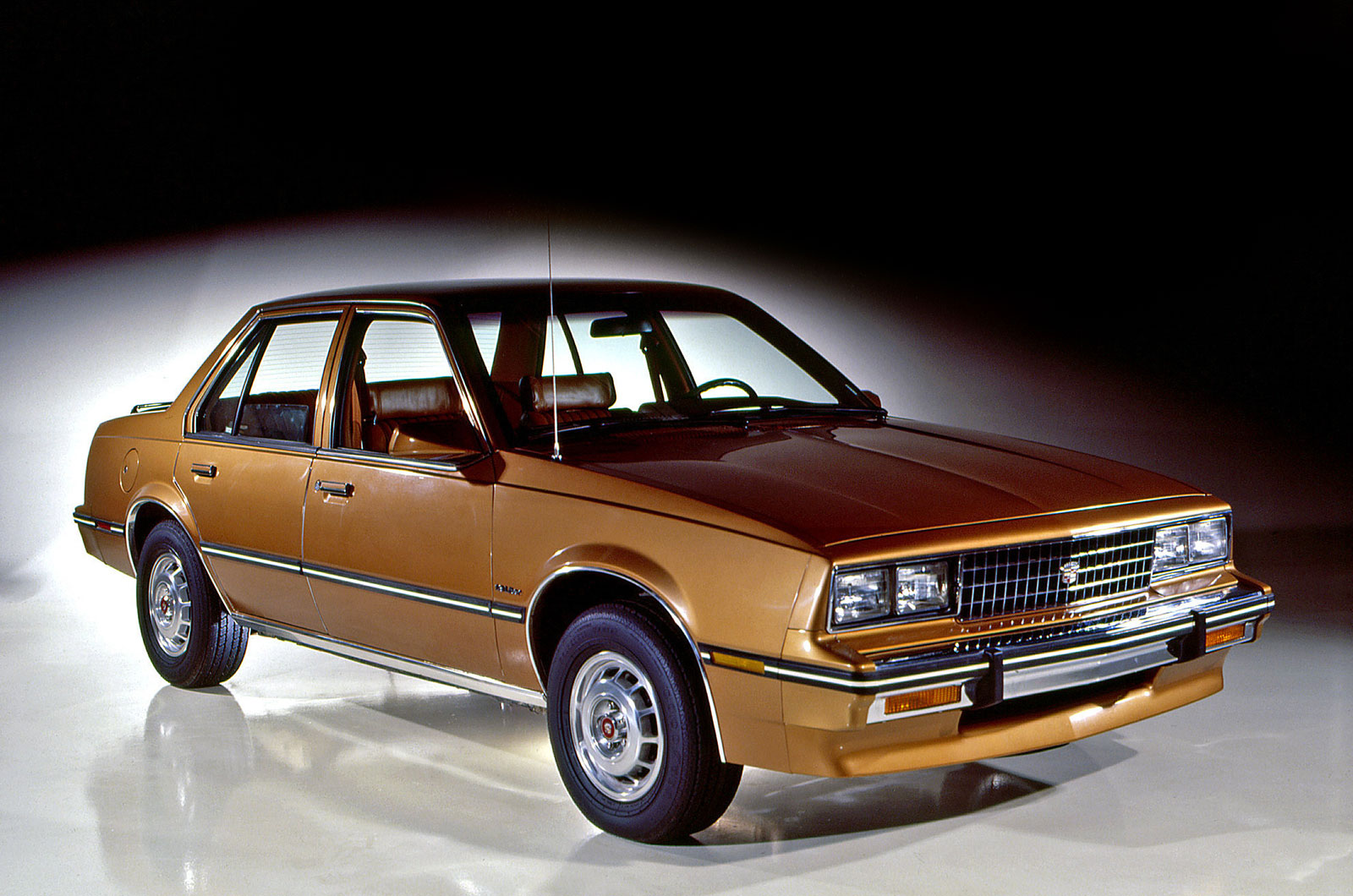
In yet another a bid to take on smaller European luxury cars from the likes of BMW, GM decided that rebadging a Chevrolet Cavalier as a Cadillac was the way to go.
Fitting some extra standard kit and doubling the price wasn't a sound strategy though, and buyers understandably stayed away – not least of all because even in cut-price Chevy form, the Cavalier wasn’t a great car.
Reliant Scimitar SS1 (1984)
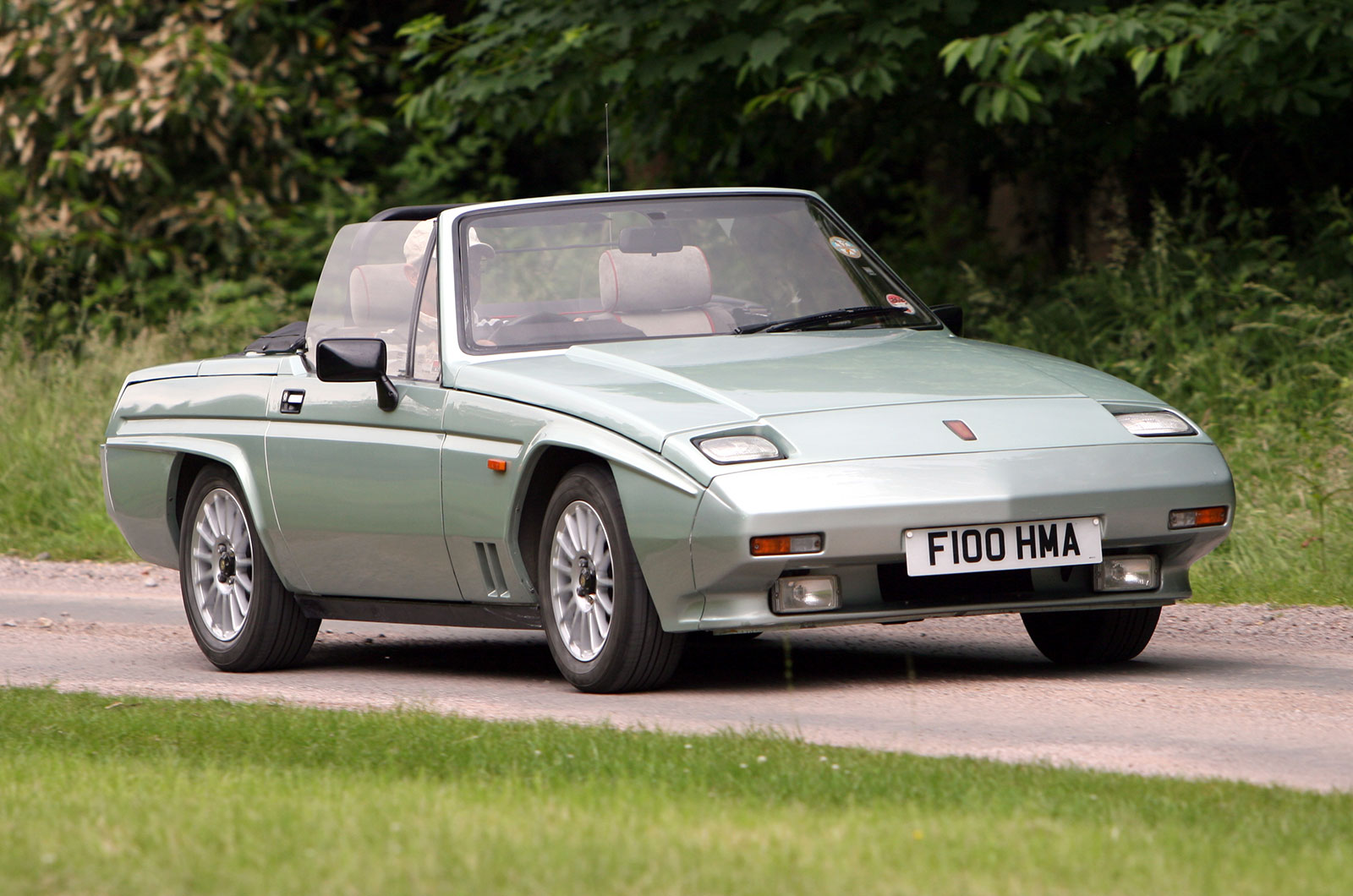
When the MGB and Triumph Spitfire went out of production in 1980-81, the affordable British sportscar seemed dead. So along came Reliant with the Michelotti-designed SS1 promising a car that was fun to drive, quick enough and cheap to buy. Great, on paper.
Sadly its design divided opinion and it was slow, with just a 96bhp 1.6-litre. The introduction of a turbocharged 1.8-litre edition and a restyle in 1990 helped to fix things – but by then the Mazda MX-5 Miata had arrived to sweep away all before it, including the SS1. Just 1507 examples were produced over ten years.
Jaguar XJ40 (1986)
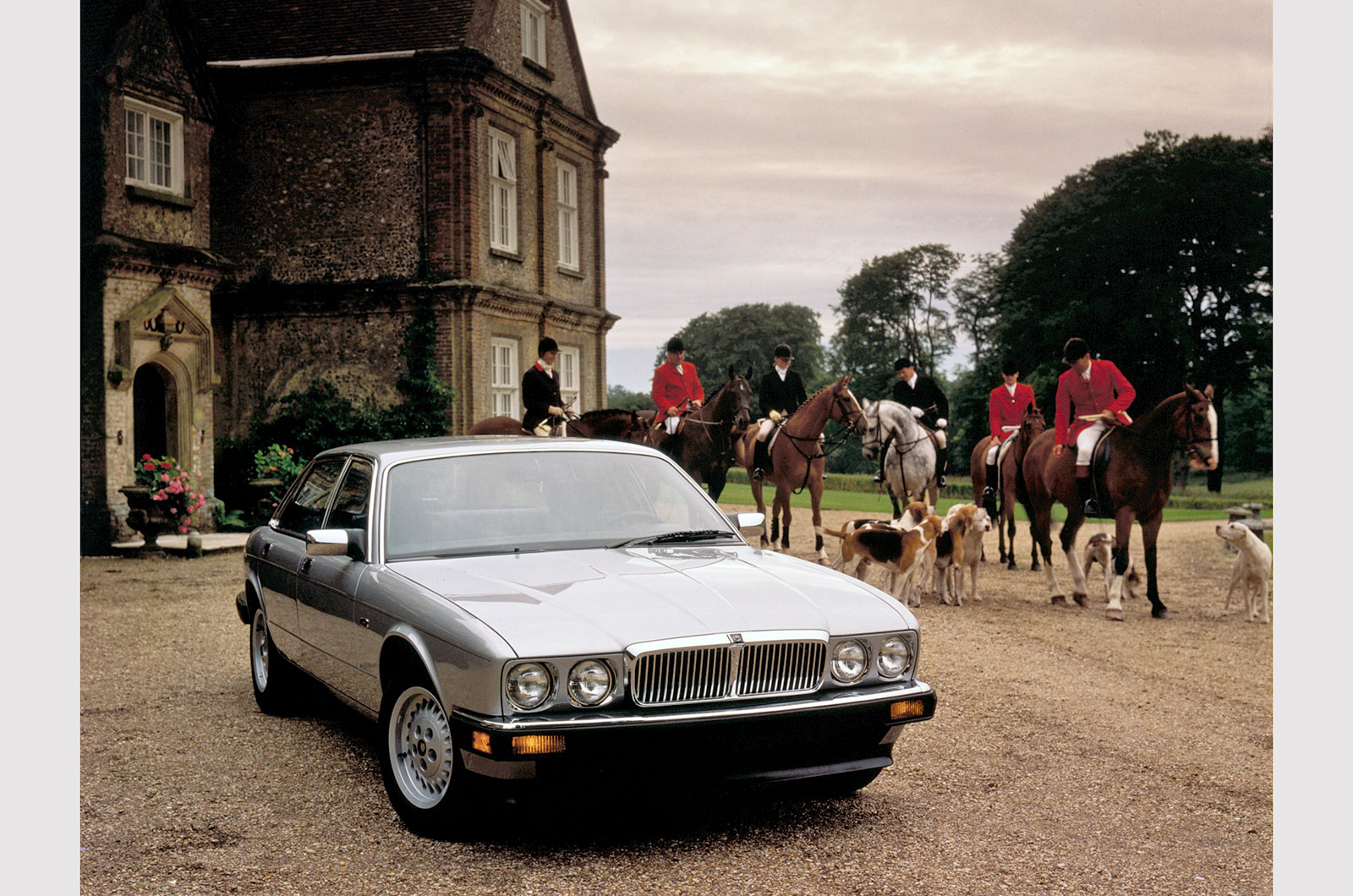
The Jaguar XJ was revolutionary when it arrived in 1968, but by the early 1980s it was looking rather tired despite a couple of substantial facelifts. What was needed was a significantly new model. Jaguar had been developing one since 1972, so by the time the XJ40 arrived in 1986 it was already looking outdated, but it was technologically advanced with sensors, motors and wiring galore.
The problem is they didn't always talk to each other properly leading to breakdowns. Later cars were better, as is so often the case, but the damage was already done. The XJ once went toe-to-toe against Mercedes in the US and many other markets, but today the German company rules the luxury road with its S-Class.
Isuzu Impulse (1986)
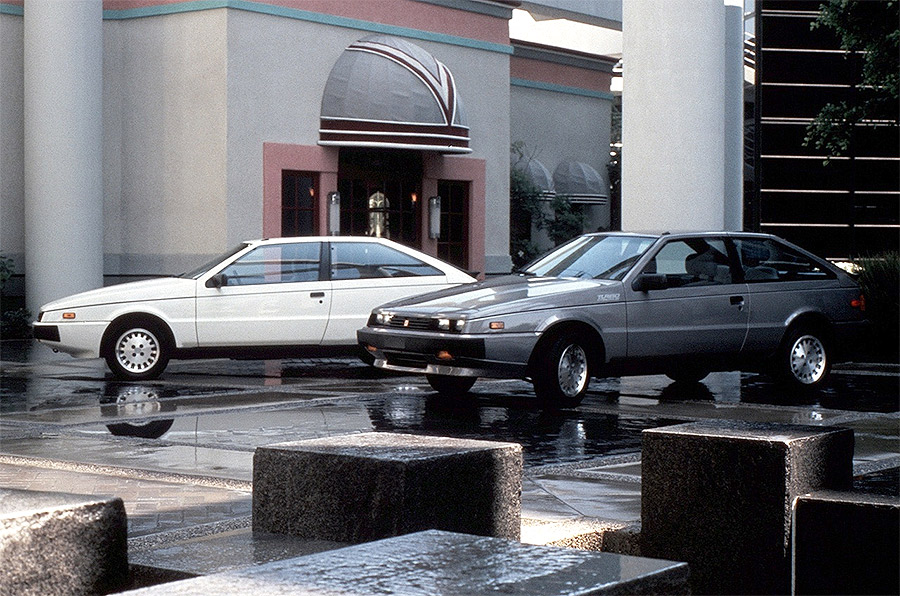
With a history of building trucks and off-roaders, Isuzu wasn't ideally placed to build a sports car – but that didn't stop the company giving it a go anyway. The result was a car that handled about as well as an SUV, with interior plastics to match.
To top things off, the car (known as Piazza in certain other markets) was powered by a GM van engine that was about as coarse as they come. Still, it looked quite nice thanks to the efforts of Italdesign, which supplied the styling.
Rover 800/Sterling (1986)
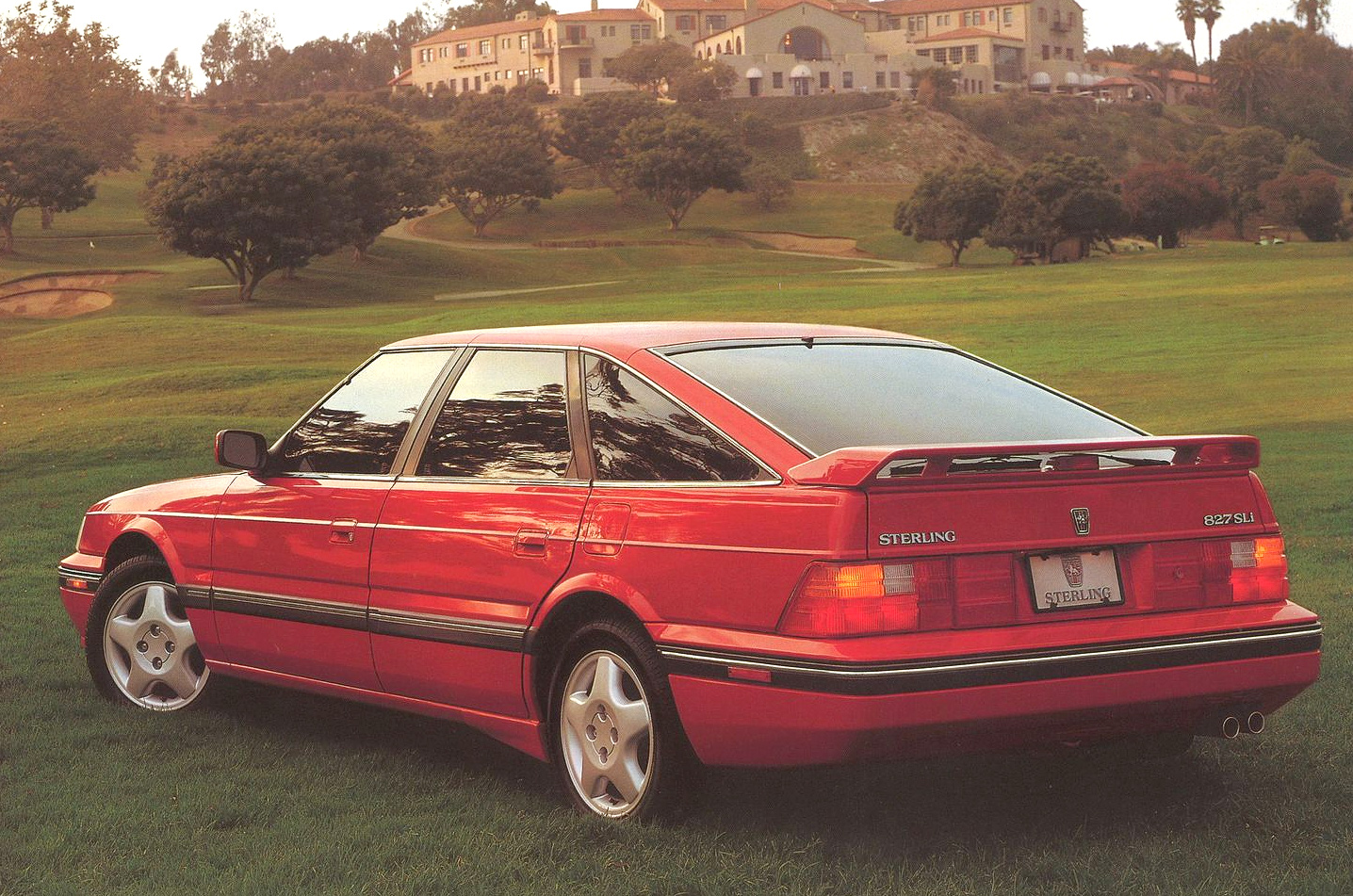
The SD1 hadn't done British Leyland's reputation any favours, and when that company morphed into Austin Rover there was a chance to make a fresh start with an all-new luxury saloon and hatch. So when the Rover 800 arrived in 1986 hopes were high, but as before the car had been released too soon and the 800 suffered from a litany of reliability and build quality glitches.
The car launched under the Sterling name in the US, but bombed there. Embarrassingly, it was rated by JD Power as one of the most unreliable cars at the same time its Japan-built sister car, the Acura Legend, was rated as one of the most reliable.
Cadillac Allante (1987)
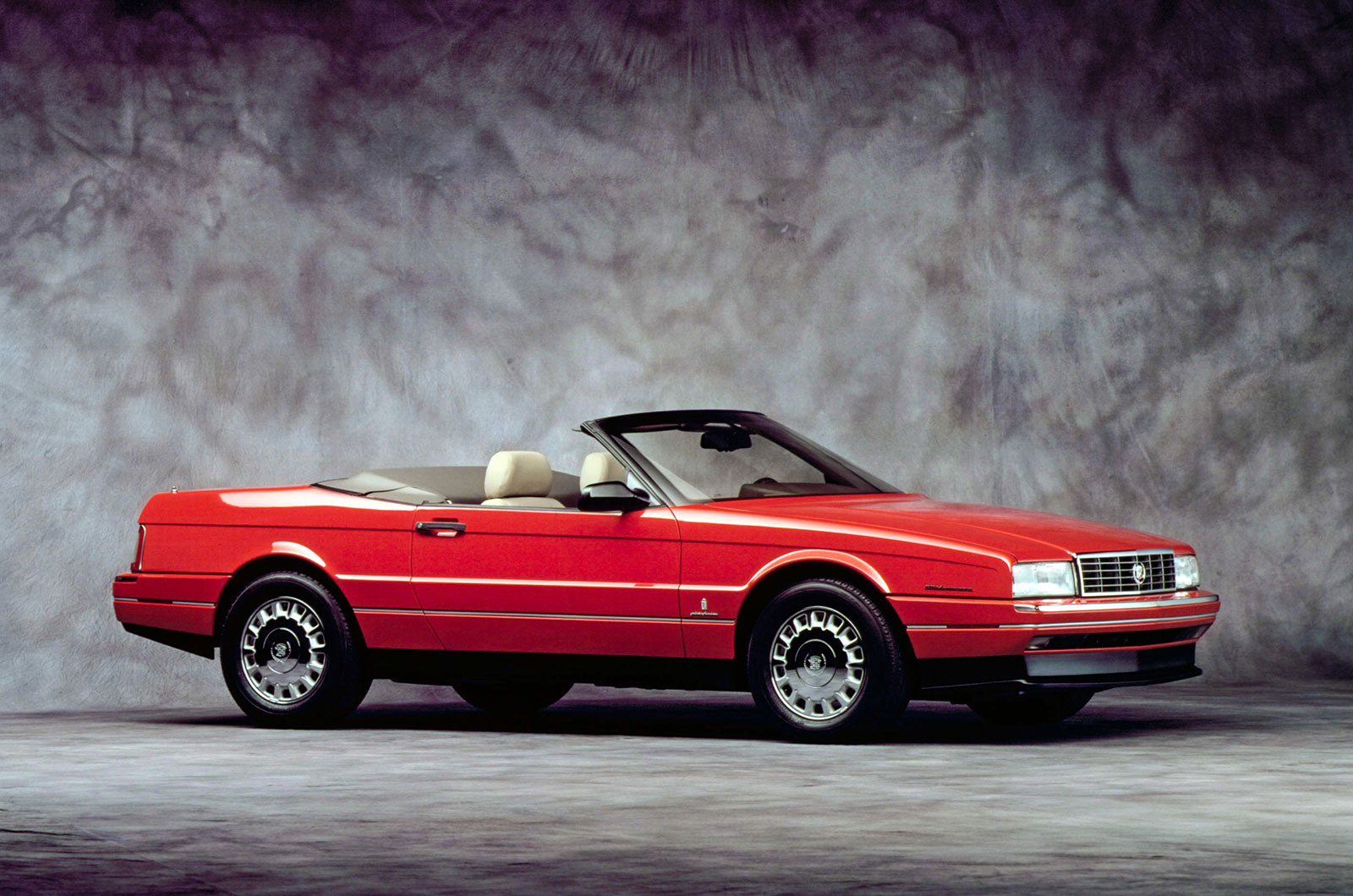
Ever since its launch in the 1950s, the Mercedes SL has been a very desirable car. Cadillac wanted a piece of that action so it decided to launch its own take on the luxury convertible with the Allante.
Not only was the Allante front-wheel drive, but the production process was so convoluted that the car could never be sold at a competitive price. Pininfarina built the bodies in Italy and then flew them to Detroit in modified Boeing 747s for GM to complete them.
Audi V8 (1988)
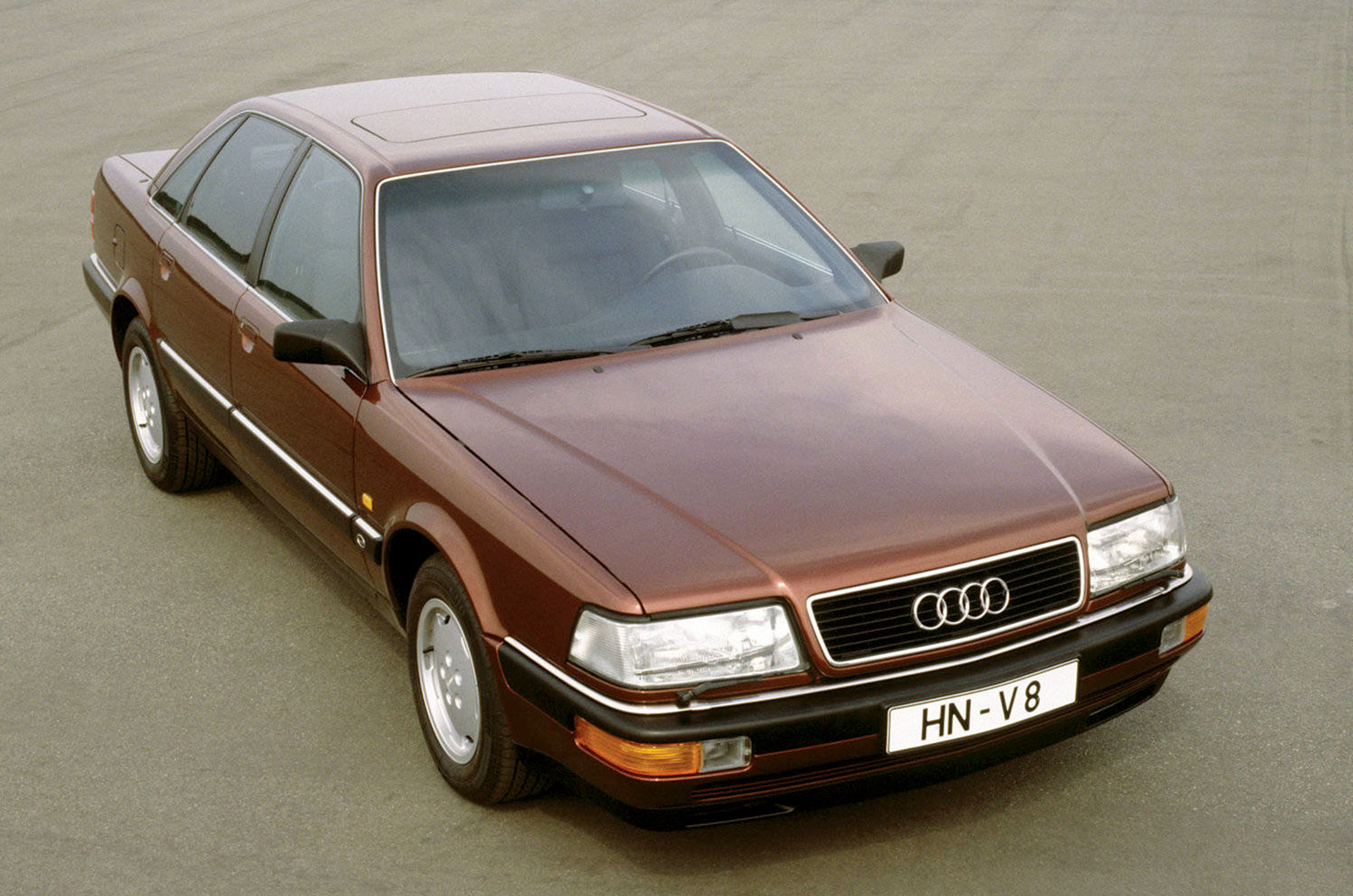
Audi has always produced desirable saloons, but with the V8 it ventured into new territory – the luxury market. Here the stakes were much higher than Audi was used to so it created an all-new V8 engine and named the car after it.
The first Audi to feature an automatic transmission with quattro four-wheel drive, the V8 was fast, luxurious and beautifully built, but the car failed to make an impact. However, it did lay the way for the current A8 luxury car line.
Eagle Premier (1988)
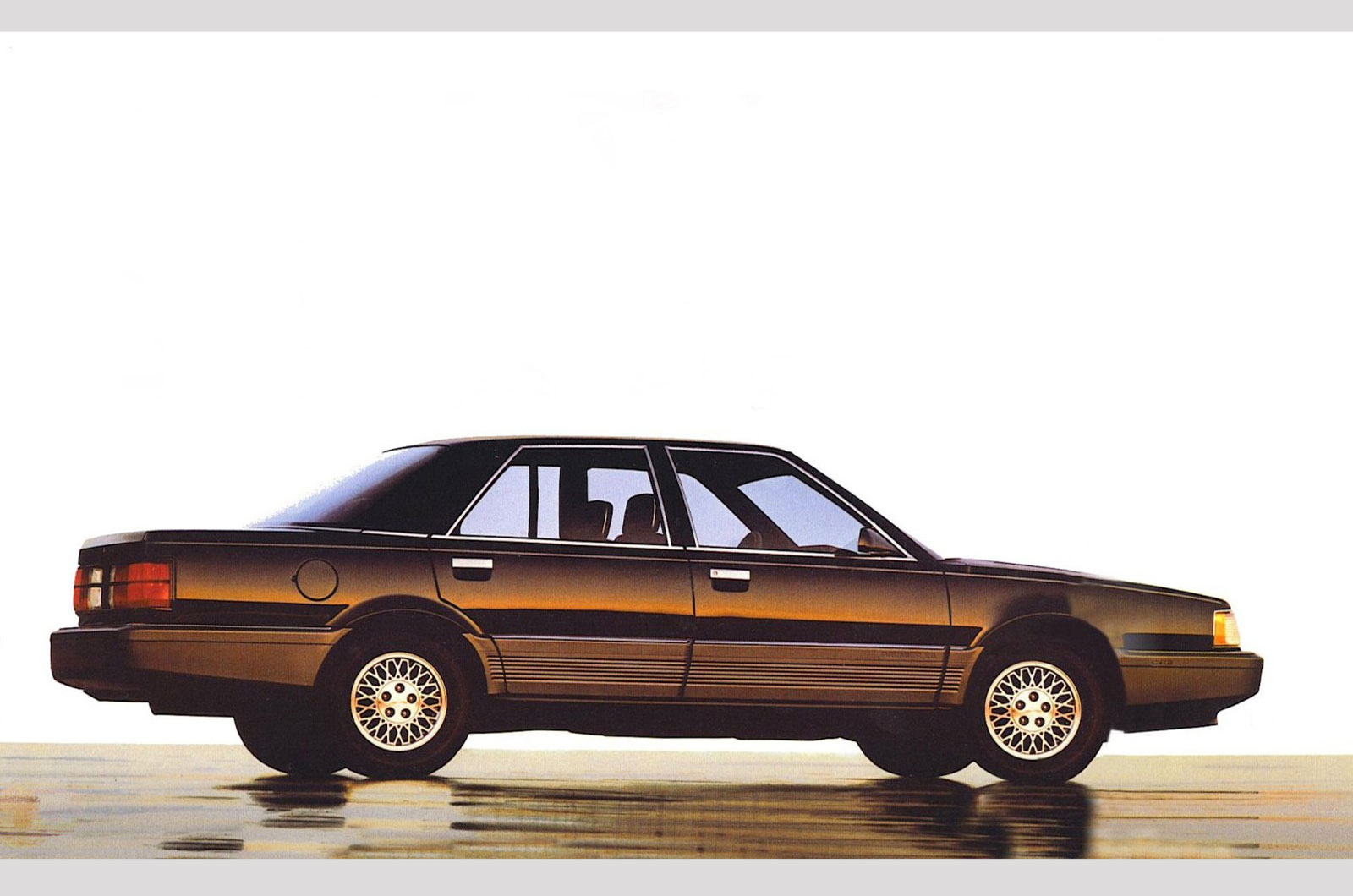
Also sold as the Dodge Monaco, the Eagle Premier was the result of a joint venture between AMC and Renault after AMC had been bought by Chrysler, which decided to create a new brand to sell its new car.
That brand was called Eagle and one of its first products was the Renault 25-based Premier. With bland looks, uninspiring dynamics, mediocre build quality and lacklustre performance there was absolutely no reason to buy an Eagle Premier, which is why few people did.
Ford Escort (1990)
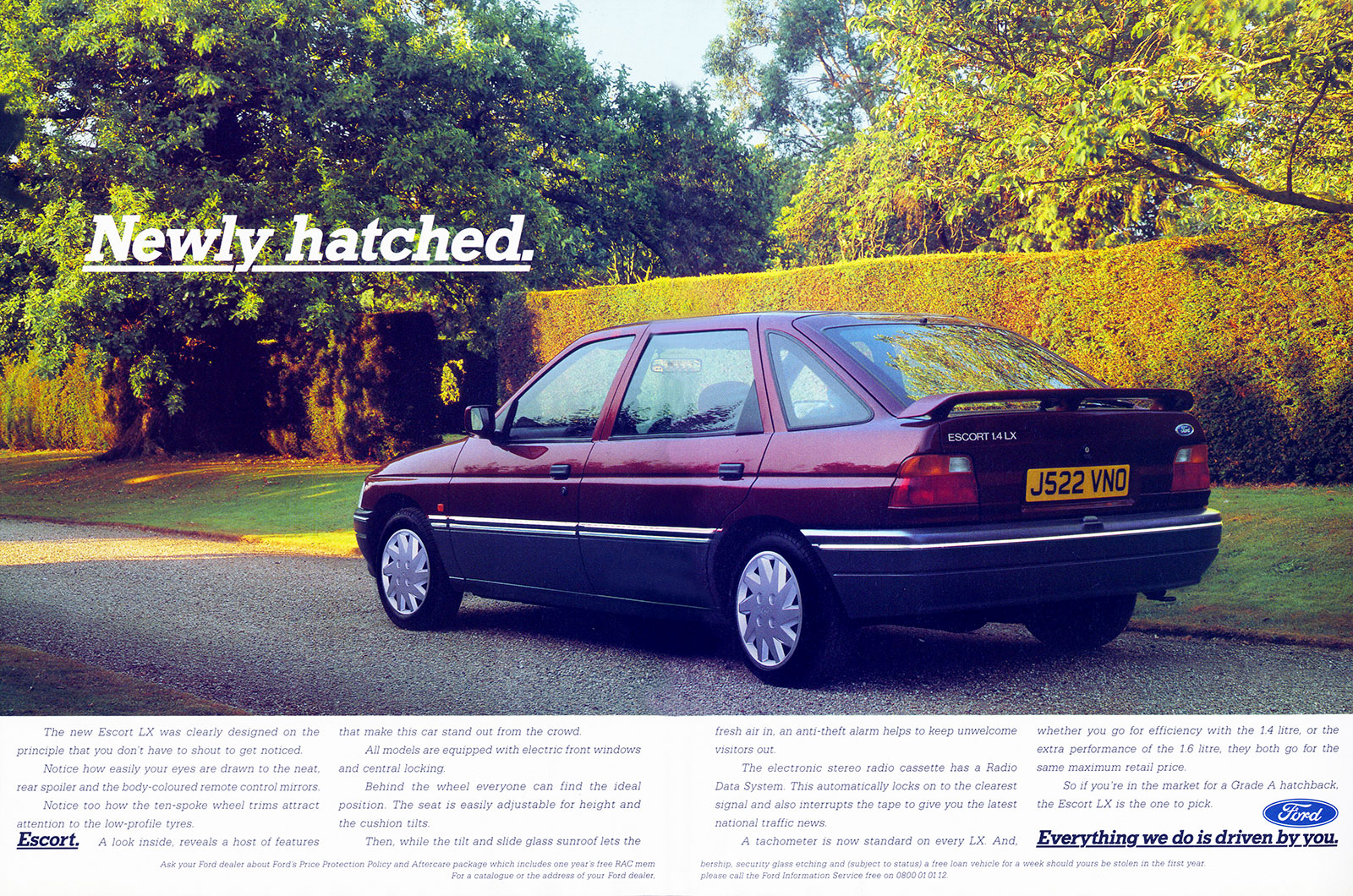
Previous European Escorts had done a perfectly good job at a reasonable price and were duly rewarded, frequently topping the sales charts in the UK and other European auto markets. So the same but better please for a new one.
However, when the Escort MkV replaced the MkIV in 1990 it was universally lambasted, including by Autocar. The new arrival looked anonymous, was uninspiring to drive, was overpriced and poorly equipped. Ford apparently spent $1 billion developing the car, but it wasn’t clear quite how.
Within two years the Escort MkVI had been launched – and stung by criticism Ford bounced back with the excellent 1993 Mondeo and then, in 1998, it replaced the Escort with the Focus, which massively raised the bar within the small family car segment.
Vector W8 (1990)
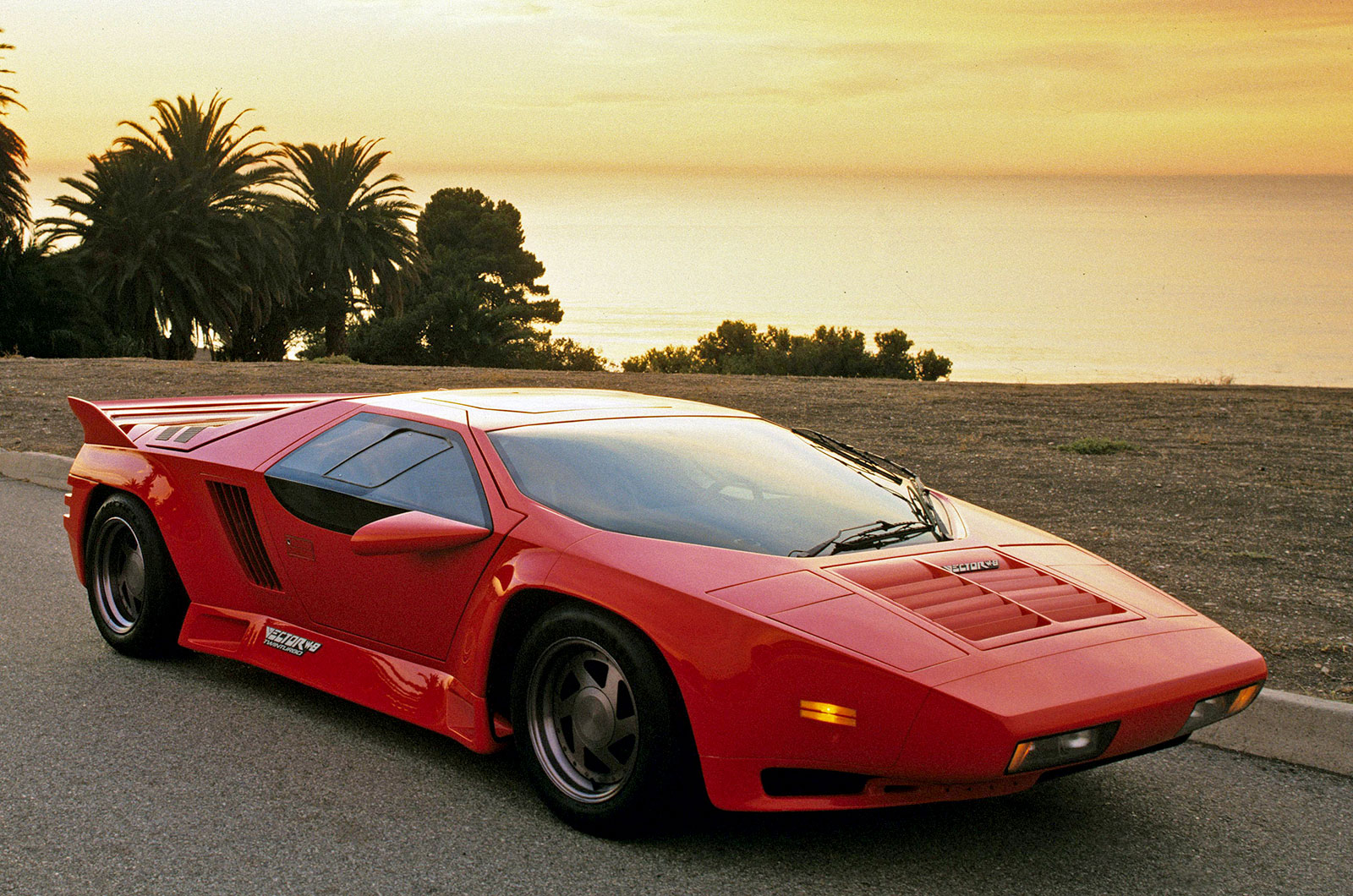
Horacio Pagani and Christian von Koenigsegg have proved that you can come from nowhere and take on the big boys if you do things properly. But when Gerry Wiegert tried to take on the likes of Ferrari and Lamborghini with his company Vector Aeromotive, he got everything wrong.
The project got underway in 1978 but didn't bear fruit until 1990. By then the world had moved on yet he still managed to shift 17 copies of his $400,000 W8 supercar which looked sensational – but proved unreliable.
Nissan Serena (1992)
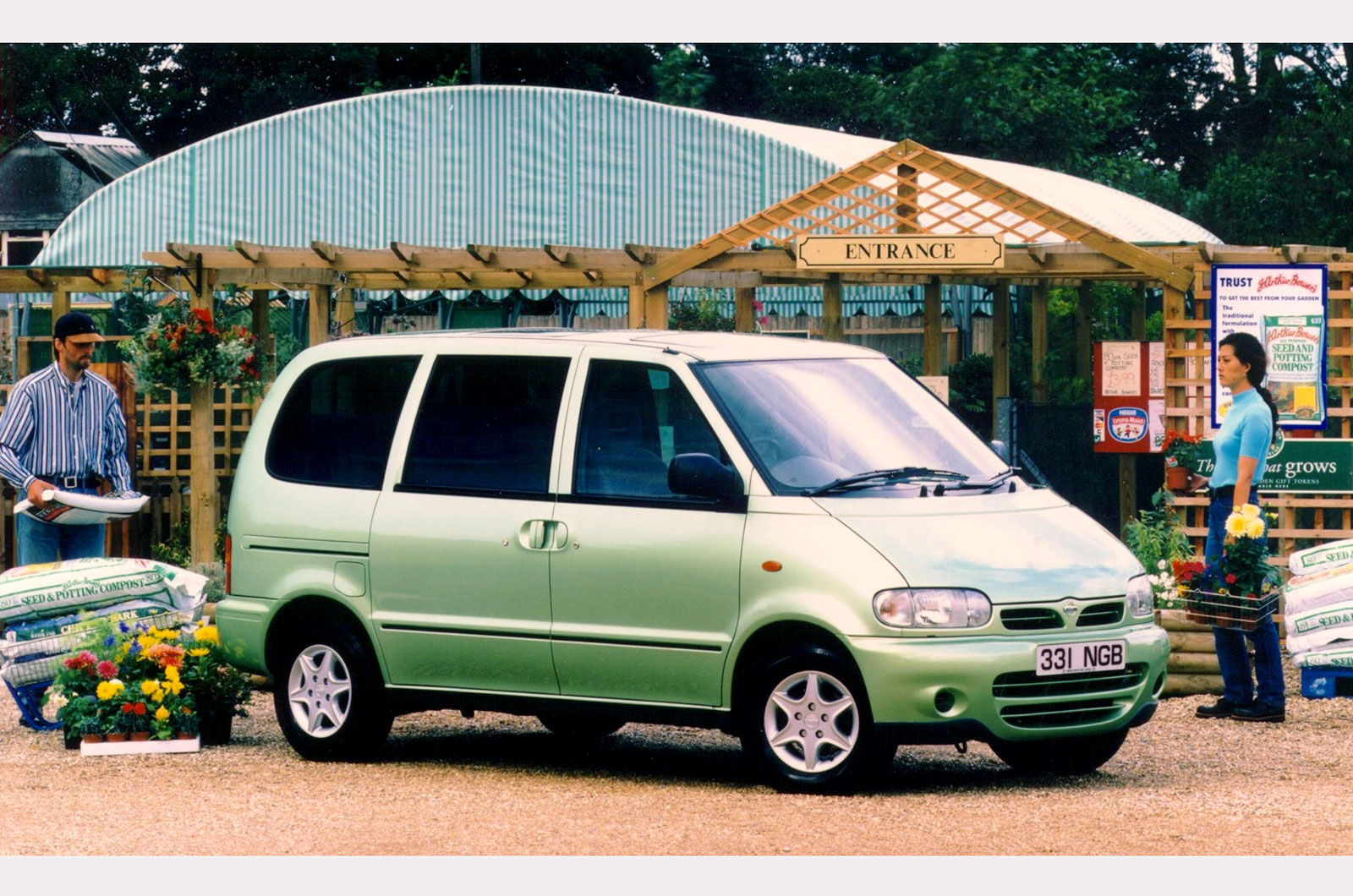
MPVs were all the rage throughout the 1990s. Some were brilliantly thought out while too many were little more than vans with windows added. The Nissan Serena fell into the latter category and it was dire as a result, with its low-rent cabin, anonymous looks and languid performance.
Buy the naturally aspirated 2.0-liter diesel and you had one of the slowest vehicles on sale at the time: 0-60mph took 34.8 seconds and the top speed was just 81mph.
Vauxhall Vectra (1995)
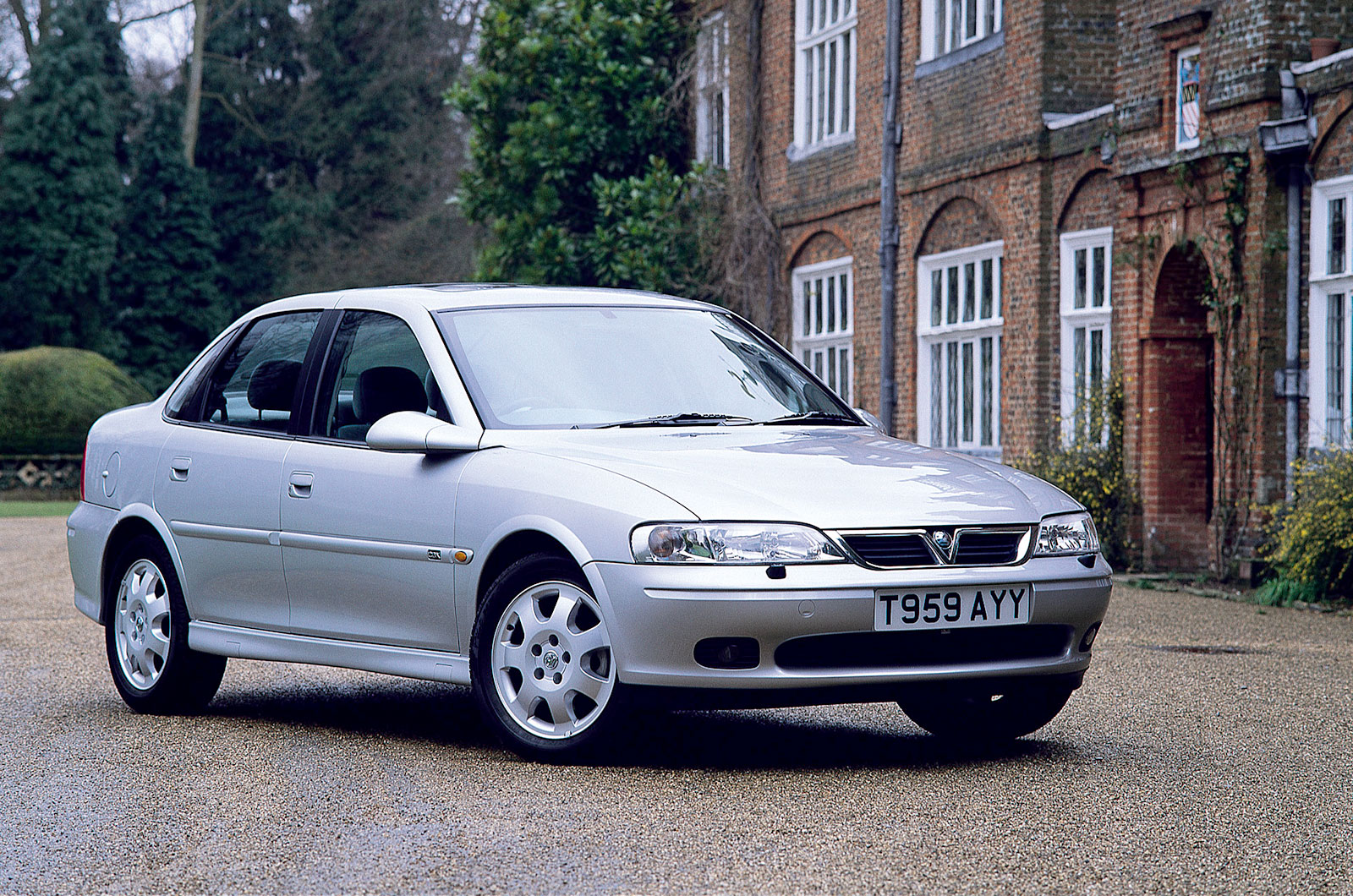
As already mentioned, when Ford introduced the Mondeo in 1993 it injected some brio into a class that was full of dull saloons, hatchbacks and wagons. So when GM’s Vauxhall/Opel came up with a Cavalier Mk3 replacement two years later it should have created something more than able to compete.
Instead we got a reheated Cavalier with a new name; put the two next to each other and it was hard to tell them apart. Coarse engines, dull handling and indifferent cabin plastics conspired to make the Vectra one of the biggest disappointments ever.
Cadillac Seville (1997)
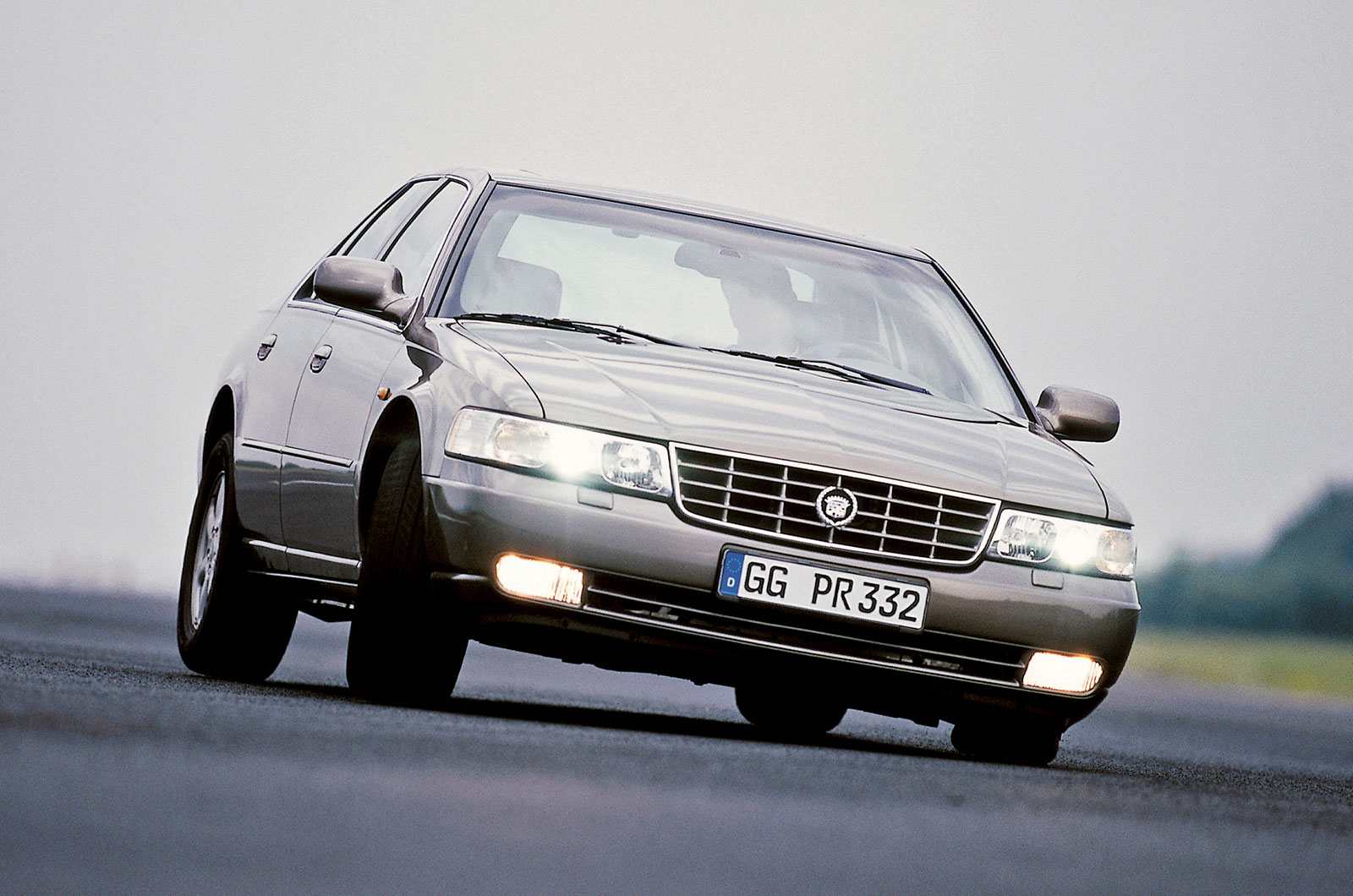
This Cadillac was designed to not only head off European luxury brands in America, but actually take them on on their home turf. Thus it could be configured for right-hand drive allowing for sales in the UK and Japan among others, and was also sold in Germany.
However, cost cuts left the car with a cheap interior and sub-par dynamics, which European rivals could easily beat. Cadillac retired from Europe, hurt.
Jaguar S-Type (1999)
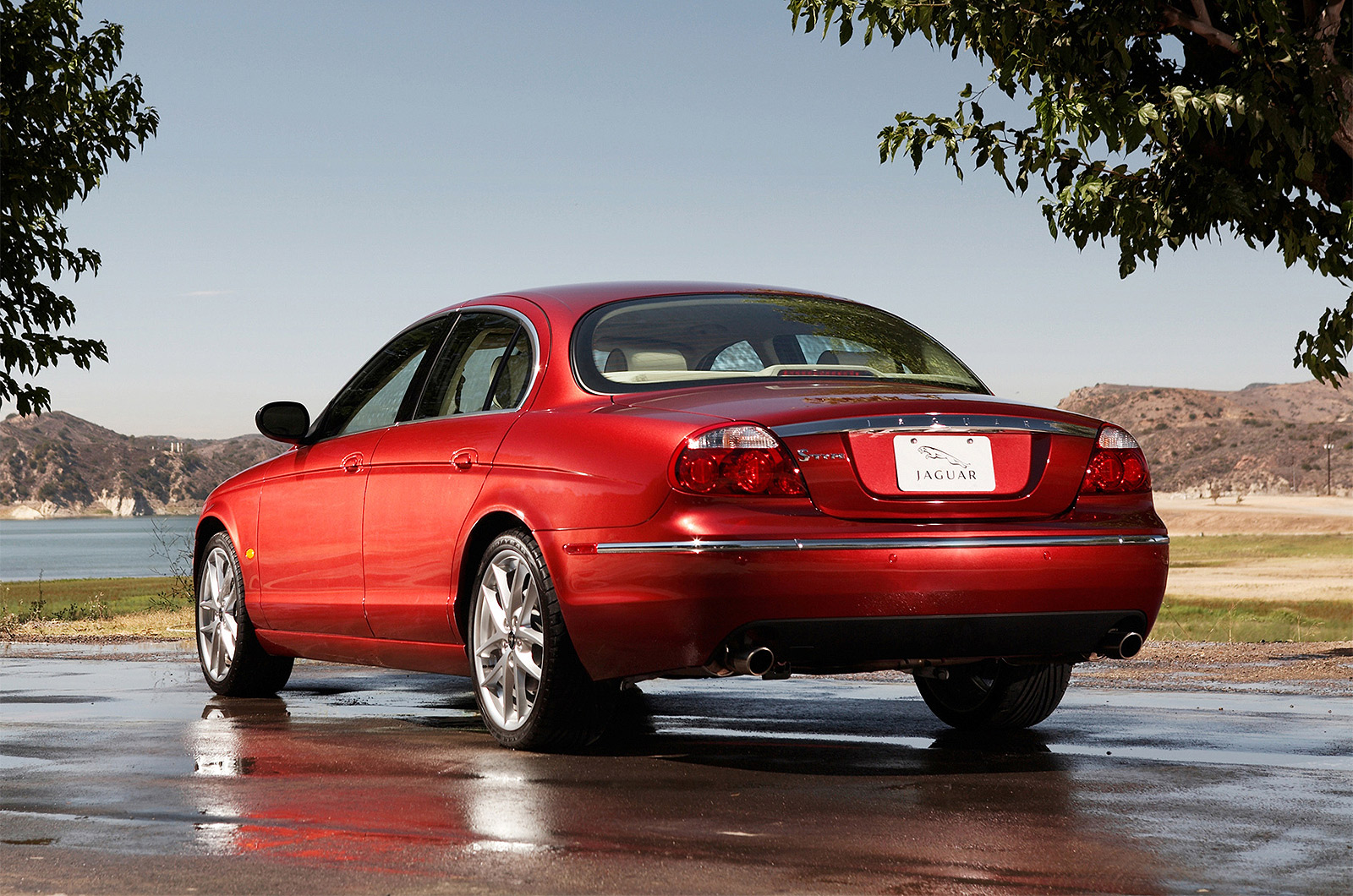
Jaguar really needed to reinvent itself in the 1990s. It was seen as an old man's brand with its retro designs – what was really required was a new look that showed the brand was embracing the 21st century that was about to hit. Instead we got the S-Type, which not only borrowed its name from a 1960s saloon, but the design was seemingly carried over wholesale too.
We had to wait until 2008 before we finally got a new look for Jaguar, with the first-generation XF.
Jaguar X-Type (2001)
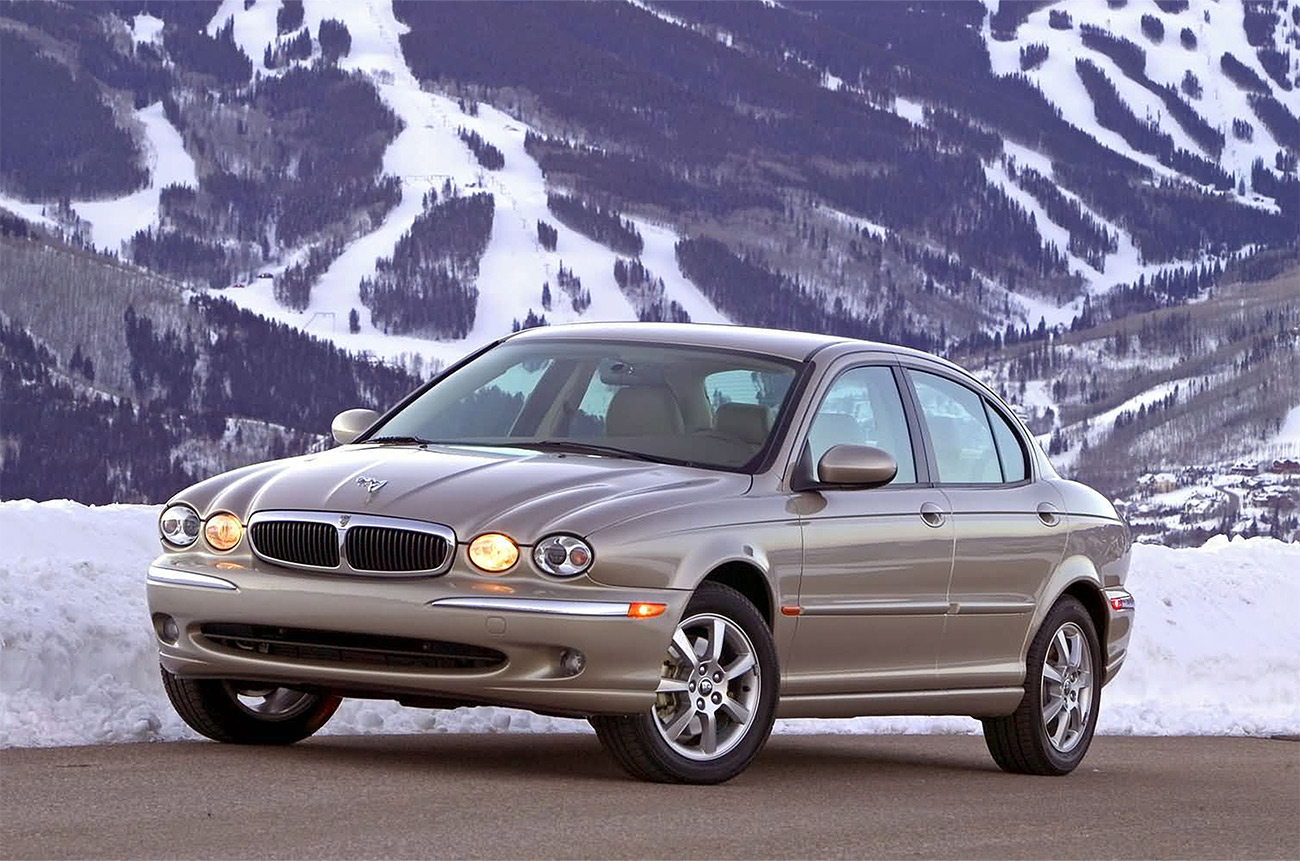
Jaguar wanted to boost its production numbers by taking on the all-conquering BMW 3 Series, and it even had a senior former BMW executive, Wolfgang Reitzle, to help it do it. However, two years after Jaguar launched the S-Type with its sixties styling, the company repeated the trick with a smaller sedan based on the Ford Mondeo floorpan. The plan was to sell 100,000 X-Types annually; in its best year Jaguar achieved half this.
The X-Type was often derided for its Mondeo underpinnings, but the Ford wasn't such a bad start point at all. What did it for the baby Jag was its retro design, poor reliability and, at first, the availability of only thirsty six-cylinder petrol engines with four-wheel drive transmissions.
Lincoln Blackwood (2002)
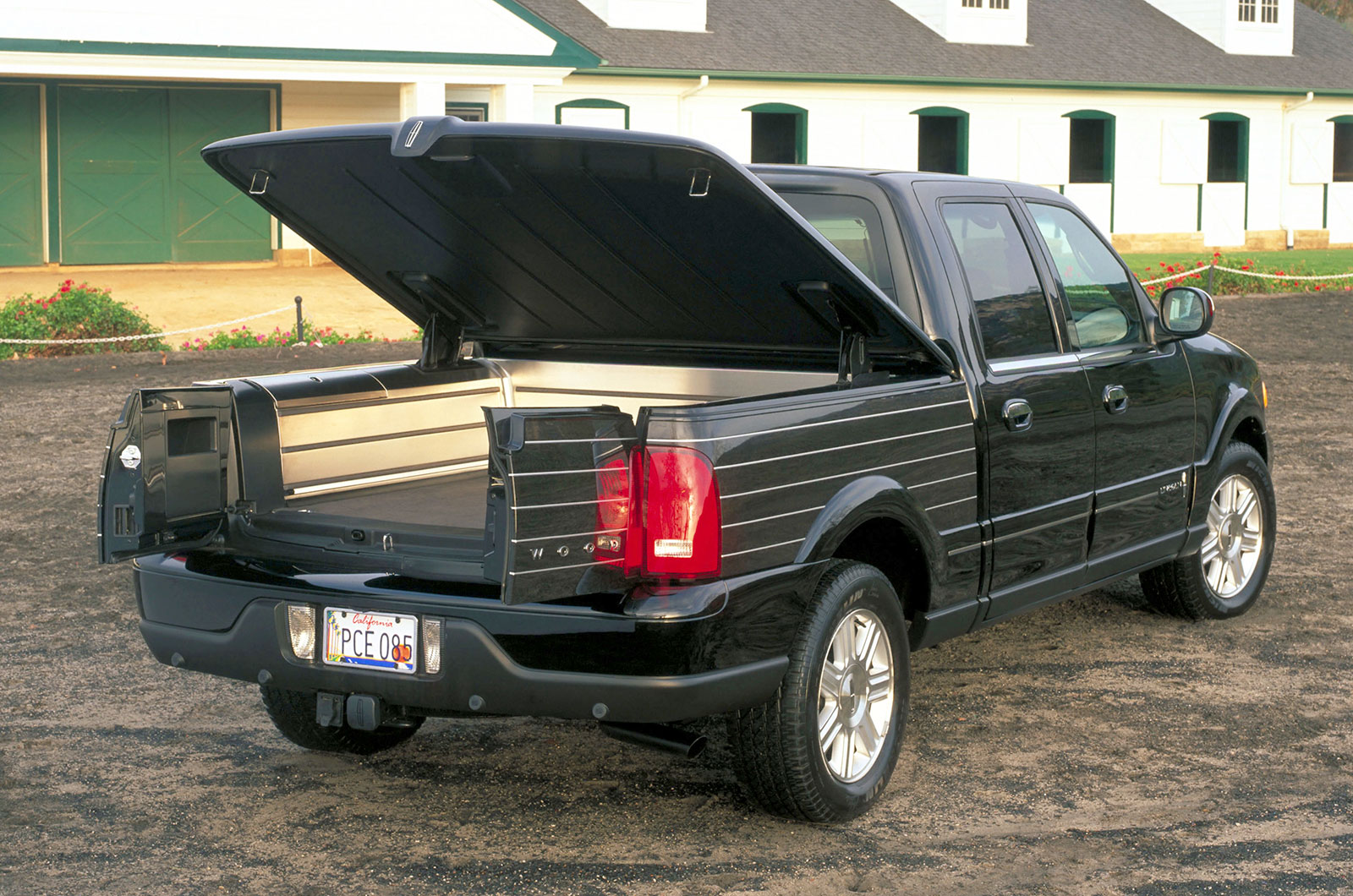
Pick-up trucks are popular because they can go anywhere with their four-wheel drive and generous ground clearance, and they can carry anything thanks to their huge beds.
But not if it's a Lincoln Blackwood, a rear-wheel drive pick-up with minimal ground clearance and a luxuriously trimmed bed with a lid that reduced the usable capacity. Production lasted just one year and it took another two years to sell off the remaining stock.
Renault Avantime (2002)
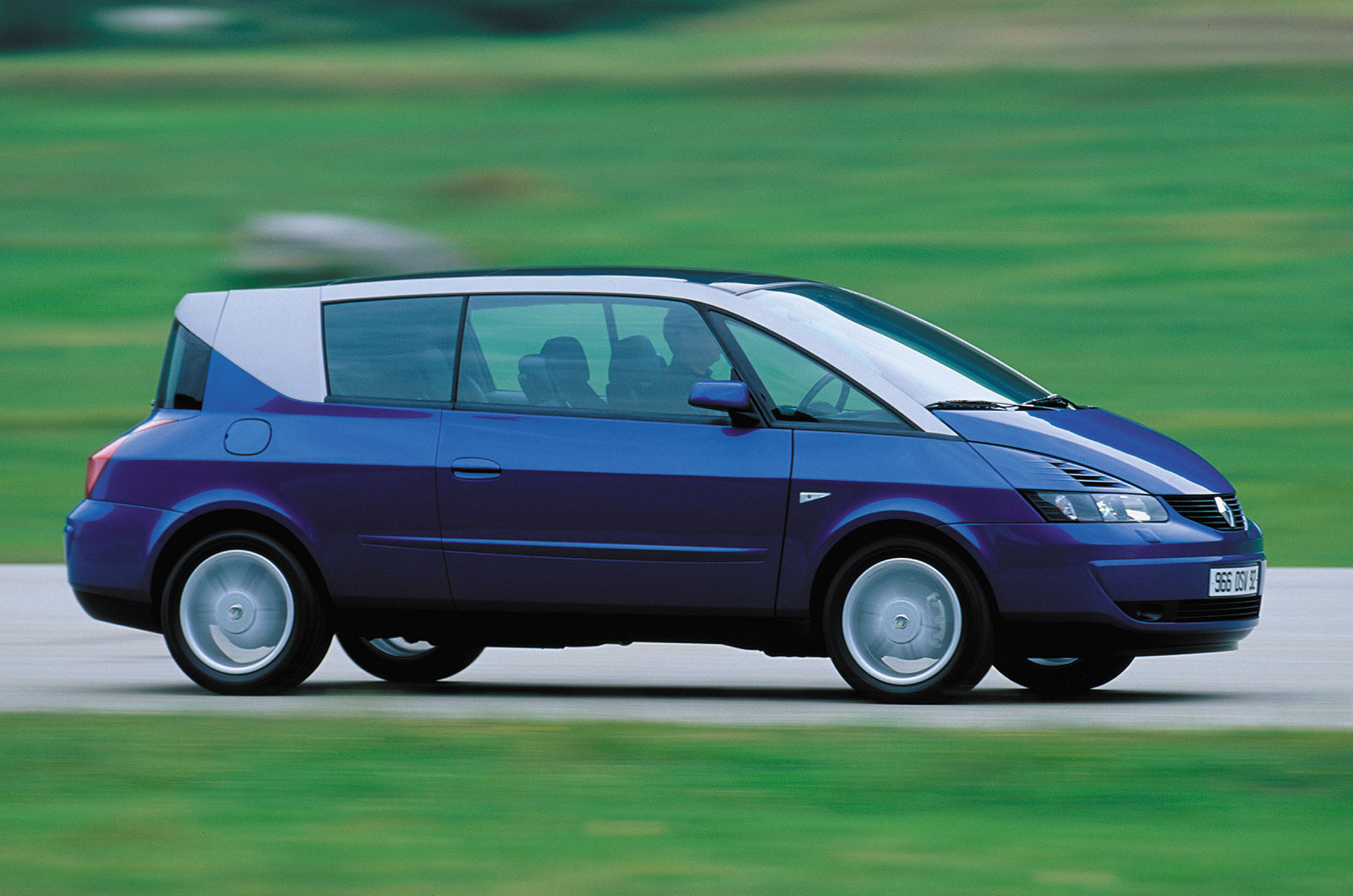
The same size as an Espace, the Renault Avantime was best viewed as a 2+2, despite being billed as a luxurious four-seater. The interior packaging was as poor as the build quality, while the huge weight blunted performance and sent fuel bills soaring.
It was a brilliant concept that still turns heads – but the Avantime just made no sense whatsoever. It was never sold in the US.
Rover CityRover (2003)
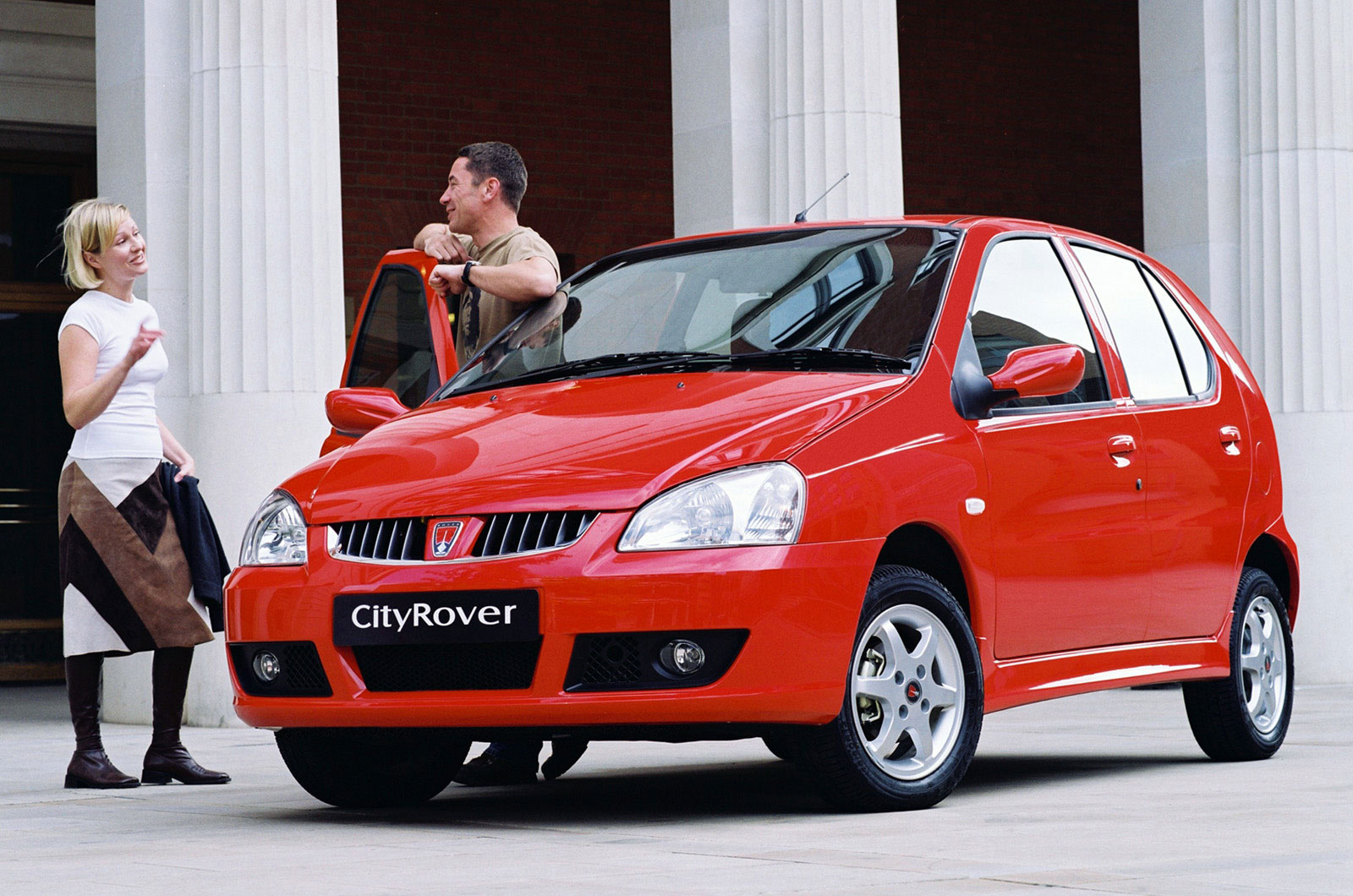
MG Rover fancied itself as an upmarket brand. A brand that could take on premium marques such as BMW and Audi – or at the very least, semi-premium brands such as Volkswagen and Volvo. But then it tried to sell a rebadged Tata Indica to British buyers.
The Indian-built Indica was already five years old when the CityRover arrived and it was desperately spartan. Rumour had it that MG Rover bought them in for little more than $6000, then attempted to sell them for $14,000 and upwards. For some reason the strategy didn't work. The CityRover died along with the MG Rover company in 2005.
Saturn Ion (2003)
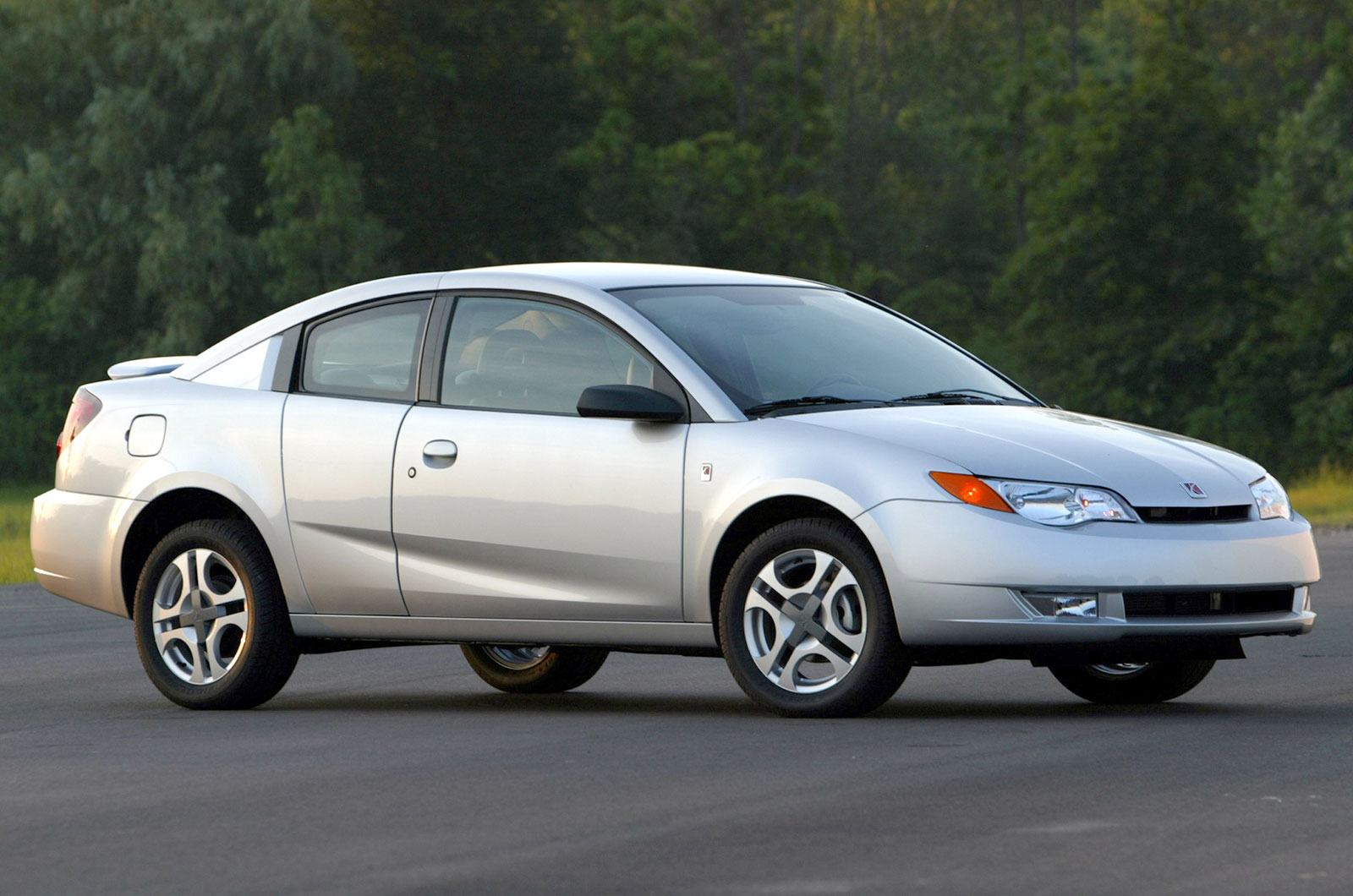
When General Motors launched the Saturn marque in 1985 it was to take on Japanese imports, which is why its products were compact and affordable. They were intended to be cheap and cheerful rather than cheap and nasty, but nobody told that to the team behind the Saturn Ion which launched in 2003.
The Ion was poorly designed, ergonomically suspect and poor to drive and this car – thanks to no fewer than a dozen recalls – is often cited as one of the key reasons for the demise of Saturn, which was closed down in 2010.
Dodge Caliber (2006)
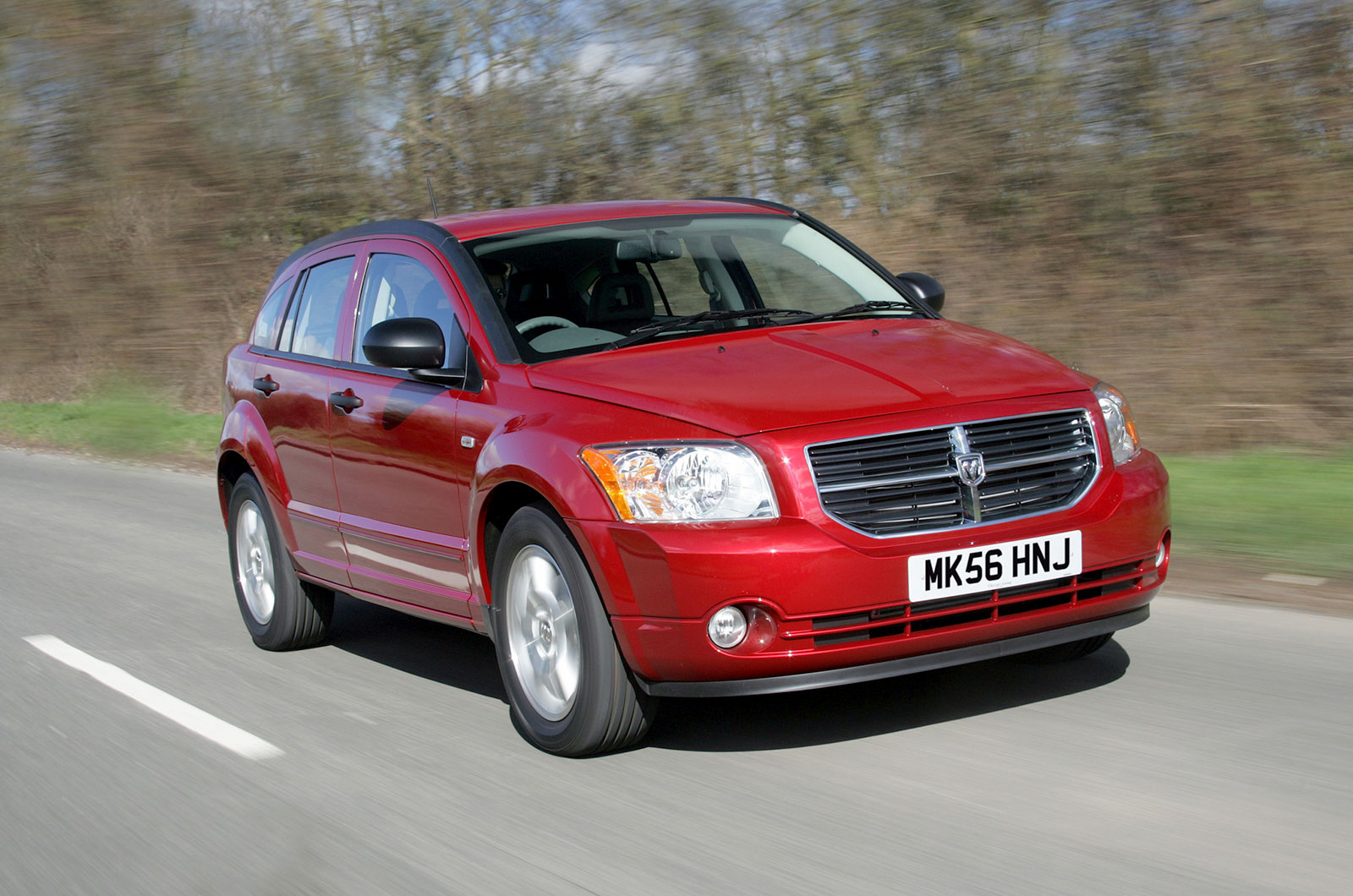
Dodge wanted to relaunch itself in Europe, and thought the compact Caliber was the car for the job. However, the fit and finish were as poor as the driving experience; here was a car that somehow managed to offer a harsh ride while still wallowing in the bends. America got a hot 'sporty' SRT-4 version, but that didn’t come to Europe. Dodge’s European adventure ended in 2011.
Subaru Tribeca (2006)
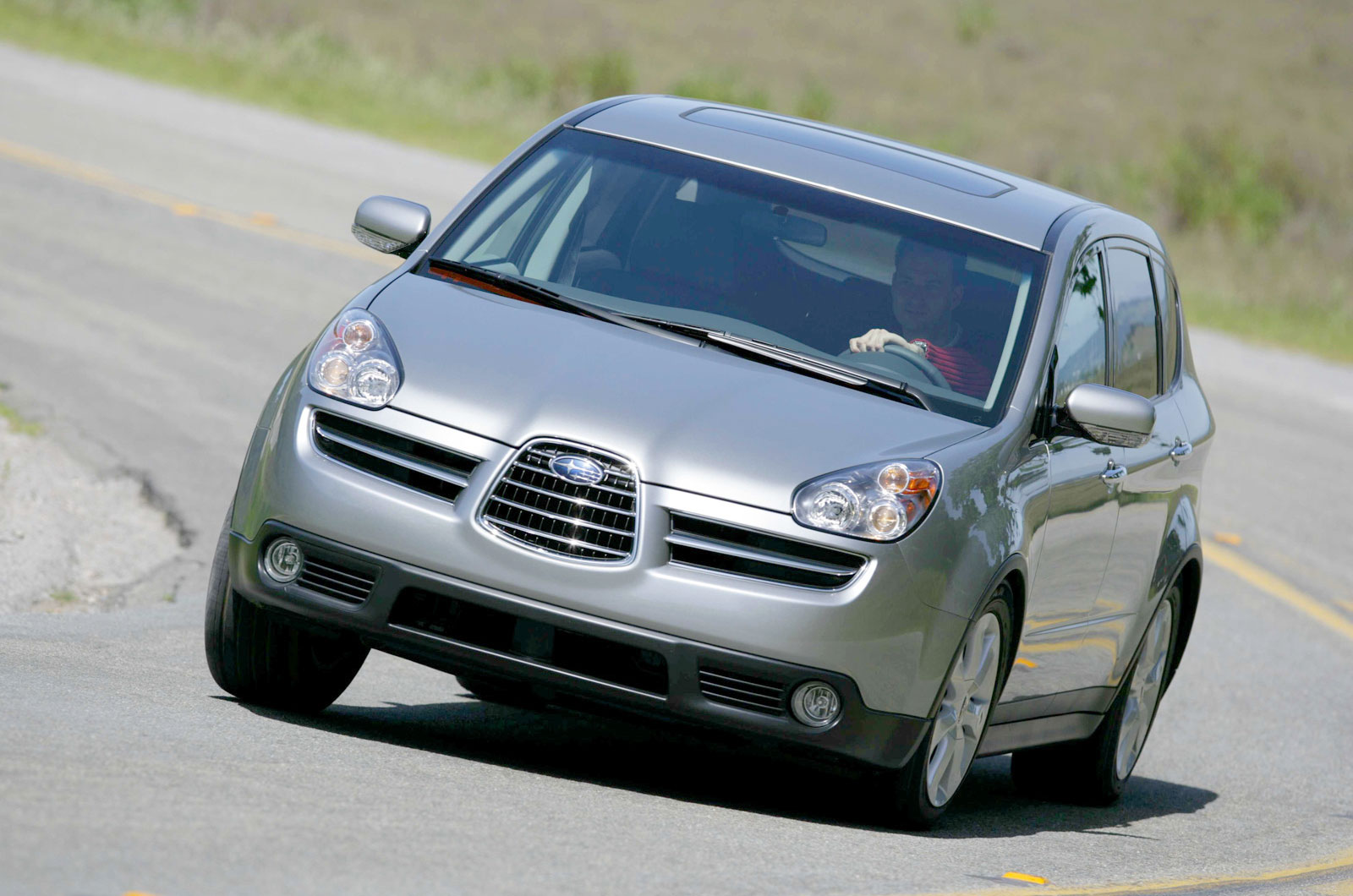
Subaru has for many years been successful in America, but it wasn’t always that way, as with the Tribeca. Never quite sure whether it was an SUV or an MPV, the vehicle featured a thirsty 3.0-liter flat six-cylinder unit that pushed running costs sky high. Buyers mostly shopped elsewhere, and sales stopped in 2014.
Alfa Romeo 4C (2013)
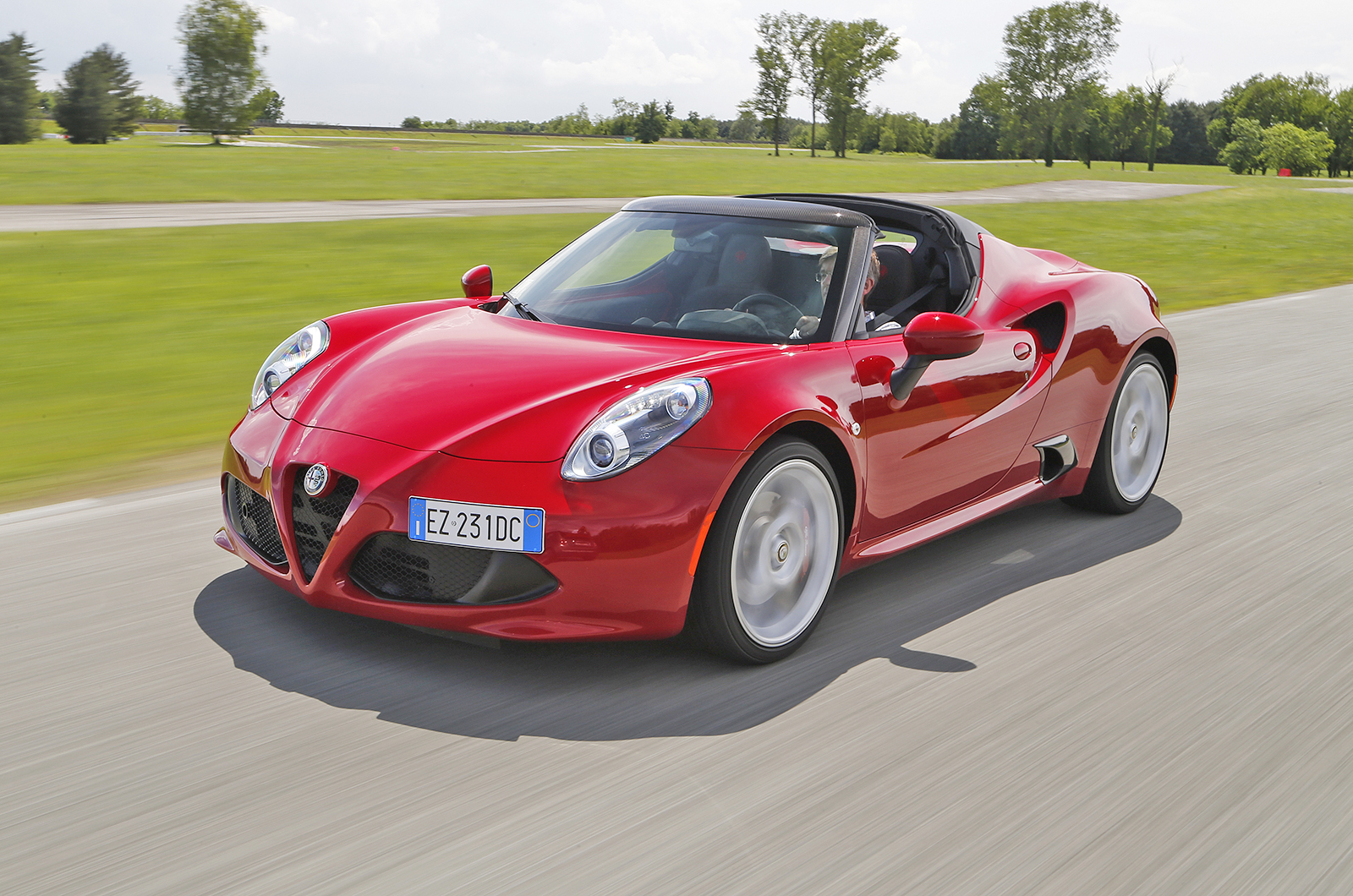
The basic facts of the 4C were enough to get our pulses racing: a carbonfiber-bodied sports car with a free-revving engine and gorgeous styling.
But the suspension was never set up properly so the handling was never quite right, and the availability of only a dual-clutch automatic transmission put off many keen enthusiasts who might otherwise have been prepared to pay the optimistic asking prices.
Ford Ecosport (2014)
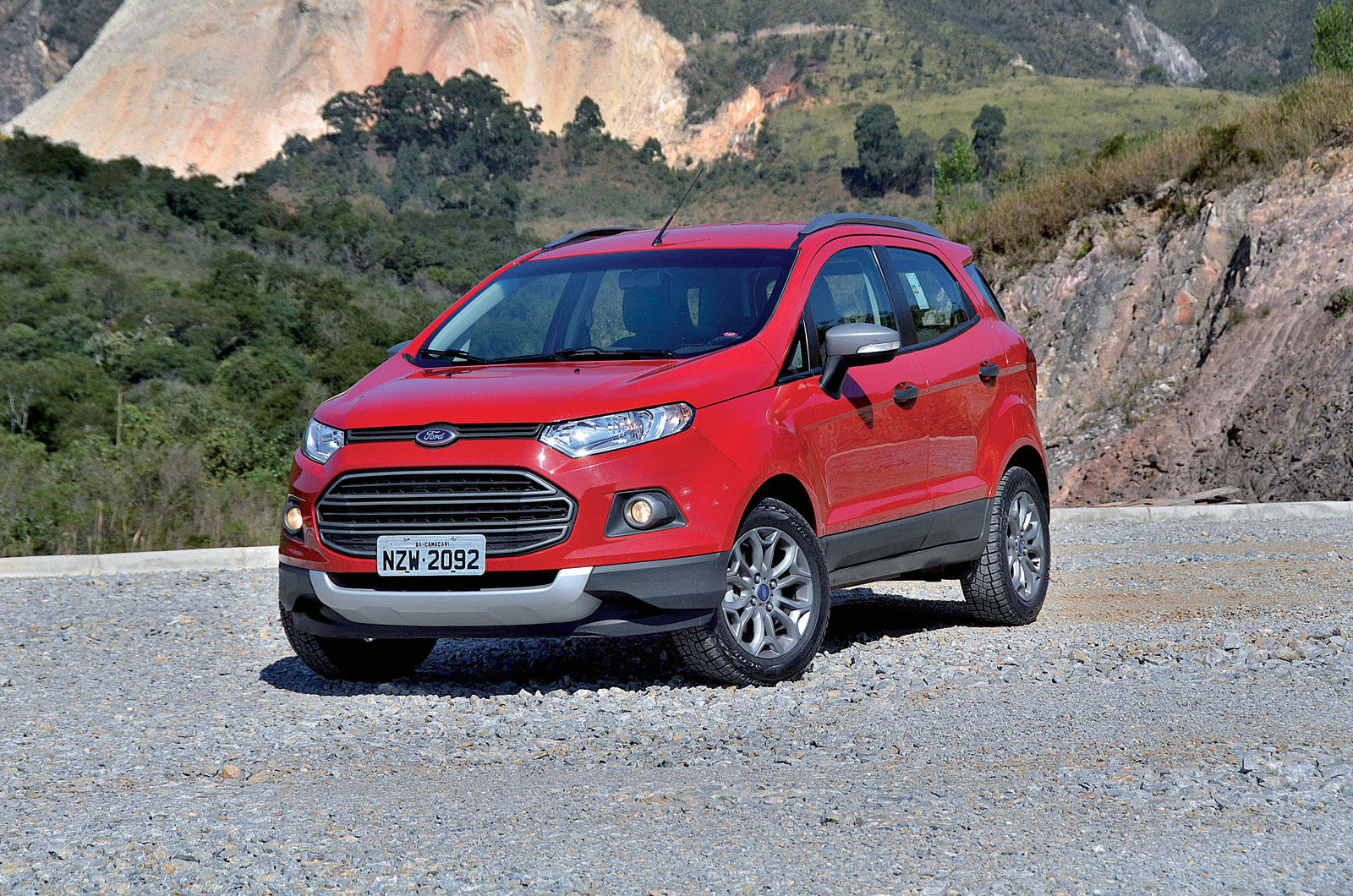
Ever since the arrival of the Mondeo in 1993, Ford of Europe has churned out one great after another. But the original Indian-built Ecosport wasn't one of them, as we made clear when we drove it:
"It’s a long time since a new Ford was as bad as the Ecosport. It may not be a European-hailing car and it may be due an early revision to address its failings, but customers won’t care and neither should we. Its perceived quality is regrettable, its diesel powertrain is rough and flat, and its chassis is so rudimentary that it could even damage Ford’s prized reputation for dynamic excellence".
If you enjoyed this story, please click the Follow button above to see more like it from Autocar

Mercedes-AMG GLE 63 S and GLS 63 Redefine Super SUV Performance With New M177...

Ford Concept Cars as Innovation Laboratories Tracing Seven Decades of Design Experimentation and Influence
 A feast for your eyes
Back to the future.
The Ford Heritage Vault is one of the finest sources of publicly available archive information provided by any car maker – and it just keeps getting better. In a recent update, many previously unseen images of concept cars have been added, bringing the total to nearly 2000.
We can’t show them all here, but what we can do is take you through 50 Ford concepts, many (if not most) of which you might never have heard of. We’re presenting them in chronological order, starting with one which dates from over 70 years ago.
FX-Atmos (1954)
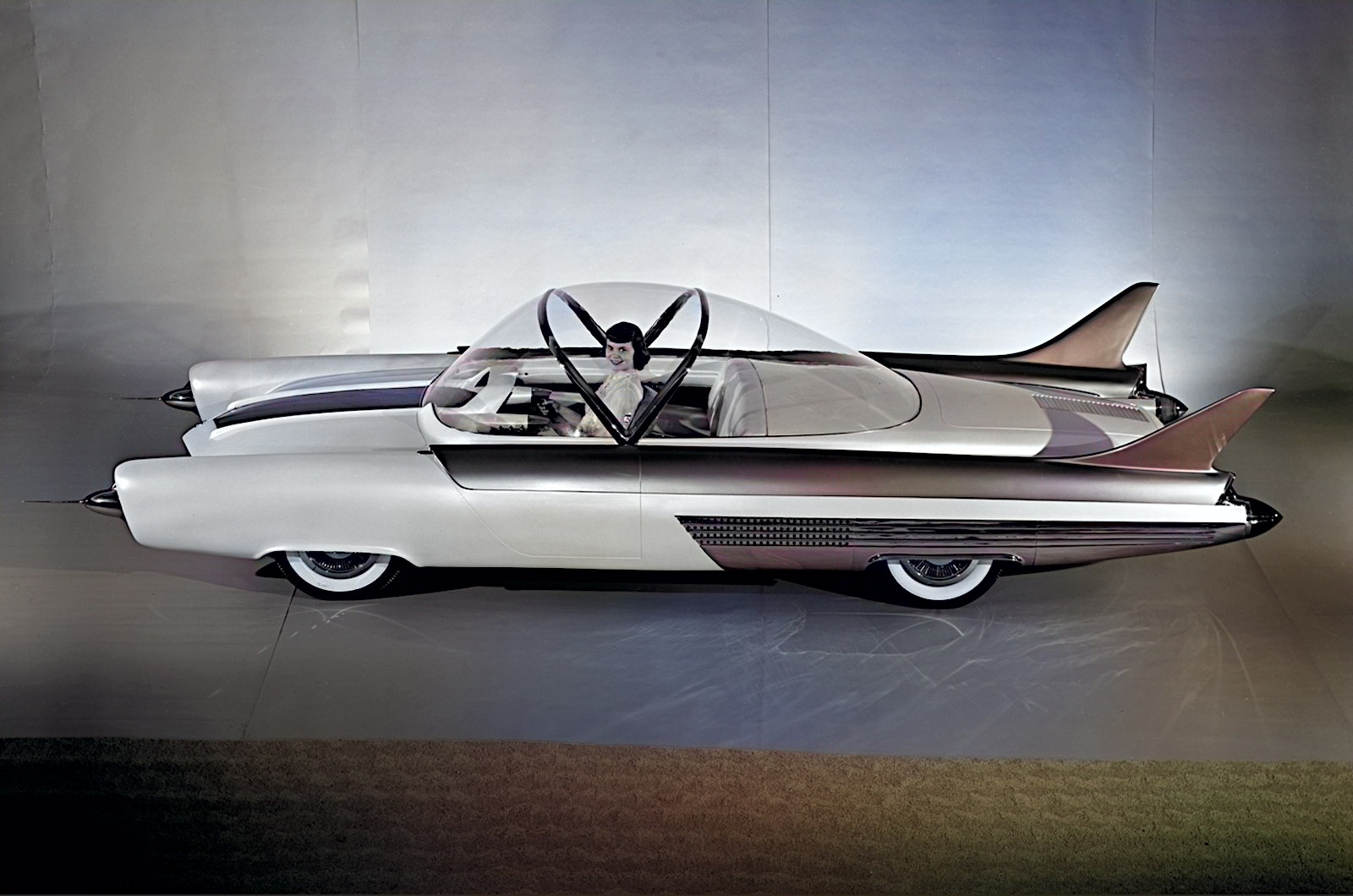
The name of the FX-Atmos (including a hyphen in Ford literature of its time, though not in the Vault) stood for “future experimental atmospheric”. According to Ford vice-president Lewis Crusoe (1895-1973), the concept “is not proposed as a future production vehicle, and for that reason, no engineering considerations have been involved in its development”.
Crusoe added, however, that the FX-Atmos “represents one of many avenues which styling could take in the future”. Sure enough, while bubble canopies and sharp spikes protruding from the front never really caught on, tailfins and extended rear lights, not yet common in 1954, soon would be.
La Galaxie (1957)
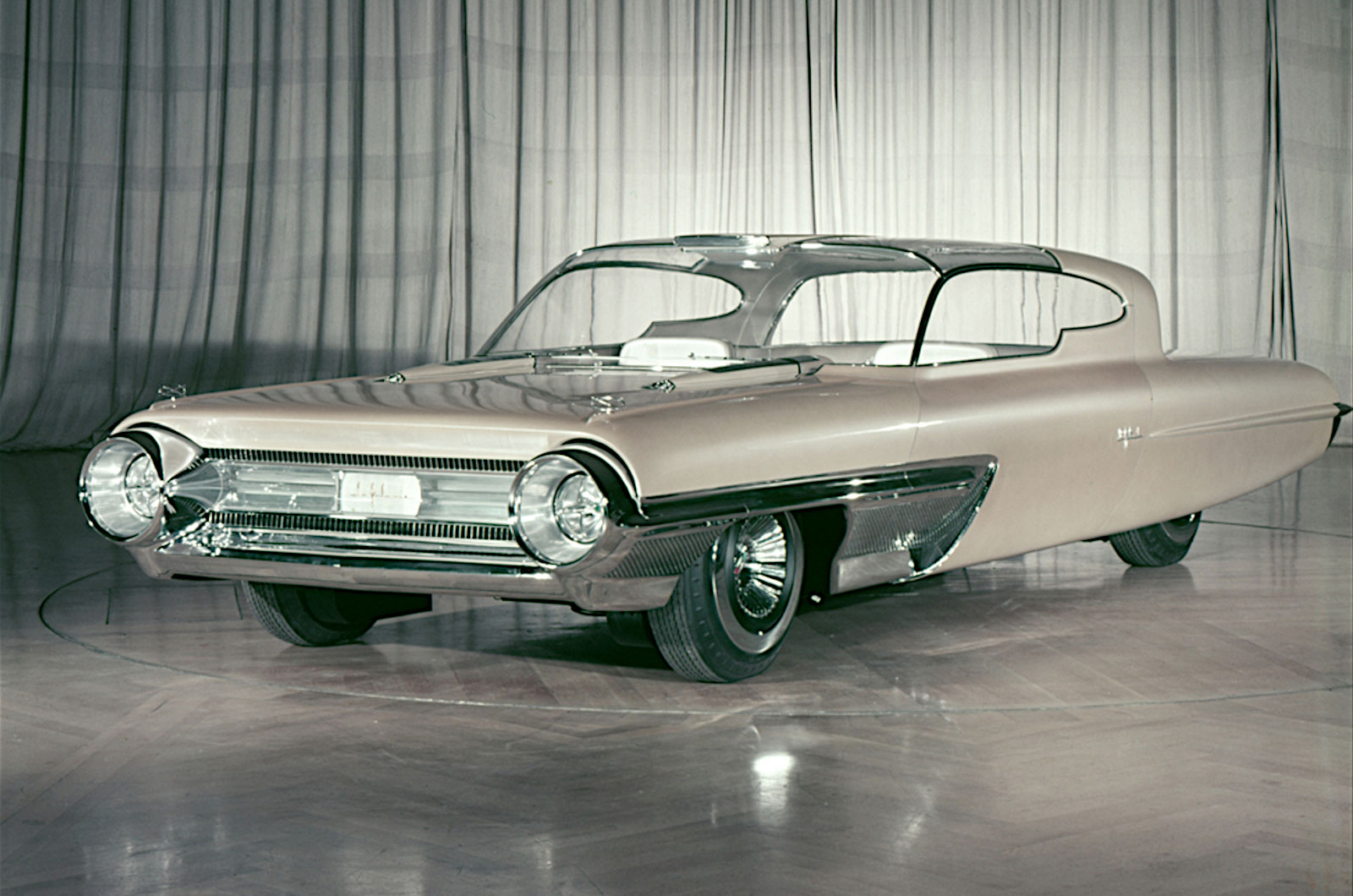
Unveiled, like the FX-Atmos, in Chicago, the La Galaxie six-seat luxury concept was slightly less futuristic. The cowled headlights were unusual, but the reverse-angle rear window and very long trunk were already becoming available in the Mercury Turnpike Cruiser, and would appear in the last-generation British Ford Anglia before the end of the decade.
A windscreen which continued over the heads over the front passengers was more unusual, though. The car also “envisions”, as Ford put it, “an electronic proximity warning device that would stop the car automatically if it came dangerously close to another vehicle or object in its path”, an idea which would not reach production for many years.
Cougar 406 (1962)
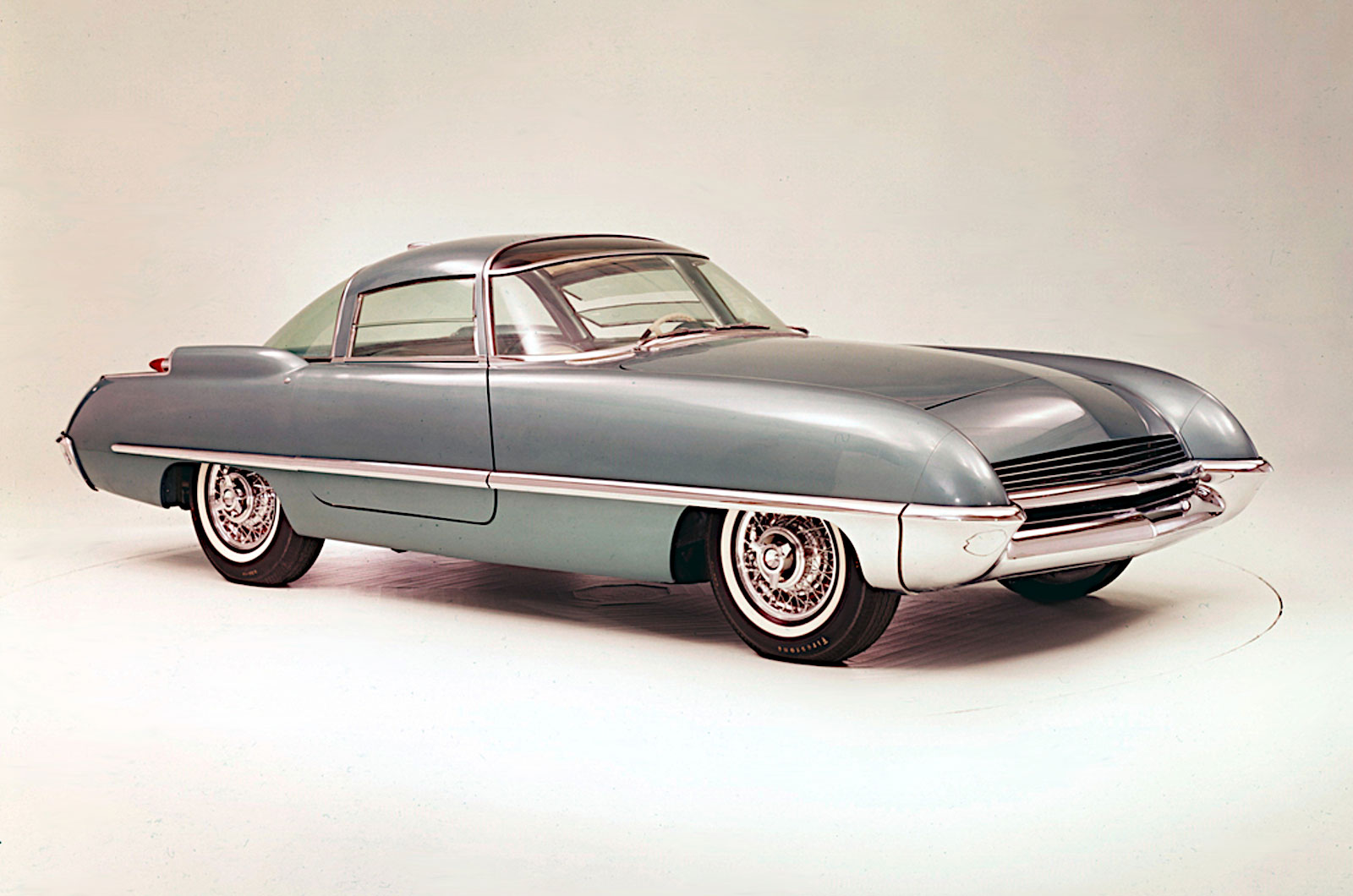
According to a Ford press release issued on 16 February 1962, the day before the opening of that year’s Chicago Auto Show, the Cougar 406 “embodies design features to excite the hardiest sports car fan, along with the comfort and style required in a personal car”. Among the most notable of these features were gullwing doors which, unlike those already seen on the Mercedes 300SL, were electrically operated.
The concept’s name referred partly to a new engine from Ford’s FE V8 family which measured 406 cubic inches, or 6.7 litres.
Ghia Selene II (1962)
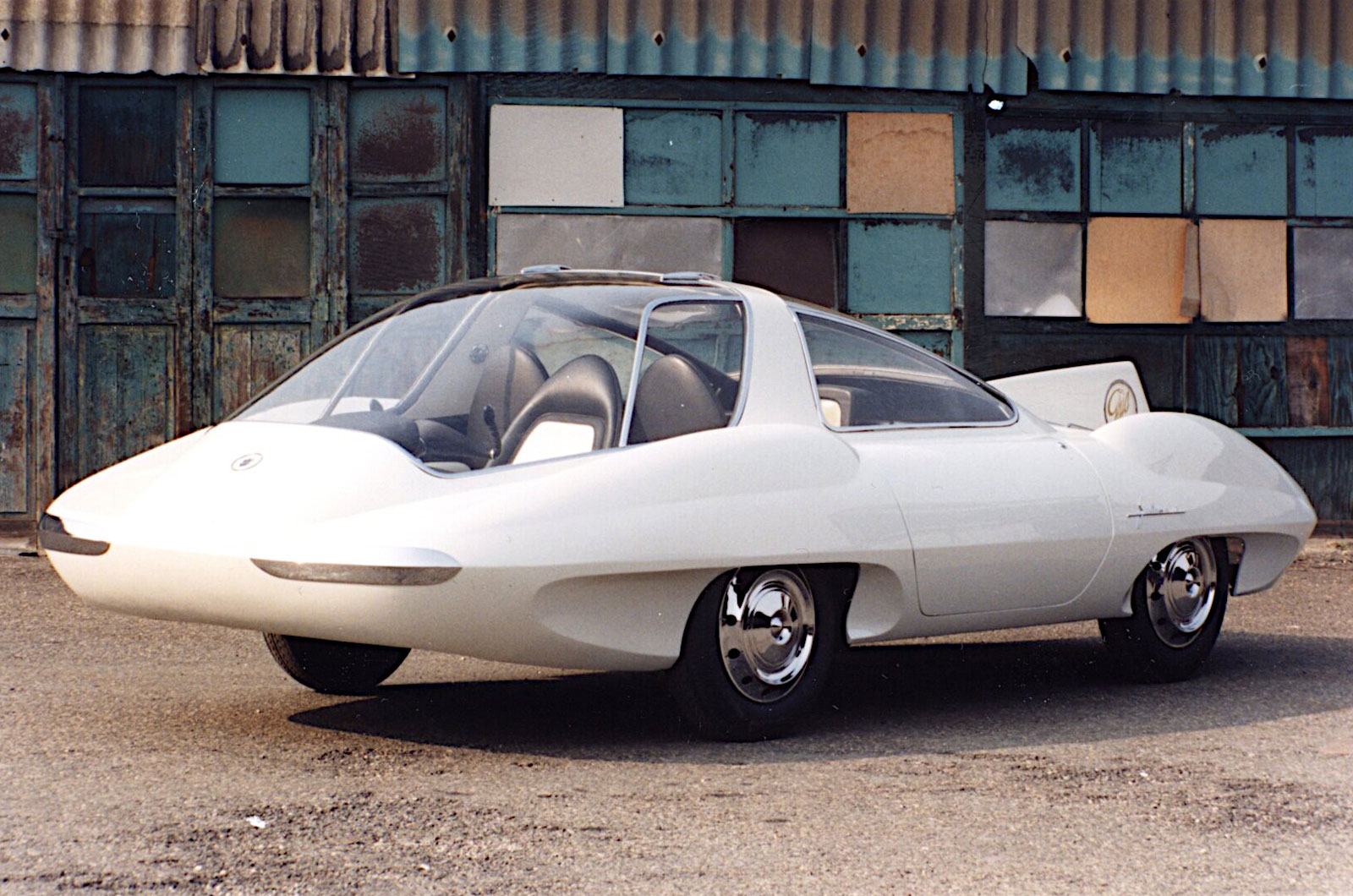
The Heritage Vault includes concepts produced by Ghia long before Ford bought the Italian design house. One example is the Selene II, a radical sports car with an extreme cab-forward design unlikely to score highly in a modern crash test.
Since there was clearly no room up front for an engine, this would have been mounted in the rear. Passengers at that end faced backwards, so they could see where they had been rather than where they were going.
Allegro (1963)
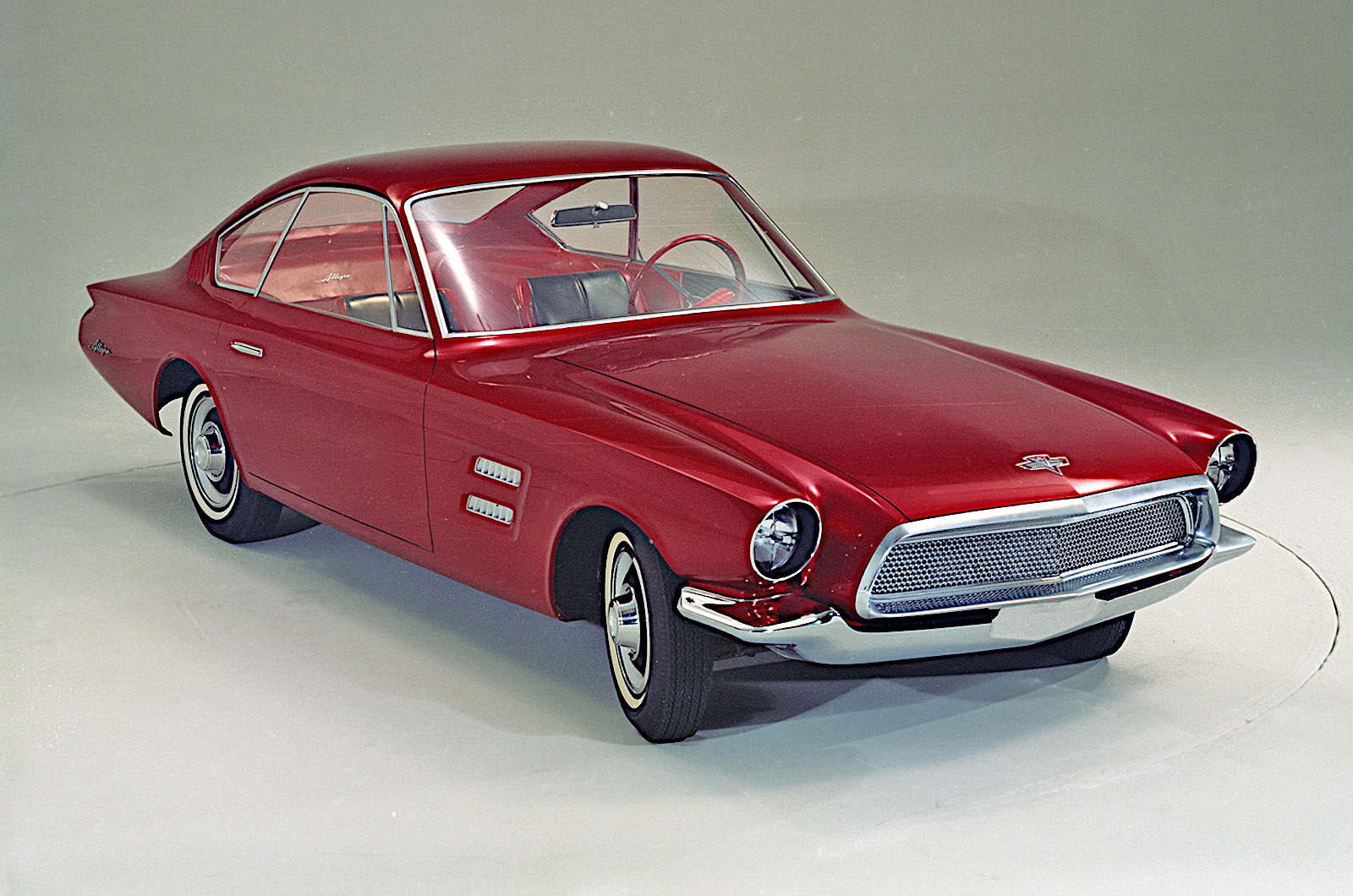
Completely unrelated to the Austin of the same name which went into production a decade later, Ford’s Allegro concept featured pedals which could be adjusted four inches four and aft and a steering wheel which moved four inches in or out and five inches up or down.
As displayed, the car had the 2.4-litre Mileage Maker straight-six engine (already used in the Falcon, among other vehicles) driving the rear wheels, but Ford said it could alternatively have the much smaller Ford Taunus V4 driving the fronts.
Mercury Comet Super Cyclone (1964)
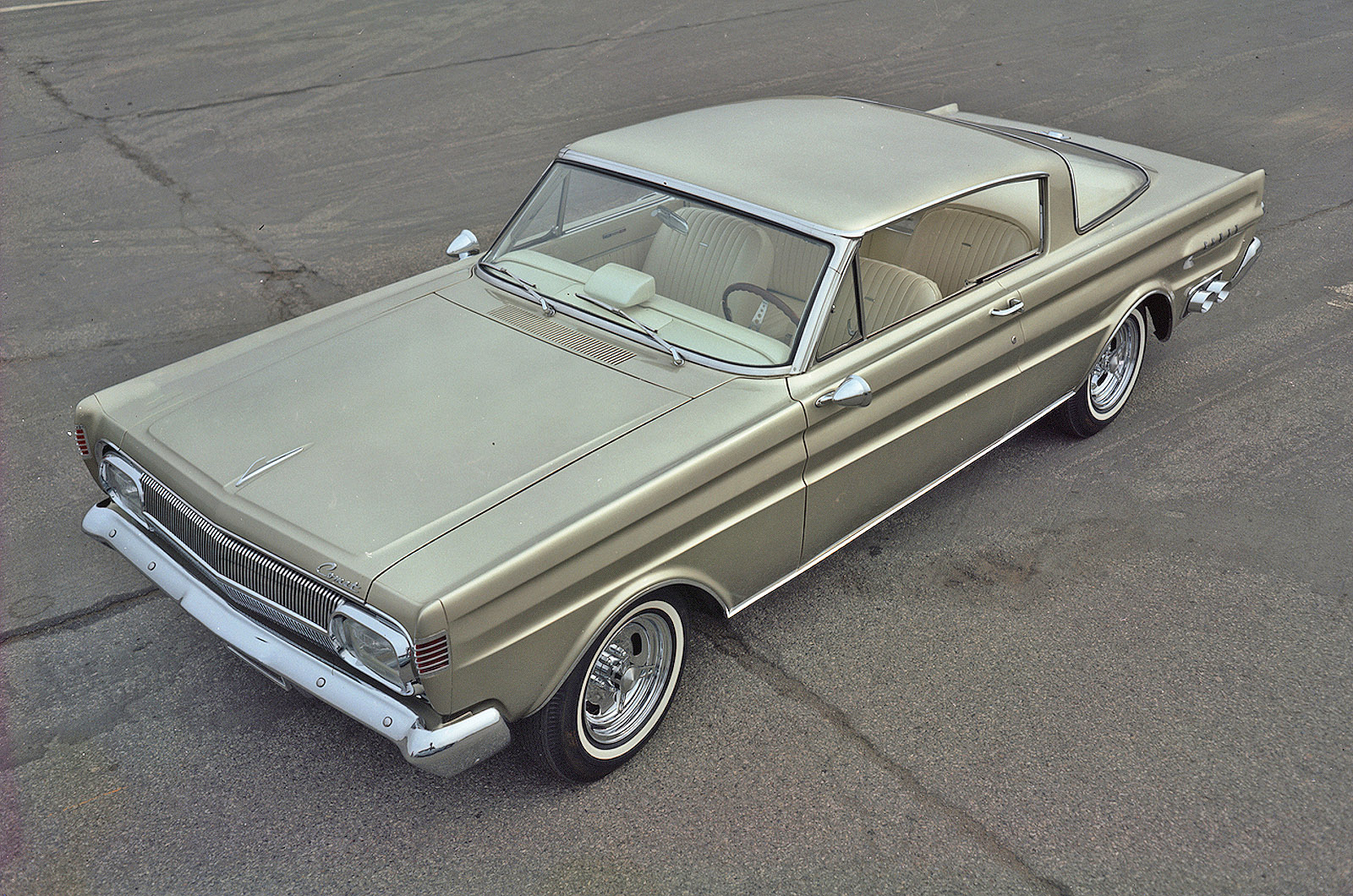
The Super Cyclone was adapted from a standard ‘64 Comet Caliente two-door hardtop and featured rectangular headlights (which would not have been legal for a car sold in the US at the time), aerodynamic bodywork described by Ford as ‘full fastback’ and a radar system which detected the presence of vehicles approaching from the rear. The radar was there merely for show on the concept, “but functional versions have been under study by Ford scientists”.
The exterior colour was called Murano Gold, and was created by applying a transparent gold outer coat over a black base.
Fairlane GT-X (1966)
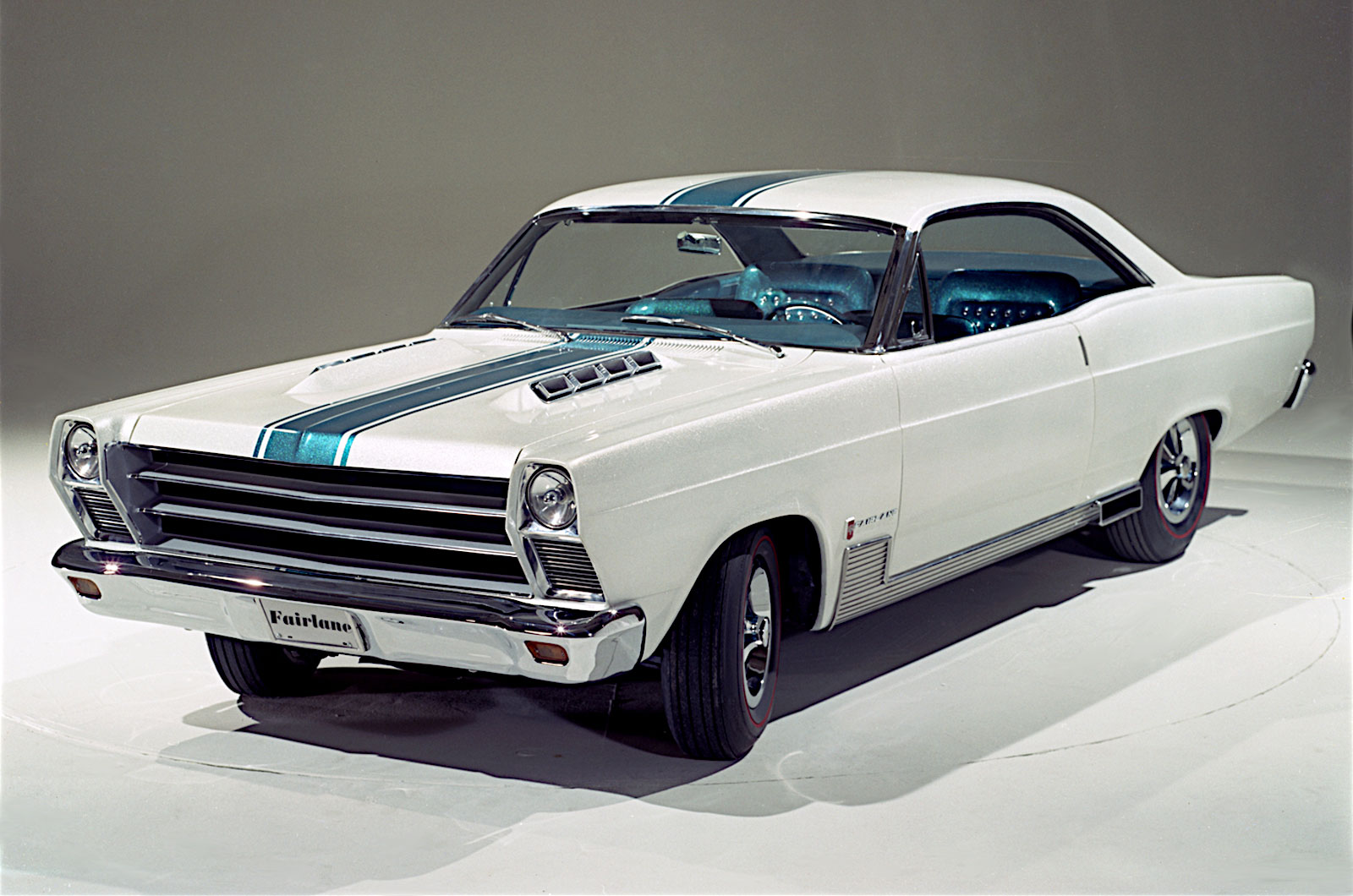
The GT-X started out as a standard fifth-generation Fairlane which was reassembled by Ford engineers and then passed on for further work to customizer Gene Winfield (born 1927). Its purpose was to promote the stock Fairlane at events around the country, but became surplus to requirements in 1967, when the road car was redesigned.
The concept disappeared for a long time, but returned to public view in 2019 after a restoration which included a repaint by Winfield, more than half a century after he last worked on the car.
Mach 2 (1967)
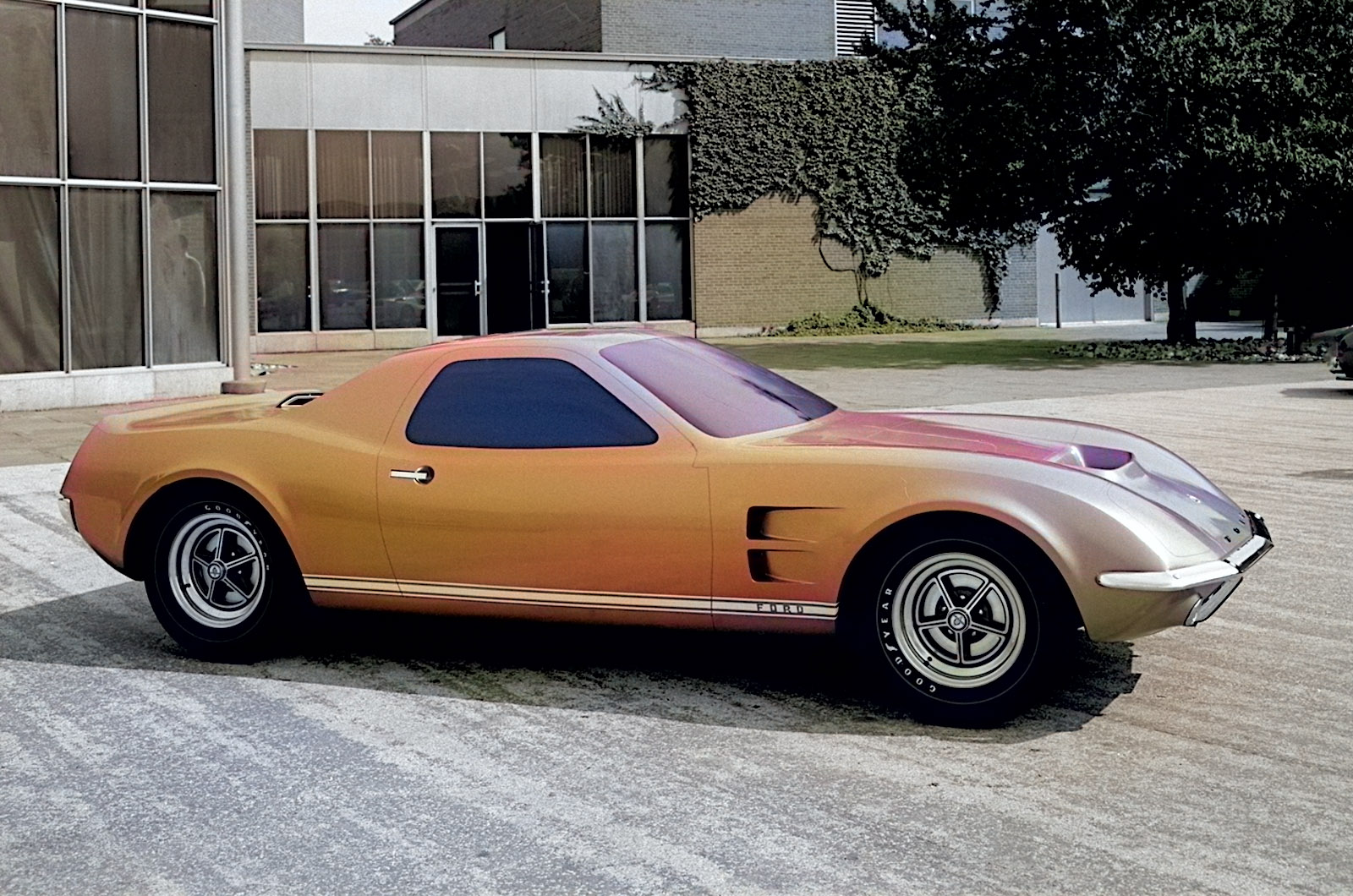
This picture shows the first of two concepts named Mach 2, this one being developed for road use and the other for racing. They were both designed by Ford but constructed by Kar Kraft Engineering, and were based on first-generation Mustang platforms adapted to accept a mid-mounted 4.7-litre Windsor V8 engine and Colotti transaxle.
Despite the connection, Ford insists that the Mach 2 was never planned as a future mid-engined Mustang, and that if it had ever been put into production it would have been a separate model.
Mustang Mach 1 (1968)
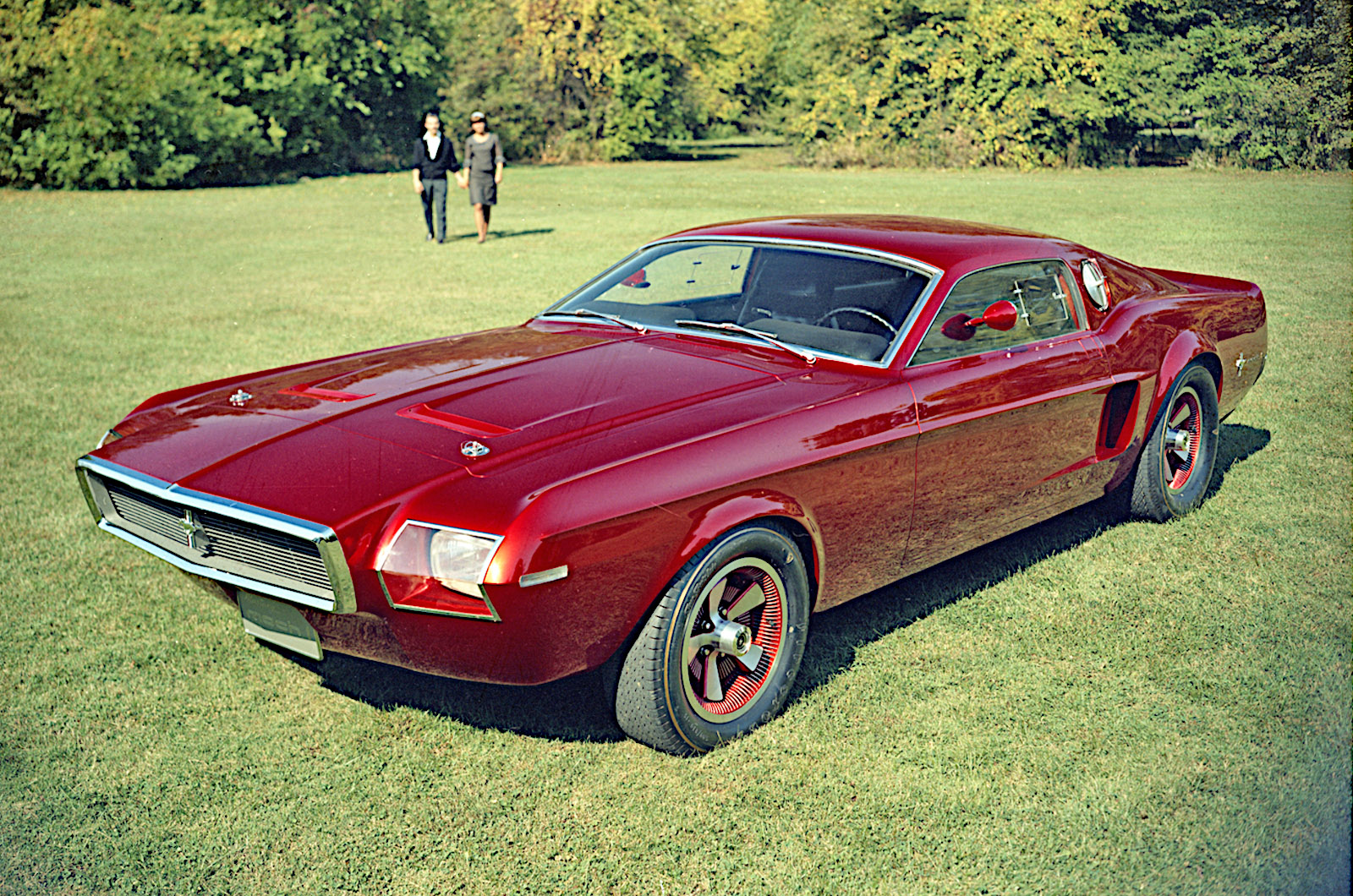
Having first used the Mach 1 name for a bizarre, wheel-less, single-seat, levitating pod displayed in 1959, Ford brought it back seven years later for a converted Mustang with a very low roof and a hatchback rear.
The same car is shown here in its revised 1968 form with a new front end which does not resemble anything Ford put into production. The first Mustang Mach 1 available to the public went on sale in the 1969 model year, and there have been many more since then.
Thunderbird Saturn II (1968)
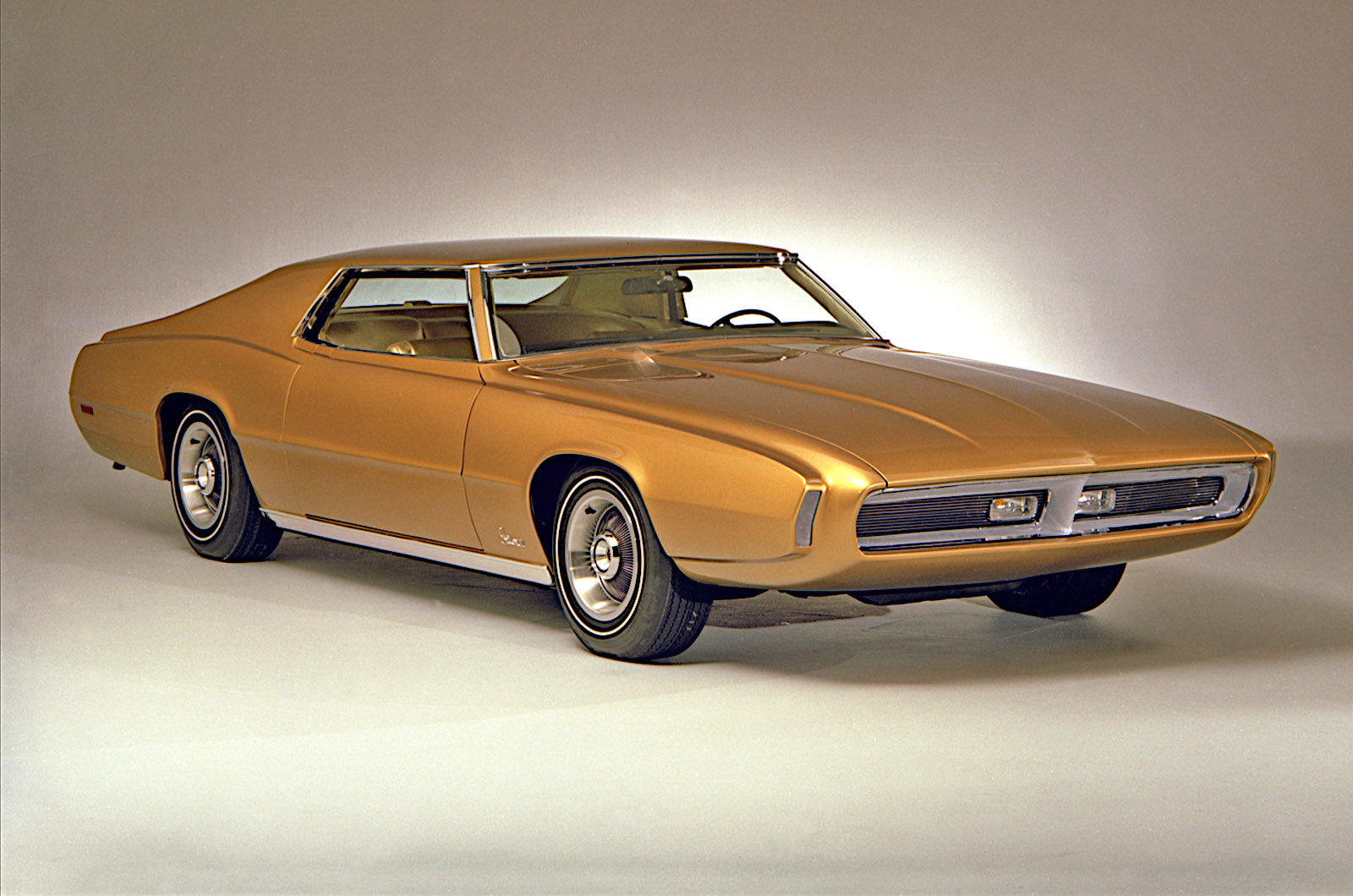
Using a period-correct term, Ford described Saturn II as a “far-out variation” of the ‘69 Thunderbird. Its design, which included gold paintwork and interior upholstery, was radically different from that of the standard model, and foreshadowed trends of the following decade, but there was a lot going inside too.
In addition to a CB radio, a microphone and a portable tape recorder, Saturn II featured a primitive equivalent of today’s satellite navigation, though in this case the directions were stored on a “’trip control’ computer card” which could be pushed into a slot in the centre console. “Theoretically”, a small screen would give the driver the distance to, and direction of, the next turn on the journey.
Ghia Flashback (1975)
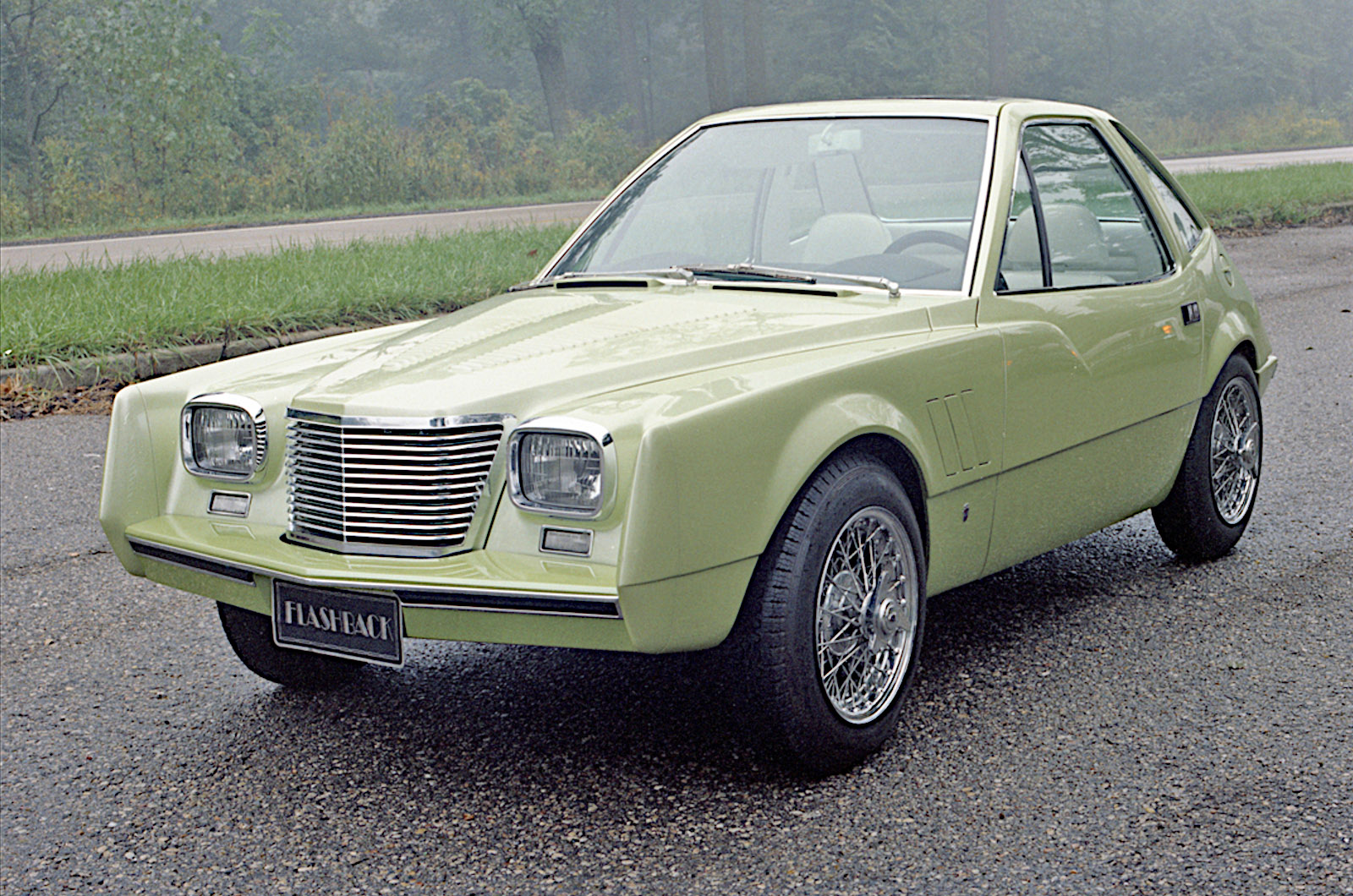
Employees at the Ford Design Center in Dearborn collaborated, perhaps not entirely successfully, with their counterparts at the now Ford-owned Ghia in Turin to produce the Flashback concept. Despite being only 134in (3404mm) long, or about three feet shorter than the contemporary Mustang, it had several styling features of past decades, including a long hood, a prominent grille and wire-spoke wheels.
There were hints that the pearlescent apple green two-seater could be powered by a four-cylinder engine, but this never happened, and the Flashback remained a “non-driveable design exploration”.
Ghia Microsport (1978)
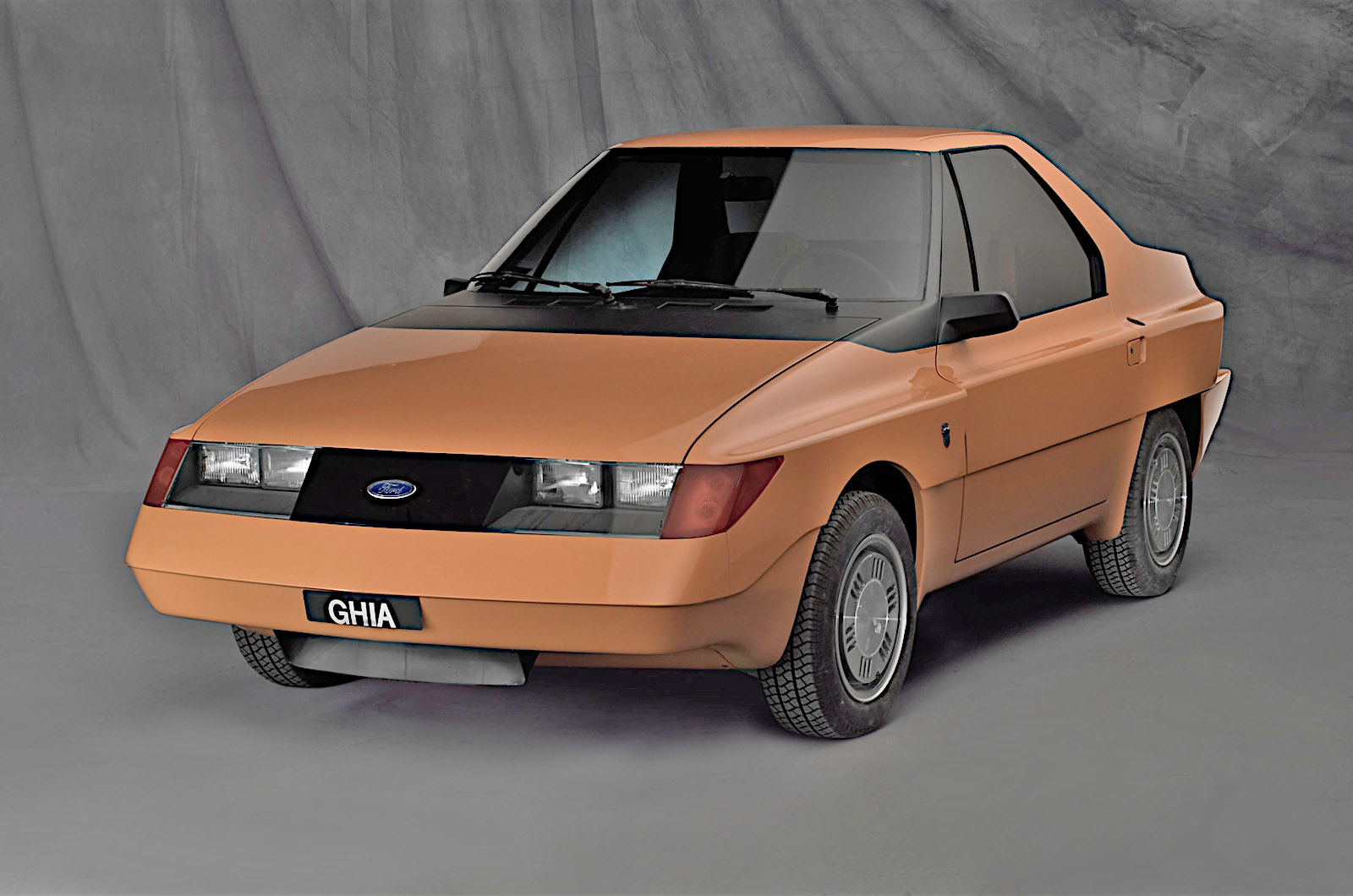
The Microsport was the fourth of many Ghia concepts based on the Fiesta supermini, and the only one revealed in 1978. Ten inches shorter than the standard car, it had only two seats, and had aluminium body panels, lightweight glass and impact-absorbing plastic structures at each end.
Ford literature states that the Microsport had a two-tone white and red paint scheme, but this was clearly not the case when the images uploaded to the Heritage Vault were taken.
Megastar II (1978)
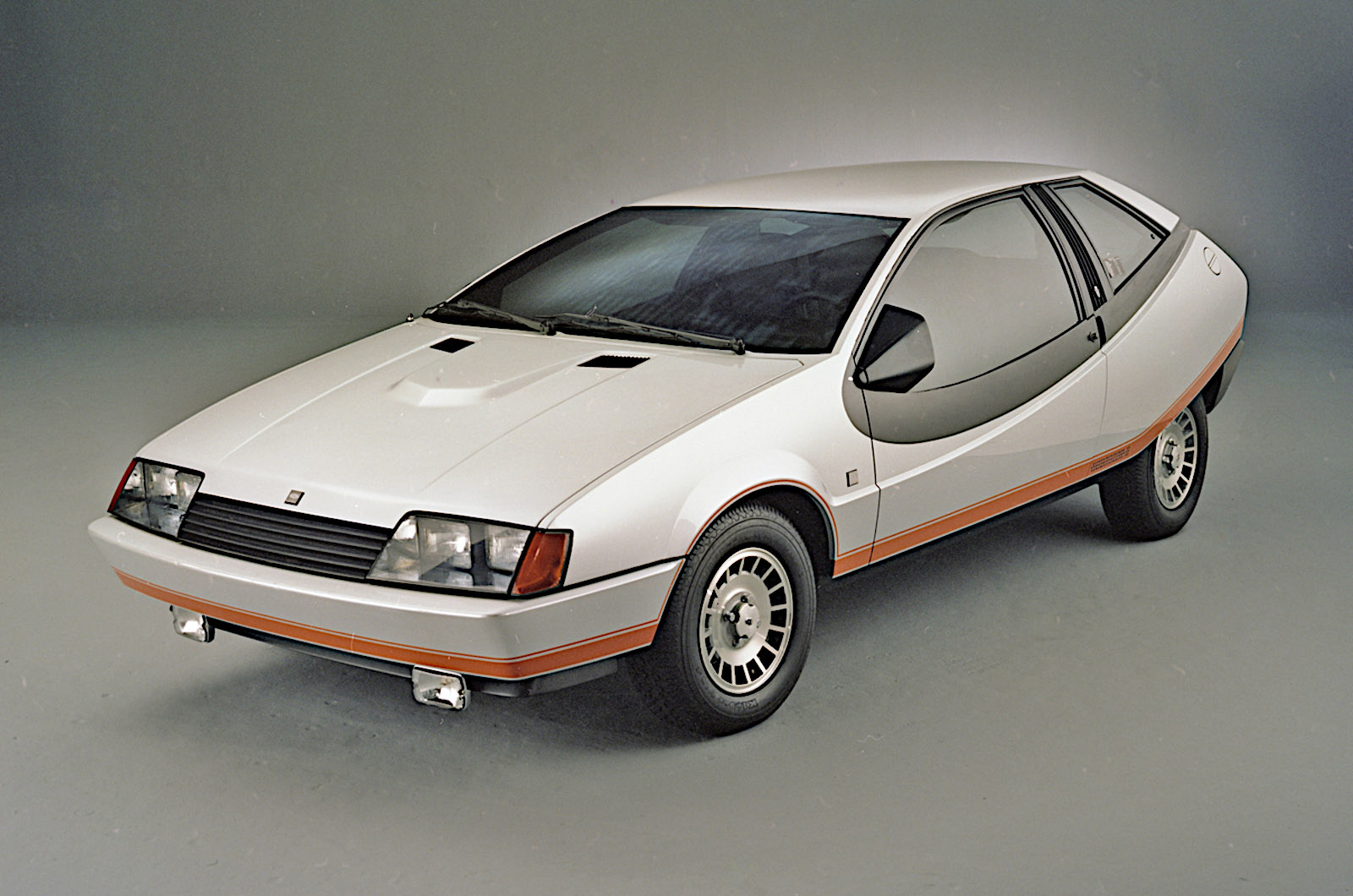
Along with the Fiesta-based Tuareg off-roader, Megastar II was part of Ford’s celebration of its 75th anniversary. The concept, designed by Ghia, was based on the contemporary Taunus (the German equivalent of the UK’s Cortina), and used the same four-cylinder engine, four-speed manual gearbox and front and rear suspension.
The floorpan was shortened at the rear, however, and the hatchback body was wedge-shaped, with deep windows in each passenger door. Megastar II made its public debut in Geneva in March 1978, and went on to be displayed at Auto Expo in New York and an import show in Los Angeles.
Ghia Pockar (1980)
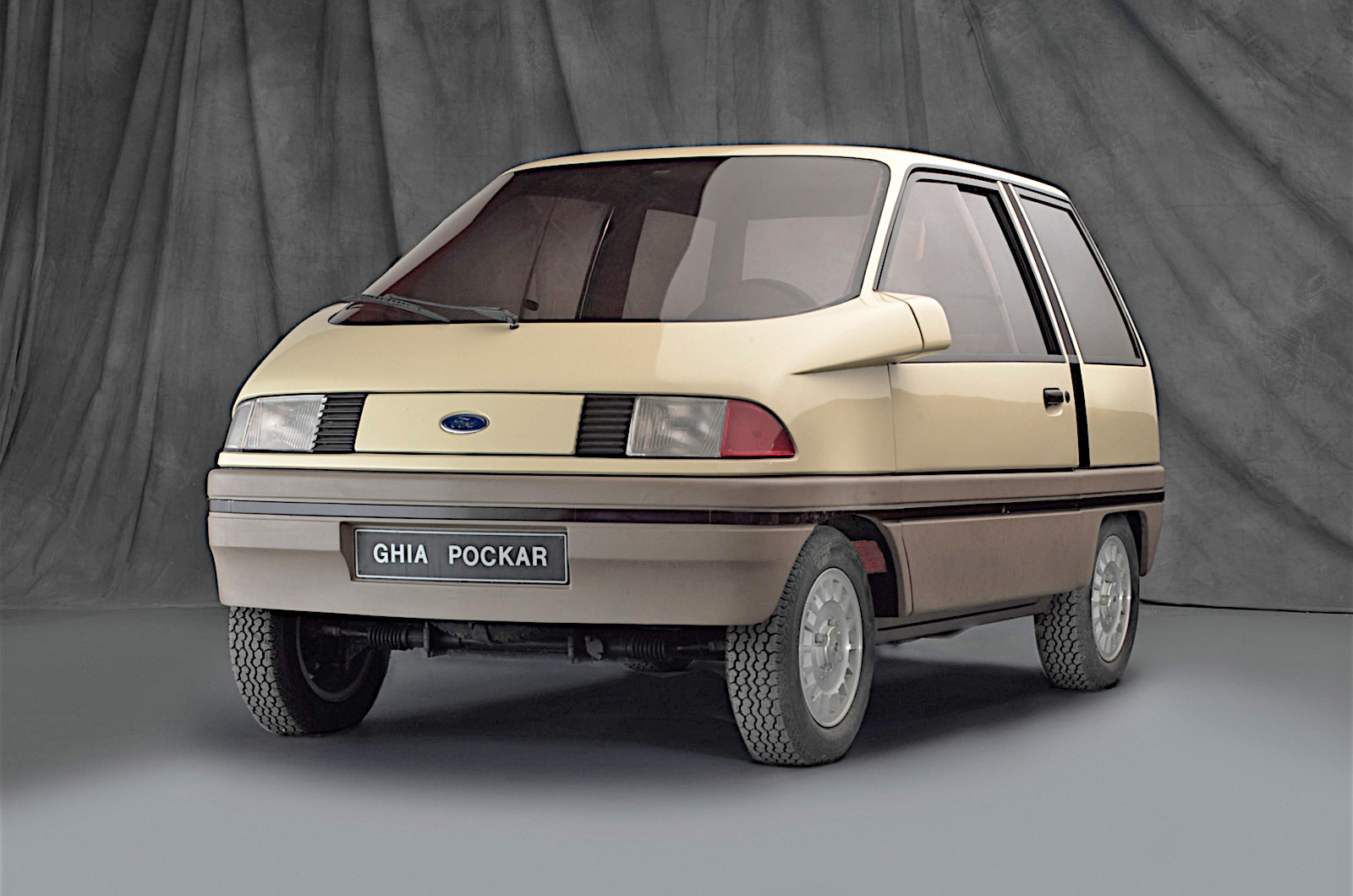
Another of Ghia’s various Fiesta-based concepts, the Pockar, short for ‘pocket car’, had room for four passengers (or perhaps five – Ford’s own contemporary accounts vary) despite being only 129in (3277mm) long.
To maintain some level of practicality, luggage could be stored in the sides, and the rear seat could be folded flat to release more cargo space. The bumpers wrapped around the entire vehicle, providing “added protection when parking in congested areas”.
Mercury Antser (1980)
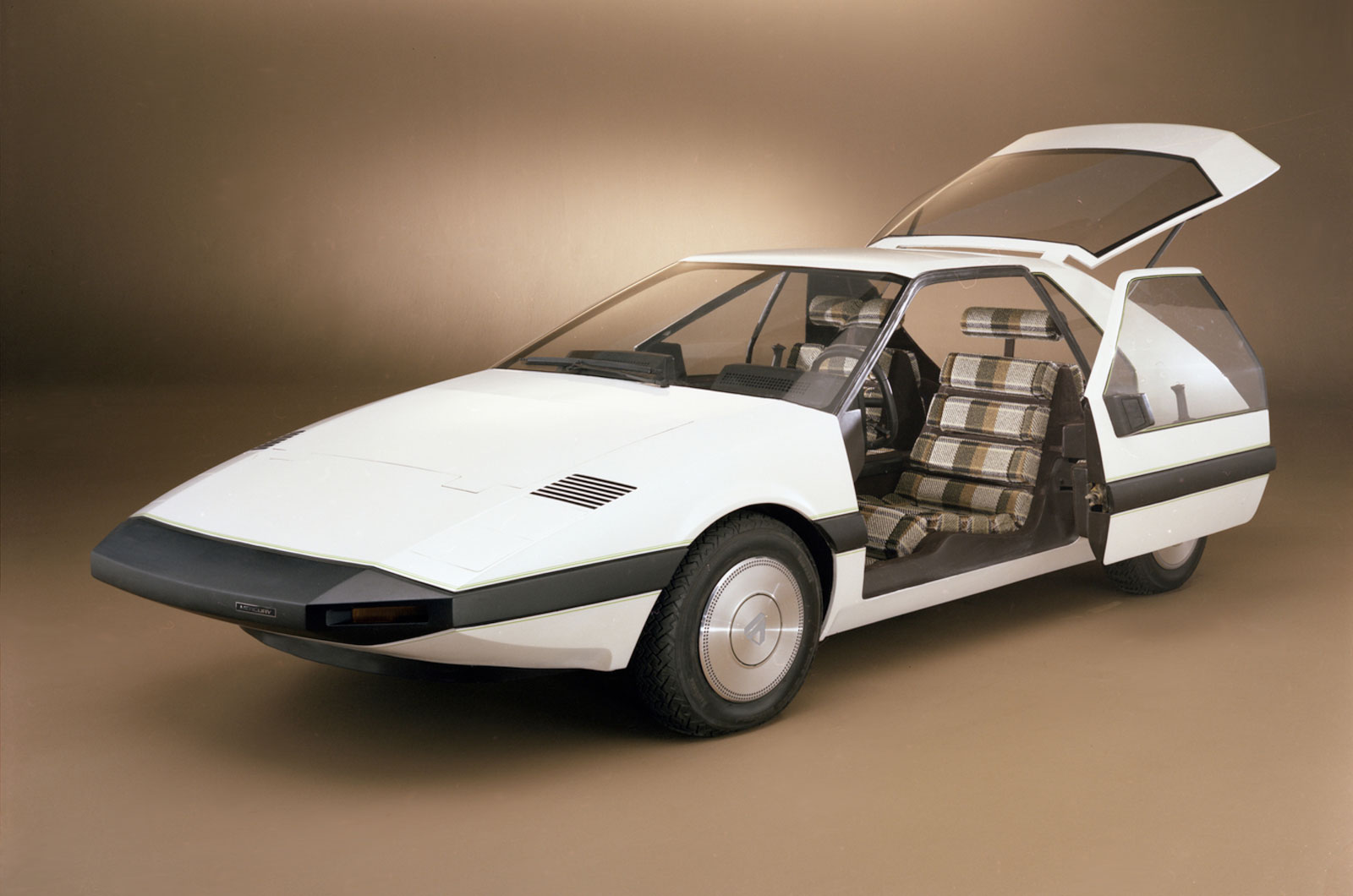
The Antser, displayed at the Detroit Auto Show in January 1980, was a wedge-shaped electric concept with 2+2 seating, an injection-moulded plastic body and sliding doors.
Its seats had inflatable cushions whose level of support could be altered by pressing buttons on the console, while a “highly sophisticated electronic instrument panel” provides a wide array of computer-controlled readouts”, including a map display.
Ghia Cockpit (1981)
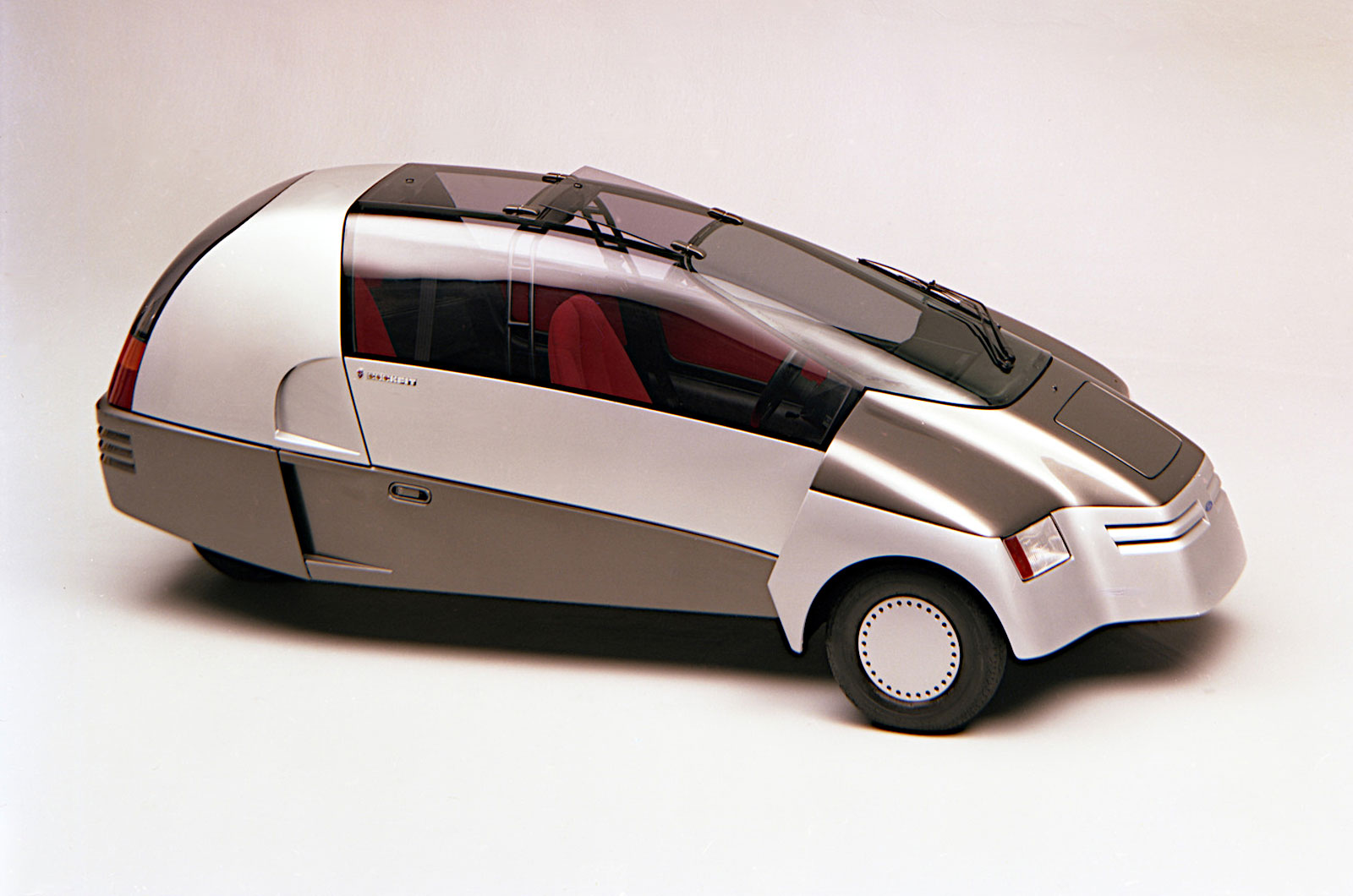
Having experienced, like everyone else, two global oil crises in the past decade, Ford was naturally giving a lot of thought to fuel economy in the early 1980s. One example of this is the Ghia Cockpit, a very aerodynamic tandem two-seat city car with a front-hinged canopy and an overall weight of just 770 pounds (349kg).
The single rear wheel was driven by a 12bhp 200cc single-cylinder petrol engine supplied by Piaggio, though Donald F. Kopka, then Ford’s vice president of design, explained at the Urban Car News Conference in Dearborn on 14 July 1981 that it could also be powered “by electricity or by an alternative fueled engine”.
Ghia Brezza (1982)
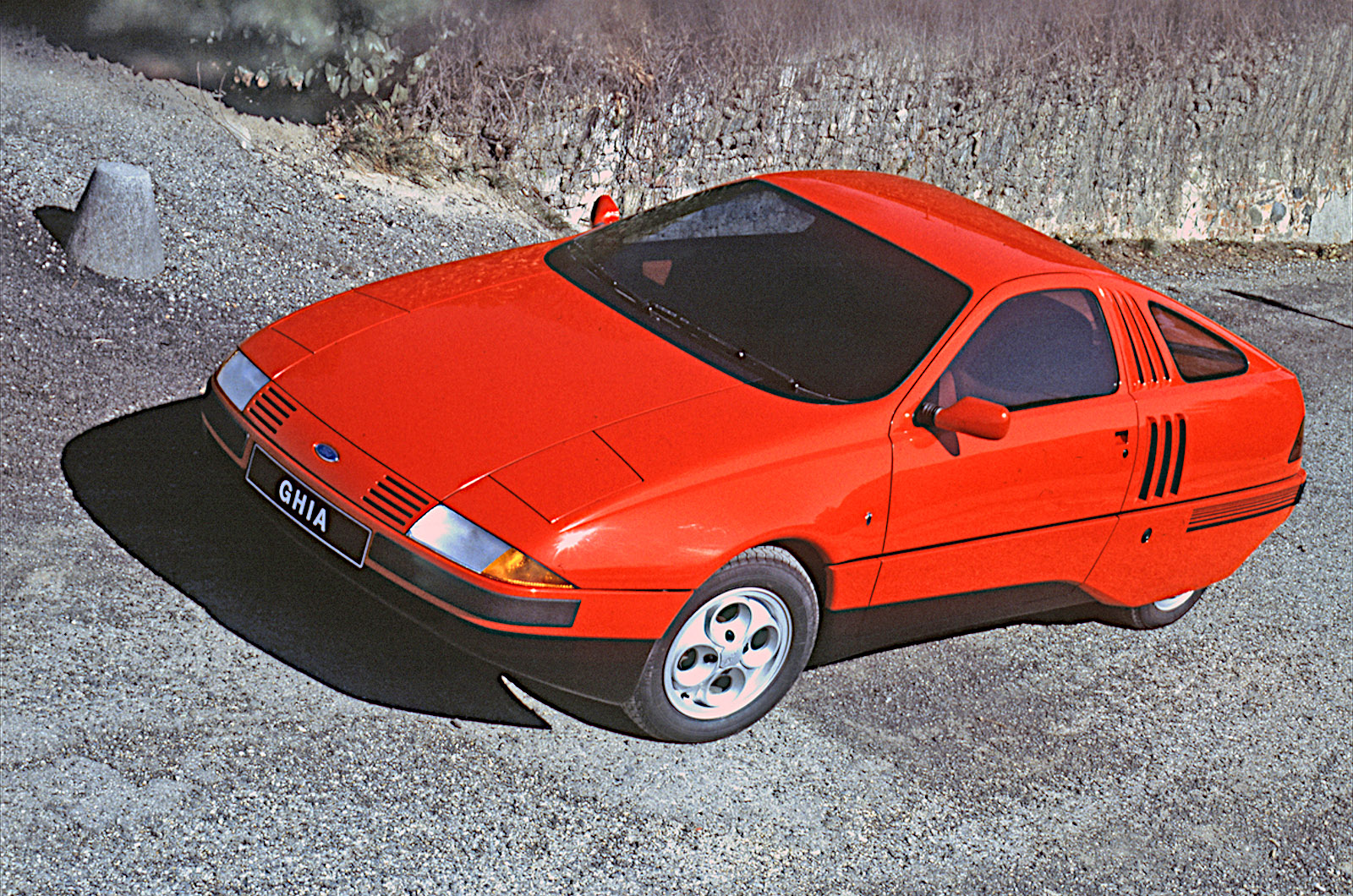
The Brezza (Italian for ‘breeze’) was a proposal for an economical two-seat sports car. Its mid-mounted engine was the 1.6-litre four-cylinder CVH which had recently made its debut in the first front-wheel drive European Escort and would also appear in the Fiesta and Sierra.
In the interests of disturbing the air as little as possible, the Brezza featured a rounded nose, retractable headlights, flush-fitting glass, rear wheel fairings and what Ford described as a “partial belly pan”.
Ghia Barchetta (1983)
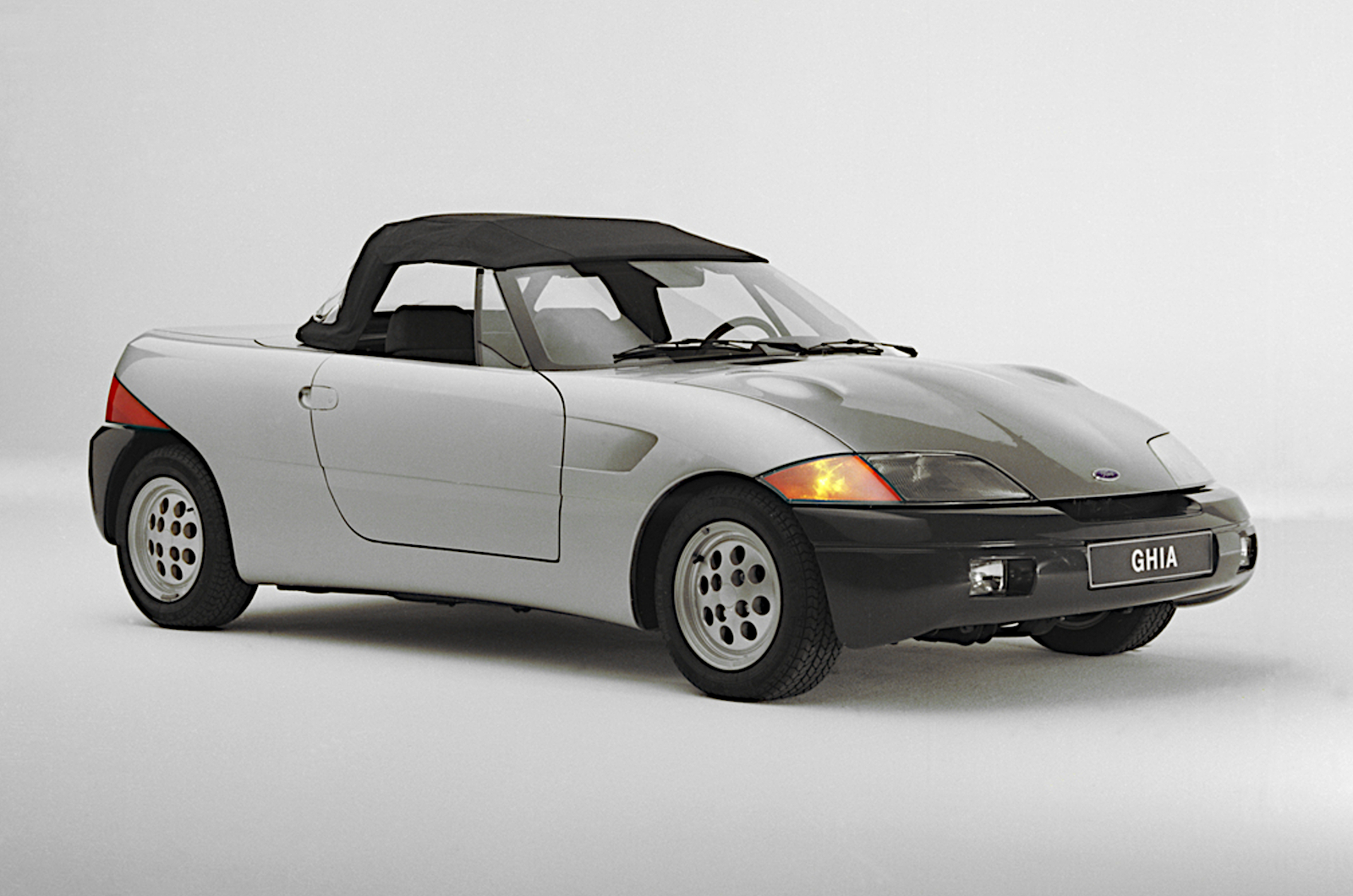
Designed jointly by Ghia and Ford of Europe’s design team, but built by the former, the Barchetta was more conventional than the previous year’s Breeze, being based on the front-wheel drive Fiesta platform. The engine was once again the 1.6-litre CVH, which also powered the hot hatch XR2 variant of the Fiesta.
The two-seat roadster did not lead directly to a production car, but two decades later Ford launched the conceptually similar SportKa. By that time, Fiat had come up with its own Barchetta, based on the Punto hatchback.
Probe IV (1983)
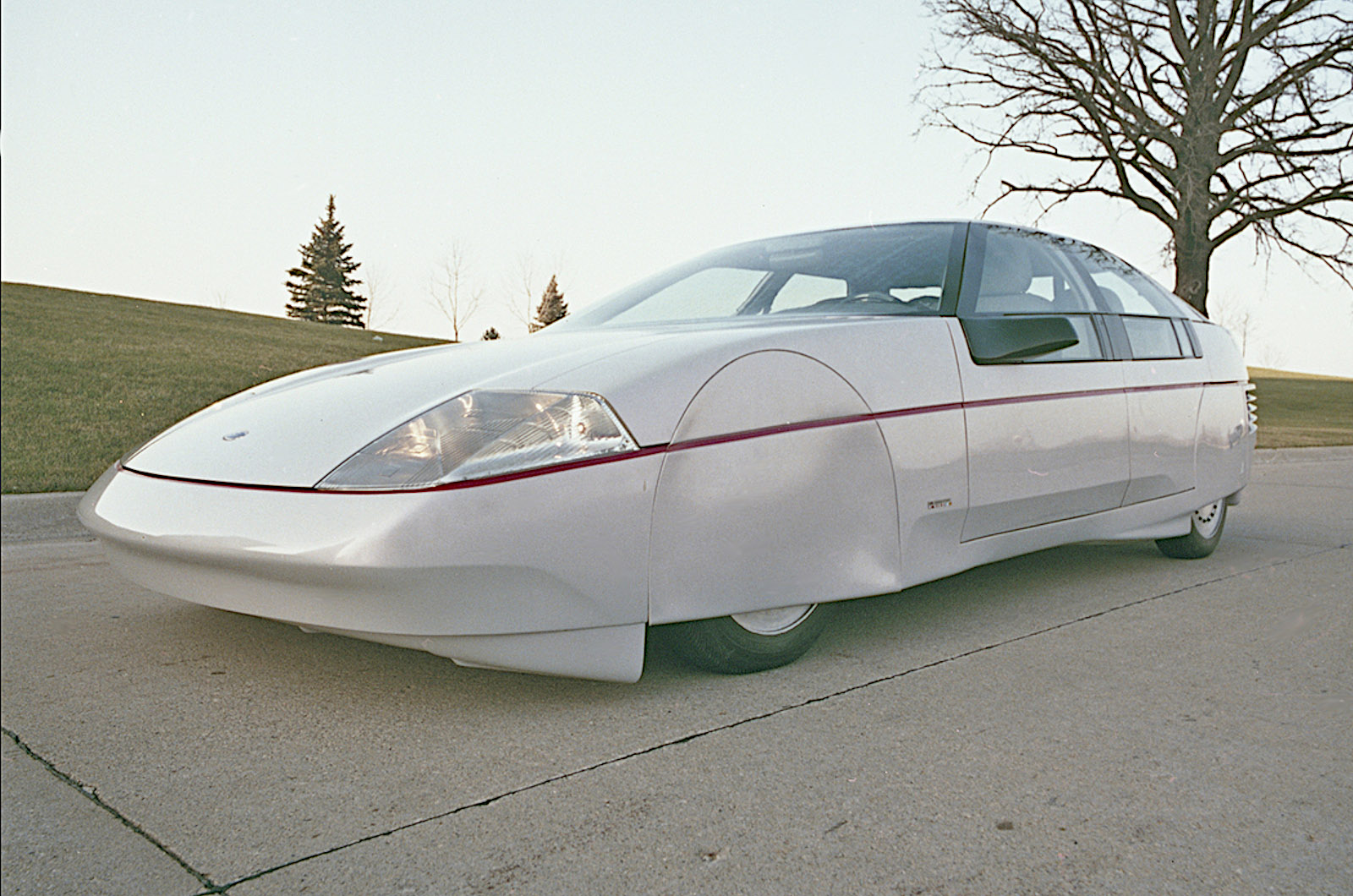
Ford put a production car called Probe on sale in the late 1980s, but before then it used the name several times for a series of aerodynamic concepts. The Probe IV was notable for its incredibly low drag coefficient of 0.15, achieved partly by canting the turbocharged 1.6-litre CVH engine over by 70 degrees to allow for the lowest possible bonnet.
Although the engine was mounted at the front, the radiator was placed at the other end to remove the need for an air-disturbing grille. Fans drew air towards it through vents behind the rear wheel wells, then sent it into the low-pressure area behind the car.
Quicksilver (1984)
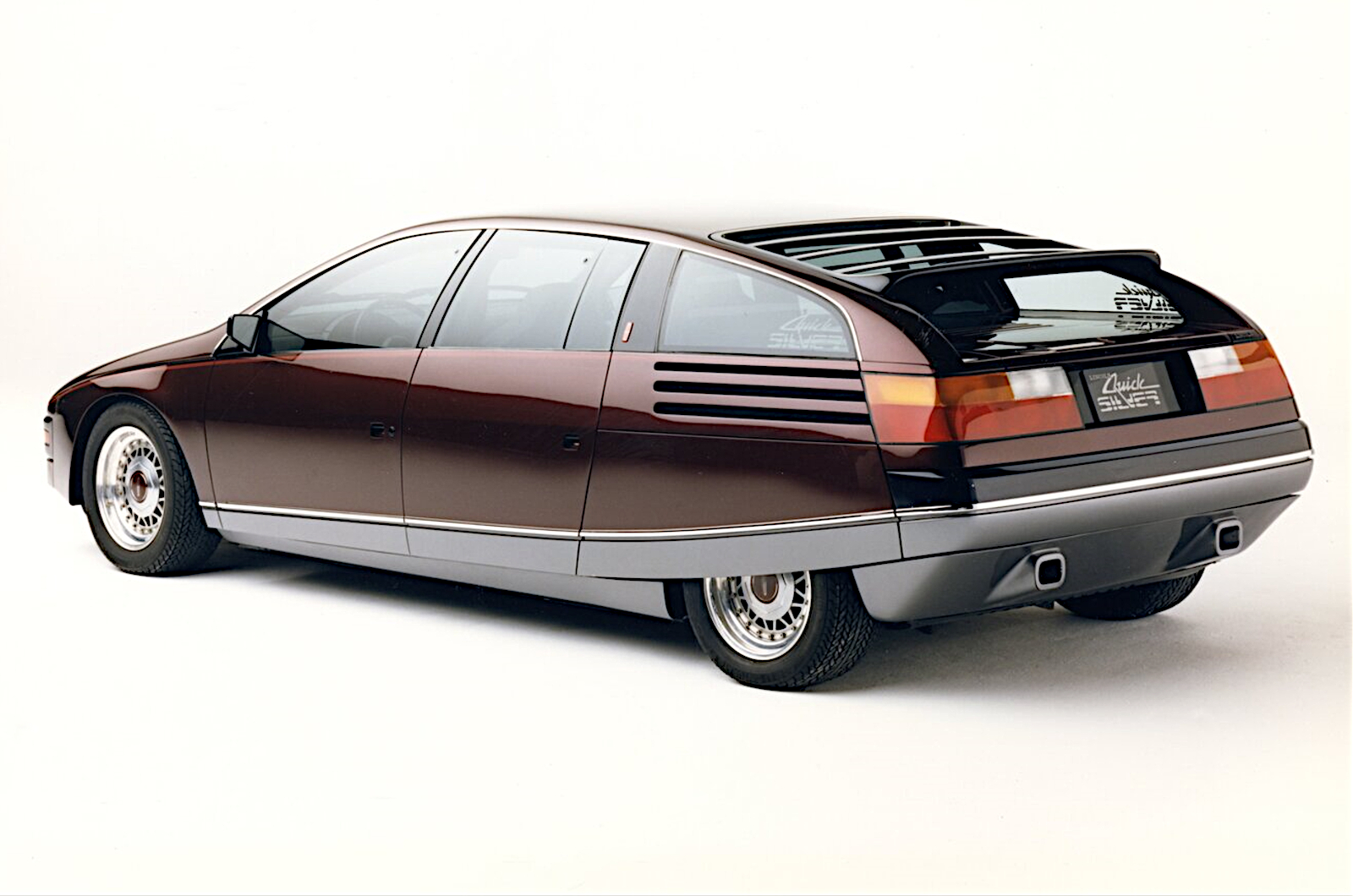
Referred to both as a Ford and as a Lincoln, the Quicksilver luxury sedan concept demonstrated that it was possible to design a mid-engined car with enough room inside for five adults. This was possible because the 3.0-litre V6 engine was mounted transversely, so that it didn’t take up much of the car’s length.
Ghia, which designed the vehicle, paid a lot of attention to aerodynamics, and in particular developed what Ford said was “a totally new method” of flush-mounting the door windows.
Maya (1985)
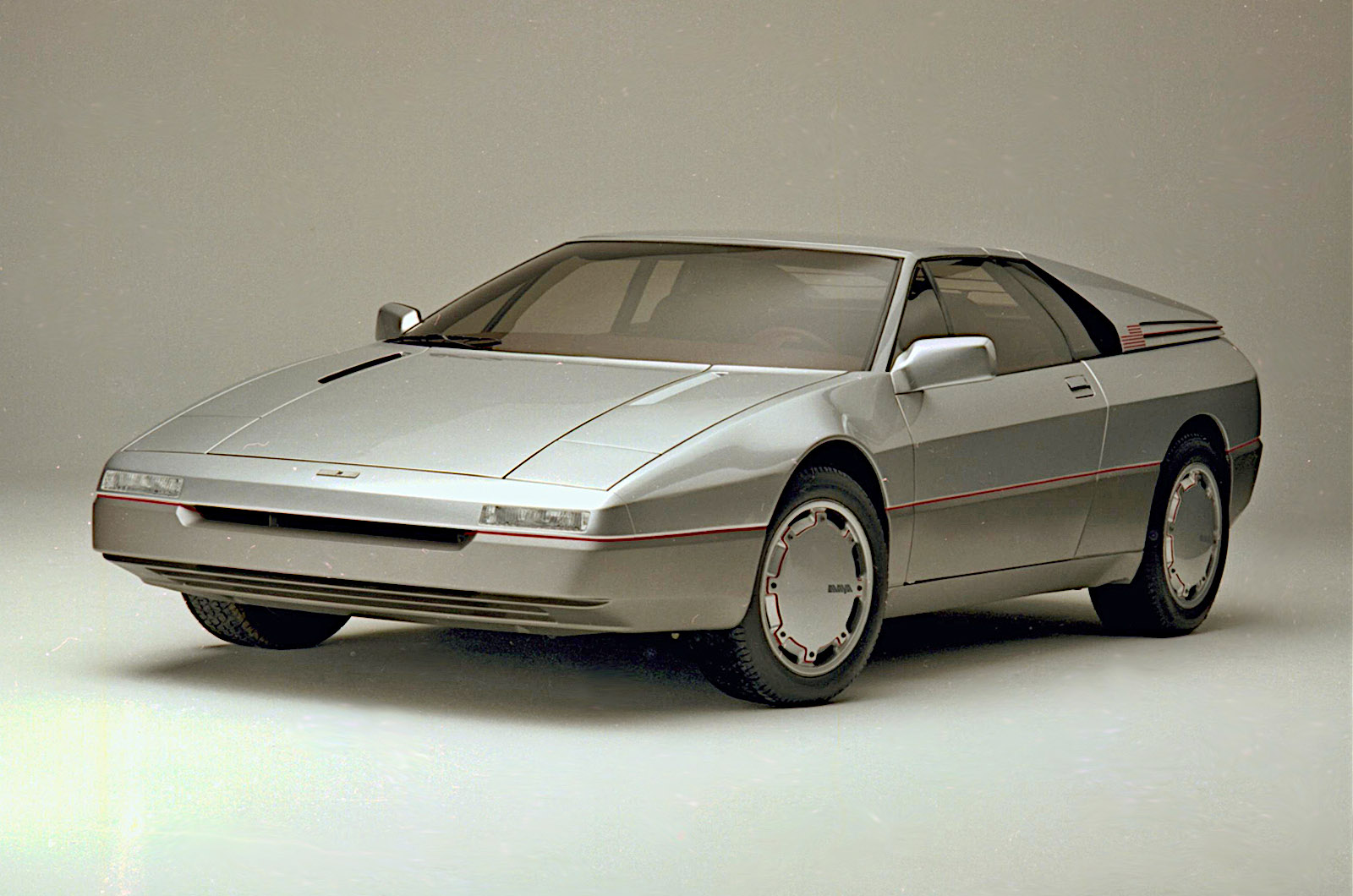
Although the Maya is referred to in the Heritage Vault as a 1985 car, it actually made its debut at the Turin Show in the previous year. Unlike other Italian Ford concepts, this mid-engined two-seater was created not by Ghia but by Italdesign, and there was talk of producing 50 a day.
That never happened, but Italdesign was commissioned to produce two follow-ups in 1985 – the softer-edged Maya II ES and the Maya II EM whose 3.0-litre V6 engine was, unlike those in the earlier versions, turbocharged.
Bronco DM-1 (1990)
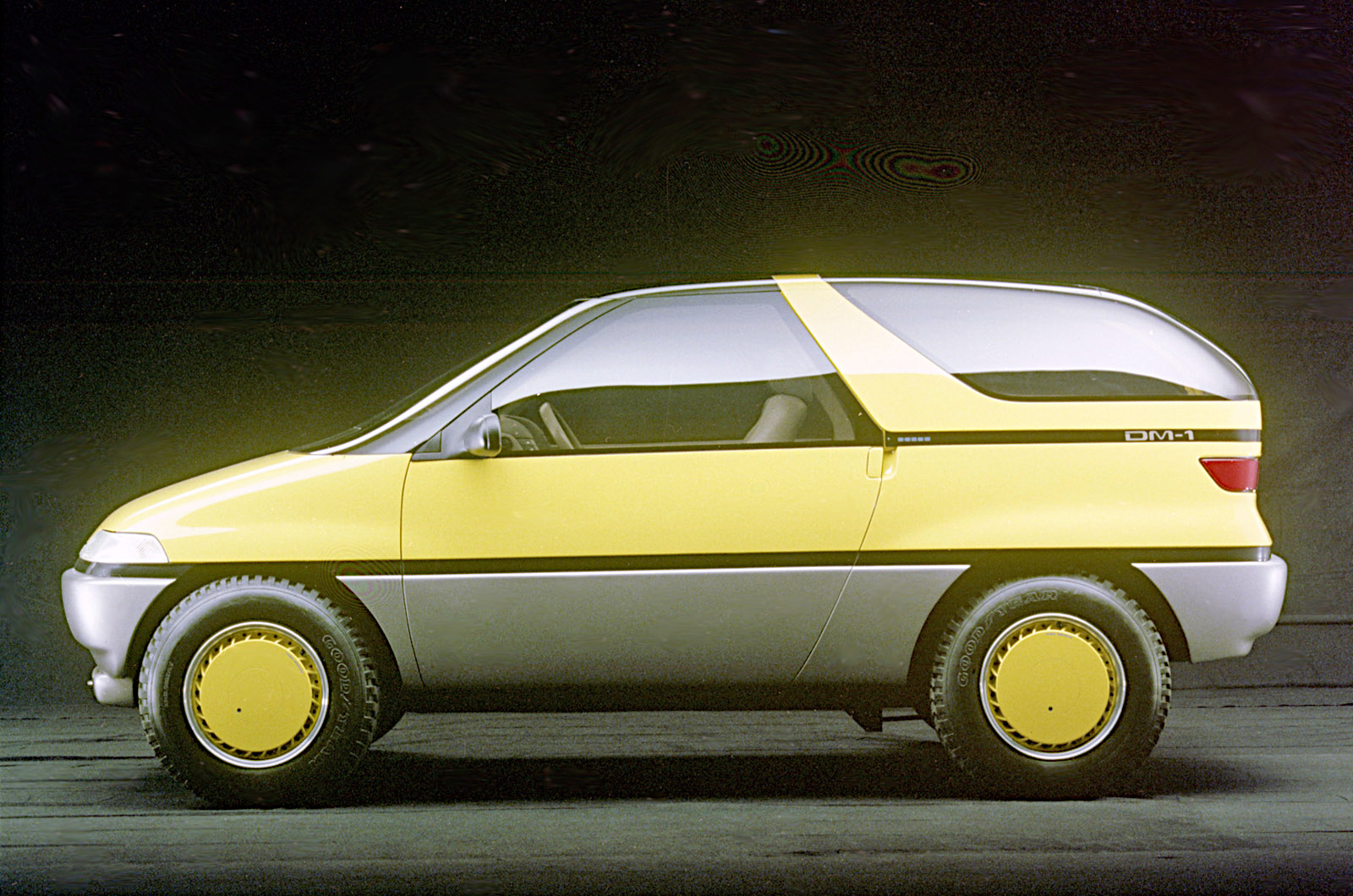
Ford has created off-road concepts named Bronco since the 1960s. This version was named after its designer, Derek Millsap, who had graduated from the Art Centre College of Design in Pasadena, California in May 1987 and was given a job at Ford’s Design Centre in Dearborn.
Millsap’s design, which first took shape as a clay model, featured low-drag fibreglass and steel-reinforced bodywork, electronic instrumentation and seating for five. Ford contracted Concept Center California to build a full-scale version. According to a company press release, this process began in late 1986 and lasted for nine months, but the Heritage Vault dates the finished product to 1990.
Contour (1991)
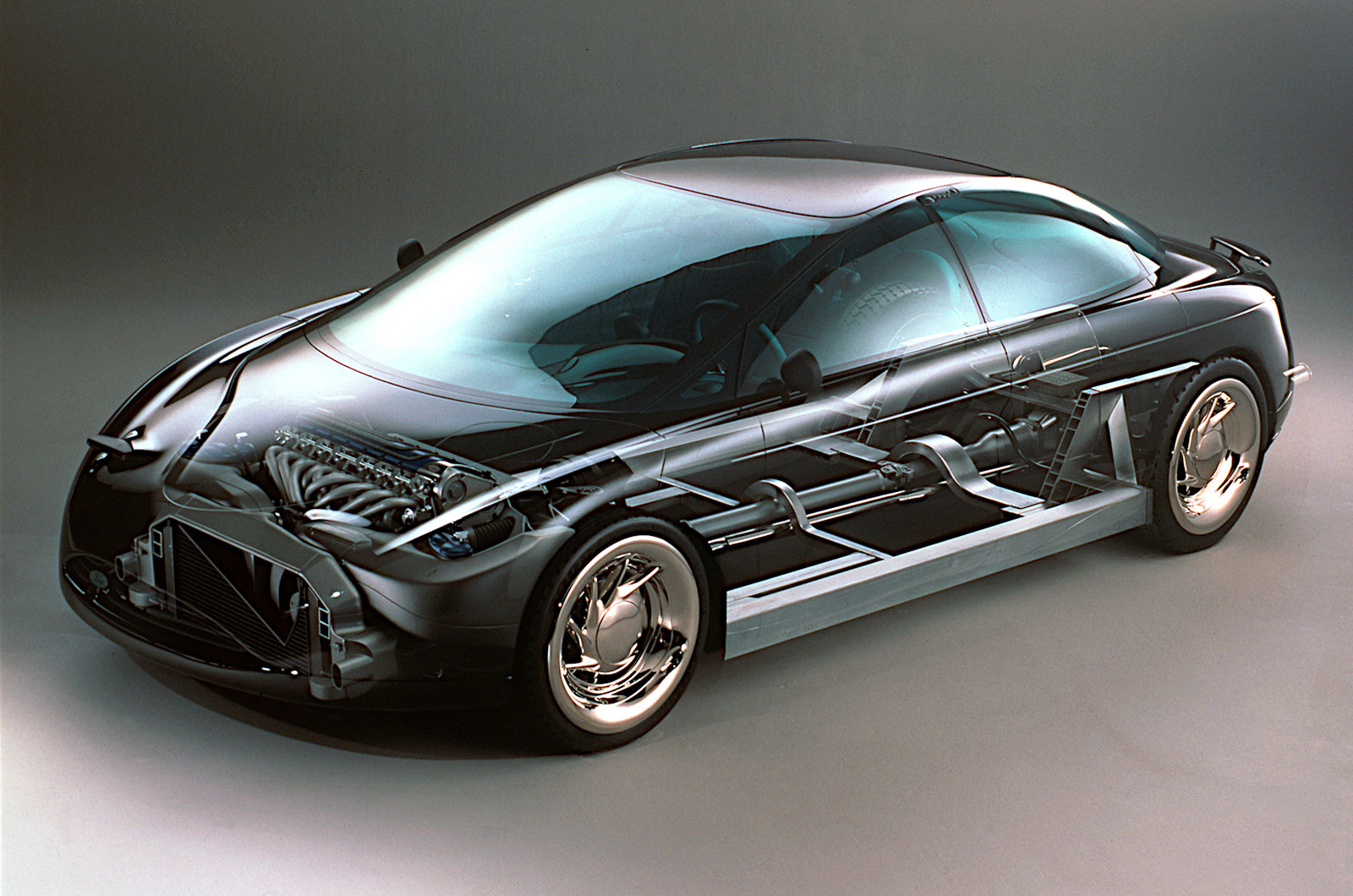
To most North American motorists, the Contour was essentially the local version of the European Ford Mondeo, also sold as the Mercury Mystique. However, the name was also used for a radical concept car.
Among its more remarkable features was a straight-eight engine (a layout popular between the two world wars but never used by Ford in a production car) mounted transversely across the front axle. Designed by Donald Carriere (1929-2016), its drive was taken from the centre of the crankshaft, allowing the use of equal-length driveshafts and reducing the possibility of torque steer to a minimum.
Bronco Boss (1992)
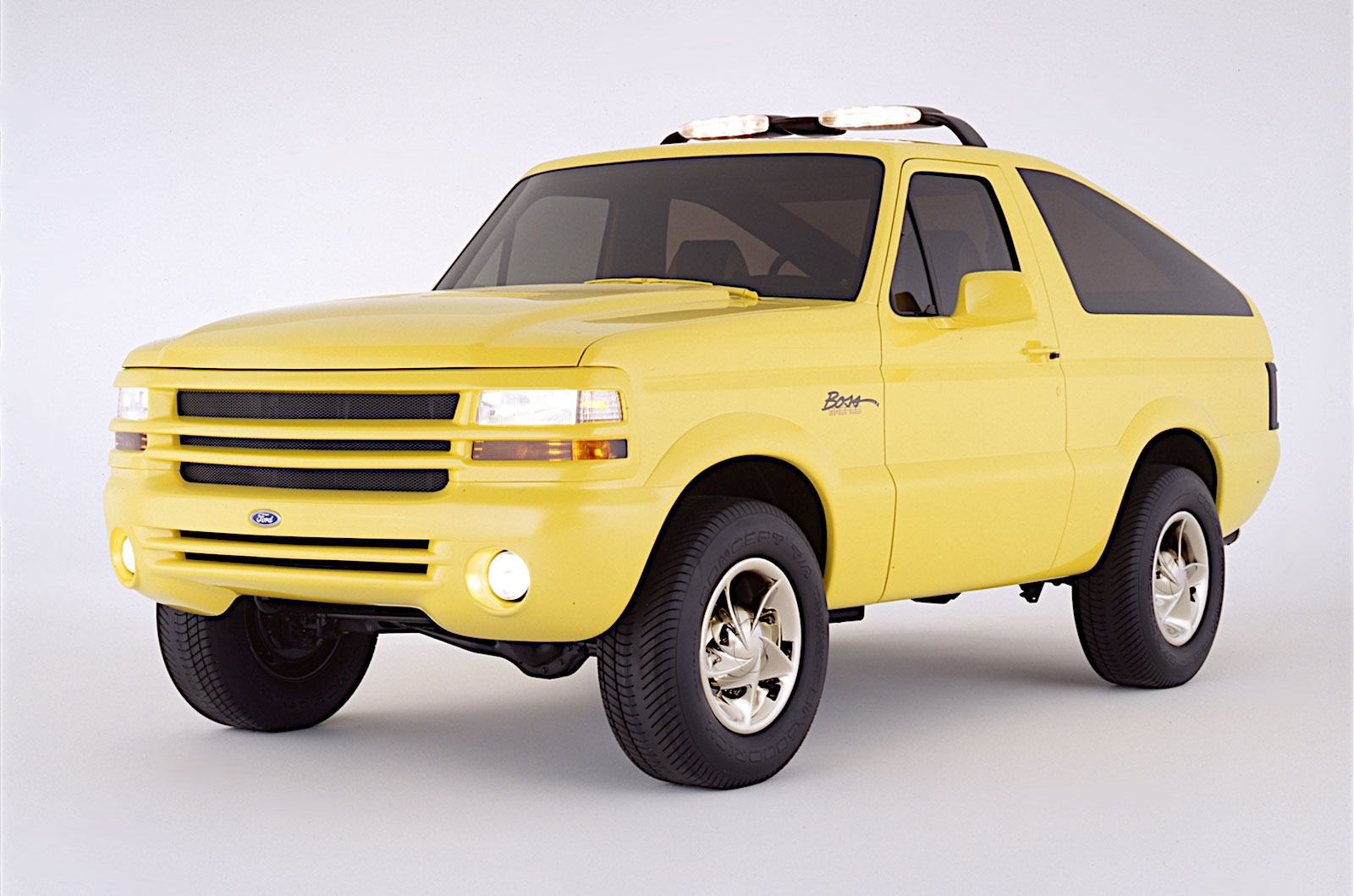
We’re using this name because that’s what appears in the Heritage Vault, but Ford referred to the vehicle as the Boss Bronco when it was revealed in late 1991.
Displayed at auto shows across the US the following year, it was, like many concepts, simply an adaptation of an existing model, in this case the recently-launched fifth-generation Bronco SUV. Changes included a new hood with power dome, a retractable roof, a wraparound rear step bumper and shade of bright yellow paint named Lone Star.
Ghia Focus (1992)
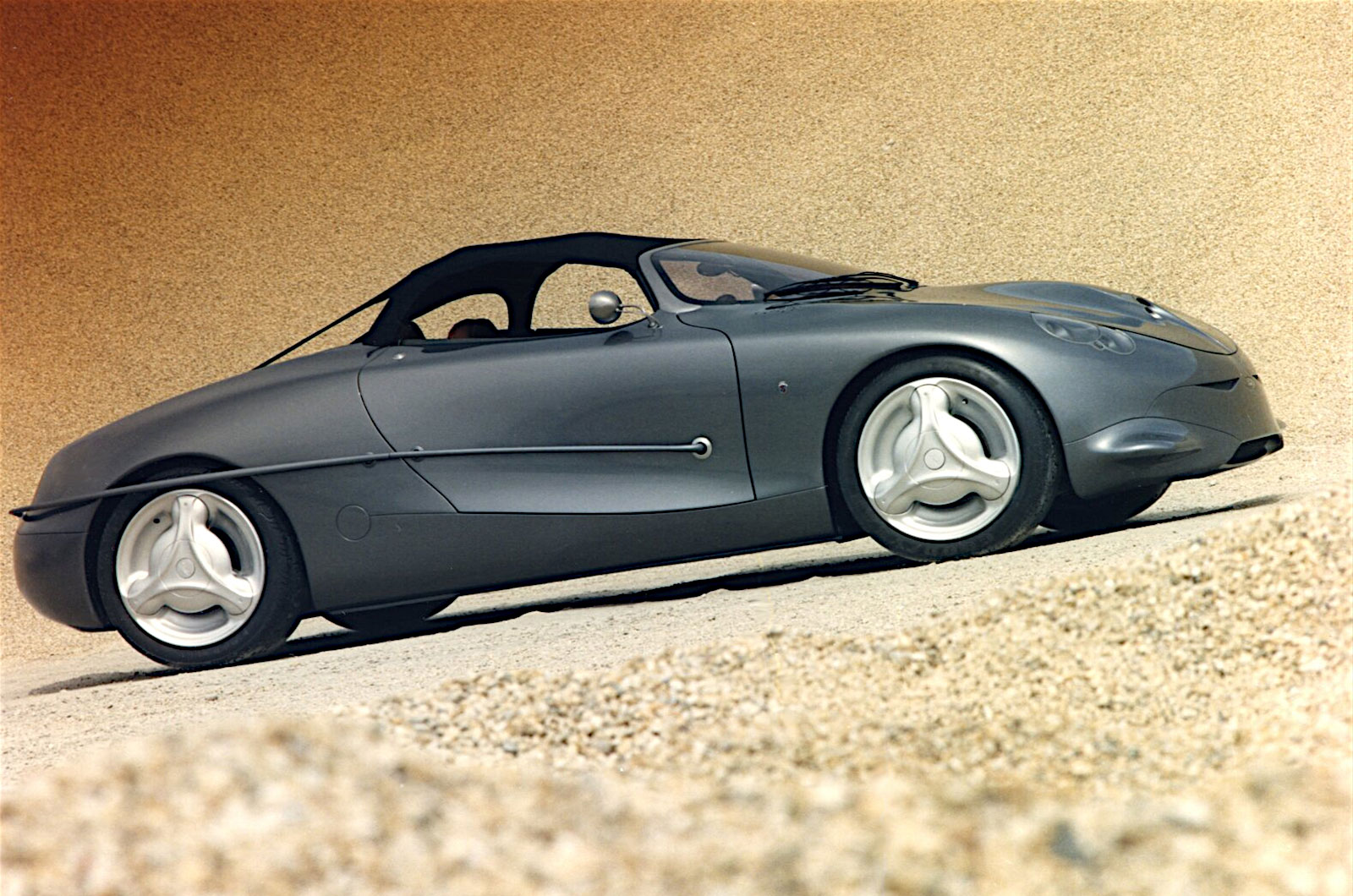
Revealed six years before the introduction of the very different European Focus hatchback, the Ghia Focus was a high-performance four-wheel drive roadster based on a shortened Escort RS Cosworth platform and powered by a 230bhp version of that car’s turbocharged 2.0-litre engine.
Design features ranged from ancient to modern. The car’s body panels were made of carbonfiber composite, but it also had a far more traditional wood-rimmed steering wheel.
Mustang Mach III (1993)
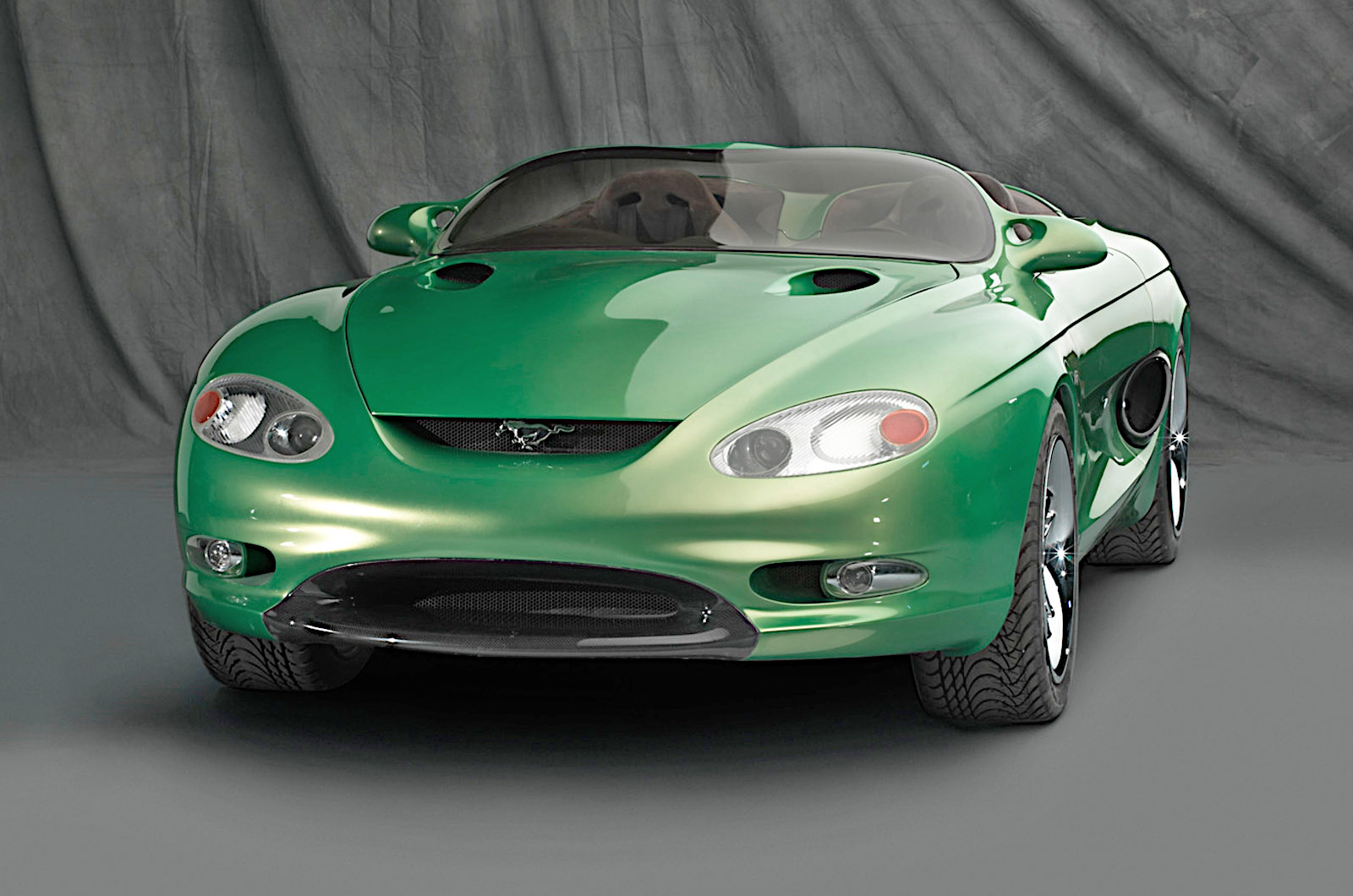
According to Ford, the Mach III “brings back the spirit of the 1965 Mustang with styling and technology for the 1990s and beyond”. Powered by a supercharged 450bhp 4.6-litre Modular V8, the concept did have some classic touches, including a wood-rimmed steering wheel, but its shape was far curvier than that of the pony car launched nearly three decades earlier.
The fourth-generation Mustang was just round the corner. “There’s no doubt that people will readily recognise some of the styling cues from the Mach III,” said Ford. There was indeed a slight resemblance, but the production car’s design had much sharper edges.
Ghia Arioso (1994)
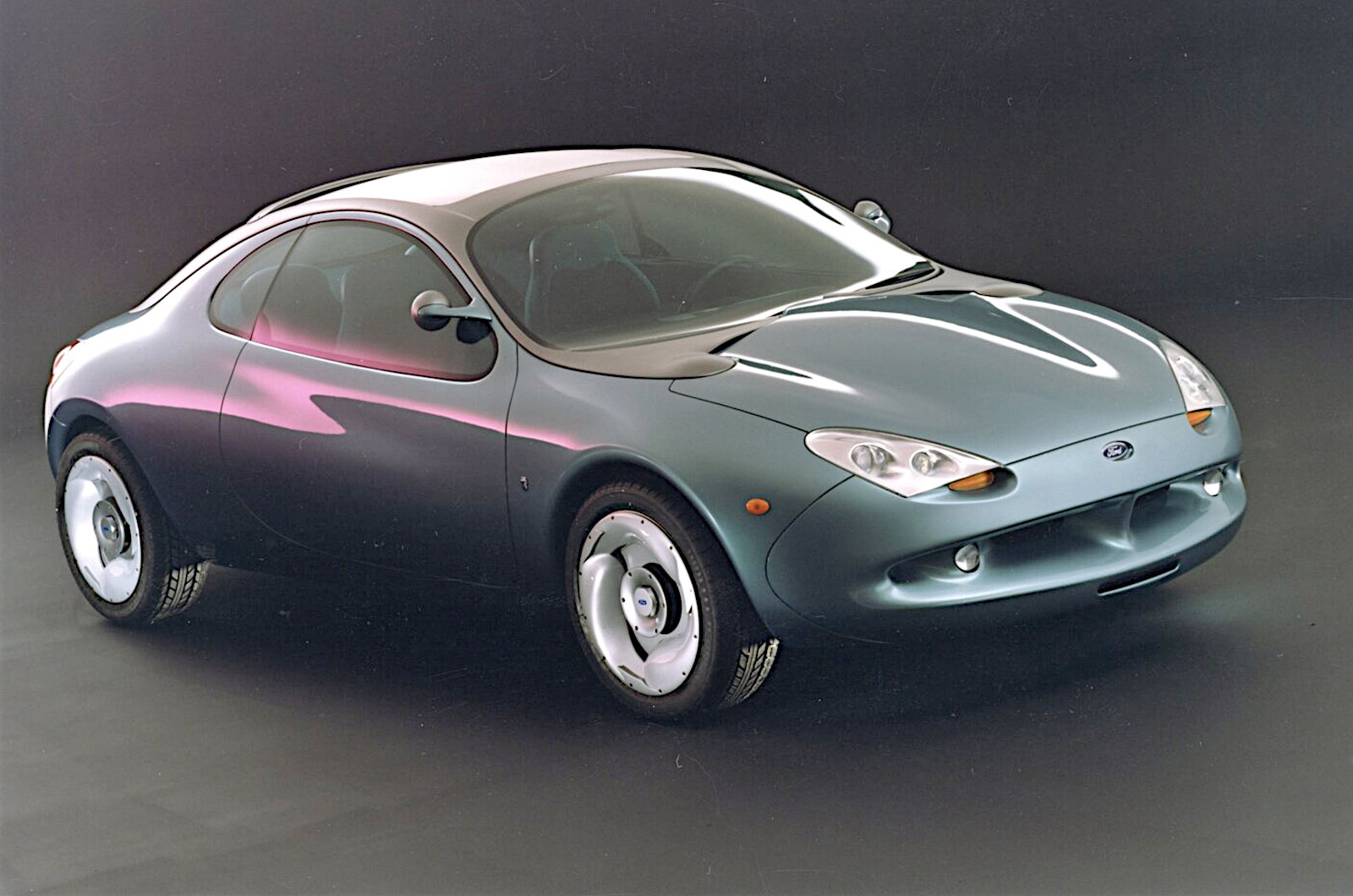
Like the Vivace of the same year, the Arioso was a coupe powered by the 2.5-litre 24-valve V6 engine used in the production Mondeo. The Arioso was the more practical of the two concepts, being a full four-seater rather than a 2+2.
It was based on an aluminum spaceframe which was covered with easily replaceable lightweight carbonfibre panels. The method of construction meant that the sunroof and rear window could be retracted into the rear luggage compartment without compromising the vehicle’s structural rigidity.
Outback Bronco (1994)
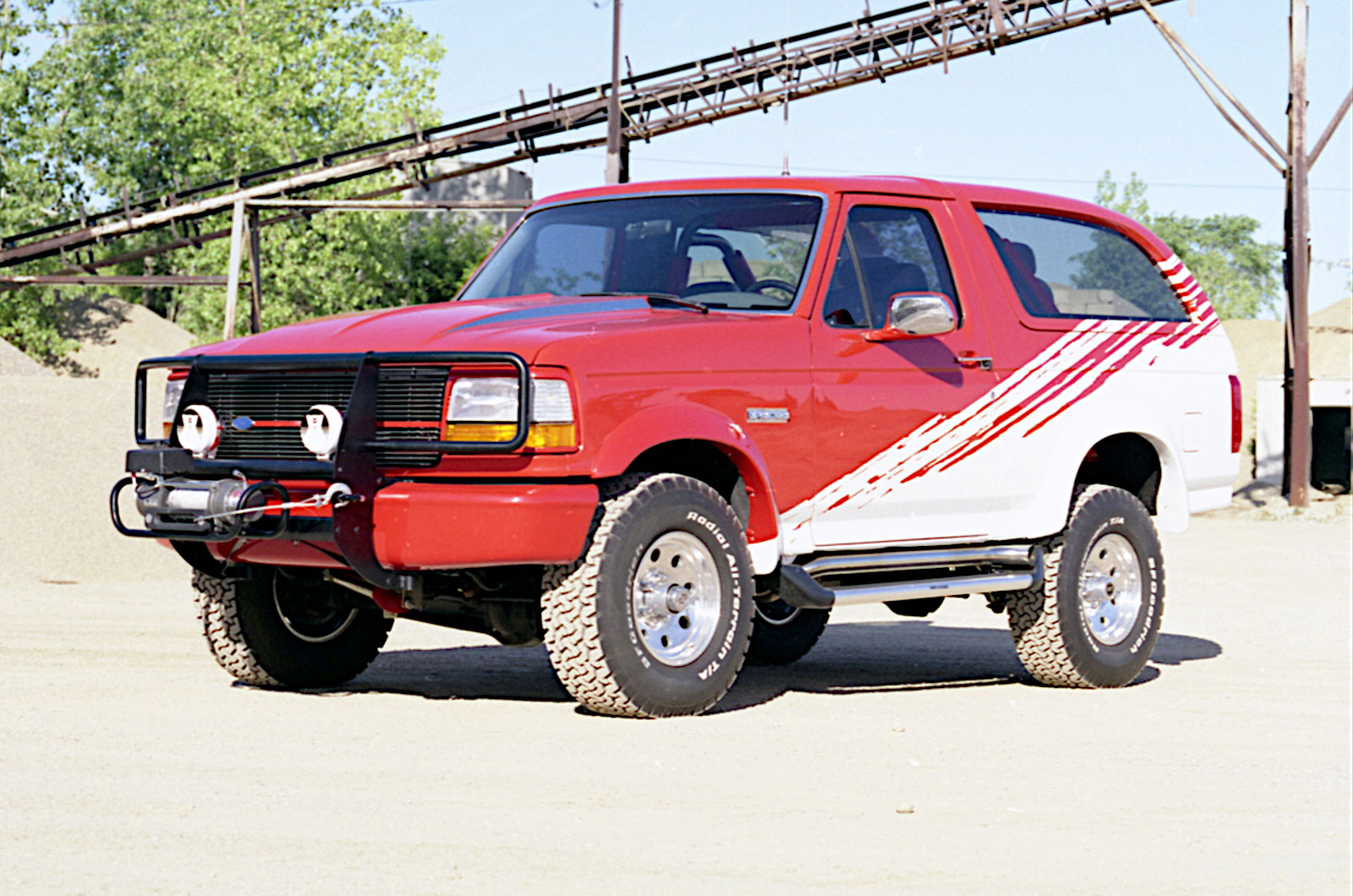
The Outback was a follow-up to the Bronco Boss revealed two years earlier, and was fitted with a very similar hood. Other equipment included a cattleguard, front foglights, a winch, side pipes and flared wheelarches.
Two years later, the Bronco was discontinued, and did not return until 2021. The Outback could reasonably have gone into production as an end-of-line special edition, but didn’t.
Mercury Fusion (1995)
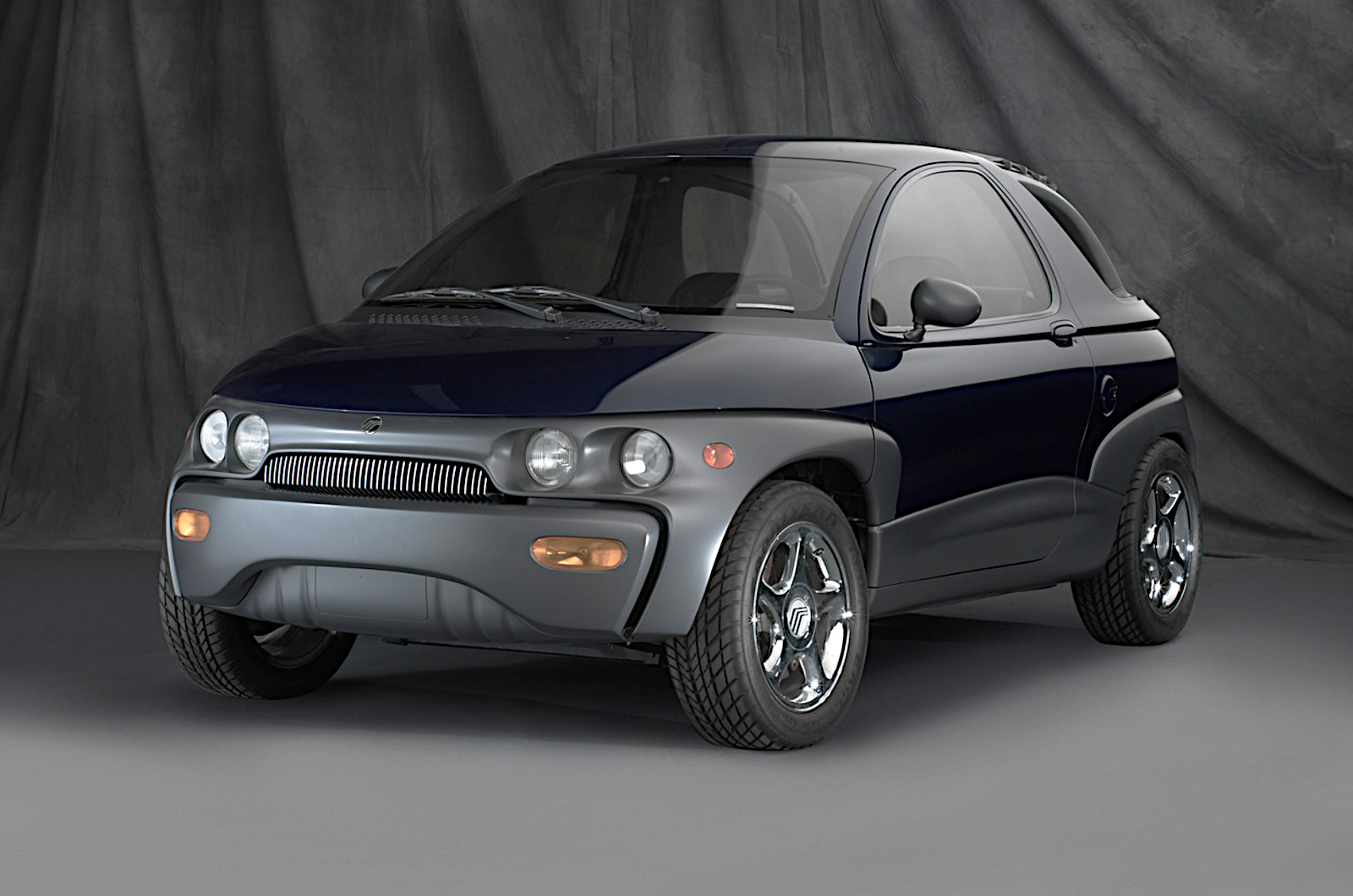
Created by Concept Center California, which as you’ll remember also built the Bronco DM-1, the Fusion combined “the toughness of a mini sport utility vehicle with the upscale image of a Mercury”.
One of its more intriguing features was an interior tubular steel frame which supported the seats, instrument panel and centre console, and contributed to the overall structural rigidity. Leather upholstery and chrome exterior trim made the concept look more expensive than a production version would probably have been.
Ghia Saetta (1996)
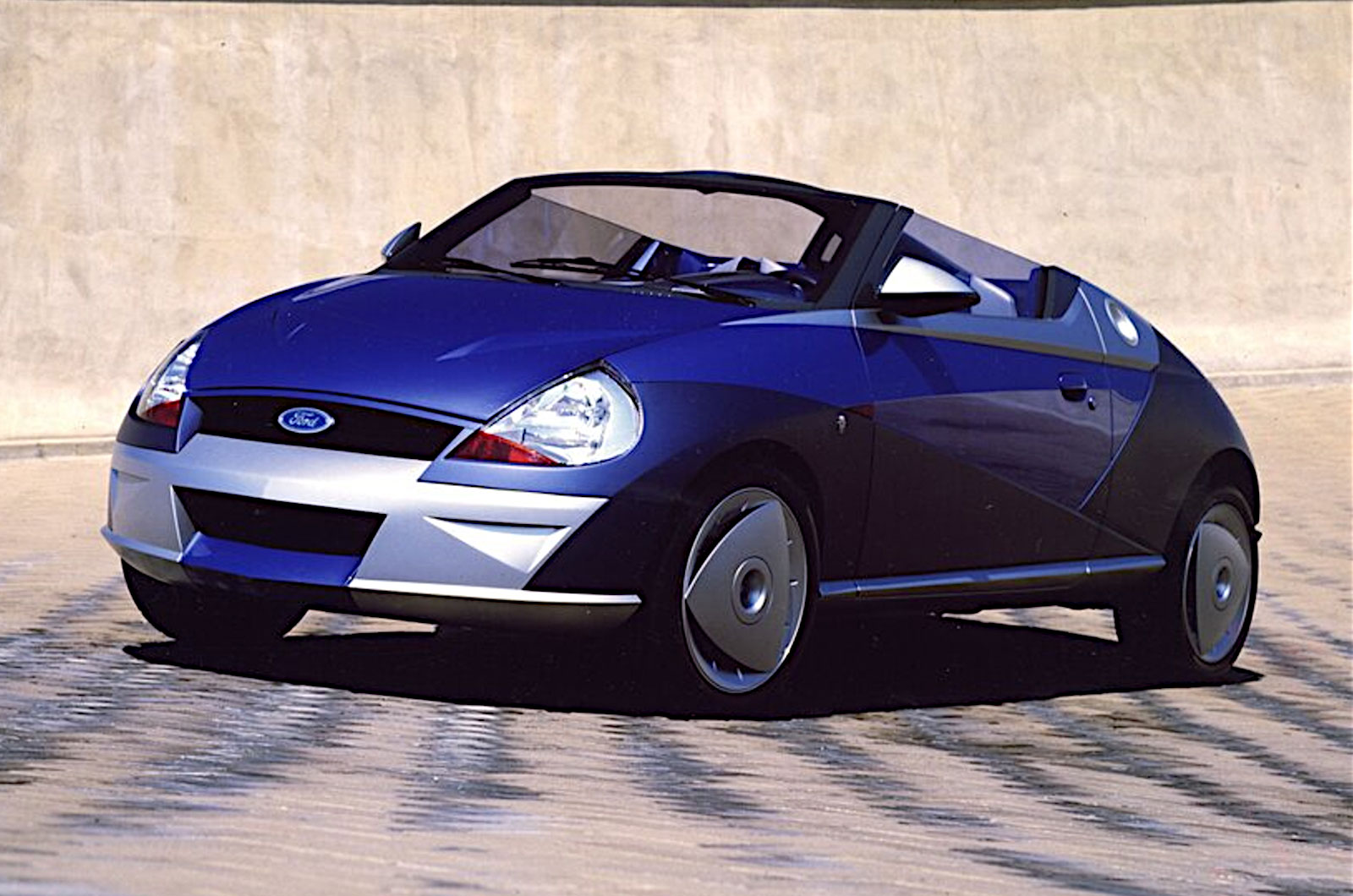
The little Ka hatchback, based on the Fiesta platform and launched in late 1996, was the first production Ford with New Edge styling. It was previewed in April of the same year at the Turin Show in the form of the Saetta roadster, accompanied by official comments that it “explodes the myth that it’s necessary to put a soft radius on everything to create an aerodynamic form”.
The Saetta resembled the Ka very closely at the front, though its slightly retro tail did not get past the concept stage.
Lynx (1996)
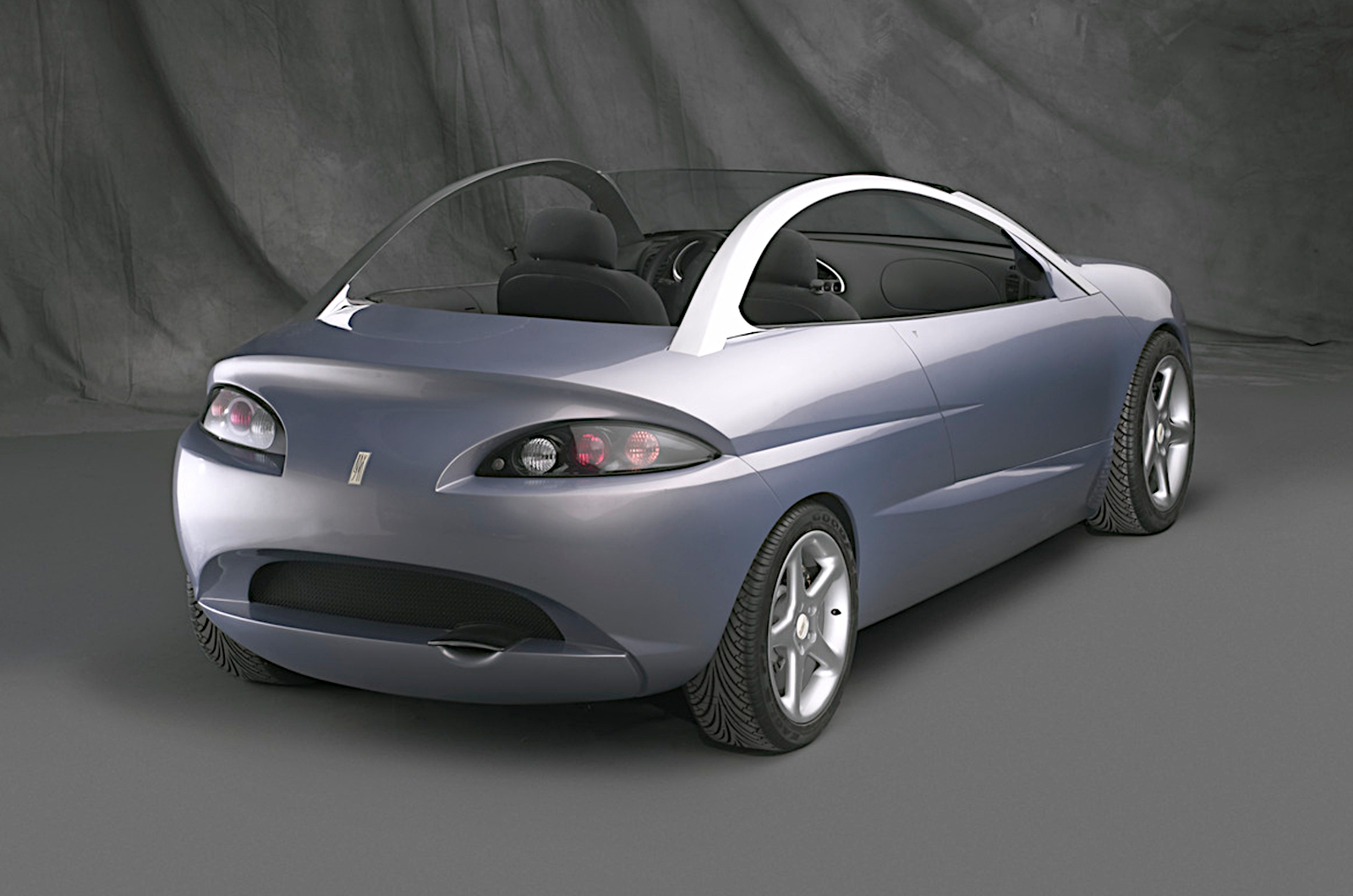
Like the exactly contemporary Saetta, the Lynx was based on the Fiesta platform, but was a coupe rather than a roadster. In a press release issued by Ford of Canada, it was described as “a clear indication of Ford’s desire to explore new concepts and research niche products”.
In fact, there was more to it than that. Look at the Lynx from any angle, but especially from the rear, and it is undoubtedly a preview of the Puma coupe which made its debut at the 1997 Geneva Show, a year after the Lynx had been revealed at the same venue.
Ranger Sandcourt (1997)
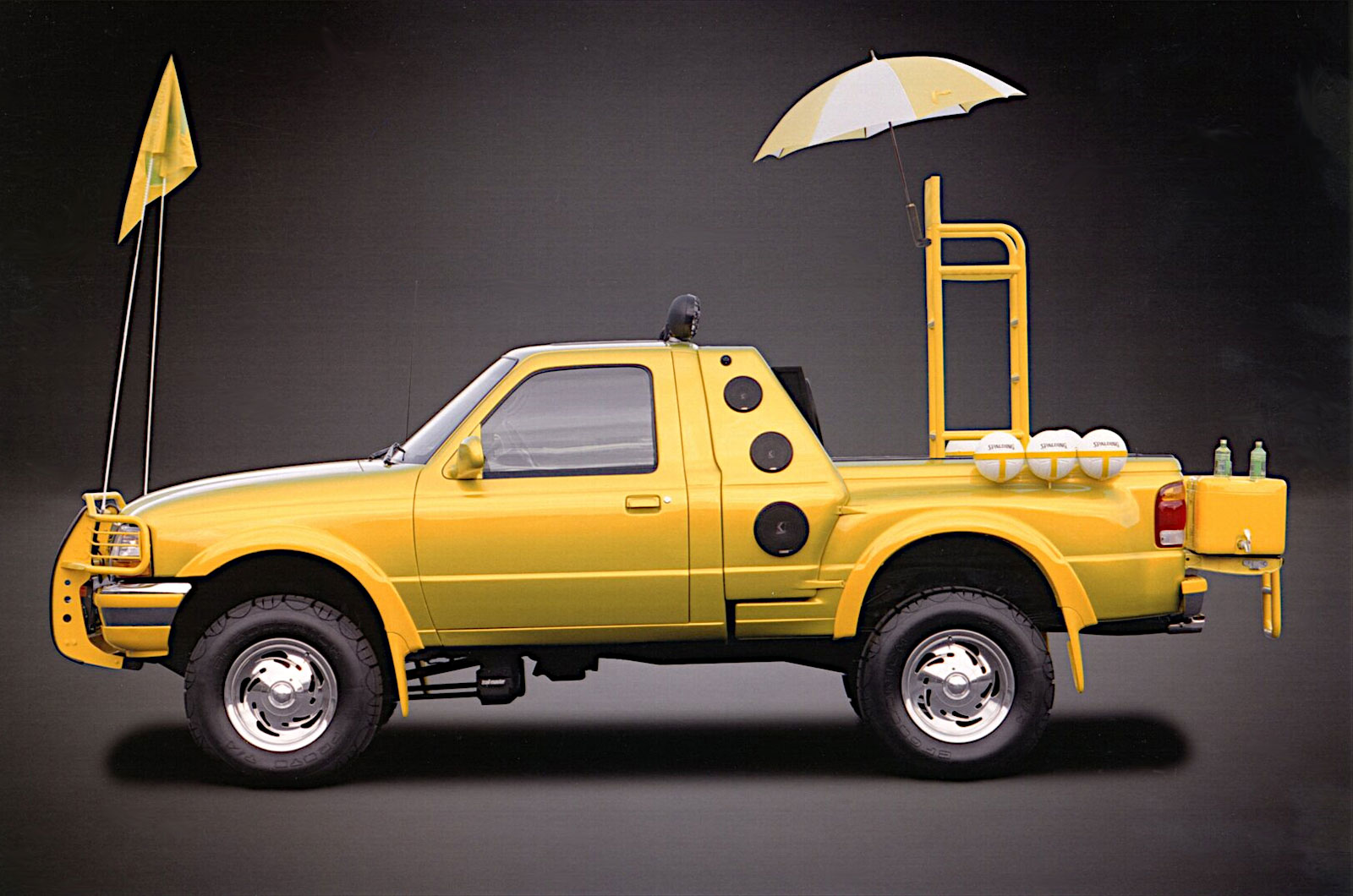
Referred to as the Sand Court by sources other than the Heritage Vault, this concept was an adaptation of the third-generation Ranger pickup truck, which went on sale in the 1998 model year.
Clearly a promotional exercise rather than anything more serious, it featured several non-standard items including a high chair, a parasol and a drinks cabinet, all of which suggested it might be useful for beach patrols.
Mercury MC4 (1997)
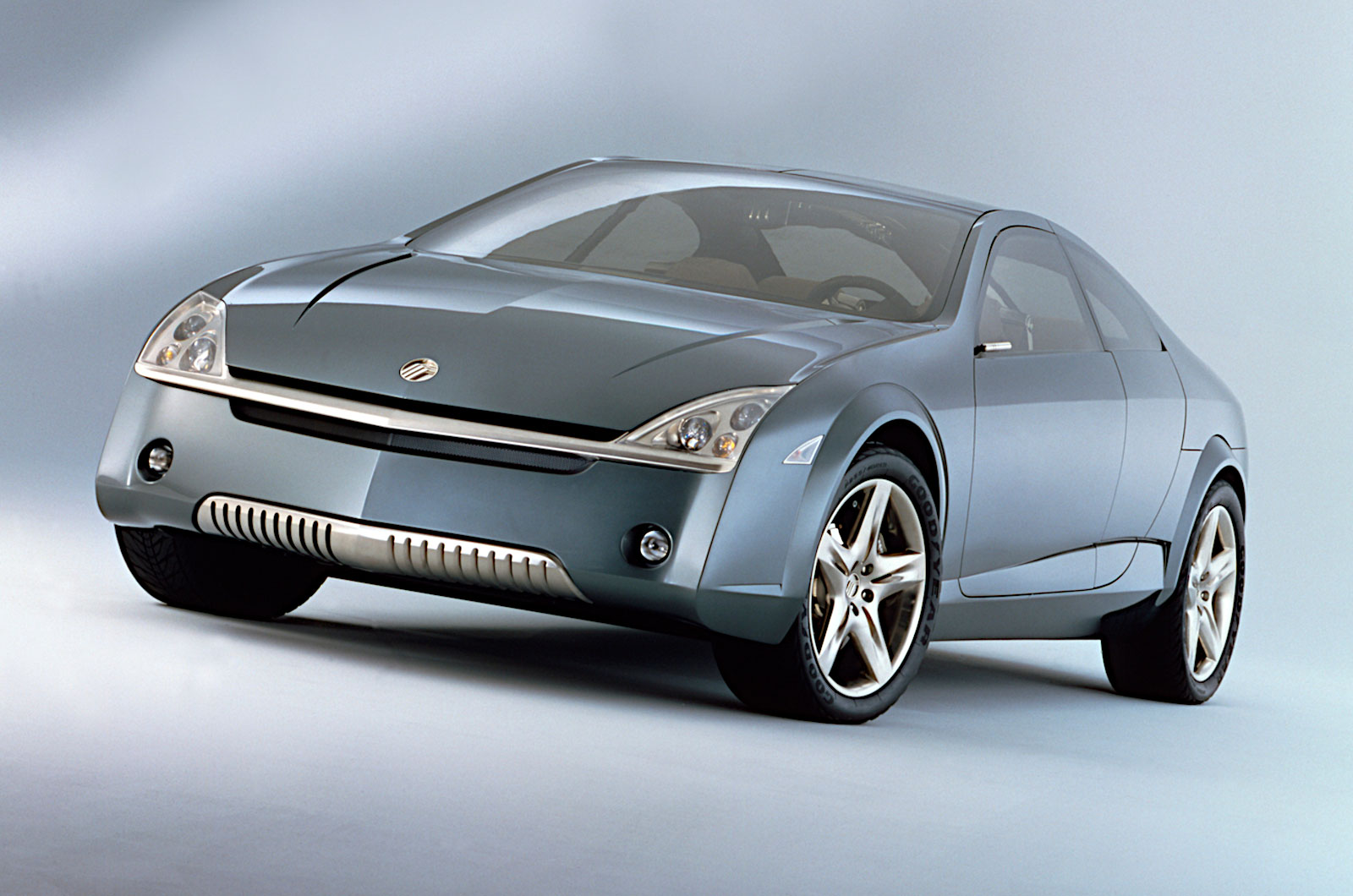
The MC4 was a roomy coupe with four seats designed for adults and one for a child. Its equivalent of a tailgate was a double gullwing, and there were four passenger doors – conventional at the front but smaller and rear-hinged at the back. The latter pair could not be opened while the fronts remained shut.
The door system was later used by Mazda (one-third owned by Ford at the time) for its own later coupe, the rotary-engined RX-8.
Ford TekSport Windstar (1998)
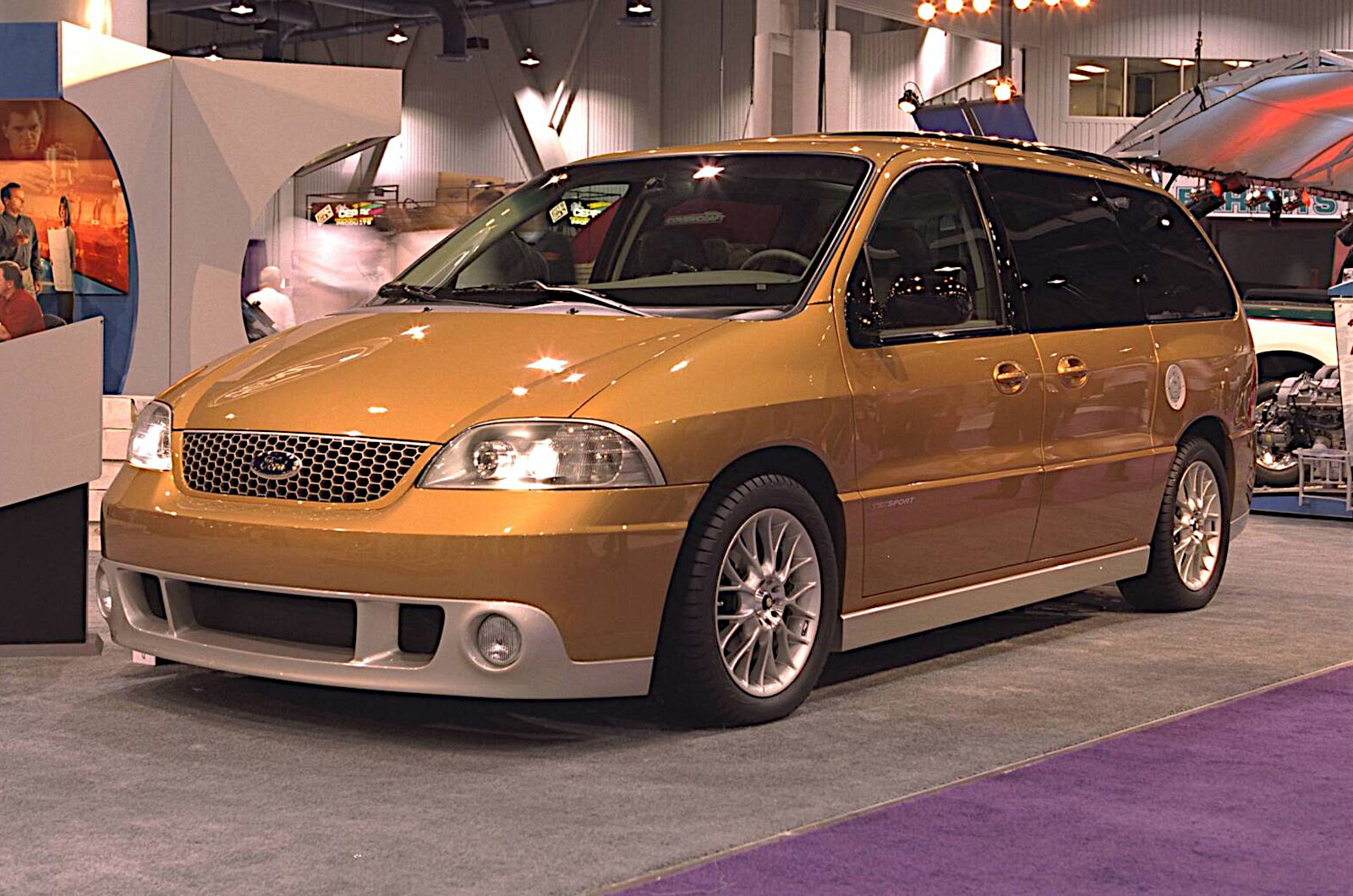
The vehicle referred to in the Heritage Vault as the 2000 Windstar TekSport was called TekSport Windstar in contemporary press releases, and was revealed at the Specialty Equipment Manufacturers Association (SEMA) show in November 1998. It was based on the new second-generation Windstar minivan, but its appearance was both more aerodynamic and more aggressive.
Most of the innovation, however, was located inside the vehicle. Visteon supplied high-tech entertainment and lighting, and as Ford put it, “Those who travel with kids will appreciate the rechargeable hand vacuum cleaner built into the right rear trim panel.”
Bronco U260 (1999)
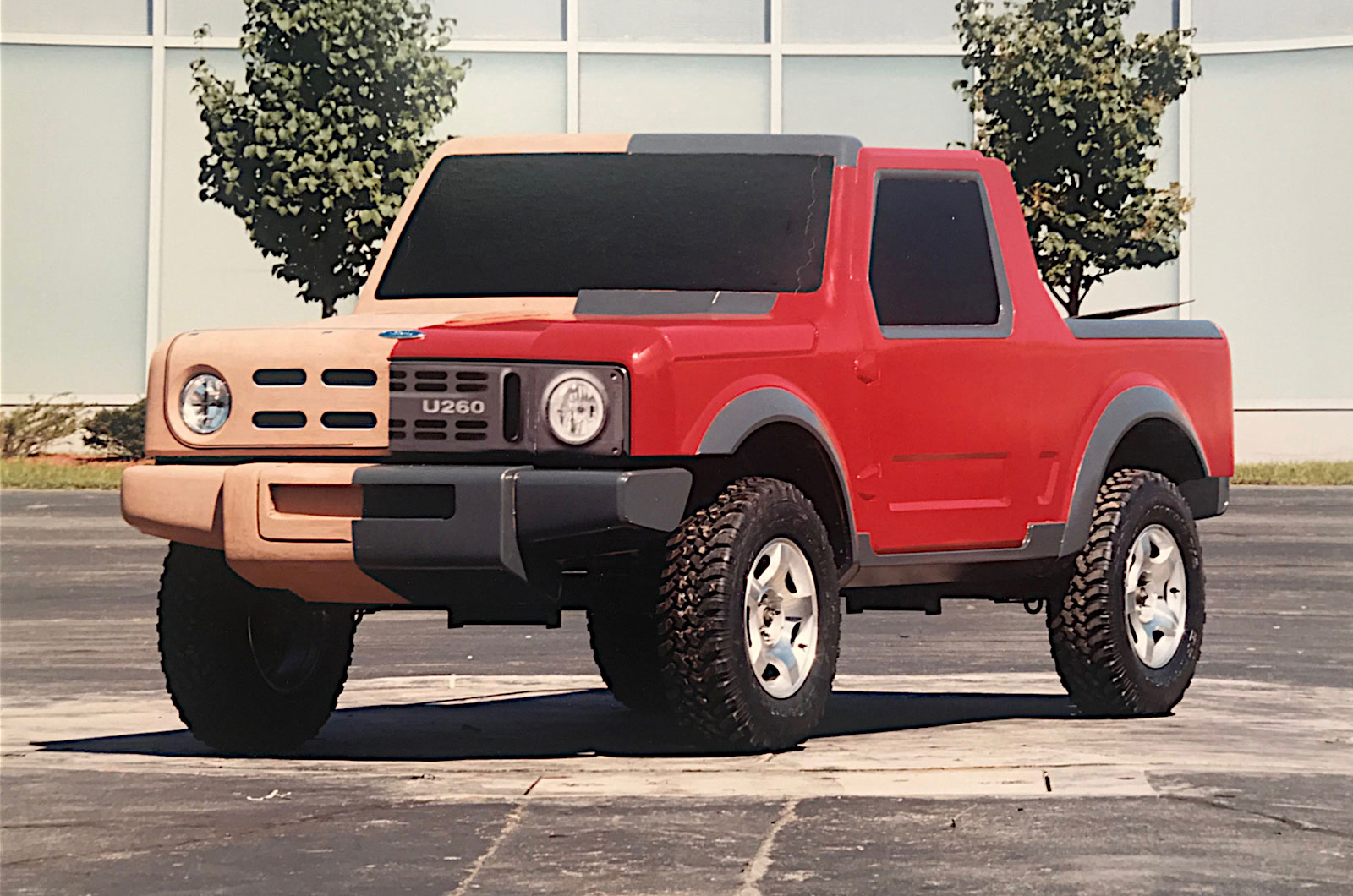
In the quarter-century gap between the end of the fifth production generation and the start of the sixth, Ford continued to create Bronco concepts. The U260 had an almost cuboid shape, and bears a remarkable resemblance to the current Bronco, which was introduced in 2021.
In the same year, the U260 was displayed in public for the first time, now with red rather than dual-coloured paintwork, and with a slightly revised front end.
MY Mercury (1999)
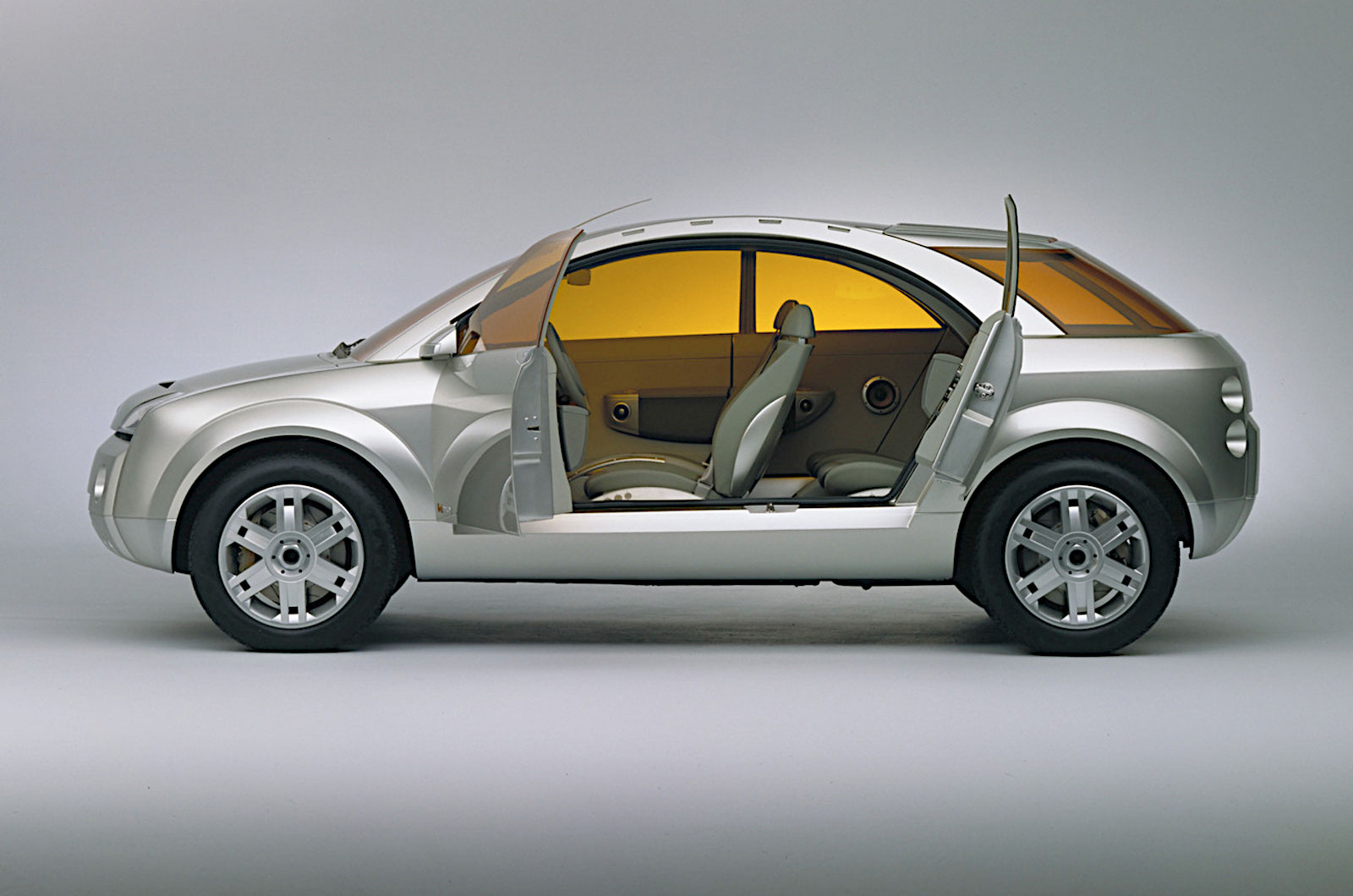
In Ford’s word, this concept – referred to as MY in the Heritage Vault but as (my) in a contemporary press release – “blurs the boundaries between a car, a truck and a sports utility vehicle”.
The door arrangement was similar to that of the slightly earlier Mercury MC4, while the top of the tailgate (which included the rear side windows) lifted upwards and the bottom extended back, giving a load length of over six feet if the rear seats were folded down.
Desert Excursion (2000)
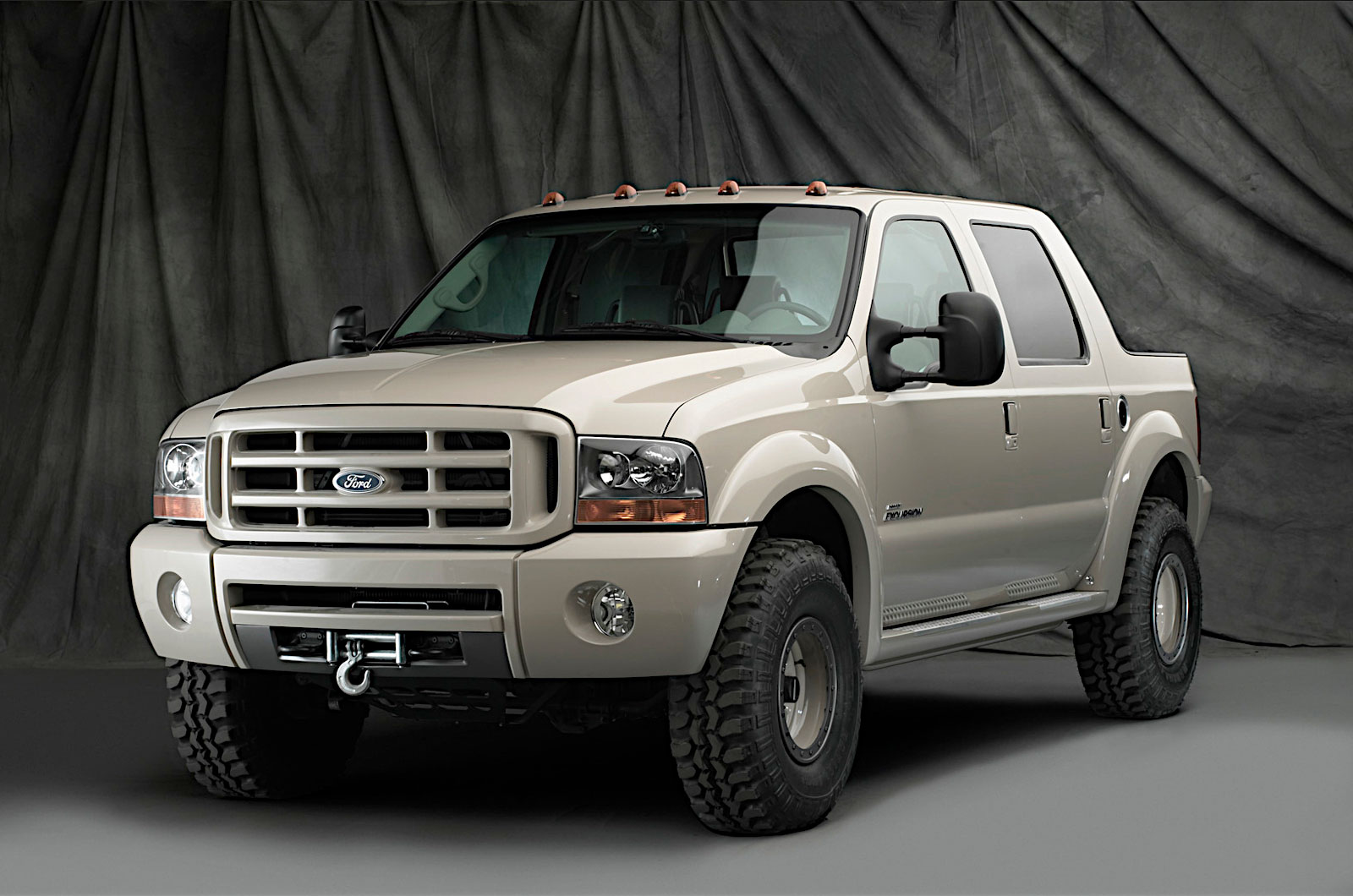
Based on the enormous Excursion SUV, the Desert concept was “customized to take on the most extreme weather conditions and terrain”, and was described as “the ultimate go-anywhere, do-anything truck”.
Up to 310bhp was provided by a 6.8-litre V10 Triton engine, available in both the regular Excursion and the F-Series Super Duty pickup, which was based on the same platform. The front-end styling was unique to this vehicle, and the interior, which had enough room for six passengers, was reported to be weatherproof.
Equator (2000)
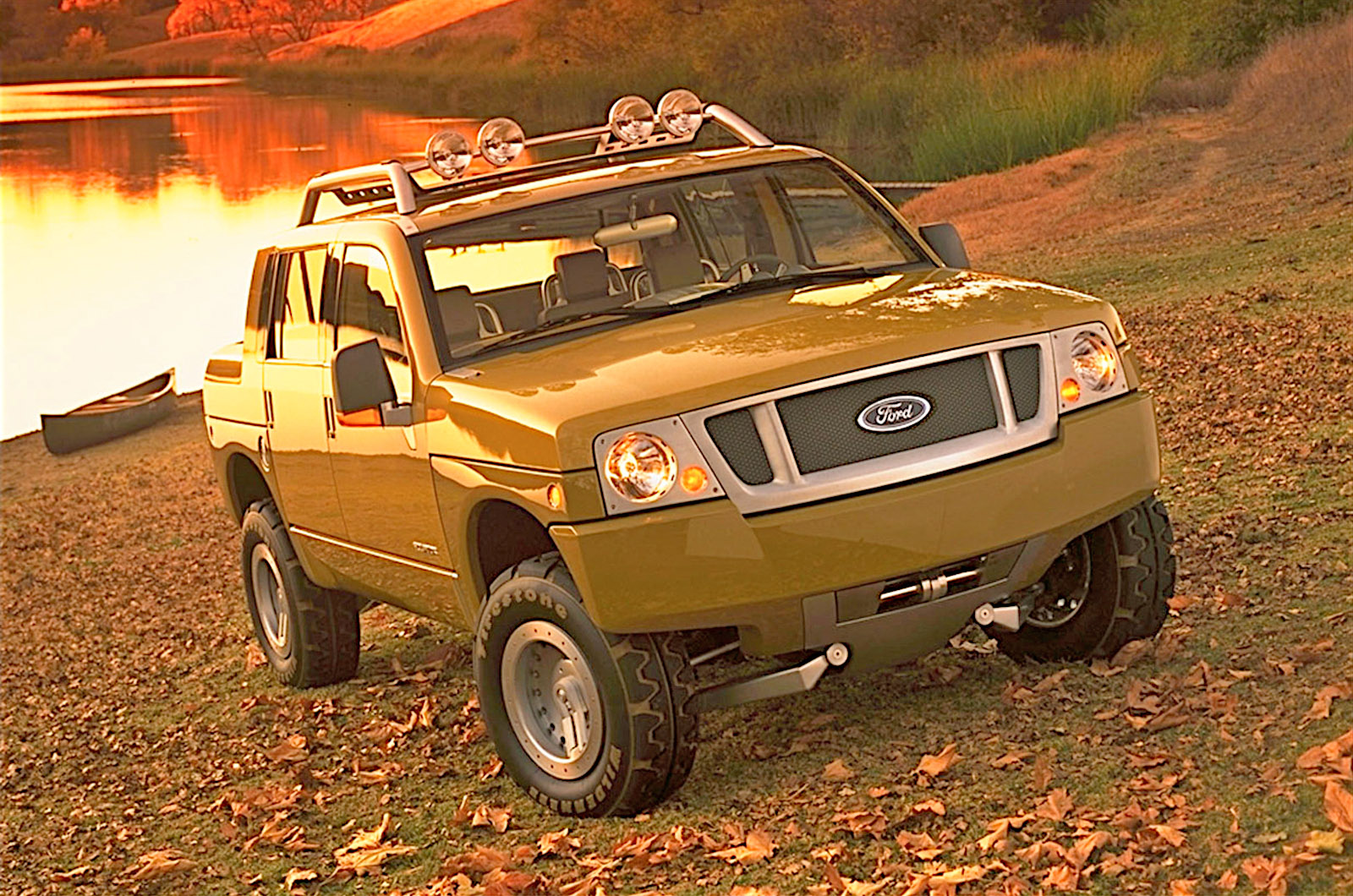
The Equator was another extreme off-road concept, this time based on the F-150 pickup. It had “off-road-racing-inspired independent suspension”, and the bumper, fender, wheel wells and lower trim panels were made of Kevlar.
In September 2005, Ford announced that it was putting the Equator up for auction to raise money for the American Red Cross disaster relief following Hurricane Rita.
Prodigy HEV (2000)
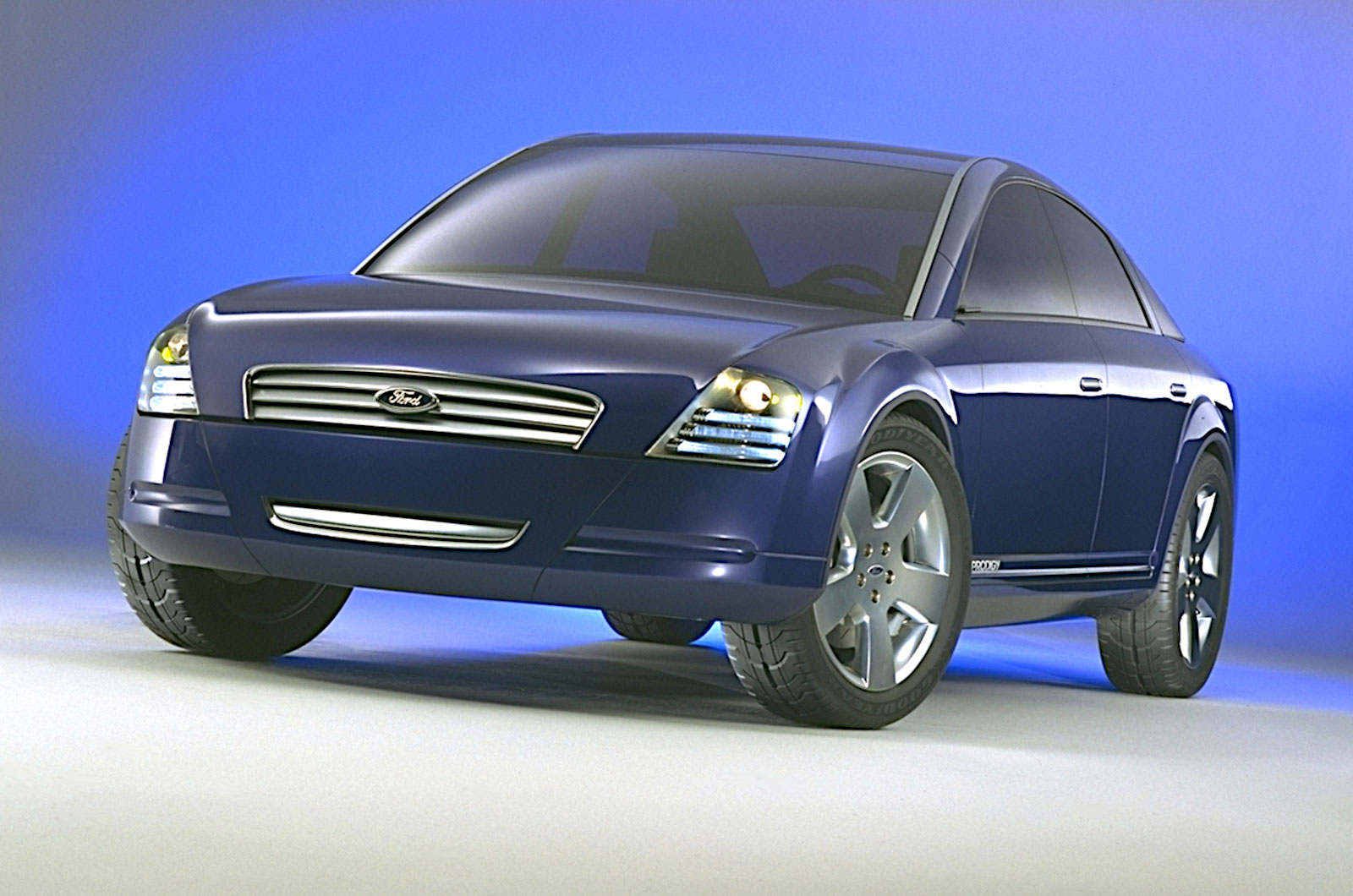
The Prodigy was part of Ford’s P2000 research programme into designing cleaner and more efficient vehicles in the 21st century. Its aluminium body was large enough to carry five passengers, and its hybrid powertrain consisted of a 1.2-litre four-cylinder turbo diesel engine and an electric motor.
The car made its public debut at the Geneva Show along with two other P2000 concepts, a sedan and an SUV with hydrogen fuel cells.
F-150 Lightning Rod (2001)
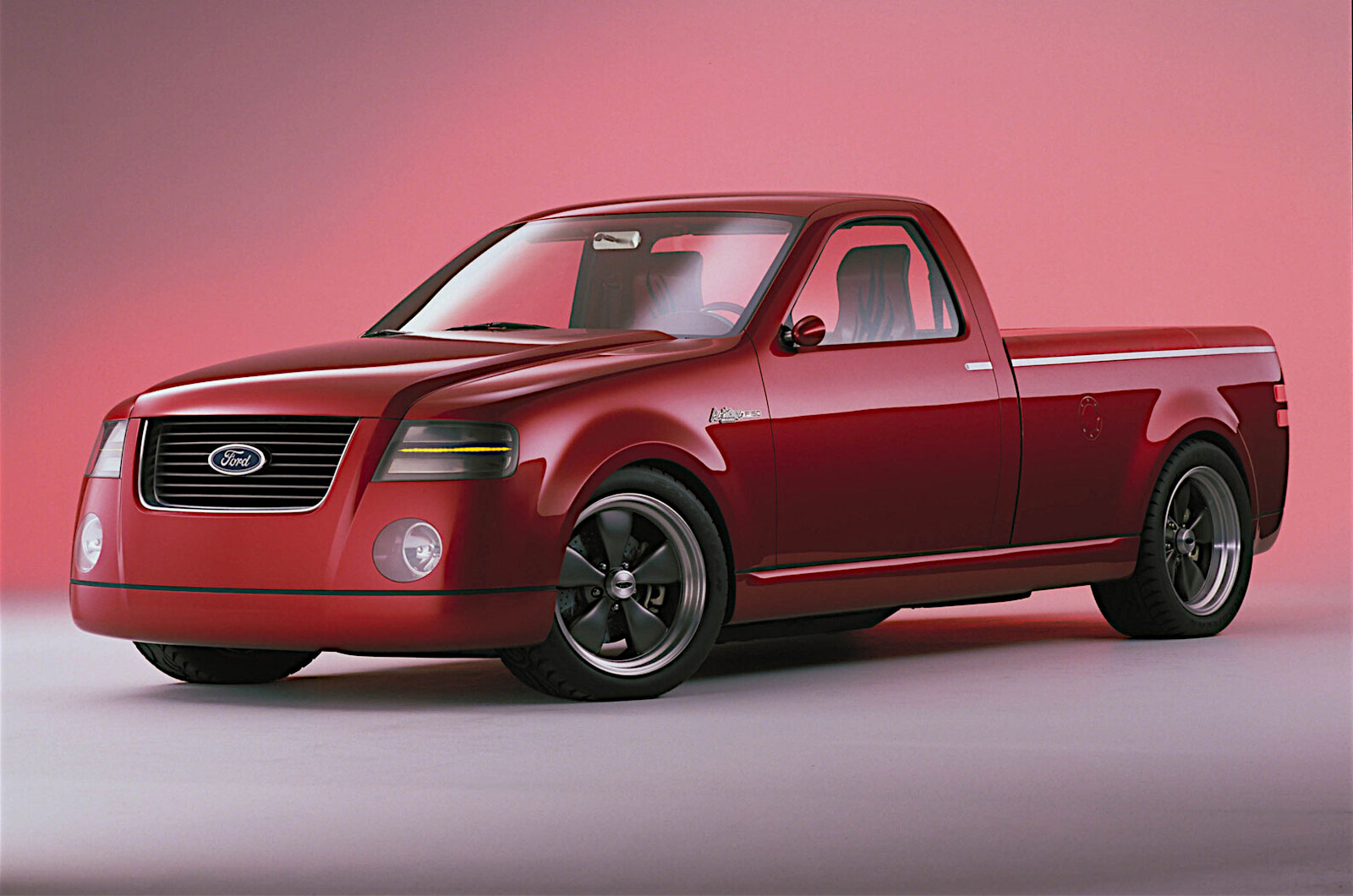
Revealed at the Chicago Auto Show in February 2001, the Lightning Rod was based on the tenth-generation F-150 (and powered by the supercharged 380bhp 5.4-litre Triton V8 available in that range) but was lowered and stretched to make it look like a custom vehicle.
To the same end, the bodywork and interior were predominantly cherry red, with graphics inspired by Maori tattoos. At both ends, the standard truck’s lights were replaced by horizontal neon tubes.
Forty-Nine (2001)
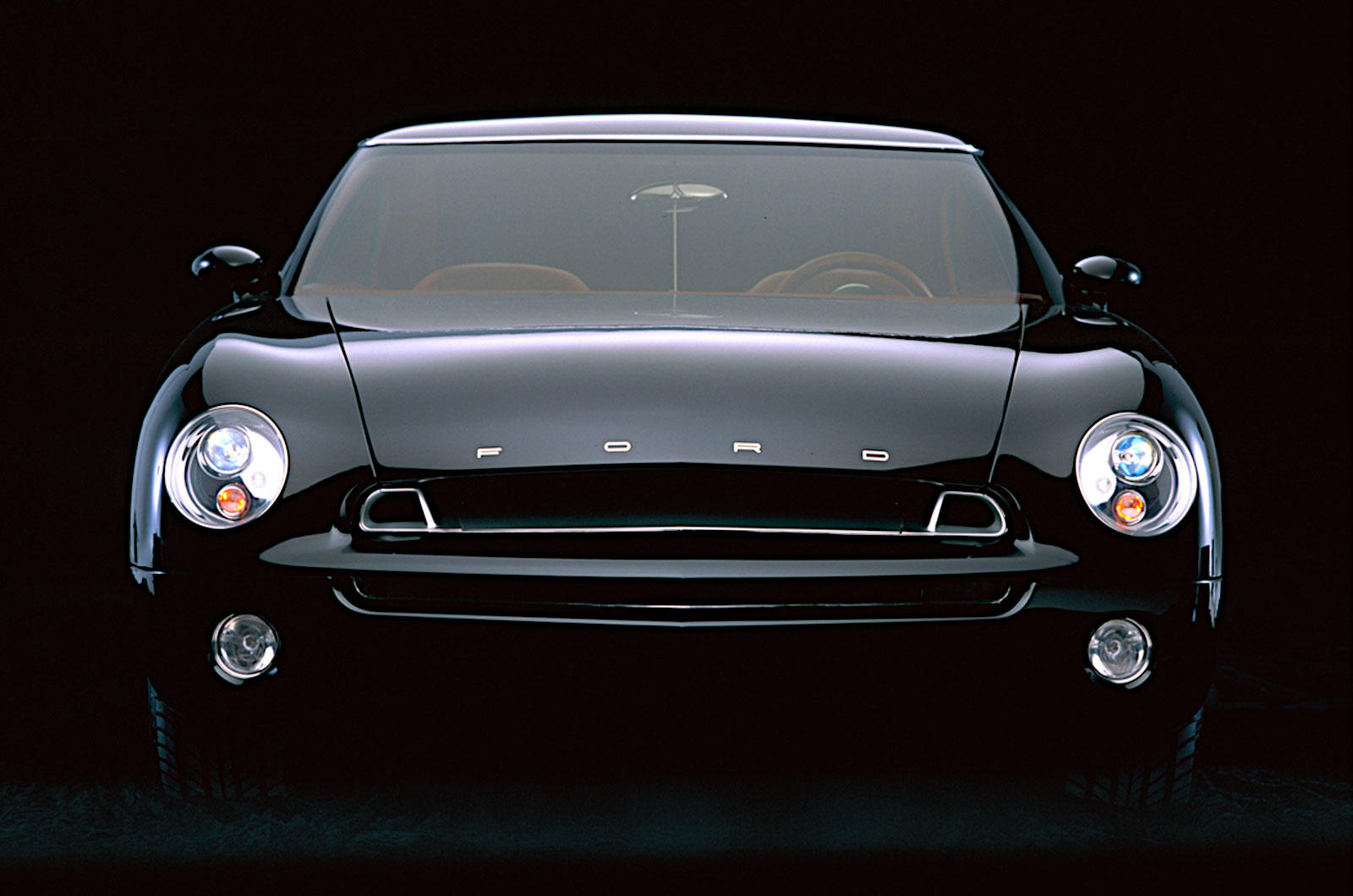
As its name suggested, this concept – “designed to take America on a sentimental drag-race down memory lane” – was inspired by the 1949 Ford model range, the first to go on sale after the Second World War. First seen at the 2001 North American International Auto Show in Detroit, it was completely modern, but its styling harked back to the famous cars of more than half a century before.
Like the contemporary, and final-generation, Thunderbird, it was powered by a 3.9-litre AJ-V8 engine (designed by Jaguar but used in this capacity only by Ford and Lincoln), “tuned to fit the car’s appearance and muscle”.
Thunderbird Sports Roadster (2001)
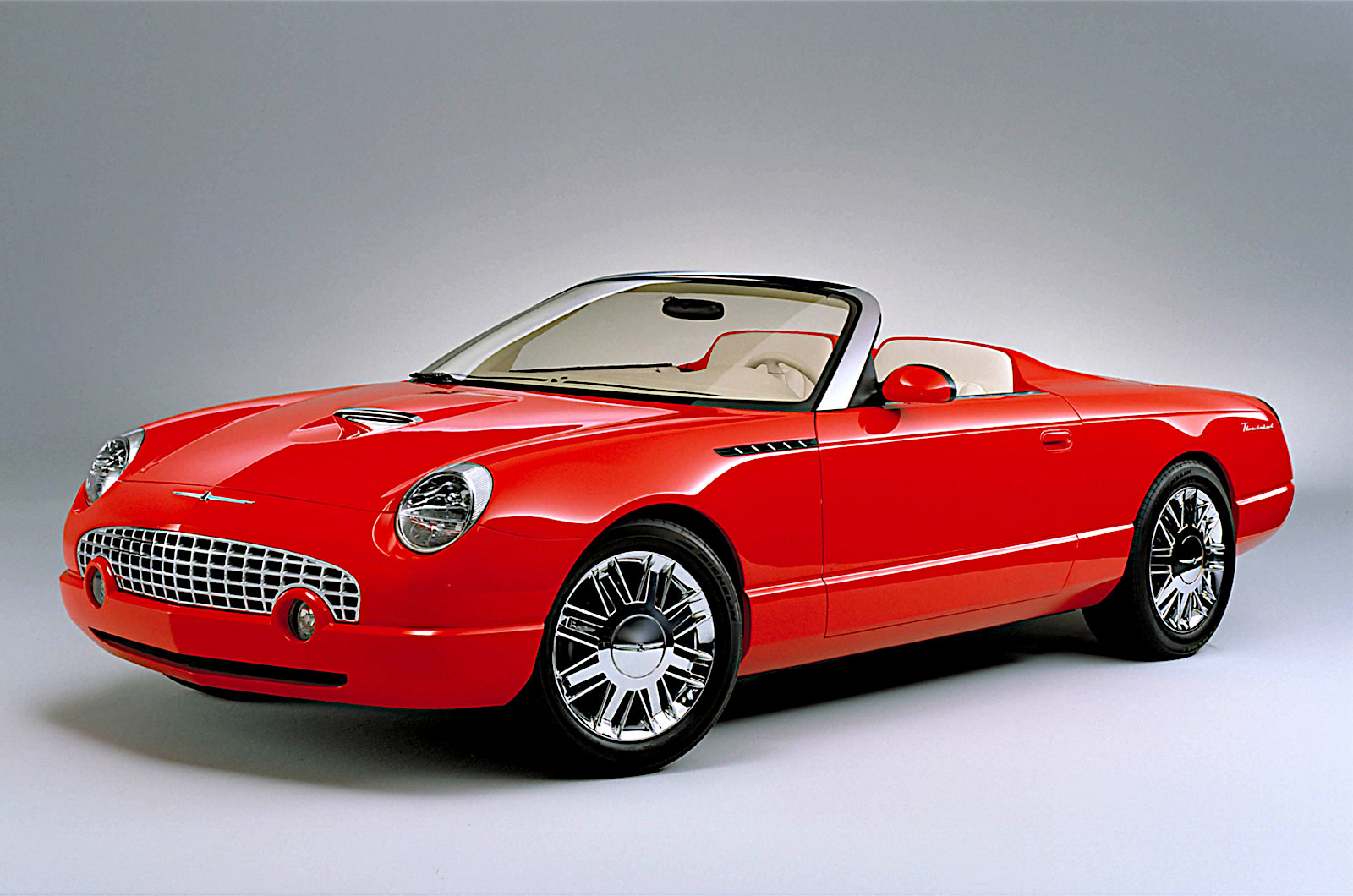
In the 1962 and 1963 model years, Ford offered a Sports Roadster version of the third-generation Thunderbird, featuring a tonneau cover which concealed the rear seats and included two raised sections, one immediately behind each of the front passengers.
For its 2001 Thunderbird concept, which had red enamel paintwork and a white leather interior, Ford returned to the idea it had tried out nearly 50 years previously, but did not adopt it for the production car.
FR100 (2002)
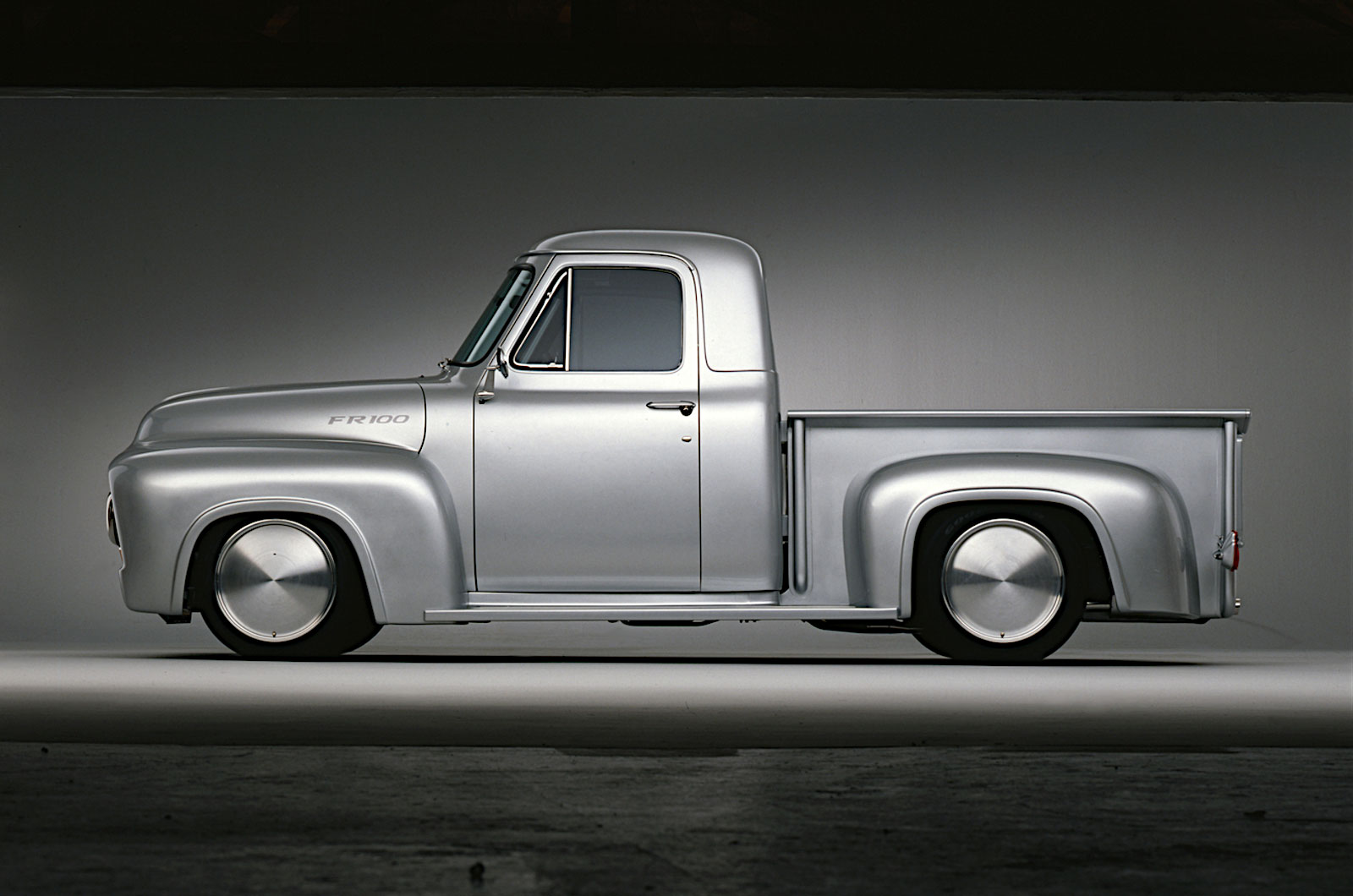
The vehicle pictured is the first of two concepts known as FR100. Both were adapted from 1953 F-100 pickup trucks, built in the debut model year of the second-generation F-Series.
The many radical modifications included fitting Ford’s then new 5.0-litre Cammer V8, a derivative of the Modular unit which became available as a crate engine in 2005.
Mighty F-350 Tonka (2002)
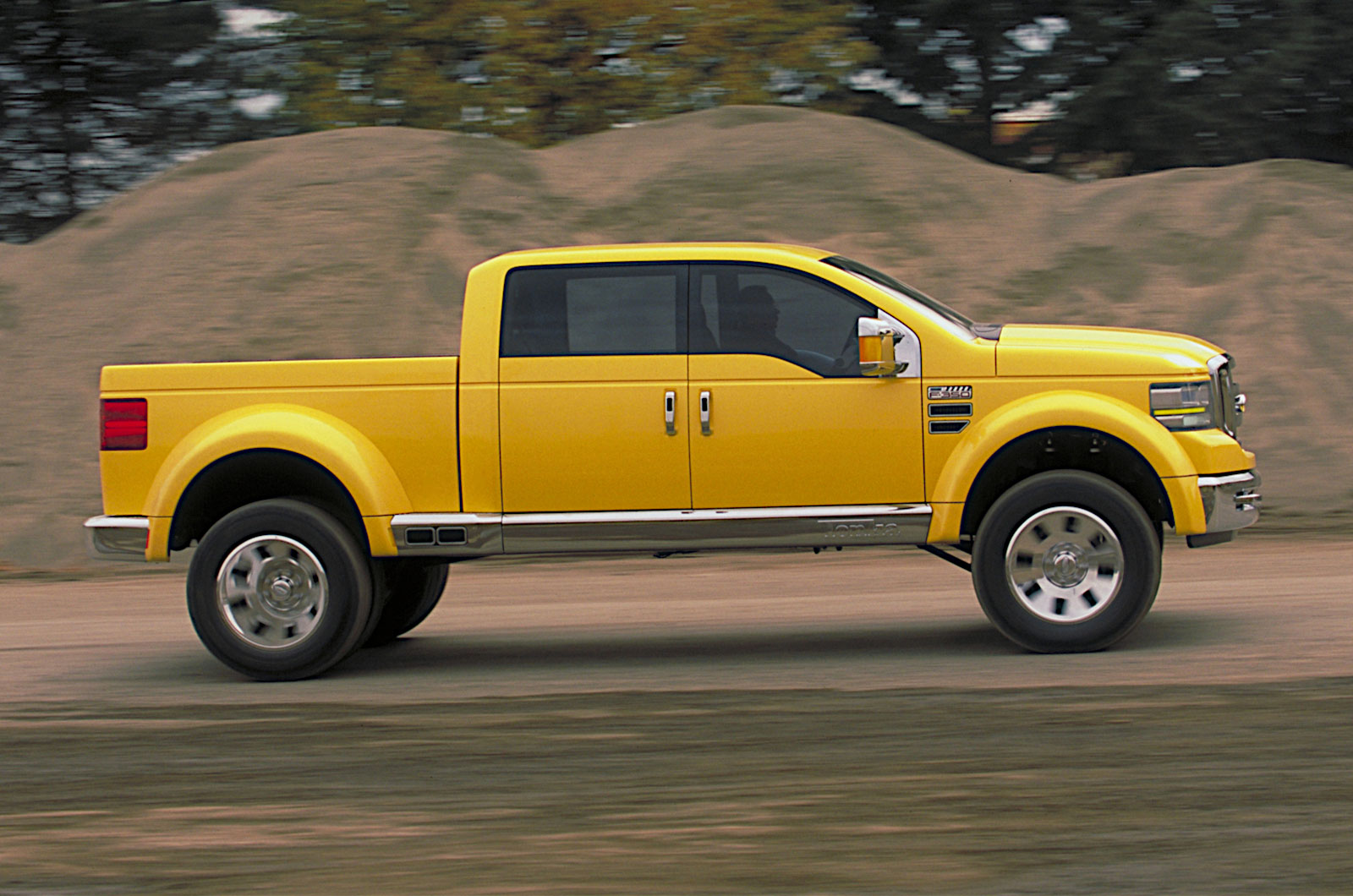
Named after the famous toy brand, this concept also marked a technological breakthrough for Ford. Its turbocharged 300bhp 6.0-litre V8 engine was the first diesel the company ever mated to an automatic transmission.
The vehicle also had air suspension which automatically reduced the ride height by five inches when the doors were opened, making loading and unloading easier than might otherwise have been the case.
Model U (2003)
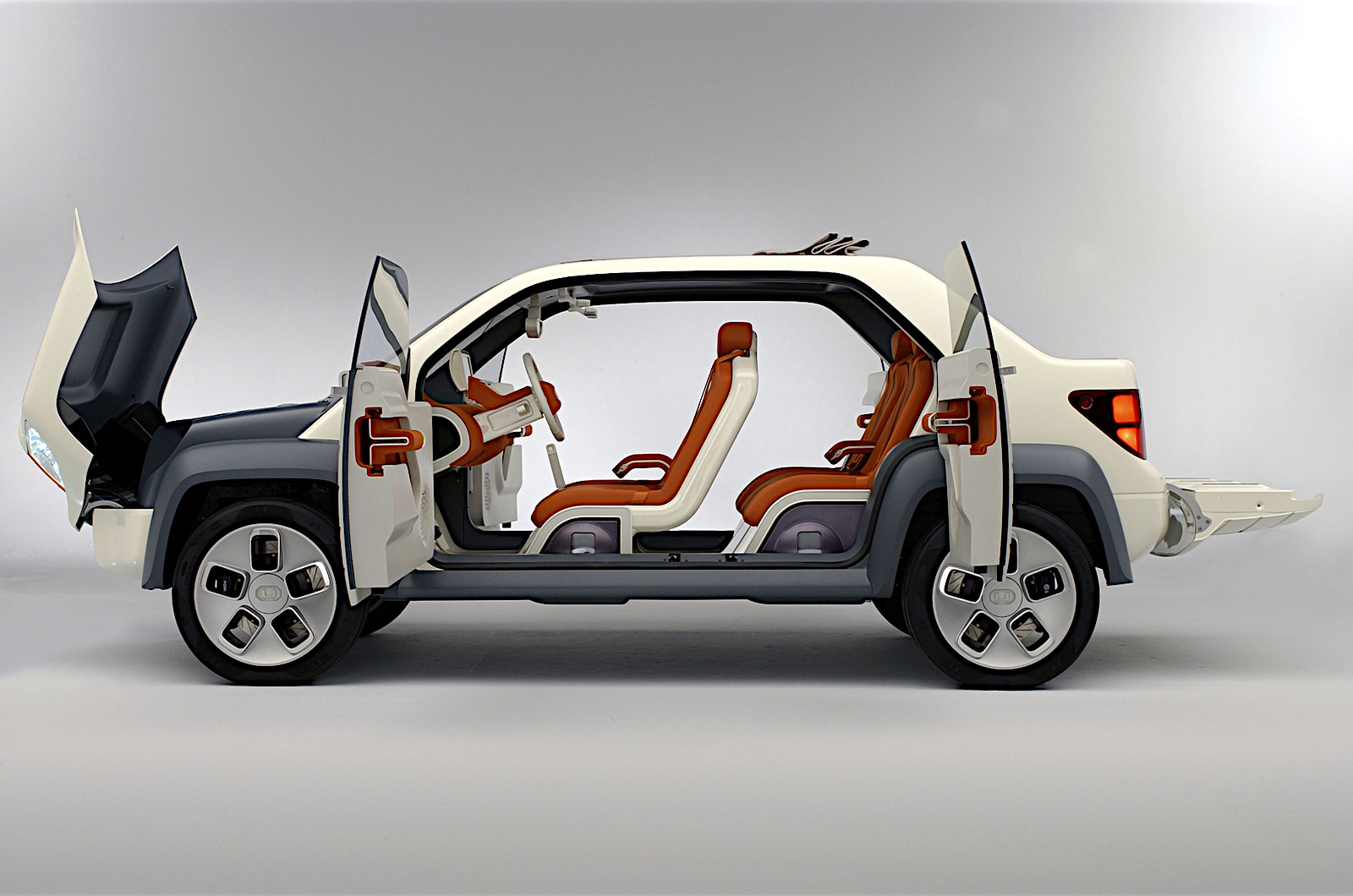
Ford was stretching things when it claimed that the Model U was “the Model T of the 21st century”, but the concept was certainly forward-looking, with a multi-configurable interior and body panels, adaptive headlights, a night vision display and a speech interface.
The engine was a hydrogen-fuelled 2.3-litre four-cylinder with a supercharger and two-stage intercooling. Its power output of 118bhp was modest, but the concept’s Modular Hybrid Transmission System (which acted as a flywheel, starter alternator and electric motor) contributed a further 33bhp in continuous use or 46bhp for short periods.
Focus (2004)
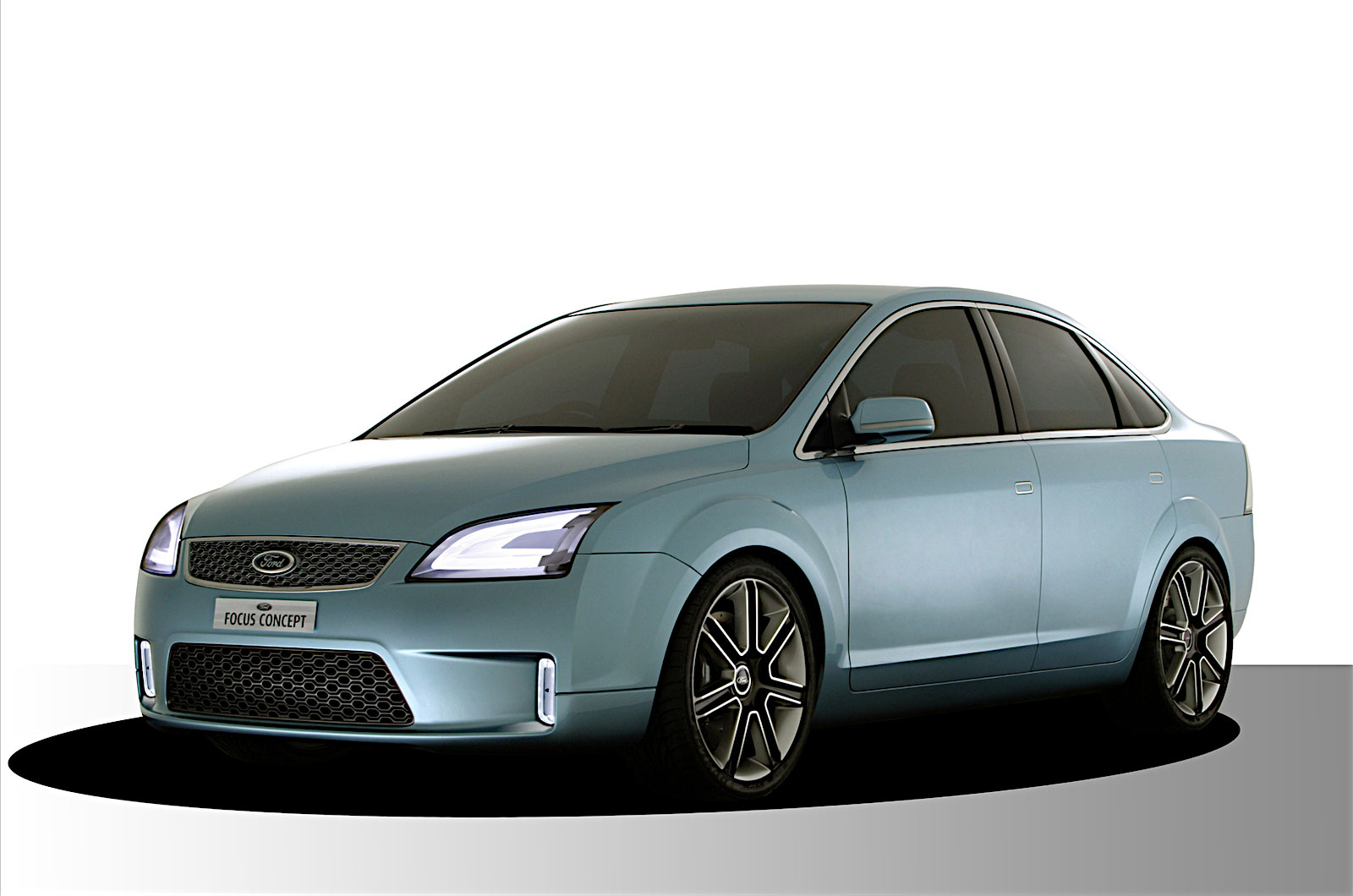
The rapidly growing significance of China as an automotive market was demonstrated when Ford chose to give the world its first glimpse of the second-generation Focus at the Beijing Auto Show in June 2004. That car would be offered as both a hatchback and an estate, but it was revealed in Beijing as a four-door saloon, the most popular type of body style in the region.
Ford branded it as the Focus Concept, which is why we’re including it here, but it must have been very close to the real thing, since production began not long afterwards.
iosis X (2006)
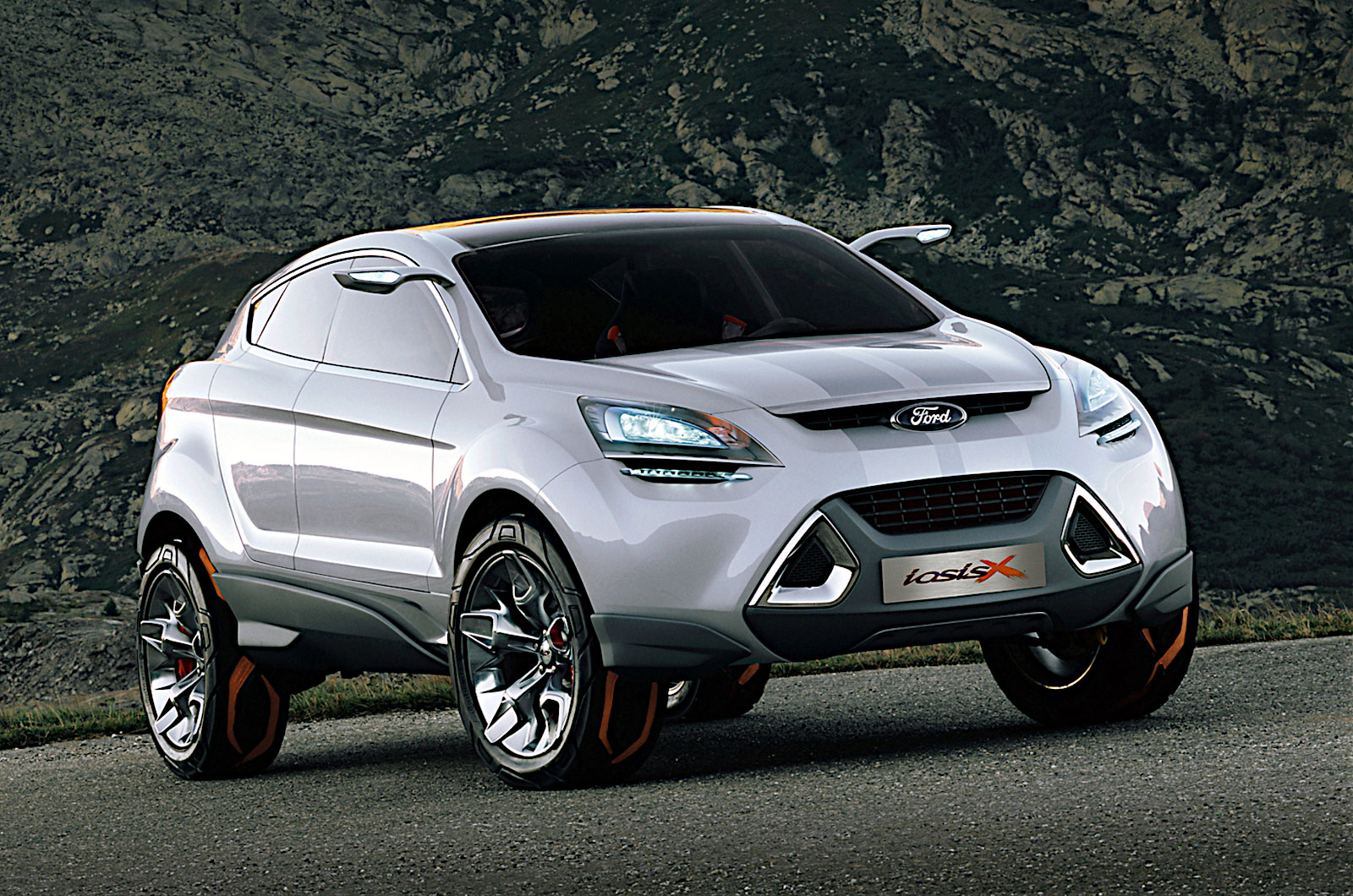
When it was revealed at the Paris Show in September 2006, we described the iosis X as “a bit like a Puma on steroids” (referring to the Fiesta-based coupe on sale earlier in the century) and “pretty funky, actually” (in the positive British sense of the word rather than the less complimentary American one).
Ford said that the concept “intended to a very strong message that we will be entering [the compact crossover market] in around 18 months from now”, and indeed it did. The production version was the Kuga, which arrived in 2008.
Start (2010)
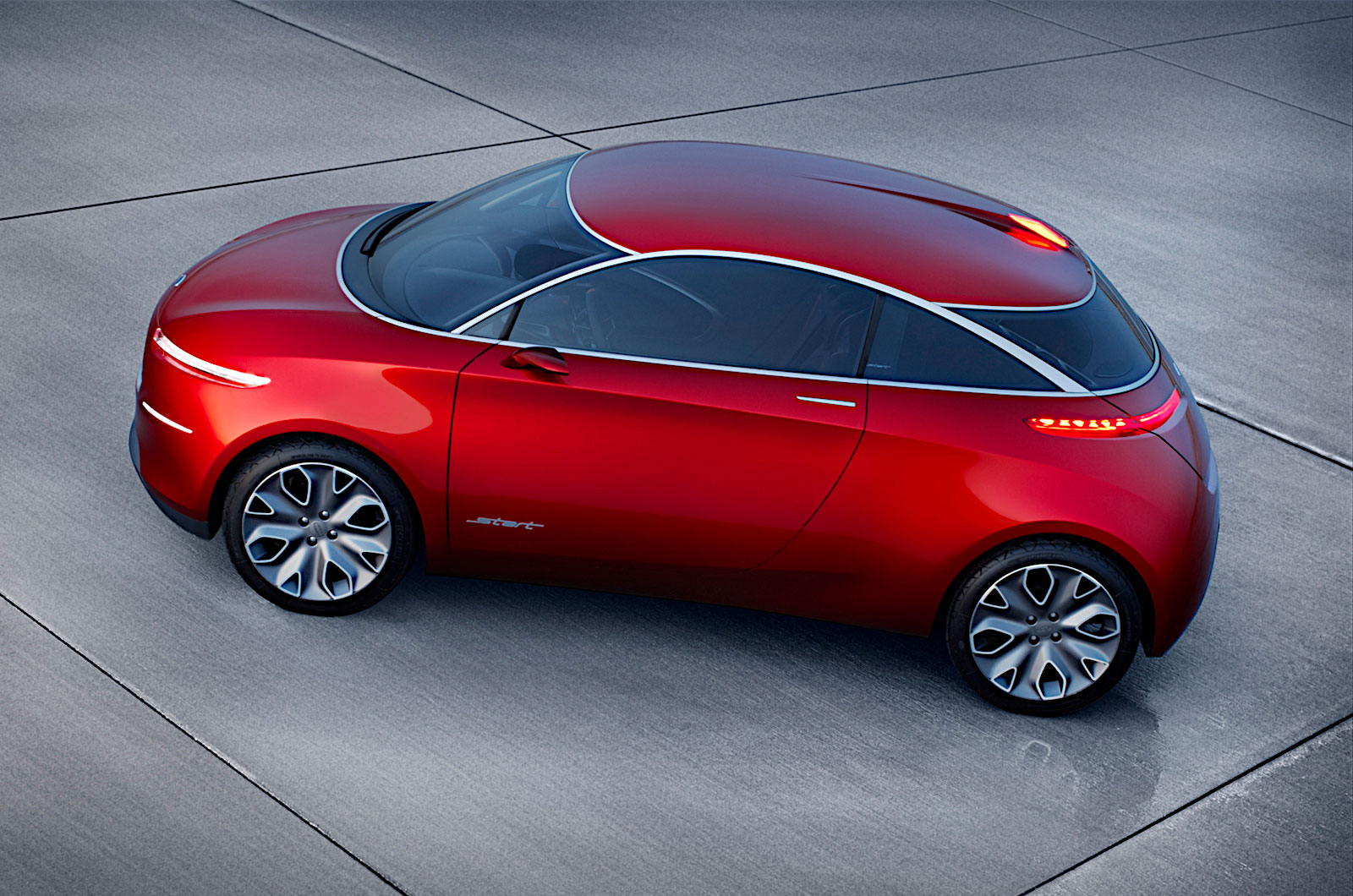
Ford created a buzz in Beijing with its Start concept, a “design exploration into the feasibility of a future small car”, but designer Chris Svensson (1965-2018) admitted five years later that adapting it for production would have been too expensive to contemplate.
In one sense, though, the Start lives on. It was the first Ford powered by the turbocharged 1.0-litre three-cylinder EcoBoost engine, which has since been used in models as varied as the Fiesta and the Transit Courier, and is a ten-time overall or category winner in the International Engine of the Year awards.
Vertrek (2011)
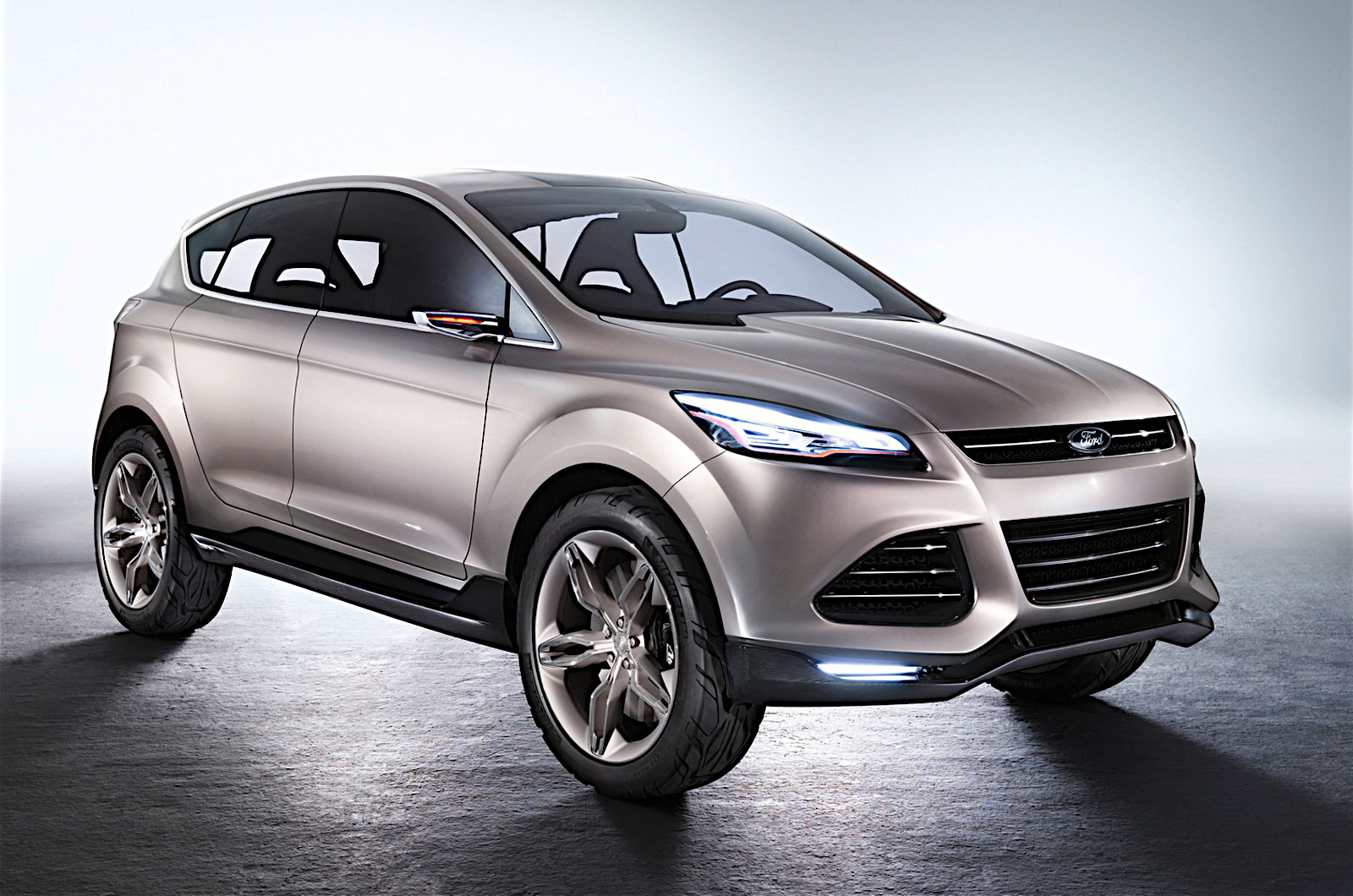
Based on Ford’s global C-segment platform, the Vertrek was a compact SUV proposal which was already being spoken of, when it was revealed in Detroit in 2011, as a “great opportunity” to unify existing vehicles produced in Europe and North America.
Sure enough, after the usual tweaking for production, it became both the second-generation Kuga and the third-generation Escape, which retained their predecessors’ names in their respective markets. The process continued when those models were replaced in 2019.
Mustang Cobra Jet Twin-Turbo (2012)
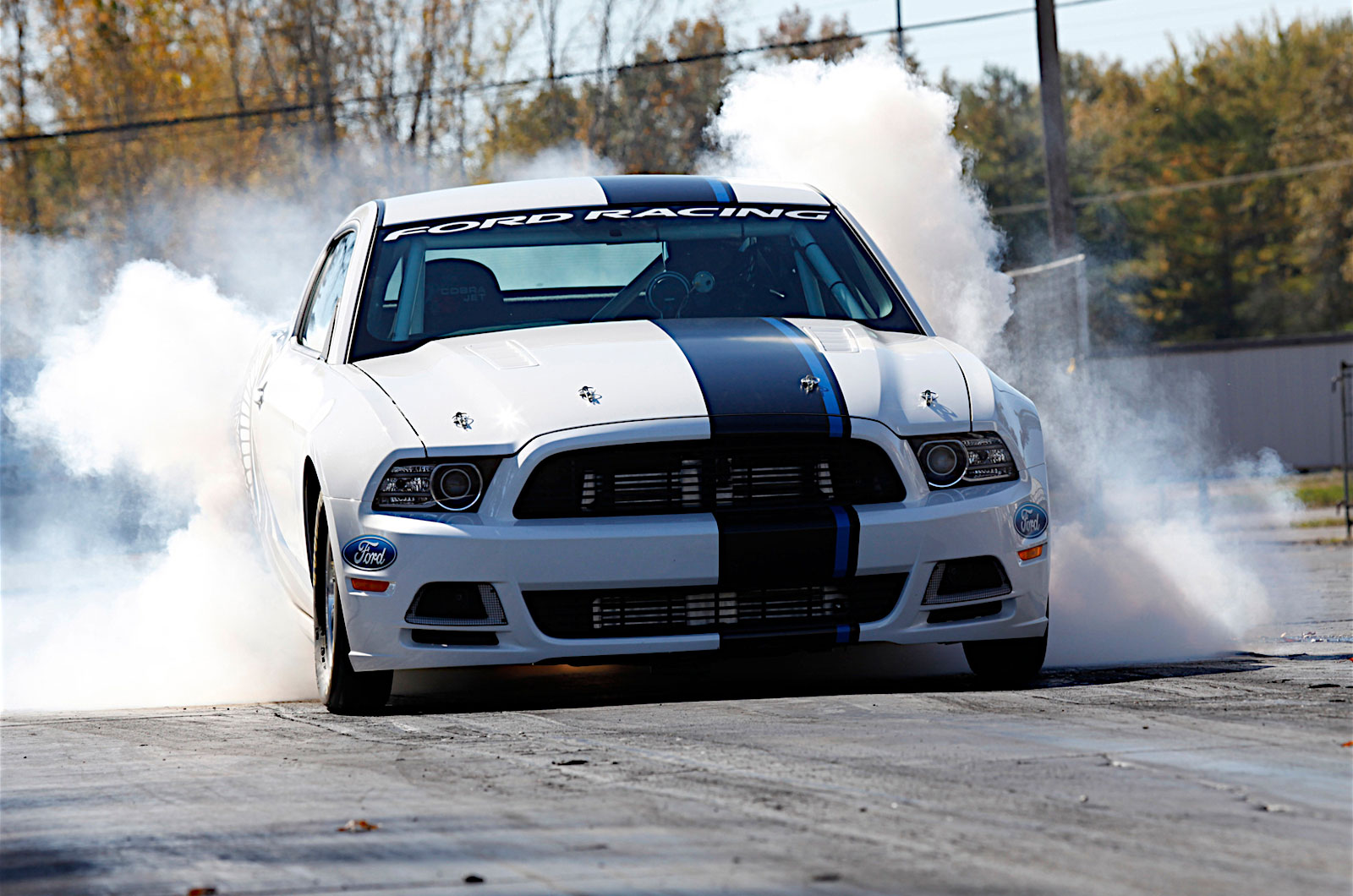
The Mustang Cobra Jet customer drag racer was relaunched in 2008, and became available in 2011 with a 5.0-litre V8 engine. In the following years it would be offered in both supercharged and naturally aspirated forms, but in 2012 Ford displayed something different at the SEMA show. The engine was the same, but it was now fitted with two small turbochargers, which spooled up more quickly than one large one but still produced a lot of boost.
This was a nice idea, but it didn’t lead to anything. Once the concept had been and gone, Ford continued to rely on supercharging for its forced-induction dragsters.

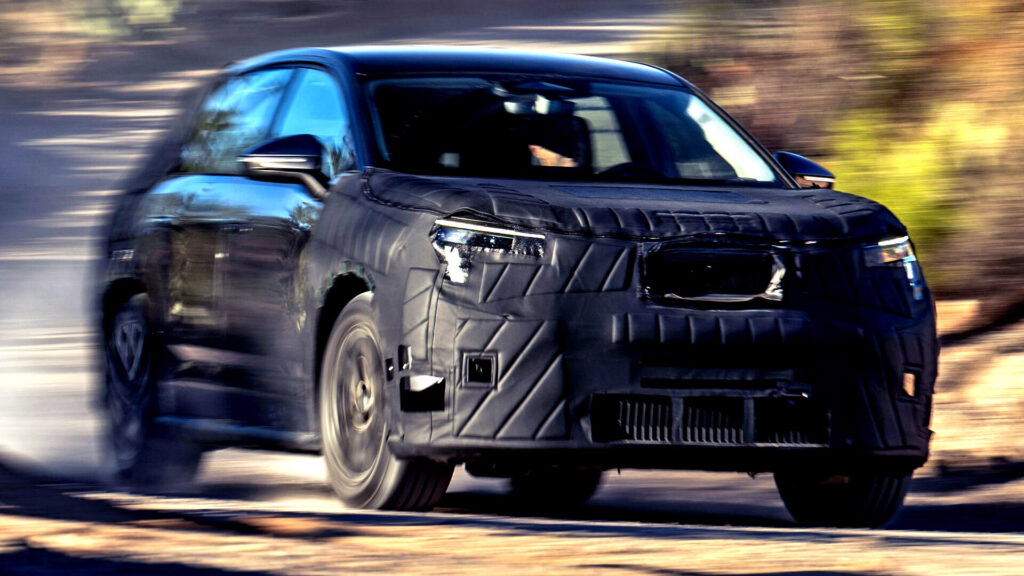
Skoda Peaq Endurance Testing Sets Stage for Three-Row EV’s Global Ambitions and Range Breakthroughs

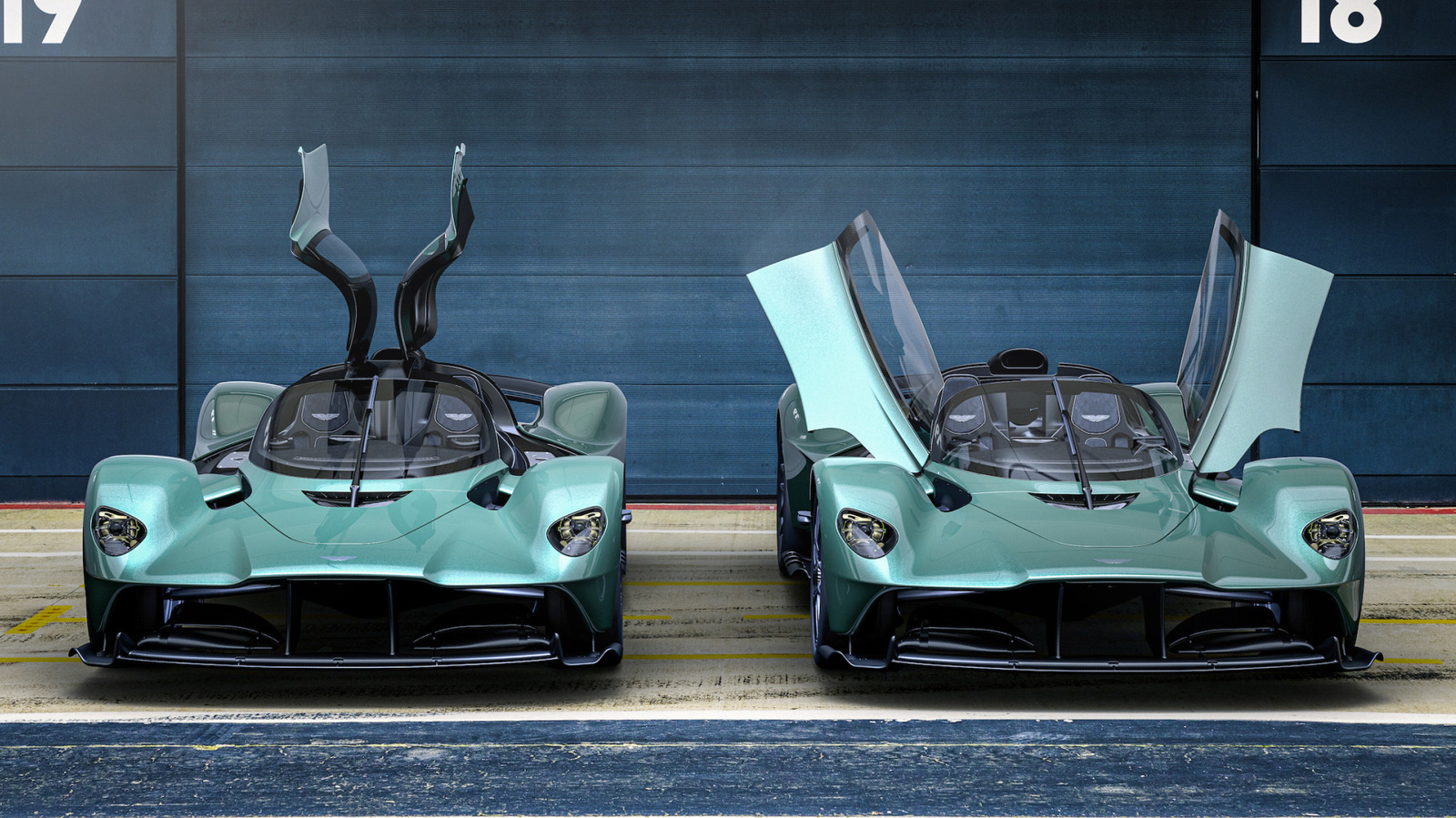
Aston Martin Valkyrie Recall Highlights Fire Risk in Brake Cooling System

Microcars and the Limits of Mobility: How Postwar Innovation Shrank the Automobile and Why...
 When small cars were really, like, small
In the 1950s a huge industry sprang up across Europe, building microcars.
Everyone wanted mobility but many couldn’t afford a ‘proper’ car, while used cars were in short supply. The answer was a glut of tiny vehicles, usually powered by two-cylinder engines and clothed in glassfibre – the new wonder material of the age. Glassfibre made small-scale production viable, although some microcars featured steel bodyshells.
Throughout the fifties many of these companies flourished, but when the Mini appeared in 1959 it killed off many microcar makers at a stroke, although some continued into the 1960s. Some microcars were ingenious while many were shockingly bad – we’ll leave you to work out which is which:
Peel P50 (1962)
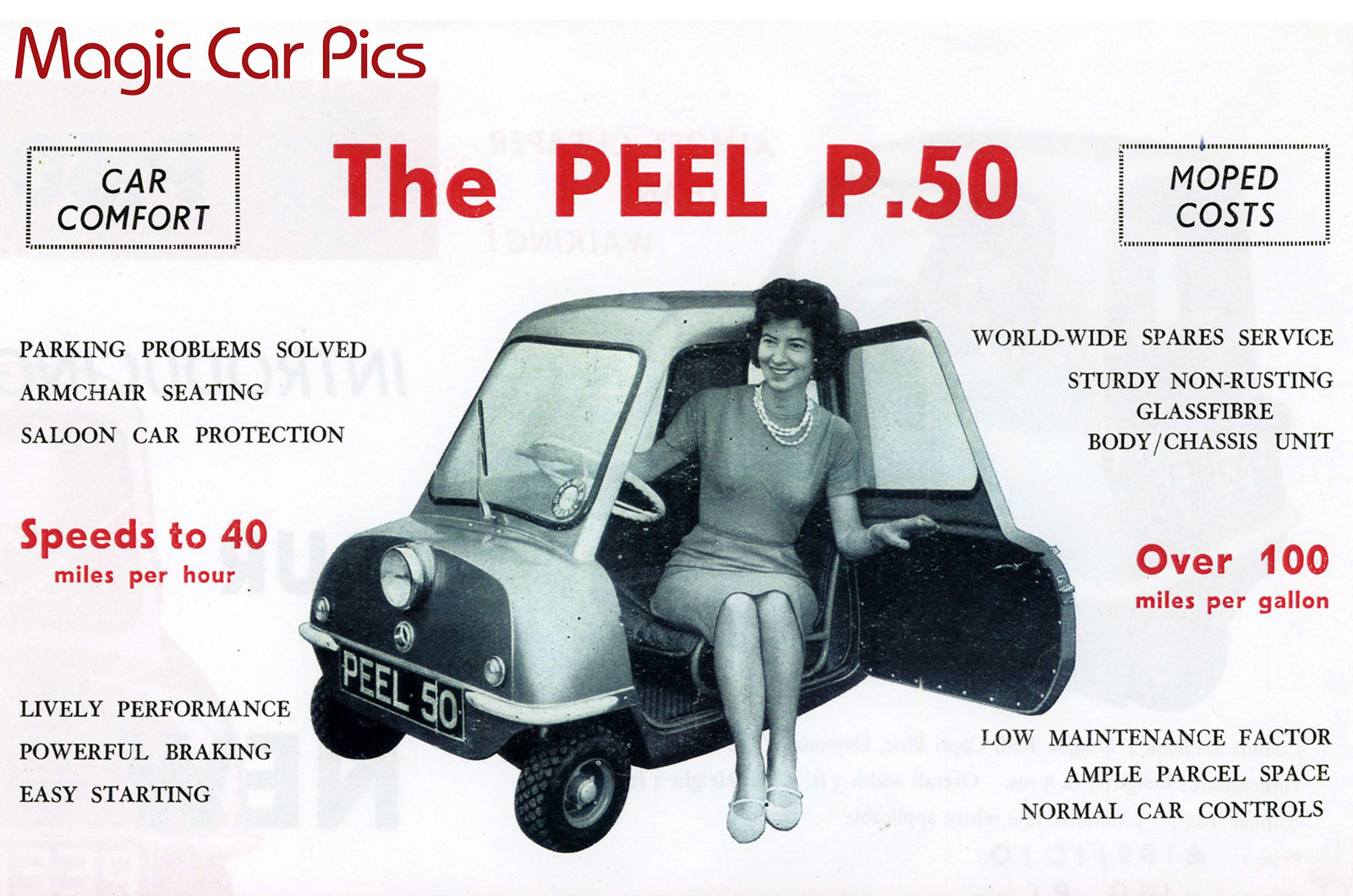
We might as well start with the smallest production car ever made – at least according to the Guinness Book of Records. Made by the Peel Engineering Company on the Isle of Man, the three-wheeled P50 came in red, white or blue. Originally built between 1962 and 1965 (50 were made), the P50 is now back in production in both petrol and electric forms, and we've just driven it. Our verdict? "A 4.8bhp happiness generator."
Biscuter (1953)
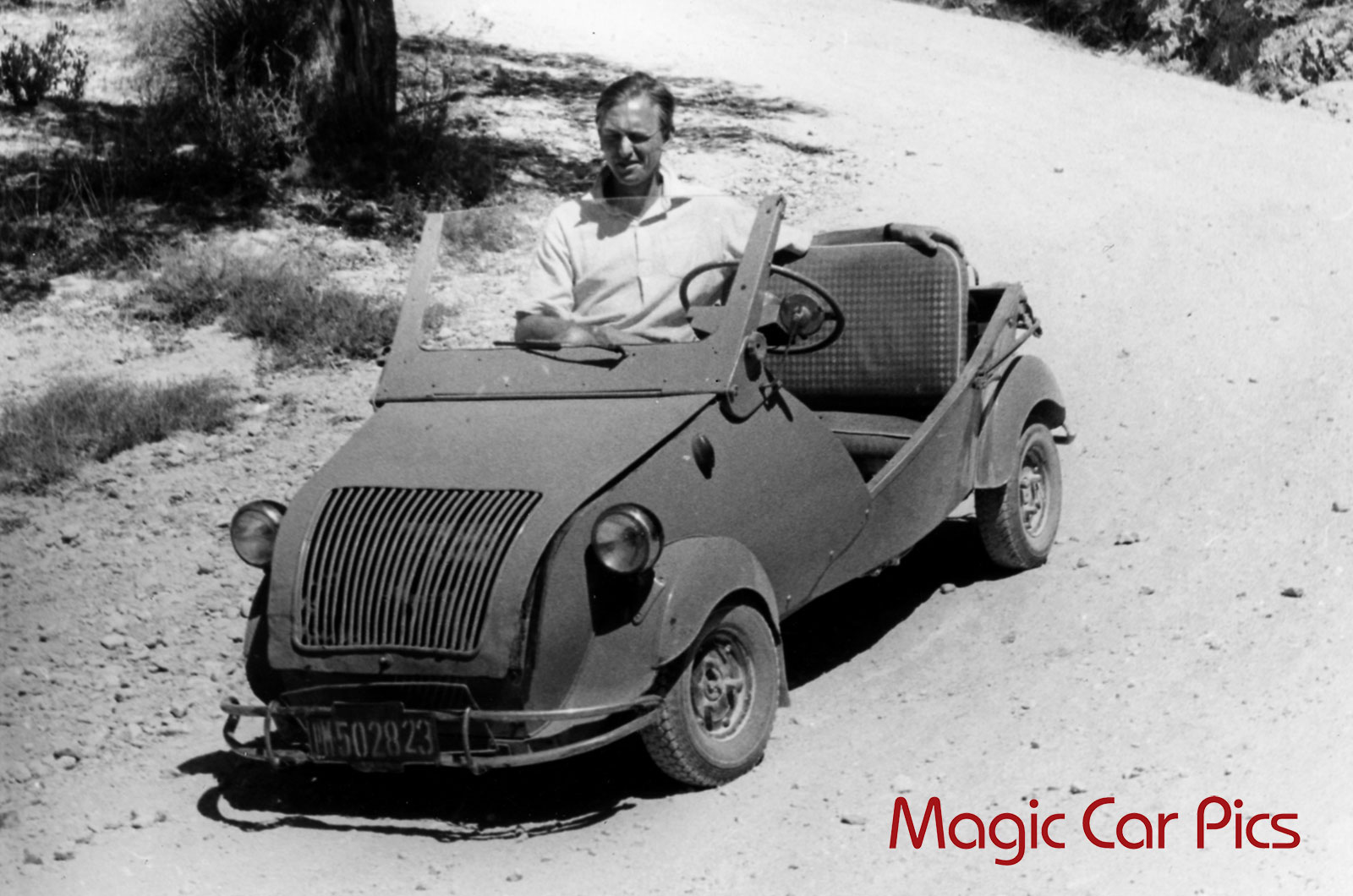
Incredibly, around 10,000 of these Spanish-built torture devices were made, between 1953 and 1960. Even more incredibly, the Biscuter’s origins lay in the Biscooter, an economy car created by Gabriel Voisin, who built some of the most luxurious and expensive cars of the 1930s.
Brutsch Mopetta (1956)
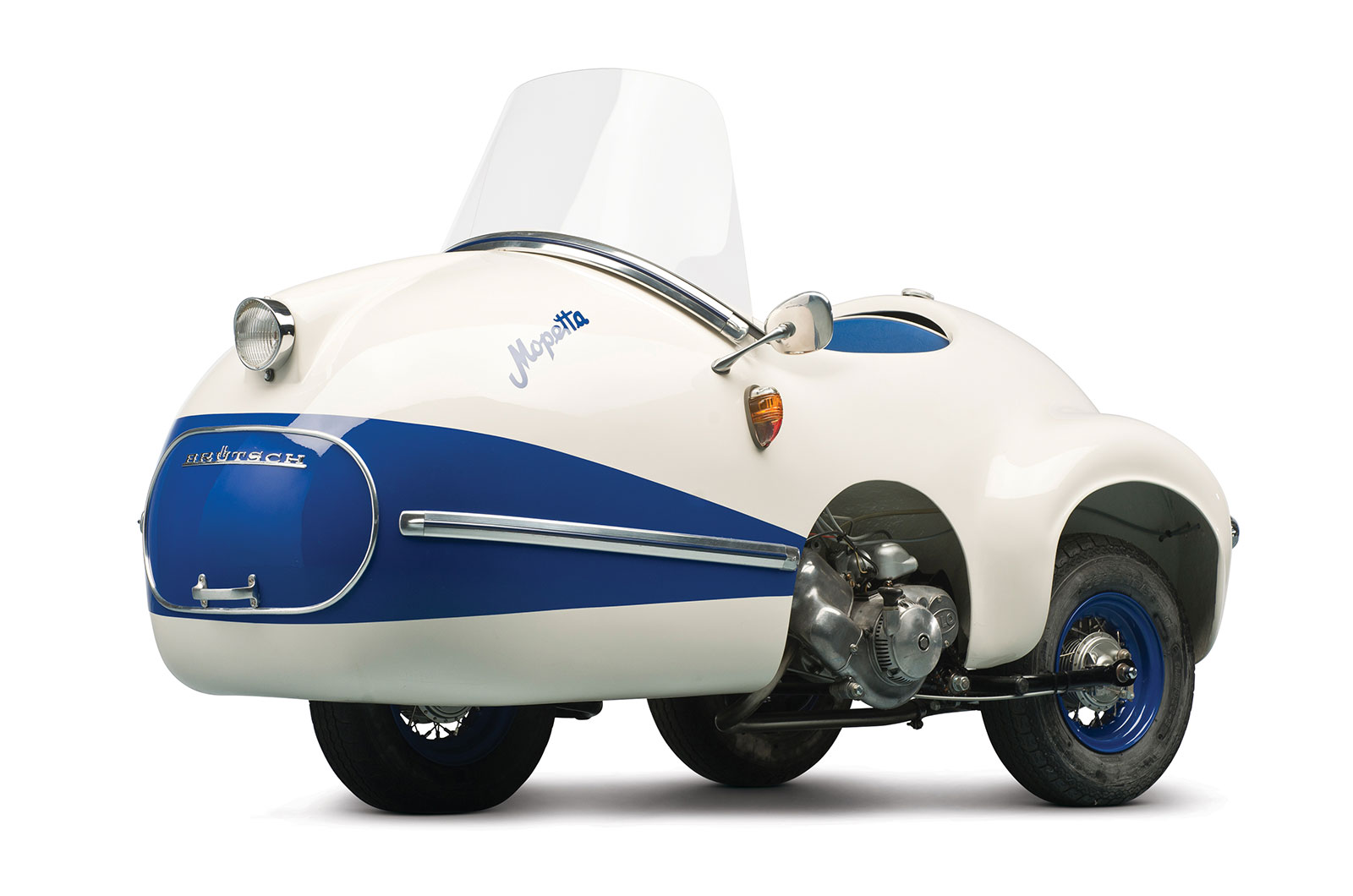
Making the Peel P50 look luxurious (at least it had a roof), the Brutsch Mopetta took minimalism to extremes. Capable of seating just one, and with a pull-start 50cc engine, just 14 examples were made between 1956 and 1958.
Brutsch V2 (1956)
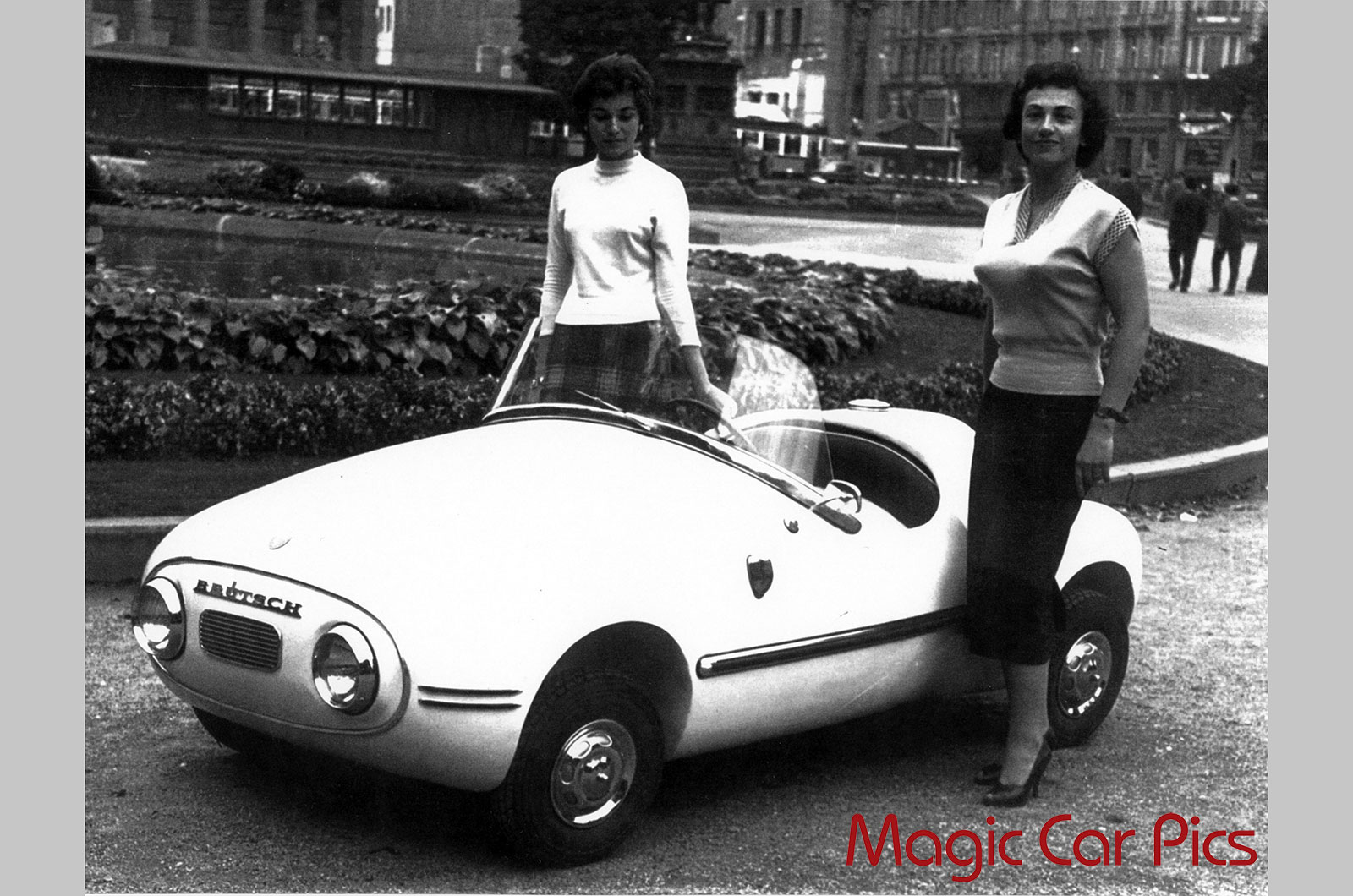
Even rarer than the Mopetta was the V2, of which just a dozen were made. This time there was a full complement of wheels and seating for two, while power came from a 98cc engine – enough to give a 40mph top speed.
Dornier Delta (1956)
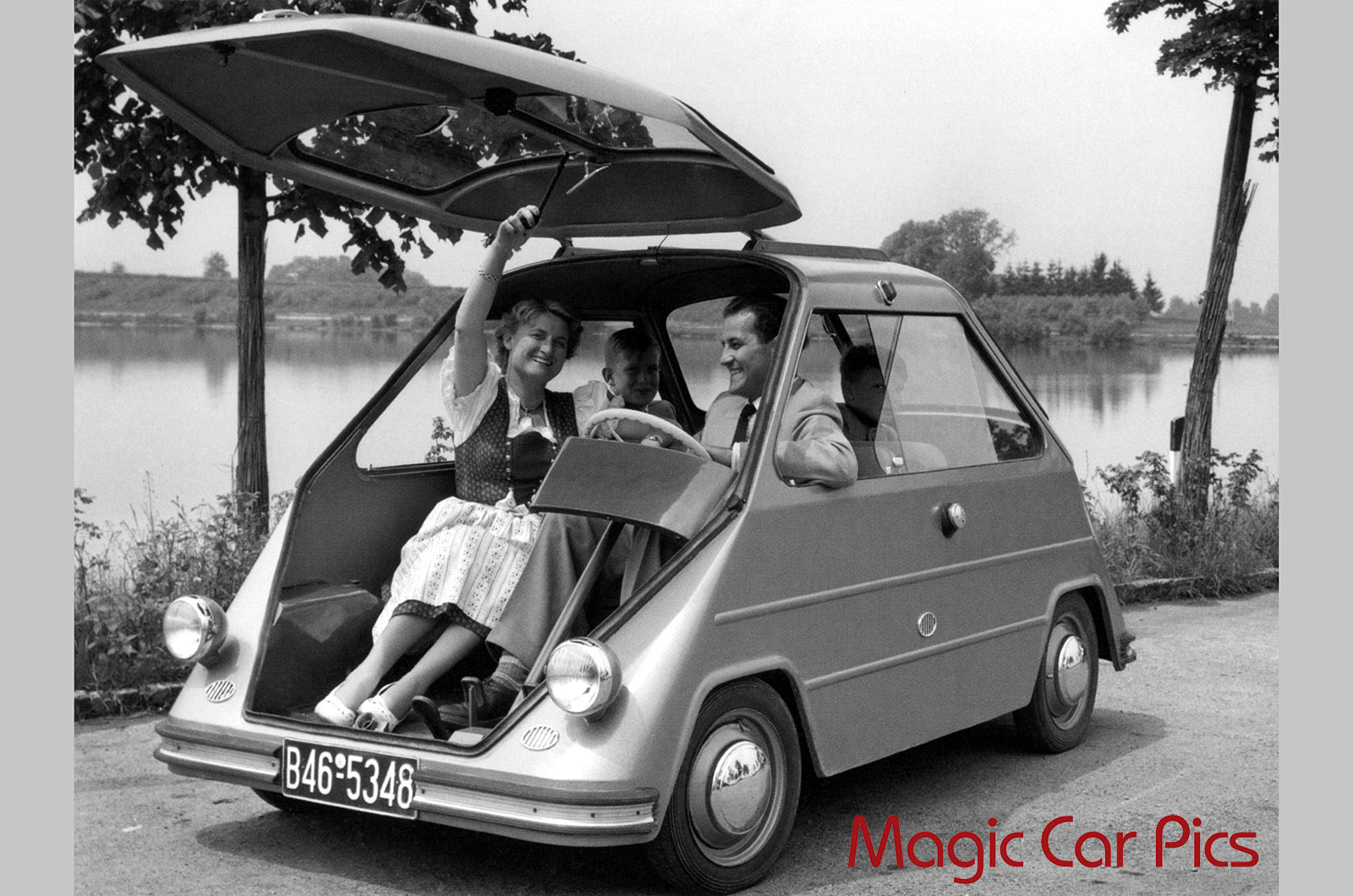
Dornier was best known for building aircraft, but in the post-war era times were tough so the company tried its hand at building cars instead. The Delta was the result, but even before the car had gone into production it was clear that the sums didn’t add up, so the project was sold on. Interestingly, today the firm focuses on medical devices and still makes a product under the Dornier Delta name, though it is a 'semi-integrated lithotripter', a device to treat kidney stones.
Zundapp Janus (1957)
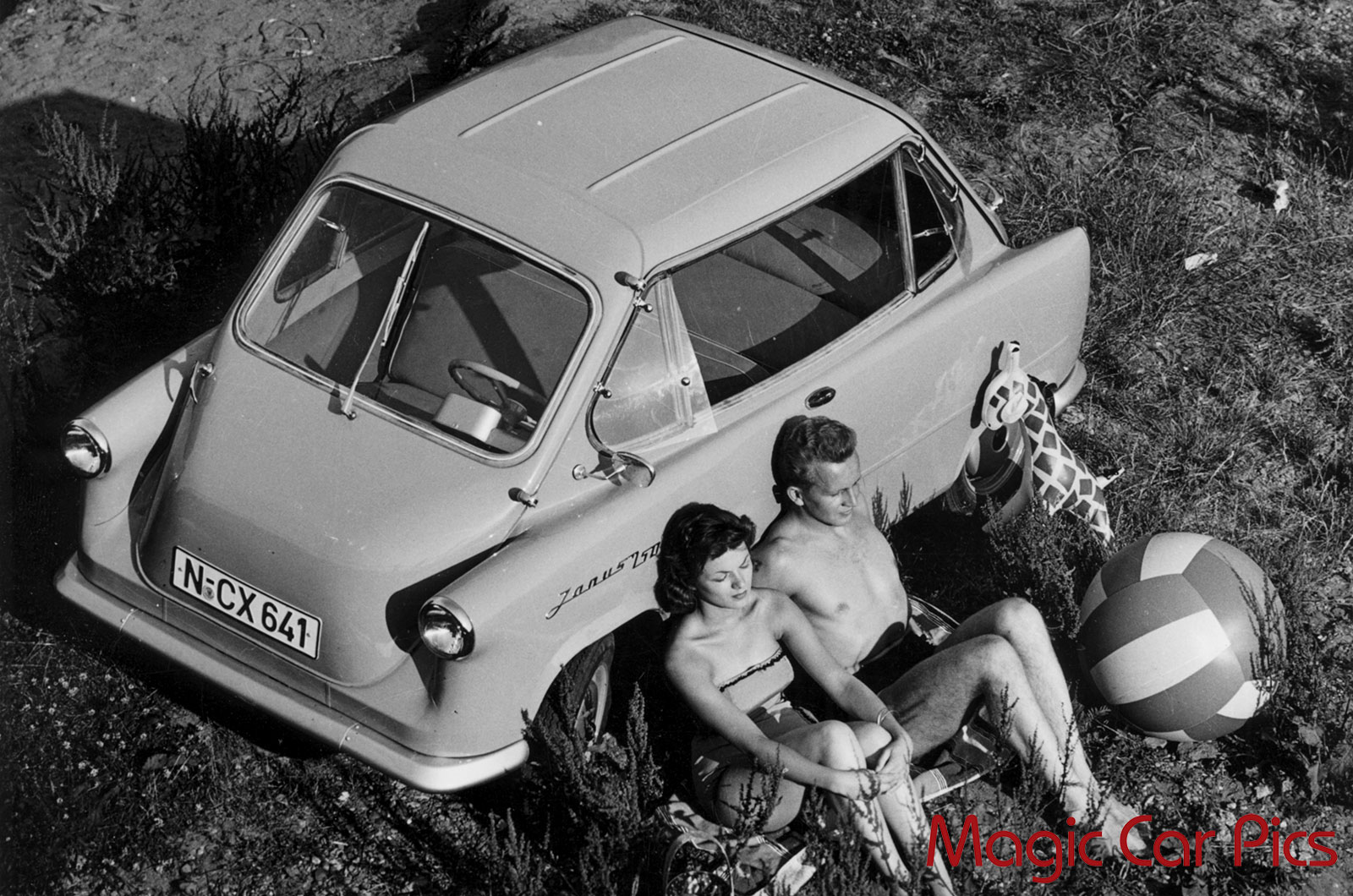
Dornier sold the Delta microcar project to German motorcycle builder Zundapp, as it was keen to expand its operations. Renamed the Janus, this four-seater microcar was powered by a mid-mounted two-stroke 245cc single-cylinder engine. Almost 7,000 cars were made in a year.
Vespa 400 (1957)
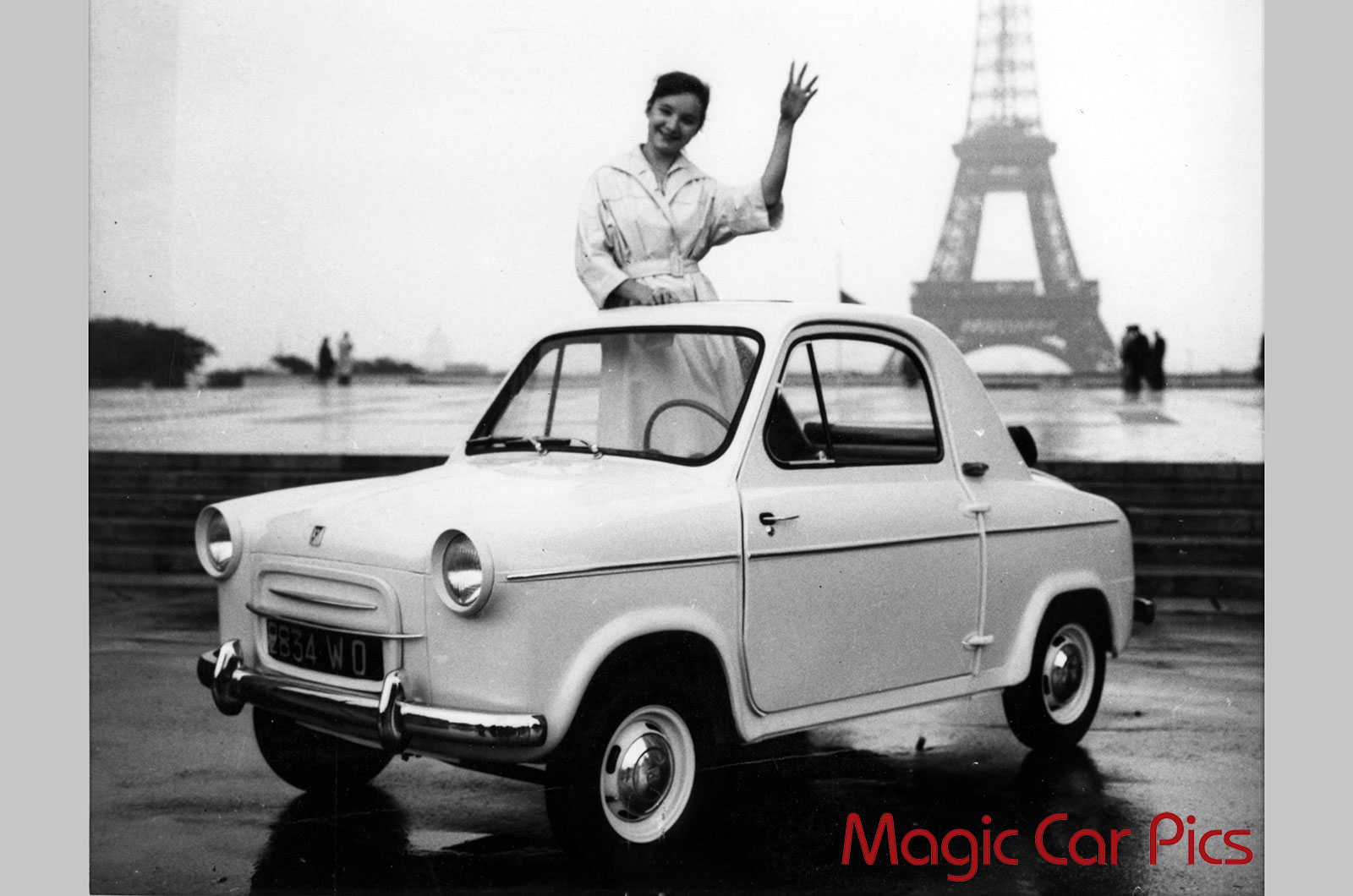
Zundapp wasn’t the only motorbike maker keen to get into building cars; Vespa did the same thing. Production ran from 1957 until 1961, with all cars powered by a 393cc two-cylinder air-cooled engine.
Frisky (1957)
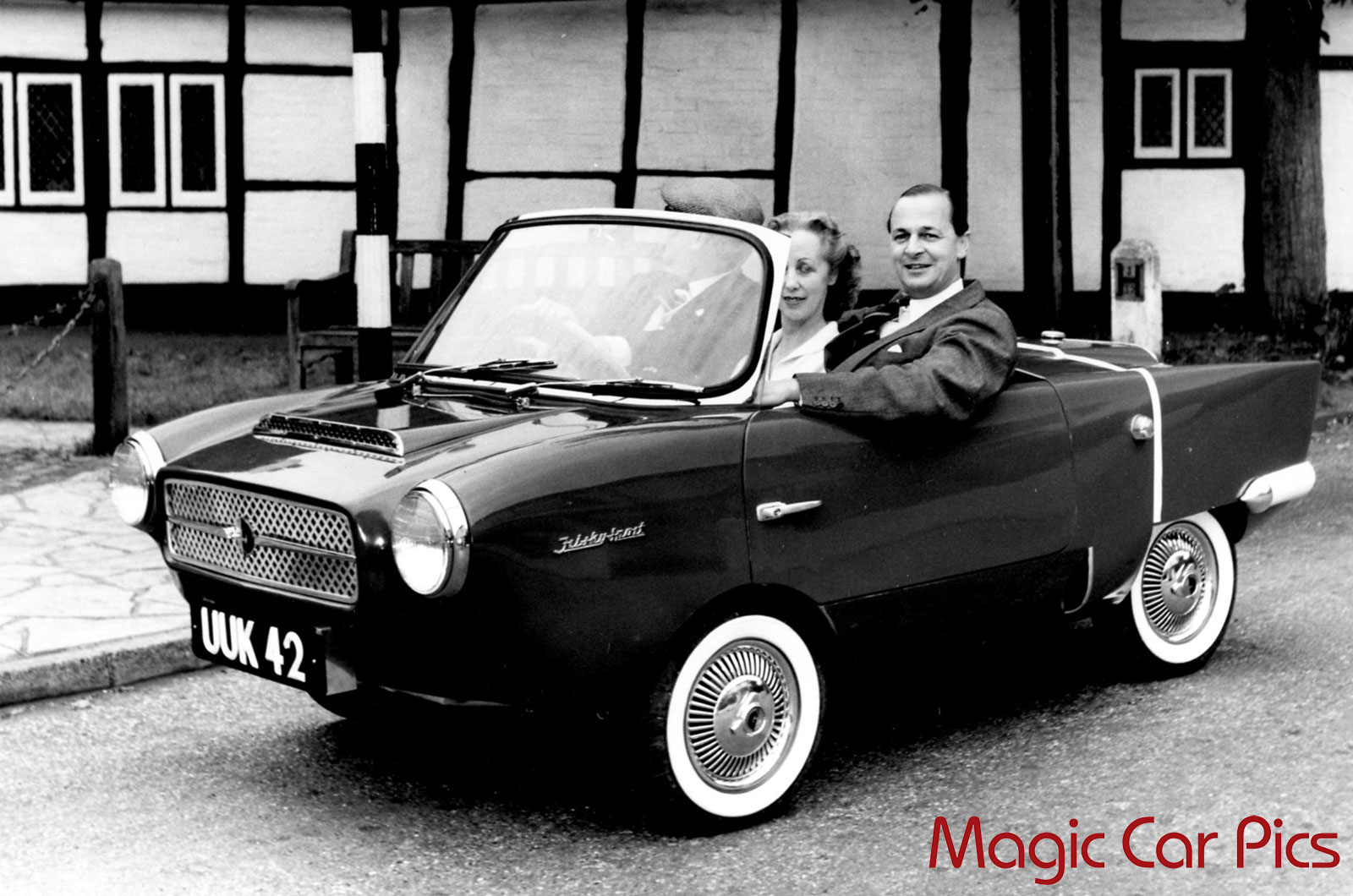
You’d buy one of these just for the name! Initially built in Wolverhampton by Henry Meadows, the Frisky came with an array of identities including the Friskysport, Coupé and Family Three, with production lasting from 1958 until 1961. Motive power was courtesy of various two-stroke engines, with either one cylinder or two.
Iso Isetta (1953)
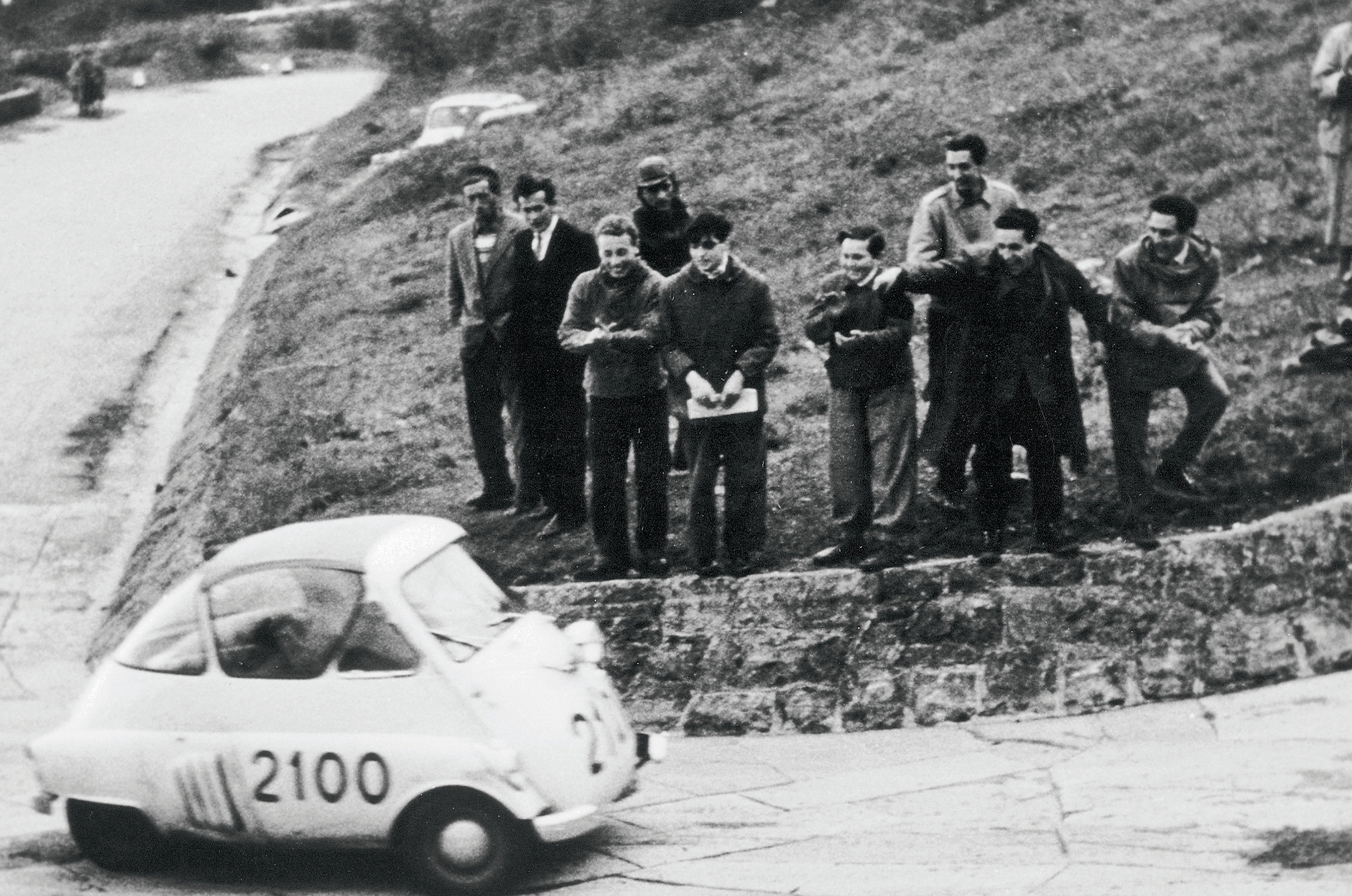
The Isetta was originally developed by Italian company Iso in 1953, and it even took part in the famed Mille Miglia race in 1954 (pictured).
BMW Isetta (1955)
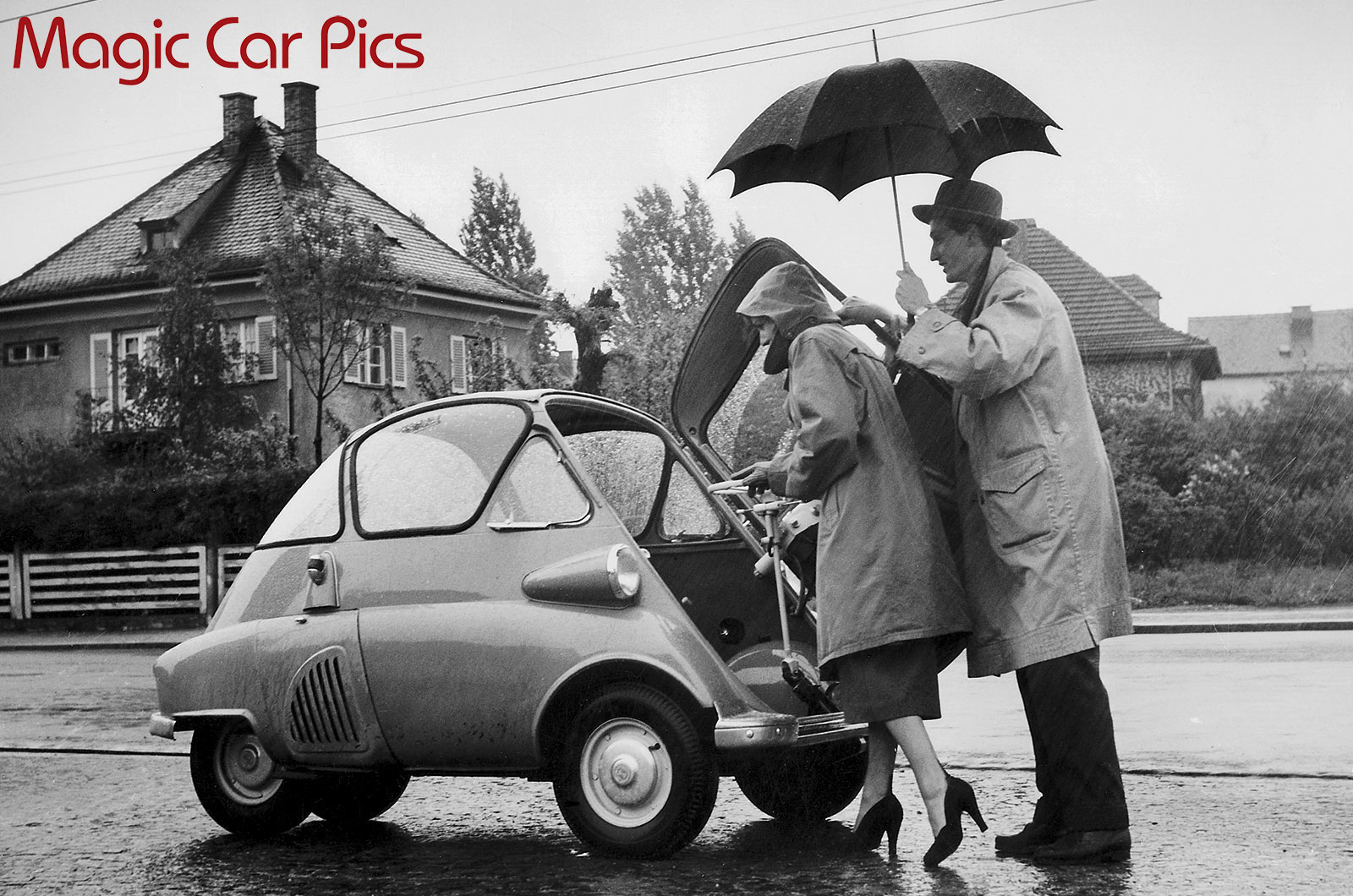
Within a year it was being made under licence by VELAM in France, there was a Spanish commercial version called the Autocarro, Romi made the car in Brazil and BMW bought the rights for German and British production. Its Isetta was in production from 1955 until 1962, with more than 160,000 examples built, making it one of the most prolific of all microcars.
Trojan 200 (1960)
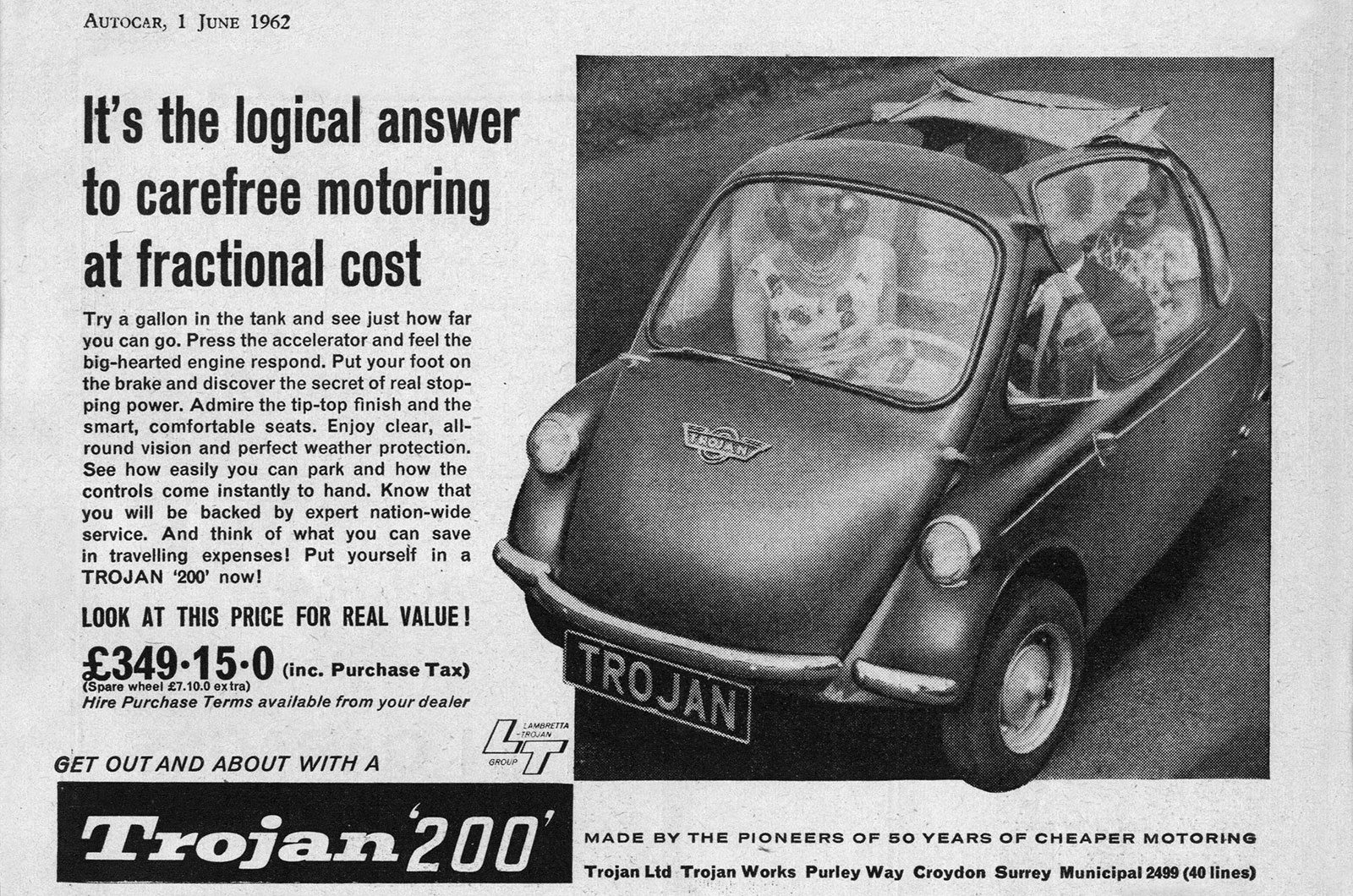
Trojan started building cars just after World War 1; the 200 was its last model before it shut up shop in 1965. One of the quintessential bubble cars of the 1960s, the 200 was developed in the mid '50s by former German aircraft maker Heinkel, which originally sold it as the Kabine.
In common with several other companies listed in this feature that seem familiar from World War 2, it was banned from its former activity and to expand its energies into more peaceful work, in its case the making of bicycles and motor scooters as well as microcars.
Berkeley B95 (1959)
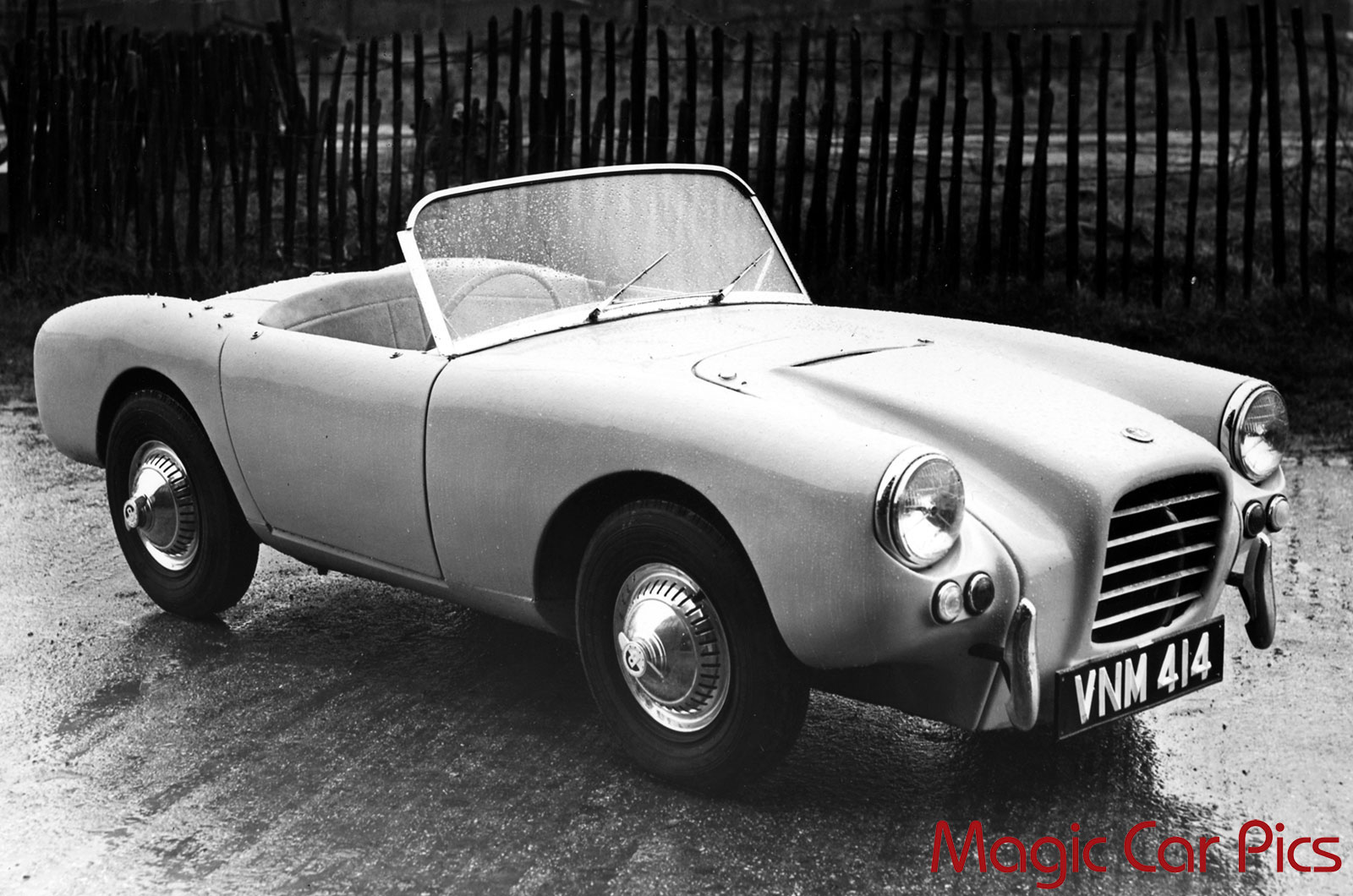
Not all microcars were about ultimate economy; some provided a healthy dose of fun too. Caravan manufacturer Berkeley teamed up with Lawrie Bond (of Bond Cars) to create a series of three- and four-wheeled microcars powered by air-cooled two-stroke engines with two or three cylinders. This is a B95; also offered were the SA322, SE328 and SE492, the number denoting the engine’s displacement.
Bond Minicar (1949-66)
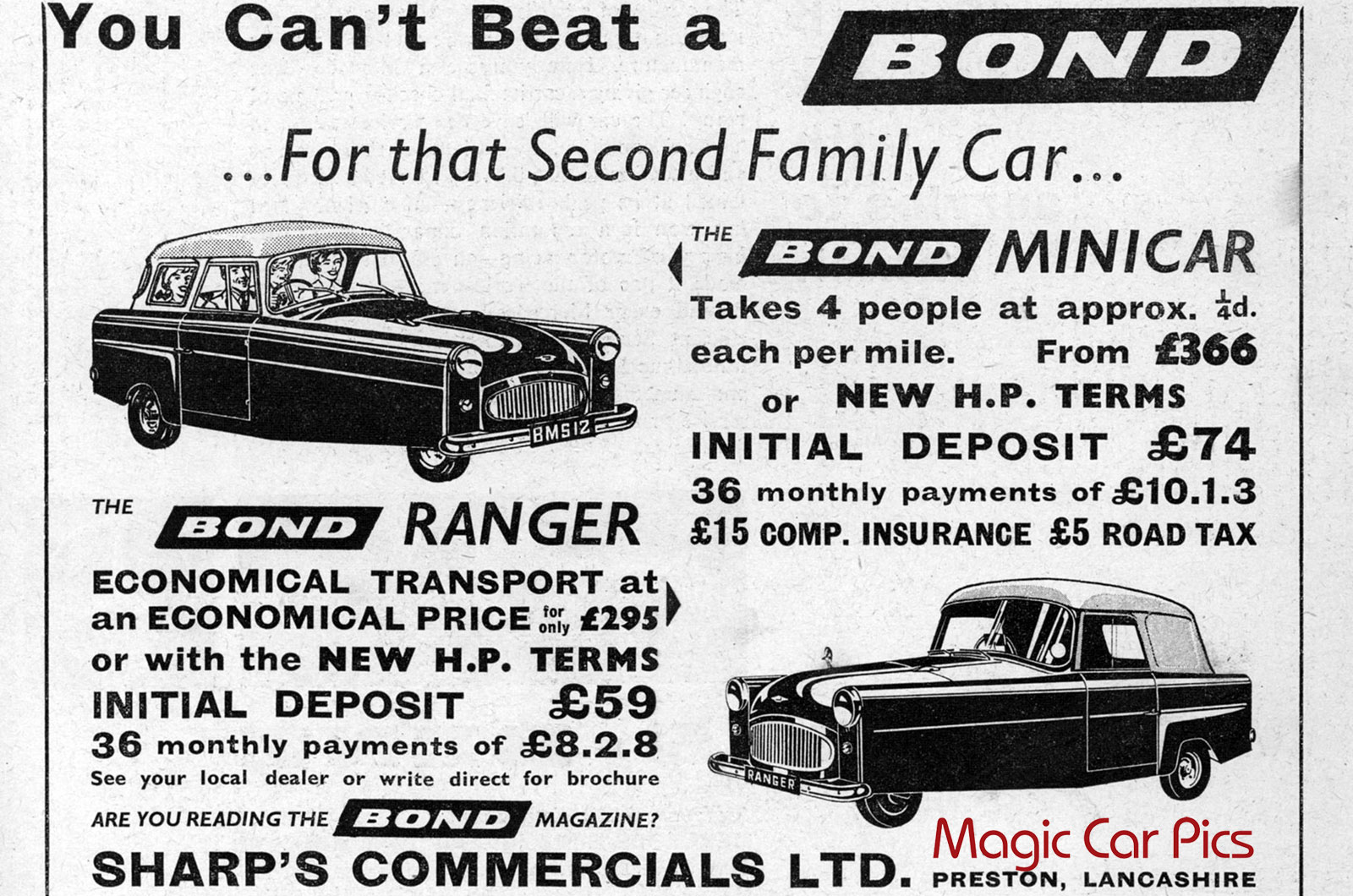
Lawrie Bond was behind a string of economy cars marketed as the Minicar. The first came in 1949 and the last in 1966, each one powered by a single-cylinder air-cooled engine mounted over the single front wheel. This displaced just 122cc in the earliest cars, but grew to 249cc to offer a frightening 60mph potential with the final cars.
JARC Little Horse (1953)
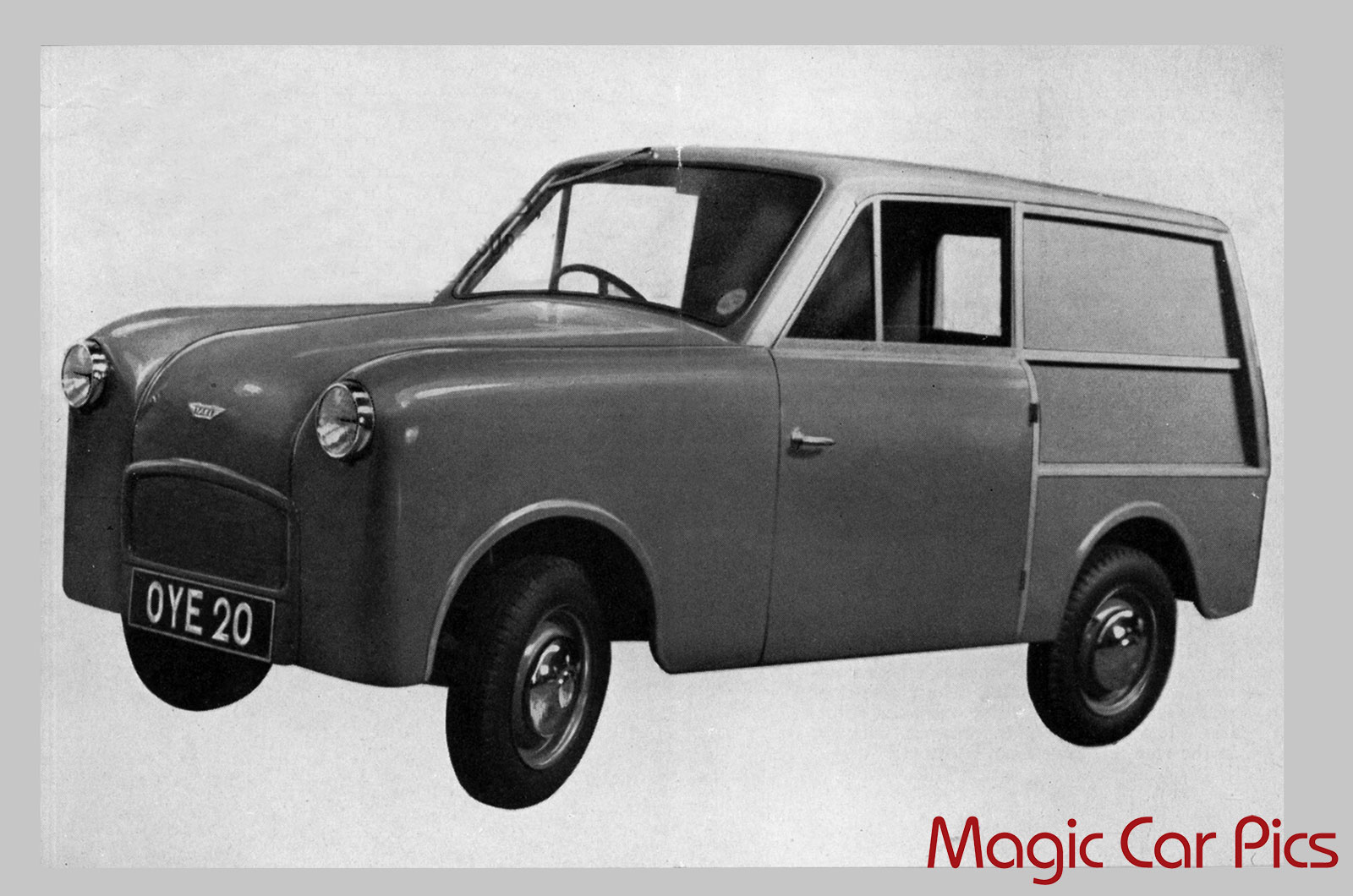
The microcar world was unbelievably complicated, with projects constantly changing hands. JARC developed the Little Horse then sold the project to Astra in 1954. Later the car would become the Gill Getabout as well as the Lightburn Zeta, which survived until 1966 in Australia.
Astra Utility (1955)
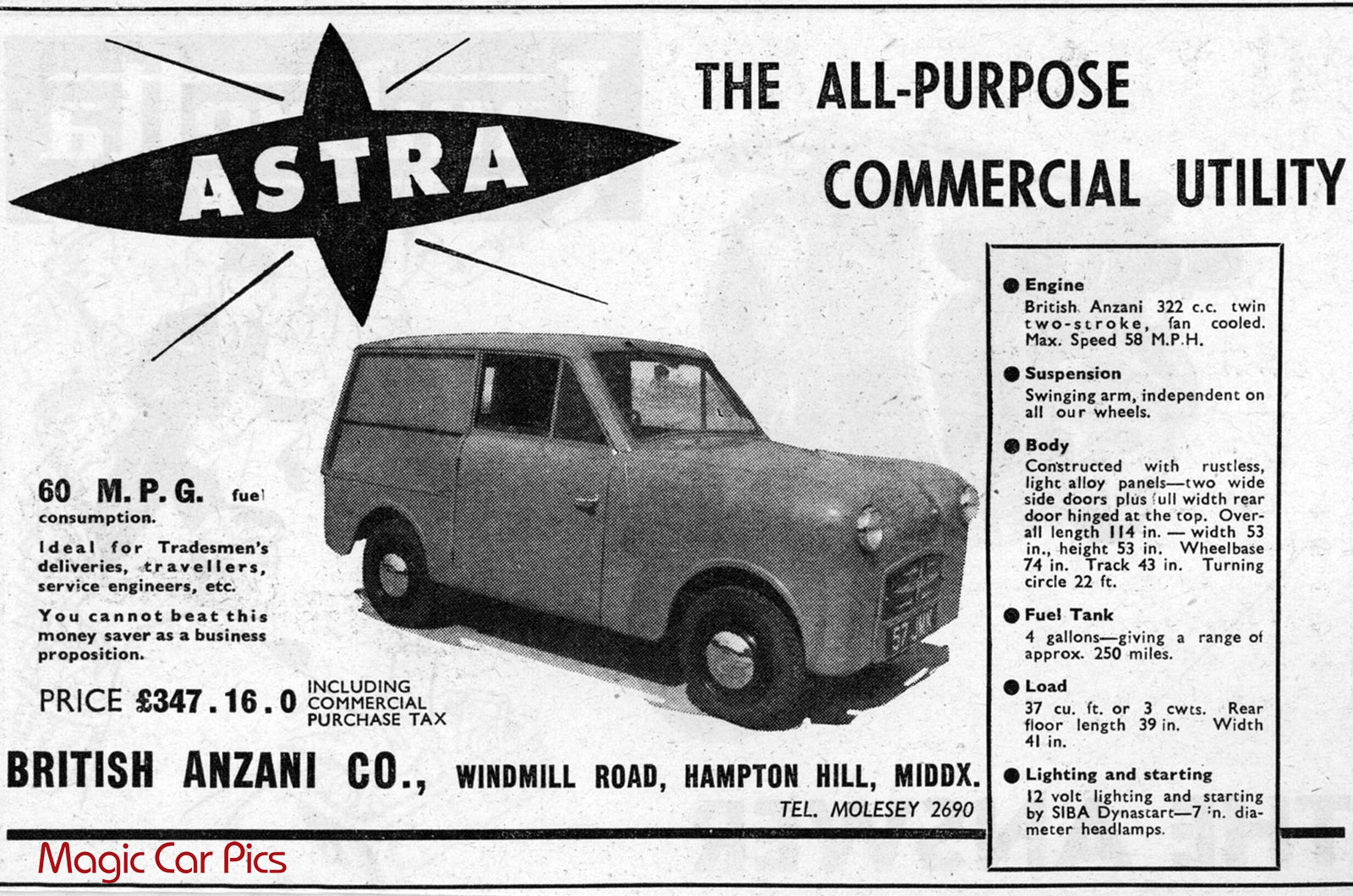
And here is the JARC in Astra guise, as seen in a contemporary Autocar advert. Just 9.5 feet (2896mm) long and less than 4.5 feet (1372mm) wide, the 322cc two-cylinder 15bhp engine provided a very healthy (and possibly scary) 58mph top speed.
Rodley (1954)
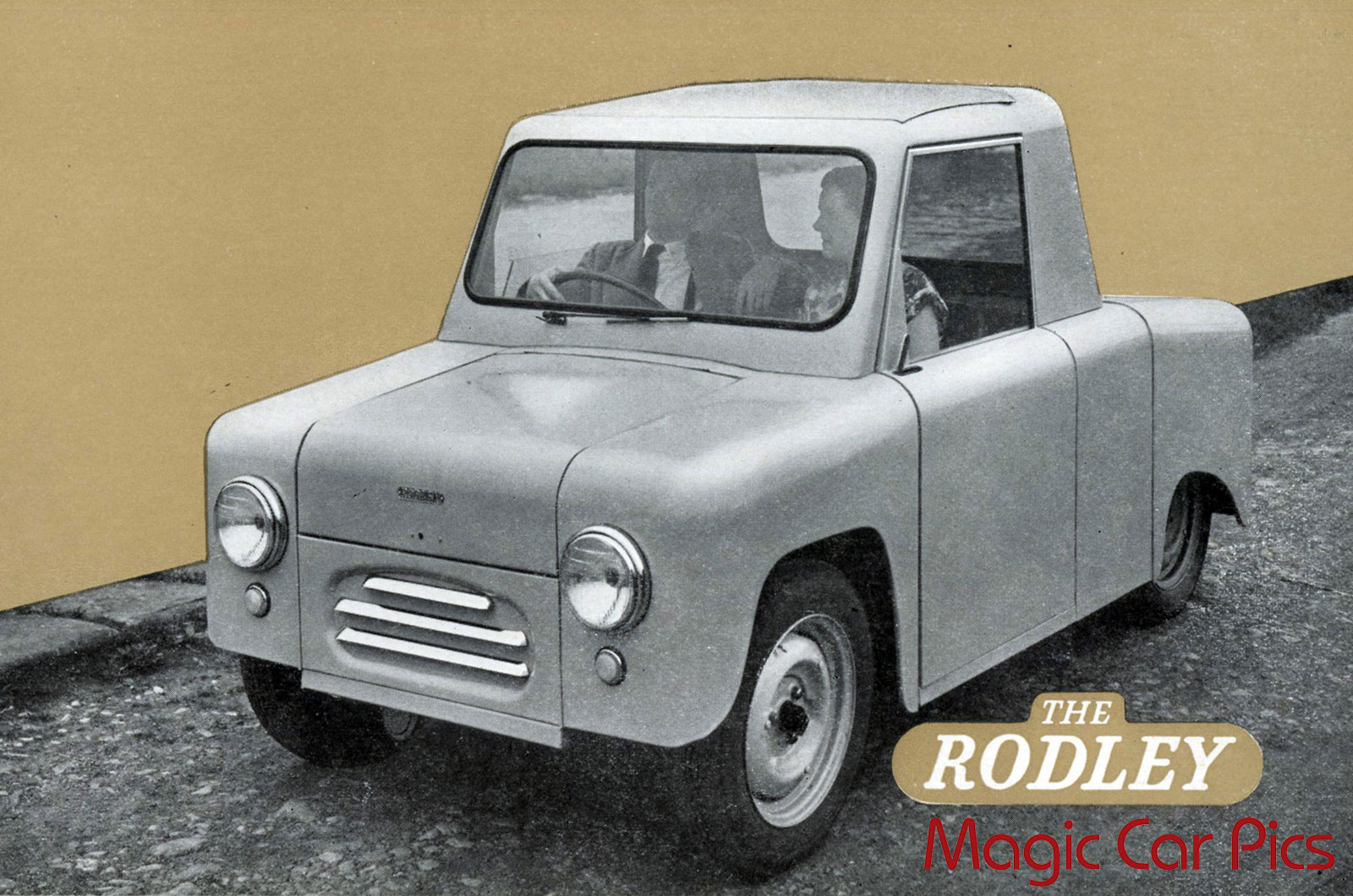
If you were a dashing man about town and looking for a girlfriend, then this was the car to have in in 1954. Driving a Rodley you were guaranteed to get lucky; just look at that styling. Made between 1954 and 1956, the Rodley was unusual in that it featured steel body panels and a relatively large 750cc engine – which was prone to overheating and catching fire. Which might have made your first date memorable at least.
Kleinschnittger F125 (1950)
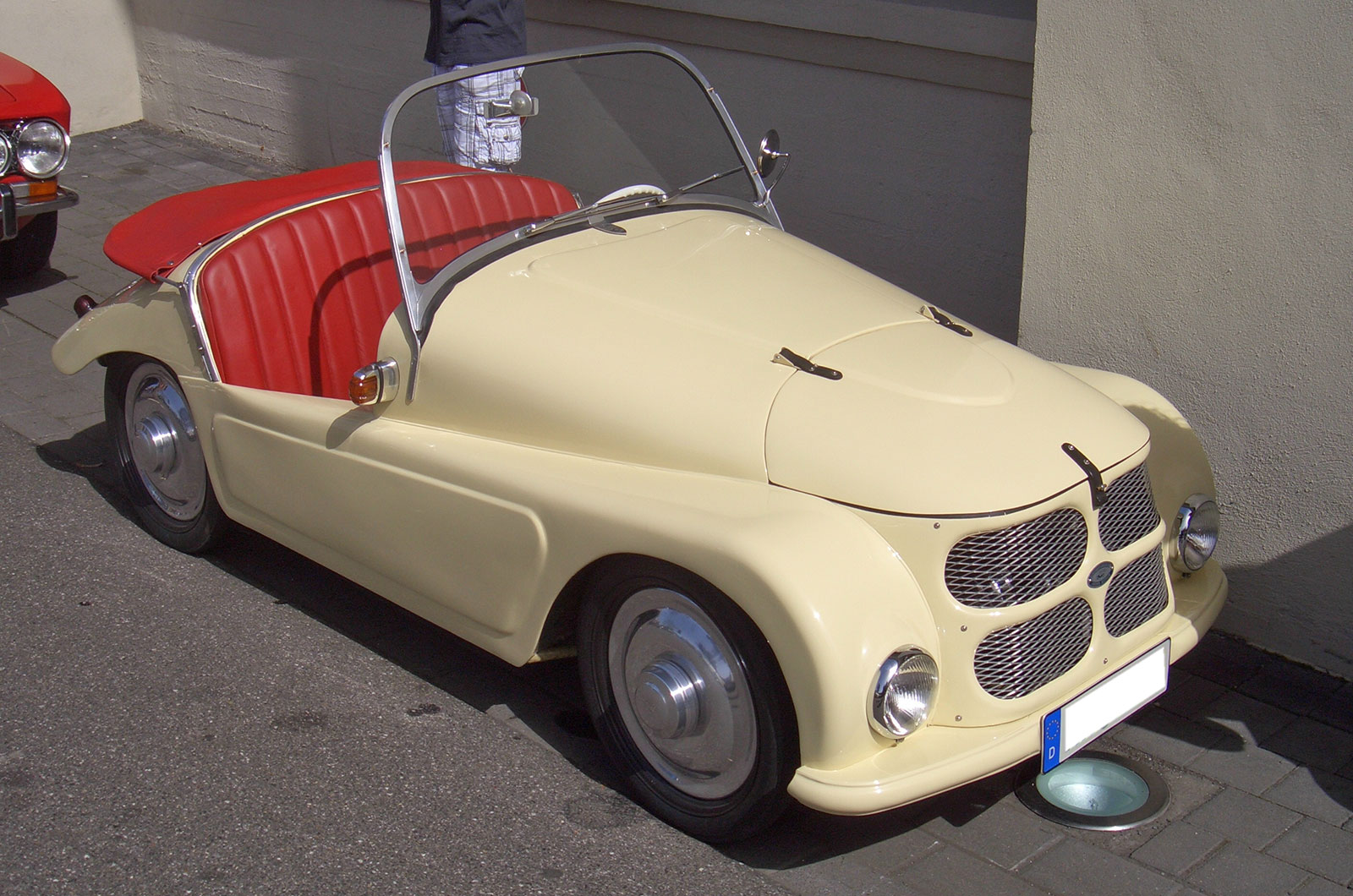
Looking more like a fairground dodgem than a proper road-legal car, the Kleinschnittger F125 was made between 1950 and 1957 and was powered by a 125cc single-cylinder two-stroke engine.
Opperman Unicar (1958)
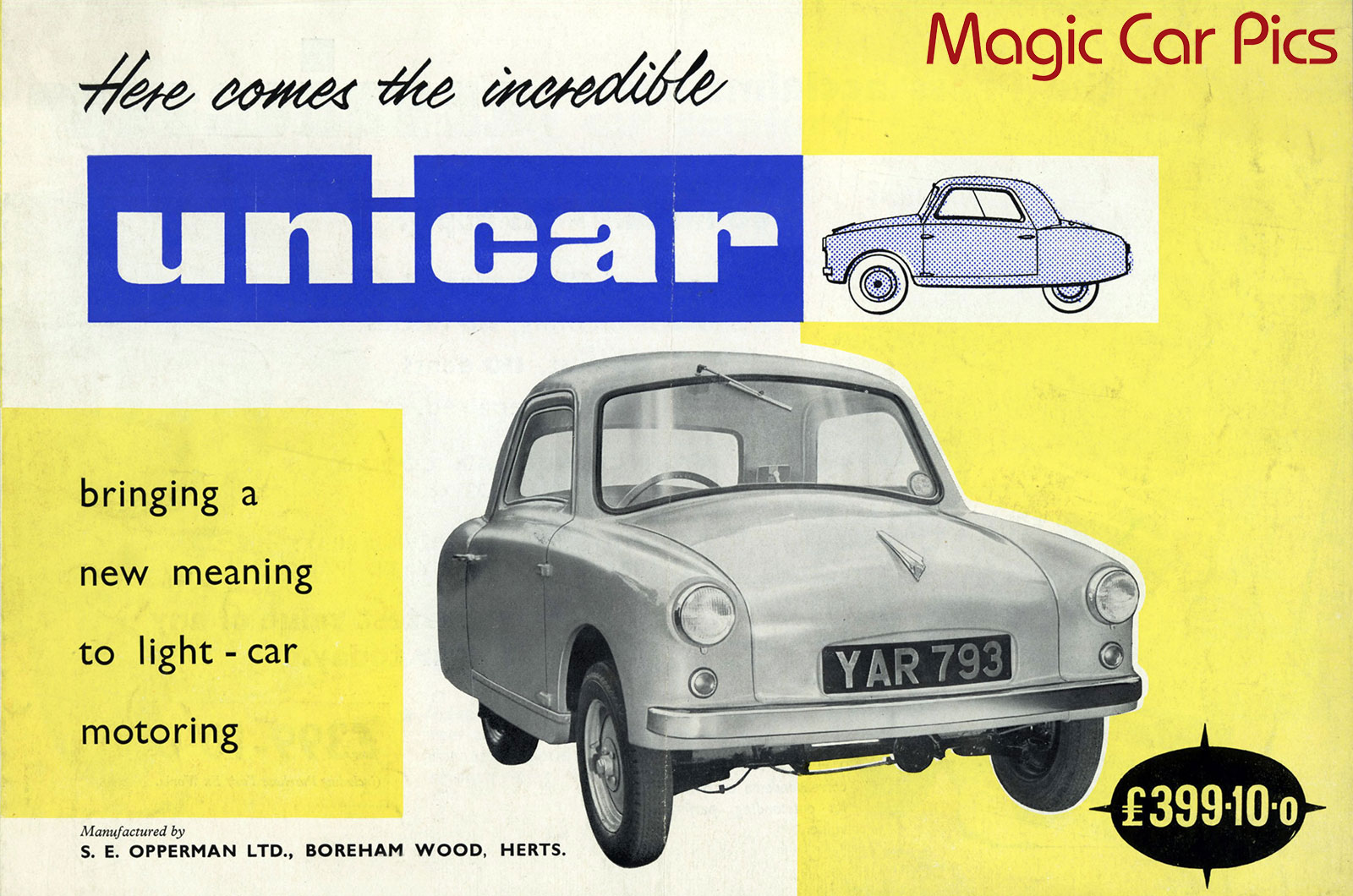
British company Opperman was a tractor maker that decided to move into microcar production in the mid-1950s. Its first product was the glassibre-bodied Unicar with a 328cc two-cylinder engine. To cut production costs the rear wheels were close to each other so a differential wasn’t required. About 200 Unicars were made.
Opperman Stirling (1959)
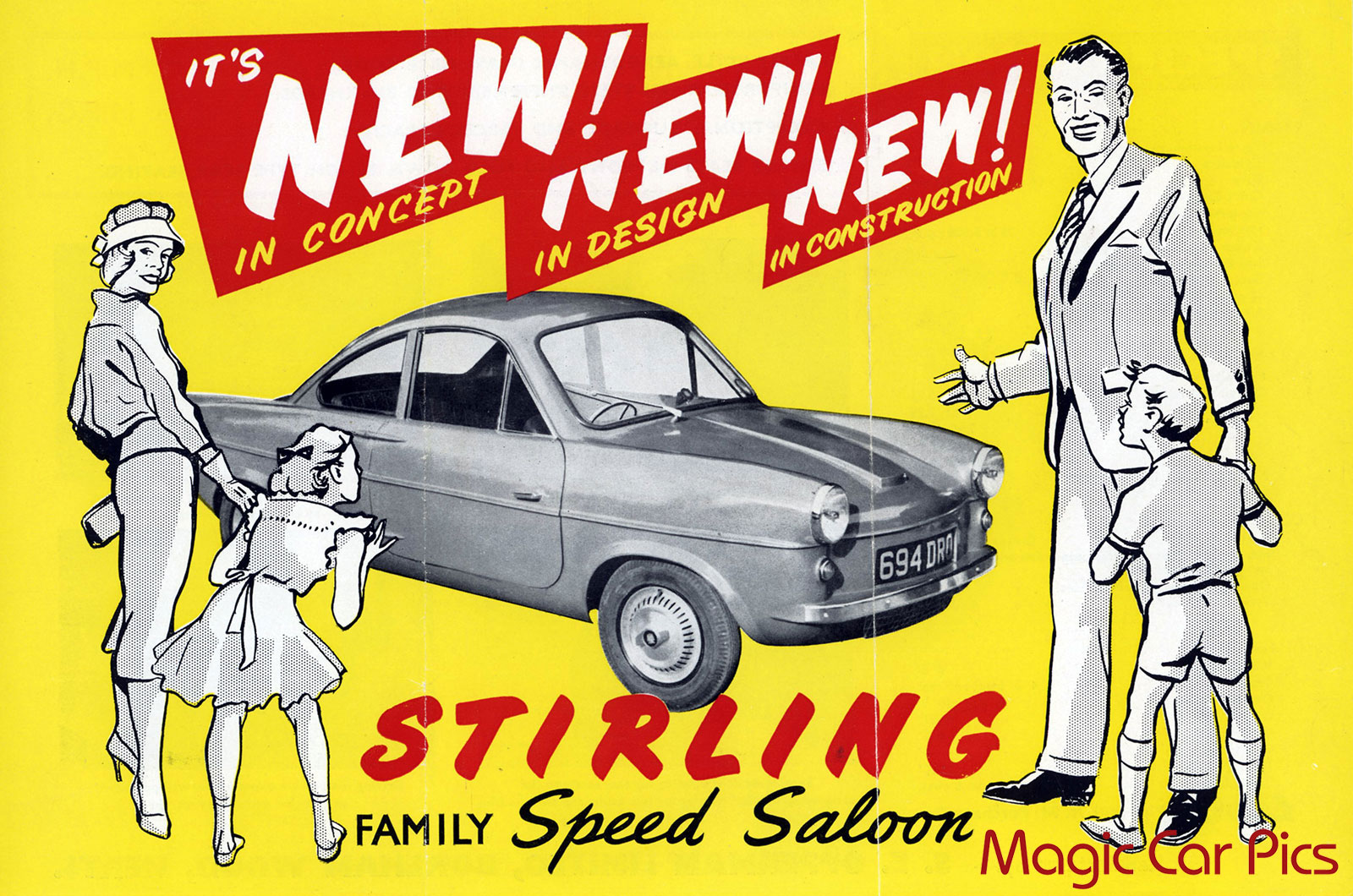
Opperman decided to move upmarket in 1958 with the Stirling. It wasn’t a good plan as BMC's Mini came out in 1959 and single-handedly wiped out much of the microcar market. As a result just two Stirlings were made, at least one of which survives.
Rovin D3 (1948)
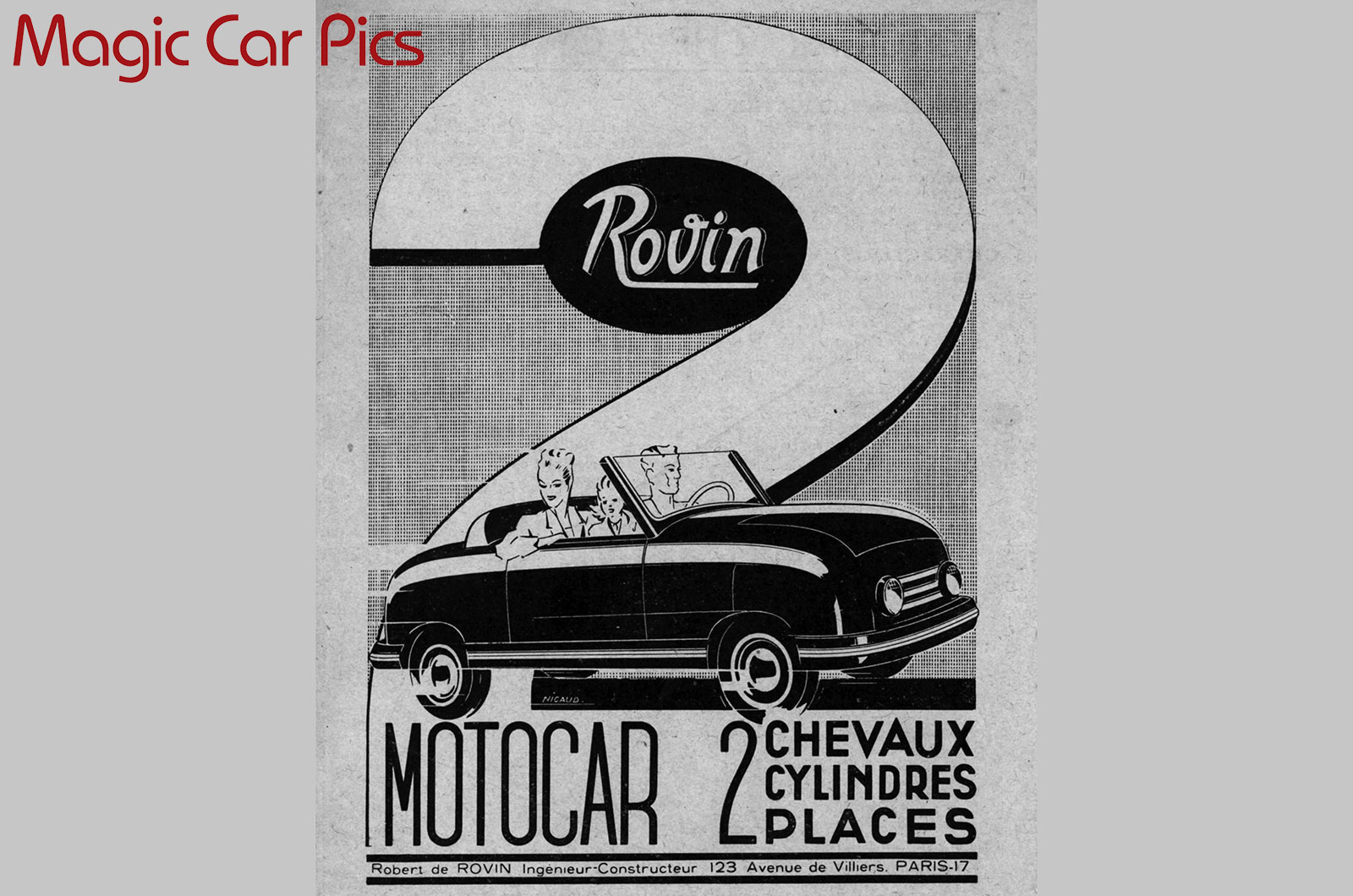
French microcar maker Rovin appeared in 1946 with its 260cc D1. The D2 followed a year later then in 1948 came the D3, with a 423cc flat-twin engine. Around 800 D3s were made between 1948 and 1950, when the D4 arrived. For some reason the D3 was advertised as a two-seater – although three people are pictured. Brought to you from a pre-health and safety era...
Powerdrive (1955)
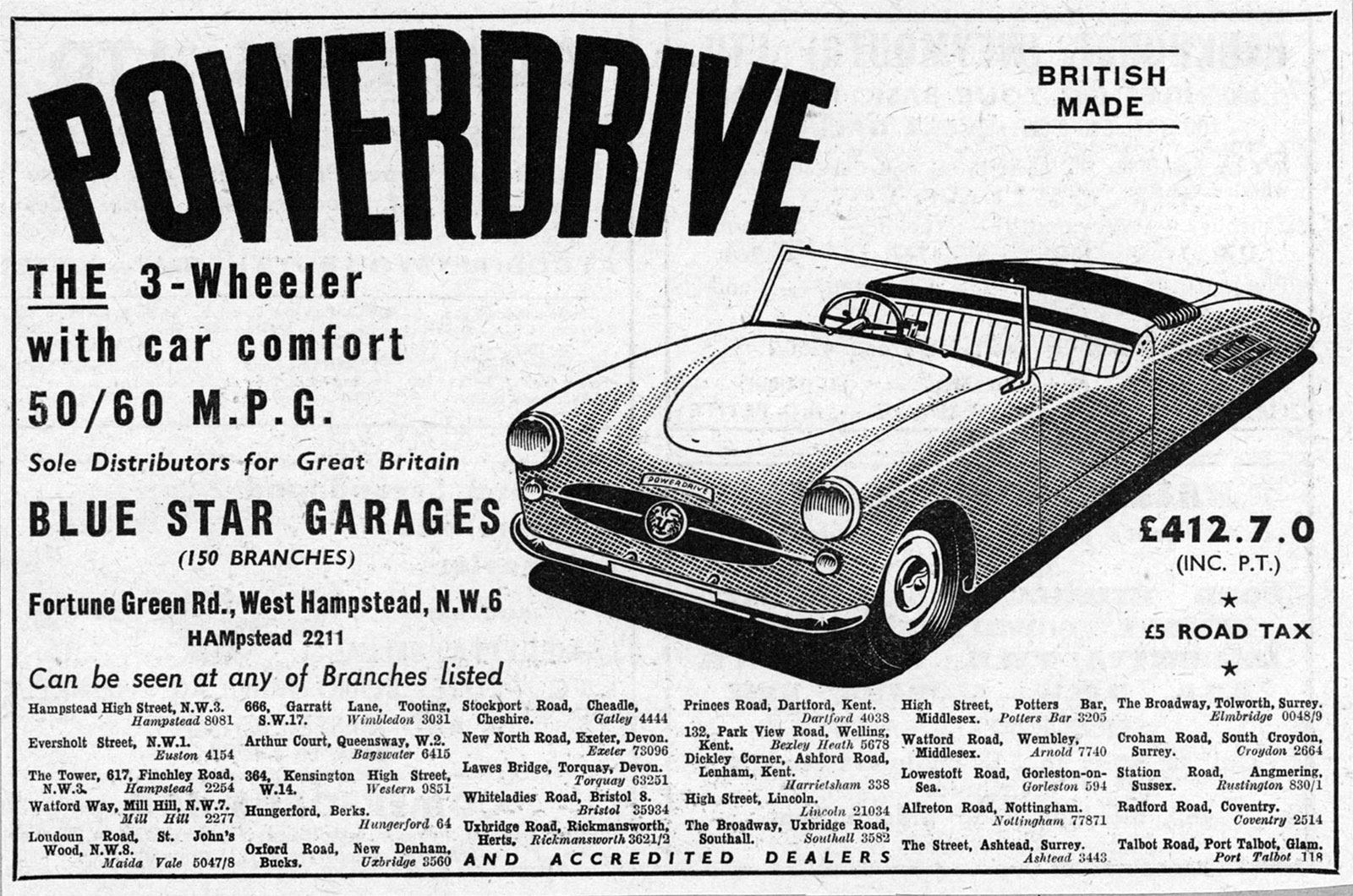
From this advert you could be forgiven for thinking that the three-wheeled Powerdrive was the size of a 1959 Cadillac; it was actually well under nine feet (2743 mm) long. It was bigger than many of its rivals though, but power came from a 322cc Anzani two-stroke engine – the same as many of its contemporaries.
Mochet CM-125 Luxe (1951)
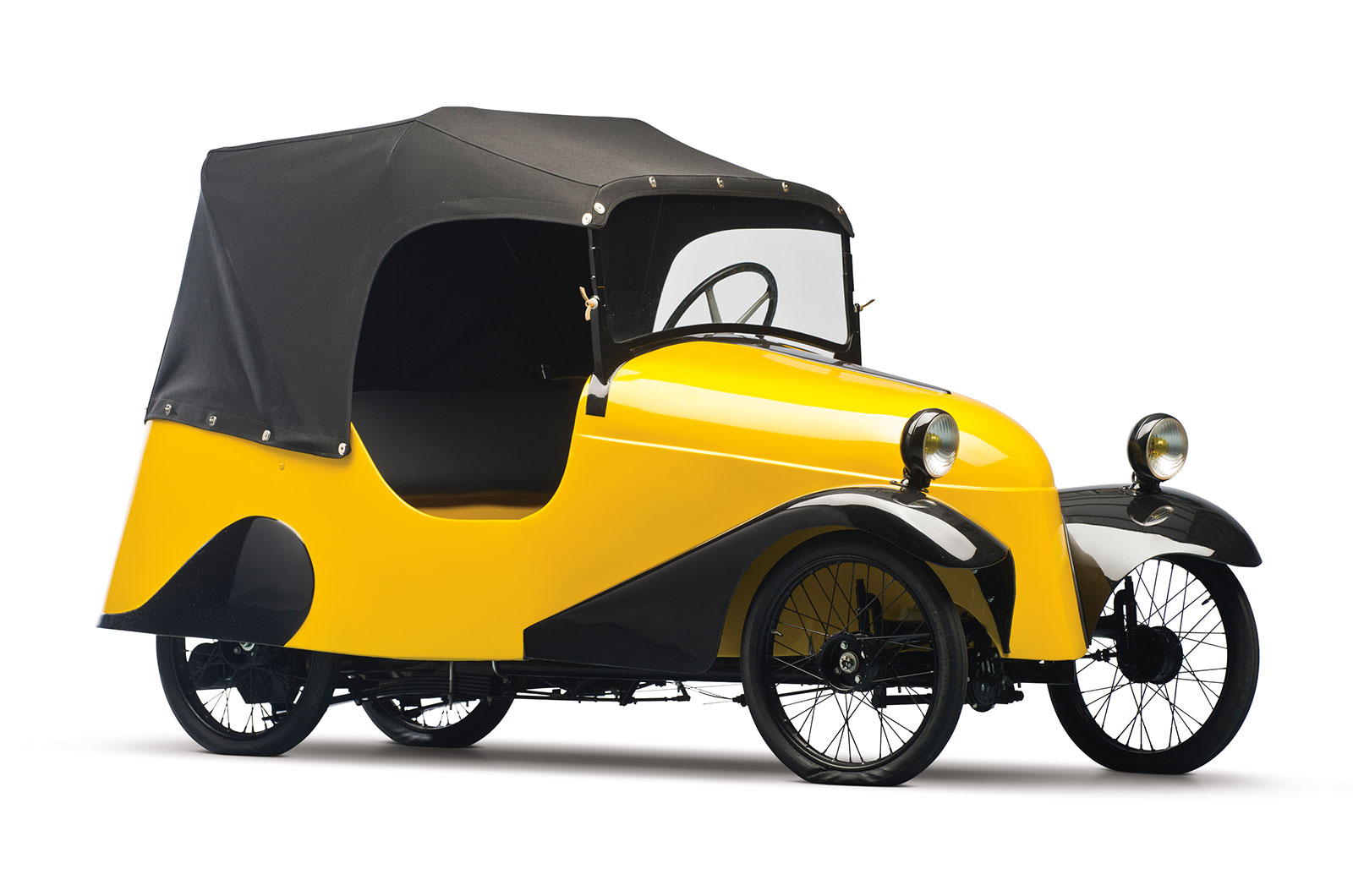
Frenchman George Mochet was a keen fan of minimalism; something that’s evident as soon as you see his CM-125 Luxe of 1951. Power (all 3.5bhp of it) came from a 125cc single-cylinder engine and while the Mochet was basic, it was very cheap to buy and run which is why around 1,250 were built.
Mochet CM 125 Y (1954)
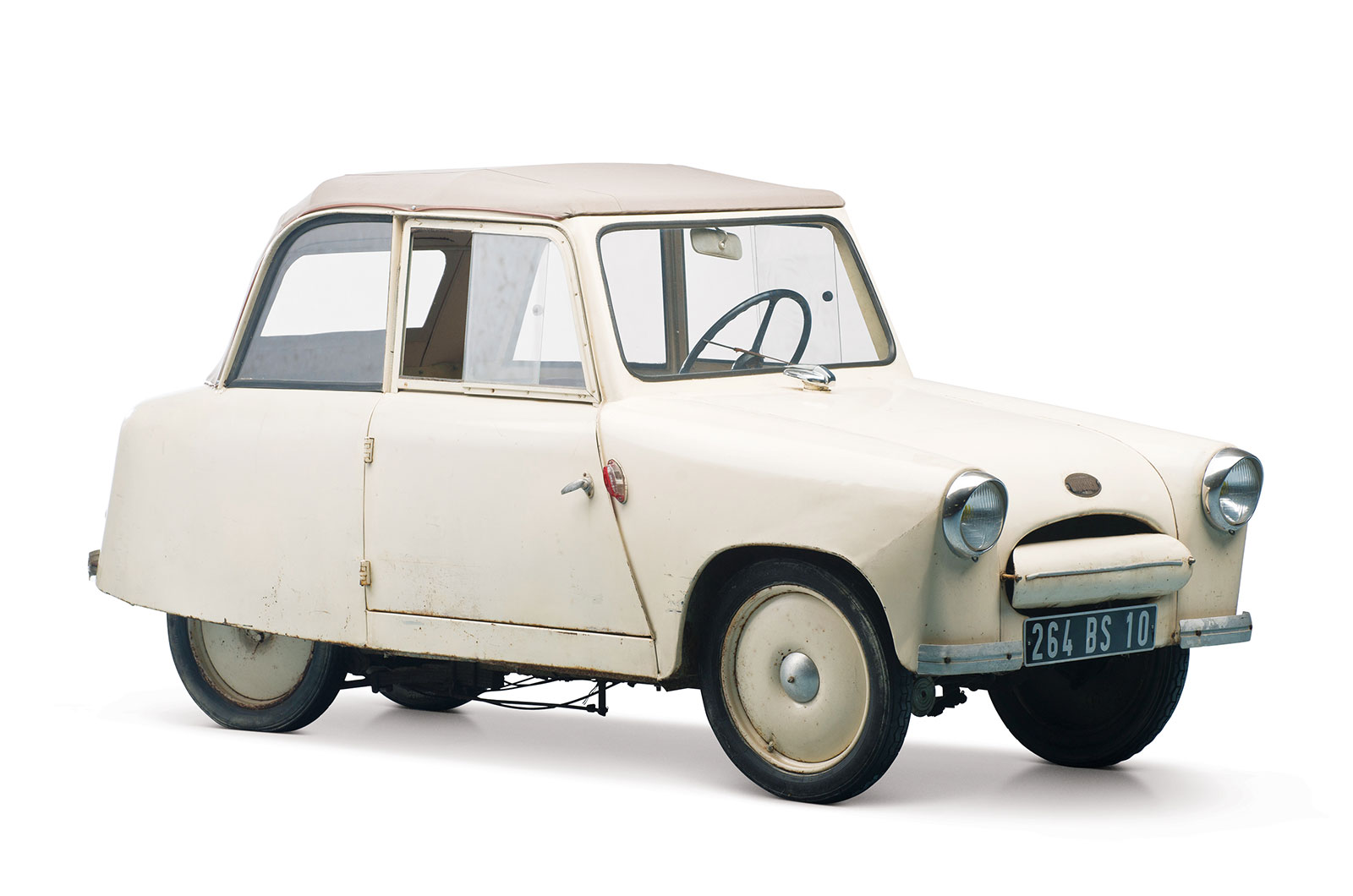
The success of Mochet’s earlier microcars led him to move upmarket and by 1954 the company had introduced the CM 125 Y. Now with fully enclosed bodywork, the 125cc engine was breathed on to produce a monster 5bhp. More than 1,100 of these cars were made before production was wound up in 1958.
Glas Goggomobil (1955)
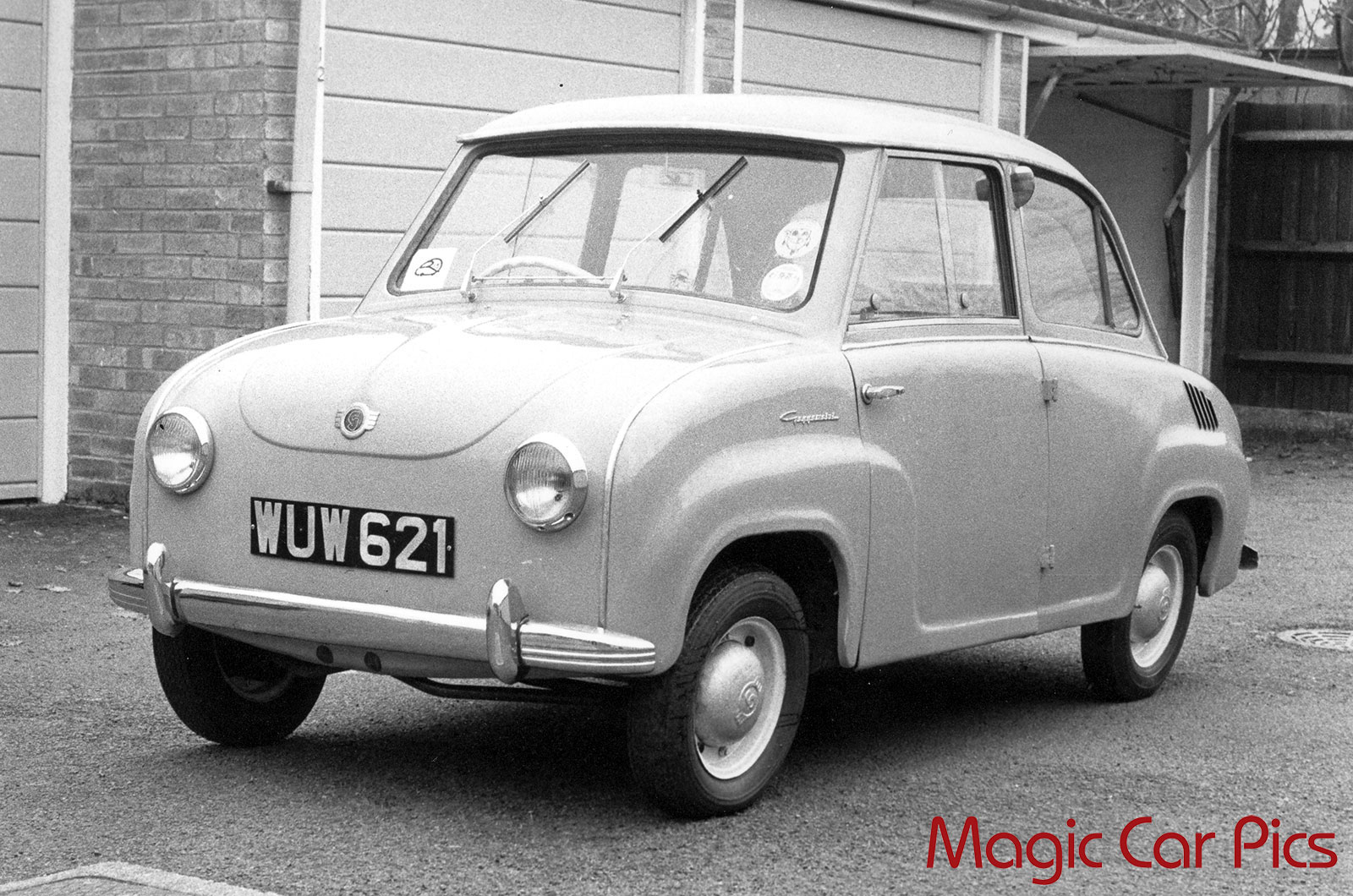
One of the most popular microcars of all time, it’s easy to see the appeal of the Glas Goggomobil when you look at those sleek, sexy lines. Launched in 1955, more than 200,000 of these quirky German saloons were built, initially with a 250cc engine but later with a choice of 300cc or 400cc units. In the UK the Goggomobil saloon was sold as the Regent.
Goggomobil Coupé (1957)
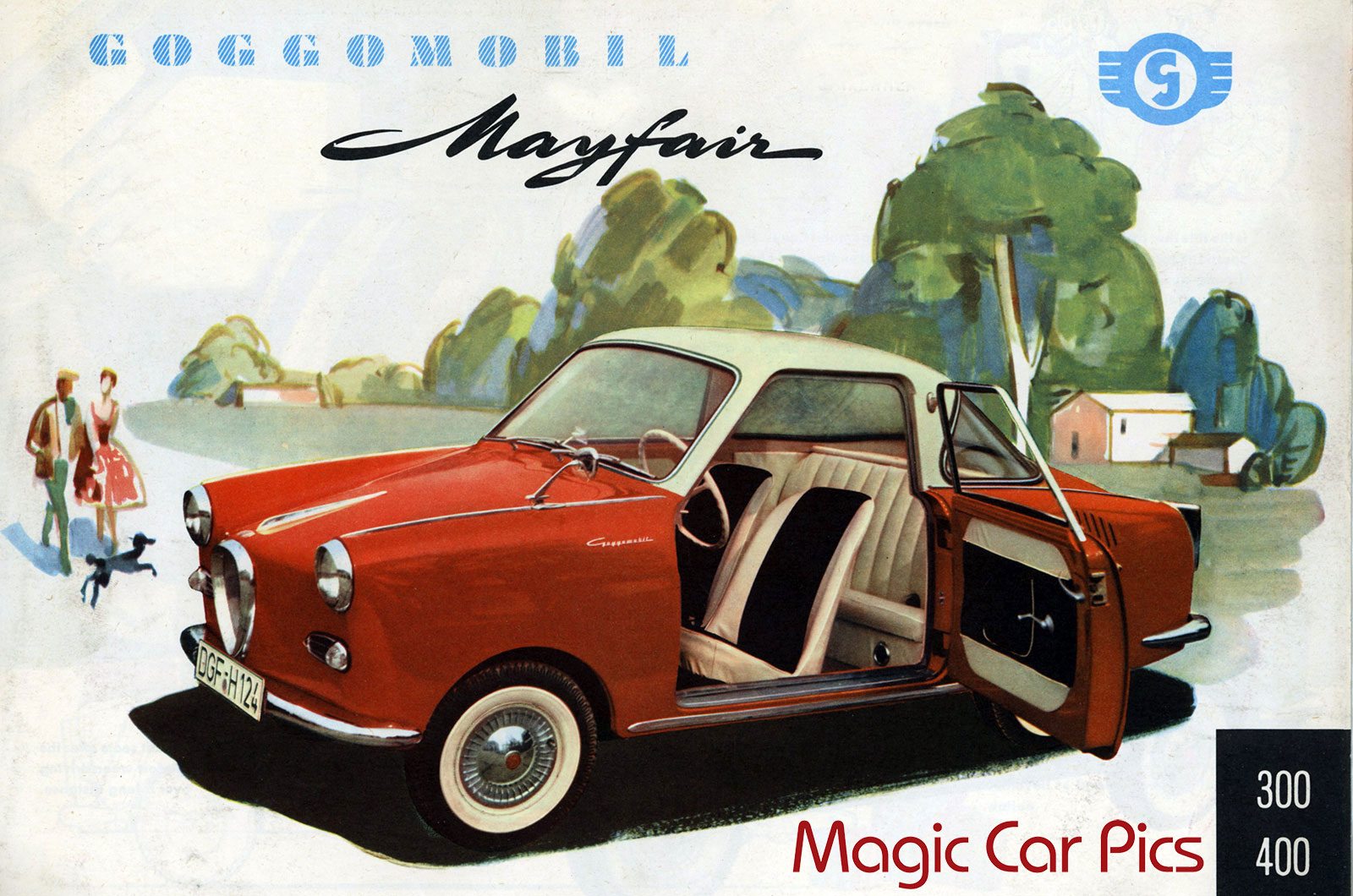
Buoyed by the success of his saloons, Hans Glas decided to introduce something more sporty, using the same platform and mechanicals. The result was the coupé, sold as the Mayfair in the UK. There were TS300 and TS400 options, depending on the engine chosen.
Goggomobil Dart (1959)
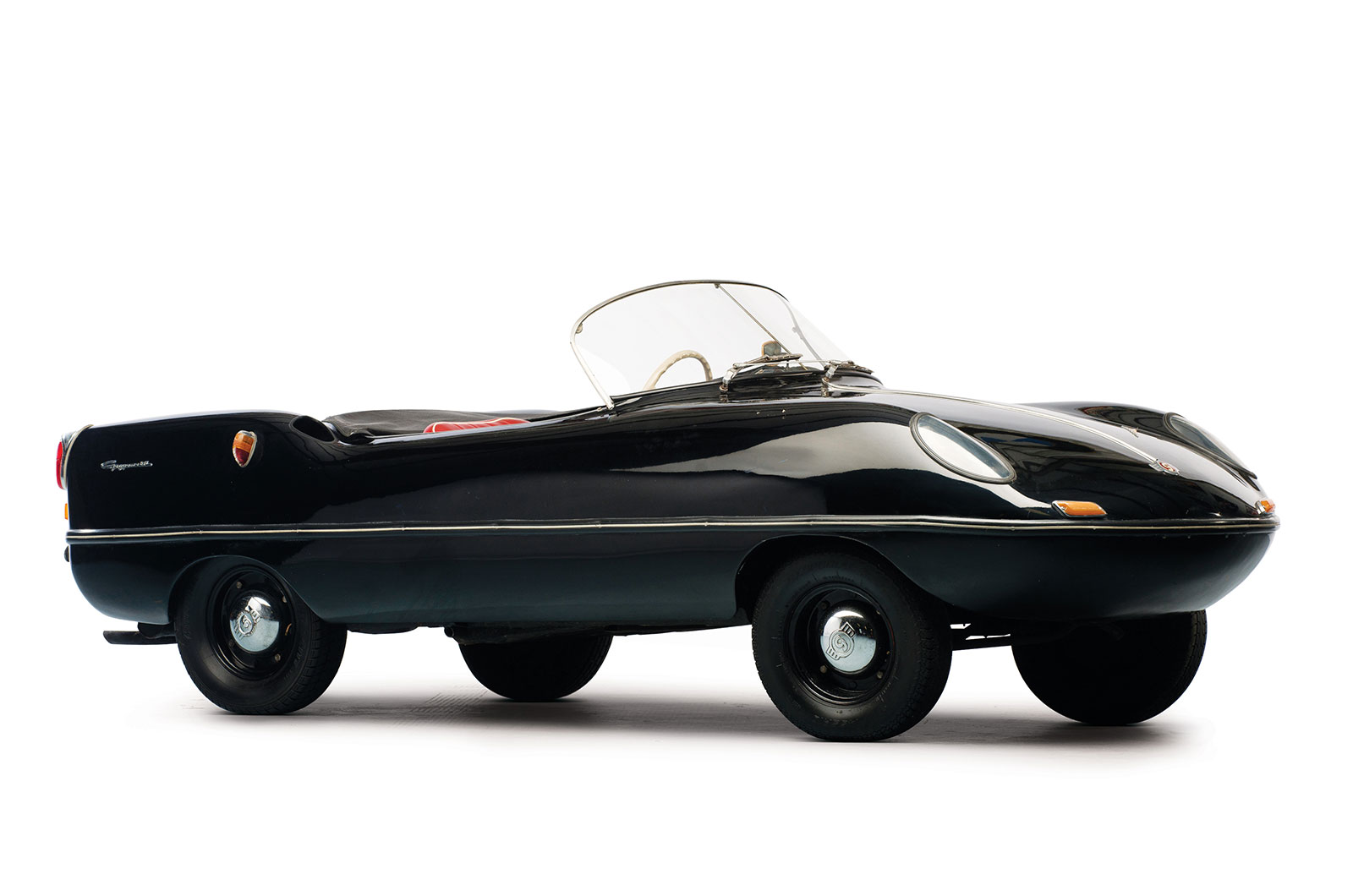
Bill Buckle was the Glas distributor in Australia and he reckoned there was a market for something even sportier than the Coupé, which was also offered in cabriolet form. He came up with this; the Goggomobil Dart which used the saloon’s platform, complete with 300cc or 400cc engine. Around 700 were made between 1959 and 1961.
Fairthorpe Atom (1955)
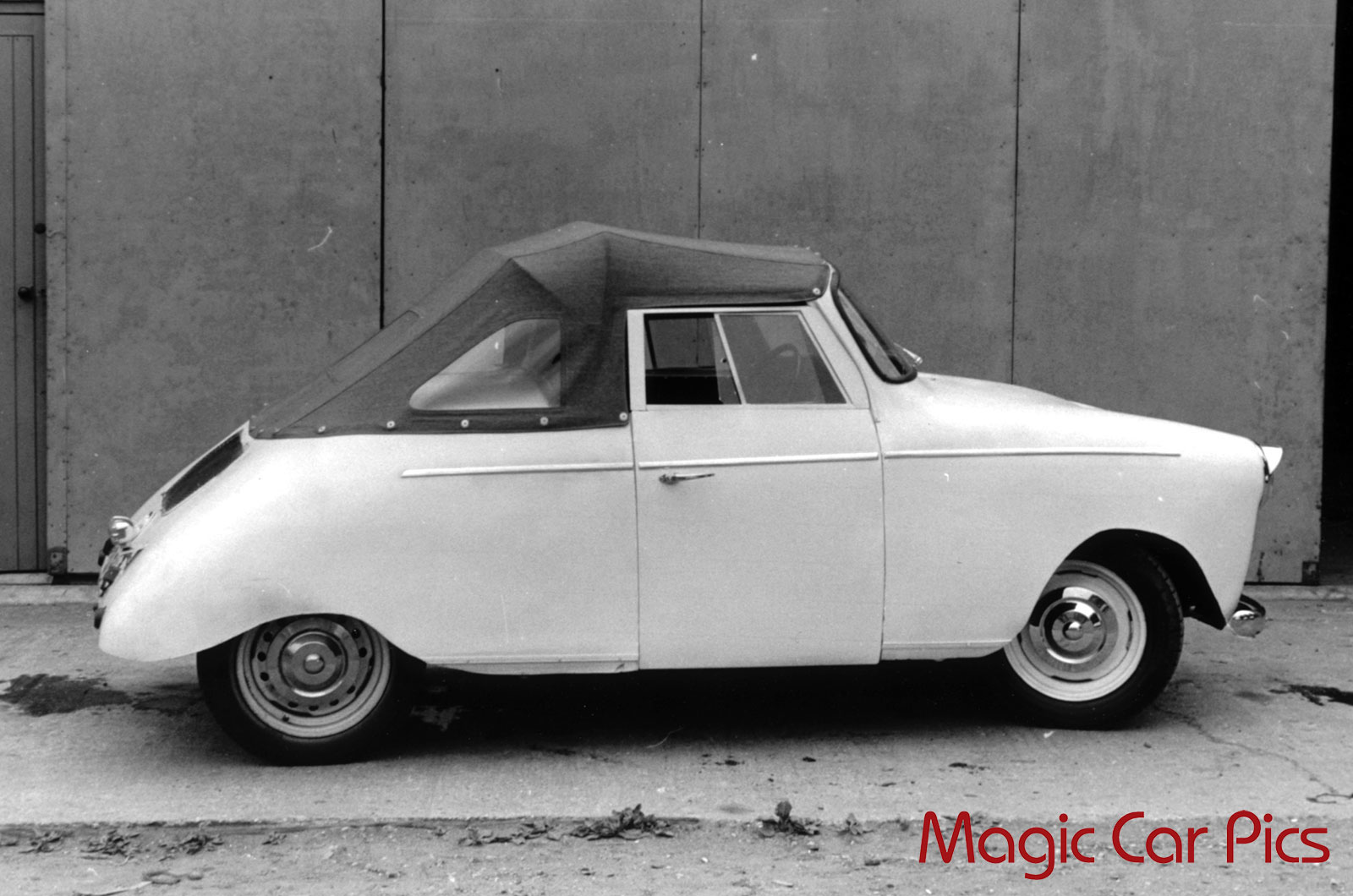
Set up just outside London in 1954 by the former World War 2 RAF hero DC Bennett, Fairthorpe specialised in plastic-bodied sportscars rather than microcars, but its first offering was this two-seater with just two cylinders and a glassfibre bodyshell, such as it was. Luxury was not on the menu.
Russon (1951)
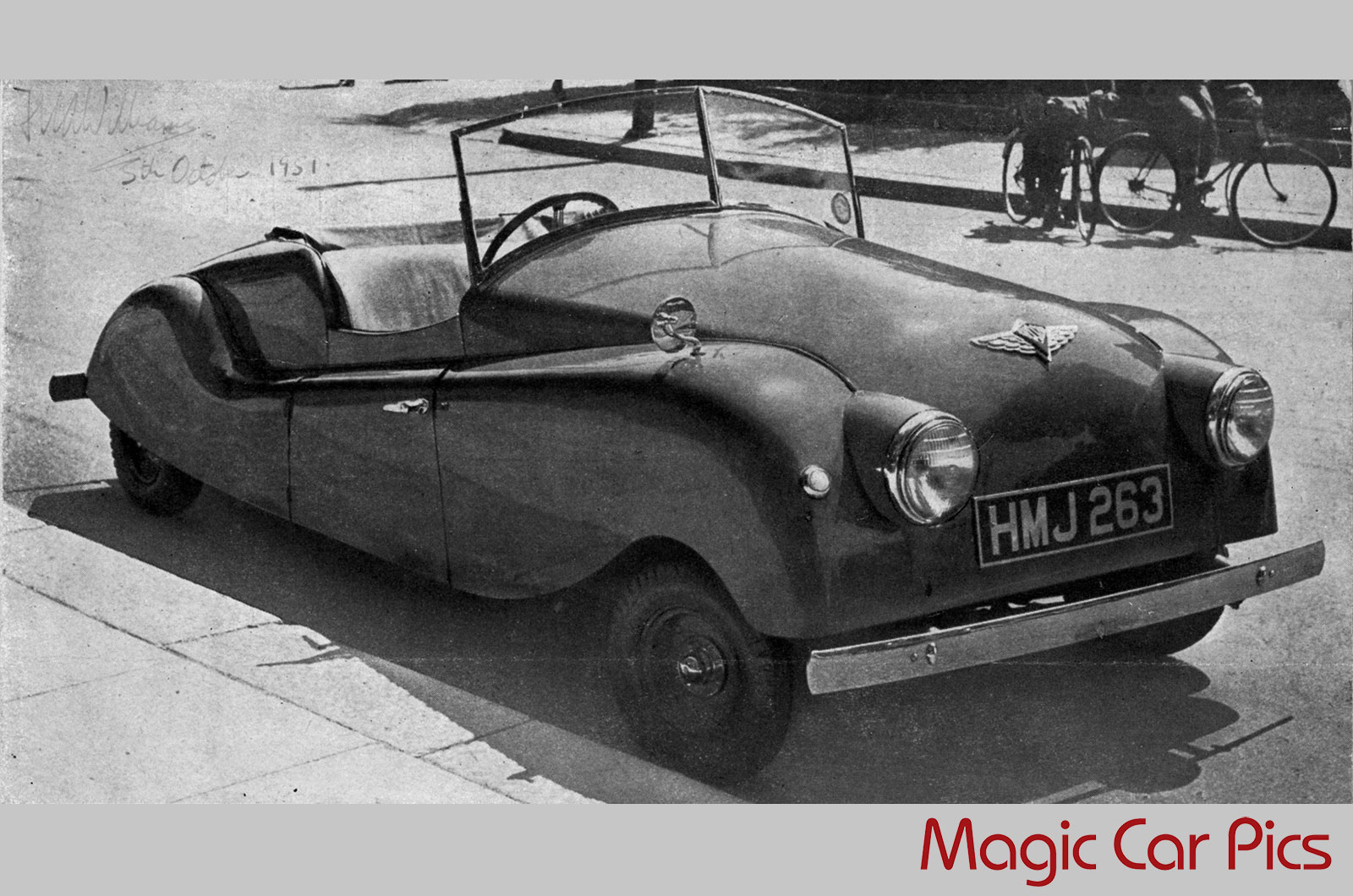
In production for just two seasons (1951 and 1952), the British-built Russon featured comically under-sized wheels, a 250cc two-cylinder Excelsior engine and an alloy-panelled body. But a high price tag of almost £500 meant the Russon was never going to be a winner and production didn’t even get into double figures. The project was bought by Fairthorpe's DC Bennett.
Lightburn Zeta (1963)
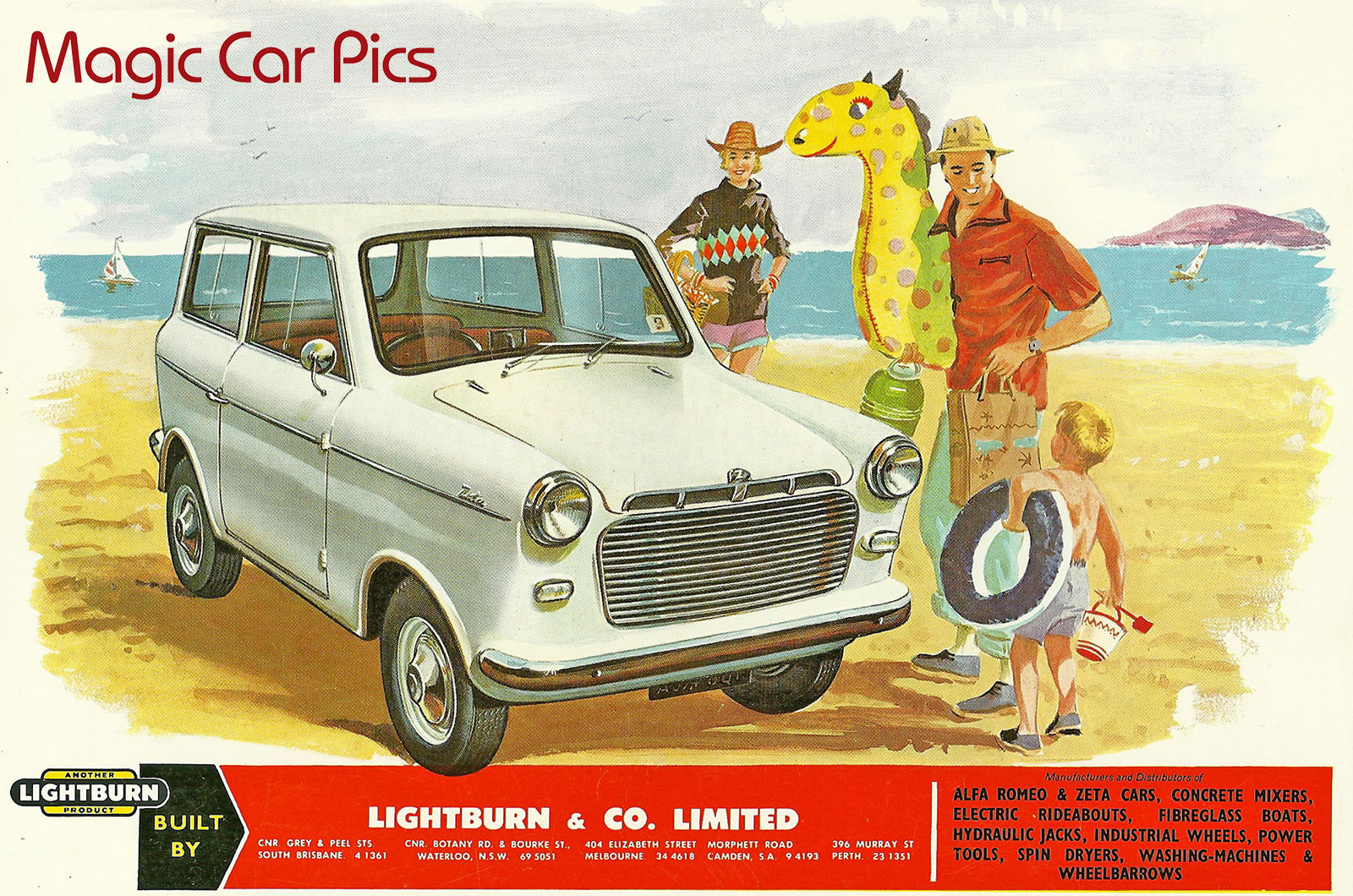
Australian company Lightburn was a manufacturer of cement mixers and washing machines, but in 1963 it decided to branch out into making affordable small cars. The first product was the front-wheel drive Zeta, with a 324cc two-cylinder Villiers engine. Around 400 were made between 1963 and 1965, including a handful of Zeta Utility commercial editions.
Lightburn Zeta Sports (1964)
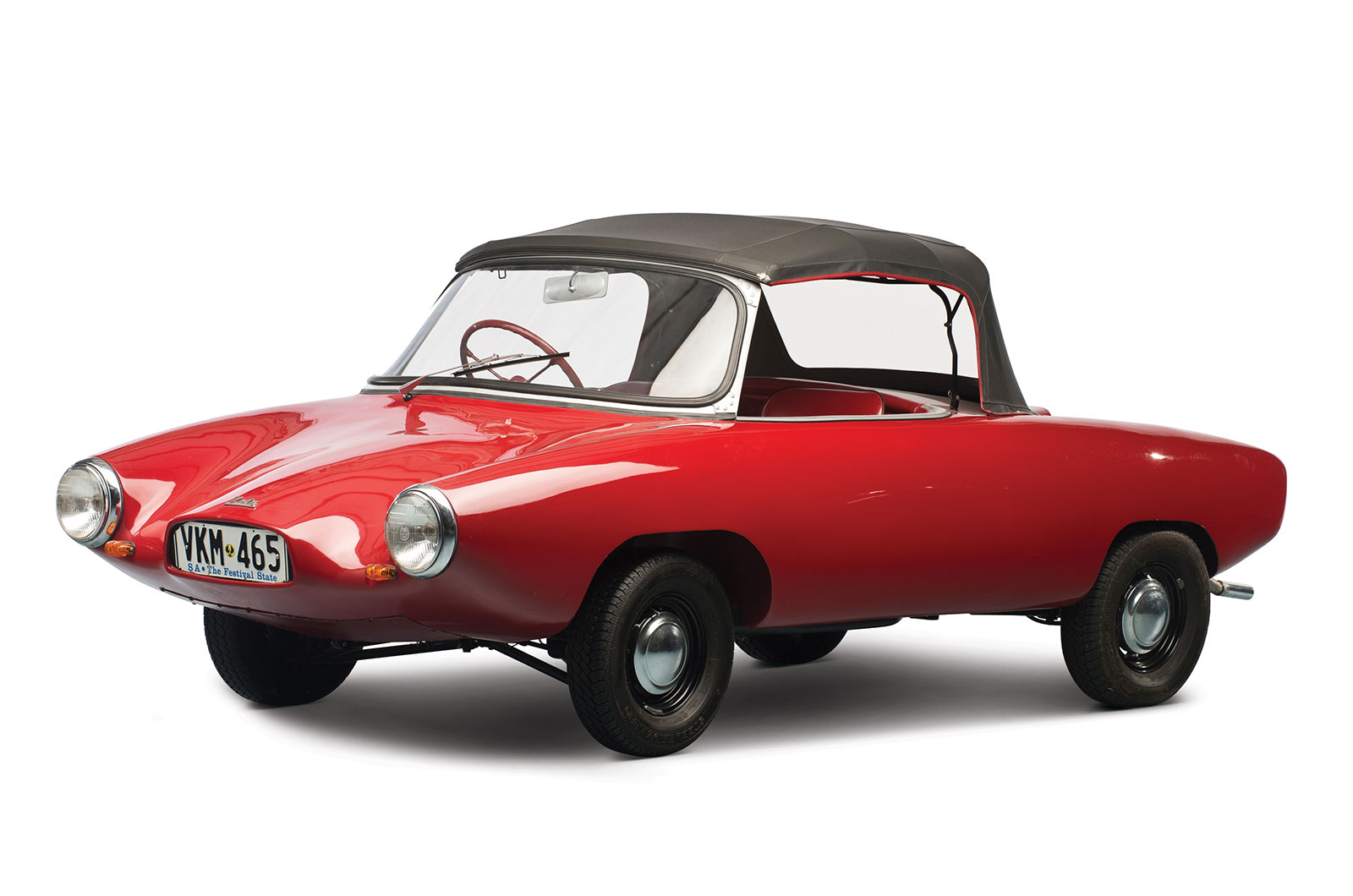
In a bid to sex things up a bit, Lightburn introduced the Zeta Sports in 1964, with a throbbing 498cc two-stroke engine rated at a heady 21bhp. It clearly proved too much for the Australian market and just 48 were built.
FMR TG500 (1957)
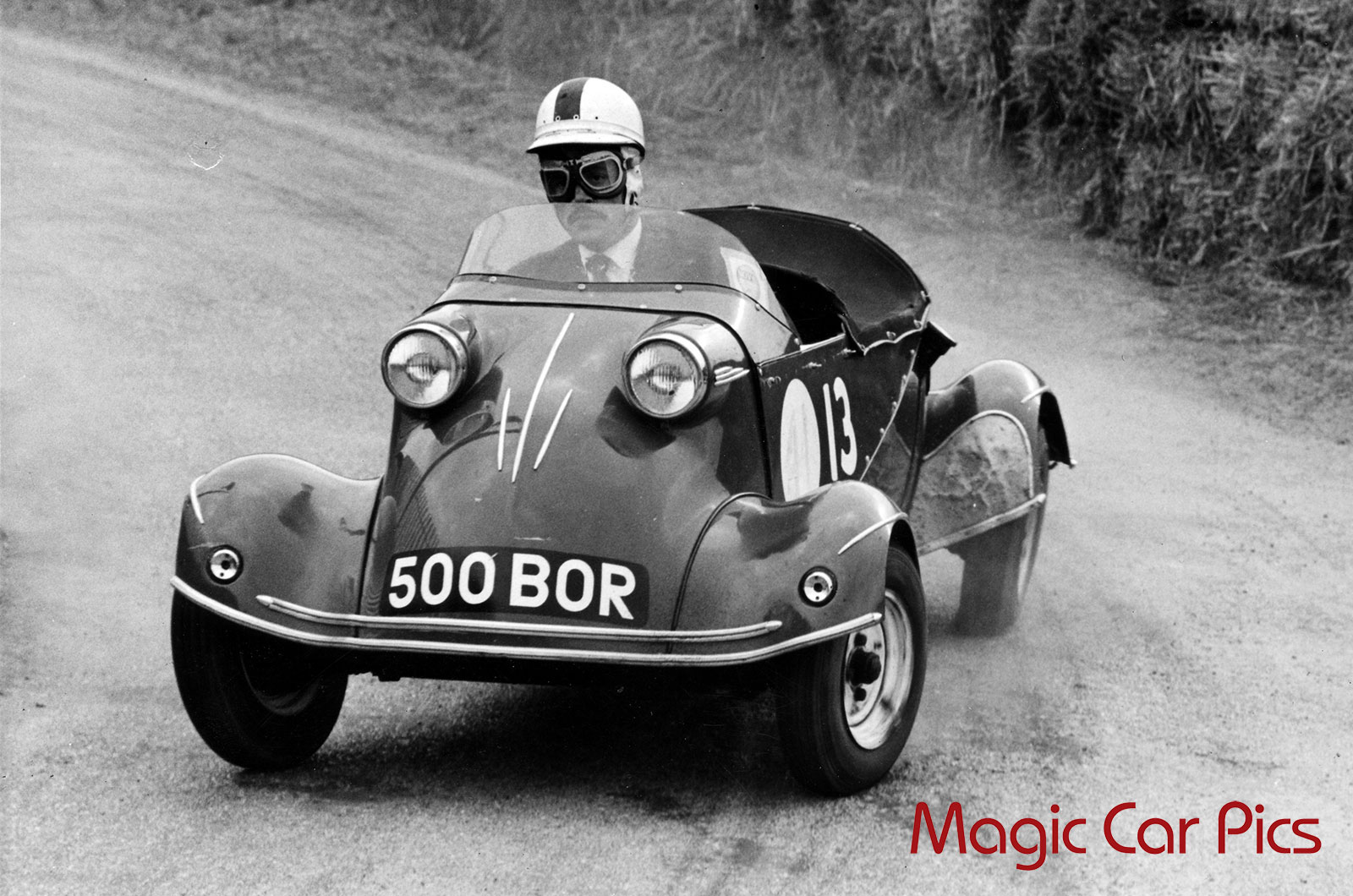
Messerschmitt started out as an aircraft manufacturer, but once World War 2 had ended it moved into making microcars, teaming up with established microcar builder Fritz Fend. Messerschmitt’s first cars were three-wheelers but in 1957 came the four-wheeled TG500, or Tiger. Sold under the FMR brand, the 493cc TG500 was supposedly capable of 85mph. Open and closed versions were offered, with around 450 made in all.
Spatz (1956)
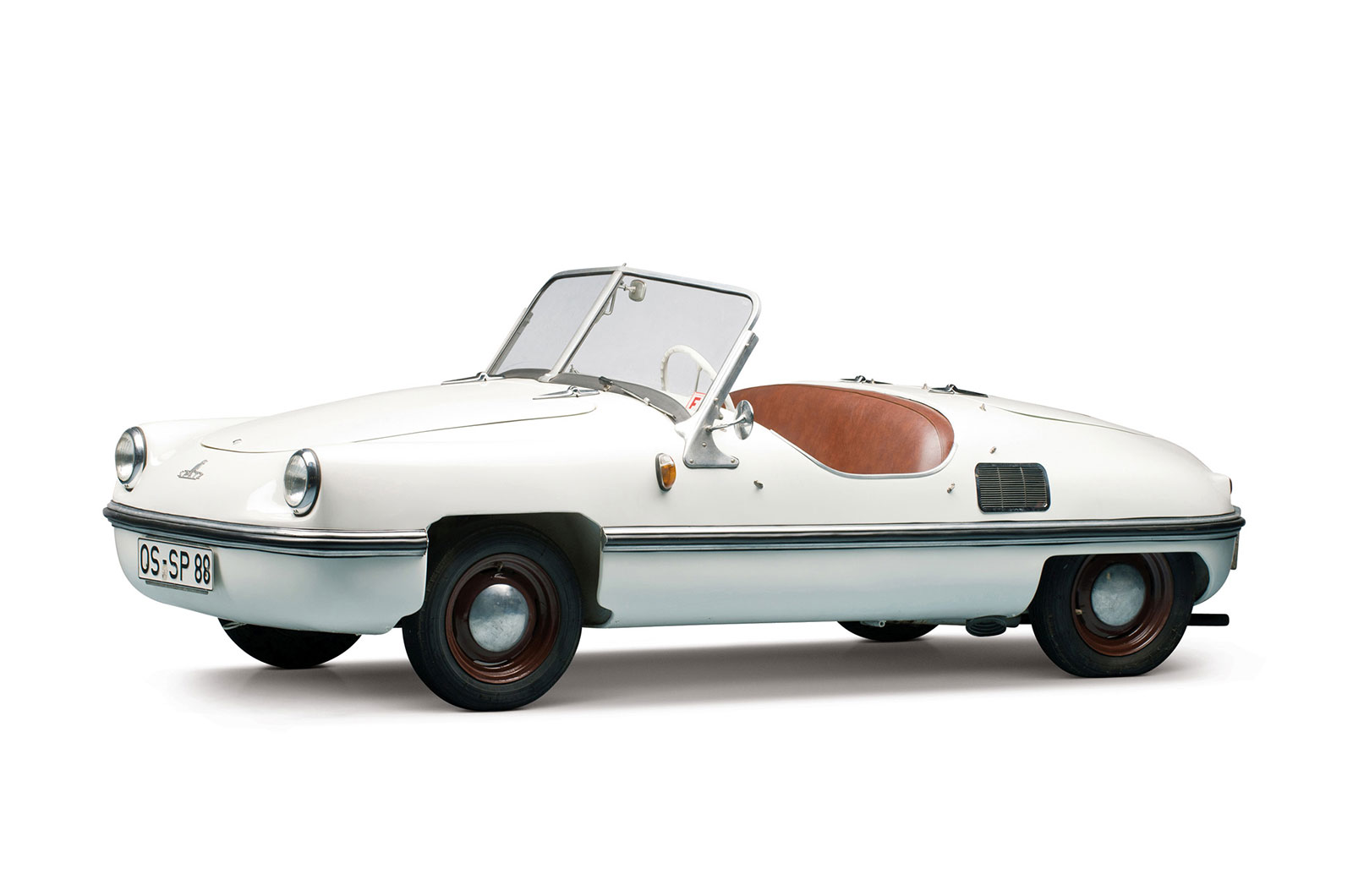
The original Spatz (German for Sparrow) was a three-wheeler deemed too unsafe for sale because of its flimsy construction; it was the brainchild of Egon Brutsch, creator of the Mopetta. Hans Ledwinka of Tatra fame turned the car into a four-wheeler which sold between 1956 and 1958, with around 1600 made.
Aixam (1983 to date)
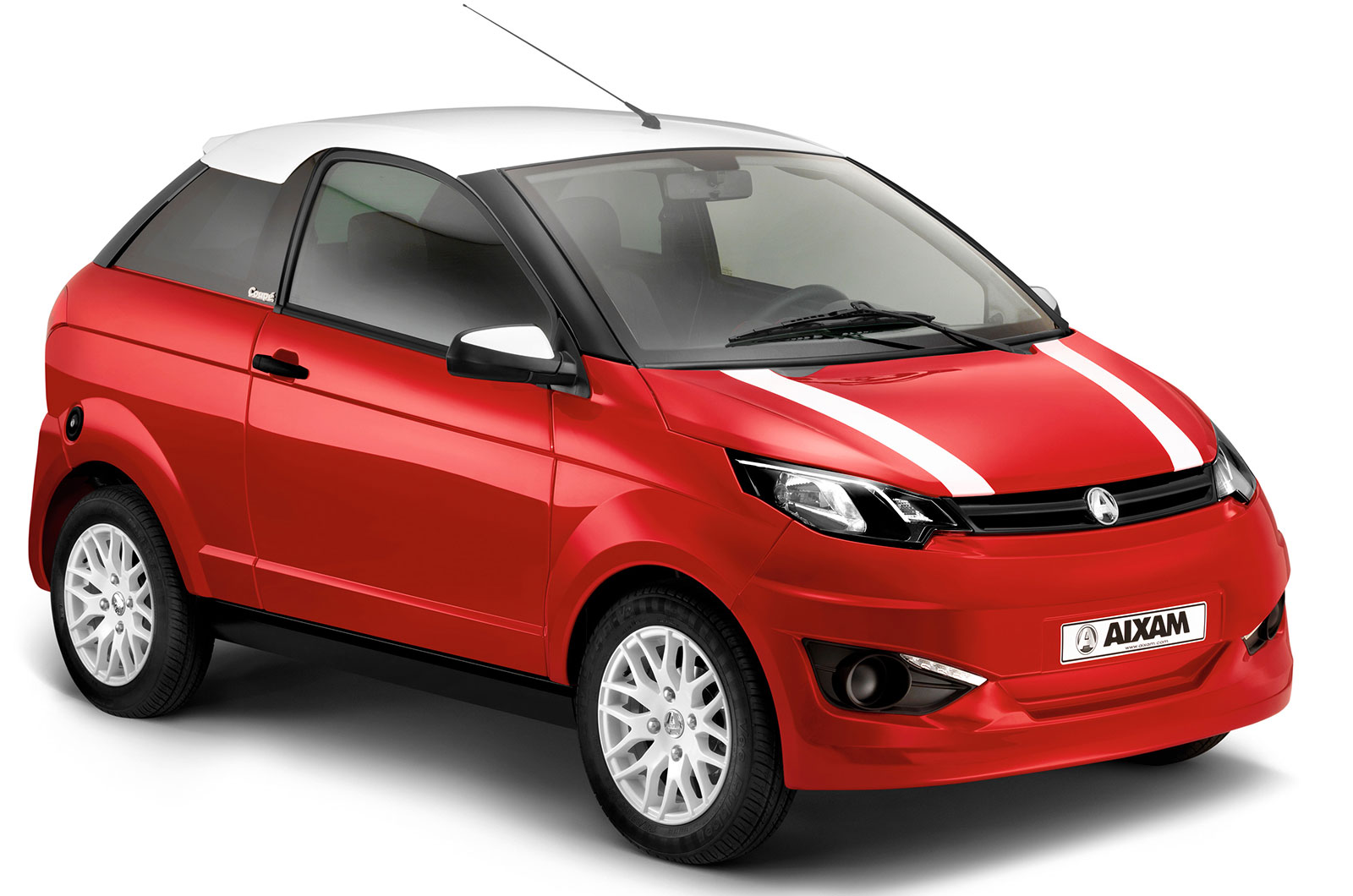
The microcar isn’t dead. Indeed, for years it’s been thriving in France thanks to the country’s quadricycle market. Known as voiture sans permis (cars without a licence), such vehicles can be driven by 14-year olds, but predictably they’re restricted in terms of engine capacity and performance. The biggest player in this market is Aixam; its latest Coupé is shown here.
Ligier Ambra (2008)
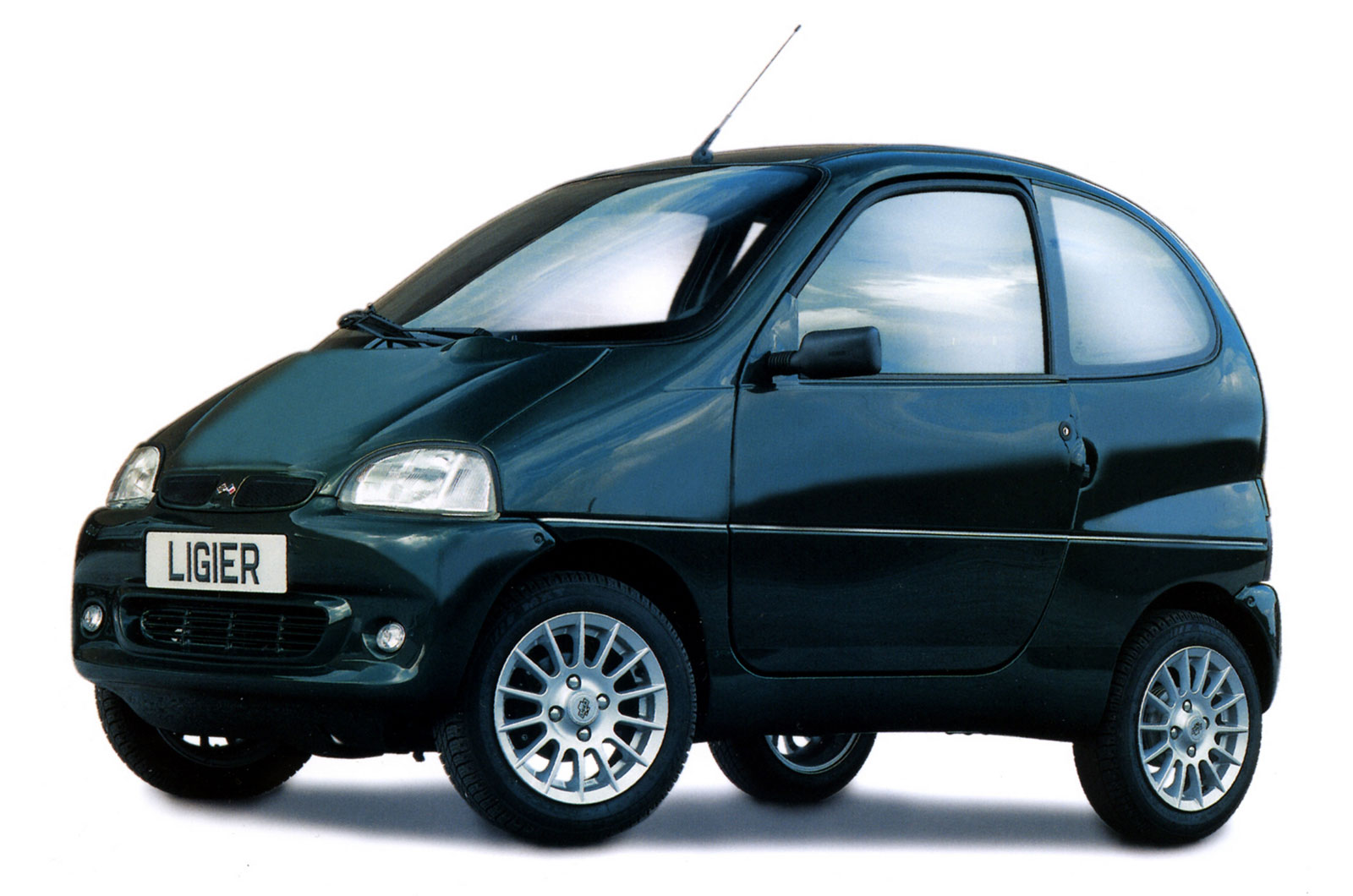
Another major contender in the quadricycle market is Ligier. The company started out making sports cars in the 1970s but since 2008 it has focused on making voitures sans permis; shown here is a Ligier Ambra. Fast, it is not...
Smart ForTwo (1998)
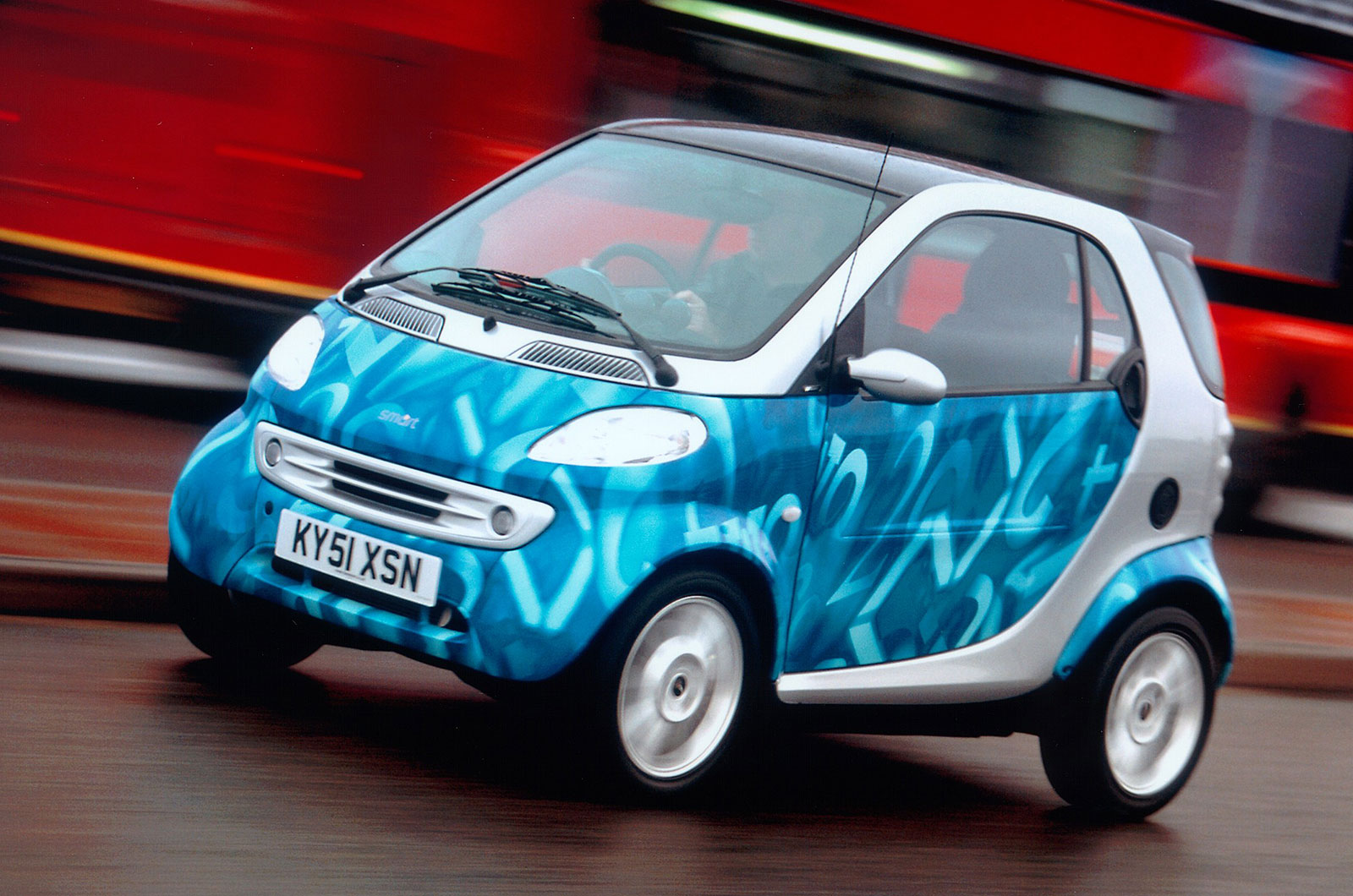
Is the Smart ForTwo really a microcar? Compared with the original models from the 1950s it’s probably too safe, fast and luxurious to qualify. But as one of the titchiest cars on sale today, we’re going to include it here as an honorary member of the microcar club.
Reva G-Whiz (2001)
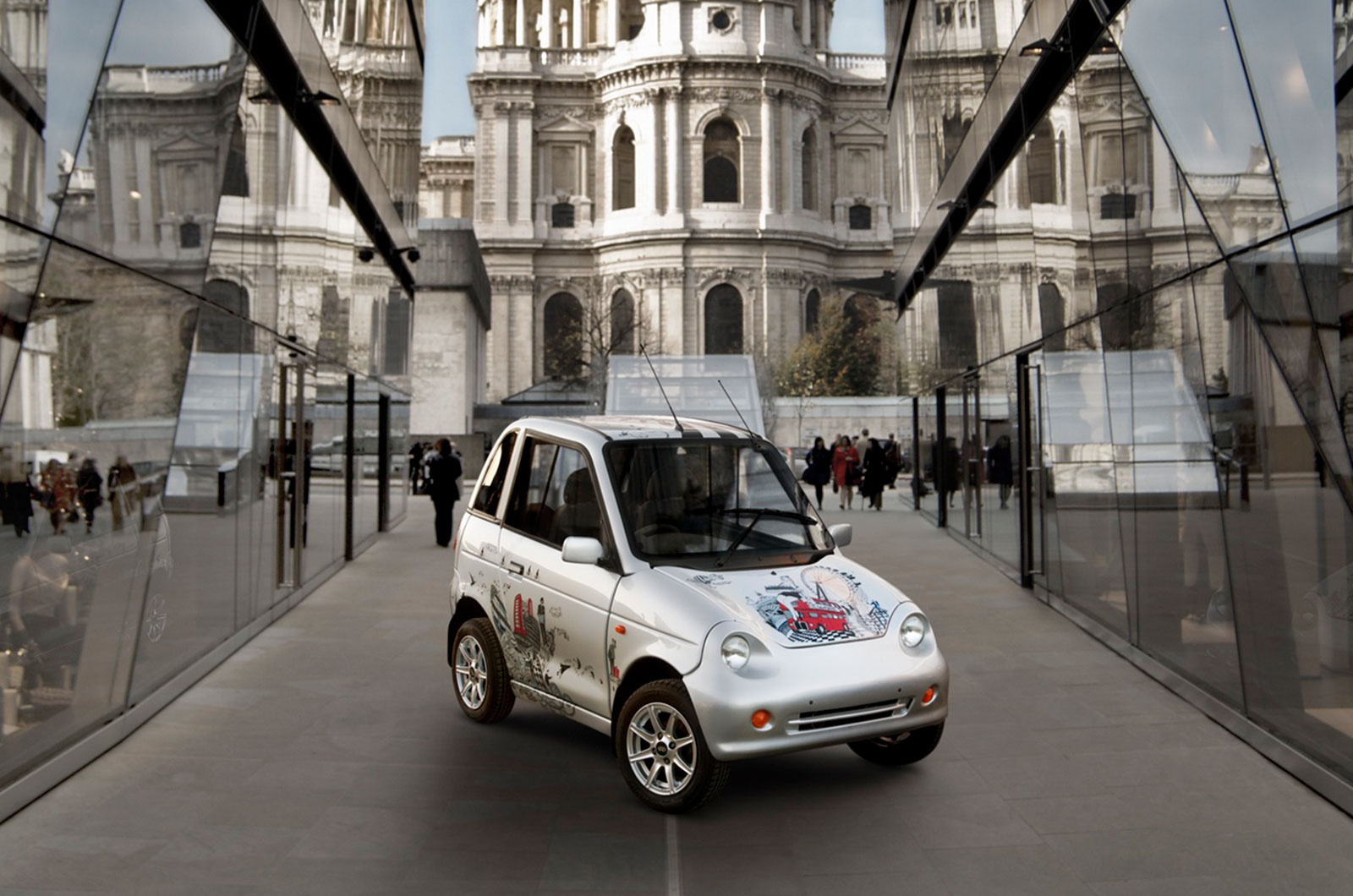
The Reva G-Whiz was closer in spirit to the microcars of old thanks to its terrible performace and dynamics, questionable safety levels and shoddy styling. This Indian-made battery-powered contraption was built from 2001 until 2012 and proved popular for a while in the UK, especially in London. But its successor (the Mahindra e2o) didn’t enjoy the same success.
Renault Twizy
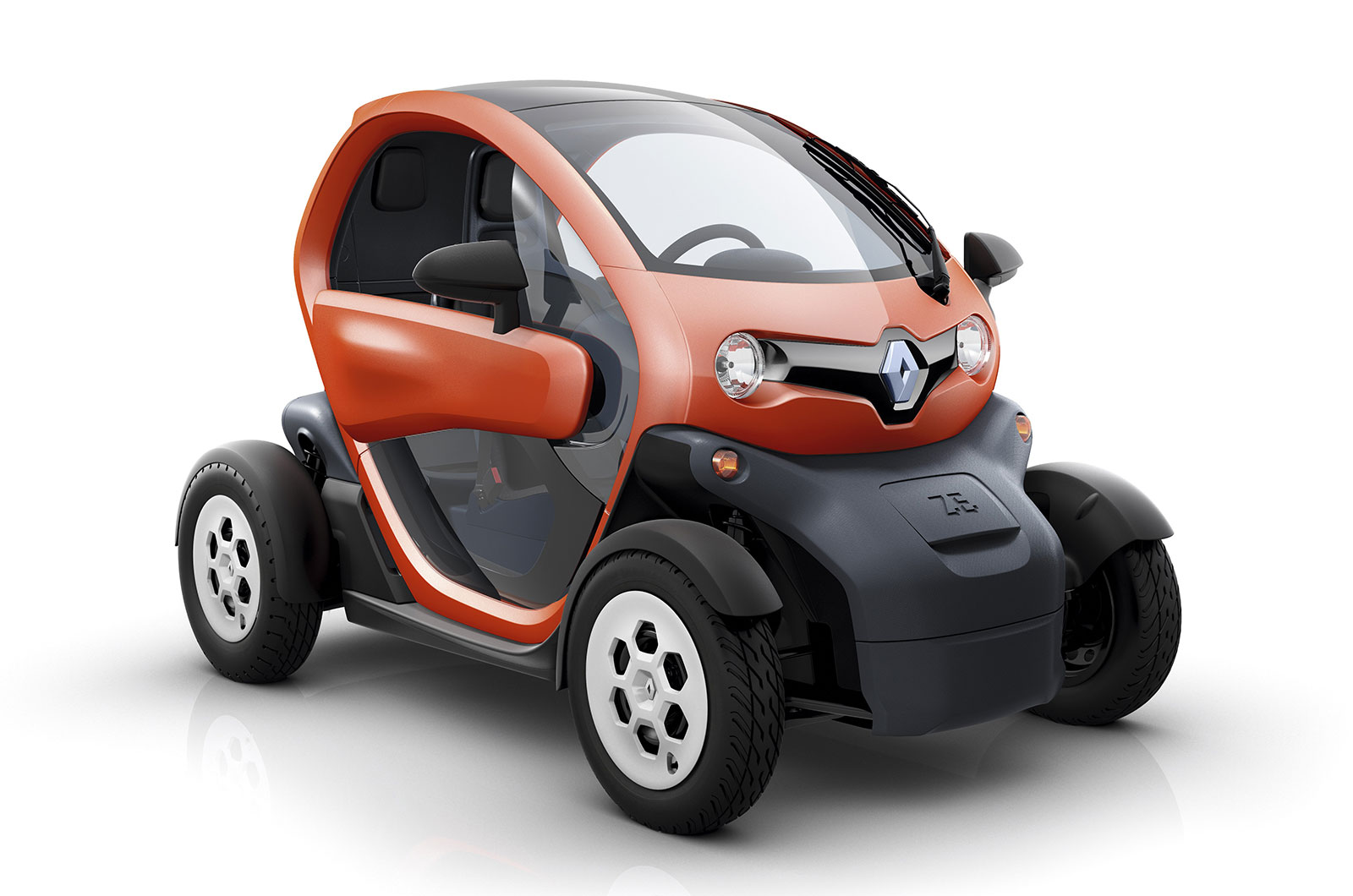
Bringing the microcar story up to date is the Renault Twizy, an electric two-seater that’s just the job for intra-urban trips. It looks great and is great fun to drive, but it’s not cheap enough – something that killed off the microcar market the first time round. How many Twizys will survive in 50 years’ time?

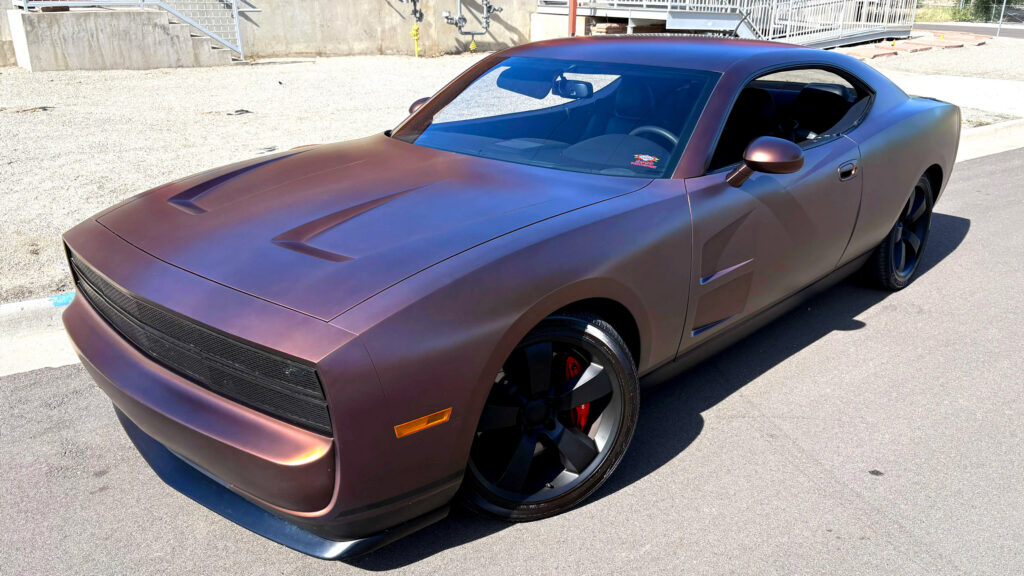
Dodge Charger Reimagined as a Carbon-Fiber Two-Door Challenges the Legacy of Modern Muscle Design

AI Surveillance Cameras Redefine Privacy Boundaries in Public Spaces


Renault 4 Plein Sud Balances Open-Air Fun and Practicality in the Electric SUV Segment
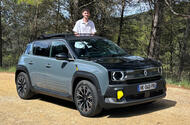 Retro-themed EV crossover gains unusual convertible roof – without any compromise
Renault is making quite a big deal of its 4 Plein Sud - a convertible version of its best-selling B-segment electric SUV.
I'm in the dramatic Catalonian mountains for a couple of days to drive the new cabrio – a real pleasure and the perfect place to enjoy top-down motoring.
Except the big deal feels a little overblown, because the Plein Sud (which roughly translates to 'due south') has more of a fabric roll-back sunroof, like previous generations of Twingo offered, than a true retractable roof.

That’s not necessarily a criticism, of anything other than the marketing at least, because unlike in the Mini Convertible (with a completely folding roof) or the Fiat 500e Cabrio (which leaves the doors and pillars in place but folds the fabric all the way back to the rear deck) there is still a hatchback for the boot and the same 420 litres of cargo space as in the normal 4.
It's a similar uncompromising story in the three back seats. Head room remains good unless you’re really tall. It’s not infinite, because the 80x92cm opening stops roughly where your knees are. Speaking of knees, room for those is unchanged, so there’s plenty if you’re of an average build, although you won't be able to stick your feet under the front seats if they’re in a lowered position.
It's from the back (with Isofix mountings for two child seats) that you get the most effect from the open roof: a great view of the sky, wind in your hair and buffeting that doesn’t really begin until A-road speeds. I can imagine kids absolutely loving it back there; I know I did.

Up front, you do miss out on some of the fun, because unless you look behind you, it really does just feel like an open sunroof. That won’t be a problem for many, because even at motorway speeds all remains reasonably calm, especially with the roof in its half-open position.
Elsewhere, the 4 experience is very much unchanged. The quality of materials is great for the price point, the seats are comfortable even over long distances and the touchscreen is easy to use and complemented by lots of buttons.
Apart from a retro-cool folded-up fabric pile on the roof, the 4's exterior is unchanged, and 18 months later it still makes an impression that rivals can’t match.
The new roof has added 19kg of weight, but I couldn’t tell a difference on the road. The steering is still sweet, the ride comfortable and the performance adequate.
My test car returned 4.4mpkWh with the roof open on a warm day, suggesting 228 miles on a charge should be achievable.

Renault says this is the only five-seat electric convertible on the market, which if you’re generous enough to call it a convertible is true. There are only three other electric rag-tops: the four-seat, £27k 500e Cabrio, with 190 miles of range and a fairly cramped interior; the £182k Maserati Grancabrio Folgore, with four seats and 279 miles of range; and the £55k MG Cyberster, with two seats and 316 miles of range.
That makes the Plein Sud, at £27,500 in the lower of its two very well-specced trims, look like quite the bargain, and its 242-mile official WTLP range is only three down on the tin-top (Renault estimates that efficiency is roughly a further 5% worse with the roof down).

In reality, customers are more likely to look at the Plein Sud as a nice-to-have £1500 option than an electric alternative to the Mini Convertible or Volkswagen T-Roc Cabriolet, but that's just fine.
Without altering the fundamentals of what makes the 4 great, Renault has instilled a sense of fun and a little wind in the hair for next to no compromise, all for the price of a small sunroof on rivals. If I were buying a 4, it would be a no-brainer.
The next question to ask is: when are the 5 and Twingo getting the same thing?

Cayenne Turbo E-Hybrid Facelift Signals Porsche’s Commitment to Combustion Amid Electric Shift