

Peugeot e-208 GTi Reimagines the Electric Hot Hatch With 277bhp Performance and Heritage Design
 Electric hot hatch – which reprises famous GTi badge – goes from concept to production with very few changes
Peugeot has confirmed the e-208 GTi will be priced from £34,995 in the UK, as the production-ready model makes its debut at the 24 Hours of Le Mans today.
That figure does not include the government's Electric Car Grant, through which the GTi is expected to qualify for a £1500 discount. That would reduce its price to £33,845, undercutting the rival Alpine A290 GTS+ (£34,245, inclusive of a £3750 government grant).
The GTi was first unwrapped in concept form at La Sarthe last year, but Peugeot has now pulled the wraps off the finished product – ready for showrooms in the coming months with a design that the brand says "is incredibly close" to the original show car.
The first new Peugeot GTi model since the hot 308 retired in 2021 is also its most powerful yet, with its single front-mounted electric motor producing 277bhp and 254lb ft of torque for a 0-62mph time of 5.5sec. It also weighs 1545kg.
Technically, it's a close relation to the Abarth 600e, Alfa Romeo Junior Elettrica Veloce and upcoming Vauxhall Corsa GSE, which means it also gets a mechanical limited-slip differential to increase its agility in the bends.
Beyond the hefty power increase of 124bhp over the standard e-208, the GTi also gains bespoke hydraulic bump stops, a rear anti-roll bar and a unique steering tune that's said to boost responsiveness.
It also rides 30mm lower and has significantly widened tracks – by 27mm at the rear and 56mm at the front – for improved poise and stance.
Although it shares its 54kWh battery pack with the regular e-208, its cooling system has been revised to prevent performance from dropping off at high speeds. It offers 218 miles of range with the standard-fit Michelin Pilot Sport 4S tyres, or 233 with the optional (but free) Hankook Ventus S1 Evo3 rubber.
As previewed by the concept, the visual makeover extends to a prominent rear spoiler and diffuser, a beefier front lip and striking 18in alloy wheels with a design inspired by the distinctive 'pepperpots' of its hallowed 205 GTi forefather.
Further details will be revealed on Friday 12 June as Peugeot marks the 100th anniversary of its first Le Mans race by taking to the circuit in three GTis - painted red, white and blue to celebrate the brand's French heritage.
UK sales of the new hot hatch will begin towards the end of the year.

Solid-State Batteries Enter Real-World Testing as Stellantis and Factorial Target Faster Charging and Greater...

Genesis Magma GT3 Concept Signals Brand’s Ambition in Competitive Racing

BYD Great Han Redefines Flagship Sedans With Supercar Power and Record-Breaking Range

Honda Prelude Redefines Hybrid Coupé Appeal with Dynamic Handling and Accessible Performance
 Nobody would have imagined the Civic's humble hybrid set-up would make a great coupé, but this is
It's something of a coupé coup for a modestly powerful, fairly affordable hybrid like the Honda Prelude to have come along in 2026 and achieved so much.
Nobody would have imagined that a powertrain like the four-pot petrol-electric one in the Civic and CR-V could have been enlivened so effectively as it has in the Prelude, just via a bit of creative thinking and some make-believe gear ratios.
Nobody would expect there to still be money to be made in the European market for mid-sized sporting coupés, from where the likes of Audi, Volkswagen, Peugeot and others have all packed up and fled - but where the Prelude now suddenly seems so uniquely placed.
It's all textbook Honda: to have been away from this arena when the likes of the TT, Scirocco and RCZ were all cashing in, only to come back when the rest of the industry's attention is elsewhere.
The Prelude may have been something of a front-wheel-drive technical pioneer in the 1980s and 1990s, but the sixth-generation car is still a bit of a change of gear (no pun intended).
It's pretty in a way the previous ones never were. It's mechanically conventional, deriving its handling dynamism not from four-wheel steering or clever torque vectoring but by adopting a revised take on the chassis and suspension of the acclaimed Civic Type R hot hatch.
And the hybrid powertrain that has brought the Prelude in for criticism in other parts of the world, where it had a greater reputation for performance in previous forms, looks ideal to give it a viable medium-term future in the UK and Europe.
Right now, a great-looking car with an efficient electrified powertrain could be exactly what mature, sophisticated, empty-nester clientele are looking for.
Moreover, when they drive the Prelude, those potential customers will find a car that delivers beyond its visuals. The car's handling is really impressive: flat, composed, super-precise and finely polished. It isn't firm-riding like the hot Civic on which it's based, either.
And that hybrid powertrain may not be a stellar dynamic draw in itself, but it provides more than enough real-world, accessible performance to keep the chassis occupied and does a convincing enough impression of a paddle-shift automatic gearbox, including that genuinely revving four-cylinder engine (eat that, EVs), to complete the picture.
The Prelude is easily the most interesting, encouraging new hybrid performance car to come along in 2026, and the offer of its talents for a rather reasonable price is the cherry on the cake.

Dodge Charger SRT Hellcat Poised for Roadkill Nights Debut as Brand Signals Multiple High-Performance...


Port Access Bottlenecks Threaten Oil Supply Recovery After Strait of Hormuz Disruptions


Nissan Lease Buyout Overcharges Spur New York Crackdown on Hidden Dealer Fees

Automobile Manufacturing Revealed Through the Diverse Materials and Labor of Early Car Production


Julian Thomson’s Collaborative Vision Reshapes Automotive Design from Lotus Elise to GM’s European Studio
 Autocar's Design Hero for 2026 stands out not only for a run of incredible cars but also his enthusiasm
This may sound odd, but what makes Julian Thomson - Autocar's 2026 Design Hero - different from other distinguished car designers is that he remains as keen as he was 40 years ago to get on with designing great cars.
By the time they've had three or four successful decades in the job, many design greats have become managers and administrators, concerned mostly with what's happening in some big company's boardroom.
Admittedly, Thomson's links are with one of the biggest - General Motors - but since 2022 he has been the driving force behind its all-new European Advanced Design studio in Warwick, England, where a tight-knit team is several years into producing original design proposals for the 'mothership' in Warren, Detroit. Longer-established studios in China, South Korea and California in the US do the same.
It stands to the credit of Thomson that GM's then global head of design, Mike Simcoe, paused a plan to open a new European studio until he heard for certain that Thomson (who in mid-2021 had just left Jaguar) was definitely available for the new role. The two had hit it off in initial meetings and Simcoe, another very design-focused character, was willing to wait.
His reward was that by 2024 Thomson's new studio had a carefully chosen team of 35 already working flat out on secret projects for GM's Cadillac, Chevrolet, GMC, Buick and Hummer marques.
Then about a year ago, the Warwick studio hit the headlines with a futuristic, full-size son-of-Stingray proposal for a new Chevy Corvette, the first of three to flow from GM's remote studios. More such commissions have followed.
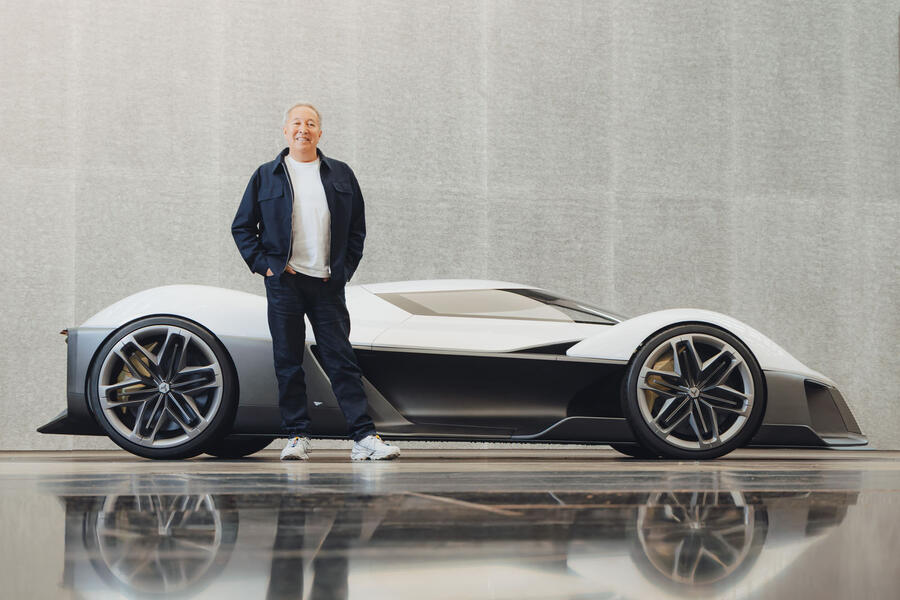
Thomson has been very particular about choosing his team, unashamedly inviting close colleagues and friends if he knows they have the required skills. "It is vital to have people who understand the power of collaboration," he says. "It's amazing how much you can accomplish with a group prepared to work together. Our people understand about discussing things properly and about pooling ideas."
Thomson's innate desire to get on with creating cars reaches back to the earliest days in his career, when he went to work in a huge Ford design studio after graduating from the Royal College of Art in the mid-1980s. "I was a bit surprised it was so little like college," he says. "People liked their jobs, but they didn't have the urge to change things on the streets like we did."
A chance to go to Lotus, where Peter Stevens was building a small design team, changed things completely. "Everything was exciting," he says. "We went from a huge studio to a Portakabin, and they hadn't even delivered the end of that, so we were open to the elements. I didn't bat an eyelid."
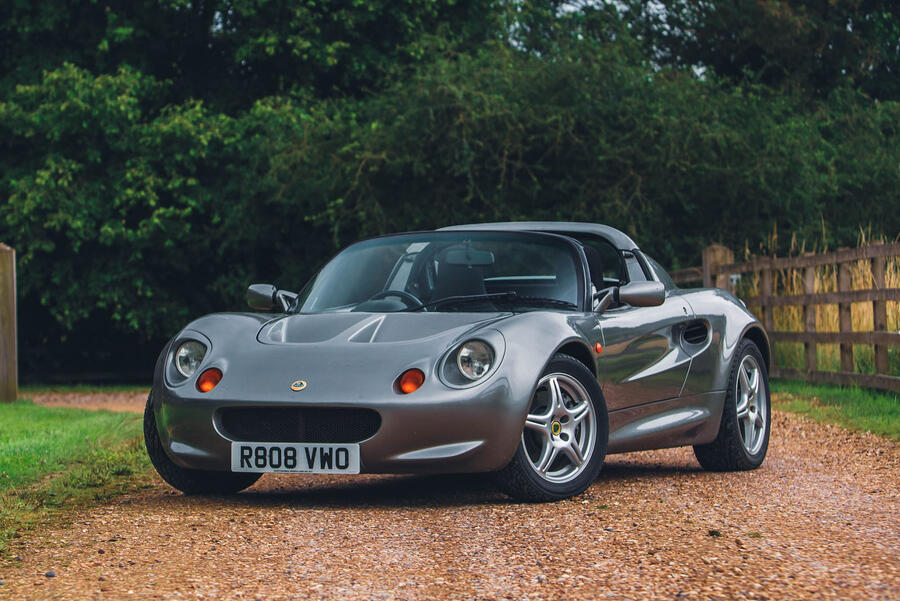
During that period Thomson designed one of his most famous cars, the original Lotus Elise, more revered today than ever. He still signs consignments of caps for the Lotus Drivers Club.
"I loved Lotus," he said, "though what we did seems much more significant now than it did at the time. The great thing was that you touched every single bit of the company: I had friends in manufacturing, engineering, powertrain, electrical and I got to know all of their problems. We socialised with one another and built a lot of friendships."
After a short stint at Volkswagen, Thomson began the career phase for which he is best known, as Jaguar's advanced design director, working with its then design chief, Ian Callum.
Famous for their lively discussions, the pair forged a highly productive friendship that created a new design direction for Jaguar (via the XF), invented Jaguar's SUVs (via the F-Pace) and moved it into the electrified era (via the I-Pace).
Thomson's most prophetic work of all was to conceive a rule-breaking SUV concept called Land Rover LRX at the start of 2008. It became a smash sales success as the Range Rover Evoque and continues to sell strongly to this day.

However, Thomson and Callum left Jaguar within a year of one another after a 20-year partnership, when a new management decided the 100-year-old marque needed radical design changes.
Callum set up his own design consultancy, and within six months Thomson was engrossed with the first steps in the GM project. The Warwick studio has already become an implicit part of GM's design portfolio, though visitors who know design often remark on its calm creativity, given the volume of its output.
Thomson regards this GM phase as one of the greatest eras of his design life. He points to a book on his shelves called Fins, which describes the life and career of the design pioneer Harley Earl, GM's first true star of the studio.
"It feels amazing to be here, now, working for the company that invented the clay model, the design studio, the concept car and the modern way of creating cars. GM is very proud of all of this," he says. "When I think about going through the various phases of my career to end up here, where it all began - and to actually be a part of it - well, it's a great honour."