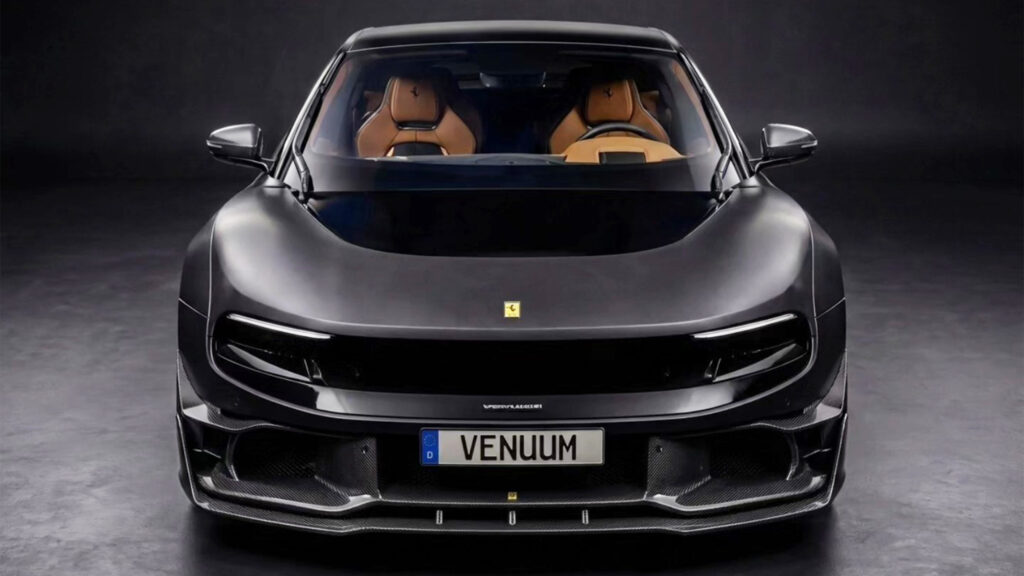
Lexus ES Development Hinges on Shock Absorber Debate as Engineers Pursue the Ideal Balance...
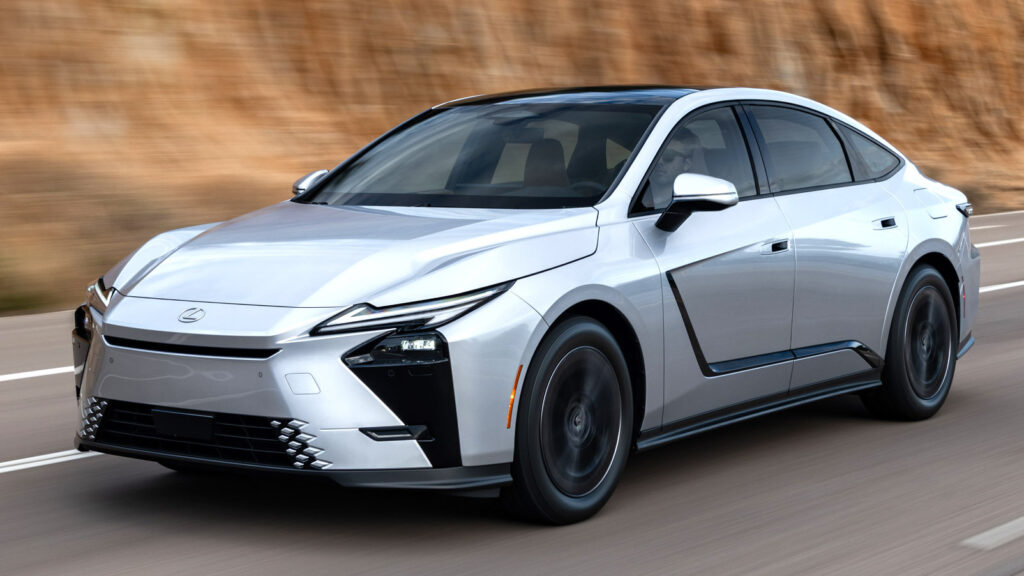

Medical Marijuana Remains Prohibited for Transportation Workers Despite Federal Reclassification


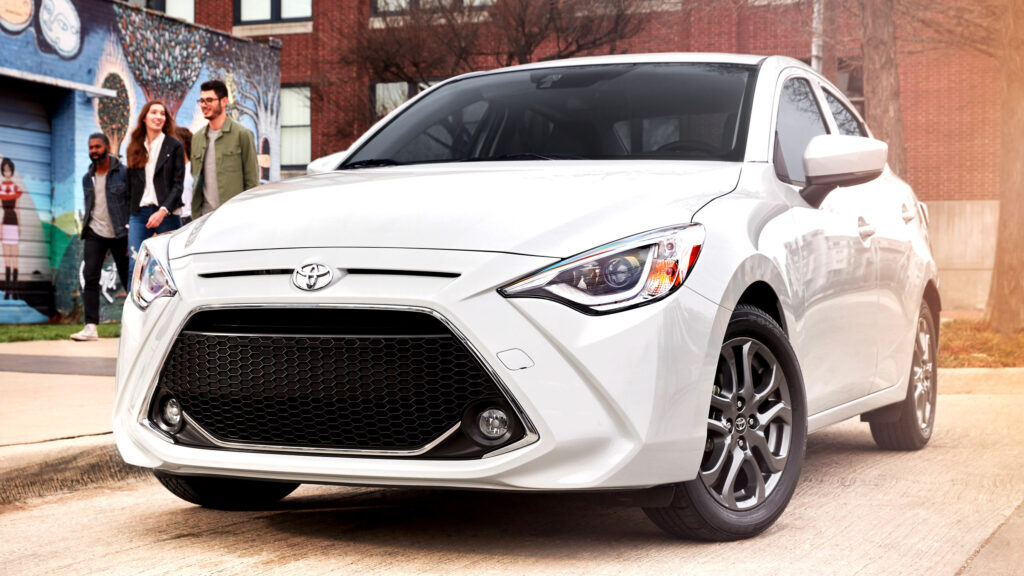
Mazda Redefines Teen Car Safety as EV Depreciation Reshapes Affordable Choices

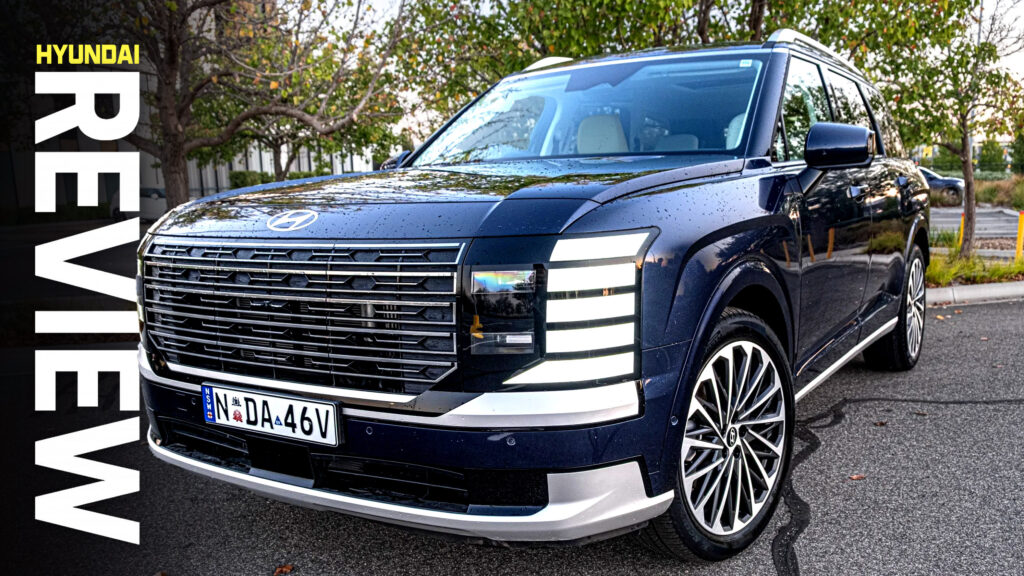
Hyundai Palisade Calligraphy Redefines Family Luxury With Flagship Hybrid Power and Range Rover Ambition

BMW 7 Series Restoration Reveals Unexpected Value in Classic Car Ownership
 Vip Kukanathan loved his 7 Series so much that he bought it back off the next owner - with a bonus
Question: when is owning one BMW 7 Series like having owned two?
Answer: when you have owned the same one twice and discover that in between you selling it and buying it back, it has been completely restored.
Vip Kukanathan is that lucky man. He first bought his 1989 BMW 730i SE in 2016, when it was showing 85,000 miles. He used it for four years, during which time he drove it in triumph to the south of France, and then, when the repair bills began mounting, parked it up for another two before reluctantly parting with it in 2022.
So far, so not unusual: a lot of people buy big, leggy motors only to offload them when the bills bite.
However, what happened next is extraordinary. Out of the blue last year, Vip was contacted by the chap to whom he had sold the car. He was emigrating, he explained, and couldn't take it with him, so was offering to sell it back. Vip had to think: the car had been on its last legs three years ago, so what would it be like now? "I wasn't keen to have it back," he says.
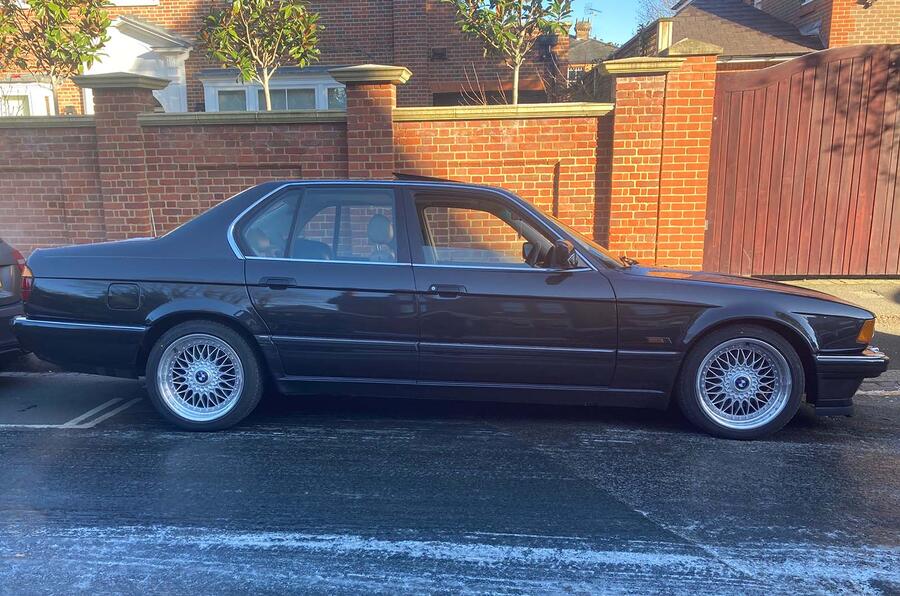
"I have a BMW 'E30' 3 Series that I love. Did I want a tired old 7 Series as well?" Then the caller said something that made Vip think again: "I've had it completely restored."
Vip recalls: "He went through the list of work that had been done: a bare-metal respray with ceramic coating, new interior, new windscreen, new fuel lines and pump, new radiator, hoses and water pump, new injectors, new suspension parts, new brake lines... All together, he told me he had spent £15,000 on the car.
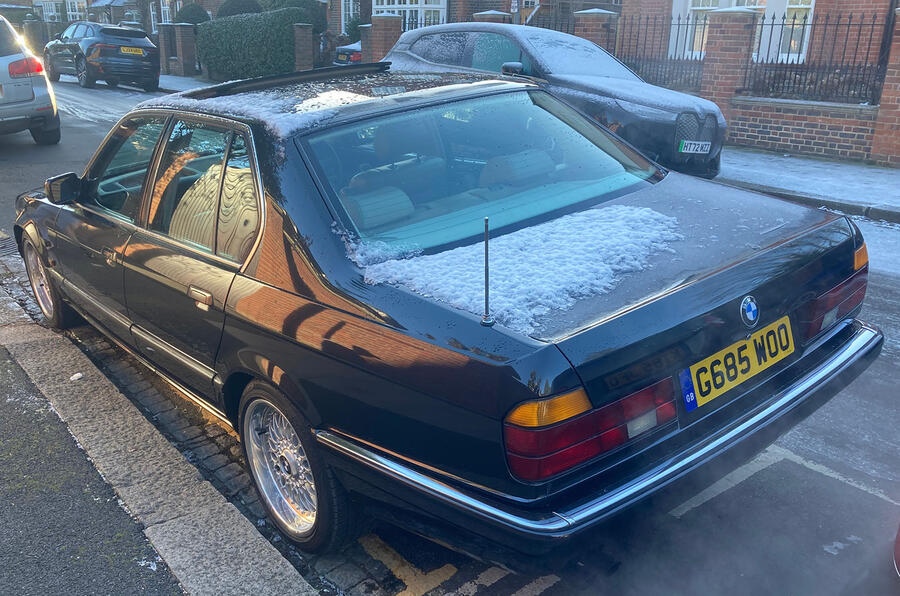
"I couldn't believe it! The 730i was a nice model but just a regular 7 Series. However, he said it was his pride and joy and fully deserved to be restored. Obviously I wondered how much he wanted for it..." In fact, the chap wanted just £3500 for the car, then with 95,000 miles on the clock. Vip took a deep breath. "I'd paid £5500 for the car in 2016 and sold it in 2022 for £3500, so in effect I was being offered a £15,000 restoration for just £2000," he says.
A done deal, you would think, but, not a chap to believe in miracles, Vip said he would come with a sceptical friend to view the car first. Later, clamping eyes on the gleaming BMW and having studied the photo album detailing its restoration step by step, said friend vowed that if Vip wasn't going to buy it, he would. "That did it," says Vip. "I bought it on the spot."
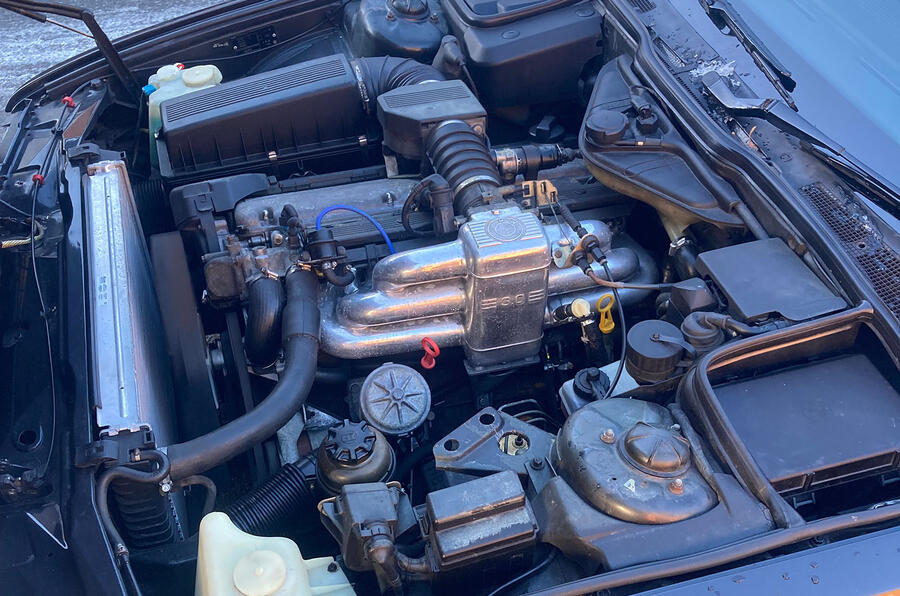
When I encounter Vip at his local car meet, there's an appreciative knot of enthusiasts gathered around his freshly minted 730i's exposed engine bay, admiring the immaculate straight six with its huge, polished exhaust manifold. "It does attract a lot of interest," says Vip. "It felt very different in a good way when I first got back behind the wheel.
"The 7 Series was designed to be a sportier alternative to the Mercedes S-Class, and it's certainly that, but it's also very comfortable." Could a return trip to the south of France be due?

New-Car Market Shrinks as Automakers Prioritize Profits Over Affordability and Volume

DIY Car Repairs That Backfired and the Risks of Amateur Modifications

Ford Archives Reveal How Curated History Shapes Brand Identity and Innovation
 Ford's archive in Detroit has a huge collection of documents, ephemera and other items that chart its rich history
When Ted Ryan was first approached to become Ford's heritage brand manager, he was intrigued but reluctant.
The issue wasn't that he doesn't consider himself a car nut: his dad, who owns a historic Mustang and Lincoln, and best friend are, and both tried to convince Ryan that "there are great stories in cars". But Ryan initially pushed back, telling them: "I've got Santa Claus and polar bears."
For 21 years before he joined Ford in 2018, Ryan was an archivist for Coca-Cola. "It's one of the best brands in the world," he enthuses. "As well as Santa and the polar bears, you've got Norman Rockwell, the colour red, the secret formula." But just as the fizzy drink is woven into cultural heritage, so is Ford. And Ryan was being offered a new role of archive and heritage brand manager: "They wanted me to treat heritage as a brand, which we didn't do at Coke."
Ryan was soon sold on giving up Santa because, for an archivist, delving into Ford's history was like experiencing Christmas every day. "Something like winning the Le Mans 24 Hours, the movie that was made [Le Mans '66] is great, but it's a work of fiction," he says. "The real story is even better. Then you've got the origins of the Mustang, or the F-150 or, over in England, the Transit. That's an amazing story, a joint venture between Ford in Germany and England: they didn't want to co-operate, but Henry Ford II banged their heads together and they developed a common bond. And now White Van Man is a huge part of British culture."
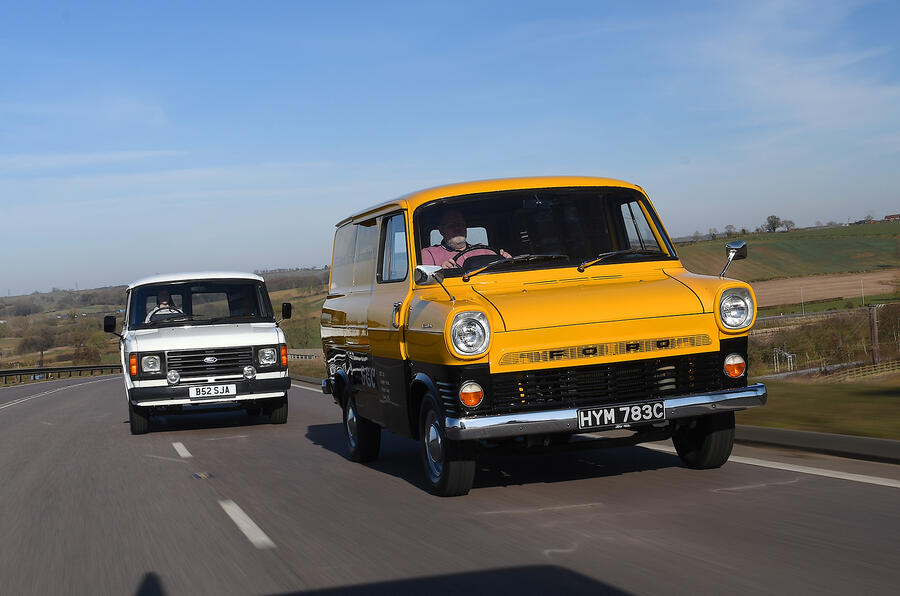
I'll pause there to let you take breath, so your brain can catch up with Ryan's dizzying answer that spans continents while flitting seamlessly through decades of Ford history covering multiple models and adding in social context. It's a perfect example of what an archivist does, delving through mountains of seemingly mundane information to distil history into a cohesive, compelling story.
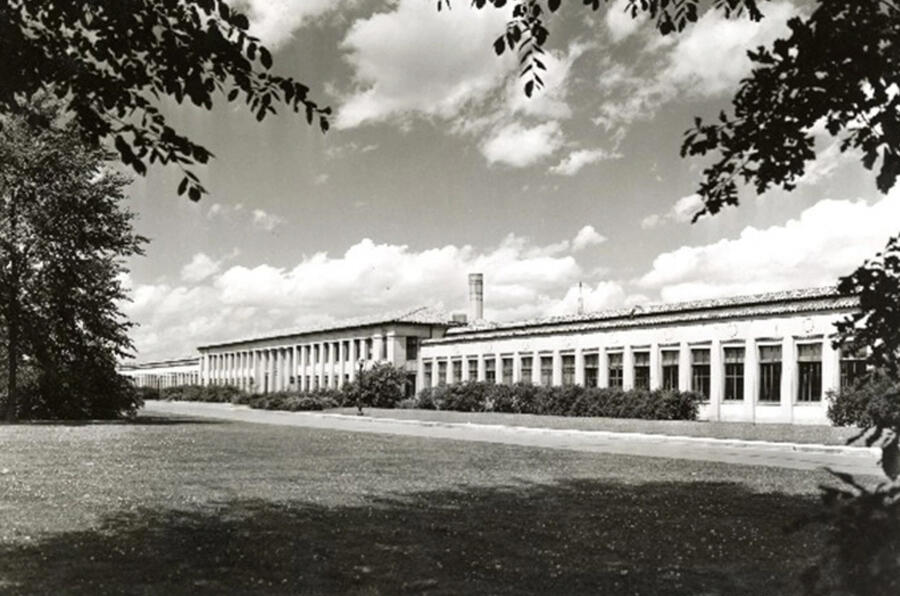
"While I like cars, I'm not a car guy per se, but the stories are amazing," says Ryan. While a significant chunk of Ford's rich history clearly now lives in Ryan's incredibly qualified mind, the physical archives are housed at the heart of the Ford Engineering Laboratory in Dearborn, Michigan. It's a fitting choice: the facility, recognisable by its bluff limestone frontage dotted with Beaux Arts decorations, was built just over 100 years ago. It initially housed everything needed to design, construct and test a new vehicle, Ford's accounts department, the company safe, offices for the Dearborn Independent newspaper and even a dance studio (for a period, classes were mandatory).
Through the decades it has been repurposed for various functions, before being closed in 2007. But it was renovated in 2015, and it is now home to the company's future - in the form of an electrified engineering team - and its past: the preserved offices of Henry Ford and Henry Ford II, and the Ford Archives, in a purpose-built facility located in a former courtyard.
You find the archives down an unassuming corridor and first enter a display room akin to a museum: the archives can be visited by appointment, and the exhibits in this room rotate to give a flavour of the rich material held by Ford. When I visit there's a focus on design, so brochures and documents about interior trim for Mustangs and Broncos sit next to an Advanced Concept Truck model, designed back in 2000 by current Renault Group design boss Laurens van den Acker. There's even a flyer produced just after World War II, helping teach people how to buy a car in readiness for the resumption of private vehicle production (when it comes to chrome on your car do you prefer just a little, a medium amount or quite a bit?).
There's also Freddie Ford, a humanoid robot built back in the 1960s to tour dealerships and help sell cars. It was programmed with a dozen answers, but the team have since rejigged him to spit facts about the archives - not that Ryan or his team couldn't offer up any information you might want just as quickly.
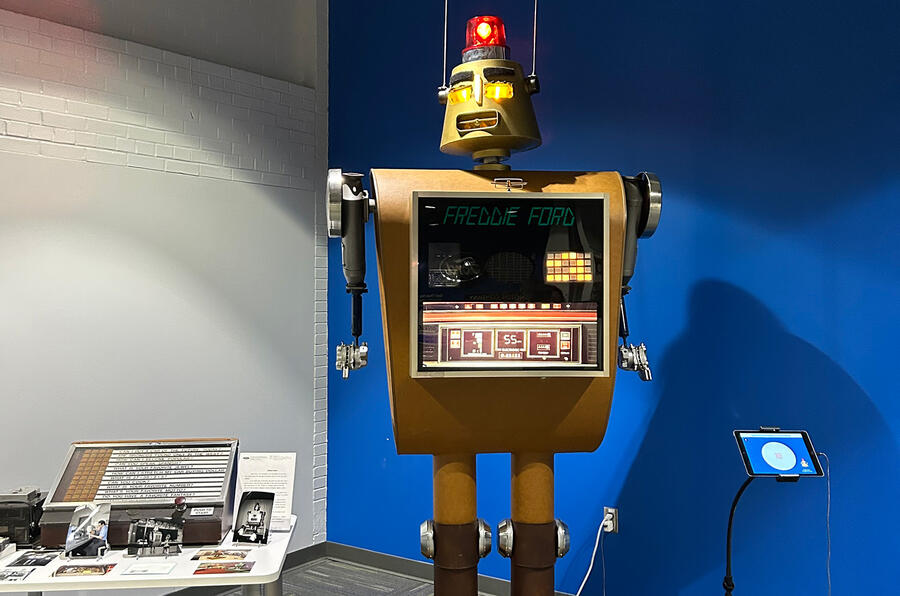
Once through the display room you enter the archive itself - and into car nerd heaven. As Freddie Ford will tell you, it features three miles of shelving and contains around 16,000 square feet of paper records, more than three million photographs or negatives, around 15,000 audiovisual assets, full sets of the Ford Times and Ford Times UK magazines (think Reader's Digest with more car-adjacent features), 4500 3D objects and even artworks. Oh, and a sizeable corner full of parcels and boxes containing newly discovered material from Ford facilities all over the world. If you want to know anything about Ford from the past 75 years, it's in here somewhere.
The past 75 years? While the Ford Motor Company dates back to 1903, the archives only cover material from 1950 onwards. The firm's first archivist was Henry Ford himself, who donated the stack of key documents he had kept to the independent Henry Ford Museum.
Henry Ford II wasn't quite so fond of preservation, notes Ryan: "He destroyed all of his correspondence. There's an interview with him, where he says 'my secretary is in the other room shredding everything."
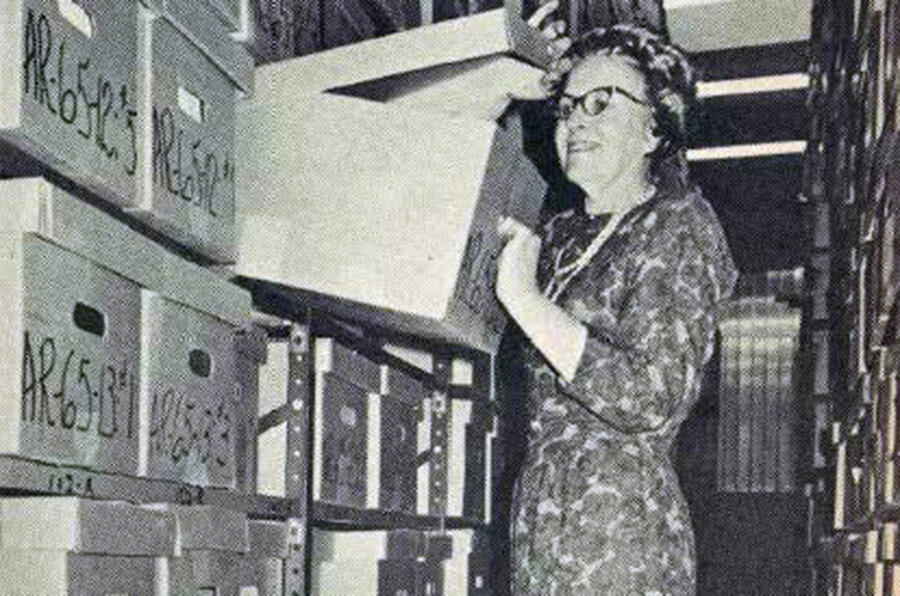
The company's commitment to preserving its past has varied massively over the years. Ryan says: "During Ford's centennial in 2003 there were 23 archivists, and there was a time when there was just a lone archivist in an off-site warehouse. Poor lady."
Ryan is one of the leading experts in the archivist community, so his appointment was a sign of how seriously Ford now takes its history. While Ryan oversees the department, the archive itself is managed by Leslie Armbruster, who heads a team of six.
Their role is a fusion of historian, journalist and detective: they file through the vast array of material to unearth relevant material, while also helping to arrange exhibitions and dealing with requests for verification or fact-checking from marketing, the media and Ford's legal department. So when delving into a new stack of documents, what are Ford's archivists looking for? "We have a standing policy which is 'if you find anything cool, let me know," says Ryan. "Initially, the team said 'what do you mean by cool?' I told them it'll jump out; it'll speak to you, it'll speak to other people."
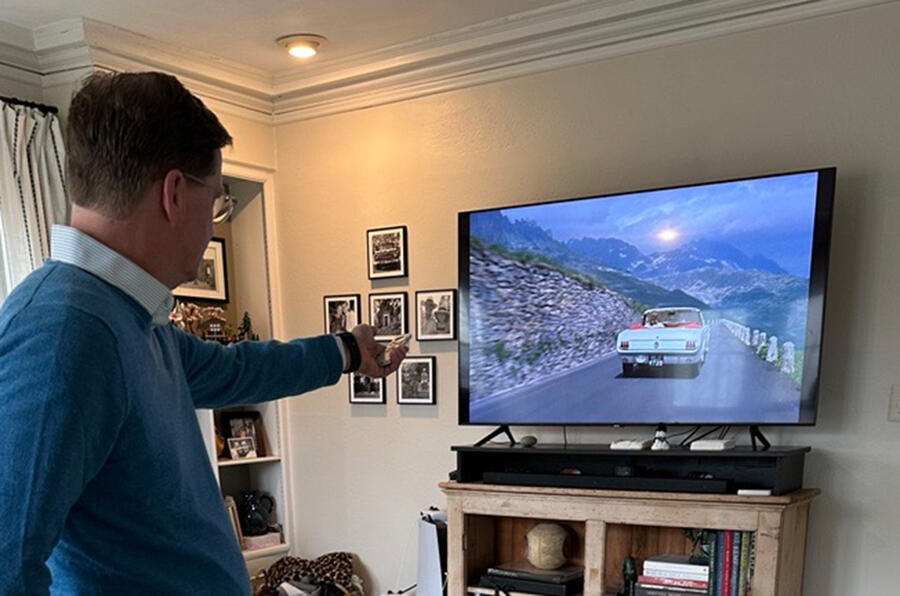
An example: shortly before talking to Autocar, Ryan was looking for images of the first 8-track cassette player to feature in a car. Looking for an image of a 1965 Thunderbird, he found a picture of a Falcon Galaxy, Fairlane, Mustang, Bronco and Ranchero. He says: "Keep in mind, these products were three years down the road, so one picture gave us a snapshot of what was coming in 1968. Just such a cool image."
Surprisingly, for a job all about preservation, a huge part of the role is choosing what not to keep. "You're curating what's important," says Ryan. "An archivist that can't throw things away isn't a very good one. We probably only need to keep 3% of the stuff Ford produces. You are liberated by what you throw away, and you're trained to know that what you keep will be useful for the future."
One key component of Ryan's work is compiling exhibits or material to support new Ford projects, whether it's the launch of the latest Mustang or Transit, or charting the brand's motorsport history for the Ford Racing season launch. That rich heritage becomes a huge asset, and it's one on which new Chinese rivals can't draw, but Ryan insists that "heritage has to be a rapier, not a broadsword".
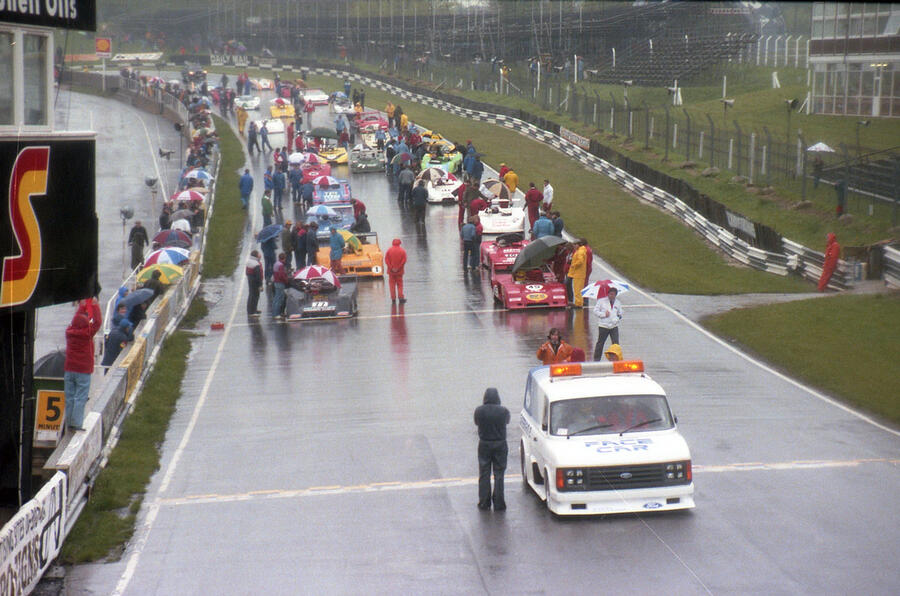
He cites the example of motorsport: "We're celebrating 125 years of racing history this year. It's part of our backbone - but I can't talk about that when we're doing F1 and hypercars. What we're doing now is more important than the fact we've been doing it for 125 years. But doing a story about Henry Ford racing the Sweepstakes car 125 years ago gives us legitimacy."
In recent years, Ford has opened up its archive to a whole new audience, by digitising huge chunks of it including more than 19,000 brochures and photos and making it freely available online (fordheritagevault.com). Ryan says the site has been "insanely popular", with close to two million searches per month: "The goal was that if a kid was writing a paper on the Mustang, they can find the original documents online and not go to Wikipedia or AI."
Of Ford's vast collection, Ryan says his favourite documents are the product development files: "Engineers are geeks, and because their secretaries were typing what they said, you get to read all of their critiques of new cars. The depth of the Ford collection is so much stronger than Coca-Cola. Coke had two million objects like vending machines, but not that much paper. So if you want to know why the Ranchero came to be, I can tell you."
Ted's archive highlights
The Le Mans bar bill
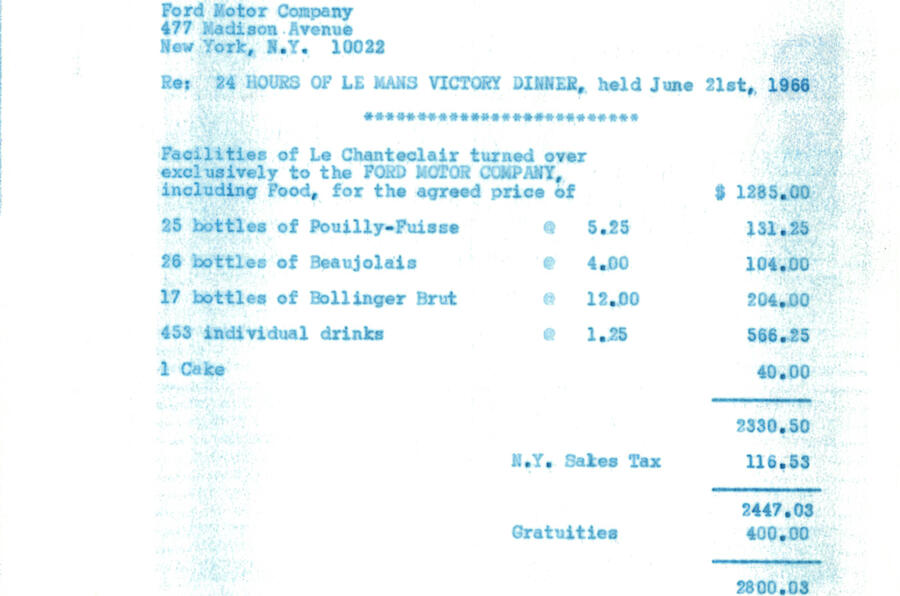
To mark Ford's first Le Mans win in 1966, the company held an invite-only celebration at Le Chanteclair in New York. The bar bill shows it was quite the night: 453 individual drinks, 68 bottles of wine and, er, one cake. "If they had followed proper management processes, that bar tab would have been thrown away," says Ryan. "We don't keep receipts but, man, that bartender receipt is pretty cool, and I'm thankful that somebody kept it."
The Ford-Ferrari contract
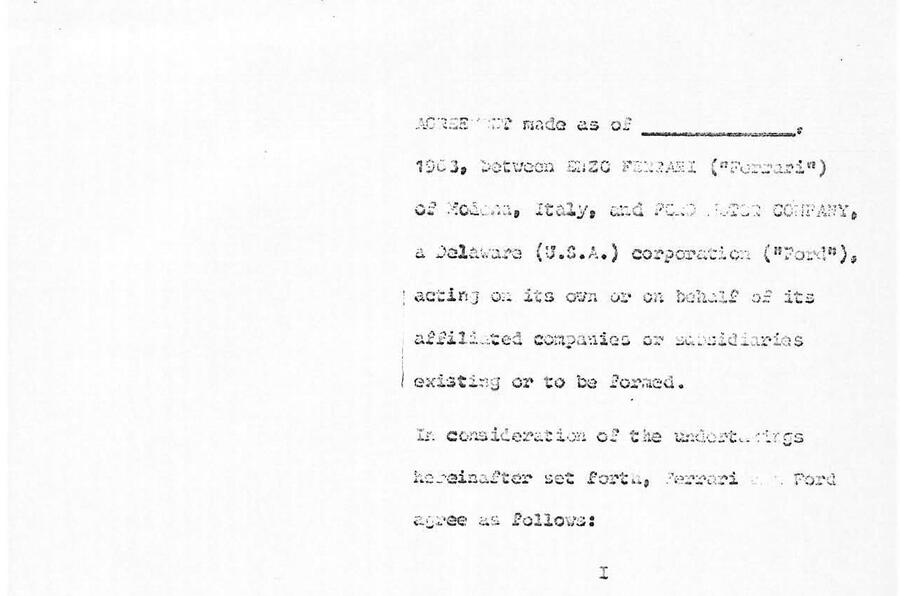
Perhaps the most famous unsigned contract in motoring: in 1963 Ford's negotiations to buy Ferrari reached the stage where a contract was drawn up, only for Enzo Ferrari to refuse to sign it. Henry Ford II started the Ford GT40 Le Mans project to exact revenge. "When you see something like the Ferrari contract, you just get goosebumps," says Ryan. "It brings history to life in a way that is just different."
March 1957 Jacque: #1 Priority: Mustang must win over all competition, (eap. Camaro) whenever 11 This is our image in U.S. even more important than Le Mans.
The Mustang memo
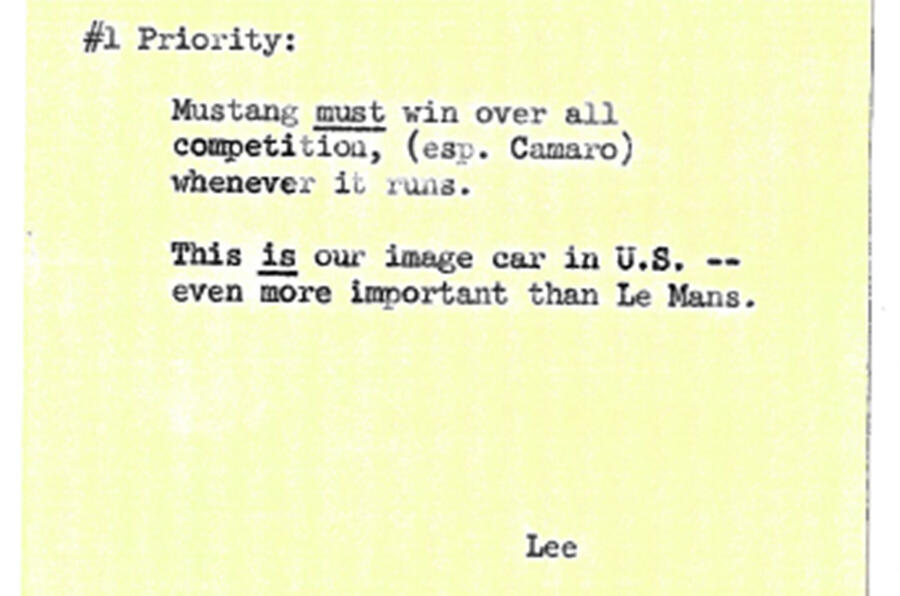
This memo was sent by Ford vice-president Lee lacocca and set out some modest goals for the firm's new muscle car: "Mustang must win over all competition (esp. Camaro) whenever it runs. This is our image car in US - even more important than Le Mans."
Ryan says: "The 1960s was the Mad Men era: they wrote memos on everything. We've got memos from Lee Lacocca and Don Frey and Walter Hayes from England. You get an amazing view of what happened in that glorious decade."

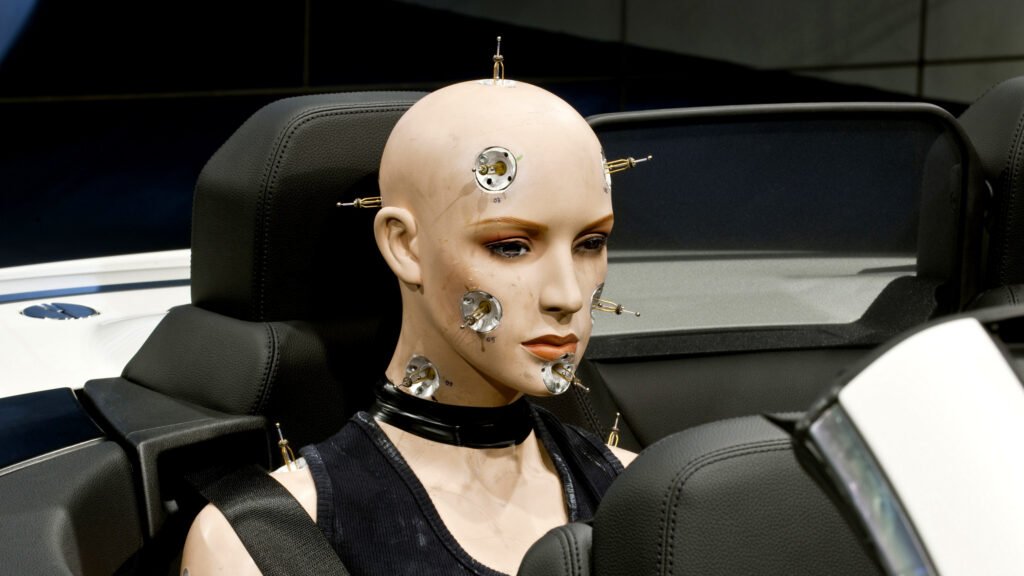
Crash Test Dummies and the Gender Gap Why Car Safety Still Fails Women

Ferrari Luce Design Faces Aftermarket Challenges as Tuners Struggle to Salvage Its Controversial Looks