Itala Revival Signals Strategic Fusion of Italian Heritage and Chinese Engineering in European Automotive...

New Itala 35 crossover is a revised GAC Trumpchi GS3Historic Italian brand returns with revised GAC petrol crossover; will coexist with revived sports car maker Osca
Historic Italian luxury car brand Itala has been revived after 92 years, with its engineering overseen by ex-Ferrari technical director Roberto Fedeli.
This is part of an expansion by Italian company DR Automobiles, which has been rebadging Chinese cars for the past 20 years and is now a significant emerging force in western Europe.
With its six current brands, DR last year sold some 34,000 cars across Italy and a few other nations, and it now plans to enter the larger markets of France and Germany.
Itala is planned to share showrooms with another revived brand, Osca, which was founded by the Maserati brothers for racing and existed from 1947 to 1967.
The first modern Itala, unveiled this week at the Turin motor show, is a 4.4m-long, petrol-engined crossover called the 35 – based on GAC's Trumpchi GS3. It will cost from around €35,000 (£30k).
Italian media reports that Fedeli has overseen refinement of the suspension; other Italian firms have redesigned the interior, notably upholstering it in red leather and Alcantara; and Italdesign tweaked the external appearance.
No plans for Osca have yet been announced, but Italian media reported late last year that a 'proper sports car' with a 'Lotus-sourced 2.0-litre engine' was planned – possibly referring to the Emira's current Mercedes-AMG four-pot.
Under its 'Historic Italian Brands' plan, DR intends to open two new 'production facilities' at its plant in Macchia d'Isernia, where it assembles Chinese cars from knocked-down kits, later this year.
This €50 million (£43m) investment is expected to create some 500 local jobs.
DR plans to open 50 Itala-Osca dealerships, the first of which is in Itala's original home city of Turin.

Gunther Werks Speedster challenges Porsche tradition with radical carbon engineering and seven-figure collector appeal

Skoda Epiq Redefines Entry-Level Electric Mobility with Lower Pricing, Practical Design, and Competitive Range
 Skoda's baby EV arrives with 190-272 miles of range and fresh styling, plus plenty of physical buttons inside
The new Skoda Epiq has been unveiled as the electric equivalent to the Kamiq – and it will be cheaper than its combustion-engined counterpart, with prices starting from £24,950.
Twinned with the forthcoming Volkswagen ID Cross, it is based on parent Volkswagen Group's MEB+ architecture. Designed specifically for small EVs, the MEB+ places the motor up front and battery under the floor between both axles.
The Epiq is the second Skoda designed from the outset in accordance with the brand's 'Modern Solid' design language, following the larger Elroq.
But it moves the style on with new T-shaped lights at each end, plus a more prominent rear shoulder line both key signatures that will be present on the seven-seat Peaq, which will be unveiled in the coming weeks.
Inside, it majors on physical switchgear, with climate control buttons mounted on the dashboard and a pair of scroll wheels on its two-spoke steering wheel.
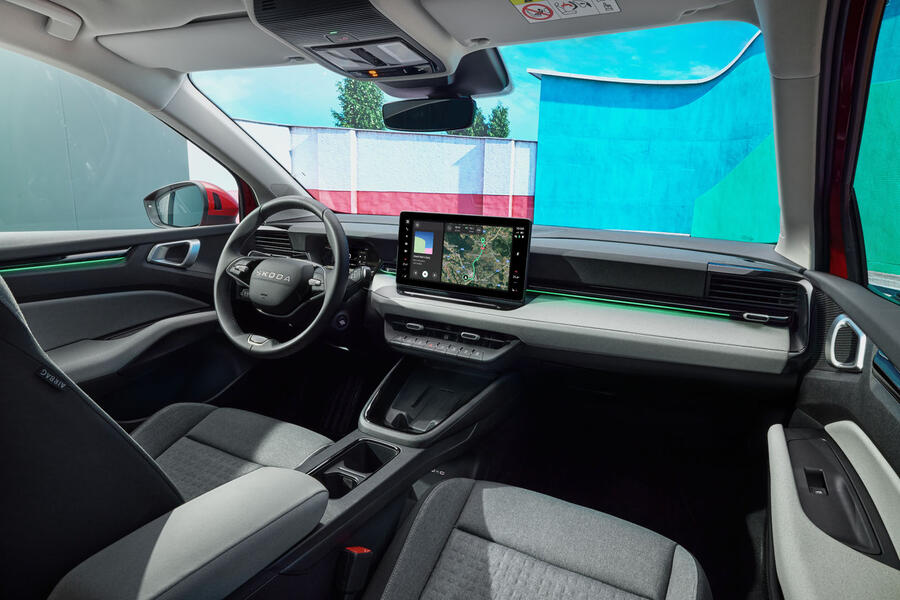
Boot space measures 475 litres and under the bonnet there is a further 25-litre compartment, meant for stowing the charging cable.
Two versions of the Epiq will be available in the UK: the entry-level Epiq 40 gets a 133bhp motor and a 37kWh lithium-iron-phosphate battery that yields a range of around 190 miles.
The Epiq 55, priced from £27,700, gets 208bhp, a more energy-dense 52kWh nickel-manganese-cobalt battery and a range of 272 miles.
The 55 has a peak charging speed of 105kW, just above the 40's 90kW, though Skoda claims both variants are capable of a 10-80% recharge in less than 25 minutes.
The Epiq's top-end range places it in the middle of its key rivals: the Renault 4 delivers 250 miles while the long-range Kia EV2 manages 281 miles, thanks to its larger, 61kWh battery.
The Epiq's battery can also be used to power external devices - including returning energy to the electrical grid. In addition, the car gets a 'B' gear that ramps up the strength of the regenerative braking for one-pedal driving.
Deliveries of the Epiq will begin early next year.

BMW M3 Resurrection Challenges Total Loss Logic as Enthusiast Rebuilds Wreck with Factory Chassis...

Classic Cars and the Great Wealth Transfer: Why $570 Billion in Automotive Heritage Risks...

Hybrid Powertrains Position Skoda Octavia at the Center of Volkswagen Group’s Multi-Technology Strategy
 Volkswagen Golf and T-Roc will share their new powertrain with Czech family hatchback and estate
The Skoda Octavia will gain hybrid power as the Czech brand looks to offer buyers of the family hatchback and estate a full gamut of powertrain options.
“What you can expect for the Octavia is that you will get pure-hybrid and plug-in hybrid solutions in future,” technical chief Johannes Neft told Autocar.
The full-hybrid powertrian is expected to be that which will make its debut in the technically related Volkswagen Golf and T-Roc later this year.
This matches the Volkswagen Group’s familiar 1.5-litre turbo petrol four and seven-speed dual-clutch automatic gearbox with an electric motor and a 1.6kWh battery.
The motor is used to drive the wheels at slower speeds, with the engine kicking in under higher loads.
In the Golf and T-Roc, the system will offer a combined output of either 136bhp or 170bhp. Both configurations are expected to be available in the Octavia.
A new plug-in hybrid Octavia, meanwhile, is expected to use the same powertrain as the current Golf eHybrid.
This uses the same 1.5-litre engine but a six-speed dual-clutch 'box, while its battery is upsized to 19.7kWh to offer an electric-only range of 88 miles.
Although EV range is likely to be slightly shorter in the larger Octavia, such a figure would place the model in the competitive 7% benefit-in-kind tax band for company car users.
Diesel is also expected to remain in the Octavia line-up for the foreseeable future, as Neft committed to offering a “complete range of combustion versions”.
An electric Octavia was previewed by the Vision O concept at last year’s Munich motor show, but this isn't due to manifest as a production car until the turn of the decade.
Skoda CEO Klaus Zellmer previously told Autocar that the firm “wanted to keep all avenues open in terms of what is feasible” in offering an ICE Octavia in the long term.

Sedans Reemerge as an Antidote to SUV Fatigue, Driven by Affordability, Efficiency, and a...

AMG GT63 Depreciation and the Value Proposition of V8 Performance Over New Compact Alternatives


Mercedes-AMG GT 4-Door Coupé Redefines Electric Performance with Axial-Flux Powertrain and Immersive Driver Engagement...
 Electric GT 4-Door Coupé majors on driver engagement with mega power, engine note and simulated gearbox
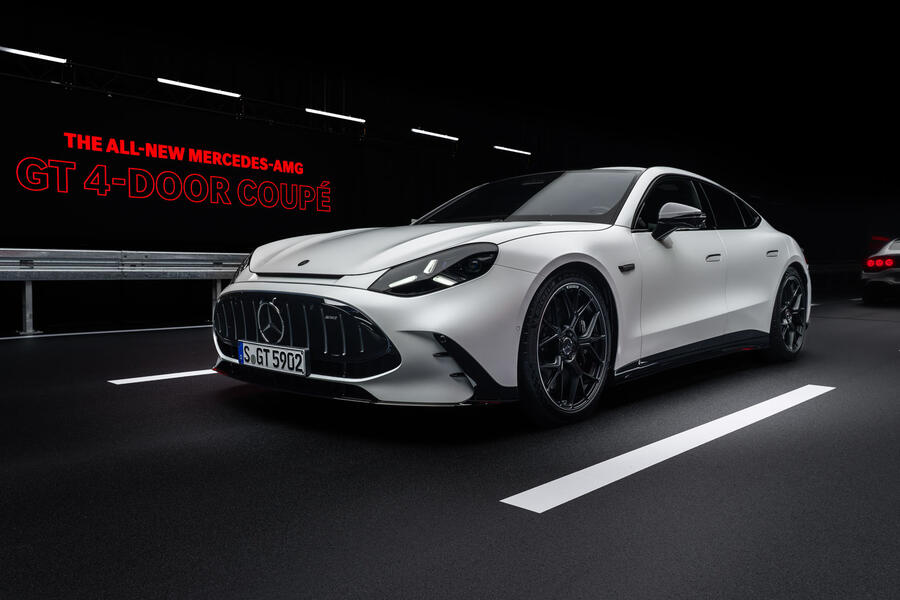
The new Mercedes-AMG GT 4-Door Coupé is the performance brand's first dedicated EV – and its most powerful model to date.
Due on sale in the UK in September from around £150,000, the new electric performance saloon line-up will be led by the GT 63, which can sprint from 0-62mph in just 2.4sec and hit a top speed of 186mph, thanks to 1169bhp and 1475lb ft of torque.
What's it like to drive? Find out here
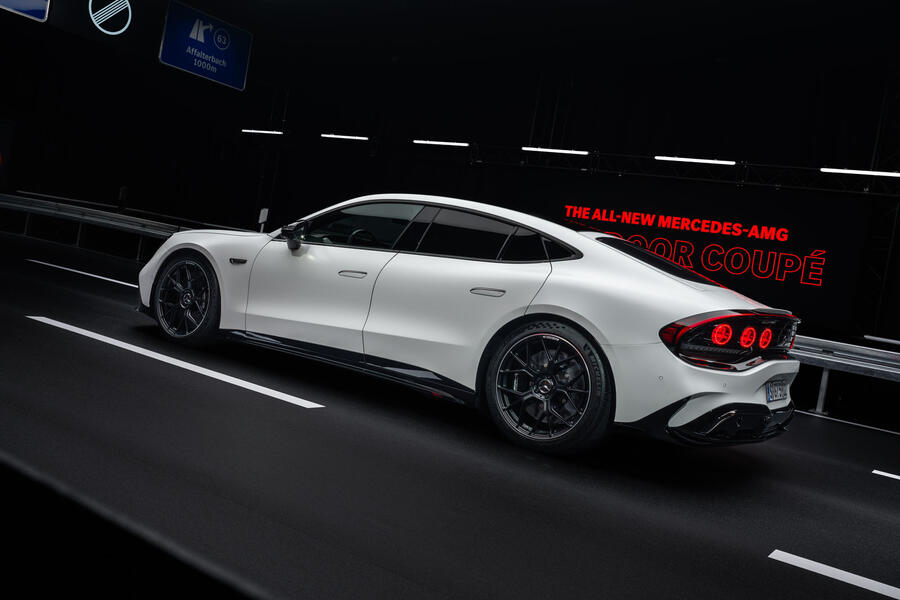
The low-slung Porsche Taycan and Lotus Emeya rival was previewed by two concepts, 2022's Vision AMG and 2025's GT XX, and its design has clearly been evolved from those.
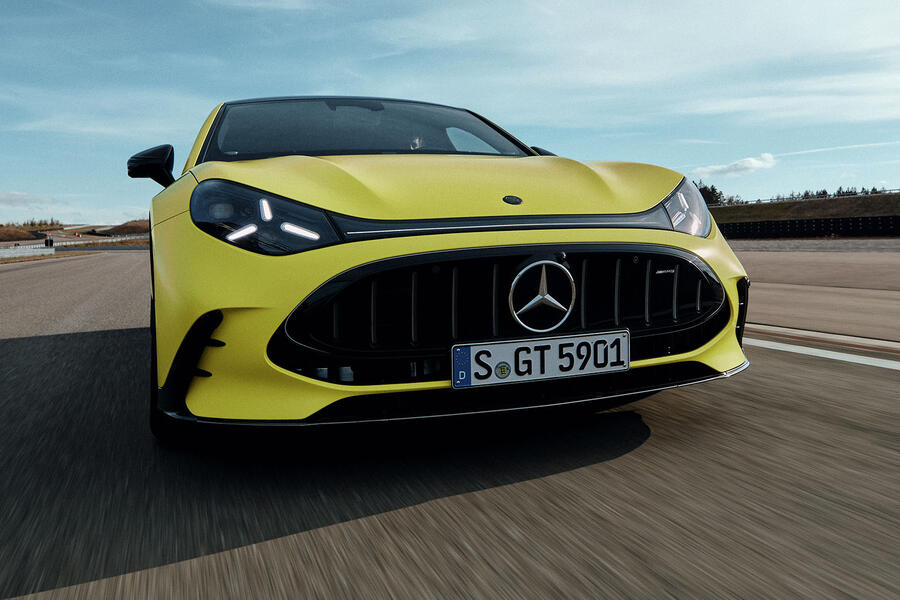
It's the first model to be underpinned by the new electric AMG.EA platform, also set to be adopted by a super-SUV currently in development at the firm's Affalterbach HQ.
At 5.09m long, 1.96m wide and 1.41m tall with a 3.0m wheelbase, the new GT 4-Door Coupé is slightly longer and taller but narrower than the Taycan.
Kerb weight is quoted at 2460kg, although AMG claims the low mounting position and compact electric motors combine for a significantly lower centre of gravity than the original petrol-engined GT 4-Door Coupé of 2018 had.
Next-gen motors
The new car's powertrain features three axial-flux motors developed with Yasa, the Oxford-based motor specialist owned by Mercedes-Benz, alongside the AMG High Performance Powertrain division in Brixworth. They are manufactured at a dedicated facility in Berlin.
Their adoption represents a major departure from the radial-flux motors used in existing Mercedes EVs. Instead of electromagnetic flow running perpendicular to the motor shaft, it runs parallel, allowing a flatter, disc-like construction.
This allows for more compact packaging. Each rear motor measures around 80mm wide, while the front motor is slightly larger, at around 90mm wide.
Two motors are mounted within the car's rear axle assembly and one at the front, providing fully variable four-wheel drive with torque vectoring across the rear axle.
The rear motors rev to 13,000rpm, while the front motor is capable of extending to 15,000rpm.
The two rear motors are paired with a compact single-speed planetary gearbox, while silicon-carbide inverters manage energy flow under high load.
The front motor operates as a boost unit, engaging only when required and disconnecting under lighter loads to reduce drag.
In the entry-level GT 55, the trio combine to produce 816bhp and 1328lb ft, while the GT 63 raises output to 1169bhp and 1475lb ft. That's significantly more than direct rivals such as the Porsche Taycan Turbo GT (1093bhp and 9881b ft) and Lotus Emeya 900 Sport (905bhp and 726lb ft).
It also eclipses the punchiest version of the original GT 4-Door Coupé, the GT 63 S E Performance, which delivered 831bhp and 1084lb ft from a V8-engined plug-in hybrid powertrain.
Beyond peak figures, AMG has emphasised sustained output, claiming the GT 63 delivers maximum power for up to 63 seconds without thermal derating and never has less than 721bhp to use.
Energy is supplied by a newly developed 106kWh battery pack that features directly cooled cylindrical cells, each individually surrounded by a dielectric coolant to maintain stable operating temperatures.
This gives a range of up to 432 miles (in the car's most efficient GT 55 form) – 10 more than the Taycan with Performance Battery Plus.
Its 800V electrical system supports peak DC rapid-charging rates of more than 600kW, meaning around 286 miles of range can be added in 10 minutes.
The production model follows the GT XX concept, which completed almost 25,000 miles of running at the Nardò test track in Italy, setting multiple EV endurance and speed records in the process.
Driver engagement in an EV
AMG claims to have addressed the issue of driver engagement in EVs via a series of innovations.
Its new AMGForce system introduces a synthesised driving sound derived from the original GT 4-Door Coupé's V8, paired with haptic feedback through the seat structure.
There's also a simulated gearbox that's designed to replicate the characteristic of an AMG engine.
Control of the powertrain and chassis is handled by the AMG Race Engineer system, which links motor, braking and suspension functions.
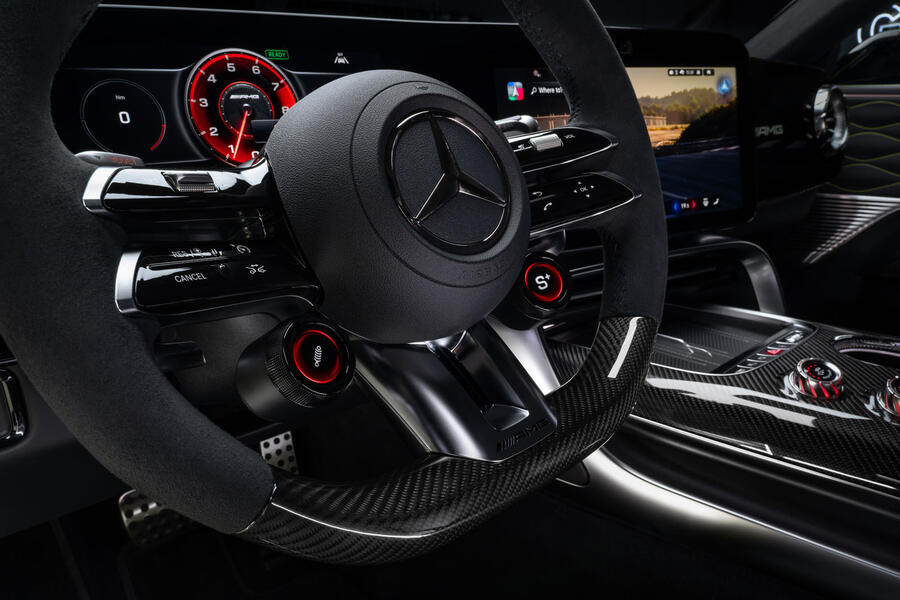
Three rotary controllers on the centre console allow adjustment of the car's response, agility and traction by altering throttle behaviour, yaw characteristics and slip thresholds across a total of 729 settings.
As with other recent AMG models, the chassis adopts an AMG Active Ride Control suspension system combining three-chamber air springs with semi-active roll stabilisation.
Hydraulically interconnected dampers replace conventional anti-roll bars, continuously varying the roll stiffness within parameters set by the five drive modes, which include Race and Drift.
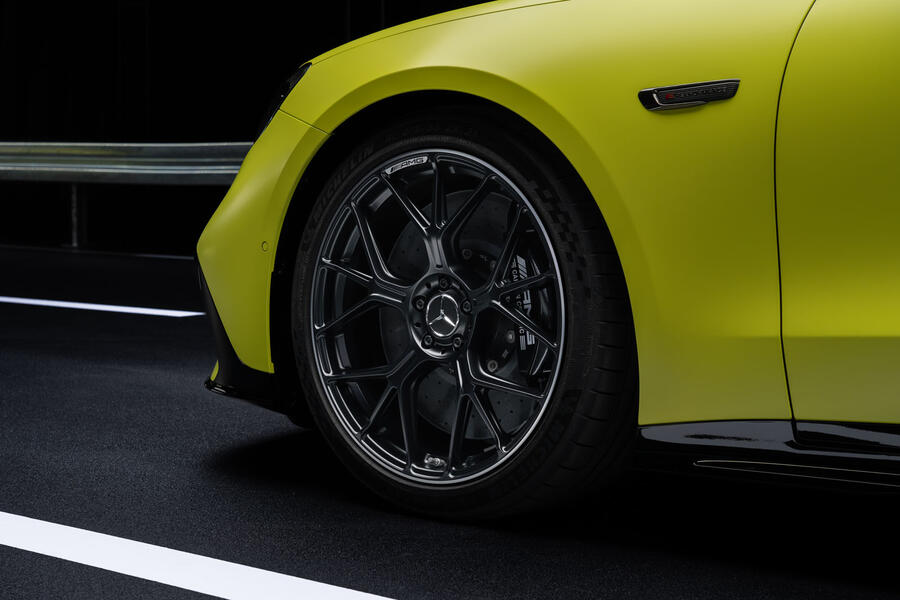
The four-link front and five-link rear suspension arrangements use forged aluminium components to reduce unsprung mass.
Meanwhile, rear-axle steering of up to six degrees aims to balance between low-speed agility and high-speed stability.
Braking is handled by carbon-ceramic discs at the front and steel discs at the rear, integrated with a energy recuperation system that can be adjusted via steering wheel paddles.
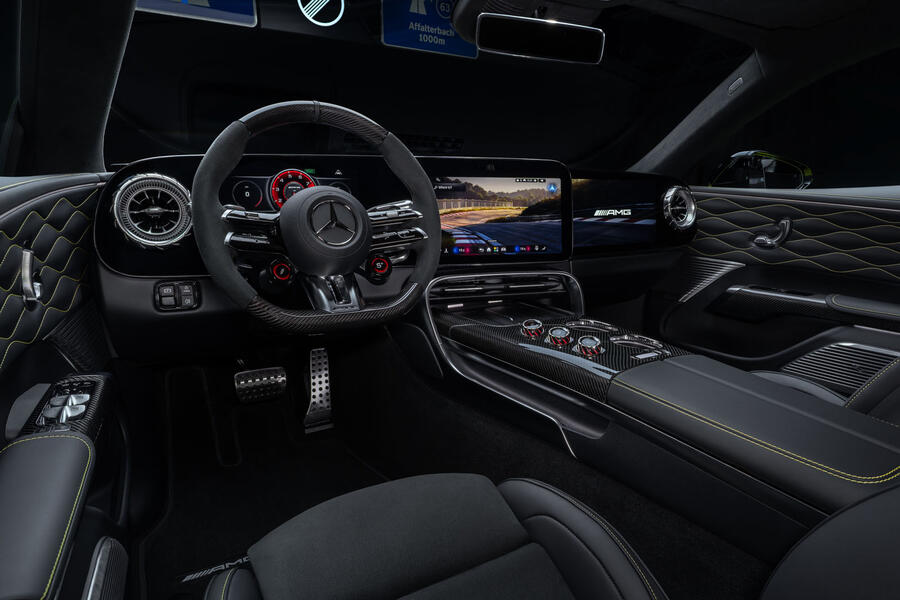
The cabin is covered in carbonfibre, metal and leather dominated by a 10.2in digital instrument cluster, a 14.0in infotainment touchscreen and a 14.0in passenger touchscreen.
Production of the new GT 4-Door Coupé will start in Sindelfingen this July.

CRX Revival as Electric Hatch Reveals the Missed Opportunity in Honda’s Modern Lineup