

Honda’s China Strategy Shifts to Localized EV Development as Sales Collapse Spurs Urgent Overhaul
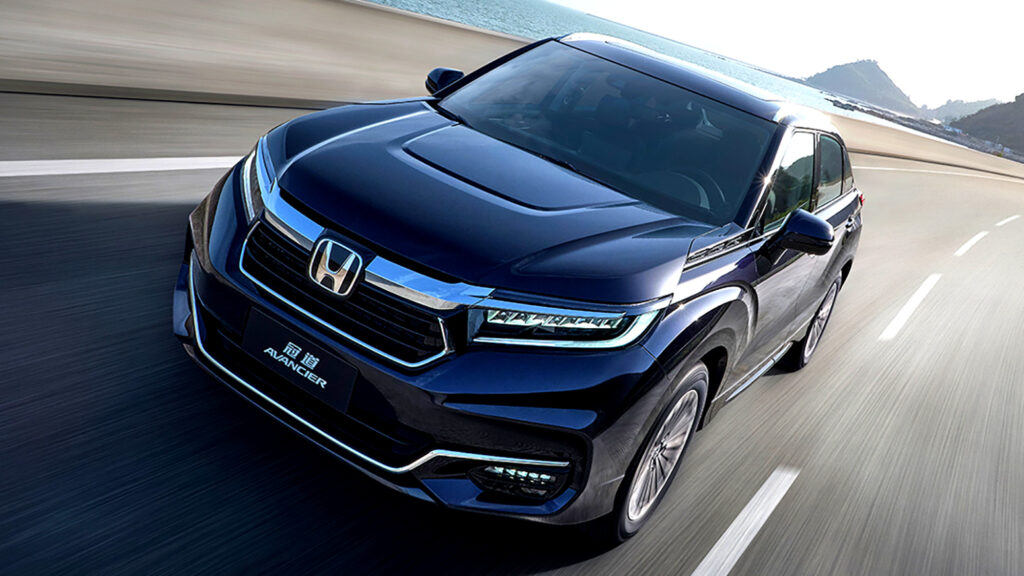

Toyota Sequoia’s Fuel Consumption Problem Undermines Its Appeal

Skoda Peaq Launch Event Offers Early Access to Next-Generation Electric Models in the UK

Be among the first in the UK to see the all-new Skoda Peaq up close...Sign up today for your chance to attend our exclusive event on 2 September
Want to be among the first in the UK to experience Skoda's next generation of electric cars?
As part of Autocar's ongoing partnership with Skoda, we're inviting 10 lucky readers to an exclusive one-day event in the heart of the Cotswolds on 2 September. You'll be among the first to see the all-new Epiq city car and seven-seat Peaq SUV before they arrive in UK showrooms, with Skoda experts on hand to guide you through both cars in detail. You'll also get the opportunity to drive the award-winning Elroq and Enyaq, as well as their hot vRS siblings.
Food and drinks will be provided throughout the day. Attendees must be aged 18 or over and hold a full driving licence. The event will be filmed, so you'll also need to be comfortable sharing your thoughts on camera.
We can’t wait to see you there.

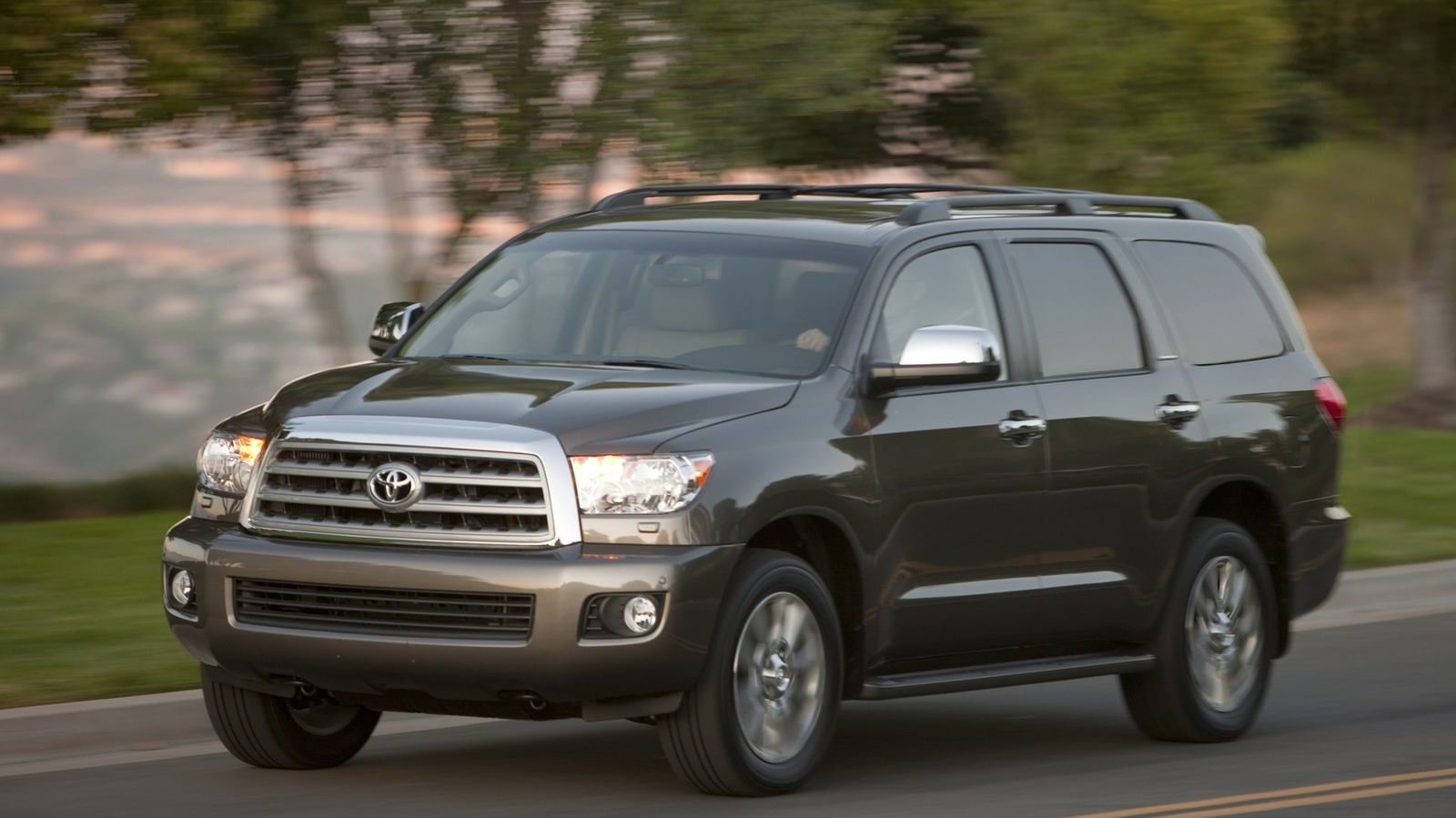
Ram Performance Trucks Reimagined as Fox Factory Concepts Redefine Aftermarket Potential
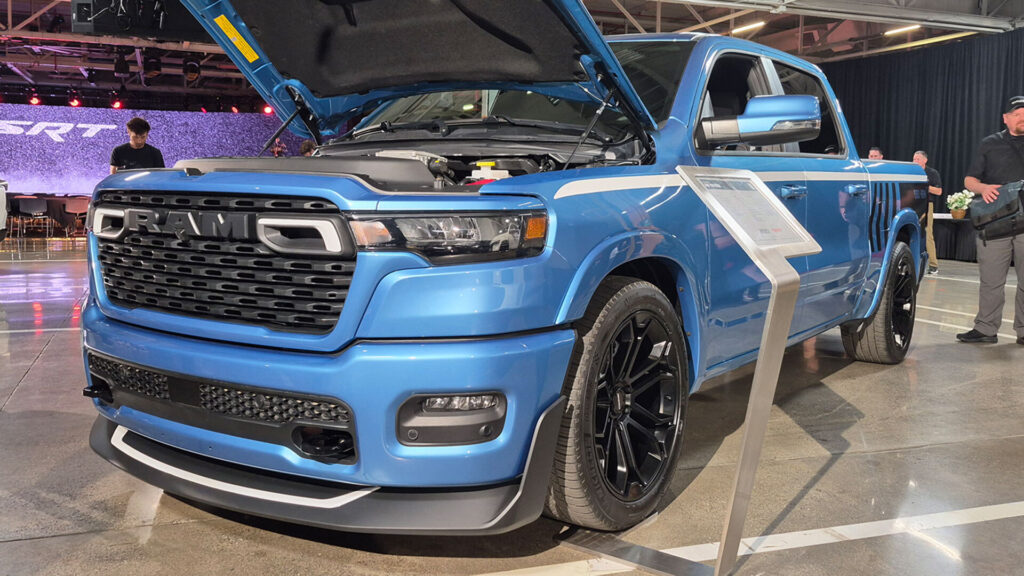

Mazda 3 Sales Surge Highlights Shifting Consumer Preferences Amid Rising Gas Prices

Kia Dealership Trust Erodes After Customer Exposes Parts Swapping Scandal

Multipla and the Origins of the Mini MPV: Innovation, Imitation, and the Quest for...

Small but mighty Multipla could seat sixThe 600 Multipla showed just what was possible in a small car, but was it actually the first MPV?
Manufacturers often make dubious claims in their marketing. For instance, in finally publishing UK pricing for the Topolino microcar, Fiat called it "a fresh approach to urban mobility", despite it being nothing more than a restyled Citroën from six years ago.
The Italians were, however, justified in claiming to have made the "original people mover" when revealing the four-seat Multiplina. Well, at least if you add the prefix 'miniature', given buses and VW Type 2s existed long before 1956.
We were really enthused by this innovative "surprise package from Turin", reporting: "The little multi-purpose vehicle [MPV] is based on the 600 and named the Multipla. Its appearance has received a mixed reception, but a full six-seater on a [2000mm] wheelbase, the same as a standard saloon, cannot be made to look sleek and low. It is trim and functional without undue austerity, and as an engineering feat is quite breathtaking."
We felt it was "the nearest approach yet in the world of motoring to putting a quart into a pint pot", as "scarcely a cubic inch of space is wasted, and it carries up to six people in very reasonable comfort, or an equivalent quantity of luggage or goods".
Our road testers marvelled at its unique construction as it landed in Britain, priced at £799 (£17k today) a year later. "It may be described as a small station wagon in which, because the engine is at the rear, the loading doors have been placed at the sides. On the other hand, in the absence of a power unit in the nose, the front seats can be located over the front wheels, leaving the maximum space behind them for seating or goods as desired. The floor area is large, low and uninterrupted by tunnels or frame members, and is a part of the platform frame."

Just make sure you don't crash...
One early adopter, M Ogle, sent us a love letter: "I've just returned from a fortnight in France. My wife and I slept in the car on air mattresses, and even ate in it on cold or rainy days, using a folding table which can be set up inside. Passers-by were quite astonished, as well they might be: I doubt if there is another car in the world so adaptable.
"Performance is very adequate: the car holds 45-50mph indefinitely. The overall fuel consumption has been a shade better than 47mpg on average, covering all kinds of load from two up to five adults and two children (each with a proper seat and no sardine-in-tin feeling). Visibility is wonderful because of windows all round. It is easy for elderly people to get in and out. The four seats at the rear fold flat into the floor in a matter of seconds. The rear engine could not be easier to get at, nor the spare wheel housed in front of the passenger - it does not get in the way of even a tall person's knees."
No wonder almost a quarter of a million Multiplas found homes over the next decade.
Was it really the first car of its type, though? Certainly it was the first to be put into production, but we had seen similar prototypes earlier.
We ignored it in our 1939 Berlin motor show report, rightly focusing on the seminal Volkswagen instead, but there are certainly hints of MPV in Karl Schlör's 'egg' or 'woodlouse' car, which seated seven within an ultra-streamlined, 4.3m-long body atop Mercedes' 170H saloon chassis.
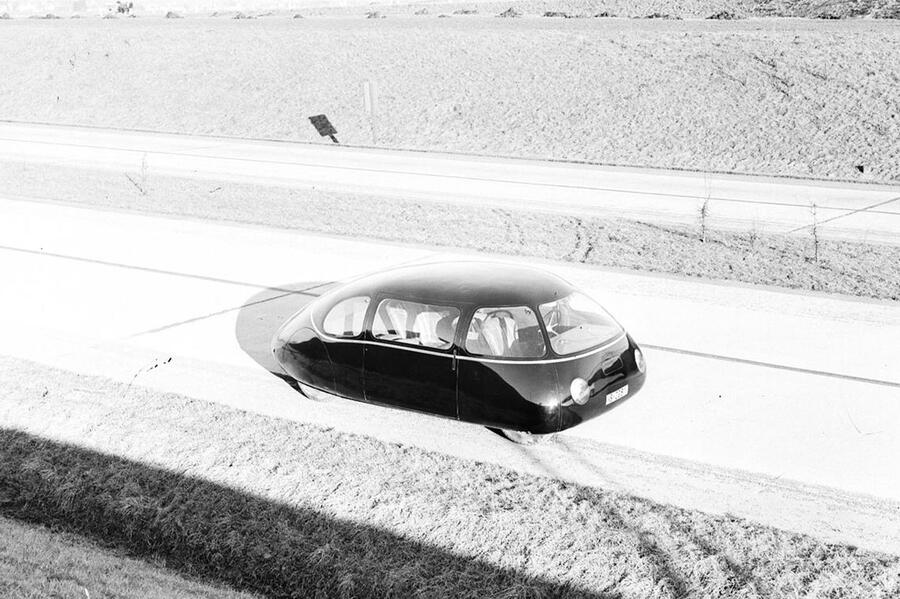
Then, in late 1945, we described one created by American aerospace engineer William Stout, under the amusing title: "This car may seem strange, but it has its advantages".
"The Stout Scarab has no chassis proper," we marvelled. "The body is formed structurally, as an aeroplane fuselage. The seven-passenger car is rigid and light, at less than [1360kg]. Seats can be arranged at will and even converted into Davenport-type couches. There is a table which can be set up when desired for bridge or luncheon, and the entire interior is suggestive of a small yacht rather than of a car, yet the overall length is no greater than that of a medium-size car of ordinary design."
It's interesting to note that Stout's mantra was 'Simplificate - and add more lightness', several years before virtually the same was adopted by Lotus founder Colin Chapman.
Our prototype drive revealed "the steering is light and it flits about and manoeuvres in small compass. With its Ford V8 it is fast and comfortable, too. But whether it will be made in quantity no one can say at present."
It wasn't, because people thought it looked weird and it cost a grand.

Mahindra Scorpio-N Redefines Value With Major Interior Upgrades and Tech-Focused Refresh for 2026

Race Car Drivers Whose Stories Demand the Hollywood Spotlight


Ford Fathom Redefines Affordable EV Pickups With F1-Inspired Aerodynamics and Expanded Interior Space
 Landmark pick-up truck moves a step closer to US launch – and will offer more space than a Toyota RAV4
Ford's moonshot electric pick-up will be called the Fathom and be priced from $28,350 (£21,000) when launched in the US early next year, the company has confirmed.
The moniker references the double meaning of a 'fathom': the standard length of a pair of outstretched arms and the discovery of meaning.
Ford claims the Fathom "welcomes you in with an expansive interior and technology that adapts on the fly".
It will be the first model built on Ford's new Formula 1-influenced affordable EV platform and, as previously reported by Autocar, it could eventually be offered in the UK to complement the company's revamped European car line-up.
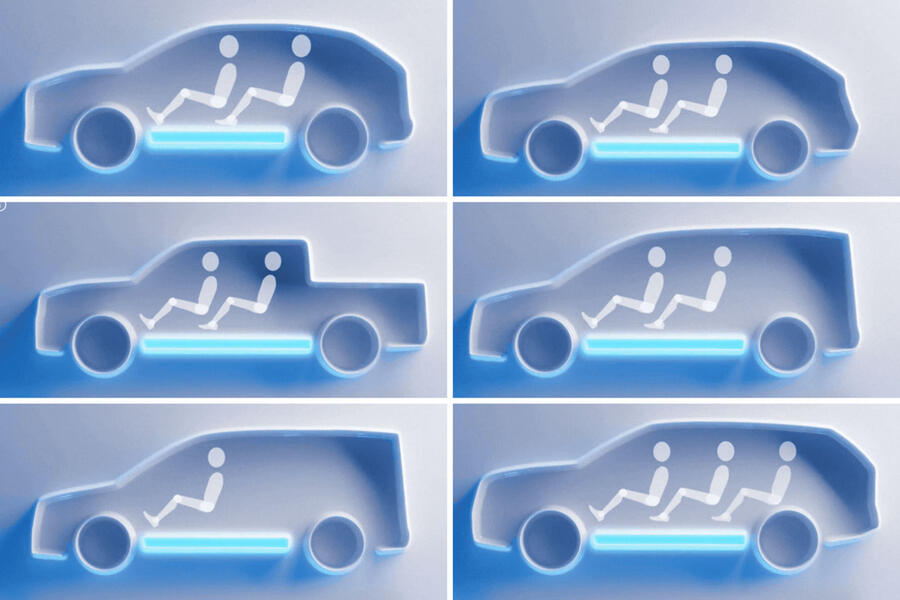
The new platform, called Universal EV, features "cooler engineering than a hypercar", according to Ford CEO Jim Farley. It has been developed by a 'skunkworks' project in California set up by Ford to work semi-independently. It will eventually spawn a range of 'global' vehicles.
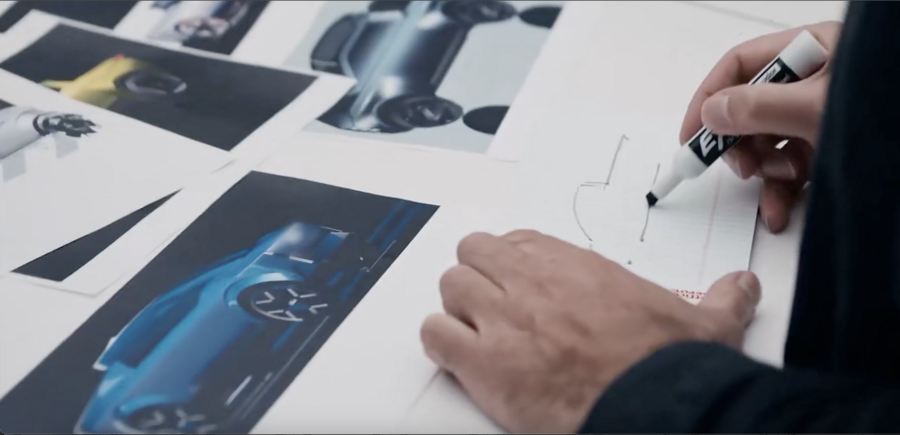
A teaser video displaying early sketches of the Fathom shows how Ford is rethinking its approach to design and engineering, with dramatically different styling to its existing combustion-engined trucks.
Ford hasn't yet confirmed whether Universal EV products will be offered in Europe, but it could be used for EVs arriving after the company's Renault-platformed small hatchback and crossover, due in 2028.
Since the project is largely a clean-sheet design, Ford has recruited staff from outside the mainstream car industry – with a focus on motorsport, given the belief that lessons on efficiency and aerodynamics learned in competition can give it an edge over Chinese rivals.
Speaking exclusively to Autocar, Farley said: "One of the biggest gifts that Formula 1 ever gave Ford was our skunkworks team in California. Almost every one of them either comes from F1 or is a huge F1 fan."
Farley added that the bulk of the skunkworks staff "have never worked in the auto industry before" but "we picked them for their aerodynamic knowledge" - although he acknowledged that had been a challenge.
"It turns out that finding people who love motorsport who want to 'build a buffet in Vegas' – a $30,000 EV that's nice-looking and fun to drive - is hard," he said.
"A lot of people want to stay in F1, and the challenge is picking people from motorsport who can actually design a breakthrough product.
"But when people see what we did with this skunkworks, they will say: 'Wow, that's cooler engineering than a hypercar.' They will be shocked."
Farley said the extreme aerodynamic focus of modern F1 cars was a key attraction in recruiting people for the skunkworks.
"Every bit of aero we can improve will help us reduce the size of the battery, and F1 has the best aero people in the world," Farley said.
As a result, Ford claims the Fathom is 15% more aerodynamically efficient than any pick-up currently on sale in the US.
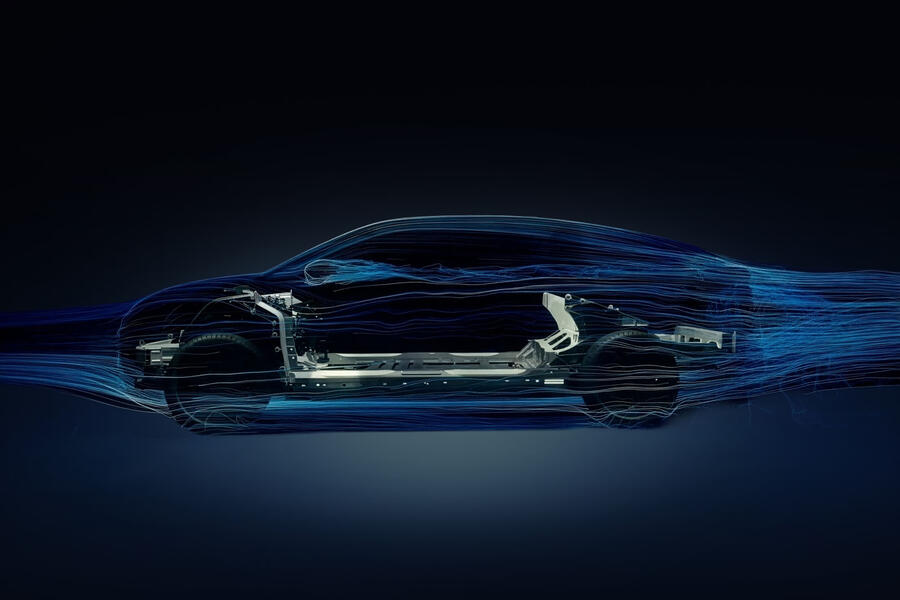
Farley said the intense focus on aerodynamics and powertrain efficiency would enable Universal EV models to use smaller batteries, in turn keeping weight and pricing down and improving packaging options.
Indeed, Ford claims the Fathom has more passenger space than the Toyota RAV4 SUV.
Farley highlighted this as a particular area where Ford can outperform Chinese rivals, some of which he said "have really cheap batteries, and that's their problem".
He continued: "Their control systems – the efficiency of the motors, inverters and gearbox and how they all work together with the software - aren't that efficient, so they're carrying around a bunch of battery they don't need to.
"We've found 20-30% gains in efficiency, but we had to get people over from motorsport to do it."
Universal EV models will also make extensive use of megacasting, meaning whole segments of the body are cast as single parts, to help reduce the complexity and further lower costs.
The first vehicles based on the platform will be built at a new US factory in Kentucky.