

Festival of the Unexceptional Redefines Classic Car Culture Through Ordinary Motoring and Personal Histories
 Well-used Volkswagen Polo was the big winner from the annual celebration of brilliantly mundane motors
Find me another car show, if you can, where the victorious car is 25 years old, has done 176,000 miles, was its owner’s wedding car and has been his daily driver ever since he bought it 20 years ago.
The car I’m talking about is a 999cc, 49bhp Volkswagen Polo C owned by Gordon McNeill, winner at the 2026 Hagerty Festival of the Unexceptional, held last weekend at Grimsthorpe Castle in Lincolnshire.
Not only has McNeill only ever had this one car, but he and his wife swear they have no plans ever to buy another.
So far the Polo has been to the Nürburgring, has lapped Silverstone, has run at Santa Pod and recently returned from a long holiday in Spain.
In 20 years and 140,000 miles, it has had one valve job and one sill replacement, the second repair so thoroughly botched by a 'specialist' that McNeill himself took to studying car body repair techniques so as to manage the restoration himself.
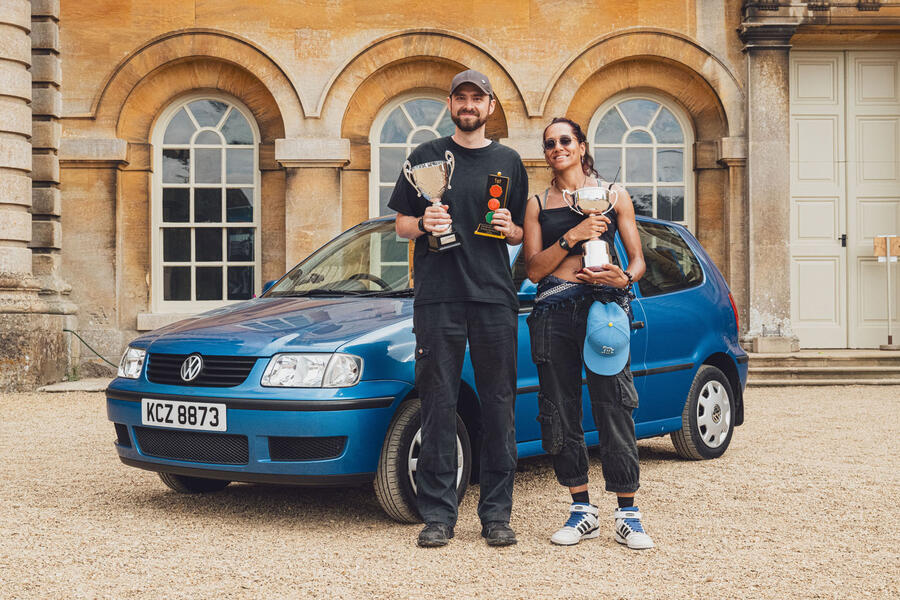
It's a dozen years since a bunch of inspired people came up with the idea for an entirely different kind of car show designed to embrace mundane, everyday and largely forgotten cars, called Festival of the Unexceptional.
In its earliest days there was a big tongue-in-cheek aspect to the whole deal. The eligible cars, which had to be made in a rolling 30-year zone that began 25 years earlier (and thus advanced) by one every year, were deemed to have very little value and largely to be figures of fun.
But in 12 years a remarkable thing has happened: the whole thing has become gradually more serious and worthwhile. I’ve witnessed the progression from the inside as a member of the judging panel of eight to 12 people.
There’s still a certain levity attached to the whole exercise (nobody is trying to pretend that a 1995 Austin Maestro about to join the ranks of the great cars), but it has become clear that many of the eligible cars last and function much better than their ancestors used to, and that for many owners they have an emotional connection far stronger than any casually bought classic car. McNeill is a prime example.
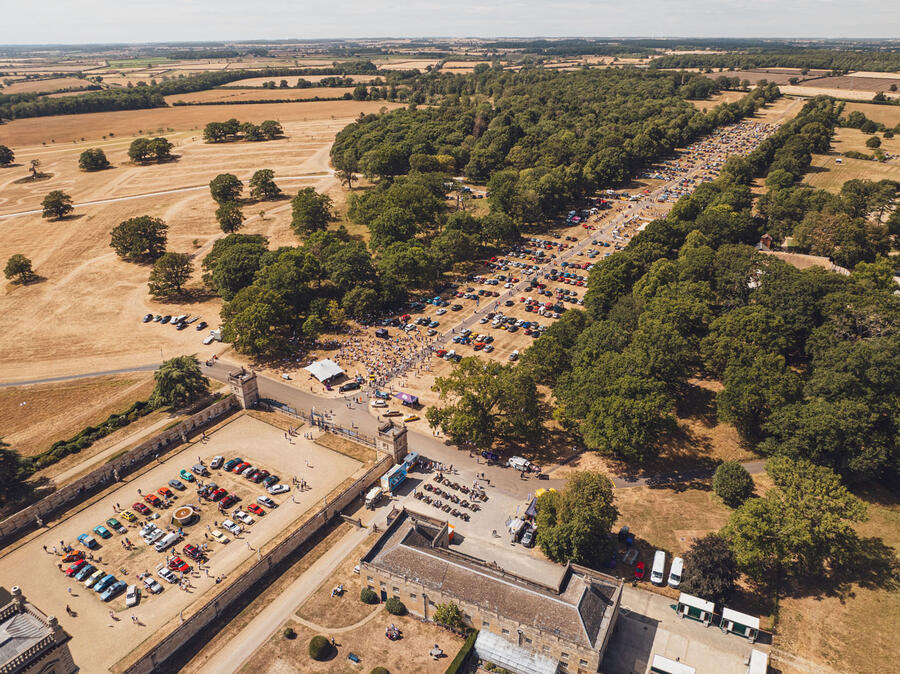
This year’s event was by every measure the best yet. The weather was perfect for the 5000-plus people who arrived in more than 2000 cars – the biggest number ever, filling the long castle front avenue to capacity. The quality and relevance of many casual arrivals matched that of the 40 pre-selected finalists, parked as usual on the inner castle lawn.
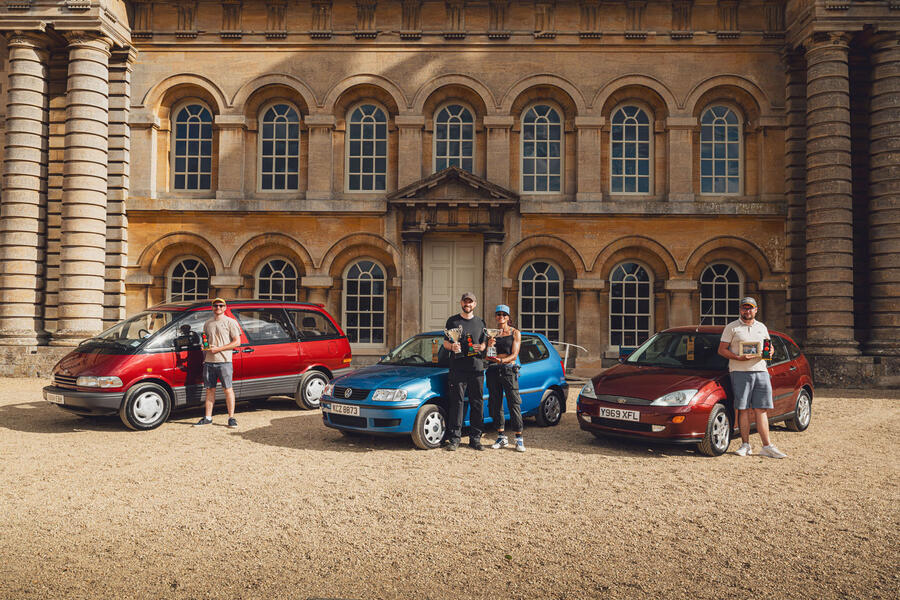
From these a first, second and third prize winner were selected, as well as a bunch of 'special mentions'. Second place went to a beautifully preserved yet relatively high-mileage Toyota Previa; third to a Ford Focus whose young owner had conserved the car in honour of his departed grandfather, the original owner.
More than ever, the joy of ordinary car ownership was enormously evident. Many owners were in their 20s and 30s, attracted by a competition that involved cars they remembered from childhood and could afford to buy and mend.
The role of elderly drivers in preserving these cars of yesterday was also recognised: many an entrant brought a car stored for a decade after its owner had stopped driving and simply garaged the car. The condition of many cars was near-faultless, as was the research into their histories.
Remarkable stories surrounded a huge proportion of the cars. Among standouts was a battered, basic-spec Ford Sierra 1.6 whose owner had two others but preferred this one because of the colourful life it had led: it had been stolen twice and broken into regularly as well, although all the thieves had only ever taken a screwdriver.
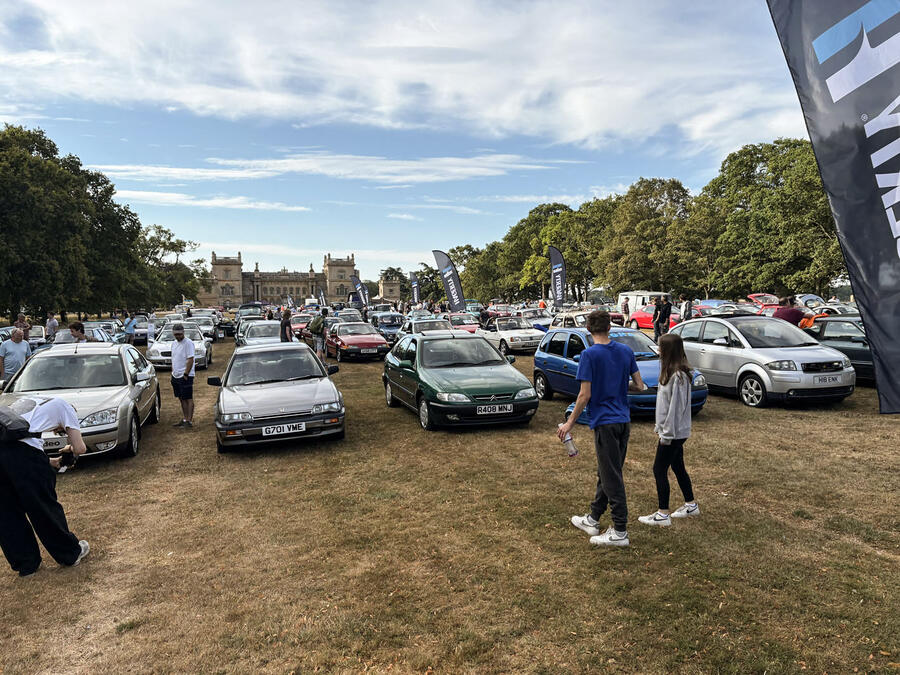
Another entrant who brought a faultless, rare-in-Britain 2000 Kia Clarus from the Netherlands, found a new way of getting the judges’ attention by wearing a specially made T-shirt with a pattern echoing that of the car's flamboyant velour upholstery.
From start to finish this was a joyous event, remarkable for the youth of its entrants and the fact that the vast majority of those who came to Grimsthorpe 'got' the rules of the competition and did their best to bring an appropriate car.
Britain abounds with car meetings and competitions at this time of the year, but for sheer, unalloyed car love, I would argue that Festival of the Unexceptional beats them all.

Insider Trading Charges Test Limits of Corporate Secrecy in VW-Rivian Joint Venture Deal

Forgotten Cars and Enduring Obsessions Why Certain Models Remain Unforgettable

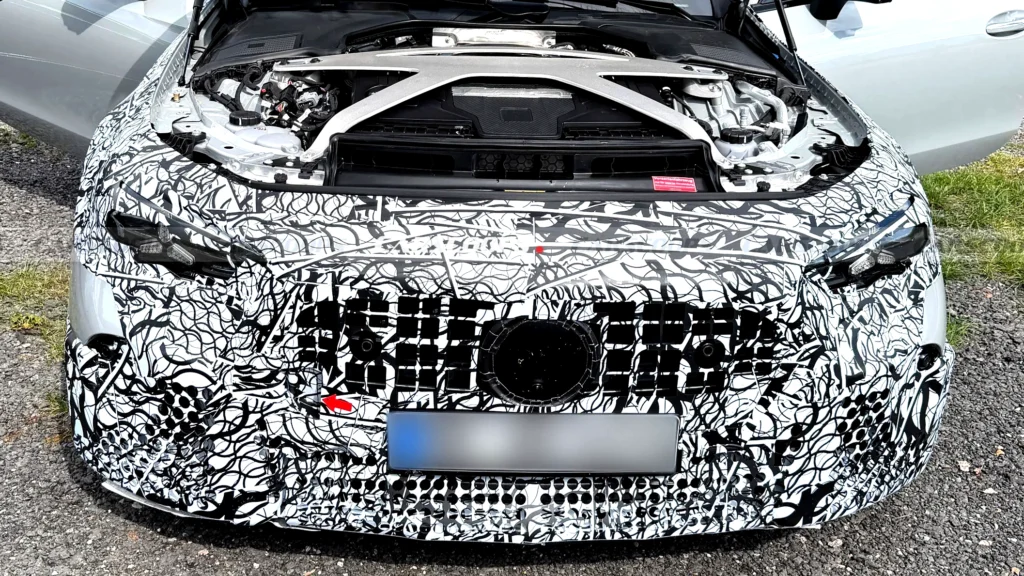
Mercedes G-Class Cabriolet Returns to Reassert Luxury Off-Road Heritage
 New images show drop-top G-Class with its roof down as its launch date approaches
Mercedes-Benz is reviving the G-Class Cabriolet almost a decade after the last open-top version of the hardcore off-roader was phased out.
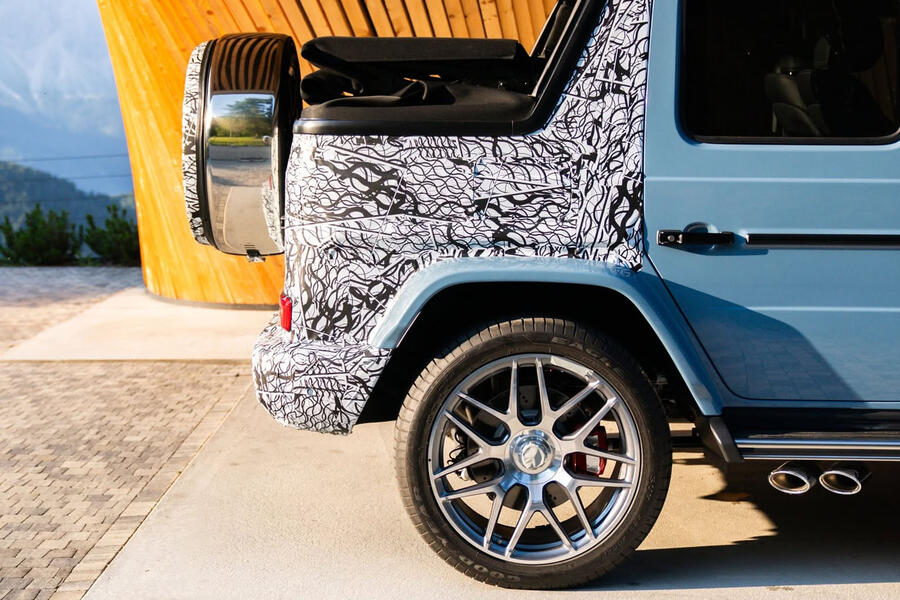
New images show the new Cabriolet with its roof down and the folded fabric top occupying the space where the boot is on the regular G-Class.
Technical details have yet to be disclosed, though the new images are of an AMG derivative with side-exit exhausts. The regular-bodied AMG G63 is powered by a 577bhp twin-turbocharged petrol V8.
No launch date has been revealed yet, but given the drop-top car is already testing and is a variant of a model already on sale, it is likely to arrive in the coming months.
The new G-Class Cabriolet is expected to carry a hefty premium over current models, which start at more than £130,000.
Cabriolets have long been part of the G-Class line-up. The first, a two-door short-wheelbase model, was introduced as part of the original line-up in 1979 and was produced up until 2013.
Later came the ultra-luxury four-door G-Class Maybach G650 Landaulet, introduced in 2017 with a 621bhp twin-turbocharged 6.0-litre V12 petrol engine and based on the high-riding G63 4x4². Produced in a limited run of just 99 units, it combined a front hard top with a rear folding roof section, individual rear seats set back in the chassis and a price close to £600,000 in the UK.

Mercedes-AMG V8 Revival Signals Strategic Shift from Downsizing to Performance Heritage

Audi’s Four-Decade Transformation: How Technical Innovation and Design Excellence Defined a Modern Automotive Icon
 A journey into the finest from Ingolstadt
From the tail-end of 1964 to Christmas 2004 were Audi’s glory days.
The rise of an unpromising relaunch that became a byword for German technical breakthroughs, stringent quality, safety-backed performance and design elegance.
Arguably the German marque represents the epitome of the internal-combustion engine epoch. Audi’s back-catalogue bulges with brilliance but we think these are the pick of its greatest-ever 40 years:
Audi Super 90 (1966)
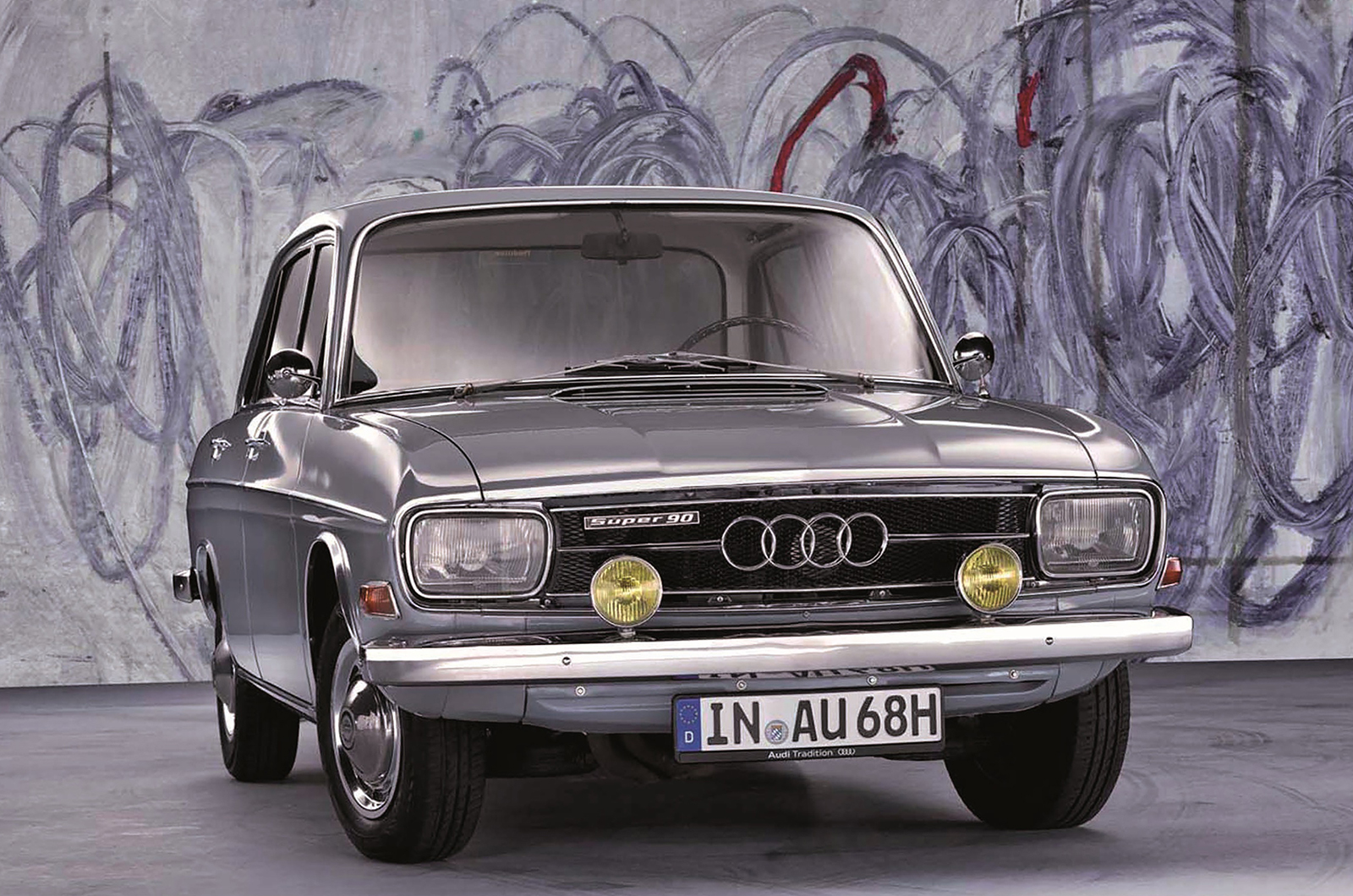
After ownership of Auto Union switched from Mercedes-Benz to Volkswagen in 1964, the days of the smoky old DKW range were numbered. The front-wheel drive DKW F102 model was redesigned with four-stroke (instead of two-stroke) engines and a slow haul upmarket began with a rebrand as Audi – a name last see on a car in 1939. The Super 90 was the best of the F103 series, with a 1.8-litre twin-choke carb engine giving 89bhp so that it could hit 100mph.
Audi 100 (1968)
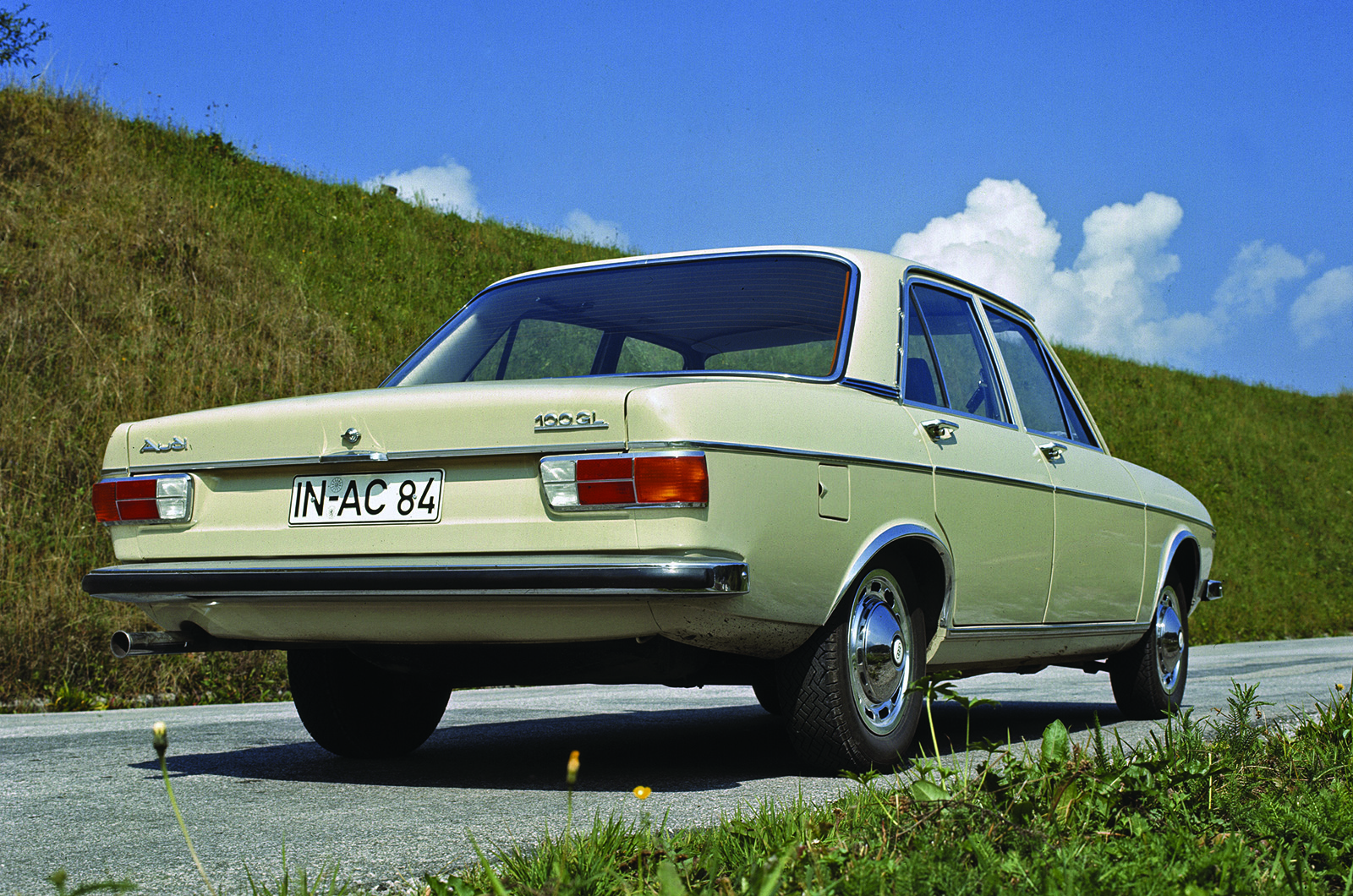
The first all-Audi Audi in 1968, carrying over some of the old drivetrain (with new strut front suspension), but in a handsome new executive saloon body. The roomy and comfortable cabin and the exacting build quality were impressive, and Audi began to pick off buyers who might otherwise have chosen a Rover 2000 or Citroen DS. Fuel-injection for the largest 1.9-litre engine arrived in 1975.
Audi 100 Coupé S (1969)
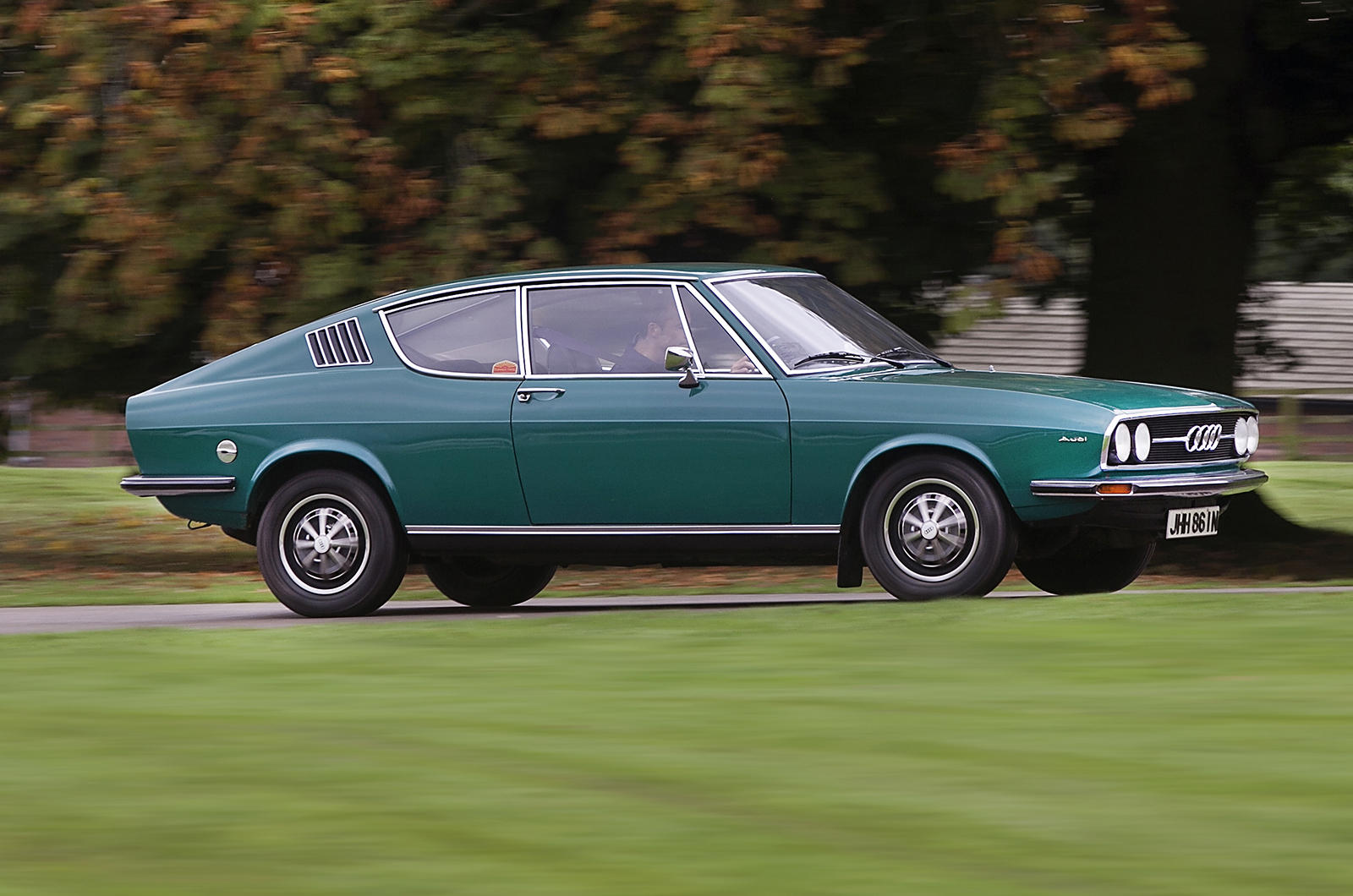
Media verdicts at the time that this four-seater fastback had something of the baby-Aston Martin to it must have been music to Audi’s ears. Under the bonnet was a 115bhp, fuel-injected engine, while vented disc brakes hid behind wider wheels. This good looker with a spacious cockpit would also remain quite rare, with just over 30,000 examples sold in seven years.
Audi 50 (1974)
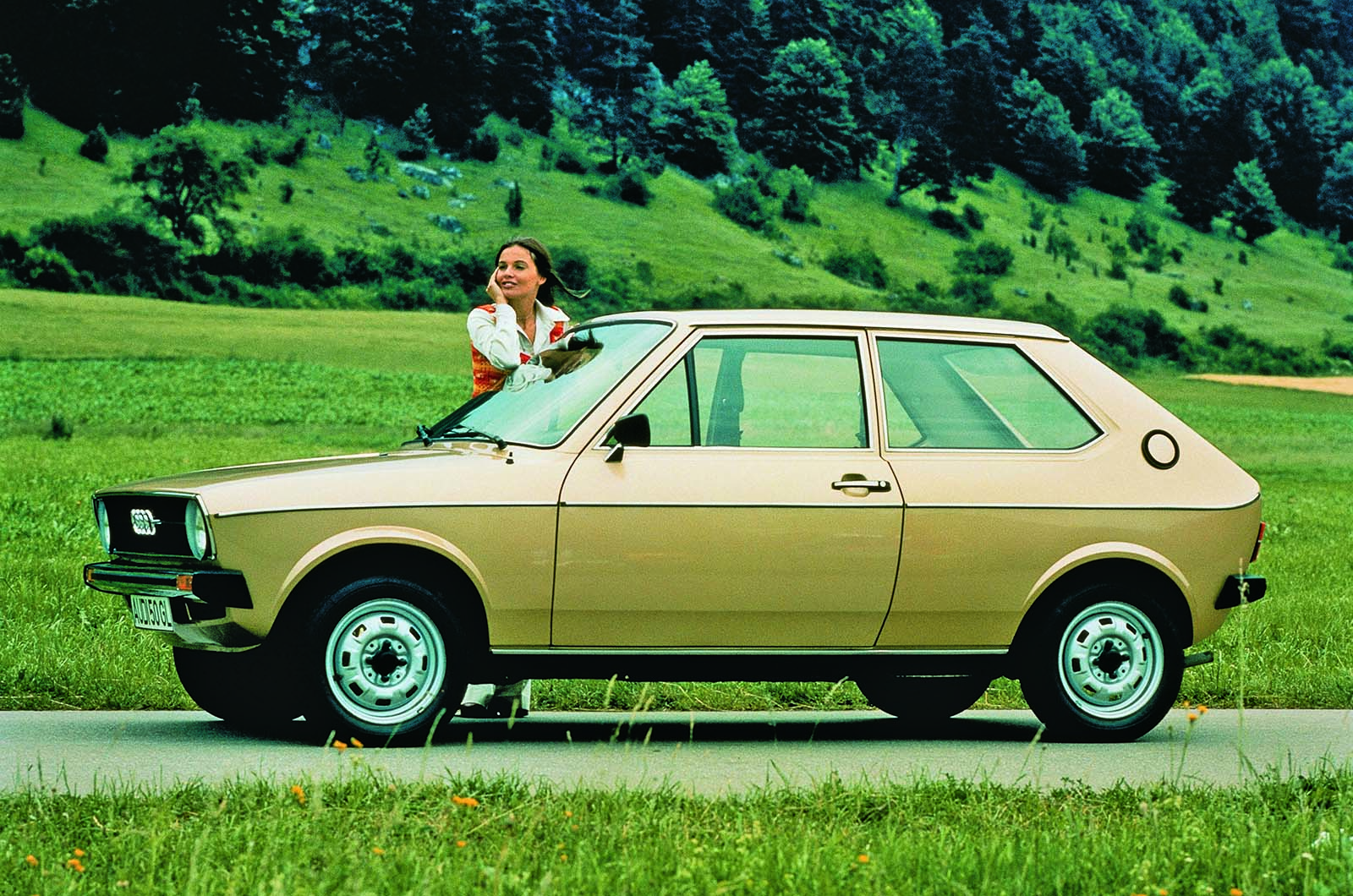
The little 50 of 1974 can rightly claim to be the first ‘premium’ supermini with transverse-mounted four-cylinder 1.1- or 1.3-litre engines, front-wheel drive, hatchback, folding rear seat and Audi allure. Volkswagen’s version of the very same car, the Polo, followed its launch by only a few weeks, and by ’78 the tiny Audi 50 was quietly discontinued.
Audi 80 GTE (1975)
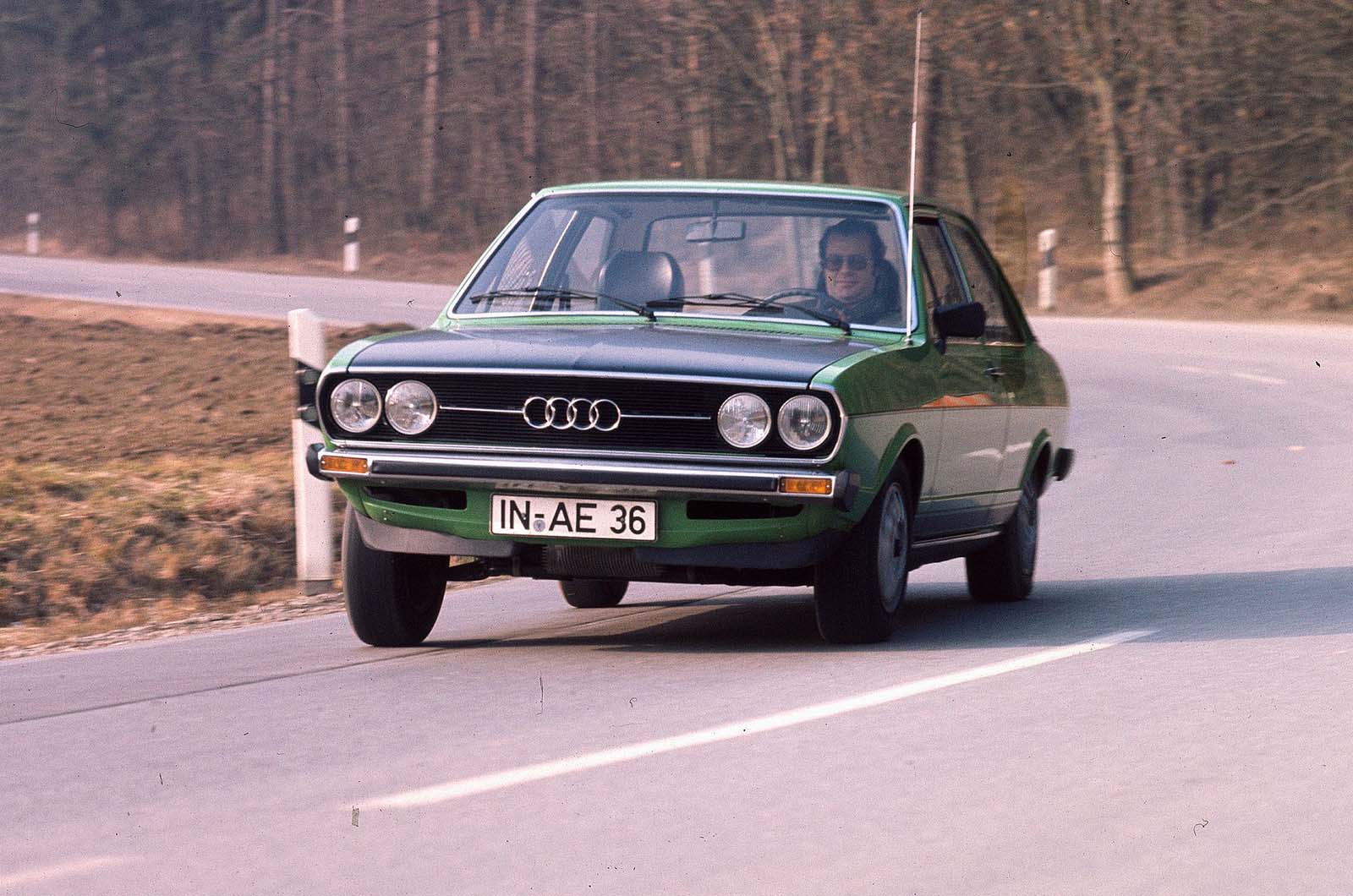
The Audi 80 received a great reception as a high-quality small saloon in 1972, bringing it the accolade of European Car Of The Year when it was highly praised by judges for its quality, roadholding, comfort and safety. Exciting, though, it was not… until a 1.6-litre engine with Bosch K-Jetronic fuel injection was installed for the vivid, 110bhp GTE boy racer of 1975. This same engine found another great home in the first Volkswagen Golf GTi.
Audi 100 Avant (1976)
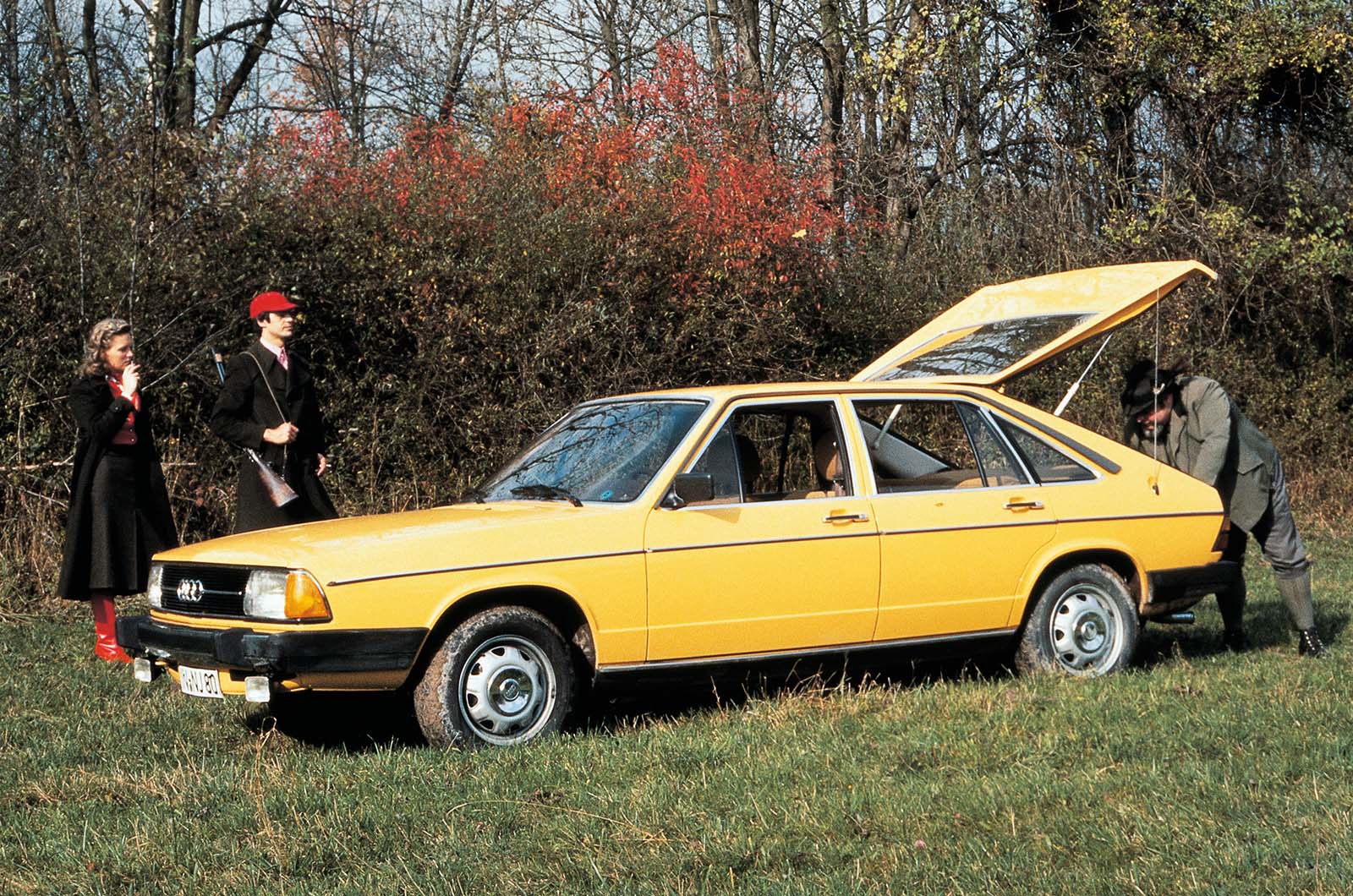
Audi modified its recently-unveiled flagship saloon model with a fastback tailgate as a semi-estate to go head-to-head with big European sellers like the Renault 20, Rover 2300/2600 and non-hatchback Citroen CX. Like its 100 saloon counterpart, the biggest power unit was unique at the time: a five-cylinder that came in 2.2-litre petrol or 2.0 diesel versions. Refinement was always a strong suit.
Audi 200 Turbo (1979)
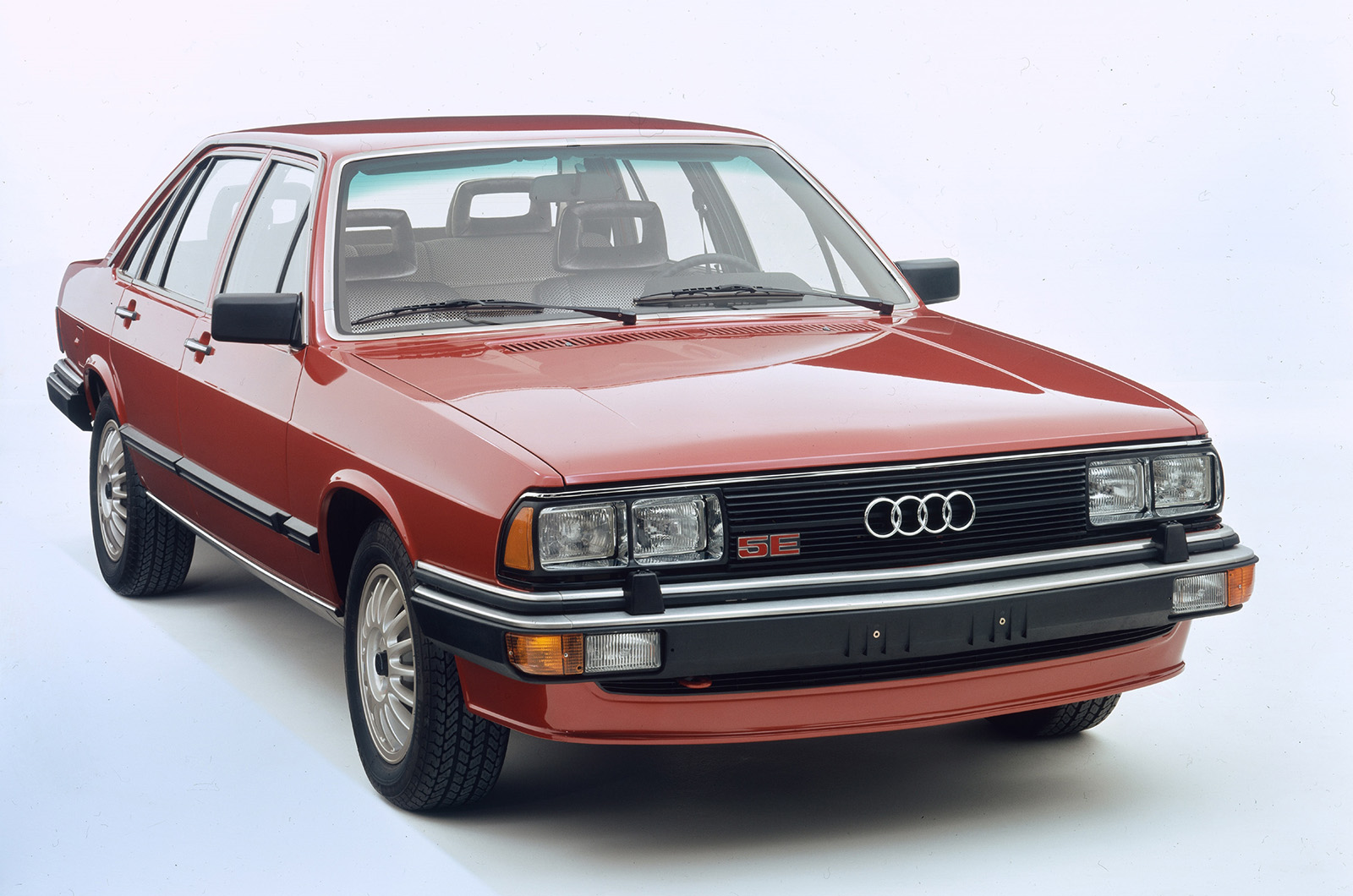
A somewhat forgotten car these days, here is Audi’s first attempt at a super-saloon, with a turbocharged edition of its inline five-cylinder engine that could propel it to 139mph and 0-60mph in 7.5sec. The dressed-up 100 bodywork looked pretty slick but 170bhp of hair-trigger power through the front wheels did have its limitations… The Audi 200 was named Audi 5000 in North America.
Audi Quattro (1980)
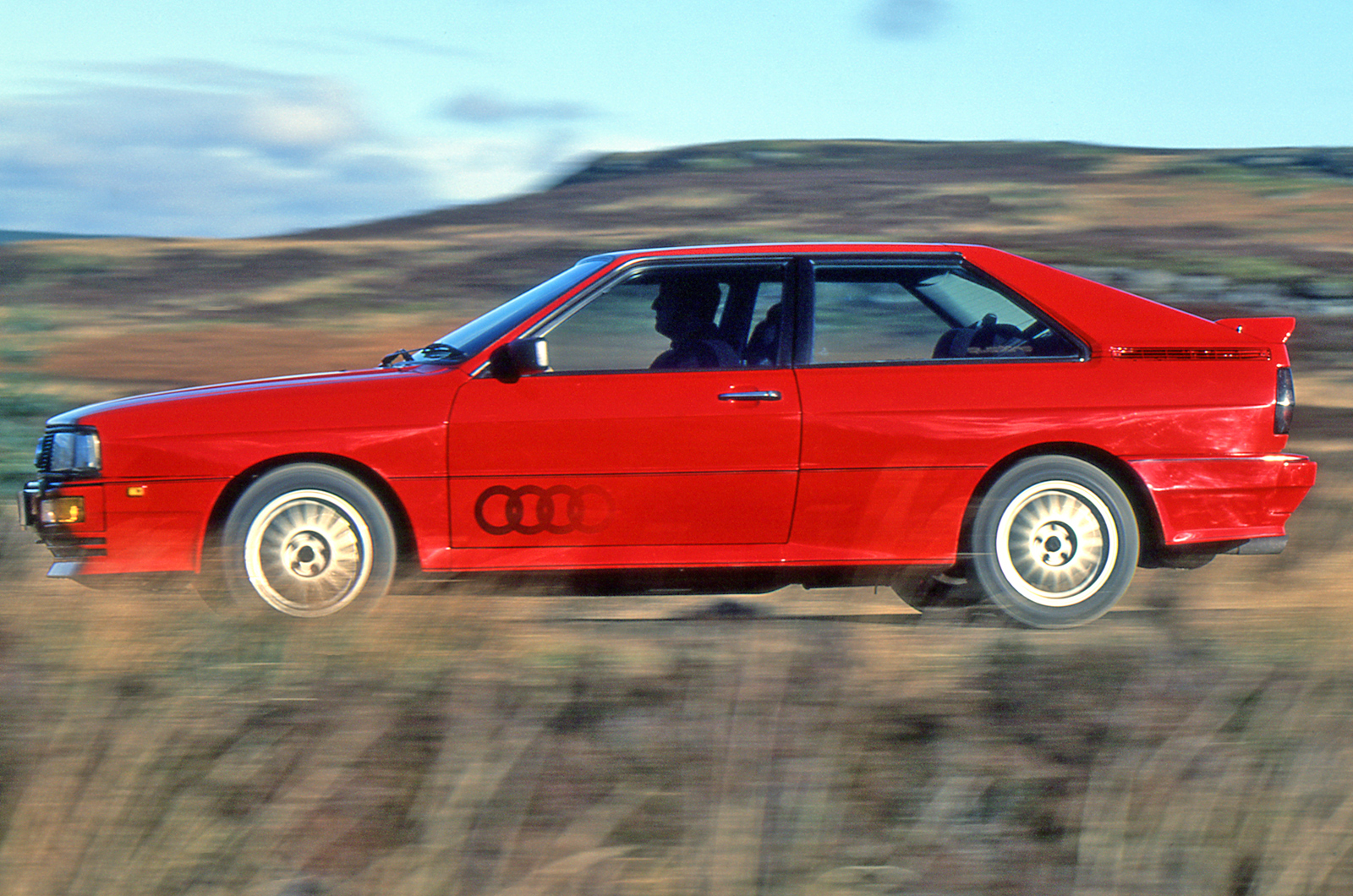
A truly game-changing performance car. The Quattro united four-wheel drive with a turbocharged engine for a car whose performance and roadholding were as sensational as each other. Once anti-lock brakes were added in 1981, the Quattro’s winning formula was complete (and its Audi 80 Coupé roots were almost unrecognisable) and the rally victories came thick and fast.
Audi Pininfarina Quartz (1981)
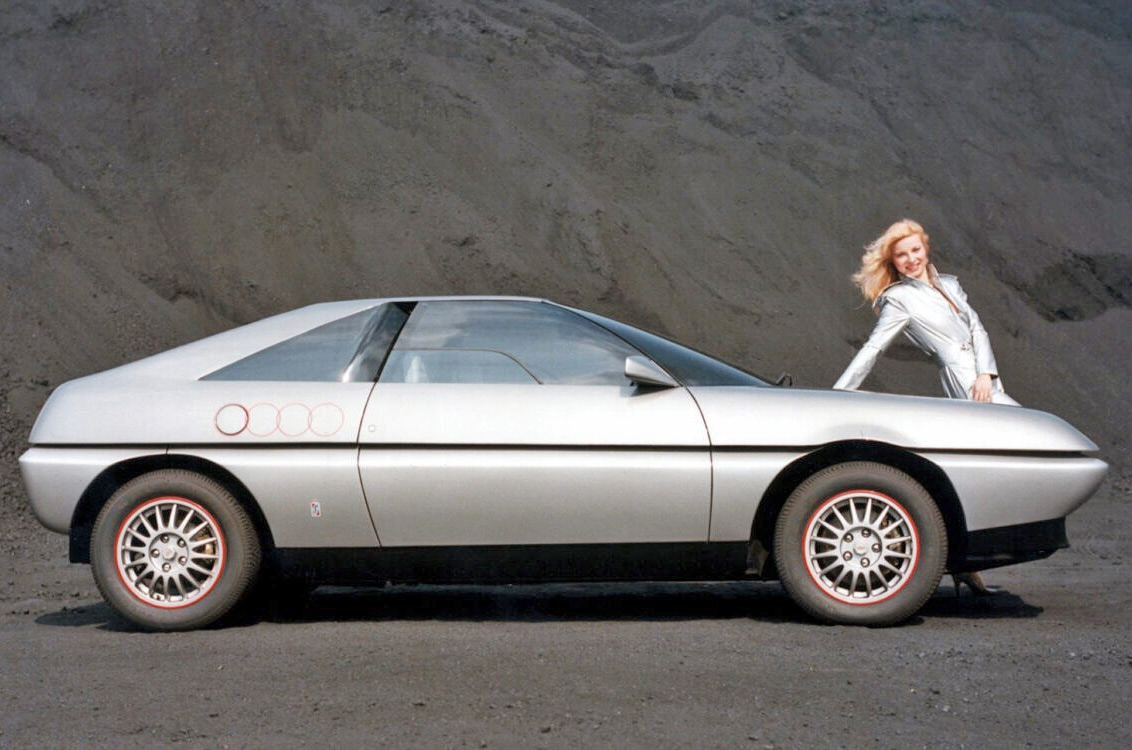
Pininfarina’s 1981 show car is the only publically revealed collaboration between the German manufacturer and the Italian design house. The basis was the then-new Quattro and the lead feature were the headlights, much smaller than normal thanks to their novel elliptical-lenses provided by Carello. It was fully functional, and later timed at 136mph by Swiss magazine Automobil Revue.
Audi 100 (1982)
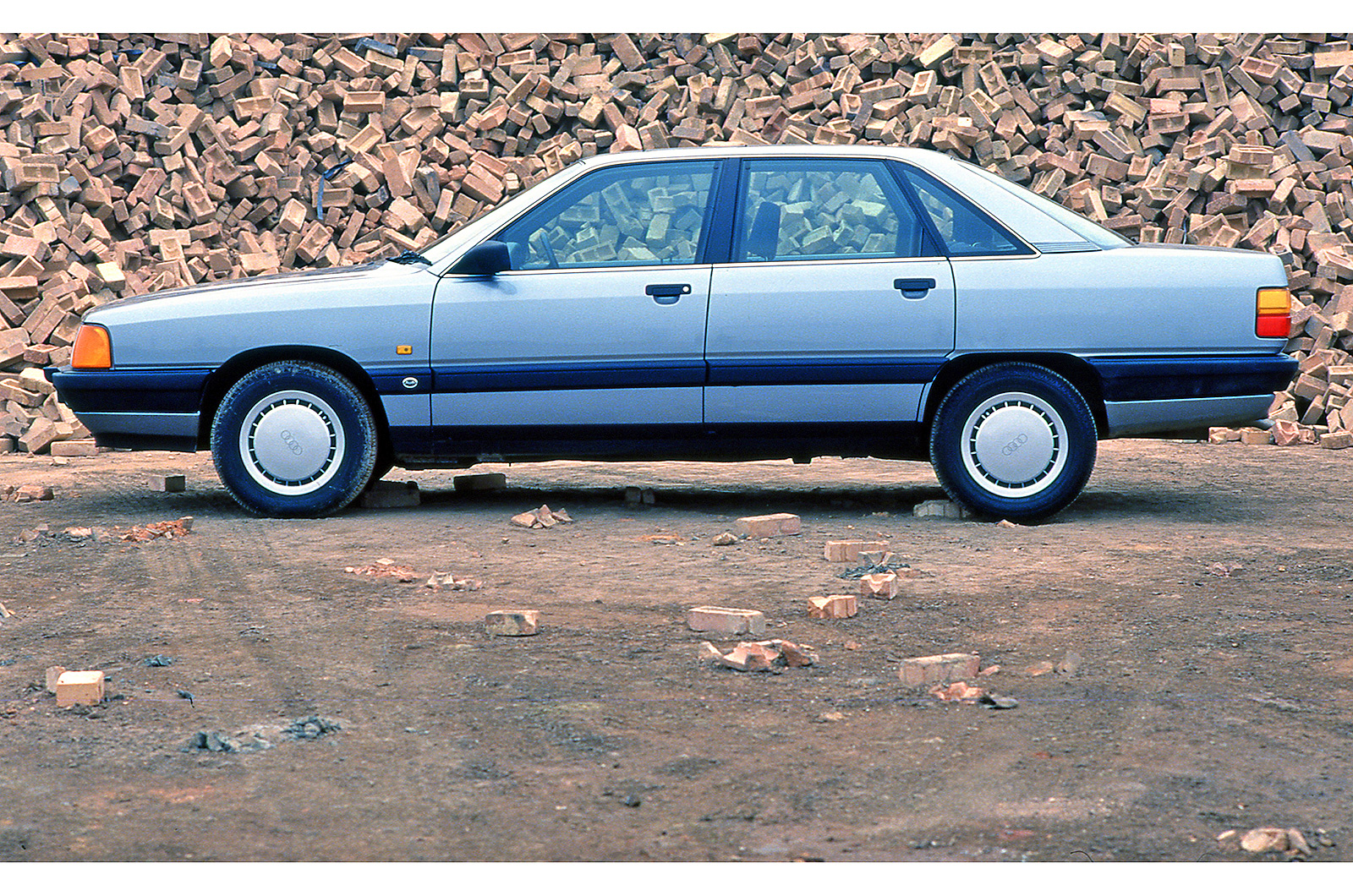
The car world got to understand what made a large car truly aerodynamic with this impressive saloon. Its co-efficient of drag (Cd) of 0.30, more wind-cheating than most supercars, was proudly stated on its side windows in decals. The new 100 exemplified the ‘Vorsprung Durch technik’ slogan that appeared in Audi marketing at the same time, and its slippery shape endowed it with class-leading fuel economy.
Audi Sport Quattro (1984)
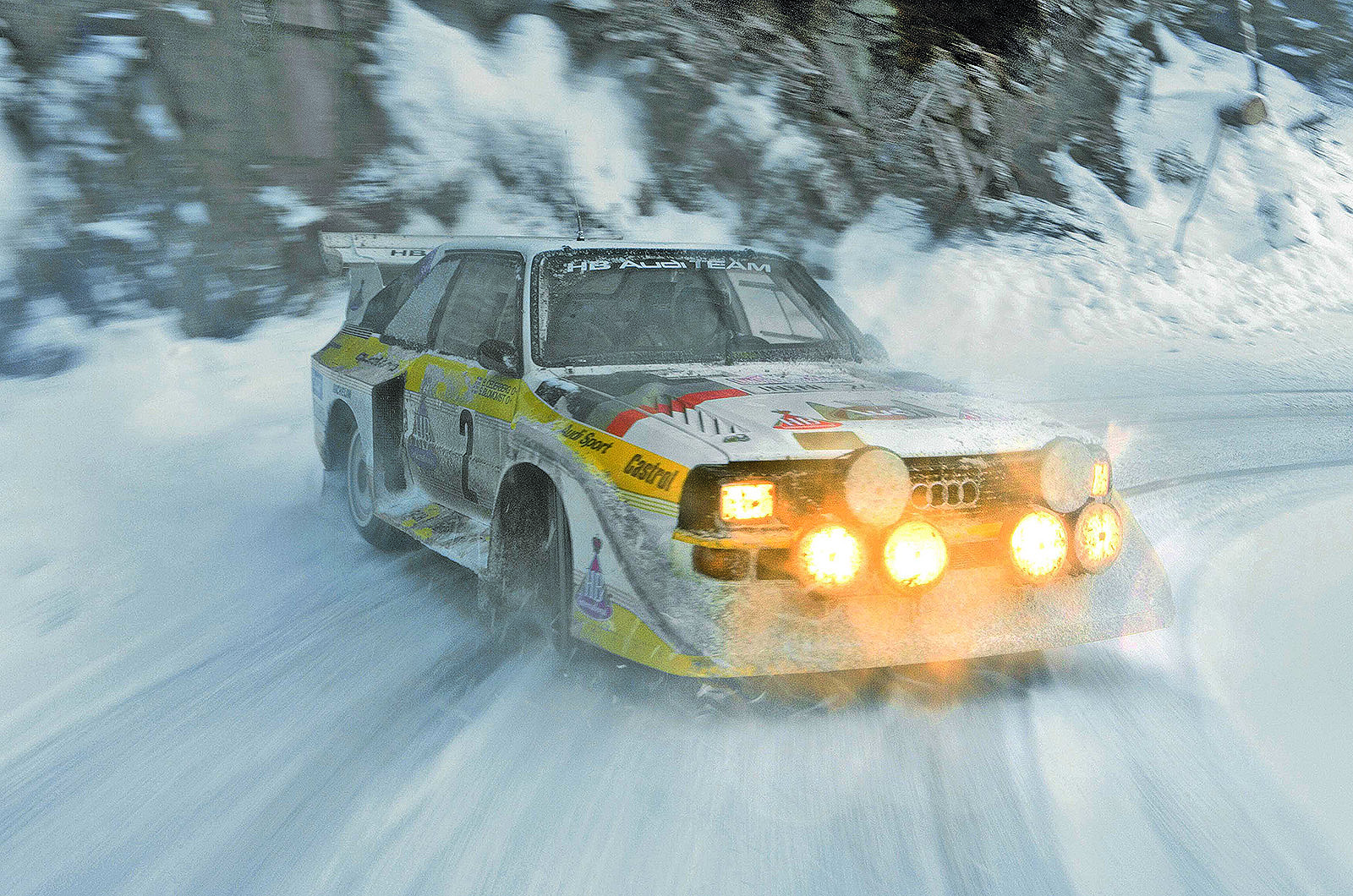
This short-chassis variant of the Quattro was intended to contest Group B rallying in 1984, but after that series was axed for its dangerously high speeds, the Sport found a new role as a relentless hillclimb machine, storming up Pike’s Peak in the USA. A small number of road cars were sold for homologation with a special, all-alloy 302bhp engine, and today they’re highly collectable.
Audi 80 (1986)
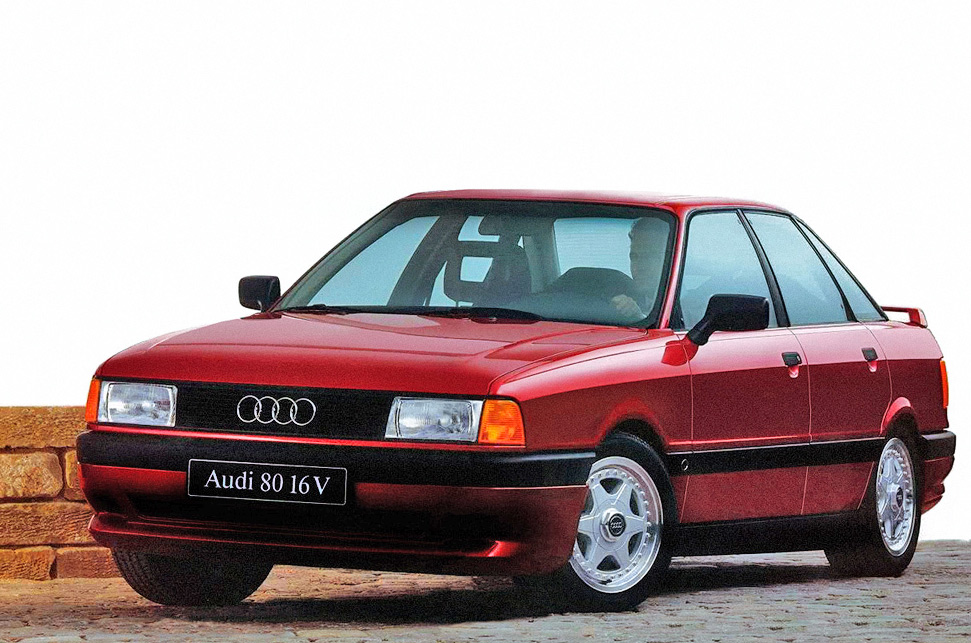
This third-generation of Audi 80, smooth and sober, occupied an envied spot in the market between Mercedes’ senior-citizen 190E and BMW’s youthful 3 Series, and was hugely successful as a result. The closely-related 90 spin-off catered for performance drivers with five-cylinder engines and turbochargers, and both models could be had with four-wheel drive.
Audi 200 Avant (1989)
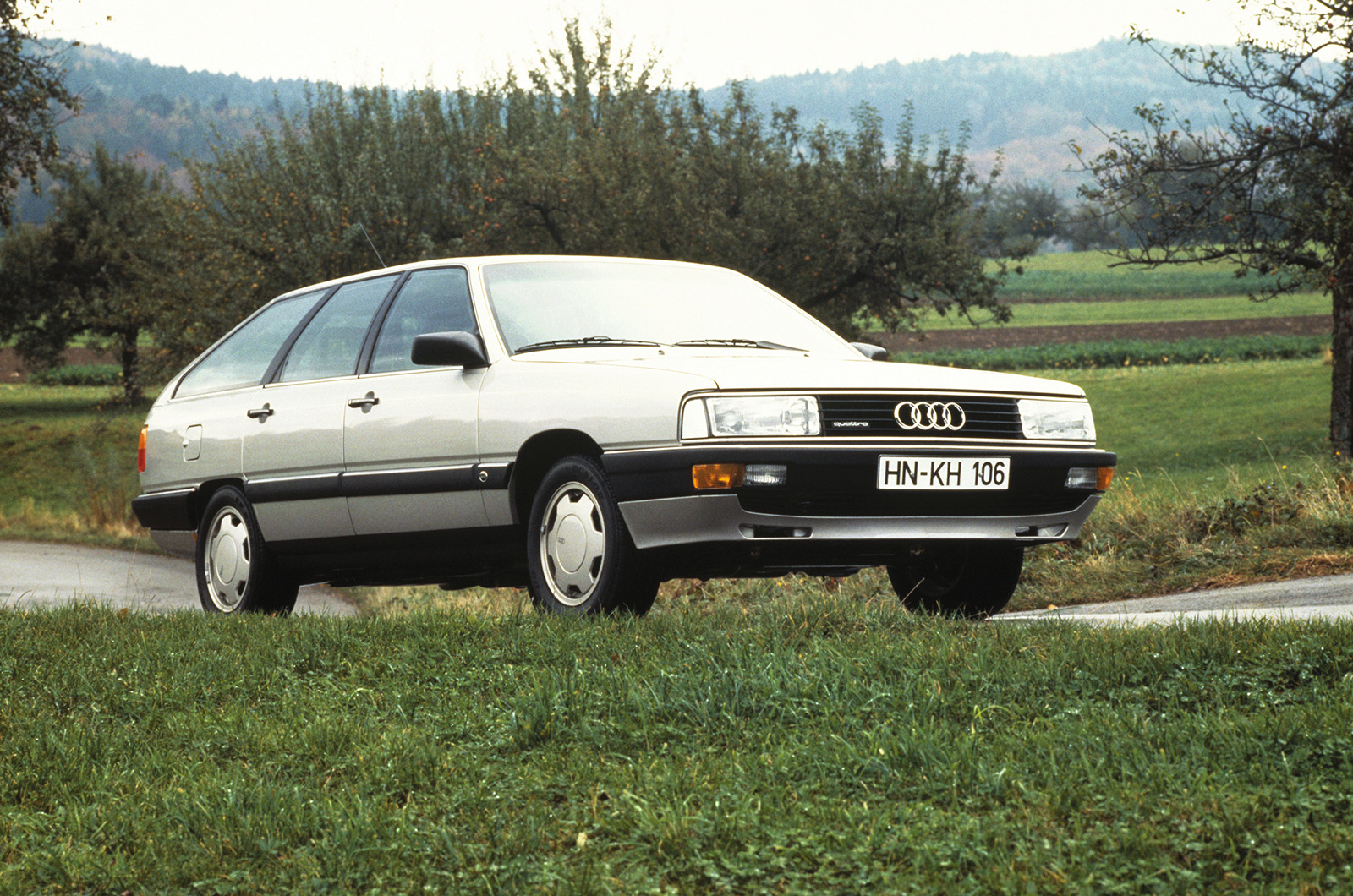
For a large estate car, this was as about impressive as you could get in the late 1980s, in price as much as in tech. The ultimate incarnation mixed the sleek five-door body with a 200bhp turbo five-cylinder driving all four wheels via the quattro system. A super-plush interior and period must-haves like an in-car CD player completed the desirable package.
Audi Cabriolet (1991)
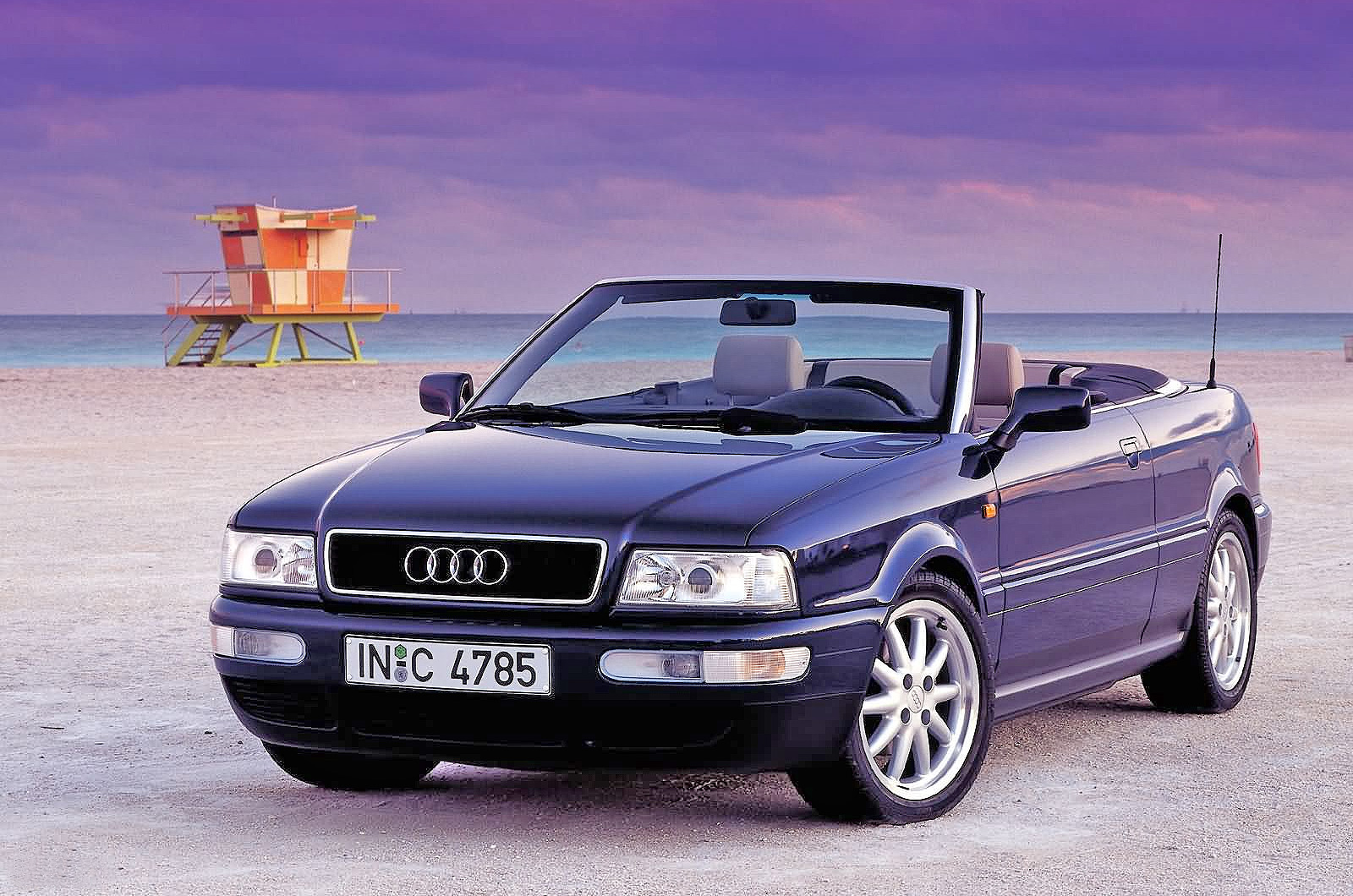
The technical fireworks here were reserved for the electrically-operated roof, which folded away beautifully to leave an elegantly gorgeous-looking profile ideal for posing. Launched in 1991 with a modest 133bhp, the four-seater Cabriolet received a huge image boost when Diana, Princess of Wales acquired one in 1994, and for a few short months it became one of the most photographed cars on the planet.
Audi V8 (1991)
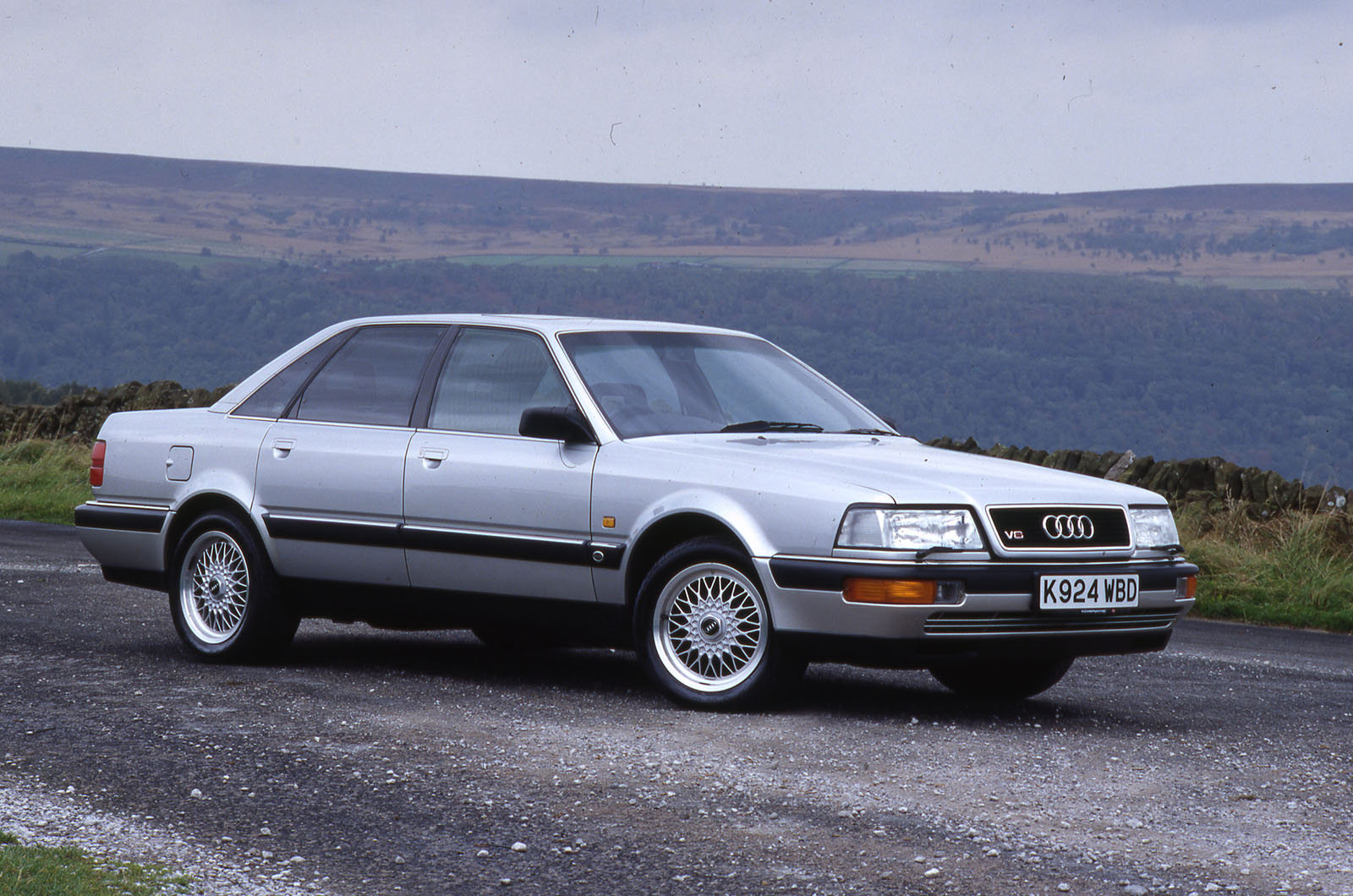
Here was Audi’s initial stab at an ultimate saloon to take its battle to Mercedes-Benz and Jaguar. The heart of the 1991 car was an aluminium V8 powerplant, Audi’s first, with a 3.6-litre capacity initially and 4.2 later, and it was also the marque’s first car to hitch an automatic transmission to the standard quattro 4x4 system. The use of a modified 100 bodyshell didn’t impress, even though there was a stretch-limo version called the Lang.
Audi RS2 (1994)
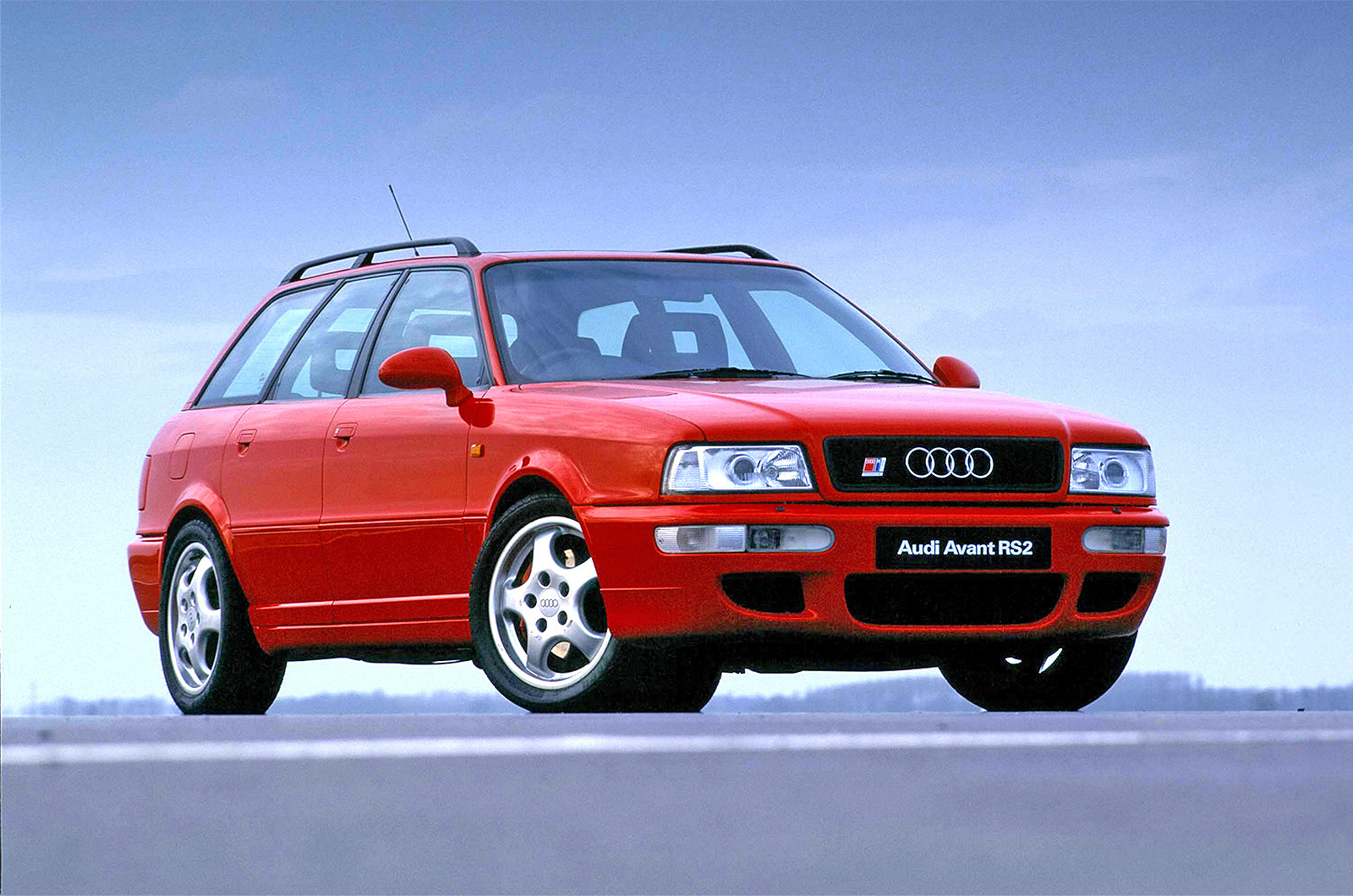
Porsche both co-developed and assembled this cult car for its cousin Audi, which at the time was looking for a performance fillip to its image. It was based on the 80 Avant but equipped with a 311bhp five-cylinder turbo engine, six-speed manual gearbox, four-wheel drive and Porsche’s own braking and suspension systems. It was shatteringly quick, with 0-62mph in 4.8sec, and with 2200 built always sought-after.
Audi A8 (1994)
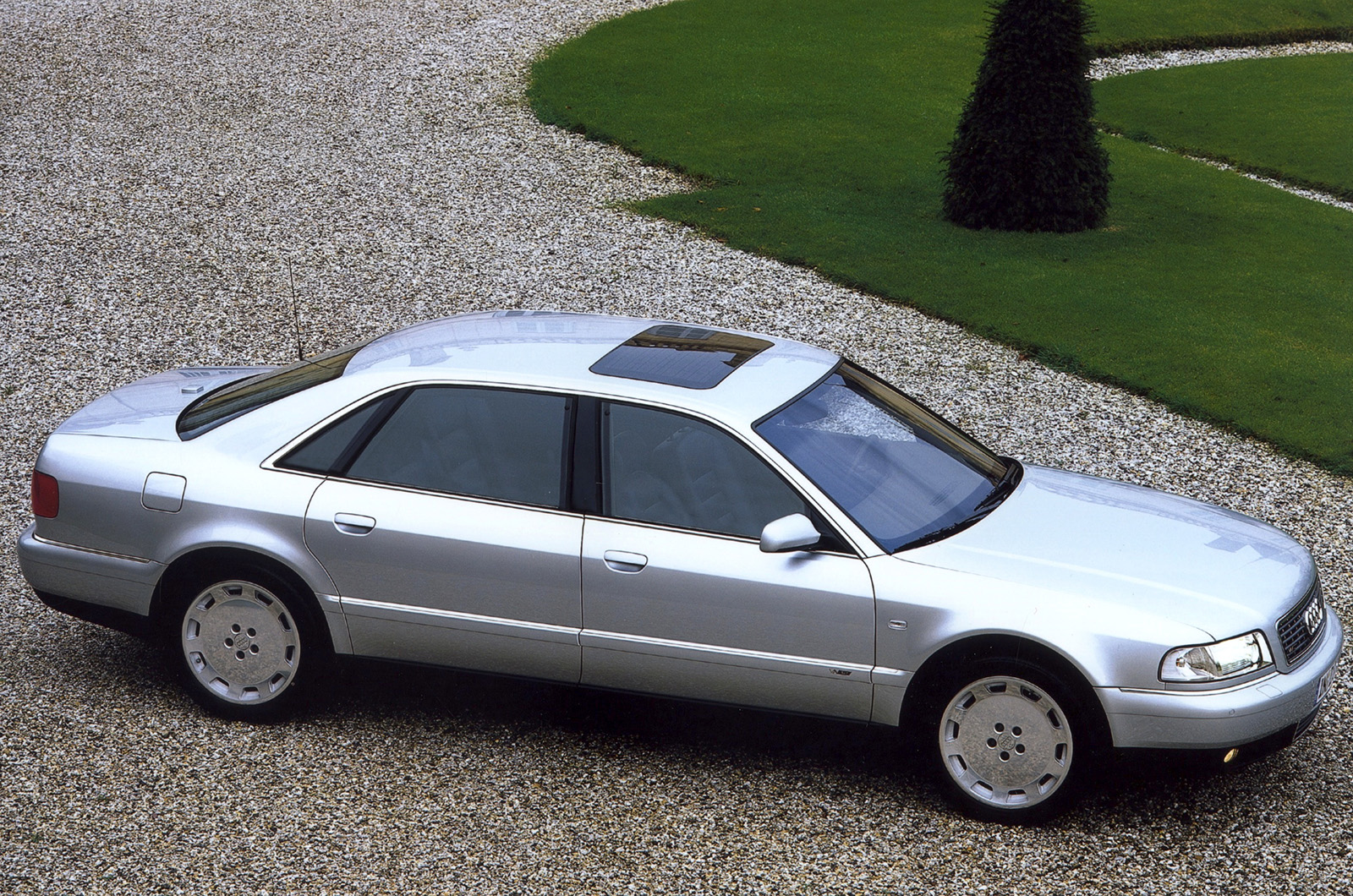
Audi’s second attempt at a luxury saloon in 1994 was an impressive machine, carrying over the V8 engines and even adding a W12 in a shortlived, late-life über-limo. The car’s huge visual heft was illusory because underneath was a ground-breaking and lightweight, all-aluminium monocoque called the Audi Space Frame. Massive depreciation came later to provide an awful lot of secondhand car for the money…
Audi A3 (1996)
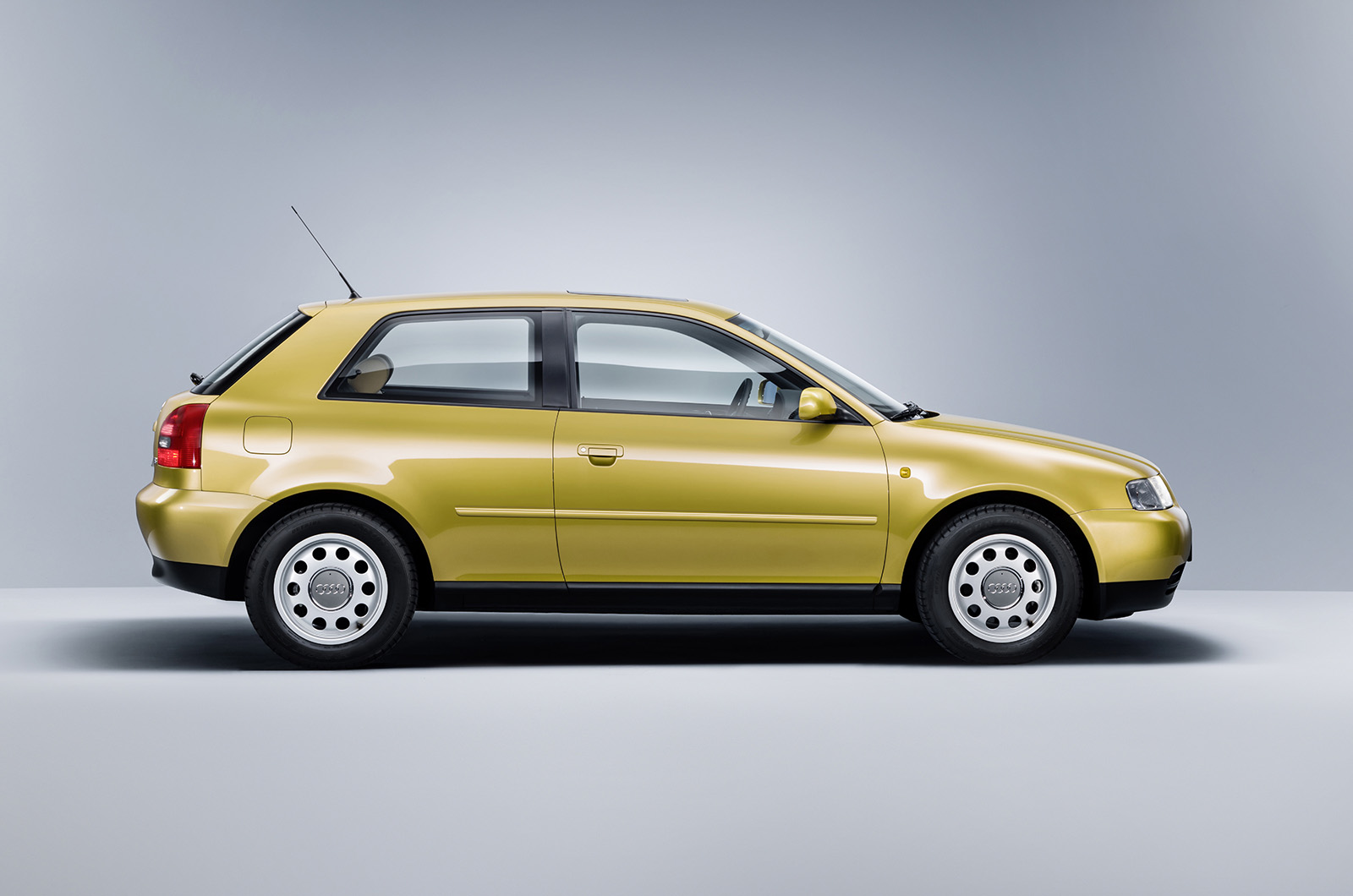
Without question one of the best compact cars of the 1990s, and a hugely important step for Audi as it introduced a Golf-sized three- and five-door hatchback to its line-up for the first time. It just couldn’t build them fast enough and the A3 and the fast S3 version won almost universal praise in every respect – we at Autocar rated it the very best car in its class.
Audi TT (1998)
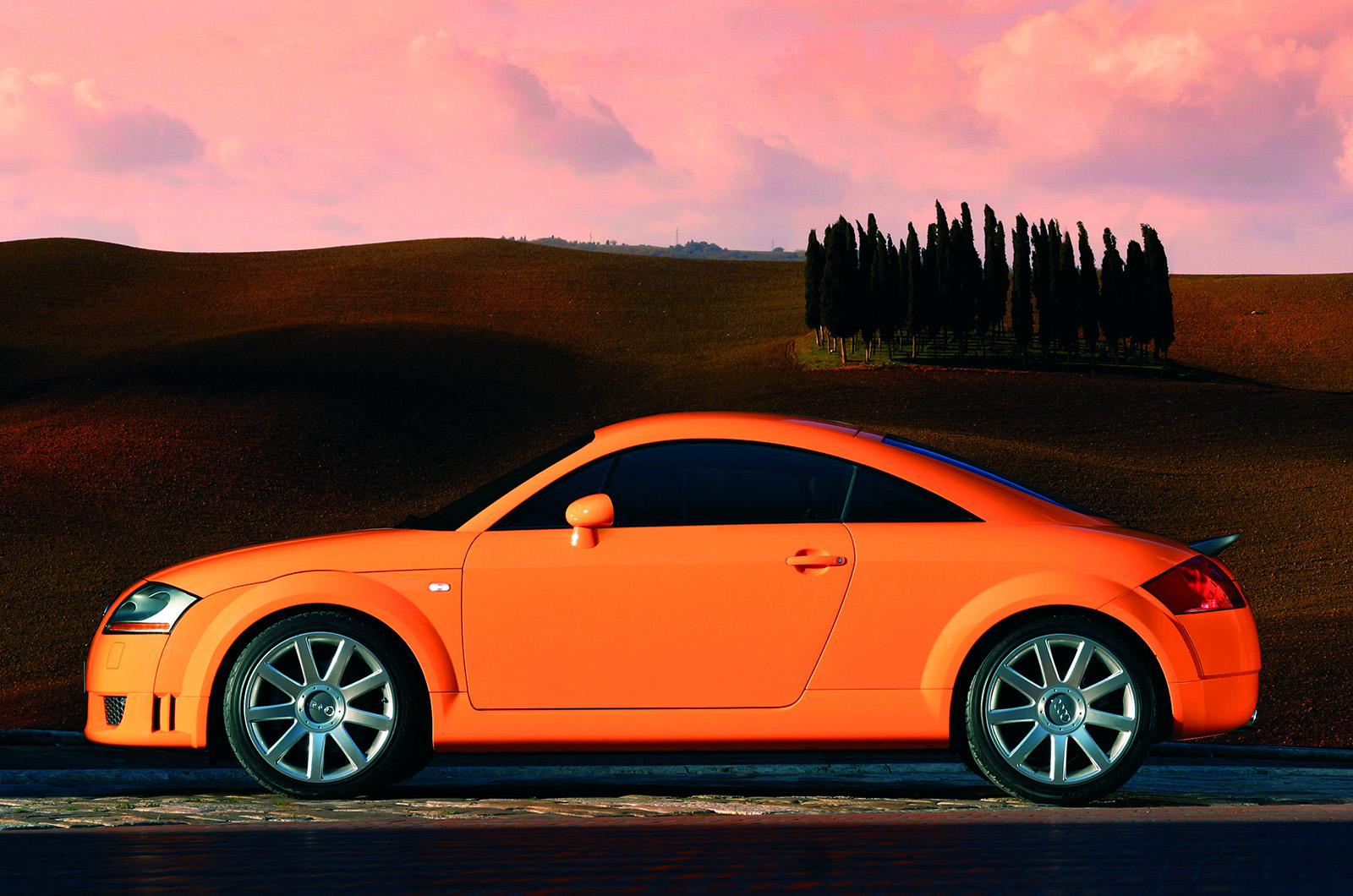
There was no doubt the original 1998 TT was a quick car thanks to its 1.8-litre 180bhp turbo engine giving 0-60 acceleration in 6.1sec. Yet this 1998 two-plus two provided a lot to admire just standing still with its smooth, Bauhaus-inspired retro-futurism and slinky low roofline. There was nothing else quite like it, despite the fact that it was largely an A3 inside. Later models included a very appealing two-seater open roadster.
Audi Steppenwolf (2000)
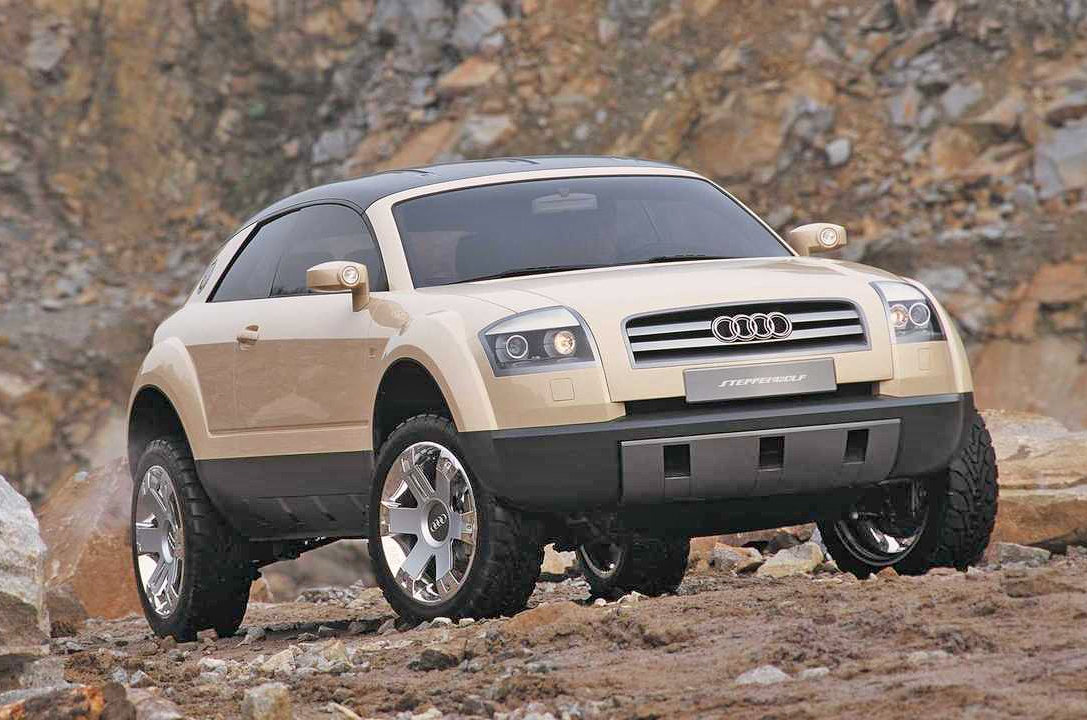
Audi’s 1990s concept cars made tantalising display pieces, but this is probably the most significant and prescient one of the era, a compact crossover that heralded the leading design trend of the 20th century. It had three doors, a removeable carbonfibre hardtop, and a 3.2-litre V6 engine, and although you could never actually buy one its influence did eventually feed into the production Q3. Still looks great today…
Audi A2 (1999)
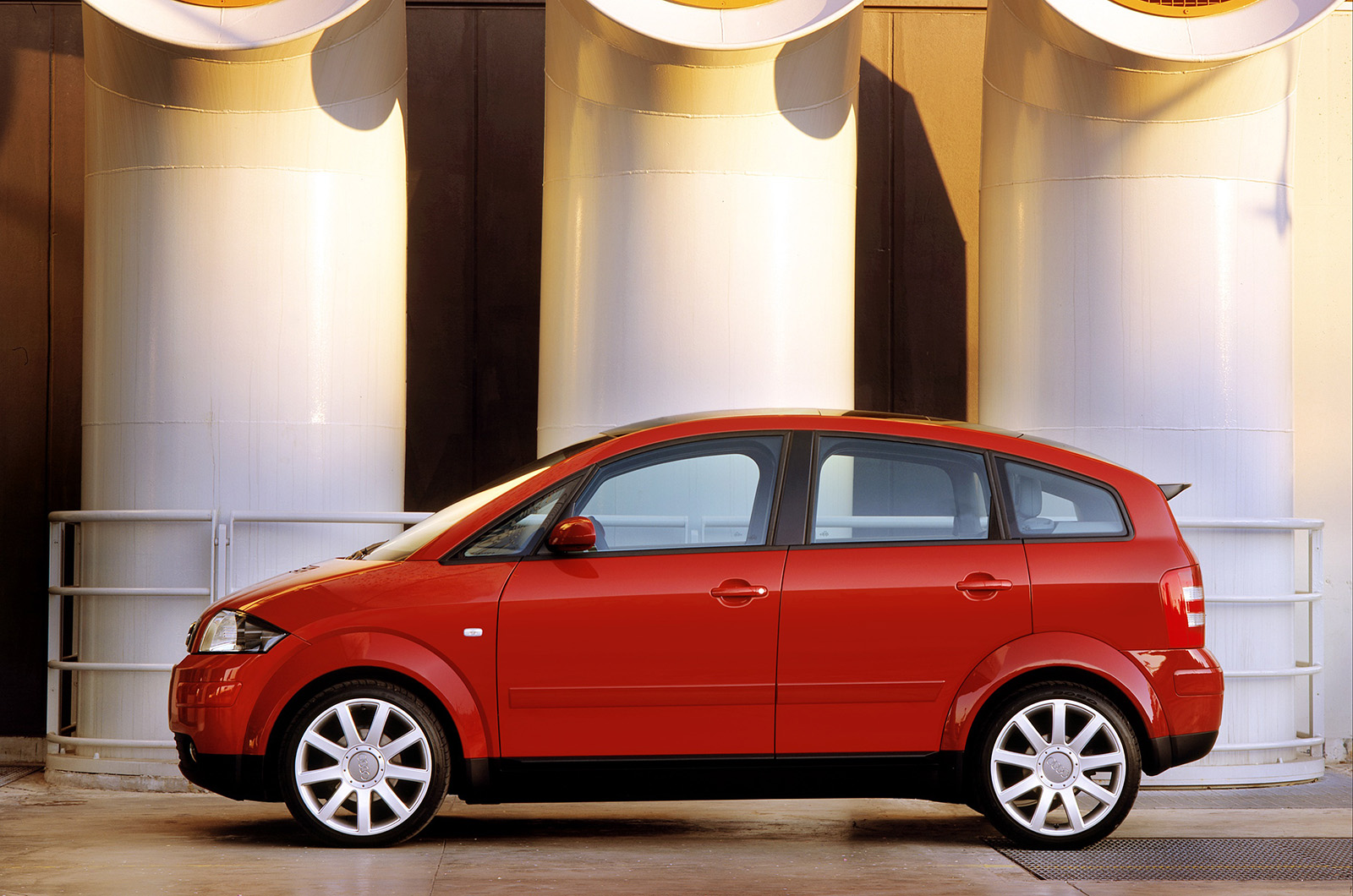
Audi returned to the city car in 1999 with the A2, a clever take on thrift with its all-aluminium construction, superb aerodynamic efficiency and narrow tyres. The three-cylinder diesel model could return an incredible 90mpg-plus, and the car came without an opening bonnet, just a service hatch for fluids and dipstick. Fascinating, clever, but expensive for its size.
Audi Allroad Quattro (2000)
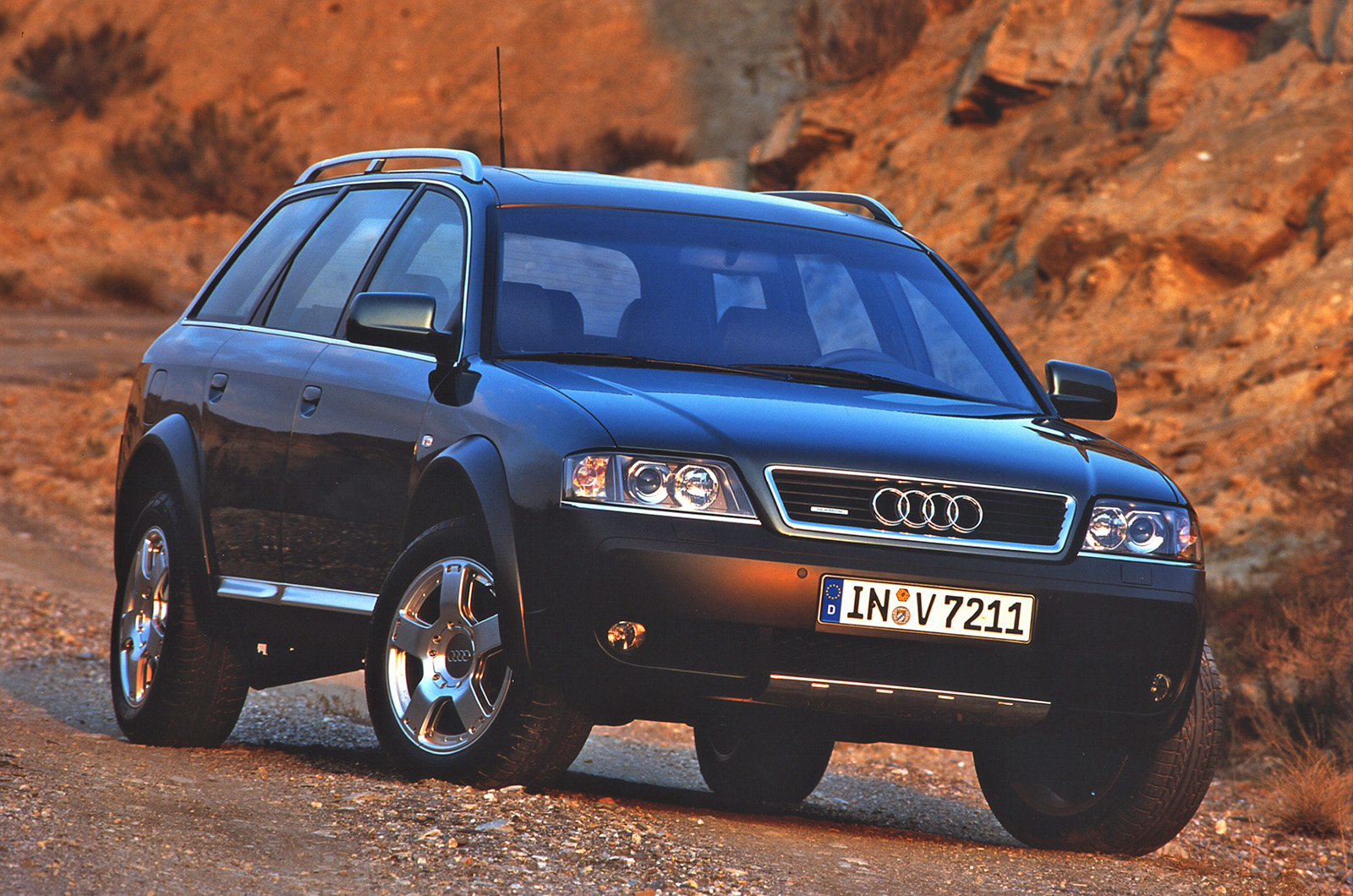
This was Audi’s semi-off-roader introduced in 2000, equipped with an air suspension system to raise or lower its ride height depending on the terrain, and a low-range mode in the four-wheel drive system. A beefed-up floorpan, bigger wheels and robust plastic cladding were all added to the A6 Avant structure. It had all the 4x4 ability that most buyers would ever need.
Audi RS 6 (2002)
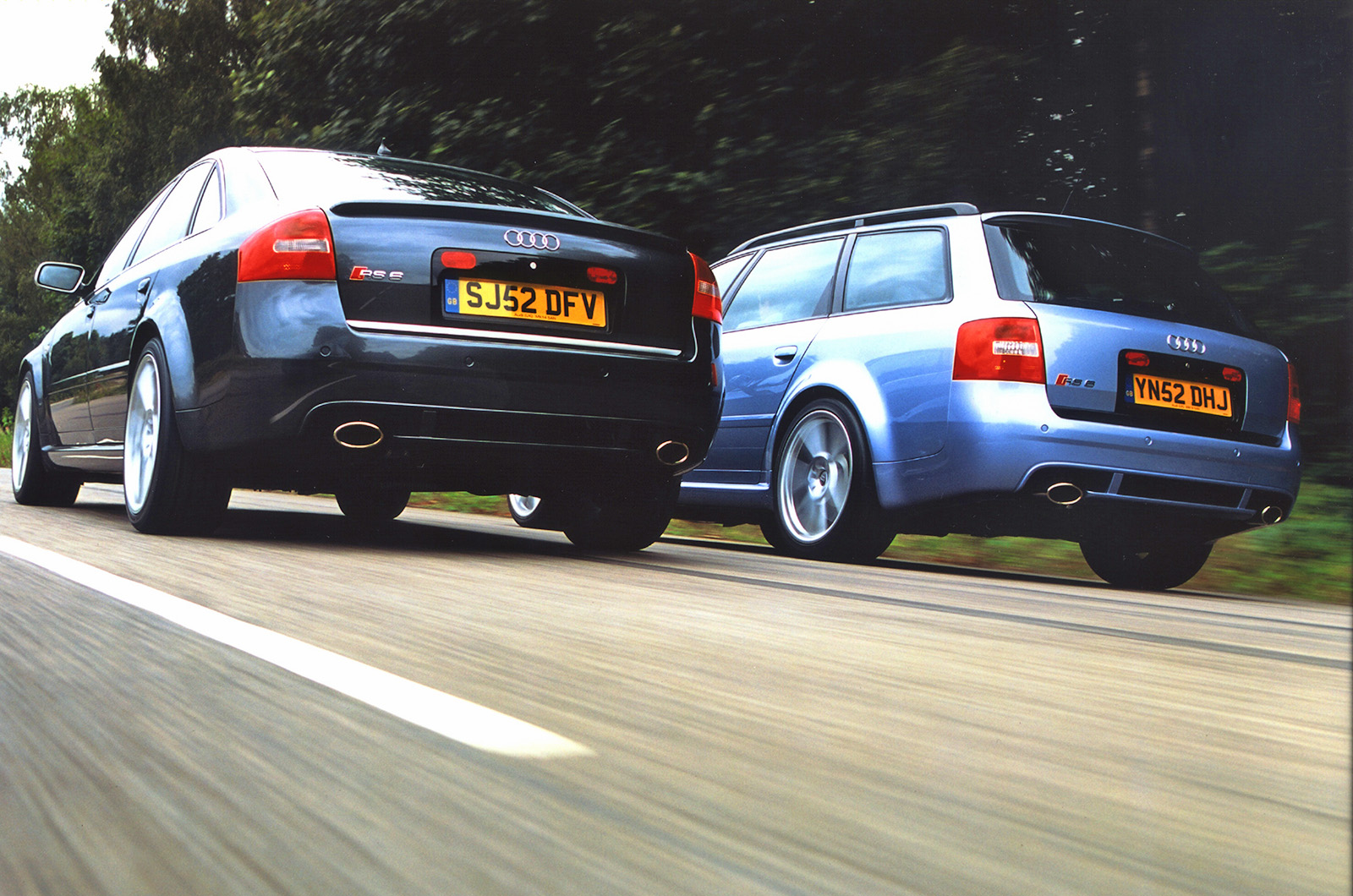
This hot-rod packed a twin-turbo 4.2-litre V8 in an A6 package, and made its debut in 2002 as either a saloon or Avant estate. Cosworth lent an experienced hand to Audi’s quattro GmbH to engineer this continent-shrinker. Drawing on its 444bhp and 428lb ft of torque, it was ultra-rapid and very flexible, although the only option was a five-speed ZF Tiptronic auto.
Audi Le Mans Quattro (2003)
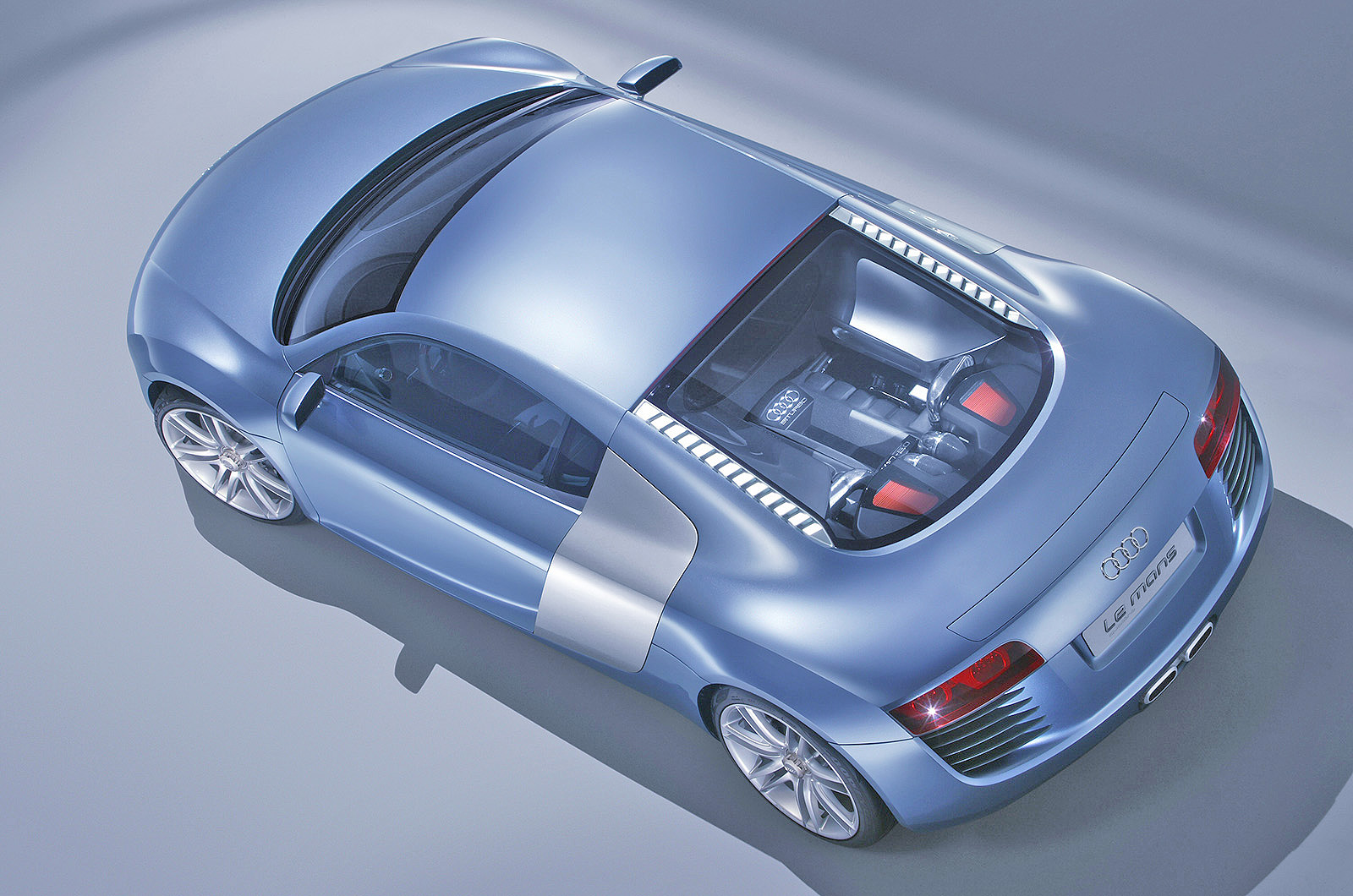
It seemed too good to be true but within three years of this 2003 mid-engined show car being revealed it was going on sale and Audi was in the supercar business with the sensational R8. Albeit with some help from glamorous subsidiary Lamborghini, which supplied the running gear from its Gallardo, and eventually even its V10 engine as an alternative to Audi’s own V8.
Audi Q7 V12 (2004)
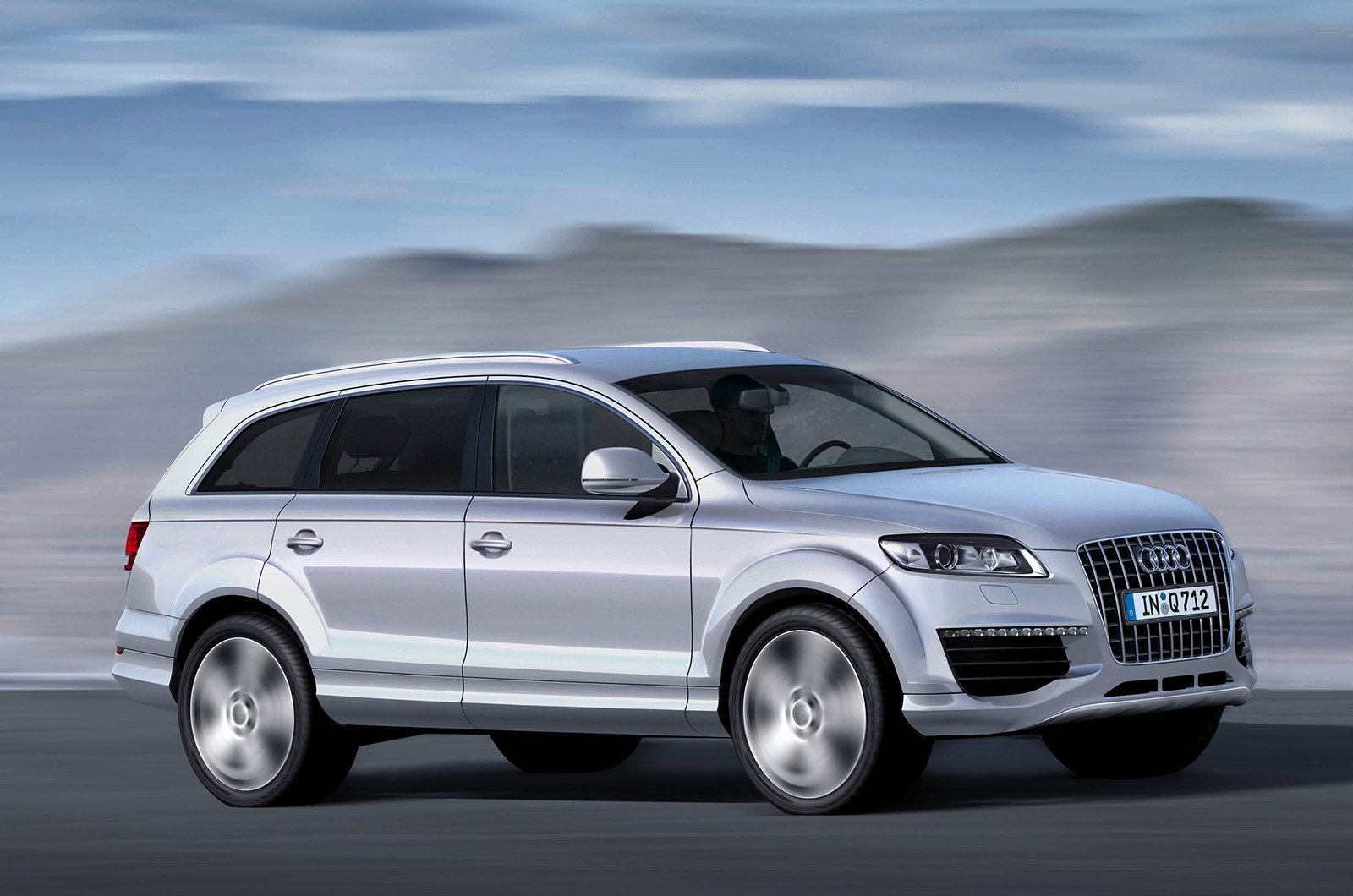
Appalling or magnificent, depending on your view; Audi’s huge SUV was readied for buyers by 2004 and quickly became a major and profitable seller, twinned with the Porsche Cayenne. Still, seven seats made it probably the most commodious Audi ever, and this first version hit a new engineering peak with the offering of the world’s only production V12 diesel engine… although most came with V6 or V8 power. A big, very big, hit in the USA.

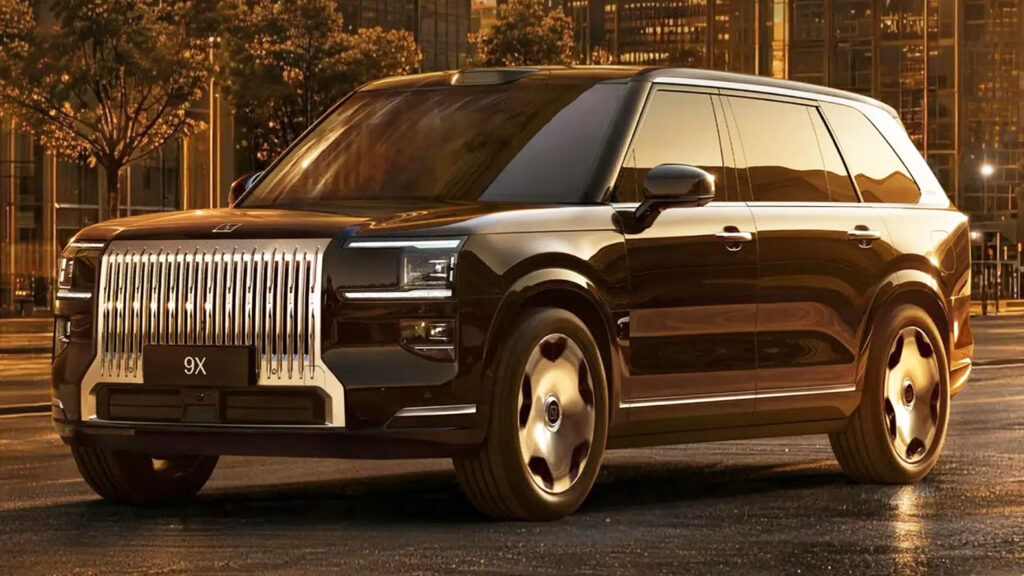
Zeekr 9X Security Lockouts Abroad Reveal Tensions Between Smart Car Safety and Owner Autonomy

Discovery Sport Retirement Signals JLR’s Shift from Entry-Level SUVs Amid EU Safety Demands and...
 JLR will retire its entry-level SUV after 11 years on sale as GSR2 safety regulations come into force in EU
Land Rover will end production of the Discovery Sport at the end of 2026, after more than 11 years.
The SUV remains configurable in the UK but is no longer available to order from the factory in various European markets, including France, Germany and Spain.
A JLR spokesperson told Autocar: “Discovery Sport production will end in December 2026, in line with normal product lifecycles. As part of this transition there will be a managed sunset of manufacturing ahead of this date for certain markets.”
This brings an end to one of the longest on-sale runs in the UK: the Discovery Sport was launched here in February 2015, making it older than the Mazda MX-5 and Alfa Romeo Giulia. After it goes, the Volvo XC90 will be the UK’s oldest car.
The removal of the Discovery Sport from order books coincides with the imposition this month of the EU’s updated General Safety Regulation 2 (GSR2) ruleset, which mandates several safety functions not fitted to the SUV.
JLR has updated its other models to comply with GSR2, but the Discovery Sport’s age – and comparatively thin profit margins – probably made such an investment unviable.
Porsche made the same decision with the Macan, which was launched at around the same time as the Discovery Sport, and is bowing out of production this month.
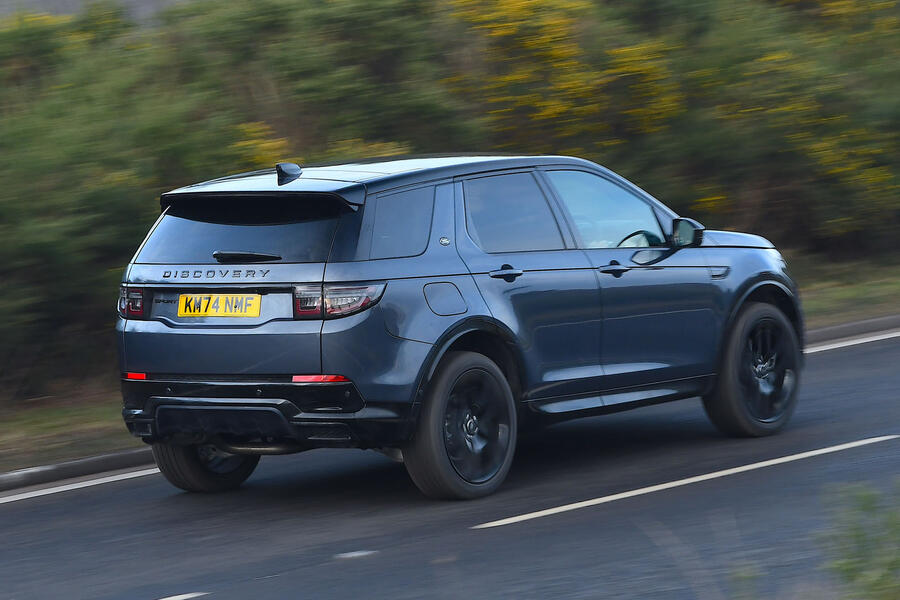
It isn't yet clear when the Discovery Sport will exit its home market (where GSR2 is not a legal obligation), but it's likely that JLR will stop taking new orders in advance of its retirement.
The entry-level SUV has historically been a significant volume generator for the company, ranking as its top seller in 2016 (its first full year on sale), with more than 122,000 examples sold globally.
A significant overhaul in 2019 – including a new platform and interior – helped to keep it fresh against rivals, but in more recent years its age has caught up with it, and JLR sold less than a tenth of that 2016 figure in 2025.
That made it the company’s slowest selling-model, behind the full-sized Land Rover Discovery, which is also coming up for retirement as the 10th anniversary of its unveiling approaches.
The Discovery Sport’s cancellation raises questions over the future of the closely related Range Rover Evoque, which is built alongside it at JLR’s Halewood plant on Merseyside.
Range Rover MD Martin Limpert suggested to Autocar last week that the brand had no immediate plans to wind down the Evoque and would continue to produce the entry-level model while it focused investment and resources on renewing and electrifying the more profitable flagship model.
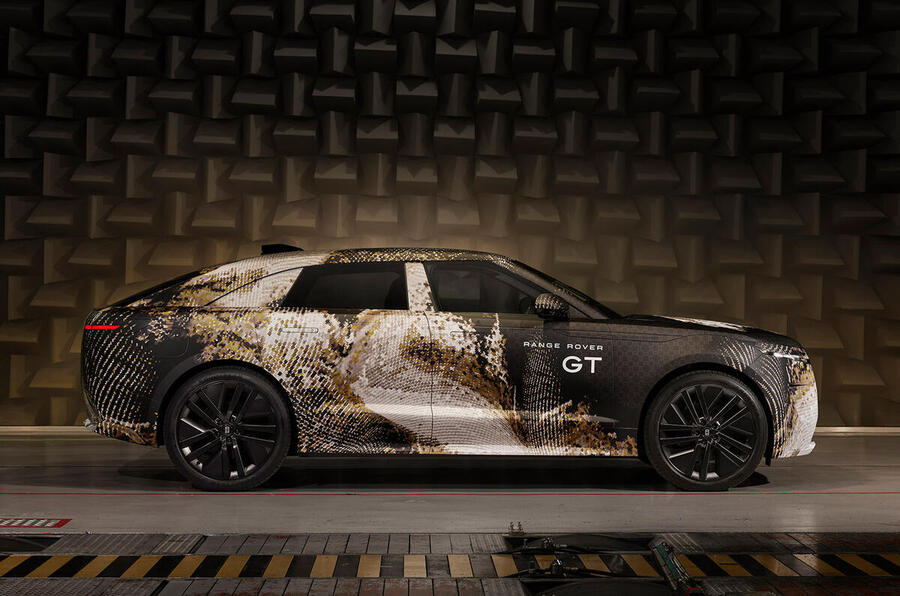
“We’ve had a big focus on launching Range Rover [Electric] and Range Rover Sport Electric, which was a big pivotal moment that we had to get over the line,” he said. “Range Rover GT [pictured above] is the first car built on our new EMA architecture, so obviously there was lots of focus to bring that to life.
“But we also refreshed the Range Rover Evoque two-and-a-half years ago, and we have launched the market editions for the Evoque and Velar [such as the Belgravia and Hoxton Editions] to keep them present in the marketplace. We have loyal audiences for these cars, and we can’t do everything at once.”
While the Discovery Sport’s retirement is understood to make room for the sleek new Range Rover GT, the Evoque could remain in production until that car’s more rugged sibling, the Land Rover Defender Sport, arrives next year.
While the GT is a new model with no direct predecessor, it's possible that the Defender Sport could serve as a replacement for both the Evoque and Discovery Sport, given its similar footprint and expected positioning.

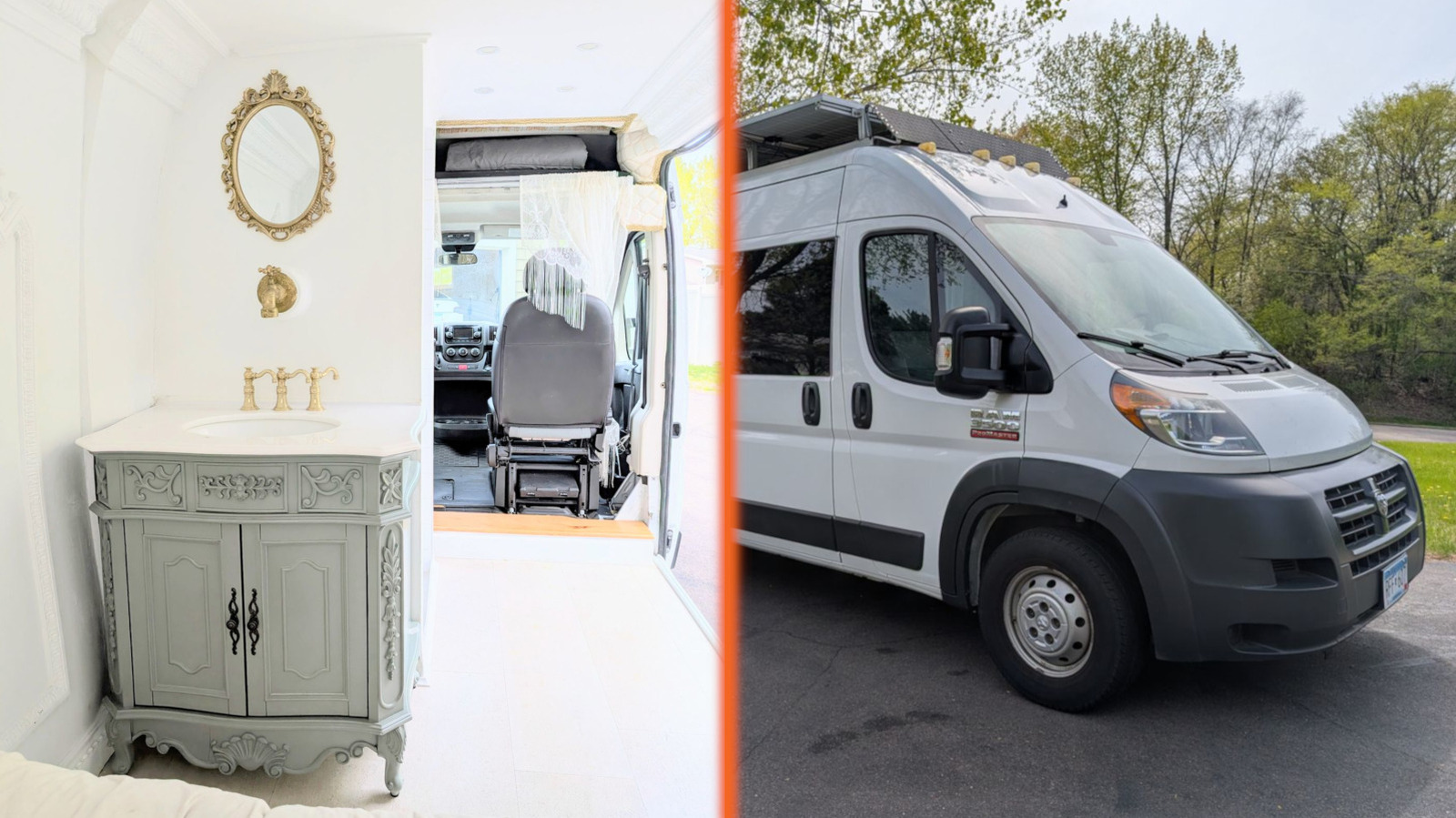
Versailles on Wheels How a $33,000 Ram ProMaster Blends Nomadic Freedom with Aristocratic Fantasy

Honda Civic 10th Generation Weighs Practicality Against Reliability Risks in the Used Market
 The Swindon-built 10th-gen Civic is an appealing, practical choice
Cars that wear the 'built in Britain' tag tend to err towards being luxurious, expensive and/or sporty - think Aston Martin, McLaren and Land Rover, to name but a few.
There are, however, a couple of reliable Japanese but British-built hatchbacks - one of them being the 10th-generation Honda Civic, a practical, fun-to-drive family car that was launched in the UK in 2017.
Unlike earlier Civics, this one was conceived as a single model for all markets. As the US was and is the largest, the British-built Civic hatch would fundamentally be designed for our friends across the pond.
Normally, this would fill us with trepidation, but it gave the Mk10 car an edge: the US's preference for larger modes of transport meant this Civic was the biggest car in its class, so an obvious win for practicality. Furthermore, a big development budget meant the Civic improved in other ways: it was a bit lighter and better to drive than before, and its tech really moved the game on.
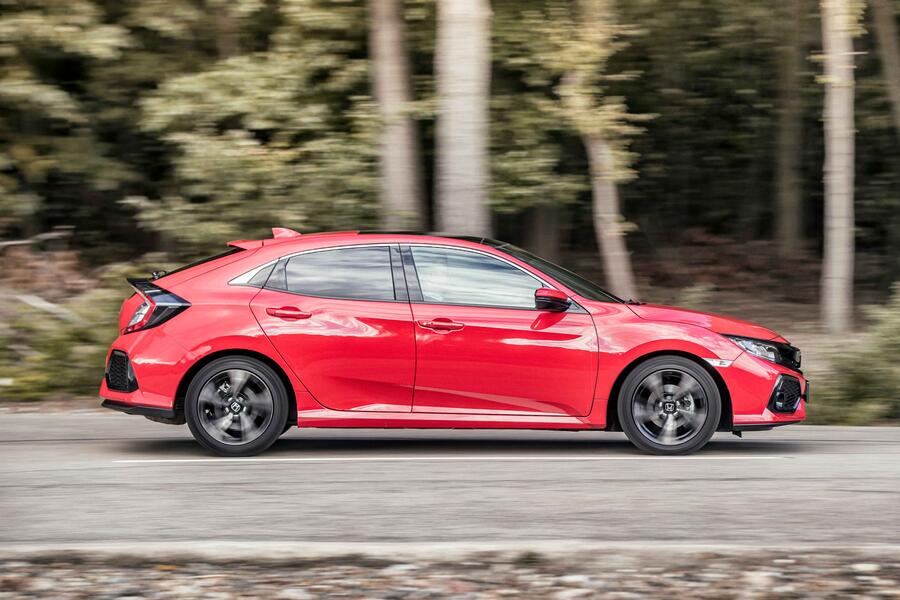
A Ford Focus or Mazda 3 will be even more enjoyable to drive, and a Volkswagen Golf will have tech that is easier to fathom, but the Civic is a great compromise - and it earned itself a four-star road test rating.
Residuals remain strong thanks to Honda's stellar reliability record, but there's a caveat to that, which we'll come to.
But first, the interior. Unlike the slightly bloated exterior, the inside of the Mk10 Civic is restrained in all the right ways. The BMW-like driver-centric dashboard gives a sporty, wraparound feel, and the fabulous short-throw manual gearlever is in the perfect place. There's lots of adjustment in the steering wheel and driver's seat (set it to the lowest in the class, if you wish), too, along with well-aligned pedals.
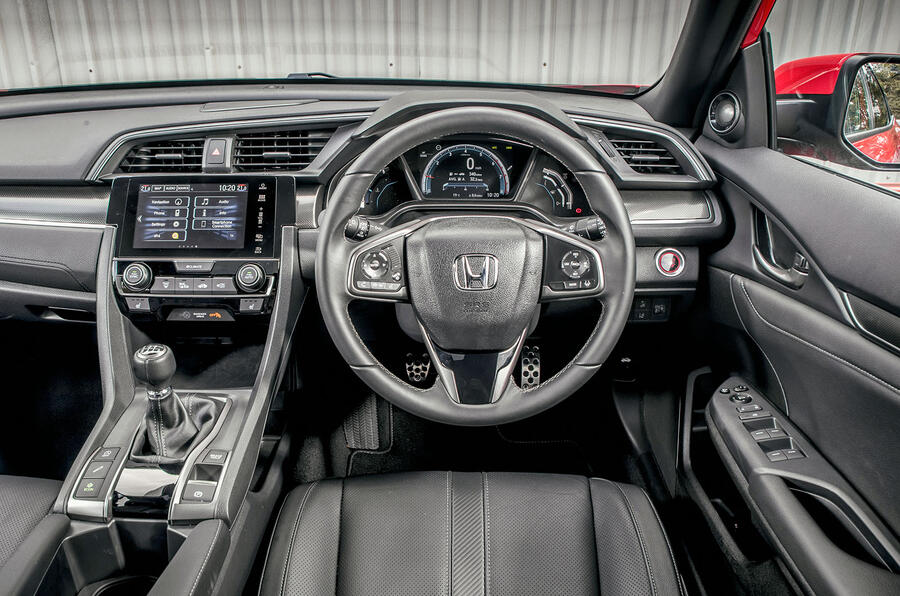
All Civics get a digital driver's display. A 7in sat-nav with reversing camera and Apple CarPlay/Android Auto is standard from Sport trim up, with base-level SE getting only a Bluetooth DAB radio. The touchscreen is laggy, but a plethora of physical controls means it's not omnipotent. In the back, there is generous leg room and decent head room, while the boot holds 478 litres.
Trims range from SE through SR and Sport, with EX at the top. SE is quite basic, but SR has two- zone climate control, automatic wipers, all-round parking sensors and a leather steering wheel and gearknob. Sport adds heated seats, while Sport Plus gets adaptive suspension - it's nice to have, but the Civic is comfortable enough without it. EX adds leather seats and a panoramic sunroof.
On the road, the Civic is mostly quiet and comfortable, although some road roar and a degree of unsettledness makes its way into the cabin on coarse surfaces. The handling is precise and responsive enough, and grip levels are fairly high, but there isn't the verve and agility you get from a Focus.
There are three engines to choose from. The standard 1.0-litre three-pot turbo would be very recommendable if it weren't for its wet belt, which can degrade and cause engine failure. Thankfully, the 1.6 diesel is only a little down on power (it has 118bhp compared with the 1.0's 127bhp), is impressively refined and is more economical - expect 55mpg to the 1.0's 45mpg. A turbocharged 1.5-litre four-pot with 180bhp rounds out the choices. It's warm-hatch quick (we timed it to 60mph in 7.8sec) while hardly less economical than the 1.0-litre.
What to look out for
Engine: 'Wet belt' has become a dirty term with used cars, and the Civic is no different. The 1.0-litre is a lovely engine to drive, but the belt can fail as early as 40,000 miles, leaving a huge bill. If you replace it preventatively, budget £1200, but it could still go without warning afterwards. Turbos and the alternator are also weak points with this engine. The diesel suffers from DPF issues if continually driven on short, urban journeys, while the 1.5-litre petrol proves thirsty in the same circumstances (30mpg can be expected around town).
Gearbox: The diesel is paired with a six-speed manual or nine-speed automatic gearbox, the petrols the same manual or a CVT. The manuals are most common, and for good reason: they have a lovely shift action and are faster and more economical than the automatics.
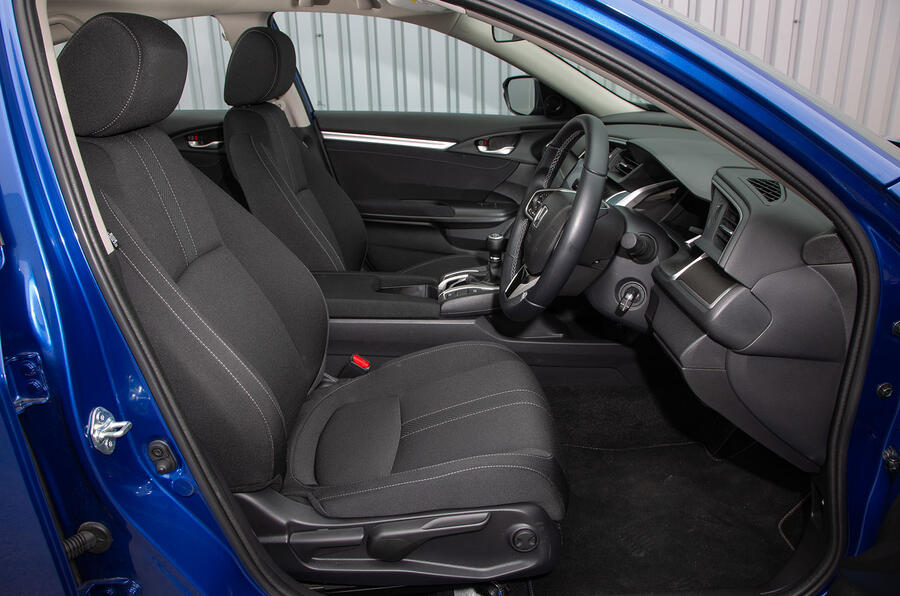
Interior: The cloth seats suffer premature wear and stain easily, but leather was only available on top-spec EX cars. Plastics weren't as well screwed together as they should have been in some cars, so rattles can be commonplace. Check the air conditioning works properly - the compressor is a known weak point.
Electrics: The reversing camera can suffer from water ingress, which blurs the image. Replacement is the only way to sort it.
Also worth knowing
Earlier this year, Honda recalled the 10th-generation Civic over an issue that could result in a wheel falling off the car while driving. Affected owners are being contacted, but if you have your eye on a used one, ask for the VIN to enter into the Honda website to check for updates.
A saloon was added to the range in 2018, to replace the Accord. It has an even larger boot (519 litres) than the hatch and more coherent styling, to some eyes. It's a rare thing and wasn't available in Sport trim or with the 1.5-litre engine.
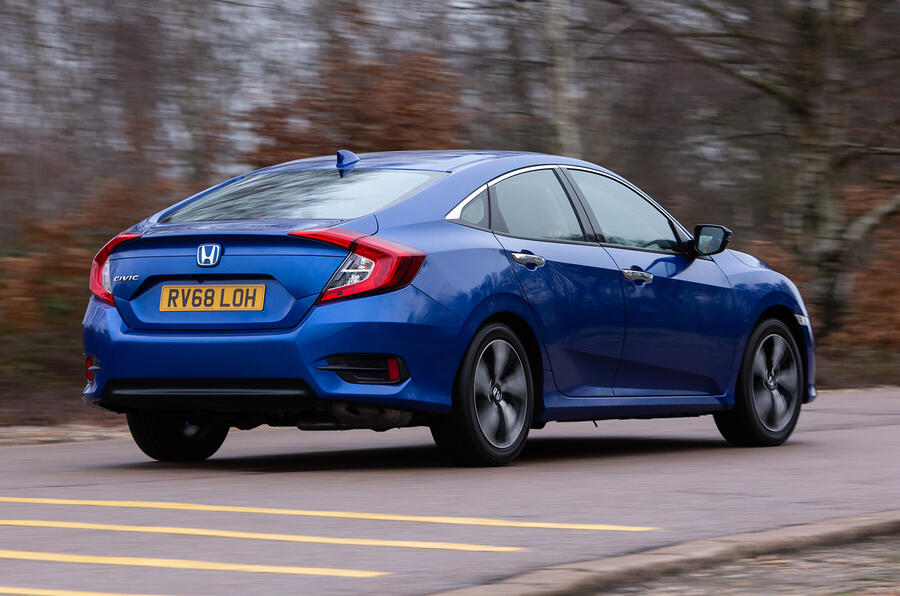
The 10th-generation Civic was treated to a very light facelift in 2020 with an electric driver's seat for the Prestige model (replacing EX) and more buttons for the infotainment system. You can tell it apart by the coloured inserts in the bumper.
There's a flat £200 VED rate, while insurance groups range between 15 and 22 for regular models. A different beast entirely, the 316bhp Type R is group 38.
How much to spend
£4500-£7999 Early cars with more than 10,000 miles per year clocked up. Some are well into six figures.
£8000-£11,999 A nice selection of average-mileage examples with good history. There is no significant premium for saloons.
£12,000-£19,999 Low-mileage examples and late facelifts - they make up the bulk of the classifieds.
£20,000-£40,000 A range of Type Rs from early, high-mileage examples to those with only a few thousand miles.
An owner's view
O'Baid Chaudhry: "I love that the Civic comes so well equipped as standard, so there is no requirement - unlike with the German brands - for specifying extras such as cruise control and heated seats. The diesel runs very smoothly and very economically, and it has plenty of power for the real world. Maintenance on mine has been minimal, with only basic servicing required."