Inside Tesla’s Diner Menu: Overpriced Dishes and Outdated Memes Unveiled
Great Wall Motors Unveils Confidence Auto Supercar to Rival Ferrari and McLaren with Powerful...

Preview hints at mid-engined proportionsGreat Wall Motors' Yangwang U9 rival could be first car to use the company's new twin-turbo 4.0-litre V8
Great Wall Motors, the Chinese manufacturer of the Ora 03 and Haval Jolion Pro, is poised to take on the Ferrari 296 and McLaren Artura with a new flagship supercar.
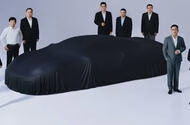
The surprising news was revealed by company chairman Wei Jianjun, who posted a photo on China's Weibo social media platform to mark the 35th anniversary of Great Wall Motors (GWM), showing the company bosses gathered around the cloaked silhouette of what is obviously a sleek, mid-engined supercar.
Earlier this year, Great Wall's chief technology officer Wu Huixiao confirmed to Chinese media that the firm had been working on a supercar for five years, revealing that it has a carbon tub and promising that it "will be better" than European rivals, after chairman Jianjun was seen driving a Ferrari SF90.
Hebei-based GWM is one of China's oldest and largest vehicle manufacturers, having delivered 1.23 million vehicles globally last year. Along with the Ora and Haval marques it sells here, it owns pick-up manufacturer Poer (due in the UK soon), premium crossover brand Wey and Tank - an off-road SUV maker.
The supercar is expected to be the first model from a newly established range-topping brand called Confidence Auto, which will be positioned far above GWM's existing brands as a rival to compatriot BYD's Yangwang marque - itself set for an imminent European roll-out.
More specifically, GWM's supercar will be a close rival to the Yangwang U9, a 1250bhp, 240mph super-EV that can jump on the spot and has gone around the Nürburgring in 7mins 18secs - making it one of the fastest production EVs at the German track.
GWM has yet to offer any indication of how its new flagship stacks up against the U9, but it could be among the first models to use the company's new self-developed 4.0-litre V8, which it revealed at the Shanghai motor show earlier this year.
Aside from confirming that it uses a pair of turbochargers, GWM has yet to reveal any specifications of its new V8, but reports suggest it could put out as much as 600bhp and 590lb ft on its own.
The supercar's combustion motor, though – whether the V8 or perhaps GWM's older V6 – will be part of a performance-focused plug-in hybrid powertrain – similar to the McLaren Artura, Ferrari 296 and Lamborghini Temerario – so its total outputs will be far greater.
GWM has yet to confirm a reveal date, but the Guangzhou motor show – one of the biggest events in the Chinese automotive calendar – takes place at the end of November.
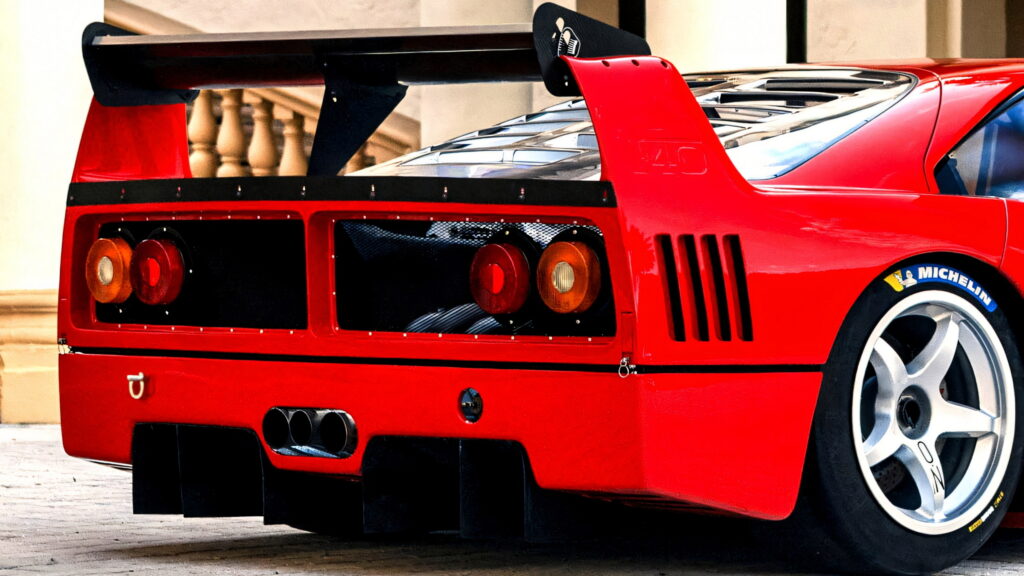
Ultra-Rare Ferrari F40 LM Roars to Auction With 760 HP and Racing Pedigree
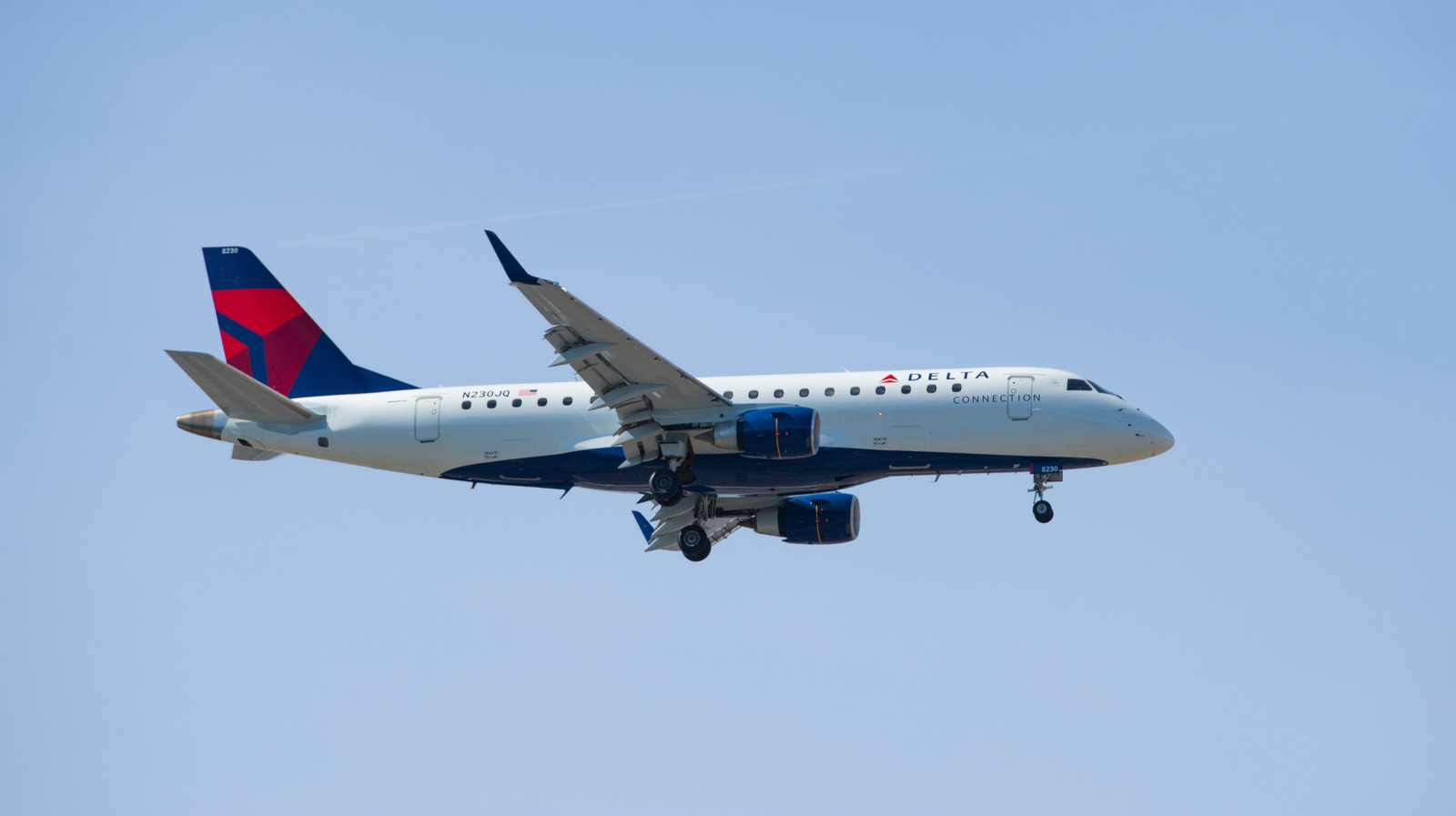
Delta Pilot’s Quick Thinking Averts Danger, Passengers Safe After Close Call
Electric Range Rovers and Supercar Thrills Inside the 150th Episode of My Week In...
 The 150th My Week In Cars is much like the others: Cropley and Prior chatting cars, events, and more

GM Faces Billion-Dollar Hit as Tariffs Shake Up Electric and Gas Vehicle Strategy

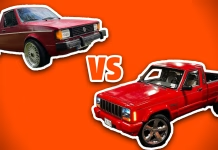
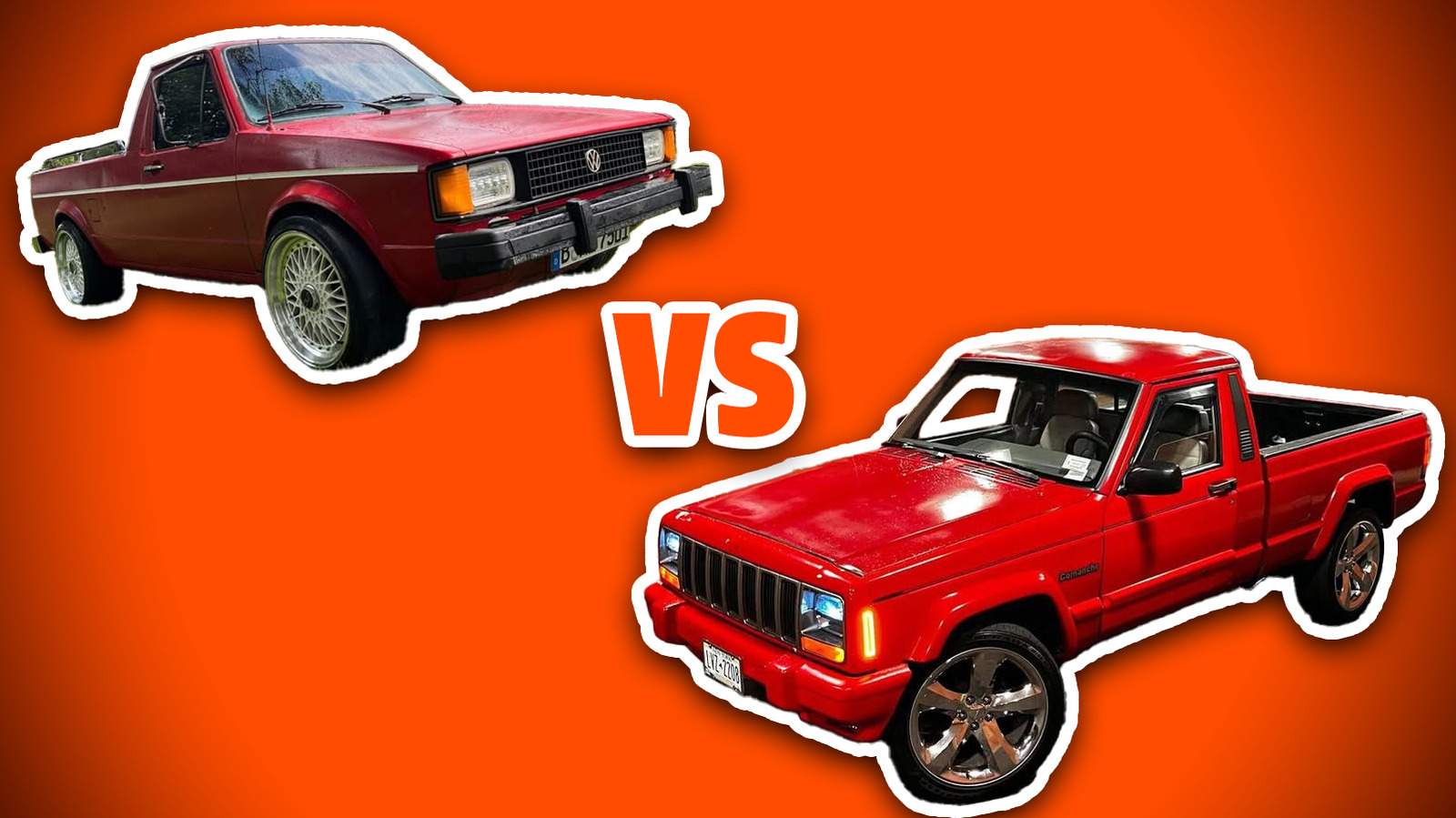
Classic Pickup Showdown: 1981 Volkswagen Caddy vs 1988 Jeep Comanche Eliminator
Renault 5 Electrifies UK Drivers as Affordable Supermini Wins Over New Buyers with Retro...
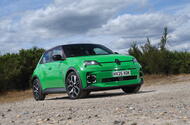 Supermini has become most popular EV among private buyers, nudging Renault to second in sales chart
Some 84% of Renault 5 buyers are new to the brand, giving it one of the highest conquest rates of any model the brand has yet launched.
A recent Renault survey of around 1900 5 buyers in the UK revealed that roughly 1600 were switching out of a competitor product: 3.4% part-exchanged a Mini Cooper, 3.8% traded in a Ford Fiesta and 4.4% swapped out of a Fiat 500.
But while Renault UK managing director Adam Wood acknowledged that the most popular part-exchange models were similarly sized superminis, there is “really no trend” to who is buying the electric supermini.
“They're coming from premium SUVs, small cars, all different brands. Some of them are second cars, some of them are primary cars,” he said, citing the car’s retro-futuristic design as a key factor in its appeal.
“The key thing with the 5 is that it comes back to that point of magic. People see the car and, I think whether they remember the original or not, it's just a great piece of design that brings a smile to peoples' faces."
"Emotion is a big part of the buyer's purchase too, and that's why you see such a conquest rate on the 5."

The 5 has been a roaring commercial success in its first few months on sale: some 2400 examples had been delivered in the UK to the end of June and it was the best-selling EV to private buyers in April and May - making Renault the country’s number-two retail EV brand, behind Tesla.
The 5 was instrumental in helping Renault grow its share of the UK car market to 3.7%, with registrations climbing 16% year-on-year in the first half of 2025 - in part because of a 17% hike in private car sales.
Renault's EV sales were up a huge 887% in the first half, with the 5 and Scenic having joined the Mégane in the last year, and Wood anticipates that the arrival of the 4 this autumn will drive further growth, based on the early success of the similarly conceived 5, which has “really has brought electric motoring to the masses in terms of affordability".
Wood cited the 5’s £23k start price and potentially low running costs – assuming the ability to charge on an EV-specific domestic tariff – as giving a “very similar” total cost of ownership to a comparable ICE hatchback but suggested that the supermini’s success wasn't entirely founded on its affordability.
"Accessible pricing is, of course, a factor. But I think often the industry forgets the emotional appeal too. So I think it's that design and fun that is also attracting more and more private individuals who perhaps weren't considering electric.
“In many ways, I think it's like a Trojan Horse to get more people considering electric."
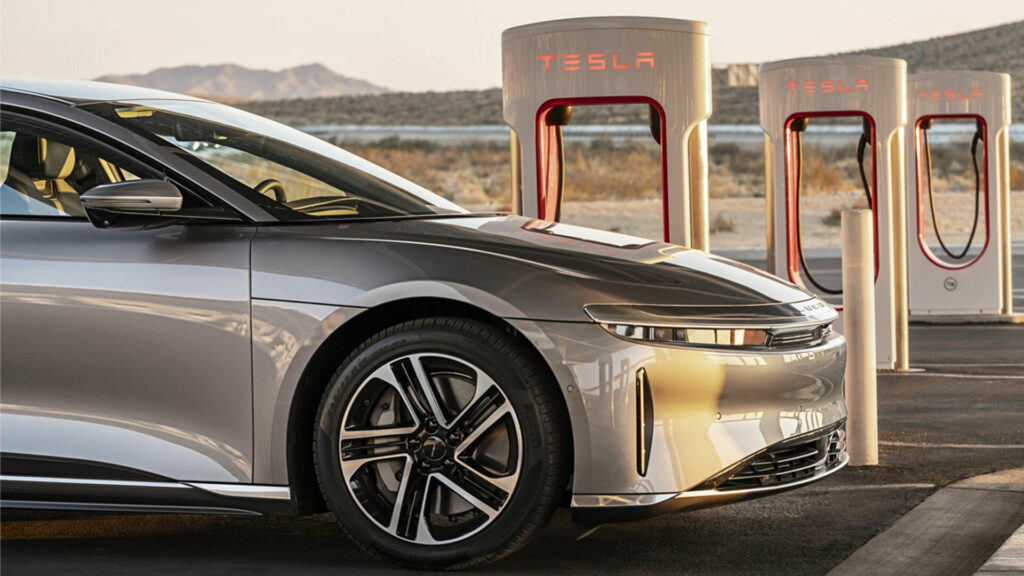
2026 Lucid Air Adds Tesla Supercharger Access and More Range, But With a Catch

Ozzy Osbourne’s Wild Journey From Rock Legend to Reluctant Driver