
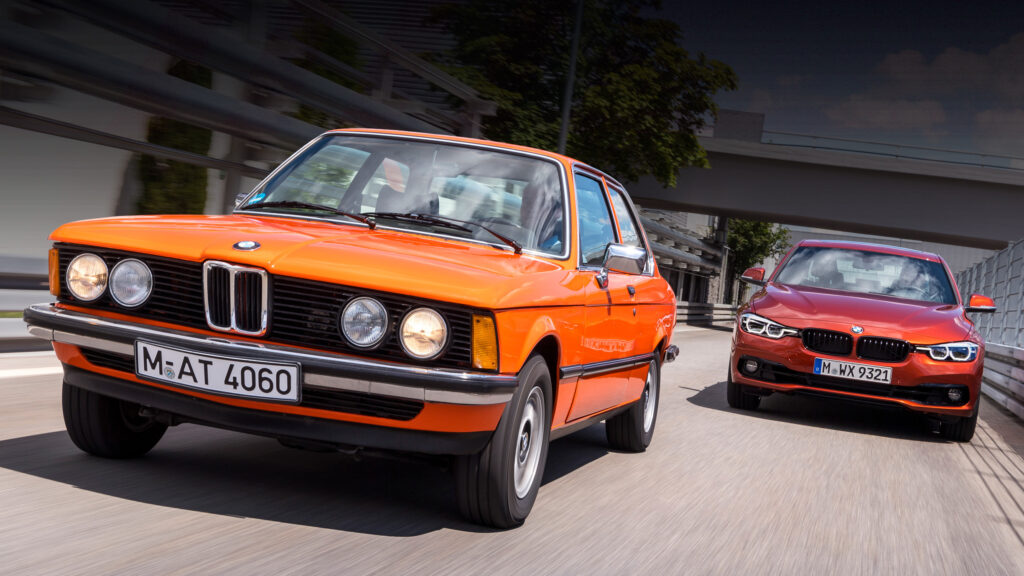
Fifty Years of the 3-Series: How BMW’s Iconic Sedan Keeps Reinventing Itself
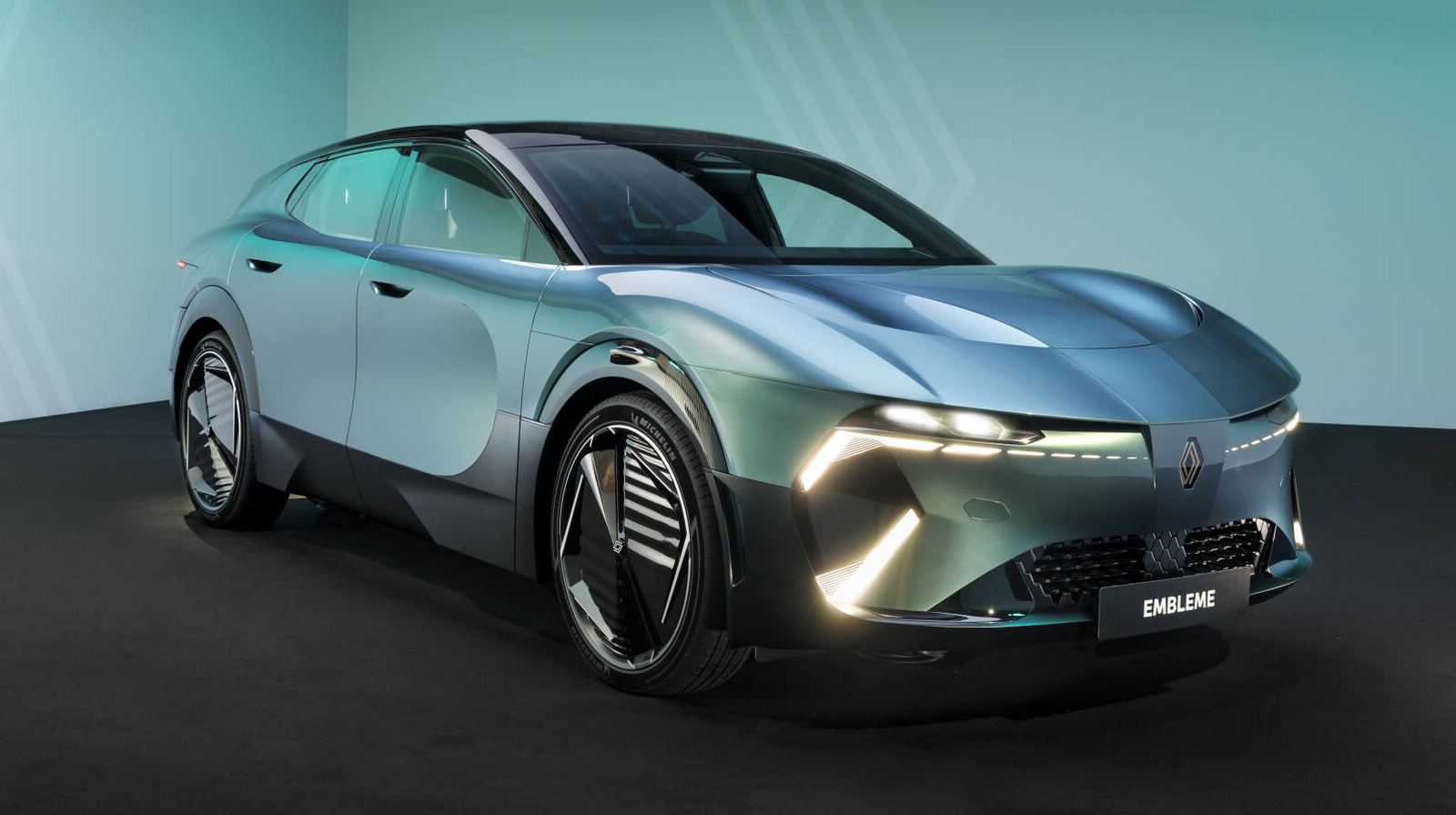
Renault Predicts Stylish MPVs Could Replace SUVs as Europe Shifts Toward Efficiency
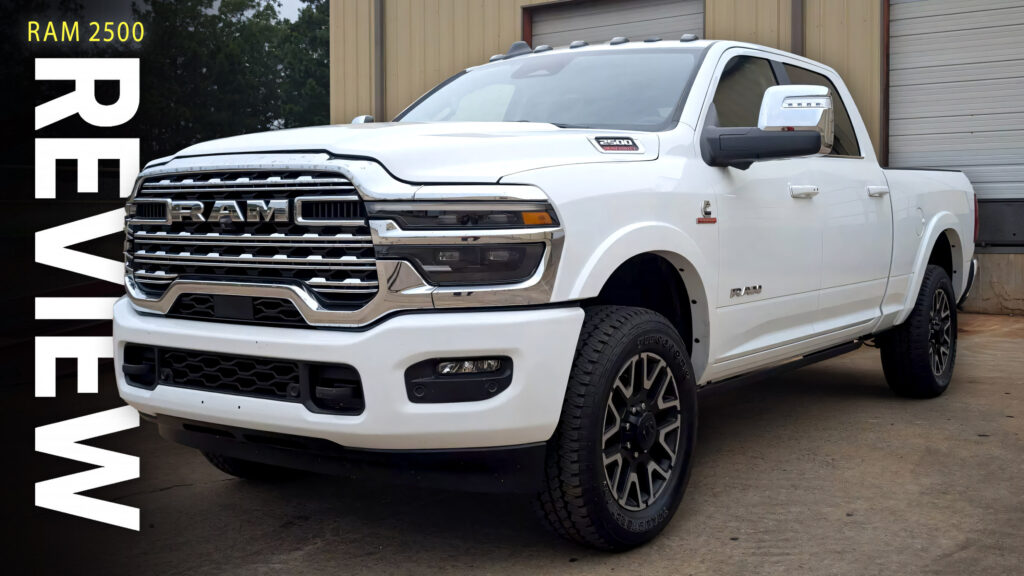
2025 Ram 2500 Review Is This Heavy-Duty Truck’s Power and Luxury Worth the Size
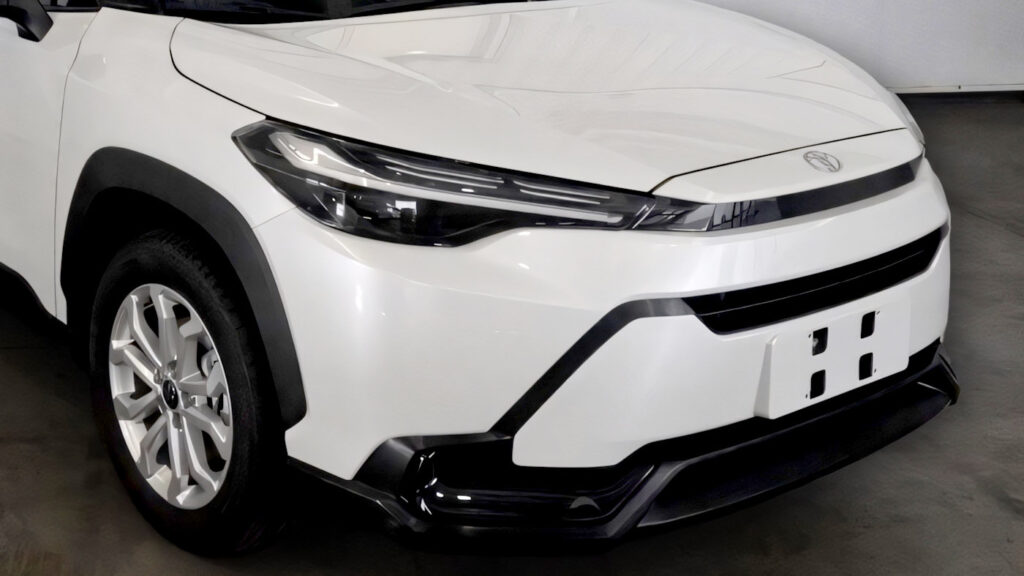
Toyota Corolla Cross and Frontlander Get Bold Facelifts and Hybrid Power for China
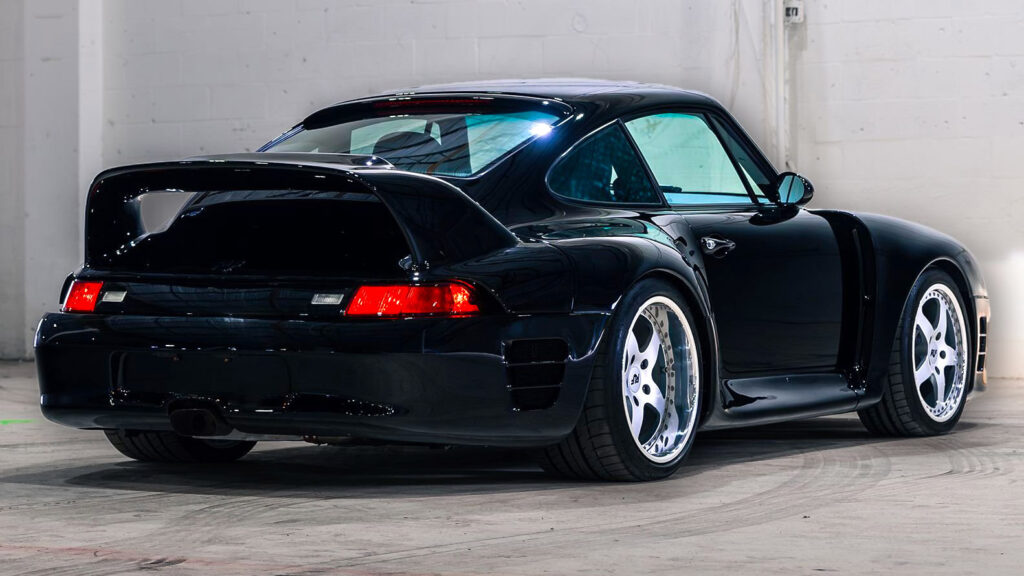
Ultra-Rare RUF CTR 2 Sport Heads to Auction With $3 Million Price Tag
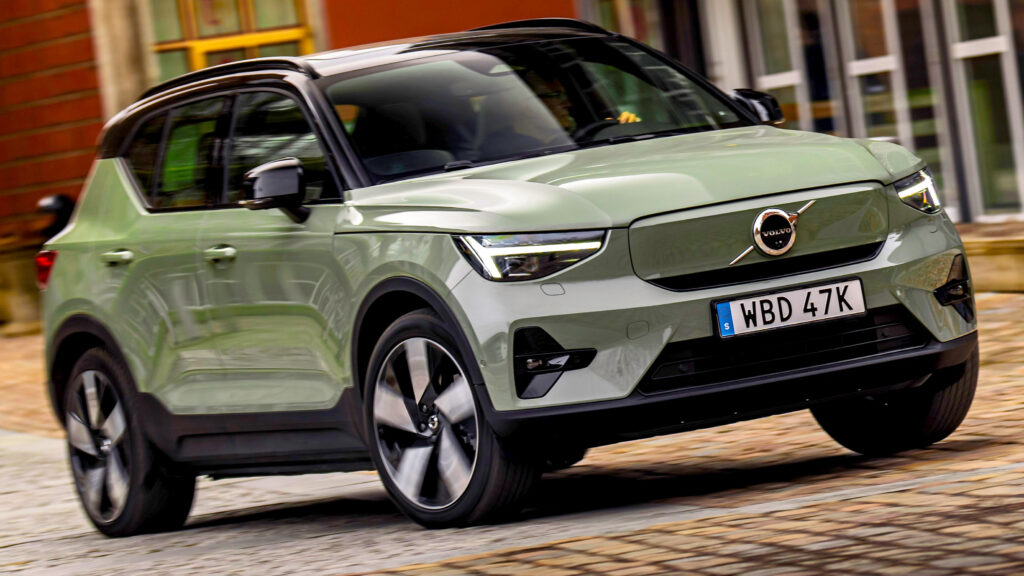
Volvo Faces Lawsuit Over Electric XC40 Recharge Safety Concerns and Sudden Acceleration Claims
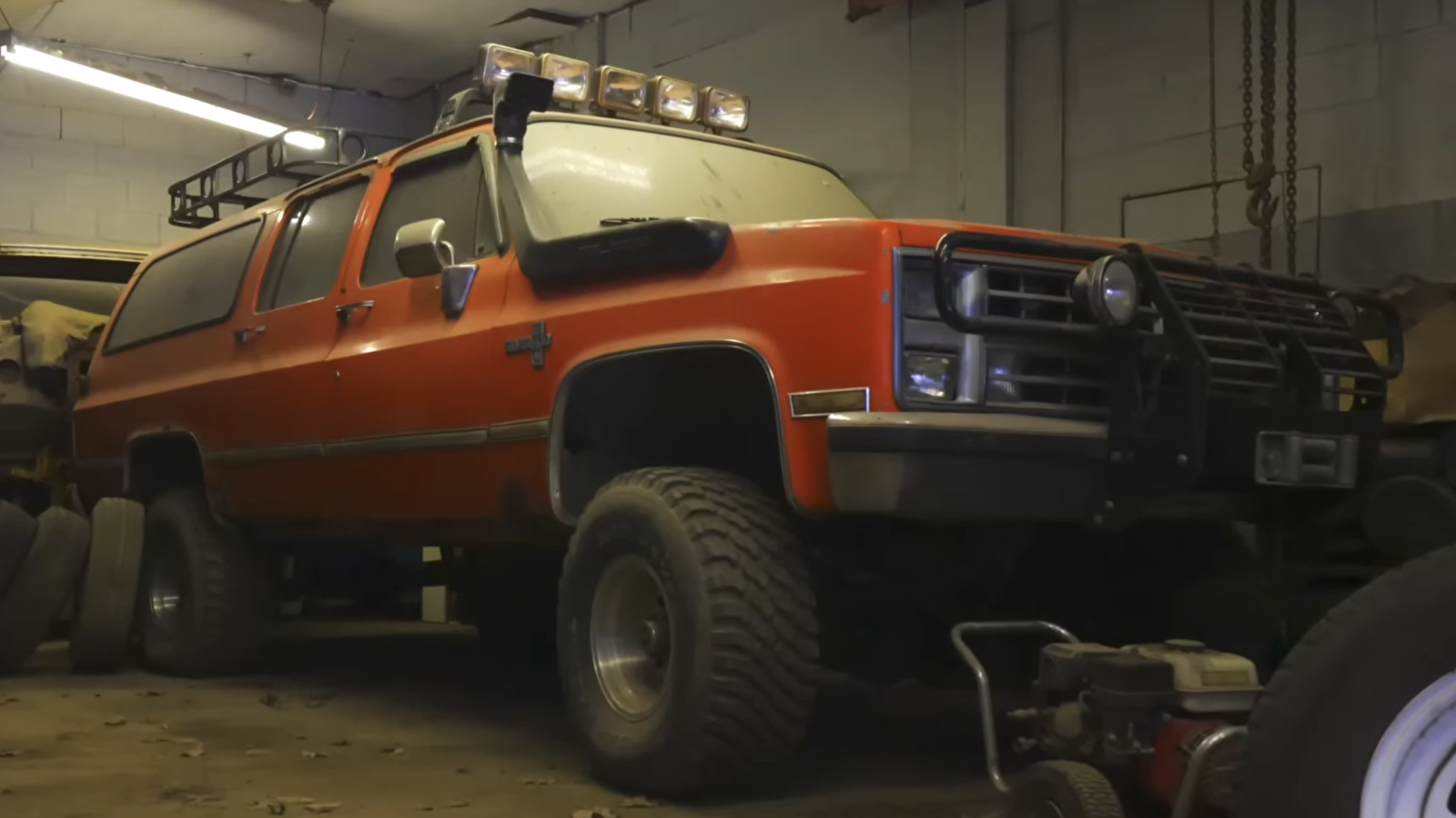
Classic Chevy Suburban Rescued for Stunning Restoration After a Decade Hidden Away
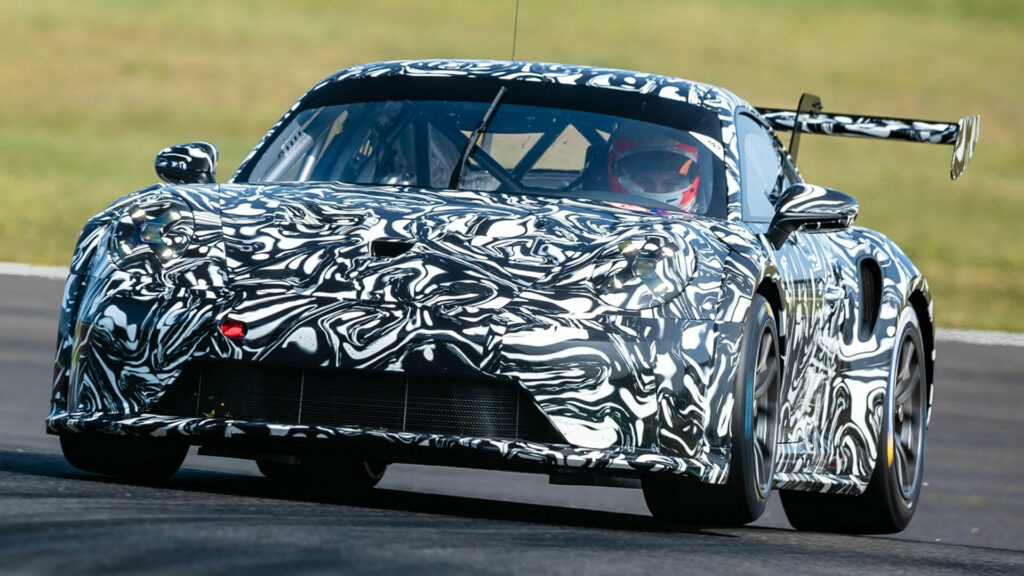
2026 Porsche 911 GT3 Cup Unveiled With Sharper Aero and Track-Ready Upgrades
Why Your Project Car Is Cool Just the Way It Is
Experience Ultimate Off Grid Luxury with the Bruder EXP 7 Adventure Trailer
This is what £450,000 worth of camping gear looks likeAussie luxury trailer specialist Bruder has cornered the market in off-road, off-grid living
The information I’m sent before I collect the Bruder EXP-7 (I feel a little strange calling it a caravan, but we’ll come back to that) contains some surprises.
There’s no bedding or kitchenware inside, I’m told, but there is a washer-dryer.
Now, I went caravanning when I was a kid, and I can still remember the noise of the pump when we had to pedal a lever repeatedly to draw water to the tap.
People with water containers that were round barrels so they could be rolled rather than carried across the campsite were positively flash gits. But now I’m going to try a caravan with a washing machine? Swoon.
I’m sure things have moved on a bit in the conventional caravan world, but even by today’s standards the Bruder EXP-7 is a bit special.
It’s from an Australian company founded by two brothers – hence the Bruder logo with kangaroos as umlauts – who grew up camping and being driven around the outback, and who kind of haven’t stopped.
They would go to places that would quickly leave a conventional caravan looking like it had been used in one of those novelty banger races, so what they make, it says here, are described as “luxury off-road expedition trailers”. Sometimes companies over-egg a description, but maybe not this lot, I think, as I have a nose around the EXP-7 outside Bentley’s Crewe factory.
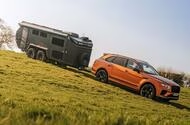
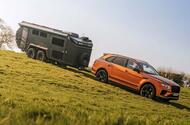
There’s no official tie-in with Bentley, by the way. The people there just thought the Bruder was quite the thing, and I think they’re keen to remind people that the Bentayga is a properly accomplished tow car and off-roader.
There is a perception sometimes that luxury is about five-star hotels and restaurants you can’t get into. I’m not sure that’s the only case: luxury, for me, is naffing off from all of that, being in a wide open space, on your own terms, in your own time, where the office can’t find you and you can’t get social media fomo because there’s no phone reception.
There’s a reason some Bentleys have a rotating dashboard that can hide away the infotainment. It’s unusual these days to find that nobody knows where you are.
It is not only unusual but also quite difficult in and around Cheshire, I grant you, but we’ll do what we can; Bruder models usually go a bit farther than this.
There are five trailers in the basic line-up, but then you can get creative and ask them to do bespoke luxury designs or, if you’re a commercial user, something more utilitarian.
They’re all expensive: the cheapest is around £75k, but depending on exchange rates this one is about £190,000 after taxes. But the military, mobile laboratory operators and royal families are all Bruder customers, and all for very different reasons.
Then there are chumps like us, out for some giggles and very quickly realising that I’m not likely to exhaust the capability of the EXP-7.
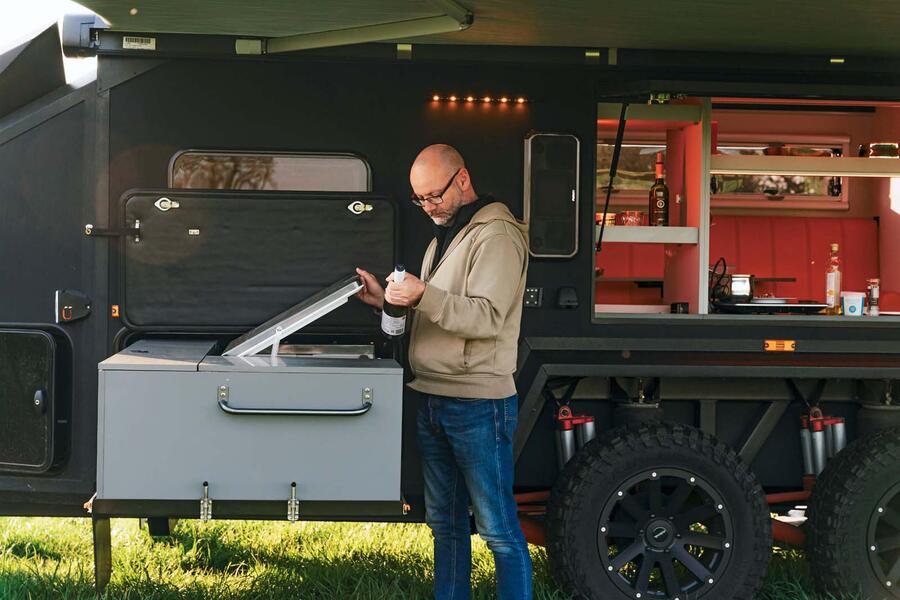
You just have to take a look underneath it: instead of a lightweight aluminium chassis so it can be towed by a Ford Focus, there is huge, beefy, sealed box-section tubing generously welded and clearly visible under the wheel arches, where individual trailing arms suspend each of the four wheels, which have 12in of travel and use a double-damped and air-sprung configuration that can withstand five times the weight of the trailer.
There’s a composite body on top, 5.76m long, and the whole caboodle from nose to stern is 7.0m. It weighs 2700kg, so a couple of hundred more kilos than the Bentayga – if you were going exploring, convention dictates you’d load more into the car than the van.
I’m not sure a duvet and a packet of risotto rice is going to make a huge difference, but I load it in the Bentley along with photographer Max Edleston in the passenger seat. And off we go exploring.
I’m glad I’ve got the shopping in already, because I’m not sure I fancy my chances of finding space outside Waitrose in Nantwich. Together this set-up is comfortably over 12m long, and while sometimes in a car I’ll say “oh, you wouldn’t know the trailer was there”, that is not a position I find myself in with the Bruder.
I’ve never towed anything quite this blocky before. I’ve pulled horse trailers, but they’ve been shorter, I think, and car trailers, but they’ve been lighter and lower. The EXP-7’s bulk never quite leaves you.
That it’s finished in what appears to be skateboard grip tape, absorbing light as it goes, doesn’t help. It’s intimidating, like being chased by one of the four horsemen, this big black indeterminate void occupying every mirror. It would look like we were off to launch missiles at a neighbouring state, were it not for the satin-orange Bentley doing the towing.
It’s not that it’s too unwieldy; at 1.9m wide it’s no wider than the Bentley, which itself has a good turning circle. But you might note that on the roof it has solar panels, and they charge 10kWh worth of lithium ion batteries, and there’s an on-board compressor for the air springing, and I suspect it’s those as much as the chassis (and washing machine) that contribute to the weight.
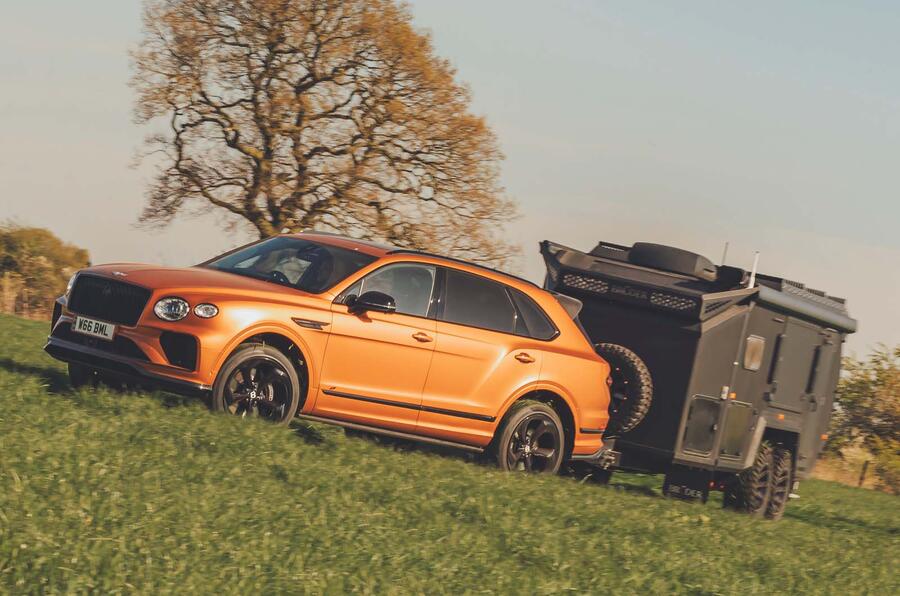
The whole caboodle is stable, but even with the Bentley’s tyres pumped up a bit and the dampers in their firm mode, on really bumpy roads the trailer reminds you its there by gently shaking hands with the towbar.
By and by we get to some fields chosen for the occasion. Some up and some down, but none challenging the capability of the Bruder. The Bentayga runs out of traction before the trailer runs into trouble, because it’s running on Pirelli P Zero tyres rather than chunkier off-road rubber. But you wouldn’t be as daft as us if you were doing this for real.
But there’s fundamentally no reason why you wouldn’t use a Bentayga for this kind of thing. It has got the right towing capacity, can raise its suspension, has good visibility and has oomph to spare.
And one of the reasons you choose a caravan or trailer over a motorhome is that you can set up camp and then head off in the car – and it’s nicer to head out in a Bentley than most other things, isn’t it?
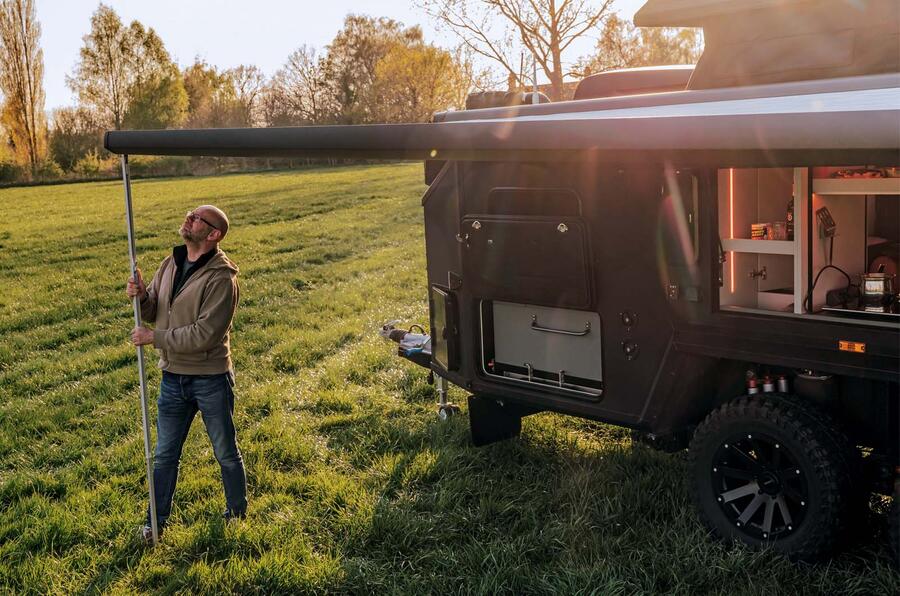
We set up camp on a flattish bit of field, but the EXP-7’s air suspension automatically levels out the van anyway. It’s got an electric awning both sides and is described as having an ‘indoor/outdoor’ kitchen.
There’s a fridge-freezer inside and another one that pulls open like a mortuary drawer outside. Then you flip up a panel and decide which side of it you want to work: outside for the barbecue experience or inside if you want burger van vibes. I go for the latter and plug in the induction hob.
The solar panels are so good and the battery is so big that you could cook for a party and wouldn’t flatten the battery overnight. At 10kWh capacity, I wonder how far the EXP-7 could drive itself off road if you connected a motor to a wheel.
The trailer can also hold 280 litres of water, there’s a shower, a loo, a door directly into the wet room, two sinks and a diesel heater. And did I mention the washing machine?
The EXP-7 gets two choices of roof: one with an electric pop-top like ours, which makes for a lower roofline, or a hard top, which is better insulated but will always be tall. I think it depends how many low bridges or trees you want to go under.
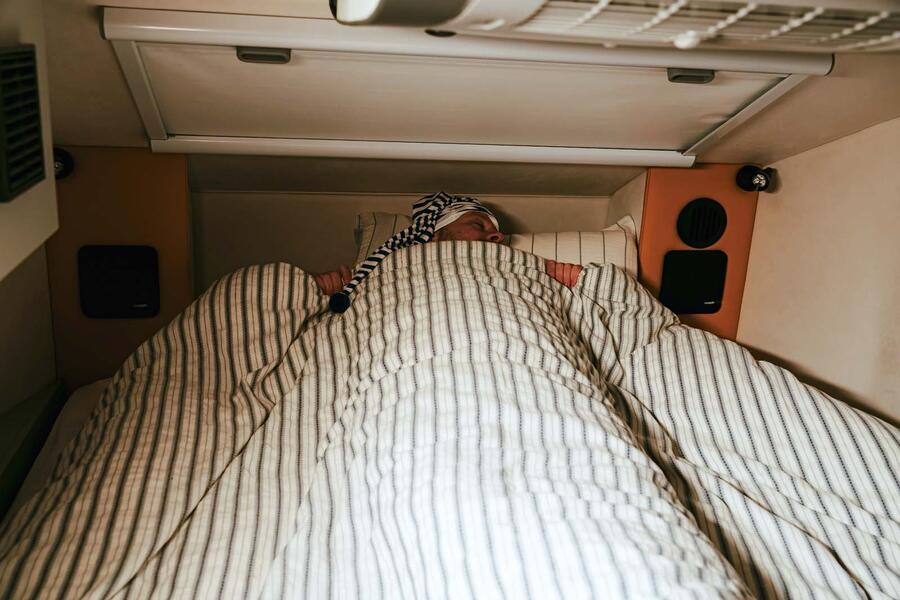
In the British spring I might recommend the hard top. After an evening of good food and terrible jokes I climb into the double bed (the sofa also converts to bunks) with the heater on; at 2am I wake to the faint smell of diesel in either my nostrils or my imagination, so I turn it off, then I wake again at 6am glad I wore a nightcap as a novelty photo prop.
In truth, the EXP-7 feels a little over-engineered for the UK. I love the idea of overlanding, or 4x4 touring, but you’ll never be more than 5.6 miles from a road in Britain and no more than 70 miles from the sea, and you’ll keep tripping over towns all the time.
But there are wilds within a day or two’s drive, where this third-of-a-million-quid convoy wouldn’t look quite so conspicuous. Or, if it did, there’d be nobody to see it.
And I get the appeal: to feel on the edge of civilisation; to sit, relax, eat, sleep and do the laundry, in splendid isolation.