
America’s Road Safety at Risk as Key Agency Faces Deep Staff and Funding Cuts
Why This Rare Mitsubishi 3000GT Spyder Still Commands Top Dollar Despite High Mileage

Dua Lipa’s Custom Porsche 911 GT3 RS Heads to Auction for Charity


Emma Watson Faces Six-Month Driving Ban After Repeated Speeding Offenses
Porsche Cayenne EV Unleashed as the UK’s Most Powerful SUV With Thrilling V8 Sound...
 Top-spec version of new Porsche EV poised to be UK’s most potent SUV
Porsche is about to take the boldest step yet on its electrification journey by revealing a fourth-generation, battery-electric version of its most popular model, the Cayenne SUV.
To be unveiled in production form later this year, the new model will be on sale in the UK this time next year.
However, recognising the risk of launching a full EV version of its biggest-selling model into markets whose demand for such cars continues to waver, the firm will carry on selling and developing its existing ICE-powered Cayenne at least until 2035, said a Porsche spokesman, “and maybe beyond that”.
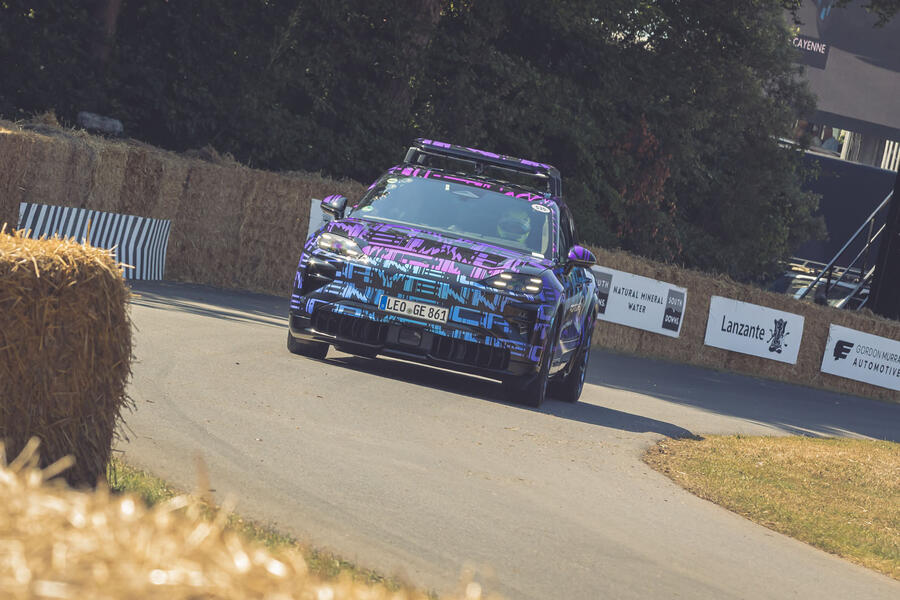
A prototype version of the new electric Cayenne, still covered in camouflage, appeared in action at last week's Goodwood Festival of Speed, driven at full tilt on the hill by GT racer and Porsche development driver Gabriela Jilkova, who the previous weekend took the prototype up the historic Shelsley Walsh hillclimb in just 31.3sec – a full four seconds quicker than any SUV previously.
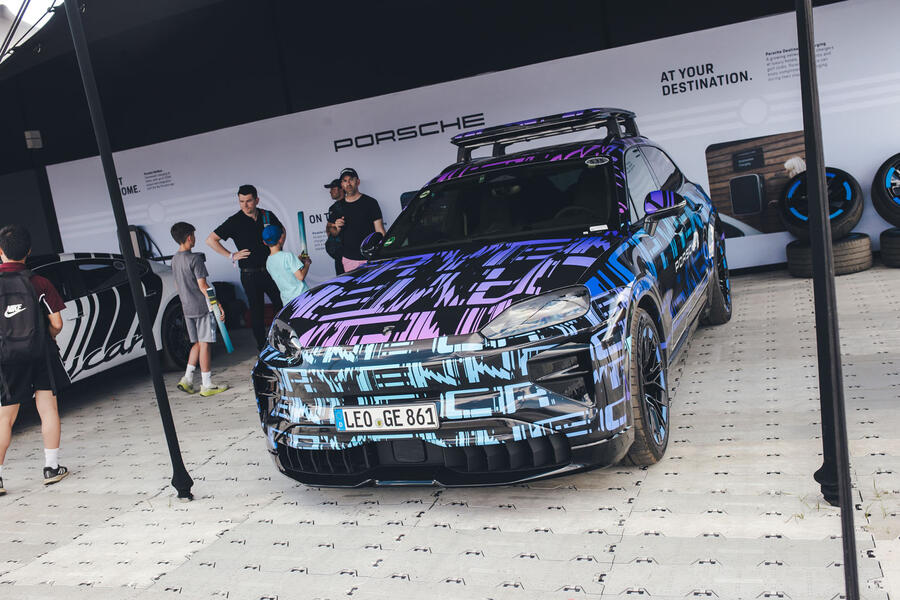
Porsche won’t yet reveal full engineering details of its new Cayenne EV, but the model is taller and longer than the petrol car, sits on a longer wheelbase and is said to “feel a bit bigger when you drive it”. It also has a generously sized frunk in the nose.
All versions of Weissach's new electric SUV – likely to be offered in a threemodel line-up of Cayenne, Cayenne S and Cayenne Turbo – will have two-motor, four-wheel-drive layouts, using Porsche’s own design of motors front and rear. The rear motor is new and was developed after it was found that the Cayenne EV needed more power at the back axle.
The company isn’t yet revealing power outputs for its three models, but they are likely to be around 395bhp for the entry model, 590bhp for the S and more than 986bhp (1000PS) for the Turbo version – which would make it the UK’s most powerful SUV.
Details of the EV’s official touring range are still being worked out, but Porsche’s target is understood to be around 370 miles. That would put it on a par with the longest-legged Lotus Eletre, its closest rival.
Porsche hasn’t yet revealed the Cayenne EVs’ performance fi gures, but the Turbo should be “at least as quick” as the lighter but less powerful top-spec combustion-powered model, posting a 0-62mph time of under three seconds and an eye-watering 0-124mph time of around 10 seconds. Top speeds of all three Cayennes are understood to be restricted to 155mph, as is the case with all Porsche SUVs.
All versions will use active dampers for their allindependent suspension systems, and top models at least are likely to have rearwheel steering to improve both low-speed agility (bearing in mind the longer wheelbase) and high-speed stability.
Porsche is still developing the final details of the new EVs’ interiors, and it won’t yet allow the cabins to be photographed. However, it is understood that, as with the Taycan and rival luxury EVs, the Cayenne driver will be able to switch on a synthesised engine sound – including one produced from recordings of “a genuine Porsche V8 engine” – if desired.
Sascha Niesen, verification and validation manager for the Cayenne EV, said there are “no surprises” in the new model’s basic layout compared with that of the Macan EV, but the torque distribution system has been improved over the Macan system, to cope with the extra power, bulk and weight and because Porsche’s policy is to carry out very detailed development programmes for every model.
“We require every one of our cars to be naturally well behaved, before the electronics come into play,” said Niesen. “Our chassis systems are there to help, but not to hide chassis flaws.”
UK launch details for the car have yet to be released, but it is likely the company will start taking orders early next year for deliveries in the early summer.
First ride: Porsche Cayenne Electric
It’s fairly tall. And quite large. Not quite Range Rover large, maybe, but on the way. The new Porsche Cayenne EV – in which I’m about to take to the Goodwood Festival of Speed's hillclimb at full speed – is the biggest Porsche they make.
We’re sitting high. You might imagine that cars with three-second 0-60mph potential ought to be squeezed right down onto the road, but not this one. From my vantage point I look forward along the track, down the tree-lined avenue to the first double-apex right-hander, wondering what this Cayenne’s body roll will feel like when we get there at full noise.
Actually, I guess I’ve already got an idea. This is a Porsche, and a fat-tyred Porsche with latest-gen active dampers at that. I’ll back it to stay planted in a 1g corner.
There are other good reasons for this Cayenne’s height. For one, we’re sitting on top of a 100kWh-plus traction battery. And despite what I understand to be an output of more than 1000 horses from its two-motor set-up, this machine is also claimed to be a competent off-roader, which means it needs ground clearance.
My driver is Gabriela Jilková, a successful GT racer from the Czech Republic who does a lot of development driving for Porsche, especially in fast stuff. She’s keen to move up the ranks from GT4 racing if the chance comes. Which it’s bound to do.
'Quick Gabi', as she’s known, looks small yet very much at home in the Cayenne EV’s big, bolstered seat, but as we ease quietly up to the line, she’s already wearing that expression of calm concentration you see on the faces of serious racing drivers accustomed to the tension of a full-on start.
Suddenly we’re at the head of the queue. The Taycan ahead disappears around the track’s double right-hander and now it’s our turn. This may be an EV but we’re hearing the Cayenne’s optional synthesised V8 burble at proper volume. And here, it seems entirely appropriate.
The Goodwood starter gives us the thumbs-up. I expect extremely hard acceleration but what I get is an explosion. My head hits the restraint behind, I’m depressed several inches into upholstery that previously felt firm and my innards are rapidly rearranged. The loads are all instant, yet it’s surprisingly quiet in here.
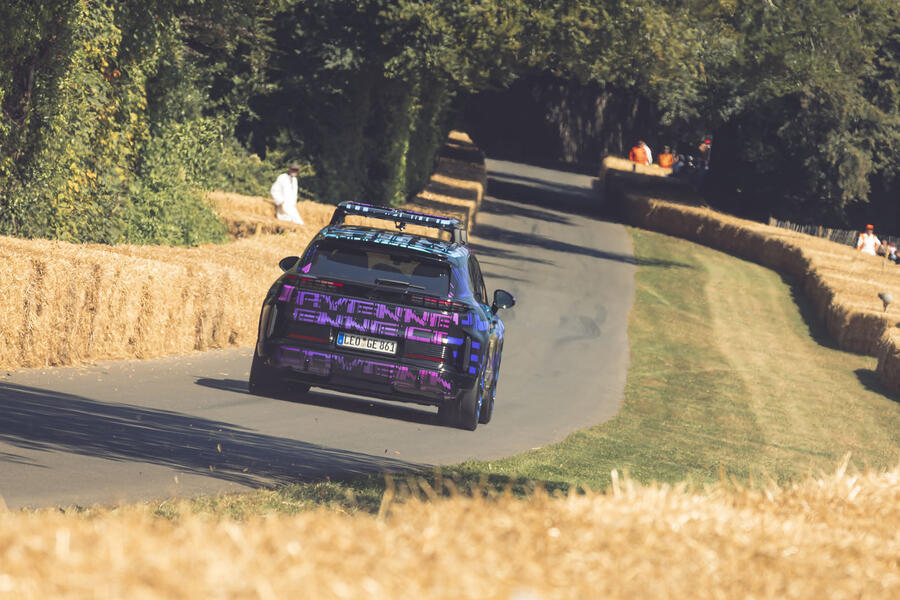
Nobody will yet tell me how much torque this thing has, but it’s got to be four figures of foot-pounds. Even though it’s all deployed at once via four fat 22in Pirelli P Zeros, there’s barely a squeak of wheelspin. That’s what electronics can do.
The trees either side are a blur, and we’ve got to be doing 90mph when we turn in to that first double-apex. Gabi dabs the brakes – I think – though retardation probably comes as much from this EV’s powerful regenerative braking. We clip the grass apexes twice and then the awesome acceleration begins again.
Out of the trees, the track straightens and widens. I glimpse thousands of blurred faces either side as our Cayenne bolts past the big house on the left and under the bridge at a speed that in other hands might seem deeply crazy.
There’s time for a lightning glance at Gabi – still ice cool, making tiny, timed steering movements – and then we’re approaching Molecomb, the reverse camber left-hander hidden beyond a little brow that has been the ruin of many a worthy Goodwood entrant over the years.
Not this time. We storm through it as if on rails, my body pinned into the seat. As we burst into sunlight, I’m aware again of crowds in stands on either side. Then we see the famed Flint Wall straight ahead.
It looks like a serious obstacle at first sight, but when you get there, it’s a fast, precise, right-then-left jink, easy for Gabi and the Cayenne. Transitions like that can upset high-riding cars, but the Porsche is planted like a sports car. This is a sports car.
The rest of the run is easy, a big left and right, and then we’re back under the shade of the trees. Up a shaded tunnel we go, flashing across the finish line. This may well be the quickest electric minute of my life.
I’ve made an agreement with myself to glance at the speedo as we finish, but of course I forget. It's hard to remember stuff in an environment like this but our speed has got to be 100mph-plus. Gabi says 115mph. I see the blurred face of the finish-line marshal and then it’s over.
Speed bleeding away, we ease up to the marshalling loop at the top of the hillclimb, where you wait for other runners in your batch to congregate for the dog-slow return to the pits. “Good,” says Gabi with a contented smile. “Fantastic,” say I.
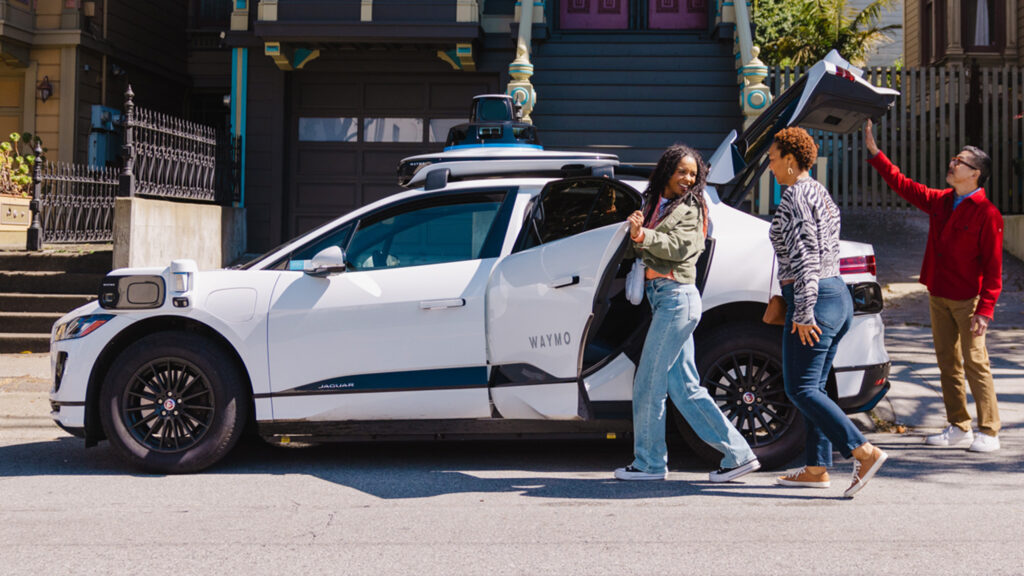
Why Your Kids May Never Need a Driver’s License

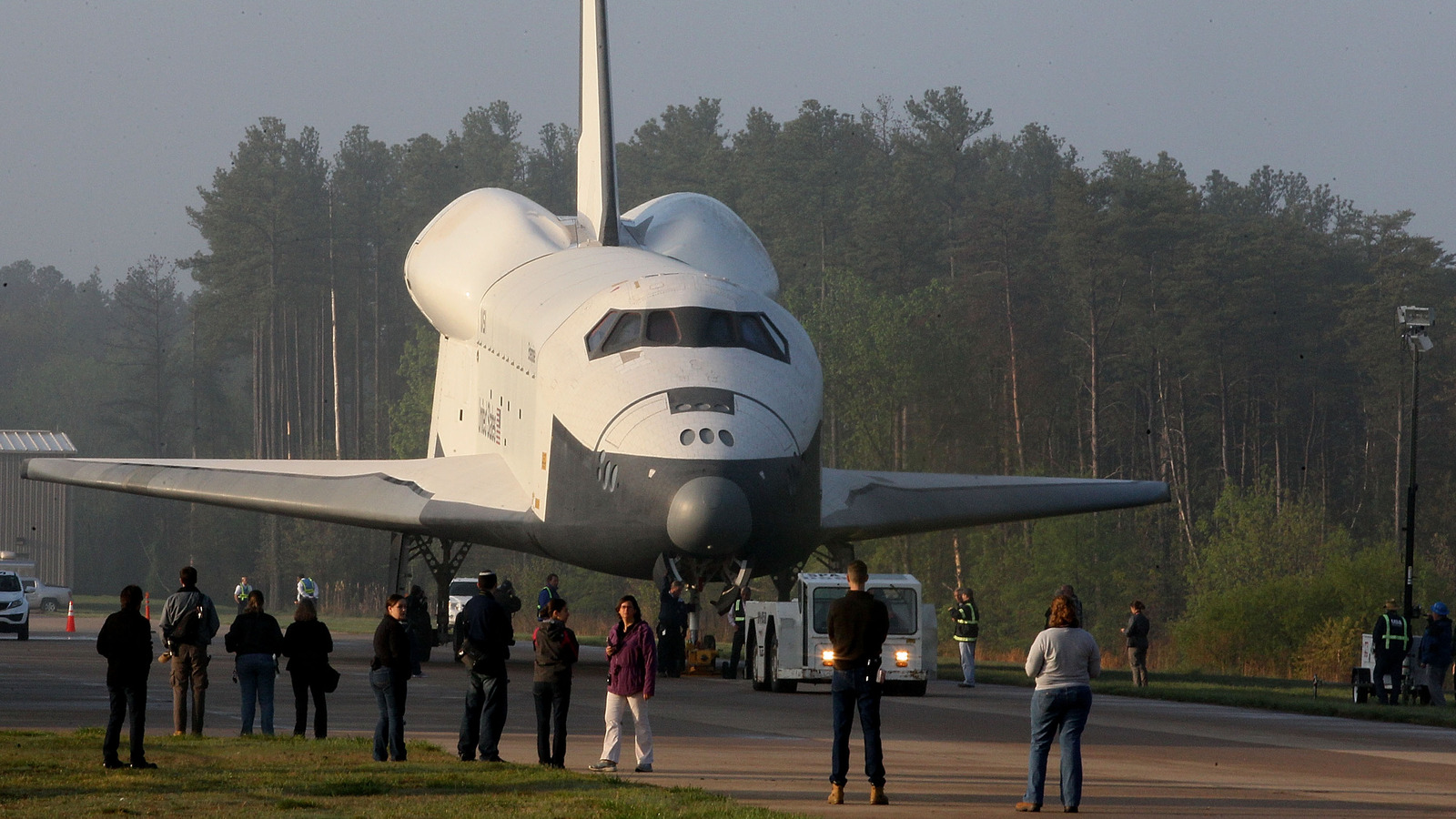
Smithsonian Battles $85 Million Bid to Relocate Space Shuttle Discovery
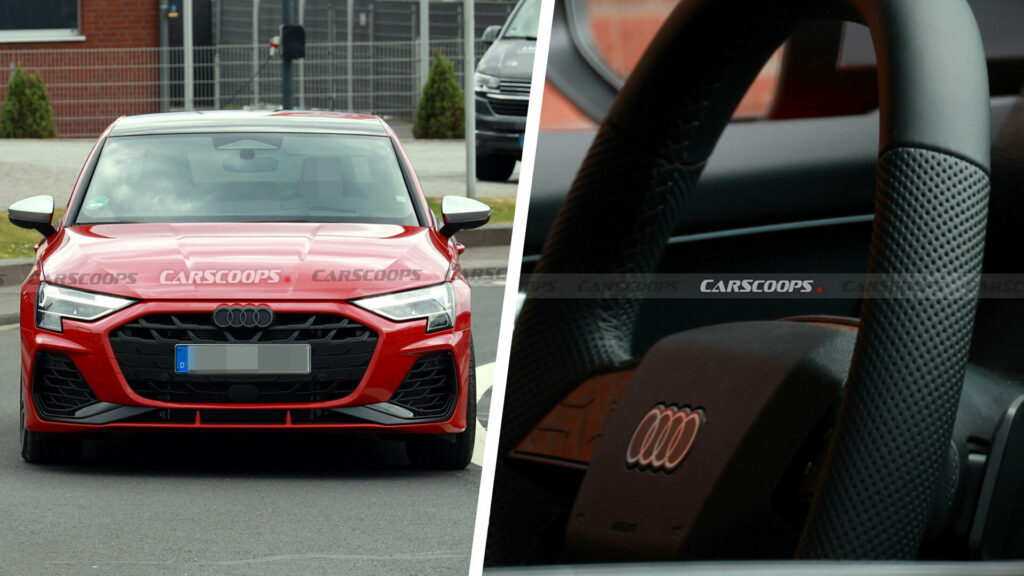
2027 Audi S3 Spied With Bold New Interior and Cutting-Edge Tech Upgrades
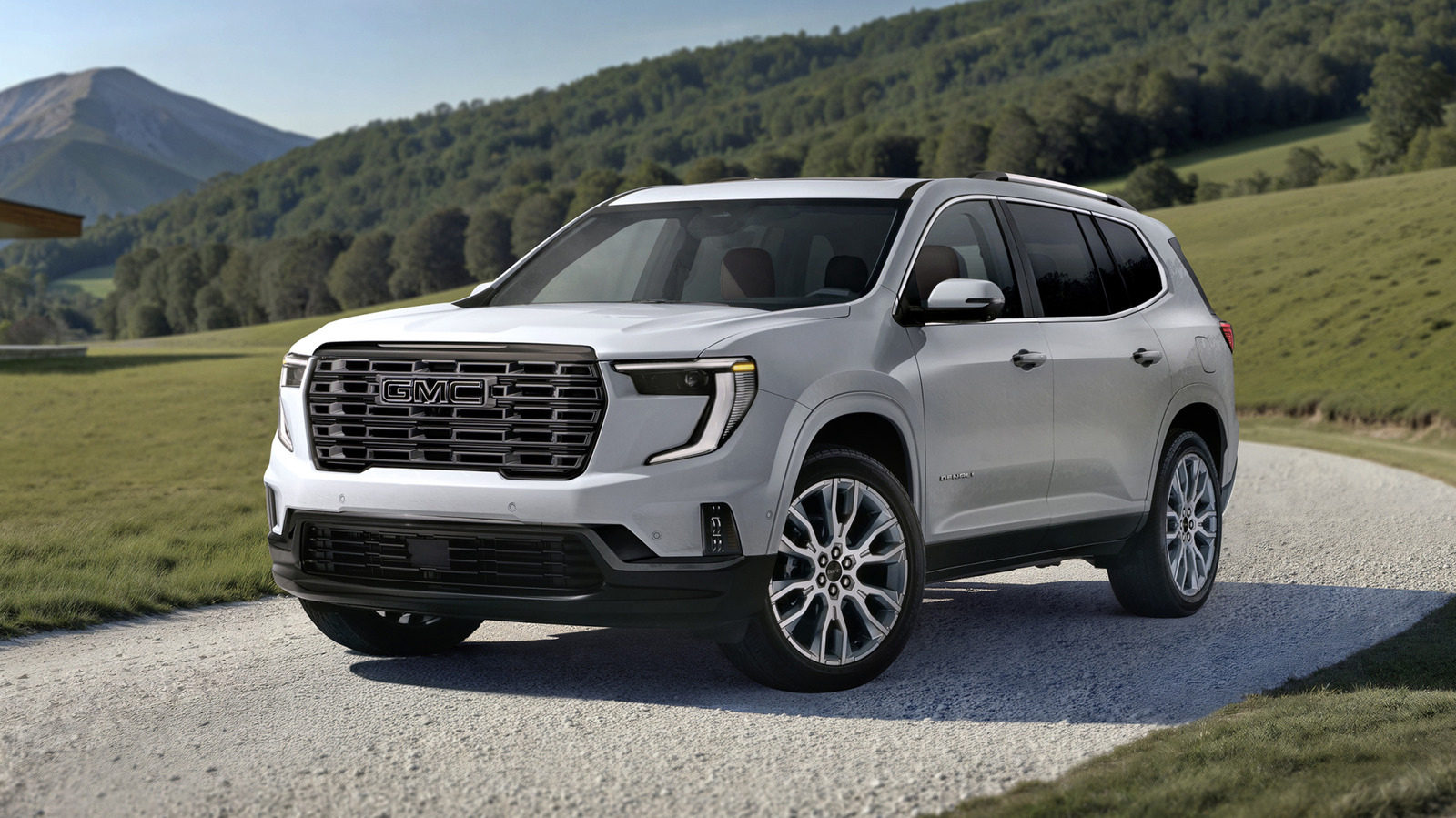
GMC Elevates Luxury SUVs With Bold New Features and Design
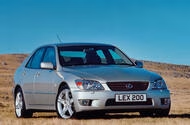
Why the Lexus IS200 Is the Ultimate Drift Car Bargain Under Two Thousand Pounds
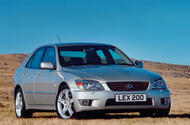 Is now the time to pull the trigger on a subtle drift weapon?
Years back, a mate and I used to amuse ourselves watching Japanese drift videos. The sport of attacking bends at improbable oversteer angles was big stuff in Japan at the turn of the century, young guns drifting their Corolla AE86s, Skylines and Mazda RX-7s illicitly in the Hakone Hills and licitly, on specially prepared tracks.
The drama of watching this was heightened – considerably – by the sight of synchronised drifting, often of impossibly large and sedate saloons, and by near-hysterical Japanese commentary.
It was into this world that Lexus, until 1998 a maker of large, subtly-functioning and somewhat baroque premium saloons launched the lithe, revvy and rear-wheel drive IS200. This pleasingly compact saloon was powered by a 2.0 litre straight six, just like a BMW 3 Series, presented a noticeably short front overhang, just like a 3 Series, and like most engines with half-a-dozen in-line pistons, was strong on smooth and weak on earthmoving luggery. It needed revs to make it go hard.
The need for quick-spinning crank speed was driven by a lot more than a lot more than the need to extract torque, the IS200’s entire character folded around the goal of creating an entertaining sports saloon. This was radical stuff for Lexus, which had previously specialised in comfort-oriented, low effort, premium sedans slushing about at the low revs favoured by the torque converters of their automatic transmissions. The big-engined, soft-sprung GS300 and LS400 were ideal for loping along the American Interstate.
The IS200, on the other hand, was created with a more invigorating approach in mind. Apart from being compact, Lexus’s pert new rear-driver had been developed under the control of one Nobuaki Katayama, who led the creation of the drift-focused AE85/86 Toyota Corolla coupes before working on Toyota’s Le Mans and rally campaigns. This was a man who knew what a driver’s car should be, and knew how to make cars that would yes, drift.
Sure enough, the IS200 had just the kind of chassis balance you’d hope for from a sporting saloon, and better still, determined revving and tight-turn attacks produced deliciously entertaining oversteer moments. Especially if your IS was fitted with an optional limited slip differential This was an entirely different kind of Lexus, a Lexus to raise your heart-rate rather than sink it, a Lexus more in the mould of a European car. That was no accident, its creation very clearly inspired by the BMW 3 Series – Lexus was happy to admit as much – a car of fast-rising popularity both on its home continent and in the US.
But the IS was far from a shameless copy. It had distinguishing features of its own, in particular a pair of rear lamp-clusters that would create an entire cottage industry of copyists selling ‘Lexus-style’ lights. They look a little tame now, but the lamp-within-a-lamp, three-dimensional nature of these cluster sets certainly accelerated the trend towards ever-more elaborate rear lights.
The IS’s nose looks tame now too, but the mildly aggressive angling of its headlights, the neat grille – vastly more modest than the gurning chrome grin of its LS400 big brother – and the trio of air intakes let into its front bumper hinted at the entertainments to come. So did the highlight of the interior, this undoubtedly the instrument pack part-styled to resemble a diver’s chronograph watch. Never mind that the three smallest gauges were distinctly fiddly to read – this ensemble looked terrific, and had you longing to get behind the wheel. So did the chrome gob-stopper of a gearlever that was your gateway to six precision-shifting gear ratios, and the circular, metal-finish speaker grilles let into the door cards. This was a car for the keen, a Lexus that had traded a generously dimensioned three-piece suit for designer gym gear.
It was a change so schizophrenic that it had some industry-watchers questioning Lexus’s sudden change of tack. The abruptness of this switch was part-explained by the discovery that the IS went by another name altogether in Japan, where it was marketed as the Toyota Altezza. So this car wasn’t actually a blue-blooded Lexus after all. The brand was yet to be launched in its home country, and Lexus had yet to gain its own (much-needed) bespoke design and engineering centres. But that’s another story.
The good news was that the IS200 certainly delivered on the road. It handled. It rode. It revved. It held together just like a Lexus should, regularly making the top five of the most reliable car index, and yes, it drifted. All of which led to it gaining a second, used car career as a darling of the young gun tuning community, both at home and over here. Which is why it’s getting harder to find unmessed-with examples.
One ad I read stated that the car ‘loves to be sideways :)’. And you can be doing that too, for under £2000.