Global Automakers Gear Up to Compete with Chinese Brands at Shanghai Motor Show

Global Automakers Gear Up to Compete with Chinese Brands at Shanghai Motor Show

VW three Shanghai concepts teaser Audi, Lexus, Mazda, Mercedes, Nissan and Volkswagen aim to convince Chinese buyers they're still relevant

Global companies are plotting a fightback in China against the rise of Chinese brands, with next week’s Shanghai motor show offering them the perfect stage to show off their recovery.

New models from the likes of AudiLexusMazdaMercedesNissan and Volkswagen will take to the stands in a bid to convince showgoers that they're still relevant in this electrified, tech-led age.

Volkswagen Group CEO Oliver Blume called the German company’s Shanghai new-model extravaganza a "milestone" in its reinvention to counter local brands.

“Our products are tailored to the needs of Chinese customers, with a clear design language and cutting-edge technologies,” he said in a statement.

Attracting the biggest crowd of all the global car makers' displays will likely be that combining both Audi (four rings) and its alter ego AUDI (four letters). The latter will be showing off the highly anticipated E5 Sportback, the first of its new youth-oriented, China-specific models with a tech-led spin, including an advanced semi-autonomous mode.

Meanwhile on the Volkswagen stands will be three concept cars, two of which are electric SUVs and the other the brand’s first ever range-extender model, entering a hot new category for EVs with an on-board petrol generator.

By 2030, Volkswagen Group is targeting 15% of the Chinese market with models it promises will be more than 80% electric or plug-in hybrid. 

Five years ago, that statement would have been insane, given that in 2020 the Volkswagen Group had a 19% share of the market.

But the rapid evolution of local brands operated by the likes of BYD, Chery, Geely and Li Auto have slashed away that leadership to the point that in the first quarter this year, the market share of all German brands combined – including Mercedes and BMW – stood at just 17%, according to data from the China Passenger Car Association (CPCA).

Meanwhile, over the same time frame, sales of Chinese brands surged to 63% of the market, up from 41% in 2021.

The punishment dealt to the likes of the Japanese (a 12% share in the first quarter, down from 23% in 2021) and the Americans (a 5.7% share, down from 10%) has damaged them financially.

For example, General Motors booked a $4.1 billion (£3.1bn) write-down on its Chinese operations for its 2024 accounts, with one of its joint-venture plants reported slated for closure.

Nissan meanwhile cut 500,000 units of capacity from its manufacturing operations in China after last year closing the Changzhou plant it ran with Dongfeng.

But China is too big to cut and run from. Stellantis chairman John Elkann told shareholders at the firm's AGM on 15 April that he believed the car market in China this year would be greater than the American and European markets combined.

The joint venture between Dongfeng and Peugeot/Citroën might be on its last legs and Maserati’s China sales may have been down 73% last year, but Stellantis has stayed engaged with China via its innovative link-up with Leapmotor.

With the US throwing up tariff barriers to car makers not building there and the European market shrinking, China has taken on a renewed importance. 

“Even though the market conditions have shifted significantly, even though China is a different place now than it was maybe three or four years ago, I would say that we're staying the course,” Mercedes’ CEO Ola Källenius said on his company’s annual earnings call on 20 February.

China was still Mercedes’ biggest market last year, taking 34% of its global total despite a sales drop. The 683,568 cars it shifted there last year was double its US tally.

Likewise, BMW continues to heavily rely on China, with the market still accounting for 29% of its sales in 2024, at 715,000. The US meanwhile accounted for 16%.

“The China market is very big. You're talking about 25 million units per year. And even if it's a 20%, 25% share for European manufacturers, you're still talking about a huge marketplace,” BMW sales head Jochen Goller said on the firm's annual earnings call on 14 March.

BMW saw its China sales fall 17% in the first three months of the year amid a wider premium slowdown, but the company is planning to launch 10 new models this year and another 20 in the following two years. Many are tailored to the Chinese market, for example the new long-wheelbase X3 SUV that will take a bow at Shanghai.

Like many other global companies, BMW is scrabbling to overcome its perceived technology shortfall compared with more nimble Chinese players. It has just launched the new 5 Series with local firm Joynext’s V2X communications tech linking it to connected street furniture like traffic lights and other cars, paving the way for safer autonomy.

While some like Ford, GM and Nissan are closing plants to reduce excess capacity, Toyota has secured land in Shanghai to build a wholly owned EV plant there – only the second foreign firm after Tesla to do so without the assistance of a Chinese partner.

At Shanghai, Toyota's premium brand, Lexus, will unveil the latest version of its big-selling ES saloon, which it says “refines advanced electrification”.

Not all foreign companies are on board with the Shanghai 2025 display of optimism. Missing from the exhibitor map are Citroën, Chevrolet, Genesis, Hyundai, JLR, Kia and Peugeot. This looks gloomy, given the accepted wisdom at the big Chinese shows is to turn up or risk customers thinking you’ve lost your appetite for the fight and are heading for the exit. 

That might still be true for some, like Peugeot and Citroën, but more likely is that the smaller foreign brands, already suffering financially from the never-ending price war in the country, are heeding their global account departments and pulling their motor show budgets, as they’ve done in the US and Europe.

It also avoids the awkward sight of crowds surging past your stand of older ICE models to reach the hottest new Chinese EV.

That threat will be reduced somewhat this year after the news that tech brand Xiaomi won’t be showing off its new electric SUV, but plenty more local brands will gathering their armies of influencers to ensure they gain that crucial show buzz.

“Don’t worry, the Chinese will pack it out,” one Chinese car executive told Autocar.

With their new local partnerships and fresh launches, the global players (excluding the luxury brands) will become indistinguishable from the locals at shows like Shanghai. It’s becoming the only way to survive.

Rare 1991 Suzuki Jimny Turbo: A Charming Off-Roader with Unique Style

Rare 1991 Suzuki Jimny Turbo: A Charming Off-Roader with Unique Style

The off-roader has a five-speed manual transmission and a dual-range transfer case
Gas Prices Hit Multi-Year Low as Summer Approaches

Gas Prices Hit Multi-Year Low as Summer Approaches

Low gas prices could continue into the summer, saving drivers quite a bit of money
Porsche 911 GT3 Sets New Nürburgring Record for Manual Cars

Porsche 911 GT3 Sets New Nürburgring Record for Manual Cars

Porsche 911 GT3 at Nurburgring cornering front Latest version of hardcore 911 dips under the seven-minute mark to outpace the V10-engined Dodge Viper ACR

The Porsche 911 GT3 is now the fastest manual car to lap the Nürburgring, beating the previous record-holder by nearly 10 seconds.

Porsche has sent the recently updated '992.2' around the Nordschleife – with ambassador and ex-racer Jörg Bergmeister at the wheel – in 6min 56.294sec.

That's not only 3.6sec quicker than the pre-facelift 992 with a PDK automatic gearbox but also substantially quicker than the previous fastest manual car, the hardcore Dodge Viper ACR, which Porsche notes has a "significantly more powerful engine". 

The American supercar, with a 645bhp 8.4-litre V10, claimed its record lap time of 7min 1.3sec in 2017 - but that was around the shortened 20.6km circuit and corresponds to a time of 7min 5.8sec around the full-length 20.832km loop, according to Porsche.

By that metric, the stick-shift GT3, with a 503bhp flat six, was 9.5sec faster around the Green Hell. 

The car used for the attempt was equipped with the Weissach Package – a £20k optional extra that brings a raft of weight-saving measures to shave 12kg over the standard GT3 – and was shod with sticky (but still road-legal) Michelin Pilot Sport Cup2 R tyres.

Andreas Preuninger, who runs Porsche's GT division, said: "More and more 911 GT3 customers are opting for the six-speed manual transmission. And more and more often we are asked by these customers how fast a 911 GT3 with manual transmission would be on the Nordschleife. We have now answered this question and, although we know that the variant with PDK is significantly faster, we drove our official lap time with a manual six-speed gearbox."

Porsche told Autocar that just under a quarter of standard GT3s are ordered with a manual gearbox in the UK, while just over half of wingless GT3 Touring orders are manual.

UK Military Warns Against Parking Chinese-Made EVs Near Sensitive Sites

UK Military Warns Against Parking Chinese-Made EVs Near Sensitive Sites

In light of espionage fears, the UK is restricting Chinese EVs and vehicles with Chinese components near sensitive sites
Revolutionizing Lake Tahoe: The Efficient Rise of Candela's P-12 Ferry

Revolutionizing Lake Tahoe: The Efficient Rise of Candela’s P-12 Ferry

Candela's P-12 is faster, cheaper to run and vastly more efficient than diesel ferries, and one is coming to Lake Tahoe.
Revolutionizing Hybrid Power: A Compact Solution for Electric Vehicles

Revolutionizing Hybrid Power: A Compact Solution for Electric Vehicles

Horse drop in hybrid powertrain Joint venture announces new hybrid powertrain that fits into the same space as a traditional EV motor

Horse, the engine-making joint venture of Geely and the Renault Group, has revealed a hybrid powertrain designed to be retrofitted into electric cars.

It contains the internal combustion engine, electric motor, gearbox and related electronics in a single unit that, Horse said, can be squeezed into the same space as an EV’s main drive motor.

This means manufacturers could retrofit an electric car with the unit without needing to comprehensively re-engineer the car or having to set up a new production line.

The powertrain can be fuelled using petrol, E85 ethanol-petrol mix, pure methanol and synthetic fuels, Horse said.

It can operate both as a traditional parallel hybrid (driving the wheels) and as a range-extender (generating electricity for a drive motor).

It bolts directly into a car’s subframe. Although it has been conceived to replace the front motor in an EV, it can also be used in ICE car platforms.

The new Horse unit comes as several manufacturers slow their transition to all-electric line-ups.

Notably, Fiat is currently developing a new version of the 500e retrofitted with a hybrid powertrain to replace the old petrol 500 and to buoy its business amid slow sales of the EV.

“For over a decade, it looked like battery-electric vehicles were the only path to net-zero and OEMs planned accordingly," said Horse Powertrain CEO Matias Giannini.

“However, we’re now shifting towards a technology-neutral world, with different markets and applications each pursuing their own sustainable mobility journey.”

Giannini added that the company’s new hybrid unit “allows OEMs to offer powertrain diversity with minimal disruption to production process and resource expenditure”.

Mustang Dark Horse: Performance Meets Price Reality in the Used Market

Mustang Dark Horse: Performance Meets Price Reality in the Used Market

The V8-powered Dark Horse Mustang failed to sell, despite having low mileage and an impressive list of options fitted
Enhance Your Ride with Color-Matched Wheels for a Striking Look

Enhance Your Ride with Color-Matched Wheels for a Striking Look

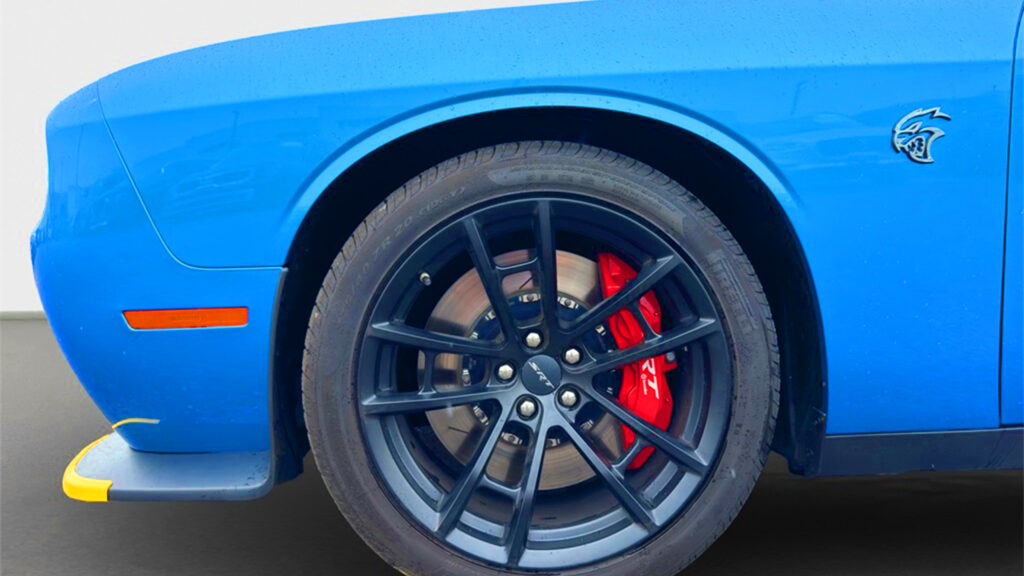
If you have a car with a bright or unique color, it would probably look great with a color-matched wheel.
Rivian R1T: The Charming Game-Changer in Electric Pick-Ups

Rivian R1T: The Charming Game-Changer in Electric Pick-Ups

Rivian R1T front quarter
Bold, big and brawny, the R1T is like no other EV or pick-up on the market
Rivian is a radical EV start-up with a different approach. We drive its flagship and explain its VW Group deal

As an American EV start-up, Rivian is routinely – and predictably – compared to Tesla. But even a cursory glance at their respective pick-up trucks indicates the vastly differing approaches of the two firms.

While the Tesla Cybertruck is unapologetically brash and wilfully confrontational, the Rivian R1T is infused with genuine warmth and charm. And while Elon Musk’s firm has delighted in disrupting the car industry, Rivian’s seemingly more conventional approach has attracted investment from the likes of Ford and Volkswagen.

But look closer, at either the R1T or Rivian itself, and both are more radical than they first appear. That’s why the Volkswagen Group signed a deal worth up to £4.6 billion to invest in Rivian, including creating a new joint-venture company.

You see, Rivian isn’t really a car firm at all: it’s a software company. A software company that makes some seriously impressive cars. “We see ourselves as a tech company that builds sustainable cars,” says Wassym Bensaid, Rivian’s software chief and co-CEO of the Rivian-Volkswagen joint venture. “We have a lot of respect for Tesla, who disrupted the industry, but we also have respect for traditional auto makers.”

Bensaid is clear about what makes Rivian different: “Software is not an afterthought for us. The way we design the car is around software. Everything in the vehicle – from the way it drives to navigation, battery management, thermal management – it’s all run by software.”

A new type of pick-up

Rivian was founded in 2009 by RJ Scaringe and went through various names and funding rounds while it slowly built up expertise. It wasn’t always smooth, and the firm has burned through a lot of investment capital, but while most other EV start-ups failed, Rivian succeeded: the R1T was the first full-size US electric pick-up to reach the market.

It was launched in 2021, ahead of the Ford F-150 Lightning and when the Cybertruck seemed more the stuff of Musk’s dystopian fever dreams than an actual production vehicle.

Still, the R1T that awaits me outside the Rivian Service Center, located in a nondescript industrial district of Las Vegas’s drab, sprawling suburbs, looks positively fresh in terms of design. It’s softer than most big US trucks, and distinctive oval-shaped headlights, a full-width light bar and a blanked-off front end give it a slightly futuristic feel, but it’s recognisably a pick-up.

Parked next to ‘my’ R1T is an R1S SUV and seeing them together reinforces just how similar they are. They’re essentially the same machine: you just choose whether you want a flatbed or a big boot and more space in the back.

The R1T’s flatbed features a mechanically closing cover and there’s a huge storage tunnel behind the rear seats, which is accessed via hatches on each side of the truck’s body. The hatches fold down and can be used as seats, or a step to make it easier to reach into the flatbed. And, of course, there’s a really chunky frunk.

The R1T in front of me may look the same as when it was launched, but Rivian made enough changes late last year to label this a second-generation model. There are new built-in-house motors, reworked air suspension and new battery packs. It’s offered with two, three or four motors, all providing four-wheel drive.

Dual-motor models have 526bhp and the quad-motor set-up produces a bonkers 1011bhp, enough to give this three-tonne pick-up a Porsche 911 GT3-beating claimed 0-60mph time of less than 2.5sec. I’ll be making do with the tri-motor version (two motors on the rear axle, one up front), which has a mere 838bhp.

Probably enough. For the record, that’s nearly identical to the tri-motor Tesla Cyberbeast. A range of battery sizes is offered for the various powertrains: this R1T Tri uses a 141.5kWh unit for a range of 371 miles.

Part of the reason Rivian hasn’t altered the styling for this new model is because it’s really the only constant. The firm regularly improves cars already on the roads through over-the-air updates. For example, the second-gen model features a new infotainment interface, which will eventually be rolled out to existing cars.

“The defining feature of our cars is how they improve over time,” says Bensaid. “We have highly engaged owners and they are very vocal in wanting more features. If a month passes by and our customers don’t receive an update, I’ll get messages asking what’s happened.”

Those updates – and much of the work on the second-generation R1T hardware – was based on customer data. Updates have included everything from new locking sounds and a car wash mode to more tangible changes.

“One of the most successful updates we had was to the suspension,” says Bensaid. Real-world testing convinced Rivian’s engineers that the ride wasn’t performing as they had intended, so they reprogrammed how the adjustable air suspension balanced the ride over bumps.

“Customers could not believe we could change that through software,” says Bensaid. “It was mind-boggling. With a traditional car, when you drive it out of the dealership, that’s the ride quality that you have, but we can change suspension through software. That’s the magic we can bring.”

Inside the R1T

So is an R1T magic to drive? I’m keen to find out, but first I need to get into it. Rivian’s press car uses digital guest keys provided through the Rivian app, except it isn’t available in the Apple UK app store. Thankfully, the Rivian Service Center staff trust me with the actual credit card-style key.

There is a Tesla-esque feel to the interior, with minimal physical controls and a big, 15.6in touchscreen, although in Rivian’s case it sits horizontally. There are multifunction toggles on the steering wheel and a row of fixed buttons at the bottom of the screen gives access to essential functions.

The interior isn’t as stark as a Tesla’s: there’s a warmth to the materials, especially the ash wood-effect dashboard and deep plaid carpeting that, depending on your view, echoes either a Volkswagen Golf GTI or a 1970s chain hotel.

Overall, it’s light and bright, helped by a panoramic glass roof that features adjustable opacity. The rear seats are a bit upright, but then this is a pick-up and there’s plenty of room, as well as a rear touchscreen that gives access to the ventilation and infotainment controls.

Still, the experience is dominated by the touchscreen, which is used for everything from the infotainment to the steering wheel adjuster (then done using the steering wheel toggles) and drive modes.

It’s truly among the slickest systems you’ll find, both in terms of functionality and visual splendour, with stylised comic-book-style graphics. There’s no Apple CarPlay or Android Auto but it’s so good you don’t miss them.

Most key features require just a press or two, but there’s no skimping on information: the off-road mode page shows off a mind-boggling amount of data. There’s fun too: Gear Guard security mode originally introduced a friendly bear to watch over your belongings and he now appears on several other function screens.

“We’re extremely intentional in what we put on the screen,” says Bensaid. “We want it to be a very intuitive experience, because we know touchscreens can be a barrier. We want our drivers to have fun and we have internal debates about every single pixel that goes on the screen.”

Driving the future of pick-ups

With an R1T for a day, the question is where to head. From the Service Center, I can see the gaudy skyline of the Las Vegas strip a few miles south, but that doesn’t feel like the R1T’s natural home. Too brash, too showy. Cybertruck territory, basically. So with the Rivian’s outdoorsy vibes, I head north-west towards the tranquillity of Nevada’s Spring Mountains.

On the urban roads and interstates that I traverse to get there, the R1T is pleasingly amiable, especially because its hefty size isn’t an issue in this wide, open space. Like many pick-ups, the high ride height, chunky tyres and raised suspension – not to mention my test car’s 22in tyres – mean it’s not the most planted of vehicles, but standard air suspension soaks up bumps and it’s really very comfortable.

It’s predictably quick too: a three-tonne kerb weight is no match for three electric motors. Once I’ve escaped the city limits and found a straight and empty road, I have a play with the launch control, egged on by the Gear Guard bear on screen (clearly a bad influence).

The novelty of a fast-accelerating EV has long worn off, but there’s still amusement in experiencing such astounding pick-up in a pick-up.

But launch control is a distracting party piece. The R1T’s core skills are the genuine multi-terrain and towing capability it offers. It’s a car for the great outdoors. Once I’ve escaped the Vegas valley, the road starts rising and winding.

Up here, the R1T is no slouch and it’s able to power out of hairpins with aplomb. It’s fun rather than thrilling in corners but you wouldn’t really expect a heavy pick-up to offer much more.

It’s a cold winter day in Nevada and a bracing wind makes it truly bitter in the mountains. Not ideal conditions for an EV, and on the outbound trip I’ve used more of the R1T’s charge than I expected.

But after playing with the regen and drive modes, and learning how best to use the truck’s weight, it fares far better on the return leg and I arrive back at the Service Center having averaged around 2mpkWh. Not impressive in isolation but reasonable for this size of vehicle.

The Volkswagen tie-up

The R1T is an impressive thing. It certainly doesn’t feel like the first product from an EV start-up. It’s well conceived and well built, with a real maturity to the driving experience and powertrain. I’ve yet to drive a Cybertruck, but when editor Mark Tisshaw tried one recently, he found himself liking it in spite of the thing. 

By contrast, the R1T is so endearing that you want to like it. I fear I’d have upset the Gear Guard bear if I didn’t.

It echoes Bensaid’s comments about Rivian’s relationship with its customers. “They now have very different expectations of what they want,” he says. “They don’t want a traditional car that has an electric powertrain. They want a different type of end-to-end product. That’s the big difference between traditional car firms and us.”

And that, ironically, is why the Volkswagen Group is so interested – and now invested – in Rivian. Legacy car firms have spent vast sums of money trying to master the art of making software-defined vehicles and they’re still struggling. After its own struggles, the VW Group has clearly decided the best way to get that knowledge is to work with a firm that has it.

“It’s great recognition for everything that the team has achieved,” says Bensaid, who performs his role as co-CEO of the new joint venture alongside the Volkswagen Group’s Carsten Helbing. And he notes that the deal isn’t a one-way street.

“We have complementary strengths,” says Bensaid. “We’re coming with a clean-sheet software stack and electric architecture, and a passionate team that wants to make an impact. The Volkswagen Group brings experience and scale, and a broad portfolio of brands. It’s a fantastic opportunity for our engineers to make a much bigger impact.”

Details of the joint venture are still being finalised, but it will involve both firms developing vehicles on a new software-based platform, which builds on Rivian’s current architecture. The first Volkswagen Group model to use the new software will be the production version of the new ID Every1 in 2027. 

“We’re learning how we work together,” says Bensaid. “Something extremely important to us was the willingness of Volkswagen leadership to keep the same agile and nimble culture that Rivian has and to use the joint venture as a change agent to bring that agility and ambitious spirit to the VW Group.”

Perhaps, then, while their approaches contrast wildly, Rivian and Tesla are pretty similar after all: both could act as agents of change in a car industry that remains in a state of flux.